
Demand Planning Solutions Market Report 2026
Global Outlook – By Component (Solutions, Services), By Deployment (Cloud-Based, On-Premise), By Enterprise (Small And Medium Sized Enterprises (SMEs), Large Enterprises), By End User (Automotive, Healthcare, IT And Telecom, Banking, Financial Services And Insurance (BFSI), Manufacturing, Food And Beverages, Other End Users) – Market Size, Trends, Strategies, and Forecast to 2030
Demand Planning Solutions Market Overview
• Demand Planning Solutions market size has reached to $4.86 billion in 2025 • Expected to grow to $8.78 billion in 2030 at a compound annual growth rate (CAGR) of 12.6% • Growth Driver: Surge In Business Entities Boosts Demand For Demand Planning Solutions Market • Market Trend: Zionex Inc. Unveils Plannel Beta, An Ai-Powered Demand Planning Solution Redefining Supply Chain Performance • North America was the largest region in 2025 and Asia Pacific is the fastest growing region.Market Gains By 2030 – Top Opportunities By Segment
Market Gain identifies the most promising market opportunities by highlighting the segments or products expected to generate the highest incremental revenue growth over the next five years.
What Is Covered Under Demand Planning Solutions Market?
Demand planning solutions refer to the process of software or systems that help organizations to forecast and predict customer demand for their products or services. These solutions utilize historical sales data, market trends, and other relevant factors to generate accurate demand forecasts, enabling businesses to optimize their inventory management, production planning, and supply chain operations. Techniques and approaches used in demand planning solutions include statistical forecasting, collaborative planning, and demand sensing. The main components in demand-planning solutions are solutions and services. A solution component refers to a specific element or part of a larger solution. It represents a modular or distinct piece that contributes to the overall functionality or effectiveness of the solution. It includes cloud-based and on-premises deployments. It is used by small and medium-sized enterprises (SMEs) and large enterprises. The main end-users are automotive, healthcare, information technology and telecommunications, banking, financial services, and insurance (BFSI), manufacturing, food and beverage, and others.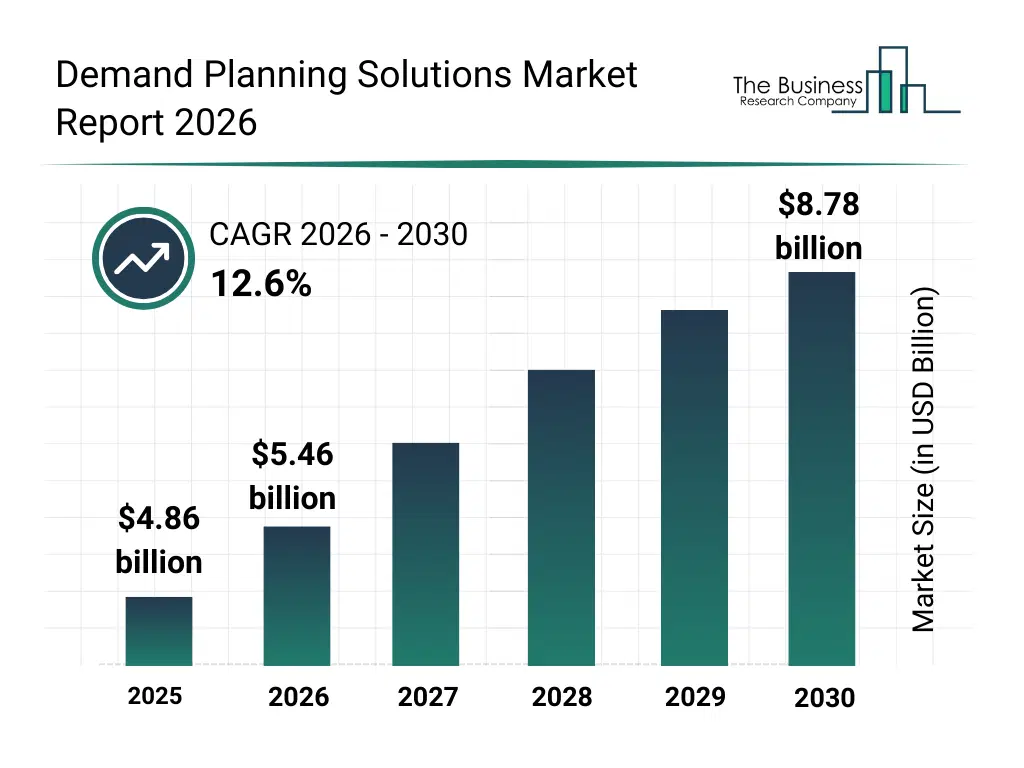
What Is The Demand Planning Solutions Market Size and Share 2026?
The demand planning solutions market size has grown rapidly in recent years. It will grow from $4.86 billion in 2025 to $5.46 billion in 2026 at a compound annual growth rate (CAGR) of 12.5%. The growth in the historic period can be attributed to adoption of historical sales data analytics, expansion of ERP systems, globalization of supply chains, need for inventory cost reduction, increasing complexity of product portfolios.What Is The Demand Planning Solutions Market Growth Forecast?
The demand planning solutions market size is expected to see rapid growth in the next few years. It will grow to $8.78 billion in 2030 at a compound annual growth rate (CAGR) of 12.6%. The growth in the forecast period can be attributed to AI driven demand forecasting adoption, rising demand volatility, growth of cloud based planning platforms, need for agile and resilient supply chains, expansion of omnichannel retail models. Major trends in the forecast period include real time demand sensing, collaborative demand planning, scenario based forecasting, integrated supply chain planning, forecast accuracy improvement.
Global Demand Planning Solutions Market Segmentation
1) By Component: Solutions, Services 2) By Deployment: Cloud-Based, On-Premise 3) By Enterprise: Small And Medium Sized Enterprises (SMEs), Large Enterprises 4) By End User: Automotive, Healthcare, IT And Telecom, Banking, Financial Services And Insurance (BFSI), Manufacturing, Food And Beverages, Other End Users Subsegments: 1) By Solutions: Software (Cloud-Based, On-Premises), Demand Forecasting Tools, Inventory Management Tools, Analytics And Reporting Tools 2) By Services: Consulting Services, Implementation Services, Support And Maintenance Services, Training And Education Services The top segments in the demand planning solutions market will be: • Solutions will reach $6 Billion by 2030. • Services will reach $3 Billion by 2030.What Is The Driver Of The Demand Planning Solutions Market?
The increasing number of business entities is expected to propel the growth of the demand planning solutions market going forward. Business entities refer to legally recognized organizations that are formed to conduct business activities. They are separate and distinct from their owners and have legal rights and responsibilities. Demand planning solutions are used by business entities in various ways to improve their demand forecasting and planning processes. They improve forecasting accuracy, optimize inventory management, and enhance supply chain efficiency. So, these factors boost the demand for the planning solutions market. For instance, in February 2025, according to NatWest Group plc, a UK-based banking and financial services organization, by the end of 2024, the UK achieved a new milestone with 5.63 million active companies registered with Companies House, representing a 3% year-on-year increase. Therefore, the increasing number of business entities is driving the growth of the demand planning solutions industry.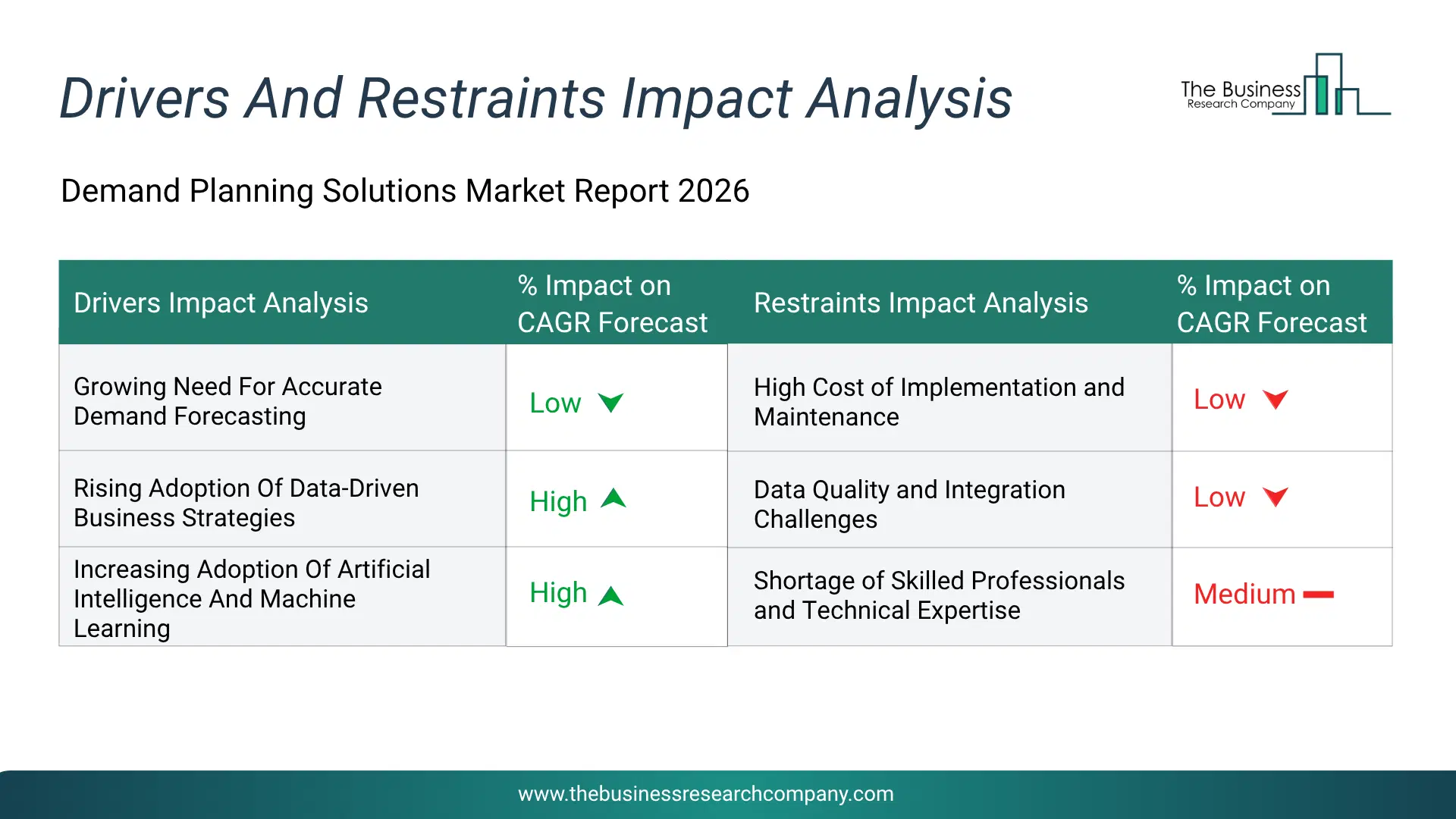
Infographic Chart Showing Key Market Drivers Analysis And Restraints For Demand Planning Solutions Market
The chart presents an impact analysis of key drivers and restraints, quantifying their relative influence on the market's growth rate and helping assess the balance between growth enablers and limiting factors. This chart offers a high-level perspective; the full report contains more detailed insights.
How Will The Drivers Impact Growth In The Global Demand Planning Solutions Market?
• Growing Need For Accurate Demand Forecasting (Low) – During the forecast period, the growing need for accurate demand forecasting is expected to emerge as a major factor driving the expansion of the demand planning solutions market by 2030. Modern demand planning solutions use historical sales data, market trends, and predictive analytics to improve forecast accuracy. Better forecasting enables organizations to optimize production schedules and reduce operational costs. It also minimizes waste and improves inventory turnover across supply chains. As consumer demand becomes more dynamic, companies require advanced forecasting capabilities to respond quickly to market changes. This increasing emphasis on accurate and reliable demand prediction continues to accelerate the adoption of demand planning solutions across multiple industries. • Rising Adoption Of Data-Driven Business Strategies (High) – During the forecast period, the rising adoption of data-driven business strategies is expected to emerge as a major factor driving the expansion of the demand planning solutions market by 2030. Demand planning platforms consolidate information from sales, marketing, finance, and supply chain operations to generate actionable insights. This integrated approach enables businesses to make informed planning decisions and improve operational efficiency. Data-driven forecasting also supports better resource allocation and reduces business uncertainty. Companies are investing in advanced analytics to strengthen competitiveness and improve customer satisfaction. As digital transformation expands across industries, the demand for intelligent planning solutions continues to grow steadily. • Increasing Adoption Of Artificial Intelligence And Machine Learning (High) – During the forecast period, the increasing adoption of artificial intelligence and machine learning is expected to act as a key growth catalyst for the demand planning solutions market by 2030. AI and ML algorithms analyze large volumes of structured and unstructured data to identify demand patterns that traditional forecasting methods may overlook. These technologies enable continuous learning, allowing forecasts to improve as new information becomes available. Automated demand planning reduces manual effort while increasing responsiveness to market fluctuations. AI-powered insights also help businesses optimize inventory levels, production planning, and supply chain performance. As organizations prioritize intelligent and predictive planning capabilities, the integration of AI and ML continues to expand the demand planning solutions market.How Will The Restraints Impact Growth In The Global Demand Planning Solutions Market?
• High Cost of Implementation and Maintenance (Low) – During the forecast period, the high cost of implementation and maintenance is a significant restraint for the demand planning solutions market because deploying advanced planning platforms requires substantial upfront investment in software licenses, cloud infrastructure, customization, and system integration. Organizations must also allocate ongoing budgets for upgrades, maintenance, technical support, and employee training. These expenses can be particularly challenging for small and medium-sized enterprises with limited financial resources. The long payback period may discourage businesses from adopting advanced demand planning technologies. In addition, implementation projects often require dedicated IT resources, further increasing total ownership costs. As a result, high deployment and maintenance expenses can slow market adoption. • Data Quality and Integration Challenges (High) – During the forecast period, the data quality and integration challenges limit the growth of the demand planning solutions market because accurate forecasting depends on reliable and consistent data from multiple business systems. Many organizations store information across disconnected ERP, CRM, sales, and supply chain platforms, making seamless integration difficult. Incomplete, outdated, or inconsistent data can reduce forecast accuracy and affect business decisions. Integrating legacy systems with modern demand planning solutions often requires additional time, investment, and technical expertise. Poor data governance can also create operational inefficiencies and planning errors. These challenges discourage organizations from fully utilizing advanced demand planning capabilities. • Shortage of Skilled Professionals and Technical Expertise (High) – During the forecast period, the shortage of skilled professionals and technical expertise restrains the demand planning solutions market because organizations require experienced personnel to implement, configure, and manage advanced forecasting platforms. Demand planning solutions increasingly incorporate artificial intelligence, machine learning, and advanced analytics, creating a need for specialized technical skills. Many companies struggle to recruit or train employees capable of interpreting complex forecasting models and optimizing system performance. The lack of qualified professionals can delay implementation and reduce the effectiveness of deployed solutions. Businesses may also incur additional consulting and training costs to bridge the skills gap. Consequently, limited technical expertise slows the successful adoption and expansion of demand planning solutions.Key Players In The Global Demand Planning Solutions Market
Major companies operating in the demand planning solutions market are IBM; Oracle; SAP SE; Infor; SAS Institute Inc.; Blue Yonder; Manhattan Associates Inc.; Coupa Software Inc.; Anaplan; e2open LLC; Blue Ridge Solutions Inc.; Kinaxis Inc.; RELEX Solutions Srl; QAD Inc.; OM Partners nv; American Software Inc.; ToolsGroup; Logiwa Technology Inc.; FuturMaster; John Galt Solutions Inc.; Gain Systems Inc.; Arkieva Inc.; Alloy Technologies Inc.; GMDH Inc.; Solvoyo; Business Forecast Systems Inc.; Avercast LLC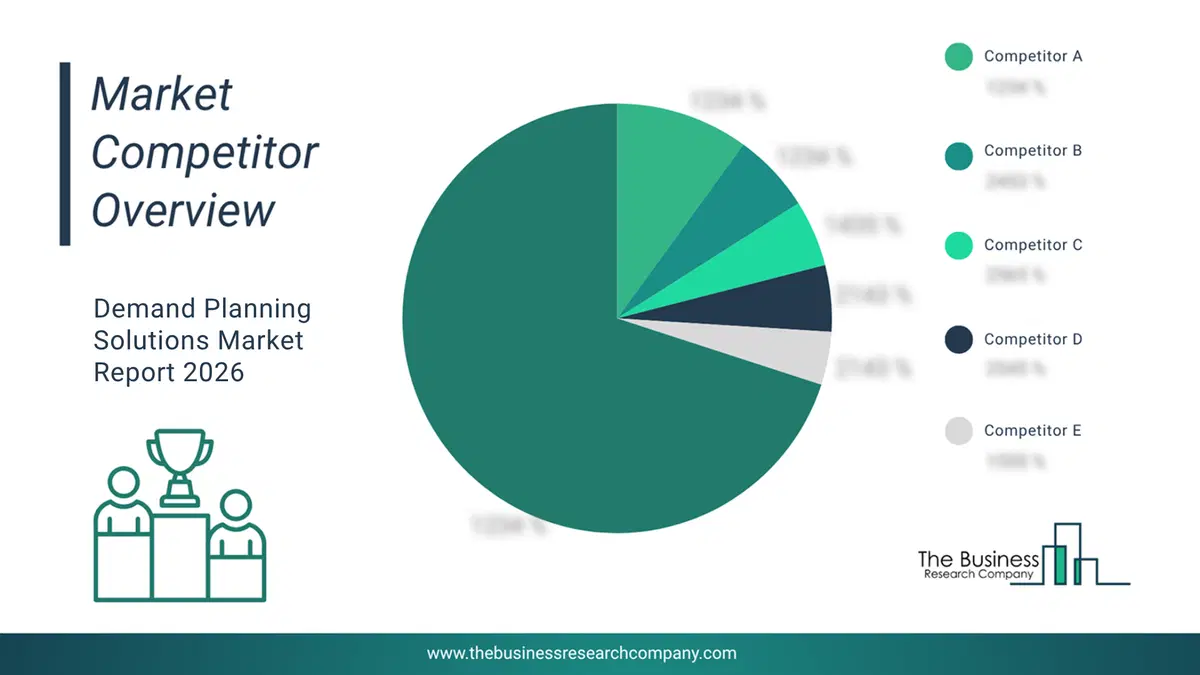
This chart is for illustrative purposes; the full report includes a detailed competitor analysis and comprehensive overview of the top 10 companies in the market.
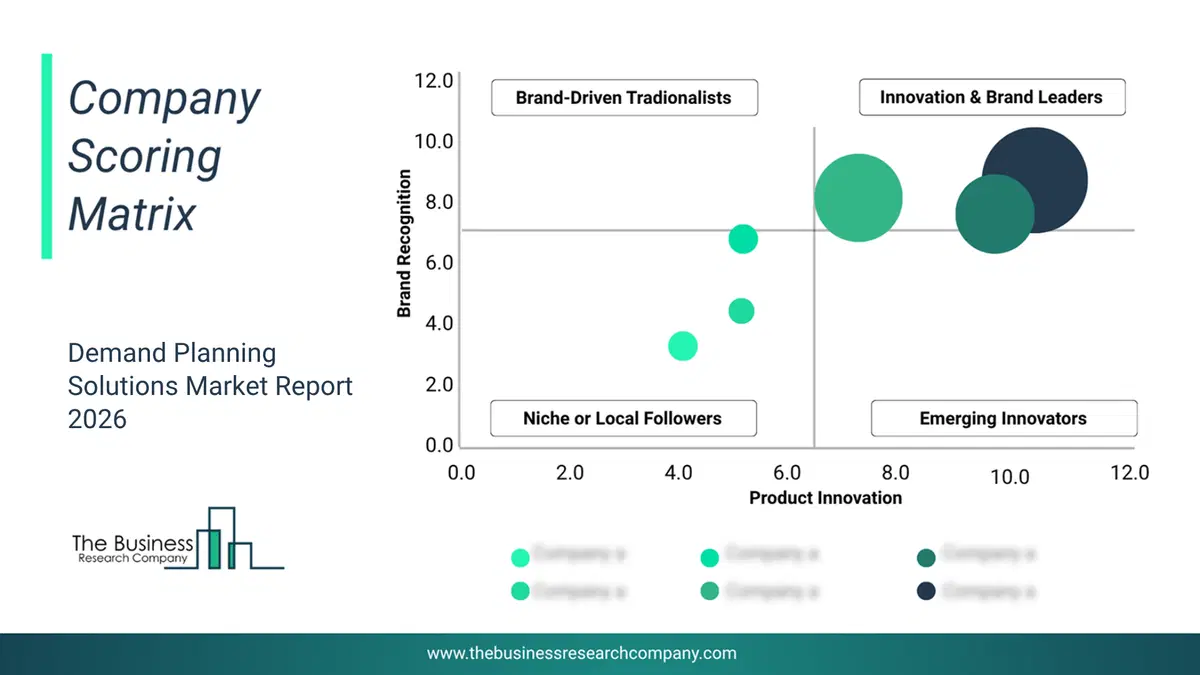
This chart maps companies by product innovation and brand strength, with bubble size indicating relative revenue, helping identify market leaders, challengers, and niche players. This is an illustrative chart; the full report provides a complete and accurate competitive analysis.
Global Demand Planning Solutions Market Trends and Insights
Major companies operating in the demand planning solutions market are increasingly focusing on advanced technologies to enhance forecasting accuracy and strengthen their competitive position. AI-powered platforms designed to improve demand forecasting, inventory optimisation, and overall supply chain performance are emerging as significant developments in this space. For instance, in March 2023, Zionex Inc., a South Korea-based provider of supply chain planning solutions, launched PlanNEL Beta an innovative AI-powered SaaS platform for demand forecasting and inventory optimisation. The platform leverages a wide range of AI techniques, including machine learning, natural language processing, and computer vision, to deliver highly accurate demand forecasts. It also offers capabilities such as demand-driven replenishment, safety stock optimisation, and cycle counting to help companies maintain optimal inventory levels and improve operational efficiency.What Are Latest Mergers And Acquisitions In The Demand Planning Solutions Market?
In January 2024, RELEX Solutions, a Finland-based supply chain and retail planning company, acquired Optimity for an undisclosed amount. The acquisition will bolster the RELEX retail and supply chain platform with daily production planning, optimization and production scheduling capabilities which are crucial for the end-to-end consumer goods value chain. Optimity is a Finland-based provider of demand planning solutions.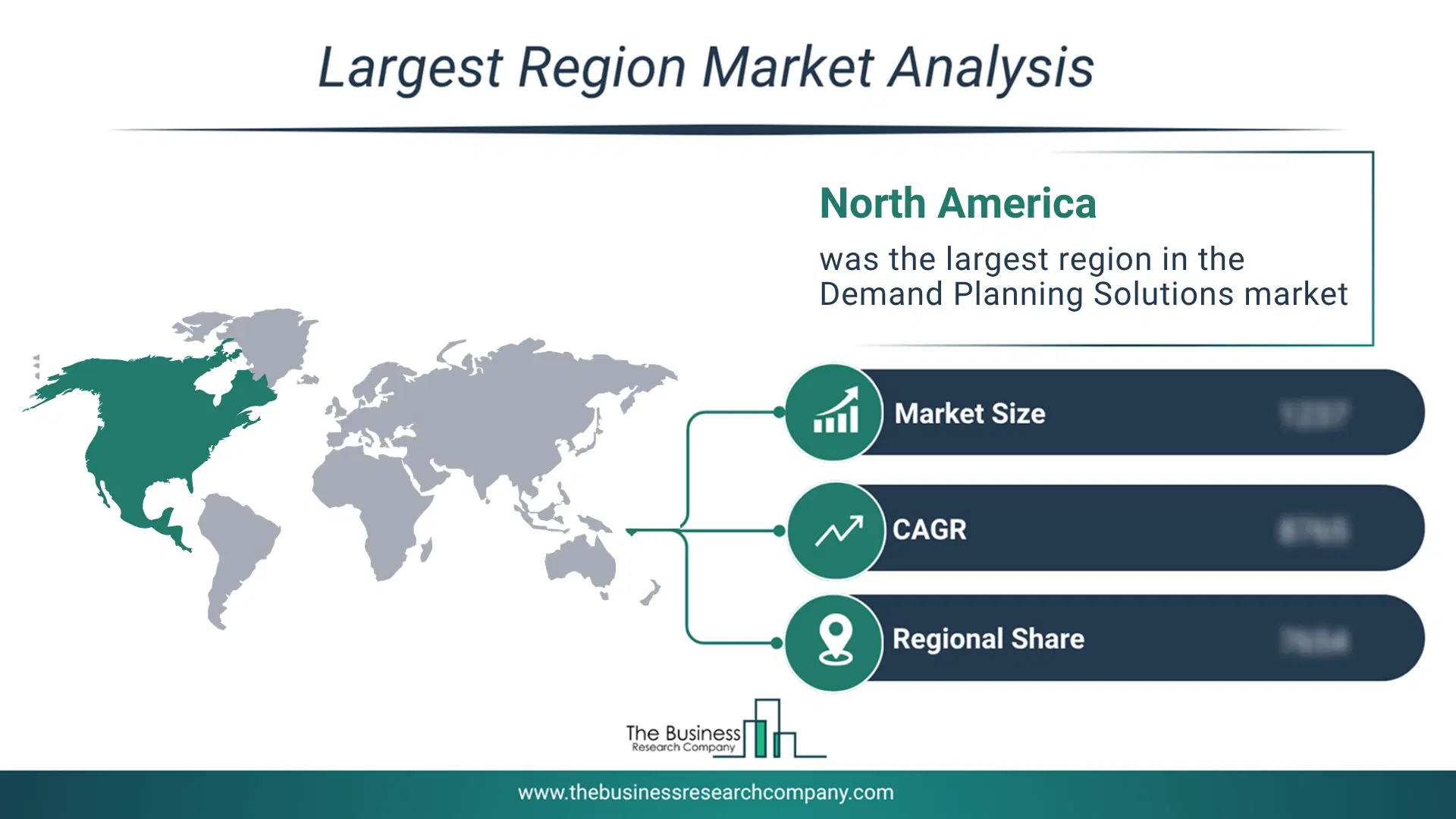
Regional Insights
North America was the largest region in the demand planning solutions market in 2025. Asia Pacific is expected to be the fastest-growing region in the forecast period. The regions covered in this market report are Asia-Pacific, South East Asia, Western Europe, Eastern Europe, North America, South America, Middle East, Africa. The countries covered in this market report are Australia, Brazil, China, France, Germany, India, Indonesia, Japan, Taiwan, Russia, South Korea, UK, USA, Canada, Italy, SpainWhat Defines the Demand Planning Solutions Market?
The demand planning solutions market includes revenues earned by entities by providing services such as implementation and integration, forecasting model development, customization and configuration, process optimization, and consulting. The market value includes the value of related goods sold by the service provider or included within the service offering. Only goods and services traded between entities or sold to end consumers are included.How is Market Value Defined and Measured?
The market value is defined as the revenues that enterprises gain from the sale of goods and/or services within the specified market and geography through sales, grants, or donations in terms of the currency (in USD unless otherwise specified). The revenues for a specified geography are consumption values that are revenues generated by organizations in the specified geography within the market, irrespective of where they are produced. It does not include revenues from resales along the supply chain, either further along the supply chain or as part of other products.
This chart presents market attractiveness based on a quantitative evaluation of growth, competition, strategic alignment, and risk, offering a clear view of opportunity areas for decision-making. This chart is for illustrative purposes; the full report contains the complete analysis.

This chart highlights the Total Addressable Market (TAM) by estimating the maximum revenue opportunity using an assumption-driven approach, supporting strategic planning and opportunity sizing across markets. The chart is illustrative; the full report provides a more comprehensive analysis.
What Key Data and Analysis Are Included in the Demand Planning Solutions Market Report 2026?
The demand planning solutions market research report is one of a series of new reports from The Business Research Company that provides market statistics, including industry global market size, regional shares, competitors with the market share, detailed market segments, market trends and opportunities, and any further data you may need to thrive in the demand planning solutions industry. The market research report delivers a complete perspective of everything you need, with an in-depth analysis of the current and future state of the industry.Demand Planning Solutions Market Report Forecast Analysis
| Report Attribute | Details |
|---|---|
| Market Size Value In 2026 | $5.46 billion |
| Revenue Forecast In 2030 | $8.78 billion |
| Growth Rate | CAGR of 12.6% from 2026 to 2030 |
| Base Year For Estimation | 2025 |
| Actual Estimates/Historical Data | 2020-2025 |
| Forecast Period | 2026 - 2030 |
| Market Representation | Revenue in USD Billion and CAGR from 2026 to 2030 |
| Segments Covered | Component, Deployment, Enterprise, End User |
| Regional Scope | Asia-Pacific, Western Europe, Eastern Europe, North America, South America, Middle East, Africa |
| Country Scope | The countries covered in the report are Australia, Brazil, China, France, Germany, India, Indonesia, Japan, Taiwan, Russia, South Korea, UK, USA, Canada, Italy, Spain. |
| Key Companies Profiled | IBM; Oracle; SAP SE; Infor; SAS Institute Inc.; Blue Yonder; Manhattan Associates Inc.; Coupa Software Inc.; Anaplan; e2open LLC; Blue Ridge Solutions Inc.; Kinaxis Inc.; RELEX Solutions Srl; QAD Inc.; OM Partners nv; American Software Inc.; ToolsGroup; Logiwa Technology Inc.; FuturMaster; John Galt Solutions Inc.; Gain Systems Inc.; Arkieva Inc.; Alloy Technologies Inc.; GMDH Inc.; Solvoyo; Business Forecast Systems Inc.; Avercast LLC |
| Customization Scope | Request for Customization |
| Pricing And Purchase Options | Explore Purchase Options |