
Emergency Lighting Market Report 2026
Global Outlook – By Power System ( Self-Contained, Central, Hybrid), By Offering ( Hardware, Software, Services), By Battery ( Ni–Cd, Ni–MH, LiFePO4, Lead–Acid), By End-User ( Residential, Commercial, Industrial, Other End-Users) – Market Size, Trends, Strategies, and Forecast to 2030
Emergency Lighting Market Overview
• Emergency Lighting market size has reached to $7.17 billion in 2025 • Expected to grow to $10.34 billion in 2030 at a compound annual growth rate (CAGR) of 7.6% • Growth Driver: Healthcare Sector Growth Fuels Demand For Emergency Lighting Solutions • Market Trend: Major Players Innovate Next-Generation Solutions In The Emergency Lighting Market • North America was the largest region in 2025 and Asia-Pacific is the fastest growing region.Market Gains By 2030 – Top Opportunities By Segment
Market Gain identifies the most promising market opportunities by highlighting the segments or products expected to generate the highest incremental revenue growth over the next five years.
What Is Covered Under Emergency Lighting Market?
The emergency lighting are designed to activate when a power outage creates low-visibility conditions. It allows the safe, rapid, and effective evacuation of places and buildings not only in the event of a power loss but even when the main lighting is still accessible. Emergency lighting lowers panic and saves lives by providing critical illumination and directing occupants to safe locations and safety equipment. The main types of emergency lighting are self-contained, central, and hybrid. Self-contained emergency lighting systems use devices with a built-in power supply, the power supply being a battery or accumulator recharged by exposure to light, and the solar unit being distinct from the lighting unit. The offerings of emergency lighting are hardware, software, and services that contain different battery types such as ni-cd, ni–mh, lifepo4, and lead-acid. The various end-users include residential, commercial, industrial, and other end users.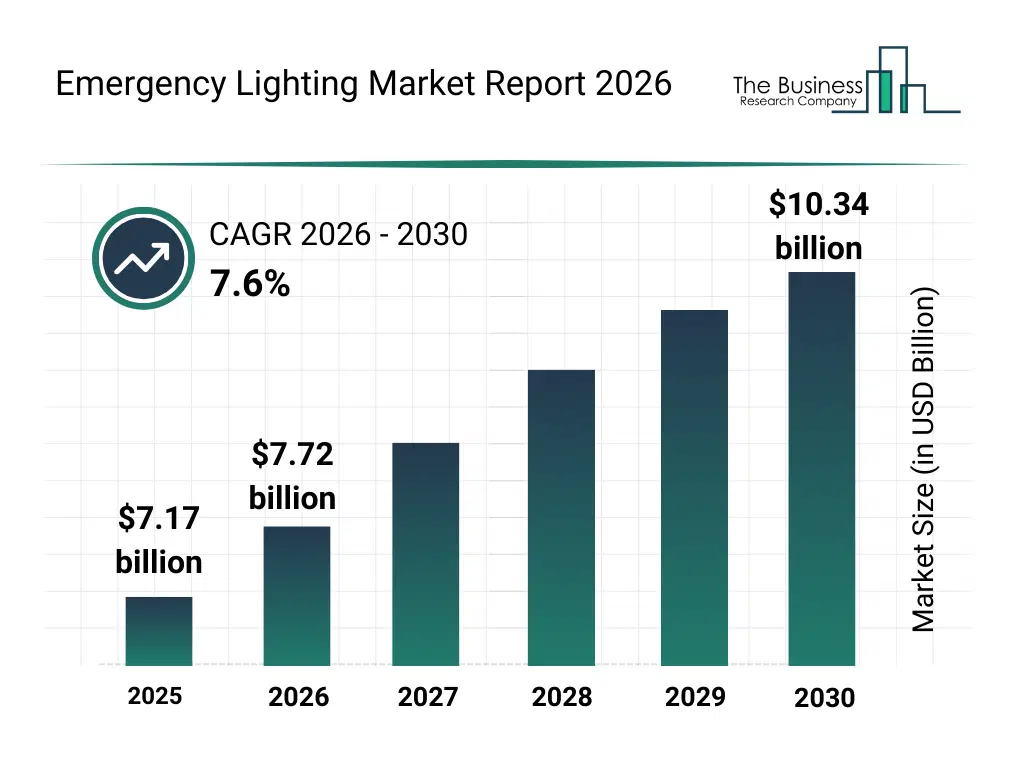
What Is The Emergency Lighting Market Size 2026 And Growth Rate?
The emergency lighting market size has grown strongly in recent years. It will grow from $7.17 billion in 2025 to $7.72 billion in 2026 at a compound annual growth rate (CAGR) of 7.7%. The growth in the historic period can be attributed to rise in installation of self-contained emergency lights, increase in adoption of central battery systems, expansion in hybrid emergency lighting solutions, growing use in commercial and industrial buildings, rise in residential emergency lighting implementation.What Is The Emergency Lighting Market Growth Forecast?
The emergency lighting market size is expected to see strong growth in the next few years. It will grow to $10.34 billion in 2030 at a compound annual growth rate (CAGR) of 7.6%. The growth in the forecast period can be attributed to increase in AI and IoT-enabled emergency lighting solutions, rising deployment of energy-efficient LED emergency systems, growth in smart hybrid lighting solutions, expansion in automated monitoring and control, increasing adoption of connected emergency lighting networks. Major trends in the forecast period include integration of smart emergency lighting systems, deployment of IoT-connected lighting controls, adoption of AI-based emergency management software, expansion of hybrid emergency lighting solutions, implementation of energy-efficient led systems.
Global Emergency Lighting Market Segmentation
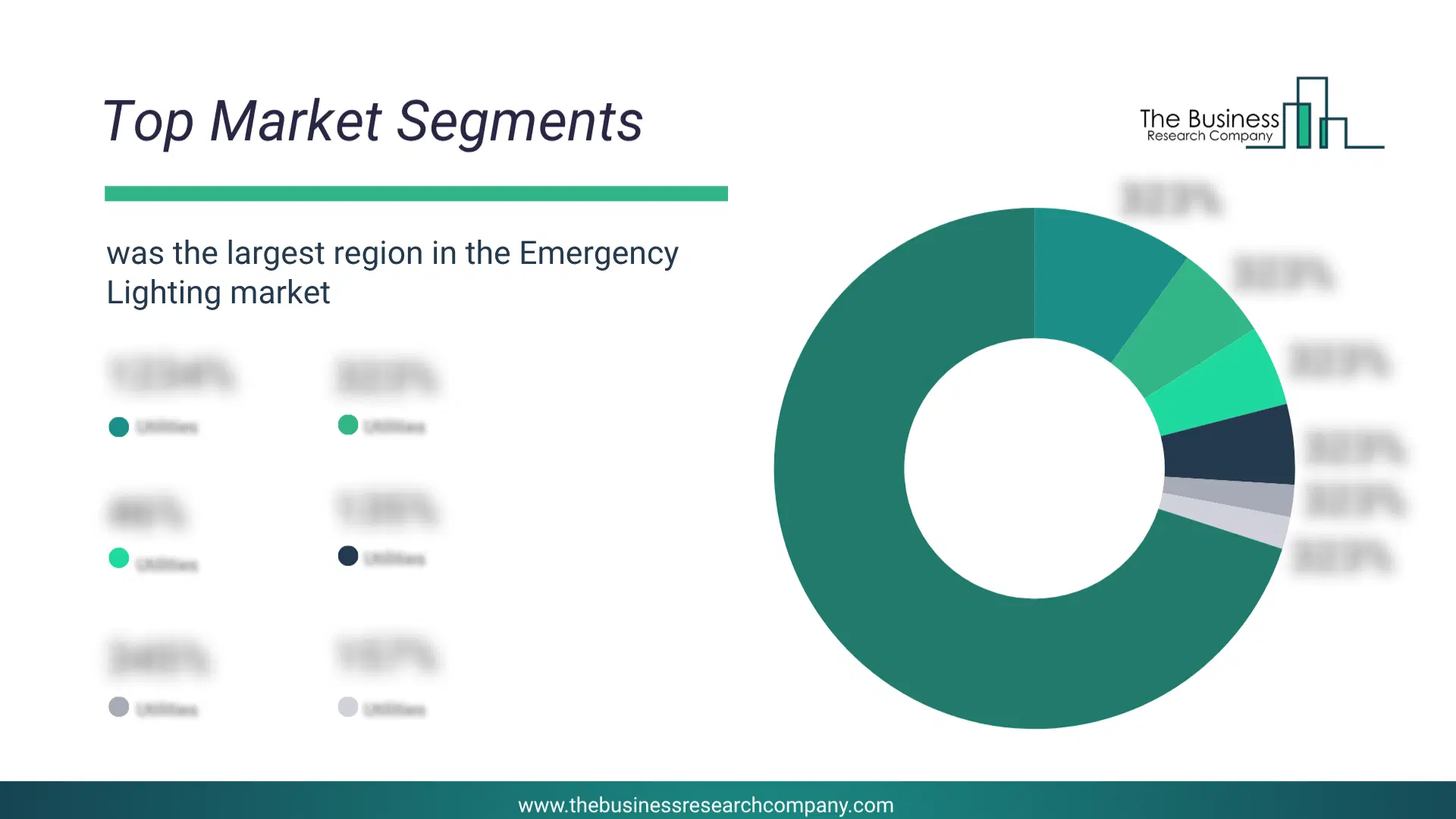
1) By Power System: Self-Contained, Central, Hybrid 2) By Offering: Hardware, Software, Services 3) By Battery: Ni–Cd, Ni–MH, LiFePO4, Lead–Acid 4) By End-User: Residential, Commercial, Industrial, Other End-Users Subsegments: 1) By Self-Contained: Battery-Powered Emergency Lights, LED Emergency Exit Signs, Self-Contained Emergency Ballasts 2) By Central: Central Battery Systems, Centralized Emergency Lighting Controls, Remote Lighting Units 3) By Hybrid: Hybrid Emergency Lighting Systems, Smart Hybrid Lighting Solutions, Modular Hybrid Emergency Lights The top segments in the emergency lighting market will be: • Self-Contained will reach $7 Billion by 2030. • Central will reach $2 Billion by 2030. • Hybrid will reach $1 Billion by 2030.What Is The Driver Of The Emergency Lighting Market?
The growing healthcare sector is expected to propel the growth of the emergency lighting market going forward. The healthcare sector encompasses a wide range of organizations and facilities dedicated to providing medical services, healthcare products, and support for the prevention, diagnosis, treatment, and management of illnesses and injuries and the overall well-being of individuals and communities. Emergency lighting in the healthcare sector serves a crucial role in ensuring the safety and well-being of patients, healthcare providers, and staff during emergency situations. Its primary purpose is to provide illumination when the regular power supply fails, such as during power outages, fires, or other emergencies. For instance, in April 2024, according to Global Genes, a US-based nonprofit organization, companies developing drugs for rare diseases raised $7.1 billion through public equity and debt financing in the first quarter of 2024 marking a 307% increase from the $1.8 billion raised during the same period in 2023. Therefore, the growing healthcare sector is driving the growth of the emergency lighting industry.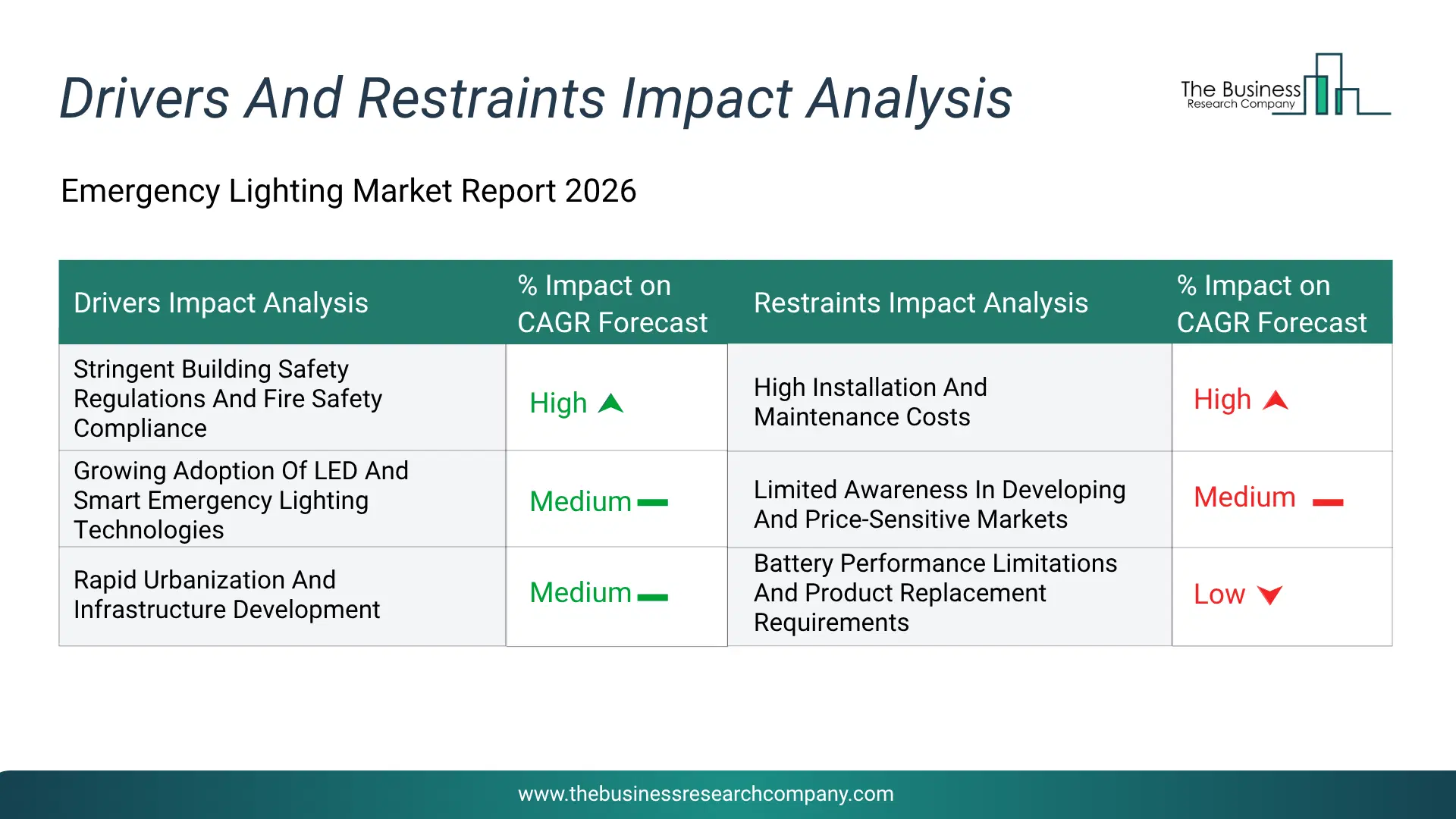
Infographic Chart Showing Key Market Drivers Analysis And Restraints For Emergency Lighting Market
The chart presents an impact analysis of key drivers and restraints, quantifying their relative influence on the market's growth rate and helping assess the balance between growth enablers and limiting factors. This chart offers a high-level perspective; the full report contains more detailed insights.
How Will The Drivers Impact Growth In The Global Emergency Lighting Market?
• Stringent Building Safety Regulations And Fire Safety Compliance (High) – During the forecast period, the stringent building safety regulations and fire safety compliance are expected to emerge as a major factor driving the expansion of the emergency lighting market by 2030. governments and regulatory authorities are strengthening safety standards that require commercial, industrial, healthcare, educational, transportation, and residential facilities to install certified emergency lighting systems capable of operating during power outages and emergency situations. mandatory inspections, testing, and replacement of lighting equipment are further encouraging investments in new installations and retrofit projects. • Growing Adoption Of LED And Smart Emergency Lighting Technologies (Medium) – During the forecast period, the growing adoption of LED and smart emergency lighting technologies is expected to emerge as a major factor driving the expansion of the emergency lighting market by 2030. organizations are increasingly replacing conventional lighting with energy-efficient LED systems equipped with IoT connectivity, wireless communication, remote monitoring, self-testing capabilities, and centralized management platforms. these intelligent solutions improve operational reliability, reduce maintenance costs, and simplify regulatory compliance, making them an integral part of modern smart buildings and connected infrastructure. • Rapid Urbanization And Infrastructure Development (Medium) – During the forecast period, the rapid urbanization and infrastructure development are expected to act as a key growth catalyst for the emergency lighting market by 2030. ongoing construction of commercial buildings, hospitals, airports, metro stations, educational institutions, manufacturing facilities, and large-scale residential projects is increasing the installation of emergency lighting systems to ensure safe evacuation and uninterrupted visibility during emergencies. smart city developments and modernization of aging infrastructure are further expanding long-term demand across public and private sectors.How Will The Restraints Impact Growth In The Global Emergency Lighting Market?
• High Installation And Maintenance Costs (High) – During the forecast period, high Installation And Maintenance Costs remain one of the major barriers limiting market expansion, particularly among small and medium-sized enterprises and budget-sensitive construction projects. Installing emergency lighting systems involves substantial initial investment in certified luminaires, emergency batteries, backup power systems, wiring infrastructure, controllers, monitoring software, and professional installation services. Beyond installation, organizations must perform routine inspections, functional testing, battery replacement, and preventive maintenance to comply with safety regulations and ensure reliable operation during emergencies. These recurring operational expenses significantly increase the total cost of ownership throughout the product lifecycle. Consequently, many organizations delay system upgrades or select lower-cost alternatives, particularly in developing countries where financial constraints remain a major concern. • Limited Awareness In Developing And Price-Sensitive Markets (Medium) – During the forecast period, limited Awareness In Developing And Price-Sensitive Markets continues to restrict the adoption of emergency lighting systems despite increasing concerns regarding public safety. In several emerging economies, many residential users, small businesses, and commercial property owners do not fully recognize the importance of emergency lighting or underestimate its role in protecting occupants during emergencies. Additionally, weaker enforcement of building regulations and inconsistent implementation of fire safety standards reduce the urgency for installing certified emergency lighting systems. Since many developers prioritize minimizing construction costs over investing in advanced safety infrastructure, emergency lighting installations are often postponed or limited to minimum regulatory requirements. This lack of awareness and uneven regulatory enforcement slows overall market penetration across several developing regions. • Battery Performance Limitations And Product Replacement Requirements (Medium) – During the forecast period, battery Performance Limitations And Product Replacement Requirements present an ongoing operational challenge for emergency lighting systems because battery performance naturally deteriorates over time due to repeated charging cycles, aging, temperature fluctuations, and environmental conditions. Since emergency lighting systems rely heavily on battery backup during power failures, organizations must conduct periodic inspections, discharge testing, battery health monitoring, and scheduled replacements to maintain regulatory compliance and ensure reliable operation. These maintenance requirements increase labor costs, operational complexity, and downtime, particularly in large commercial buildings with hundreds of emergency lighting units. Furthermore, concerns regarding battery disposal, environmental regulations, and replacement expenses may discourage some end users from adopting advanced emergency lighting systems, thereby limiting overall market growth.Key Players In The Global Emergency Lighting Market
Major companies operating in the emergency lighting market are Acuity Brands Inc., Syska LED Lights Private Limited, Eaton Corporation plc, Hubbell Incorporated, Legrand Group, OSRAM Licht AG, Signify Holding, Schneider Electric SE, Zumtobel Group AG, Daisalux S.A.U., Larson Electronics LLC, ABB Group, Beghelli S.p.A., Fagerhult AB, Glamox AS, HADLER GmbH, Herbert Waldmann GmbH & Co. KG, iGuzzini illuminazione S.p.A., LIGMAN Lighting Co. Ltd., Lumenpulse Group Inc., NVC Lighting Technology Corporation, Opple Lighting Co. Ltd., R. STAHL AG, Raytec Ltd., Safelincs Ltd., SCHRÉDER Group, SITEM S.p.A., Thorlux Lighting, Trilux GmbH & Co. KG, WISKA Hoppmann GmbH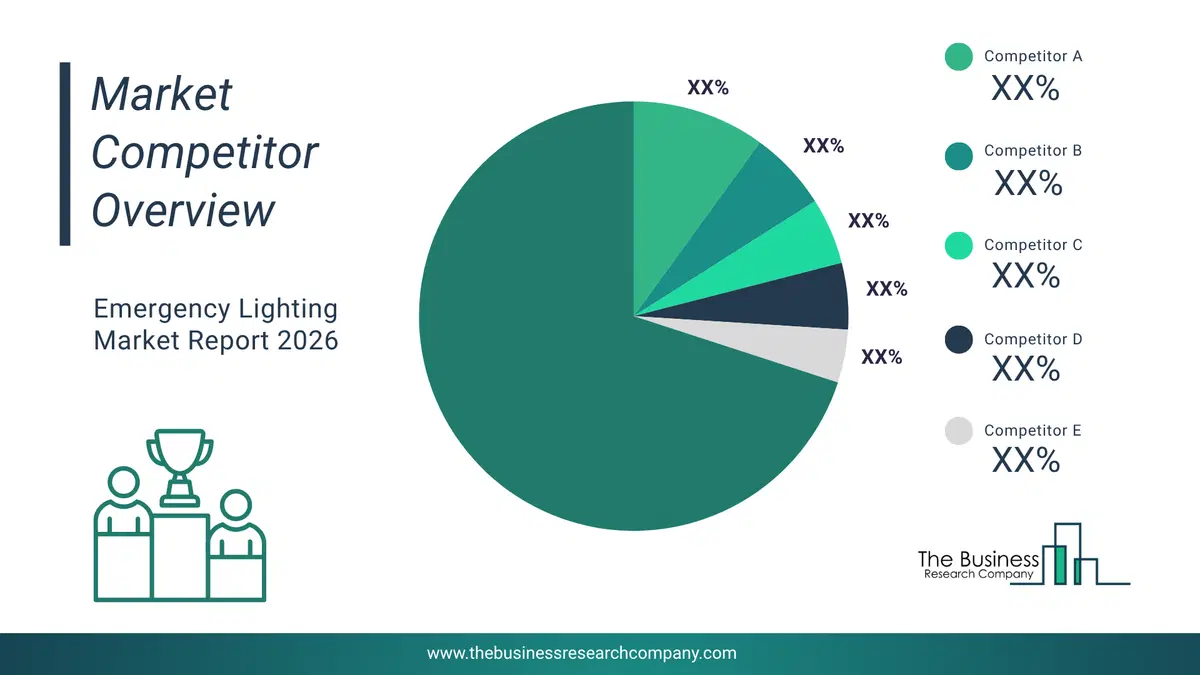
This chart is for illustrative purposes; the full report includes a detailed competitor analysis and comprehensive overview of the top 10 companies in the market.
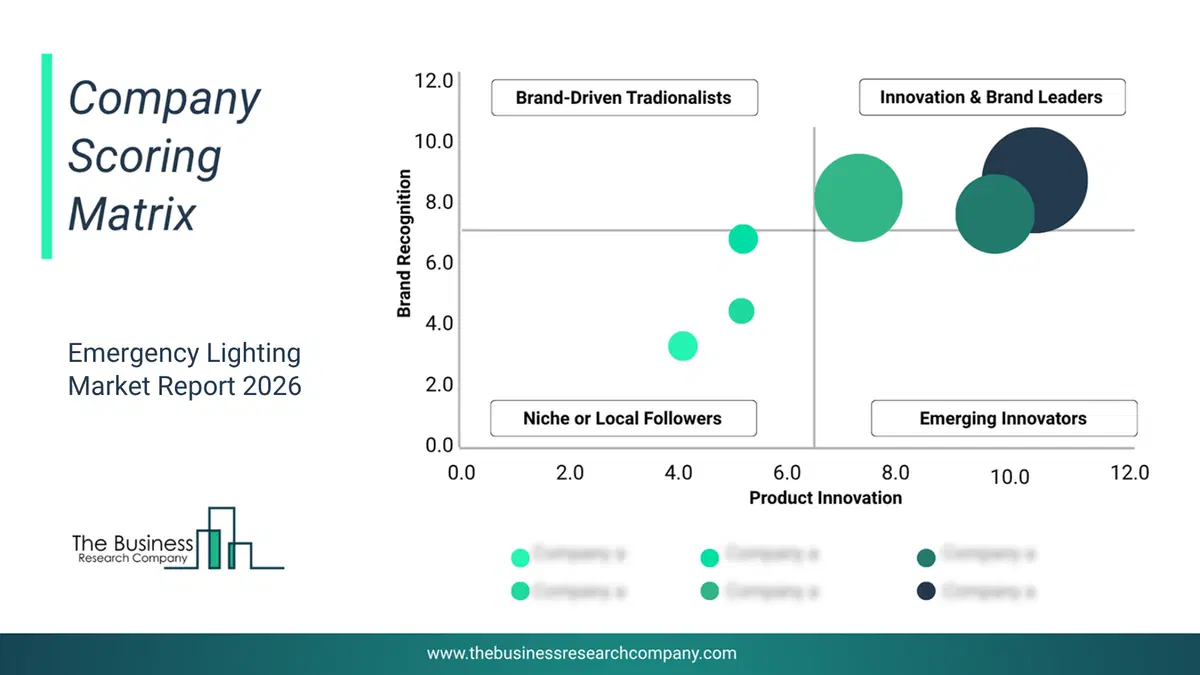
This chart maps companies by product innovation and brand strength, with bubble size indicating relative revenue, helping identify market leaders, challengers, and niche players. This is an illustrative chart; the full report provides a complete and accurate competitive analysis.
Global Emergency Lighting Market Trends and Insights
Major companies operating in the emergency lighting market are focused on introducing next-generation solutions to gain a competitive edge in the market. Next-generation solutions for emergency lighting are being developed to improve the effectiveness and efficiency of emergency lighting systems. For instance, in March 2023, Hochiki, a Japan-based manufacturer of fire detection and emergency lighting products, launched FIREscape Nepto, the next generation of emergency lighting systems. Like its predecessor, FIREscape Nepto complies with BS 5266 and is built on an addressable emergency lighting control panel with addressable, standalone LED luminaires and exit signs that operate at an exceptionally low operating voltage. The new system is also backwards compatible with the current panels and gadgets from the earlier FIREscape series, ensuring project continuity. In contrast to centralized battery or mains-powered systems, FIREscape Nepto can continuously self-test and monitor itself, making installation and maintenance of the new system quick, simple, and less expensive.What Are Latest Mergers And Acquisitions In The Emergency Lighting Market?
In February 2024, Myers Emergency Power Systems, a US-based designer and manufacturer of emergency lighting systems, acquired Storage Power Solutions (SPS) for an undisclosed amount. This acquisition strengthens Myers EPS's market position and aligns with its commitment to innovation and sustainability in energy solutions. Storage Power Solutions (SPS) is a Canada-based provider of highly efficient, reliable, and competitively priced energy storage systems.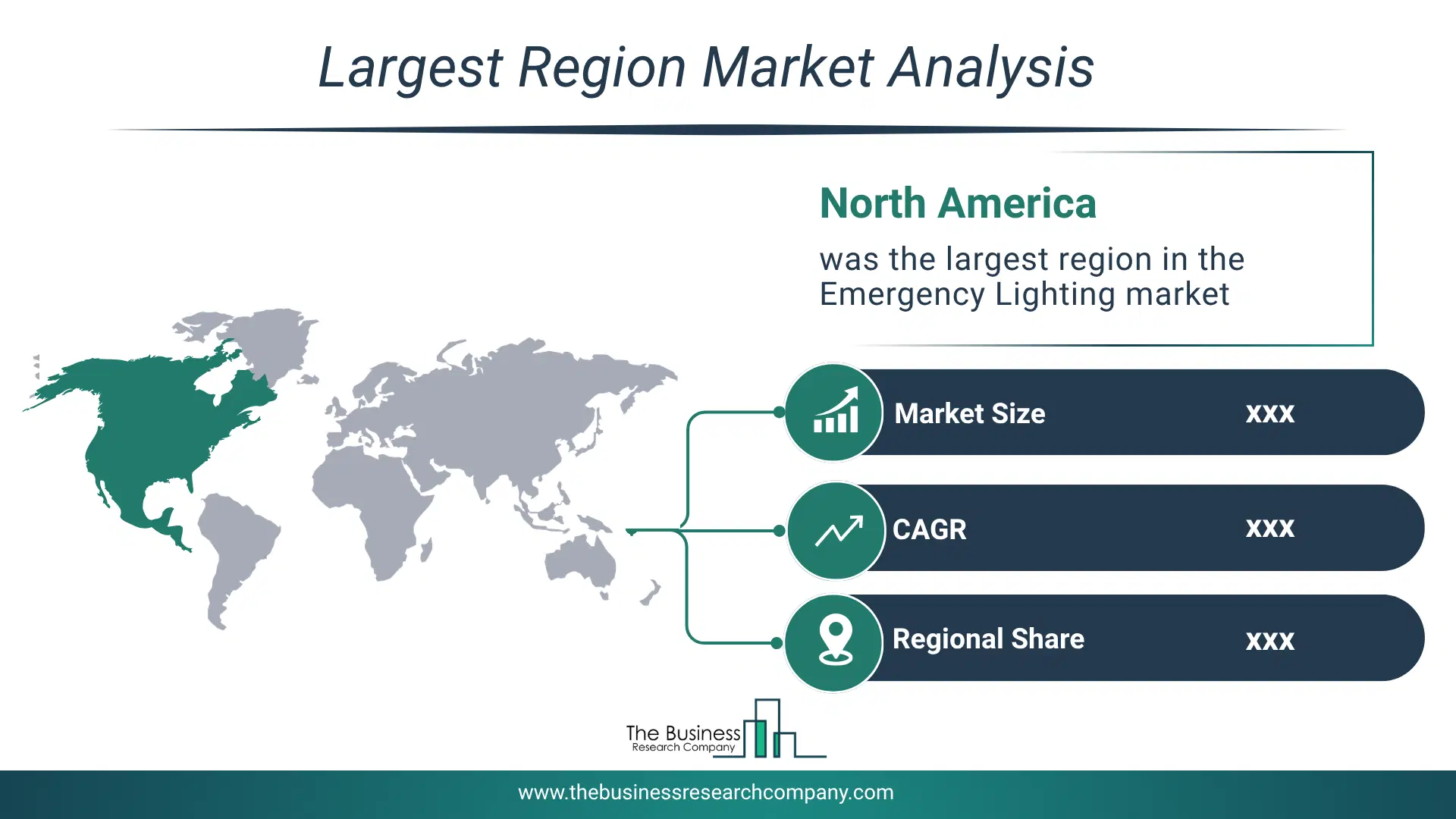
Regional Outlook
North America was the largest region in the emergency lighting market in 2025. Asia-Pacific is expected to be the fastest-growing region in the emergency lighting market during the forecast period. The regions covered in this market report are Asia-Pacific, South East Asia, Western Europe, Eastern Europe, North America, South America, Middle East, Africa. The countries covered in this market report are Australia, Brazil, China, France, Germany, India, Indonesia, Japan, Taiwan, Russia, South Korea, UK, USA, Canada, Italy, Spain.What Defines the Emergency Lighting Market?
The emergency lighting market consists of sales of central power supply systems, damp room trays, LED light strips, twin flood light. Values in this market are ‘factory gate’ values, that is the value of goods sold by the manufacturers or creators of the goods, whether to other entities (including downstream manufacturers, wholesalers, distributors and retailers) or directly to end customers. The value of goods in this market includes related services sold by the creators of the goods.How is Market Value Defined and Measured?
The market value is defined as the revenues that enterprises gain from the sale of goods and/or services within the specified market and geography through sales, grants, or donations in terms of the currency (in USD unless otherwise specified). The revenues for a specified geography are consumption values that are revenues generated by organizations in the specified geography within the market, irrespective of where they are produced. It does not include revenues from resales along the supply chain, either further along the supply chain or as part of other products.
This chart presents market attractiveness based on a quantitative evaluation of growth, competition, strategic alignment, and risk, offering a clear view of opportunity areas for decision-making. This chart is for illustrative purposes; the full report contains the complete analysis.

This chart highlights the Total Addressable Market (TAM) by estimating the maximum revenue opportunity using an assumption-driven approach, supporting strategic planning and opportunity sizing across markets. The chart is illustrative; the full report provides a more comprehensive analysis.
What Key Data and Analysis Are Included in the Emergency Lighting Market Report 2026?
The emergency lighting market research report is one of a series of new reports from The Business Research Company that provides market statistics, including industry global market size, regional shares, competitors with the market share, detailed market segments, market trends and opportunities, and any further data you may need to thrive in the emergency lighting industry. The market research report delivers a complete perspective of everything you need, with an in-depth analysis of the current and future state of the industry.Emergency Lighting Market Report 2026 Market Report Forecast Analysis
| Report Attribute | Details |
|---|---|
| Market Size Value In 2026 | $7.72 billion |
| Revenue Forecast In 2030 | $10.34 billion |
| Growth Rate | CAGR of 7.6% from 2026 to 2030 |
| Base Year For Estimation | 2025 |
| Actual Estimates/Historical Data | 2020-2025 |
| Forecast Period | 2026 - 2030 |
| Market Representation | Revenue in USD Billion and CAGR from 2026 to 2030 |
| Segments Covered | Power System, Offering, Battery, End-User |
| Regional Scope | Asia-Pacific, Western Europe, Eastern Europe, North America, South America, Middle East, Africa |
| Country Scope | The countries covered in the report are Australia, Brazil, China, France, Germany, India, Indonesia, Japan, Taiwan, Russia, South Korea, UK, USA, Canada, Italy, Spain. |
| Key Companies Profiled | Acuity Brands Inc., Syska LED Lights Private Limited, Eaton Corporation plc, Hubbell Incorporated, Legrand Group, OSRAM Licht AG, Signify Holding, Schneider Electric SE, Zumtobel Group AG, Daisalux S.A.U., Larson Electronics LLC, ABB Group, Beghelli S.p.A., Fagerhult AB, Glamox AS, HADLER GmbH, Herbert Waldmann GmbH & Co. KG, iGuzzini illuminazione S.p.A., LIGMAN Lighting Co. Ltd., Lumenpulse Group Inc., NVC Lighting Technology Corporation, Opple Lighting Co. Ltd., R. STAHL AG, Raytec Ltd., Safelincs Ltd., SCHRÉDER Group, SITEM S.p.A., Thorlux Lighting, Trilux GmbH & Co. KG, WISKA Hoppmann GmbH |
| Customization Scope | Request for Customization |
| Pricing And Purchase Options | Explore Purchase Options |