
Feed Acidulants Market Report 2026
Global Outlook – By Type (Lactic Acid, Formic Acid, Propionic Acid, Malic Acid, Citric Acid, Sorbic Acid, Acetic Acid, Other Types), By Form (Liquid, Dry), By Function (PH Control, Feed Efficiency, Flavor, Others Functions), By Application (Ruminants, Poultry, Swine, Aquaculture, Other Applications) – Market Size, Trends, Strategies, and Forecast to 2030
Feed Acidulants Market Overview
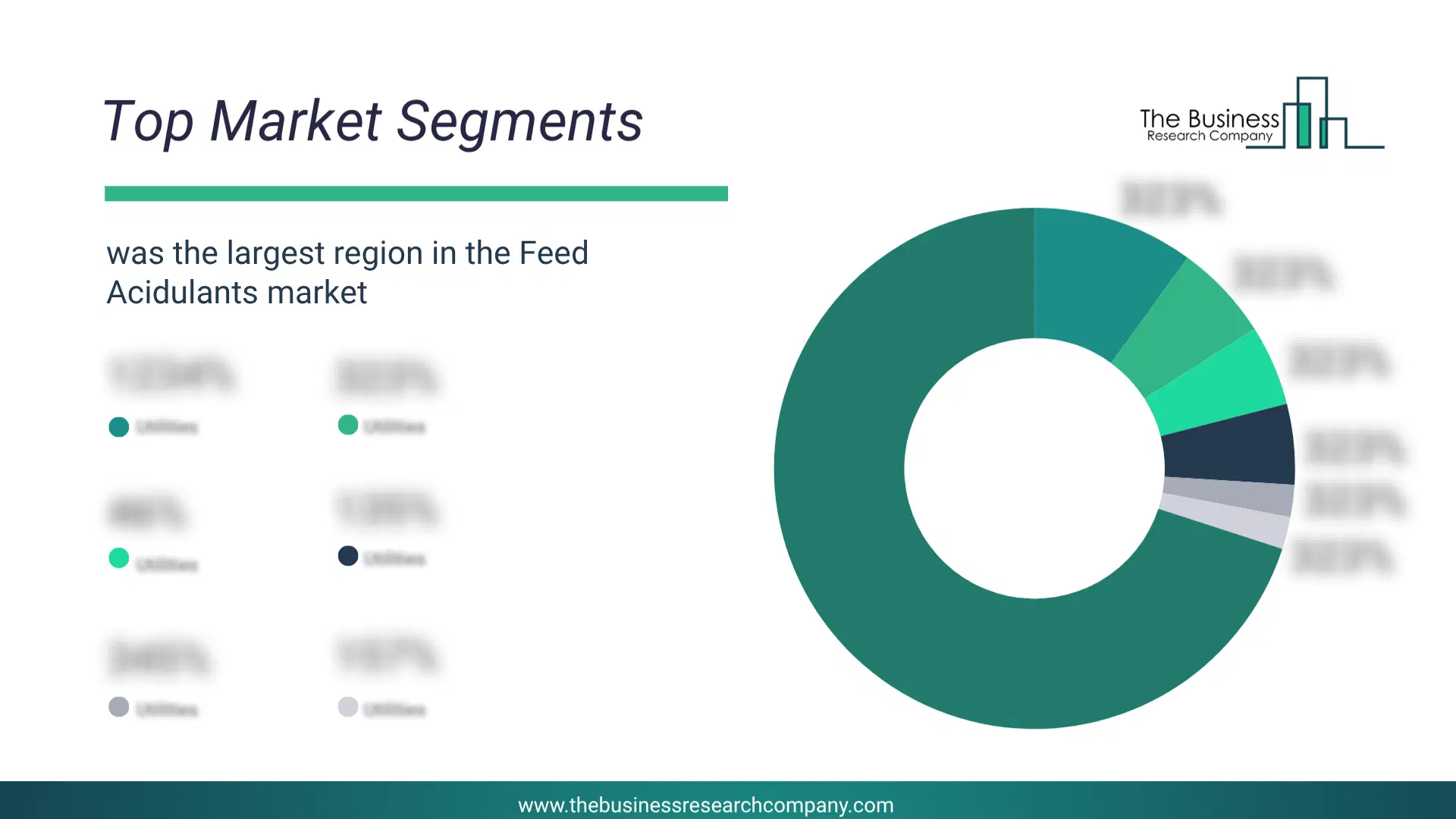
• Feed Acidulants market size has reached to $3.07 billion in 2025 • Expected to grow to $4.19 billion in 2030 at a compound annual growth rate (CAGR) of 6.3% • Growth Driver: Rising Demand For Animal-Based Products Driving Growth In The Market Due To Increasing Livestock Production And Health Focus • Market Trend: Advancements In Feed Pathogen Control Solutions For Enhanced Animal Health And Feed Safety • Asia-Pacific was the largest region in 2025.What Is Covered Under Feed Acidulants Market?
Feed acidulants are ingredients incorporated into animal diets to boost feed utilization, support gut health, and enhance overall animal performance. This acidification process enhances nutrient absorption, boosts enzyme activity, and can reduce the need for antibiotics. In addition to their antimicrobial effects, feed acidulants can help preserve the quality and stability of feed during storage by preventing mold and bacterial contamination. The main types of feed acidulants include lactic acid, formic acid, propionic acid, malic acid, citric acid, sorbic acid, acetic acid, and others. Lactic acid is an organic compound produced naturally through fermentation processes. It is available in both liquid and dry forms and is used for various functions such as pH control, feed efficiency, flavor, and others. It is applied for ruminants, poultry, swine, aquaculture, and others.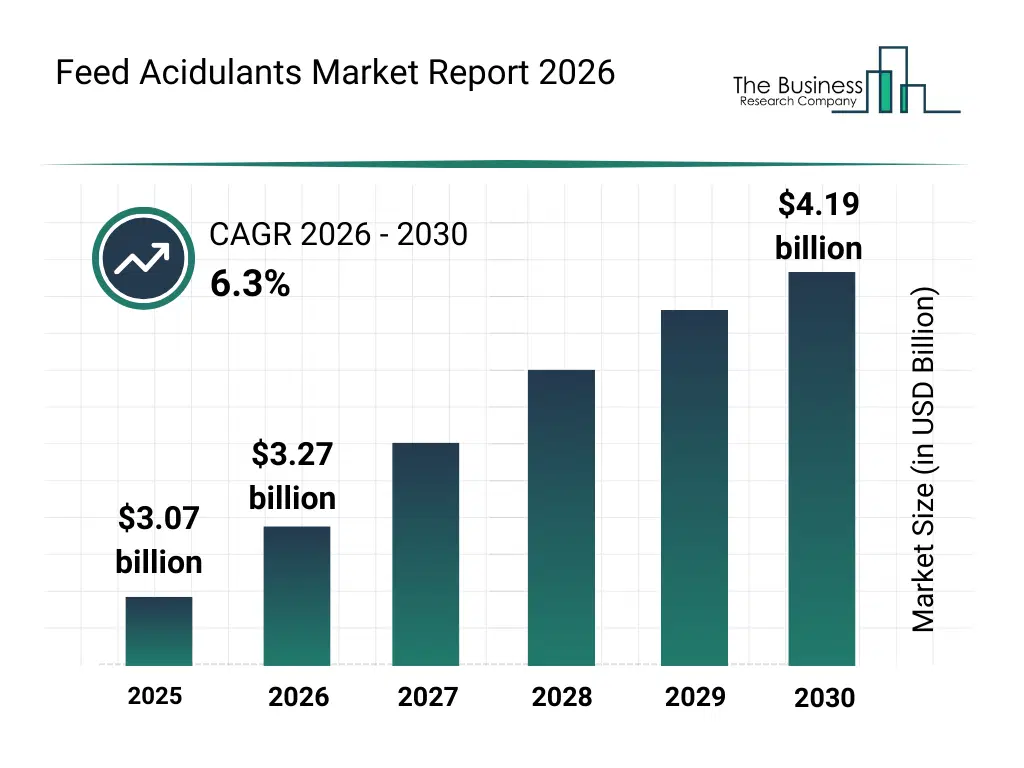
What Is The Feed Acidulants Market Size and Share 2026?
The feed acidulants market size has grown strongly in recent years. It will grow from $3.07 billion in 2025 to $3.27 billion in 2026 at a compound annual growth rate (CAGR) of 6.7%. The growth in the historic period can be attributed to increasing prevalence of livestock diseases, rising use of alternative feed additives, expansion of commercial livestock farming, growing demand for high-quality animal protein, increased focus on feed preservation.What Is The Feed Acidulants Market Growth Forecast?
The feed acidulants market size is expected to see strong growth in the next few years. It will grow to $4.19 billion in 2030 at a compound annual growth rate (CAGR) of 6.3%. The growth in the forecast period can be attributed to growing shift toward antibiotic-free production, rising adoption of precision livestock nutrition, increasing demand for organic animal farming, expansion of intensive aquaculture systems, growing investment in advanced feed formulation technologies. Major trends in the forecast period include rising shift toward antibiotic-free animal production, increasing demand for enhanced gut health solutions, growing adoption of organic and natural feed ingredients, expansion of precision nutrition practices, growing use of acidulants for feed shelf-life extension.
Global Feed Acidulants Market Segmentation
1) By Type: Lactic Acid, Formic Acid, Propionic Acid, Malic Acid, Citric Acid, Sorbic Acid, Acetic Acid, Other Types 2) By Form: Liquid, Dry 3) By Function: PH Control, Feed Efficiency, Flavor, Others Functions 4) By Application: Ruminants, Poultry, Swine, Aquaculture, Other Applications Subsegments: 1) By Lactic Acid: D-Lactic Acid, L-Lactic Acid, DL-Lactic Acid 2) By Formic Acid: 85% Formic Acid, 94% Formic Acid 3) By Propionic Acid: 80% Propionic Acid, 85% Propionic Acid 4) By Malic Acid: L-Malic Acid, DL-Malic Acid 5) By Citric Acid: Anhydrous Citric Acid, Monohydrate Citric Acid 6) By Sorbic Acid: 99% Sorbic Acid, 95% Sorbic Acid 7) By Acetic Acid: Glacial Acetic Acid, Diluted Acetic Acid 8) By Other Types: Tartaric Acid, Fumaric Acid, Phosphoric Acid, Oxalic AcidWhat Is Driver Of The Feed Acidulants Market?
The increasing consumption of animal-based products is anticipated to propel the growth of the feed acidulants market in the coming years. Animal-based products are materials or goods derived from animals, including their meat, milk, eggs, skin, or other body parts, used for food, clothing, or various industrial purposes. Consumption of animal-based products is rising due to increasing income levels, which allow more people, especially in developing countries, to include protein-rich foods such as meat and dairy in their diets as symbols of improved living standards. The growing consumption of animal-based products supports the demand for feed acidulants, as higher livestock production necessitates improved animal health and feed efficiency, with acidulants playing a critical role in optimizing digestion and gut health. For instance, in March 2023, according to the Australian Bureau of Statistics, an Australia-based government agency, pig meat production rose by 5.9% in the March 2023 quarter, reaching 117,512 tonnes, up from 111,000 tonnes in December 2022. Therefore, the increasing consumption of animal-based products will drive the growth of the feed acidulants industry.Key Players In The Global Feed Acidulants Market
Major companies operating in the feed acidulants market are Cargill Incorporated, Archer Daniels Midland Company, BASF SE, Evonik Industries AG, Univar Solutions Inc., Eastman Chemical Company, DSM-Firmenich, Nutreco NV, Adisseo SAS, Tate & Lyle PLC, Corbion NV, Kemin Industries Inc., Perstorp Holding AB, Batory Foods Inc., Bartek Ingredients Inc., RP International Limited, FBC Industries Inc., Hawkins Watts, Suntran Industrial Group Ltd., Sunnycare Inc.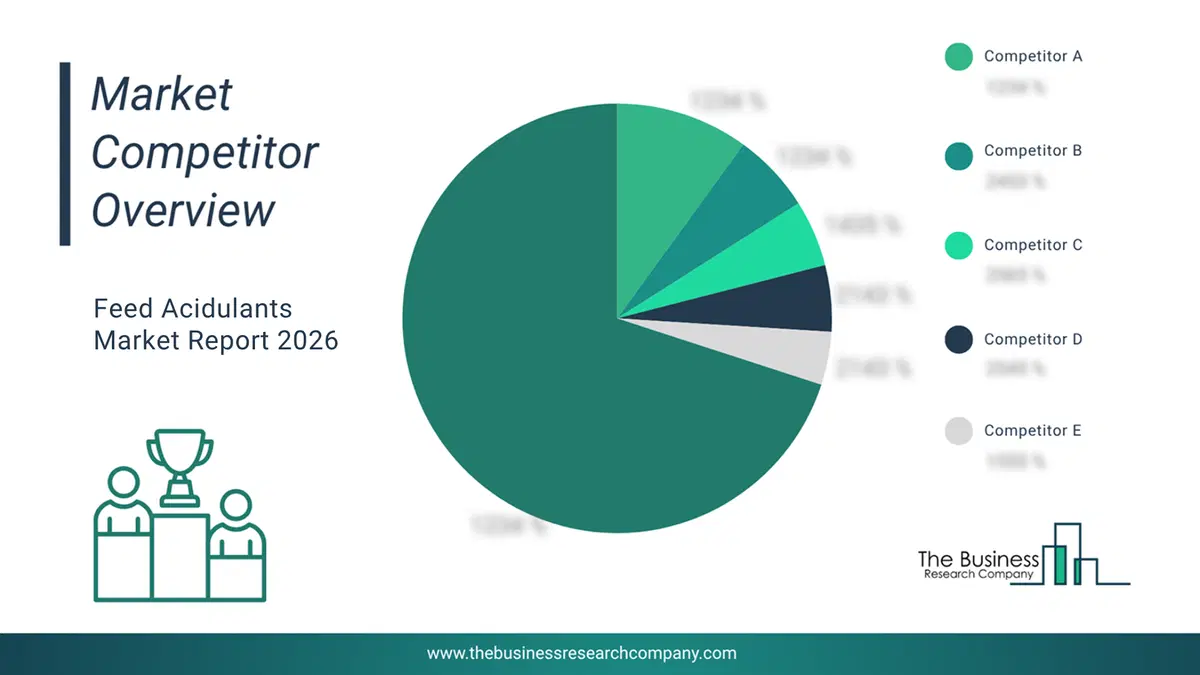
This chart is for illustrative purposes; the full report includes a detailed competitor analysis and comprehensive overview of the top 10 companies in the market.
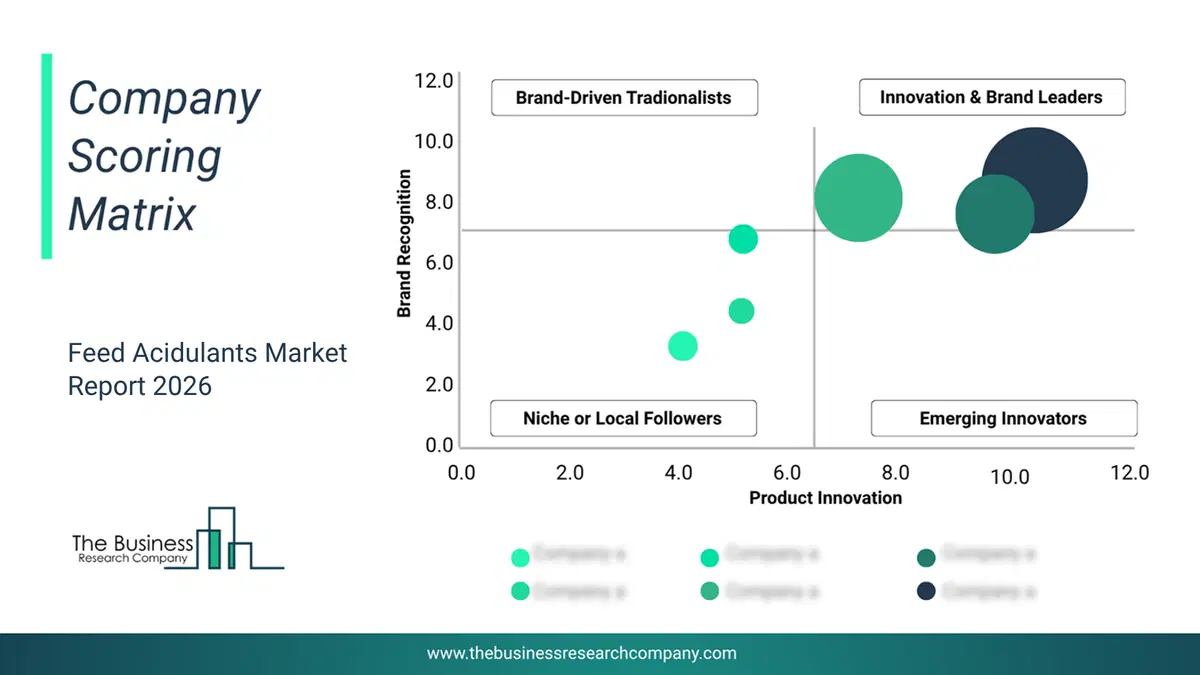
This chart maps companies by product innovation and brand strength, with bubble size indicating relative revenue, helping identify market leaders, challengers, and niche players. This is an illustrative chart; the full report provides a complete and accurate competitive analysis.
Global Feed Acidulants Market Trends and Insights
Major companies operating in the feed acidulants market are focusing on developing innovative products, such as feed pathogen control solutions, to enhance feed efficiency and improve digestion. Feed pathogen control solutions are specialized interventions used in animal feed to inhibit or destroy harmful pathogens, thereby promoting feed hygiene and protecting livestock health. For instance, in March 2025, Kemin Industries, a US-based biotechnology company, launched PROSIDIUM, a feed pathogen control solution. It is an innovative feed pathogen control solution developed through extensive research and designed to help raw material and animal feed producers ensure the safety of animal feed. Based on powerful peroxy acids, it effectively disrupts the cell membrane of pathogens, reducing the risk of salmonella and viral transmission in animal feed. The residual acids provide continued protection, maintaining feed safety. This patent-pending solution not only mitigates pathogen risks but also elevates industry standards, promoting improved biosecurity, healthier livestock, and safer animal protein production.What Are Latest Mergers And Acquisitions In The Feed Acidulants Market? DSM And Firmenich Merger To Lead In Flavors Fragrances And Nutritional Ingredients
In May 2023, DSM, a Netherlands-based manufacturer of feed acidulants, merged with Firmenich to integrate their businesses in food, drink, and flavor. The merger brings together the strengths of both companies in the flavors, fragrances, and nutritional ingredients sectors. As a result, DSM-Firmenich is poised to lead the way in reinventing, manufacturing, and combining essential nutrients, flavors, and fragrances. Firmenich is a Switzerland-based fragrance and flavor company.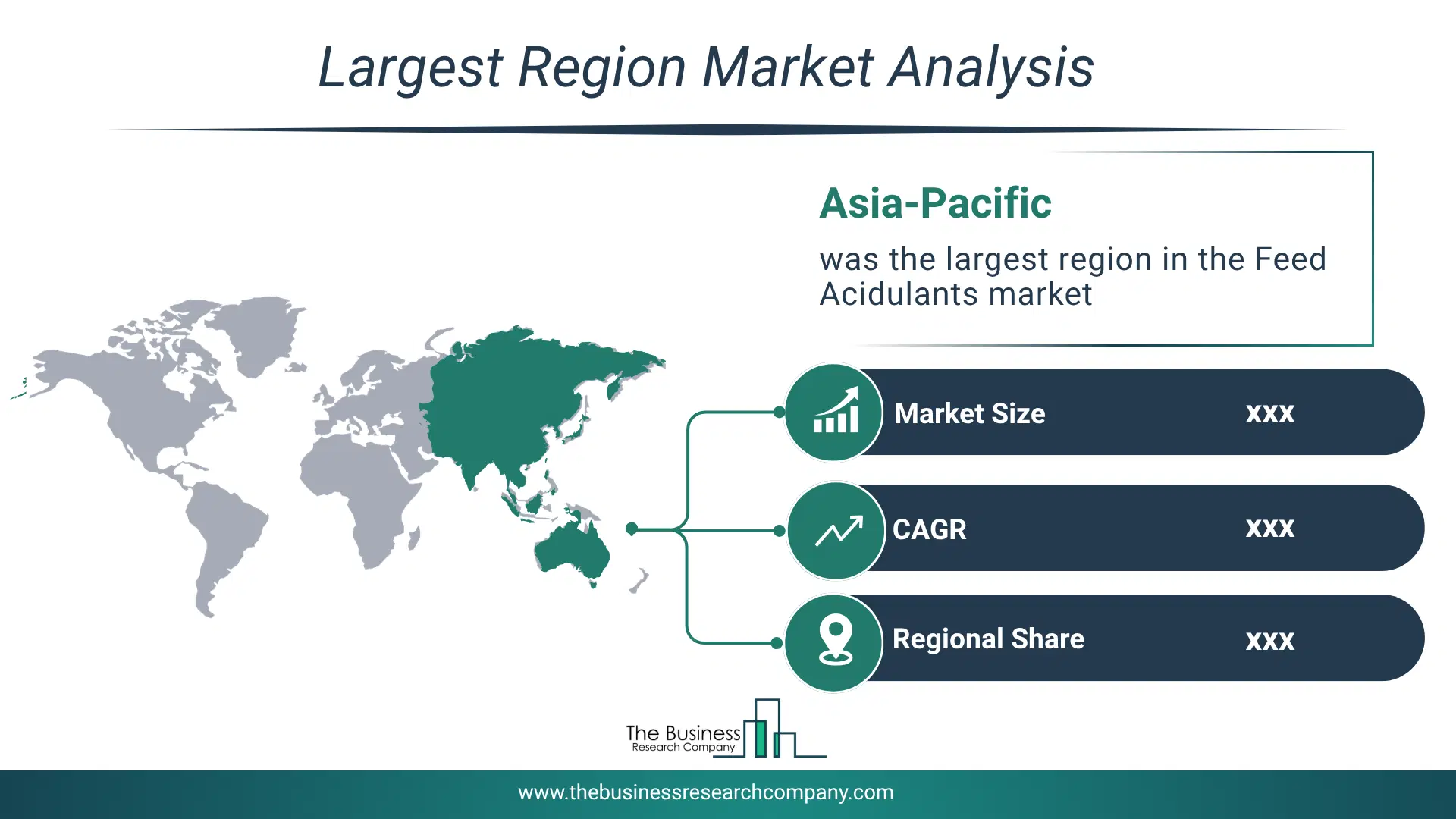
Regional Outlook
Asia-Pacific was the largest region in the feed acidulants market in 2025. The regions covered in this market report are Asia-Pacific, South East Asia, Western Europe, Eastern Europe, North America, South America, Middle East, Africa. The countries covered in this market report are Australia, Brazil, China, France, Germany, India, Indonesia, Japan, Taiwan, Russia, South Korea, UK, USA, Canada, Italy, SpainWhat Defines the Feed Acidulants Market?
The feed acidulants market consists of sales of encapsulated acidulants, probiotic-acidulant blends, mycotoxin binders with acidulants, and species-specific acidulants. Values in this market are ‘factory gate’ values, that is the value of goods sold by the manufacturers or creators of the goods, whether to other entities (including downstream manufacturers, wholesalers, distributors and retailers) or directly to end customers. The value of goods in this market includes related services sold by the creators of the goods.How is Market Value Defined and Measured?
The market value is defined as the revenues that enterprises gain from the sale of goods and/or services within the specified market and geography through sales, grants, or donations in terms of the currency (in USD unless otherwise specified). The revenues for a specified geography are consumption values that are revenues generated by organizations in the specified geography within the market, irrespective of where they are produced. It does not include revenues from resales along the supply chain, either further along the supply chain or as part of other products.
This chart presents market attractiveness based on a quantitative evaluation of growth, competition, strategic alignment, and risk, offering a clear view of opportunity areas for decision-making. This chart is for illustrative purposes; the full report contains the complete analysis.

This chart highlights the Total Addressable Market (TAM) by estimating the maximum revenue opportunity using an assumption-driven approach, supporting strategic planning and opportunity sizing across markets. The chart is illustrative; the full report provides a more comprehensive analysis.
What Key Data and Analysis Are Included in the Feed Acidulants Market Report 2026?
The feed acidulants market research report is one of a series of new reports from The Business Research Company that provides market statistics, including industry global market size, regional shares, competitors with the market share, detailed market segments, market trends and opportunities, and any further data you may need to thrive in the feed acidulants industry. The market research report delivers a complete perspective of everything you need, with an in-depth analysis of the current and future state of the industry.Feed Acidulants Market Report Forecast Analysis
| Report Attribute | Details |
|---|---|
| Market Size Value In 2026 | $3.27 billion |
| Revenue Forecast In 2030 | $4.19 billion |
| Growth Rate | CAGR of 6.3% from 2026 to 2030 |
| Base Year For Estimation | 2025 |
| Actual Estimates/Historical Data | 2020-2025 |
| Forecast Period | 2026 - 2030 |
| Market Representation | Revenue in USD Billion and CAGR from 2026 to 2030 |
| Segments Covered | Type, Form, Function, Application |
| Regional Scope | Asia-Pacific, Western Europe, Eastern Europe, North America, South America, Middle East, Africa |
| Country Scope | The countries covered in the report are Australia, Brazil, China, France, Germany, India, Indonesia, Japan, Taiwan, Russia, South Korea, UK, USA, Canada, Italy, Spain |
| Key Companies Profiled | Cargill Incorporated, Archer Daniels Midland Company, BASF SE, Evonik Industries AG, Univar Solutions Inc., Eastman Chemical Company, DSM-Firmenich, Nutreco NV, Adisseo SAS, Tate & Lyle PLC, Corbion NV, Kemin Industries Inc., Perstorp Holding AB, Batory Foods Inc., Bartek Ingredients Inc., RP International Limited, FBC Industries Inc., Hawkins Watts, Suntran Industrial Group Ltd., Sunnycare Inc. |
| Customization Scope | Request for Customization |
| Pricing And Purchase Options | Explore Purchase Options |