
Acidity Regulators Market Report 2026
Global Outlook – By Product (Citric Acid, Phosphoric Acid, Acetic Acid, Lactic Acid, Other Products), By Source (Natural, Synthetic), By Application (Beverages, Bakery Products, Confectionery, Processed Food, Dairy Products, Dressings And Condiments, Other Applications) – Market Size, Trends, Strategies, and Forecast to 2030
Acidity Regulators Market Overview
• Acidity Regulators market size has reached to $8.23 billion in 2025 • Expected to grow to $12.56 billion in 2030 at a compound annual growth rate (CAGR) of 8.9% • Growth Driver: The Increase In Demand In The Food And Beverage Industry • Market Trend: Innovative Heartburn Relief Solutions Address Unmet Needs In GERD Treatment • North America was the largest region and fastest growing region.What Is Covered Under Acidity Regulators Market?
Acidity regulators refer to a class of acidulants that regulate the growth of harmful bacteria while modifying acidity to maintain food safety and improve flavor. It is used to change and regulate the acidity or alkalinity at a particular level that is crucial for processing, flavor, and food safety. The main products of acidity regulators are citric acid, phosphoric acid, acetic acid, maleic acid, lactic acid, and others. Phosphoric acid refers to a crystalline liquid that is tasteless, colorless, and contains the element phosphorus that is used as an acidifying ingredient in soda and cola to add sour flavor. The various sources include natural and synthetic. These are used in various applications such as beverages, bakery products, confectionery, processed food, dairy products, dressings and condiments, and others.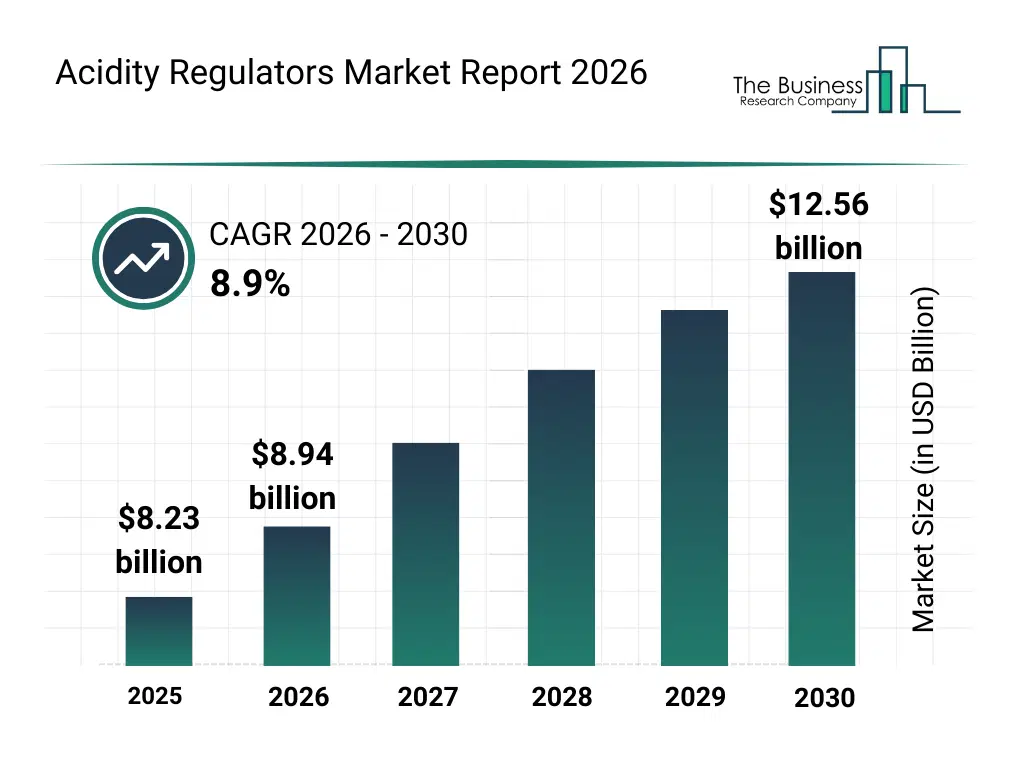
What Is The Acidity Regulators Market Size and Share 2026?
The acidity regulators market size has grown strongly in recent years. It will grow from $8.23 billion in 2025 to $8.94 billion in 2026 at a compound annual growth rate (CAGR) of 8.6%. The growth in the historic period can be attributed to growth of processed food consumption, rising use of preservatives and stabilizers, expansion of beverage manufacturing, increasing adoption of citric and lactic acid, regulatory approval of food additives.What Is The Acidity Regulators Market Growth Forecast?
The acidity regulators market size is expected to see strong growth in the next few years. It will grow to $12.56 billion in 2030 at a compound annual growth rate (CAGR) of 8.9%. The growth in the forecast period can be attributed to increasing demand for natural food ingredients, rising focus on extended shelf life, expansion of ready-to-eat food products, growing use in dairy and bakery segments, increasing investment in food innovation. Major trends in the forecast period include increasing demand for clean-label acidulants, rising use of natural acidity regulators, growing application in processed foods, expansion of shelf-life enhancement solutions, enhanced focus on food safety compliance.
Global Acidity Regulators Market Segmentation
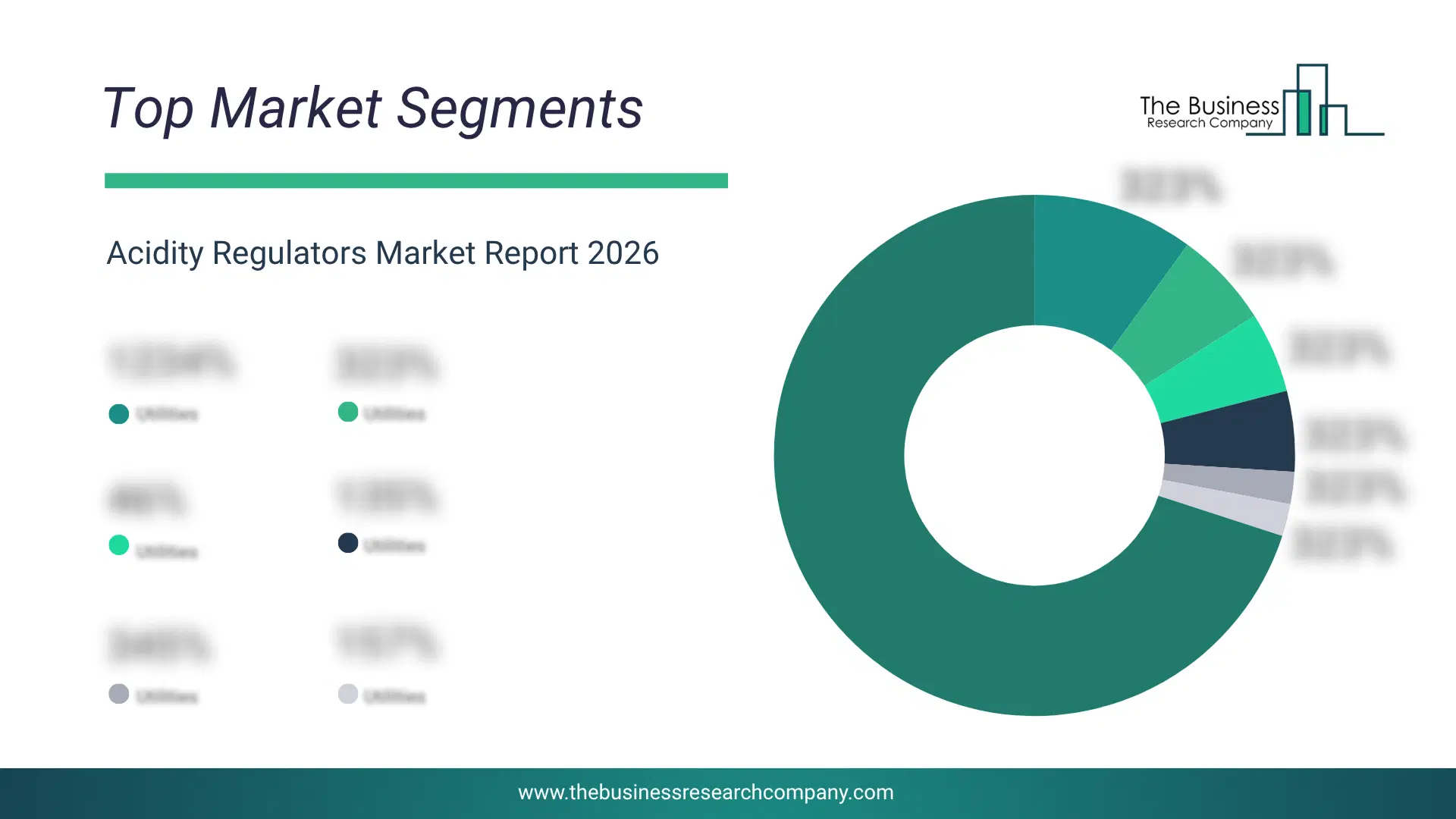
1) By Product: Citric Acid, Phosphoric Acid, Acetic Acid, Lactic Acid, Other Products 2) By Source: Natural, Synthetic 3) By Application: Beverages, Bakery Products, Confectionery, Processed Food, Dairy Products, Dressings And Condiments, Other Applications Subsegments: 1) By Citric Acid: Anhydrous Citric Acid, Monohydrate Citric Acid 2) By Phosphoric Acid: Food Grade Phosphoric Acid, High-Purity Phosphoric Acid 3) By Acetic Acid: Glacial Acetic Acid, Dilute Acetic Acid 4) By Lactic Acid: Natural Lactic Acid, Synthetic Lactic Acid 5) By Other Products: Tartaric Acid, Ascorbic Acid, Fumaric AcidWhat Are The Drivers Of The Acidity Regulators Market?
The increase in demand for acidity regulators in the food and beverage industry is expected to boost the growth of the acidity regulators market going forward. The food and beverage industry refers to all businesses that handle the processing, packaging, and distribution of uncooked food. Acidity regulators are used to alter and regulate the pH or alkalinity at a precise level in the food that is crucial for processing, flavor, and food safety. For instance, in May 2024, according to the 2024 ANNUAL REPORT published by the British Soft Drinks Association, a UK-based trade association, the total volume of soft drinks consumed increased to 15,343 million liters in 2023, with an intermediate total of 14,912 million liters in 2022. Therefore, the increase in demand for food and beverages is driving the growth of the acidity regulators industry. The increased demand for processed foods supported the growth of the acidity regulators market. Processed food is a food item that has had a series of mechanical or chemical operations performed on it to change or preserve it. The addition of preservatives in processed foods maintains the quality of food and helps to reduce the spoilage by microorganisms and can alter their natural taste. Acidity regulators are used to enhance flavors, improve texture, and contribute to the safety of these products. For instance, in April 2024, according to the data published by the National Association of Convenience Stores (NACS), a US-based trade association, total industry foodservice sales made up 26.9% of in-store sales in 2023, rising from 25.6% in 2022, with prepared food sales increasing by 12.2% per store per month, making it the leading in-store category. Therefore, the increased demand for processed foods drove the growth of the acidity regulators industry.Key Players In The Global Acidity Regulators Market
Major companies operating in the acidity regulators market are Cargill, Archer Daniels Midland Company, Tate & Lyle PLC, Jungbunzlauer Suisse AG, Corbion N.V., DSM-Firmenich, Fufeng Group Company Limited, COFCO Biochemical (AnHui) Co., Ltd., Shandong Ensign Industry Co., Ltd., Gadot Biochemical Industries Ltd., Bartek Ingredients Inc., RZBC Group, Henan Jindan Lactic Acid Technology Co., Ltd., Galactic S.A., ATP Group, Weifang Ensign Industry Co., Ltd., TTCA Co., Ltd., Hawkins, Inc., Meihua Holdings Group Co., Ltd., Shandong Baisheng Biotechnology Co., Ltd.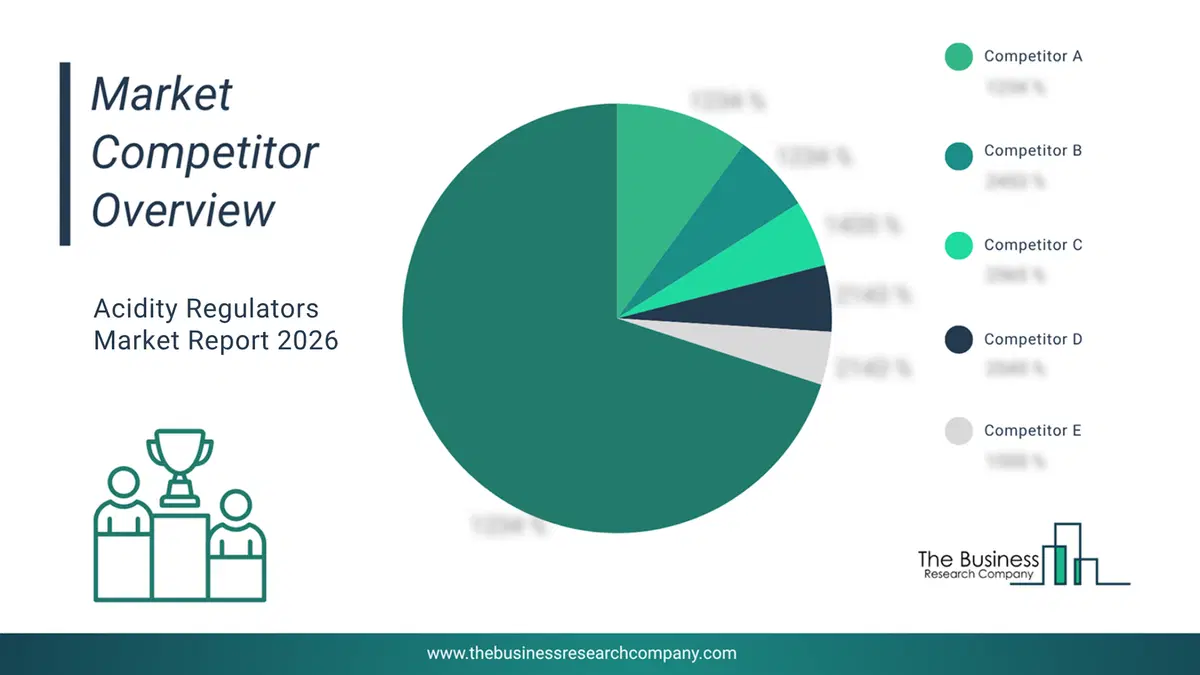
This chart is for illustrative purposes; the full report includes a detailed competitor analysis and comprehensive overview of the top 10 companies in the market.
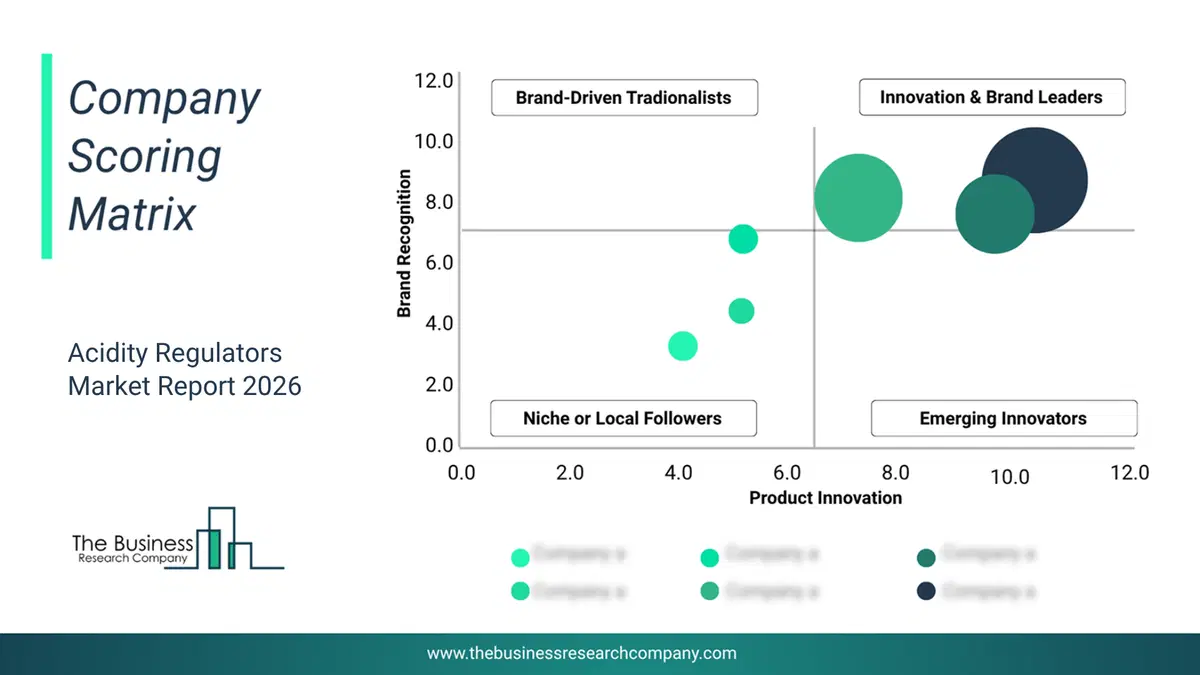
This chart maps companies by product innovation and brand strength, with bubble size indicating relative revenue, helping identify market leaders, challengers, and niche players. This is an illustrative chart; the full report provides a complete and accurate competitive analysis.
Global Acidity Regulators Market Trends and Insights
Major companies operating in the acidity regulators market are focusing on developing innovative products, such as advanced heartburn relief solutions, to address the substantial unmet need for effective and innovative treatment options for millions of patients suffering from frequent heartburn associated with non-erosive GERD. An advanced heartburn relief solution typically refers to medications such as proton pump inhibitors (PPIs) and H2-receptor antagonists, which effectively reduce stomach acid production to alleviate symptoms of gastroesophageal reflux disease (GERD) and severe heartburn. For instance, in July 2024, Phathom Pharmaceuticals, Inc., a US-based pharmaceutical company, announced US FDA approval for VOQUEZNA. This offers rapid and significant relief from heartburn associated with non-erosive GERD, providing patients with more complete 24-hour heartburn-free days compared to traditional treatments. Its approval marks the first major innovation in GERD therapy in over 30 years, addressing a substantial unmet need for effective acid suppression in millions of patients suffering from frequent heartburn.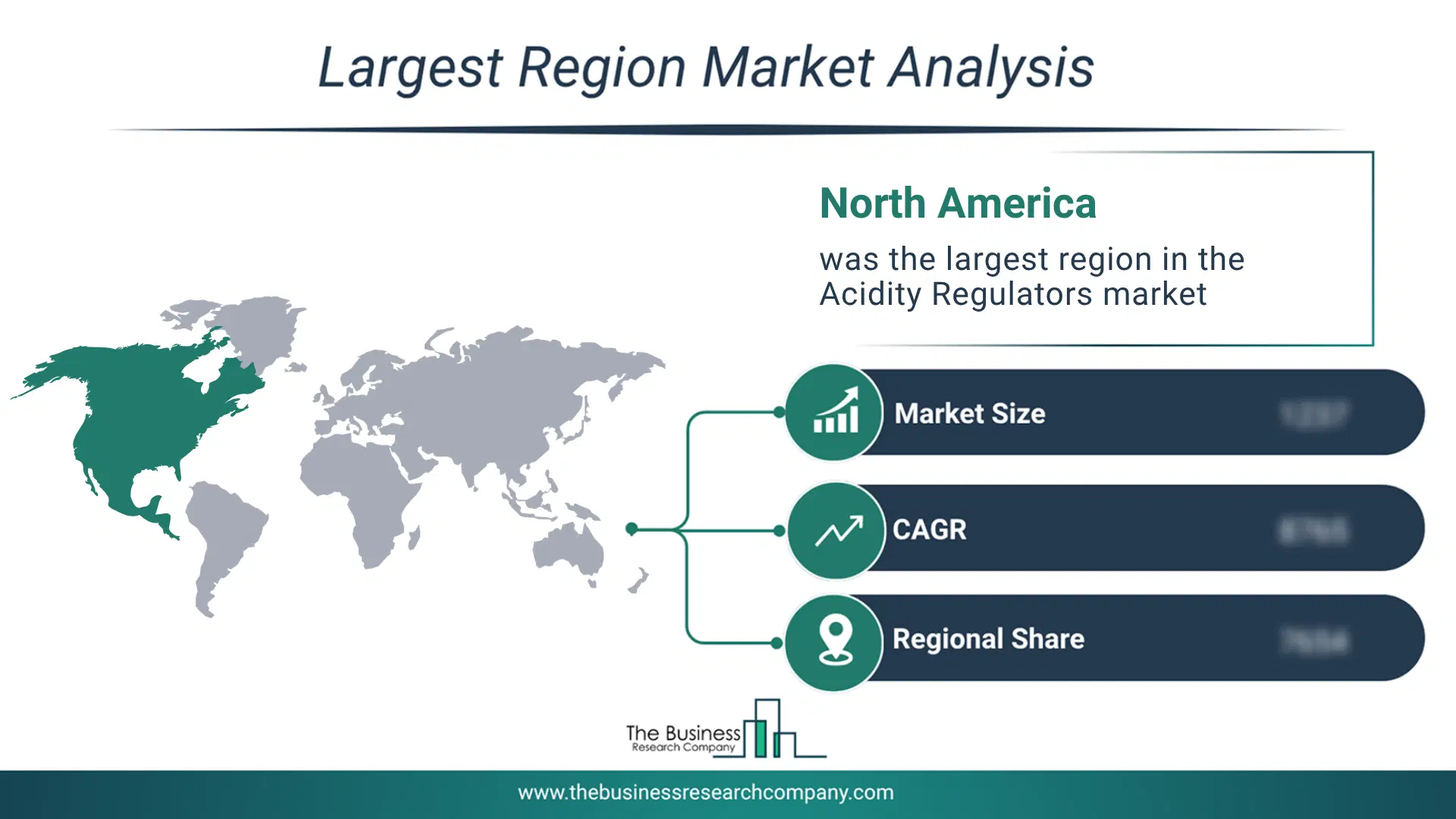
Regional Insights
North America was the largest region in the acidity regulators market in 2025. The regions covered in this market report are Asia-Pacific, South East Asia, Western Europe, Eastern Europe, North America, South America, Middle East, Africa The countries covered in this market report are Australia, Brazil, China, France, Germany, India, Indonesia, Japan, Taiwan, Russia, South Korea, UK, USA, Canada, Italy, SpainWhat Defines the Acidity Regulators Market?
The acidity regulator market consists of sales of sodium citrate, calcium acetate, and tartaric acid. Values in this market are ‘factory gate’ values, that is the value of goods sold by the manufacturers or creators of the goods, whether to other entities (including downstream manufacturers, wholesalers, distributors, and retailers) or directly to end customers. The value of goods in this market includes related services sold by the creators of the goods.How is Market Value Defined and Measured?
The market value is defined as the revenues that enterprises gain from the sale of goods and/or services within the specified market and geography through sales, grants, or donations in terms of the currency (in USD unless otherwise specified). The revenues for a specified geography are consumption values that are revenues generated by organizations in the specified geography within the market, irrespective of where they are produced. It does not include revenues from resales along the supply chain, either further along the supply chain or as part of other products.
This chart presents market attractiveness based on a quantitative evaluation of growth, competition, strategic alignment, and risk, offering a clear view of opportunity areas for decision-making. This chart is for illustrative purposes; the full report contains the complete analysis.

This chart highlights the Total Addressable Market (TAM) by estimating the maximum revenue opportunity using an assumption-driven approach, supporting strategic planning and opportunity sizing across markets. The chart is illustrative; the full report provides a more comprehensive analysis.
What Key Data and Analysis Are Included in the Acidity Regulators Market Report 2026?
The acidity regulators market research report is one of a series of new reports from The Business Research Company that provides market statistics, including industry global market size, regional shares, competitors with the market share, detailed market segments, market trends and opportunities, and any further data you may need to thrive in the acidity regulators industry. The market research report delivers a complete perspective of everything you need, with an in-depth analysis of the current and future state of the industry.Acidity Regulators Market Report Forecast Analysis
| Report Attribute | Details |
|---|---|
| Market Size Value In 2026 | $8.94 billion |
| Revenue Forecast In 2030 | $12.56 billion |
| Growth Rate | CAGR of 8.6% from 2026 to 2030 |
| Base Year For Estimation | 2025 |
| Actual Estimates/Historical Data | 2020-2025 |
| Forecast Period | 2026 - 2030 |
| Market Representation | Revenue in USD Billion and CAGR from 2026 to 2030 |
| Segments Covered | Product, Source, Application |
| Regional Scope | Asia-Pacific, Western Europe, Eastern Europe, North America, South America, Middle East, Africa |
| Country Scope | The countries covered in this market report are Australia, Brazil, China, France, Germany, India, Indonesia, Japan, Taiwan, Russia, South Korea, UK, USA, Canada, Italy, Spain |
| Key Companies Profiled | Cargill, Archer Daniels Midland Company, Tate & Lyle PLC, Jungbunzlauer Suisse AG, Corbion N.V., DSM-Firmenich, Fufeng Group Company Limited, COFCO Biochemical (AnHui) Co., Ltd., Shandong Ensign Industry Co., Ltd., Gadot Biochemical Industries Ltd., Bartek Ingredients Inc., RZBC Group, Henan Jindan Lactic Acid Technology Co., Ltd., Galactic S.A., ATP Group, Weifang Ensign Industry Co., Ltd., TTCA Co., Ltd., Hawkins, Inc., Meihua Holdings Group Co., Ltd., Shandong Baisheng Biotechnology Co., Ltd. |
| Customization Scope | Request for Customization |
| Pricing And Purchase Options | Explore Purchase Options |