
Flour Market Report 2026
Global Outlook – By Type (Wheat, Maize, Rice, Oats, Other Types), By Sales Channels (Direct, Indirect), By Application (Noodles And Pasta, Bread And Bakery Products, Animal Feed, Wafers, Crackers, And Biscuits, Non-Food Application, Other Applications) – Market Size, Trends, Strategies, and Forecast to 2030
Flour Market Overview
• Flour market size has reached to $109.84 billion in 2025 • Expected to grow to $137.17 billion in 2030 at a compound annual growth rate (CAGR) of 4.7% • Growth Driver: Surging Demand For Bakery Products Ignites Growth In The Flour Market • Market Trend: Key Players Solutions For Health-Conscious Consumers Revolutionizing The Flour Market • Asia-Pacific was the largest region in 2025.Market Gains By 2030 – Top Opportunities By Segment
Market Gain identifies the most promising market opportunities by highlighting the segments or products expected to generate the highest incremental revenue growth over the next five years.
What Is Covered Under Flour Market?
Flour refers to a product made of finely ground grains. It is a basic ingredient in baked goods and is used in a variety of food products. Wheat grain flour tends to be ideal for baked goods that require a spongy structure. The main types of flour are wheat, maize, rice, oats, and others. Wheat flour refers to a type of flour that is made from whole grains and includes every component found in wheat kernels. The various forms include wet and dry. These are sold through various sales channels such as direct, and indirect, and are used in various applications such as noodles and pasta, bread and bakery products, animal feed, wafers, crackers, and biscuits, non-food applications, plastics, biomaterials, and glue, others.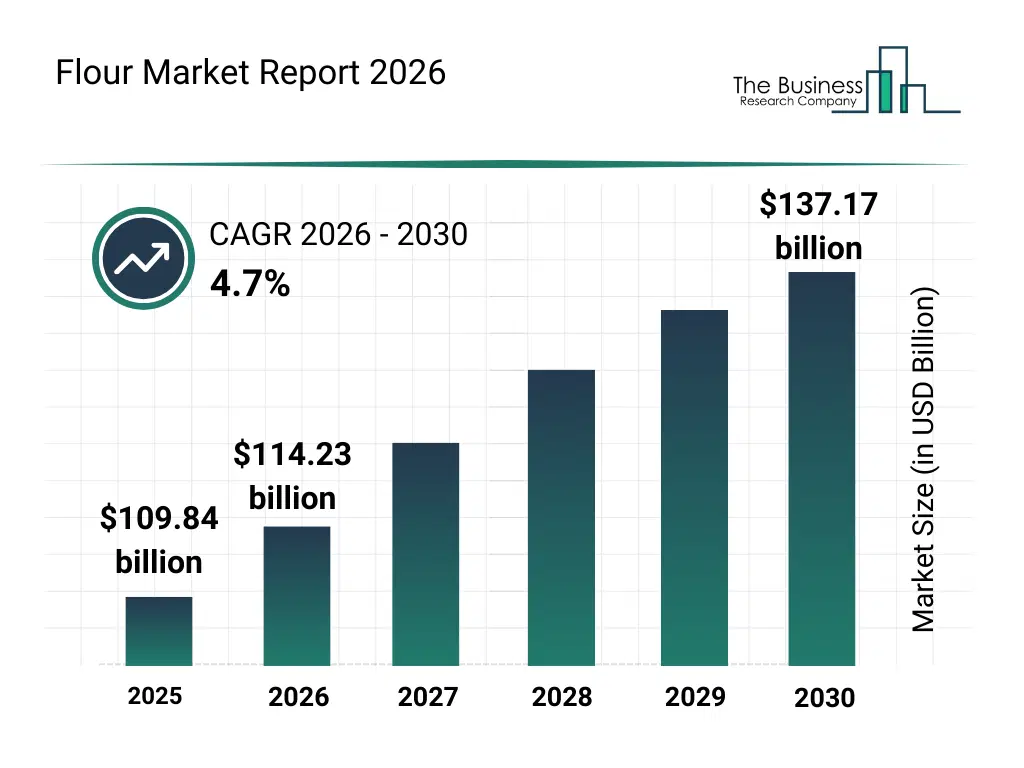
What Is The Flour Market Size and Share 2026?
The flour market size has grown steadily in recent years. It will grow from $109.84 billion in 2025 to $114.23 billion in 2026 at a compound annual growth rate (CAGR) of 4.0%. The growth in the historic period can be attributed to expansion of commercial baking activities, rising wheat and grain cultivation, growth of packaged food production, increasing urban food consumption, improvements in milling technologies.What Is The Flour Market Growth Forecast?
The flour market size is expected to see steady growth in the next few years. It will grow to $137.17 billion in 2030 at a compound annual growth rate (CAGR) of 4.7%. The growth in the forecast period can be attributed to increasing demand for functional and fortified food ingredients, rising adoption of alternative grains, expansion of health-focused food formulations, growing investments in advanced milling infrastructure, increasing demand from industrial food processors. Major trends in the forecast period include increasing demand for specialty and fortified flours, rising adoption of clean-label milling practices, growing preference for gluten-free and alternative grain flours, expansion of industrial flour blending capabilities, enhanced focus on shelf-life and consistency.
Global Flour Market Segmentation
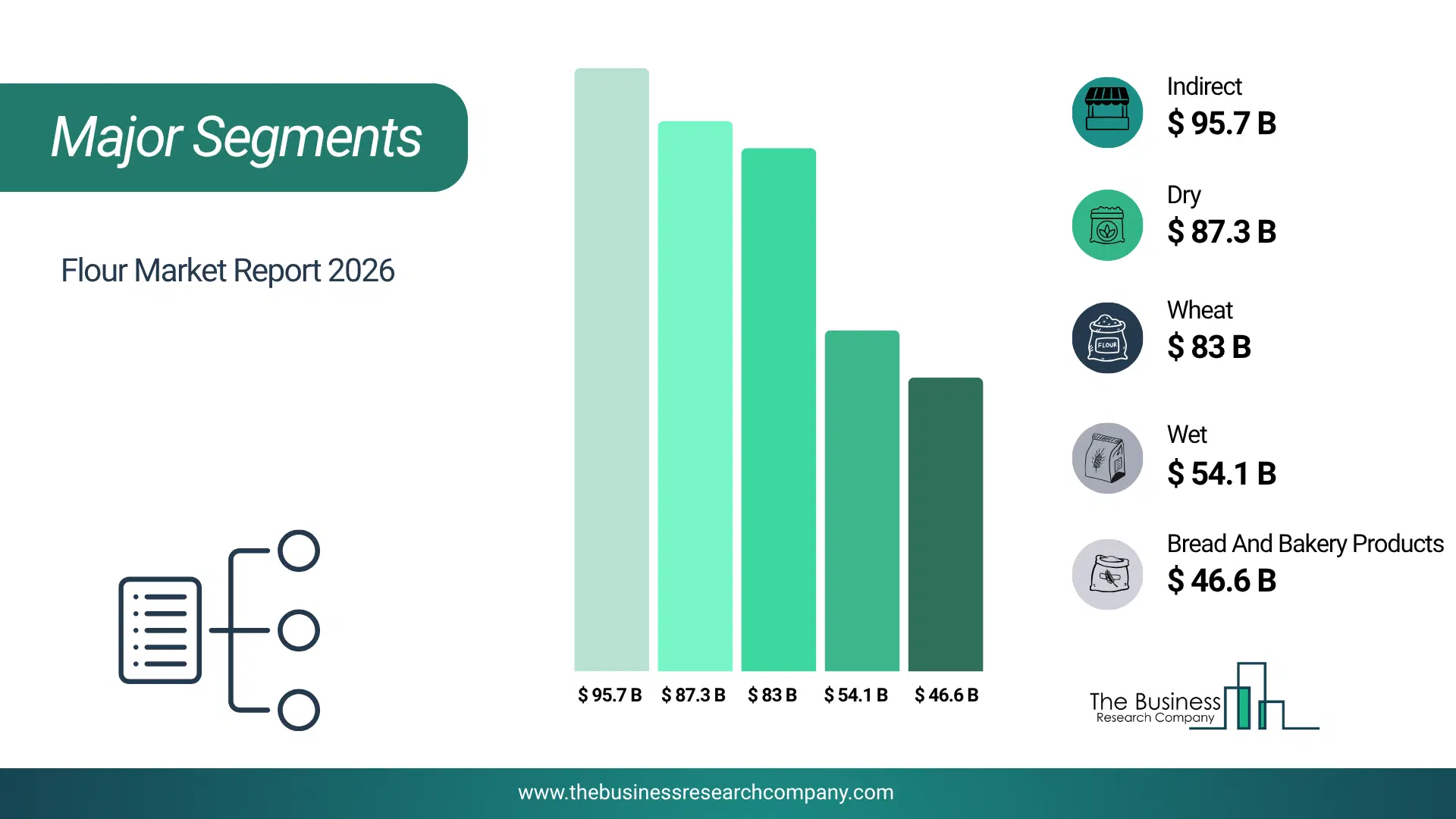
1) By Type: Wheat, Maize, Rice, Oats, Other Types 2) By Sales Channels: Direct, Indirect 3) By Application: Noodles And Pasta, Bread And Bakery Products, Animal Feed, Wafers, Crackers, And Biscuits, Non-Food Application, Other Applications Subsegments: 1) By Wheat: All-Purpose Flour, Whole Wheat Flour, Bread Flour, Cake Flour 2) By Maize: Cornmeal, Cornstarch 3) By Rice: White Rice Flour, Brown Rice Flour 4) By Oats: Rolled Oats Flour, Instant Oats Flour 5) By Other Types: Barley Flour, Rye Flour, Millet Flour, Quinoa Flour The top segments in the flour market will be: • Indirect will reach $95698.56 Million by 2030. • Dry will reach $87320.82 Million by 2030. • Wheat will reach $83017.53 Million by 2030. • Wet will reach $54090.76 Million by 2030. • Bread And Bakery Products will reach $46615.74 Million by 2030.What Is The Driver Of The Flour Market?
The rise in the consumption of bakery products is expected to propel the growth of the flour market going forward. Bakery products refer to goods that are often made from flour or other grains. Bakery producers are increasingly altering their product offerings to accommodate changing consumer tastes and requirements such as less fat and high nutritional value food items. These foods are high in calories and nutritional value. Due to these advantages, there is an increasing demand for bakery items, which is likely to enhance the cookies and crackers market. For instance, in February 2024, according to Agriculture and Agri-Food, a Canada-based government department, baked goods retail sales in the United States (U.S.) increased, reaching US$82.9 billion in 2022. It is expected to grow at a CAGR of 3.1% from 2023 to 2027, reaching US$97.7 billion in 2026. Therefore, the rise in the consumption of bakery products is driving the growth of the flour industry.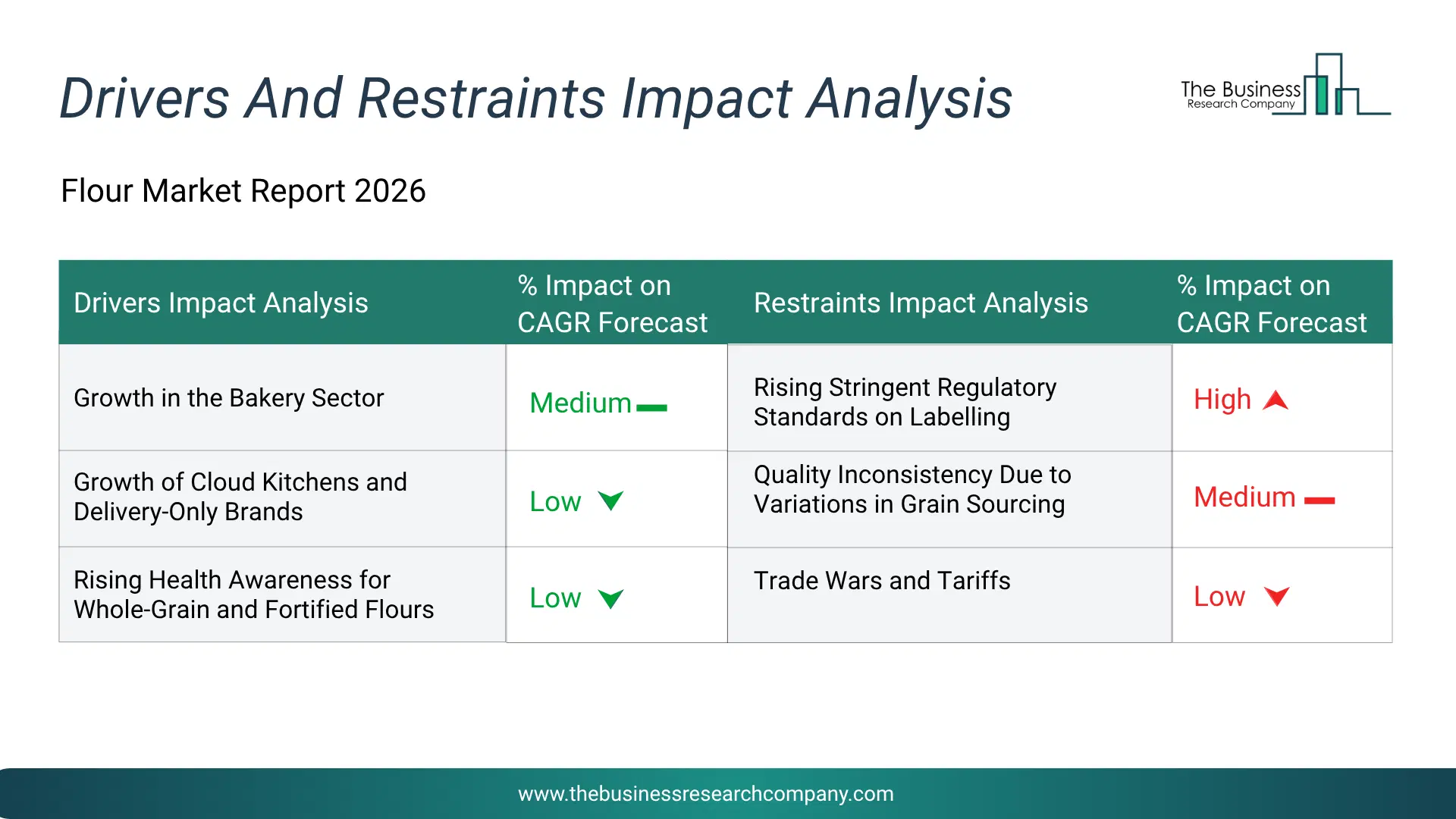
Infographic Chart Showing Key Market Drivers Analysis And Restraints For Flour Market
The chart presents an impact analysis of key drivers and restraints, quantifying their relative influence on the market's growth rate and helping assess the balance between growth enablers and limiting factors. This chart offers a high-level perspective; the full report contains more detailed insights.
How Will The Drivers Impact Growth In The Global Flour Market?
• Growth in the Bakery Sector (Medium) – During the forecast period, the growth in the bakery sector will propel growth in the flour market. rising urbanization, changing lifestyles and increasing consumption of convenient and ready-to-eat bakery products such as bread, cakes, biscuits and pastries are fueling demand for flour as a primary raw material. in addition, product innovation in artisanal, premium and health-oriented bakery offerings, including whole-grain and gluten-free variants, is increasing flour usage across commercial and industrial bakeries. growth in quick-service restaurants and in-store bakeries further supports volume demand. collectively, these trends are expected to sustain consistent flour consumption and strengthen market expansion. as a result, growth in the bakery sector is anticipated to contributing to a 1.2% annual growth in the market. • Growth of Cloud Kitchens and Delivery-Only Brands (Low) – During the forecast period, the growth of cloud kitchens and delivery-only brands is expected to propel the growth of the flour market. these business models focus on high-volume, standardized food production, relying heavily on flour-based items such as pizzas, wraps, burgers, flatbreads and desserts. increasing demand for online food delivery, driven by convenience and digital adoption, is accelerating the proliferation of such kitchens across urban areas. moreover, cloud kitchens prioritize cost efficiency and scalable menus, leading to consistent and repeat demand for flour as a core ingredient. as these formats continue to expand geographically, they are expected to drive steady growth in flour consumption. consequently, the growth of cloud kitchens and delivery-only brands is projected to contributing to a 1.0% annual growth in the market. • Rising Health Awareness for Whole-Grain and Fortified Flours (Low) – During the forecast period, the rising health awareness for whole-grain and fortified flours is expected to propel the growth of the flour market during forecast period. consumers are becoming more conscious of nutritional intake, driving demand for flours enriched with fiber, vitamins, minerals and proteins. whole-grain and fortified flours are increasingly perceived as healthier alternatives to refined products due to their role in supporting digestive health, weight management and reduced risk of lifestyle-related diseases. this trend is further reinforced by recommendations from health authorities and growing availability of such products across retail and foodservice channels. consequently, manufacturers are expanding their portfolios, contributing to higher value and volume growth. therefore, rising health awareness for whole-grain and fortified flours is projected to contributing to a 0.8% annual growth in the market. • Government Initiatives Supporting Grain Processing (Low) – During forecast period, the government initiatives supporting grain processing is expected to propel the growth of the flour market. Policy measures such as subsidies, tax incentives and financial assistance for milling facilities encourage capacity expansion and modernization of flour production. Investments in storage, logistics and cold-chain infrastructure help reduce post-harvest losses and ensure consistent raw material availability. In addition, programs promoting food security, value addition and agro-processing support increased utilization of grains for processed food products. Regulatory support for small and medium-scale millers further enhances market participation. Collectively, these initiatives improve operational efficiency, boost production volumes and stimulate sustained growth. Therefore, the government initiatives supporting grain processing will drive the growth of the flour market. The government initiatives supporting grain processing growth contribution during the forecast period in 2025 is 0.5%.How Will The Restraints Impact Growth In The Global Flour Market?
• Rising Stringent Regulatory Standards on Labelling (Medium) – During the forecast period, rising stringent regulatory standards on labelling is expected to hinder the growth of the flour market in forecast period. compliance with detailed requirements on nutritional disclosure, allergen statements, ingredient sourcing and health claims increases operational complexity for manufacturers. frequent updates to labeling regulations across different regions also raise compliance costs, particularly for small and mid-sized millers with limited regulatory expertise. in addition, the risk of penalties, product recalls, or re-labeling due to non-compliance can disrupt supply chains and delay product launches. these factors may reduce market flexibility, slow innovation and negatively impact overall growth. therefore, rising stringent regulatory standards on labelling may hinder the growth of the flour market. growth affected by the rising stringent regulatory standards on labelling during the forecast period in 2025 is -2.0%. • Quality Inconsistency Due to Variations in Grain Sourcing (Low) – During the forecast period, the quality inconsistency due to variations in grain sourcing is expected to hinder the growth of the flour market. Differences in climate conditions, soil quality, farming practices and crop yields across regions can lead to fluctuations in grain protein content, moisture levels and overall quality. Such variability affects the functional performance of flour, including texture, baking consistency and shelf life, creating challenges for food manufacturers that require standardized inputs. To manage these inconsistencies, millers may incur higher costs related to testing, blending and quality control. These added complexities can disrupt production efficiency, increase costs and limit the ability to meet customer expectations. Therefore, the quality inconsistency due to variations in grain sourcing may hinder the growth of the flour market. Growth affected by the quality inconsistency due to variations in grain sourcing during the forecast period in 2025 is -1.5%. • Trade Wars and Tariffs (Low) – During the forecast period, trade wars and tariffs are expected to restrain the growth of the flour market during the forecast period by increasing the costs of imported grains, milling equipment, packaging materials and value-added inputs, thereby pressuring production margins, limiting price competitiveness and reducing the availability of high-quality and specialty flour products for consumers. higher tariffs on imported wheat and other cereals raise raw material prices for millers, particularly in countries dependent on imports. in addition, duties on milling machinery, packaging materials and processing equipment increase capital and operational expenditures. these cost pressures are often passed on to end users, reducing price competitiveness and demand. trade restrictions may also limit access to high-quality or specialty grains, affecting product consistency. collectively, these factors can constrain profitability, slow capacity expansion and dampen overall market growth. therefore, trade wars and tariffs may restrain the growth of the flour market. growth affected by the impact of trade war and tariffs during the forecast period in 2025 is -0.2%.Key Players In The Global Flour Market
Major companies operating in the flour market are The Archer-Daniels-Midland Company, Bunge Limited, General Mills Inc., Conagra Brands Inc., Ingredion Incorporated, Hindustan Unilever Limited, Ardent Mills, Horizon Milling LLC, Dangote Flour Mills plc, Grain Millers Inc., King Arthur Baking Company Inc., Bay State Milling Company, Idaho Pacific Corporation, Mennel Milling Company, Interflour Group Pte. Ltd., Grain Craft, Miller Milling Company, Bob's Red Mill Natural Foods, Siemer Milling Company, Arrowhead Mills Inc., Hodgson Mill Inc., Lakeside Mills Inc., Sunrise Flour Mills, Great River Organic Milling, Star of the West Milling Company, Hayden Flour Mills, Heartland Mills Inc., US Durum Milling Inc., Carr's Flour Mills Ltd., FWP Matthews Ltd., Wilkins Rogers Mills, Wudeli Flour Group, Wilmar International Limited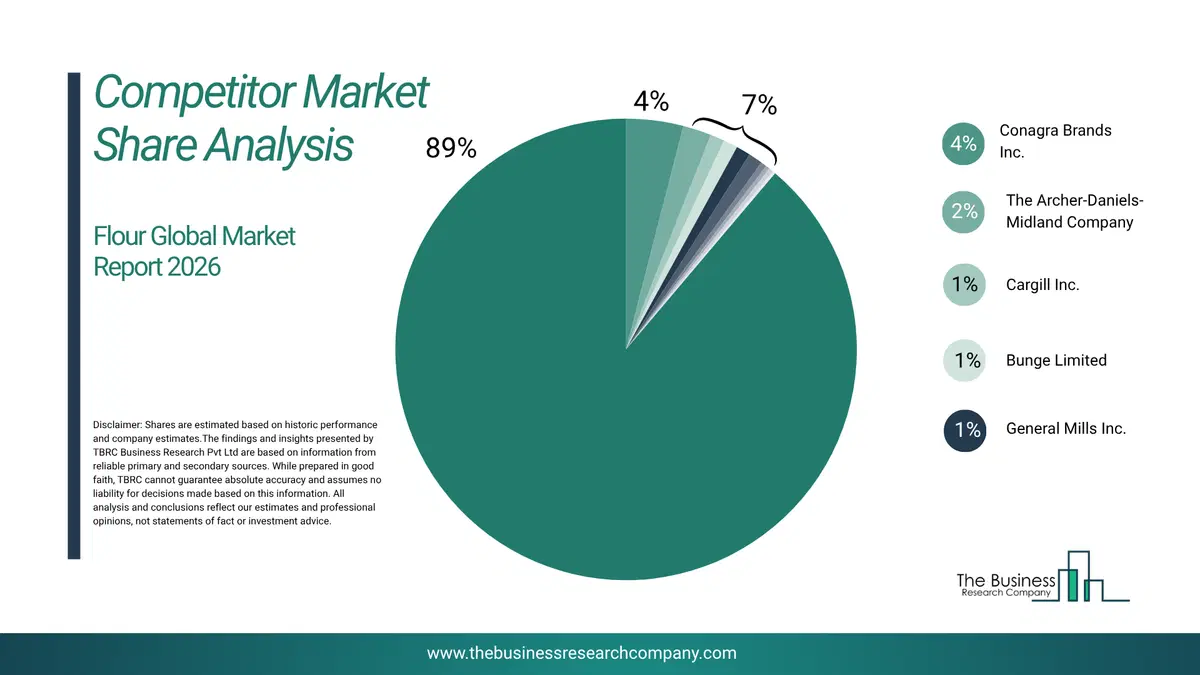
This chart is for illustrative purposes; the full report includes a detailed competitor analysis and comprehensive overview of the top 10 companies in the market.
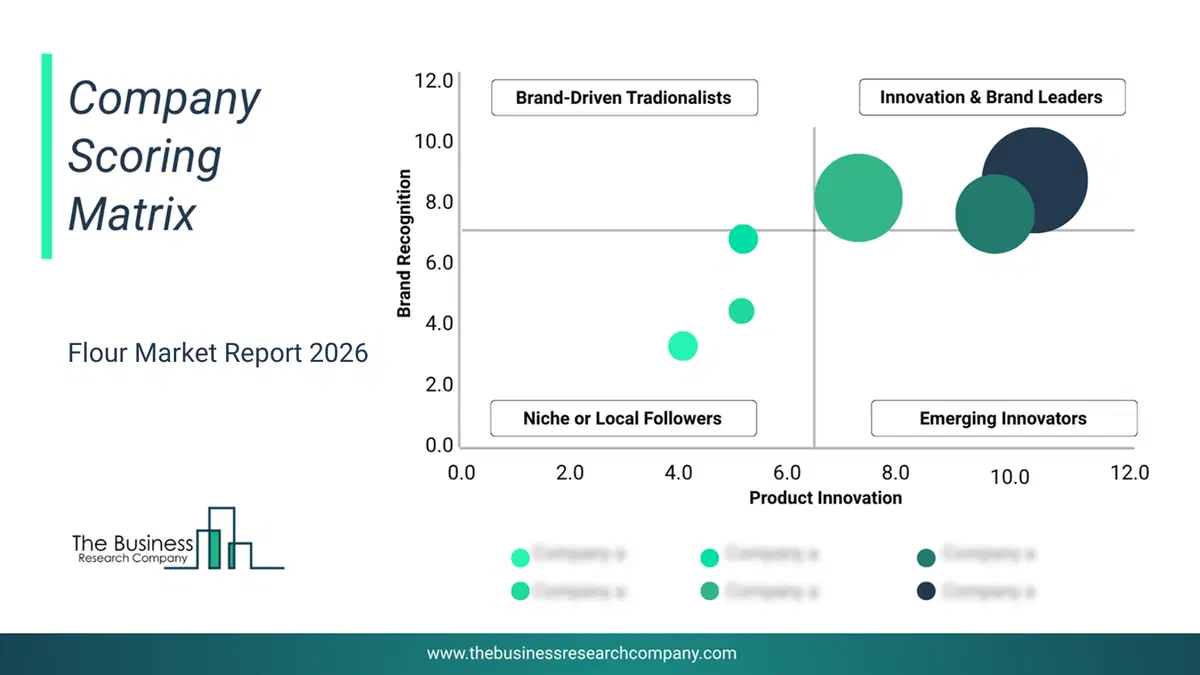
This chart maps companies by product innovation and brand strength, with bubble size indicating relative revenue, helping identify market leaders, challengers, and niche players. This is an illustrative chart; the full report provides a complete and accurate competitive analysis.
Global Flour Market Trends and Insights
Major companies operating in the flour market are focusing on advanced solutions such as high-fiber wheat flour to meet evolving consumer demands for healthier and more functional food options. High-fiber wheat flour is a type of flour with an increased concentration of dietary fiber derived from wheat grains, promoting digestive health and offering potential nutritional benefits. For instance, in March 2023, Bay State Milling Company, a US-based plant-based ingredient provider, launched Wingold Wellness multi-purpose flour, featuring three times the gut-friendly fiber of standard refined wheat flour while maintaining identical taste, functionality, and quality, providing a rich fiber source for various applications such as pizza, pasta, bread, and tortillas without additional fiber additives. Crafted solely from wheat, this innovative flour presents retail and wholesale bakeries and manufacturers with a convenient, cost-effective solution to boost a product's nutritional value without necessitating formulation modifications.What Are Latest Mergers And Acquisitions In The Flour Market?
In September 2023, Grain Processing Corporation, a US-based company specializing in grain processing and agricultural products, expanded its operations with the acquisition of a specialty flour milling facility for an undisclosed amount. Through this acquisition, Grain Processing Corporation aimed to enhance its product offerings in the specialty flour segment, focusing on improving production capabilities and meeting the growing demand for diverse flour products. The newly acquired facility, located in the US, is recognized for its expertise in producing high-quality specialty flours tailored to various applications in the food industry.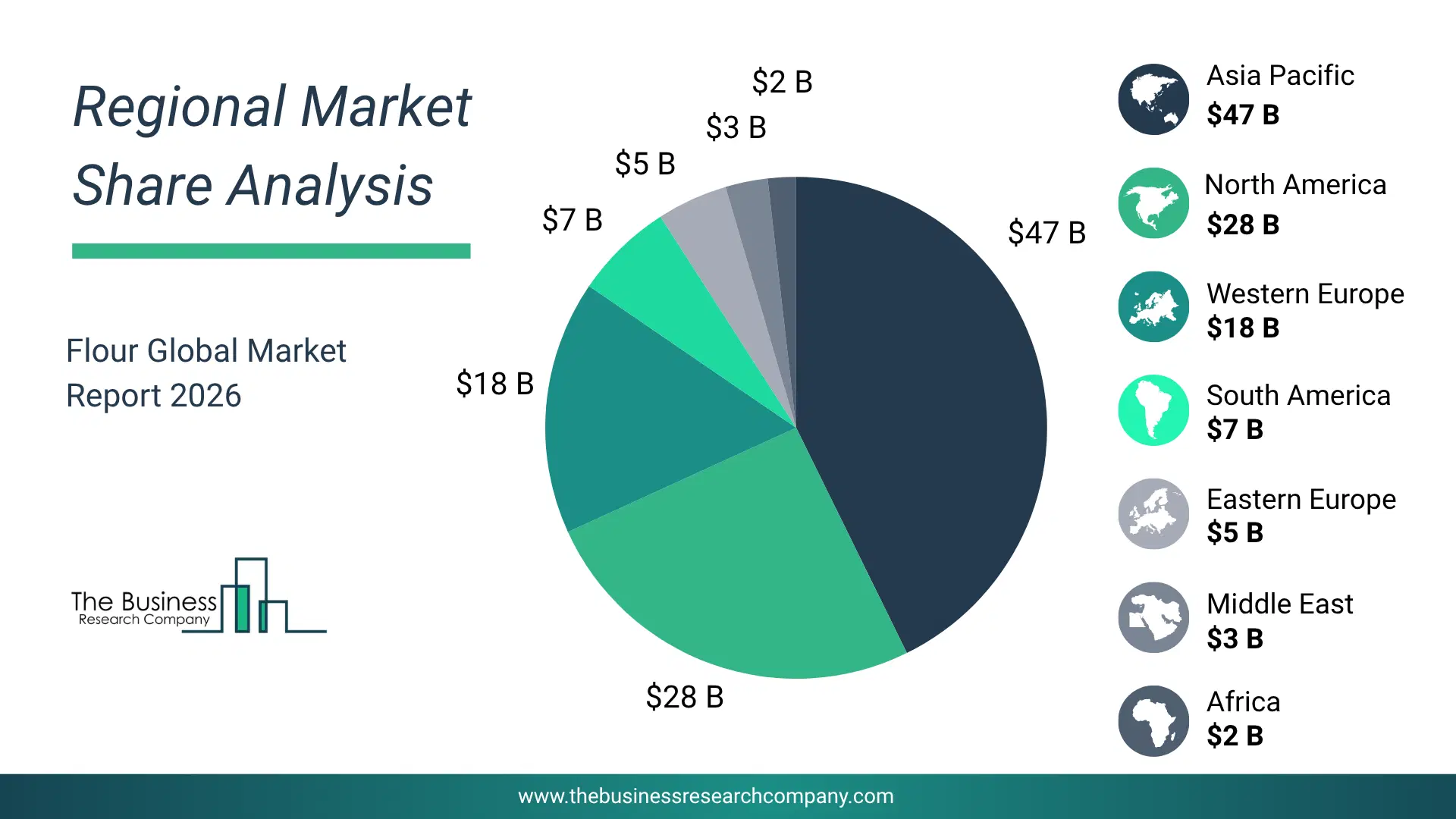
Regional Outlook
Asia-Pacific was the largest region in the flour market in 2025. The regions covered in this market report are Asia-Pacific, South East Asia, Western Europe, Eastern Europe, North America, South America, Middle East and Africa. The countries covered in this market report are Australia, Brazil, China, France, Germany, India, Indonesia, Japan, Taiwan, Russia, South Korea, UK, USA, Italy, Spain, CanadaWhat Defines the Flour Market?
The flour market consists of sales of white whole wheat, semolina, rye, and barley flour. Values in this market are ‘factory gate’ values, that is the value of goods sold by the manufacturers or creators of the goods, whether to other entities (including downstream manufacturers, wholesalers, distributors, and retailers) or directly to end customers. The value of goods in this market includes related services sold by the creators of the goods.How is Market Value Defined and Measured?
The market value is defined as the revenues that enterprises gain from the sale of goods and/or services within the specified market and geography through sales, grants, or donations in terms of the currency (in USD unless otherwise specified). The revenues for a specified geography are consumption values that are revenues generated by organizations in the specified geography within the market, irrespective of where they are produced. It does not include revenues from resales along the supply chain, either further along the supply chain or as part of other products.
This chart presents market attractiveness based on a quantitative evaluation of growth, competition, strategic alignment, and risk, offering a clear view of opportunity areas for decision-making. This chart is for illustrative purposes; the full report contains the complete analysis.

This chart highlights the Total Addressable Market (TAM) by estimating the maximum revenue opportunity using an assumption-driven approach, supporting strategic planning and opportunity sizing across markets. The chart is illustrative; the full report provides a more comprehensive analysis.
What Key Data and Analysis Are Included in the Flour Market Report 2026?
The flour market research report is one of a series of new reports from The Business Research Company that provides market statistics, including industry global market size, regional shares, competitors with the market share, detailed market segments, market trends and opportunities, and any further data you may need to thrive in the flour industry. The market research report delivers a complete perspective of everything you need, with an in-depth analysis of the current and future state of the industry.Flour Market Report Forecast Analysis
| Report Attribute | Details |
|---|---|
| Market Size Value In 2026 | $114.23 billion |
| Revenue Forecast In 2030 | $137.17 billion |
| Growth Rate | CAGR of 4.0% from 2026 to 2030 |
| Base Year For Estimation | 2025 |
| Actual Estimates/Historical Data | 2020-2025 |
| Forecast Period | 2026 - 2030 - 2035 |
| Market Representation | Revenue in USD Billion and CAGR from 2026 to 2030 |
| Segments Covered | Type, Sales Channels, Application |
| Regional Scope | Asia-Pacific, Western Europe, Eastern Europe, North America, South America, Middle East, Africa |
| Country Scope | The countries covered in the report are Australia, Brazil, China, France, Germany, India, Indonesia, Japan, Taiwan, Russia, South Korea, UK, USA, Canada, Italy, Spain. |
| Key Companies Profiled | The Archer-Daniels-Midland Company, Bunge Limited, General Mills Inc., Conagra Brands Inc., Ingredion Incorporated, Hindustan Unilever Limited, Ardent Mills, Horizon Milling LLC, Dangote Flour Mills plc, Grain Millers Inc., King Arthur Baking Company Inc., Bay State Milling Company, Idaho Pacific Corporation, Mennel Milling Company, Interflour Group Pte. Ltd., Grain Craft, Miller Milling Company, Bob's Red Mill Natural Foods, Siemer Milling Company, Arrowhead Mills Inc., Hodgson Mill Inc., Lakeside Mills Inc., Sunrise Flour Mills, Great River Organic Milling, Star of the West Milling Company, Hayden Flour Mills, Heartland Mills Inc., US Durum Milling Inc., Carr's Flour Mills Ltd., FWP Matthews Ltd., Wilkins Rogers Mills, Wudeli Flour Group, Wilmar International Limited |
| Customization Scope | Request for Customization |
| Pricing And Purchase Options | Explore Purchase Options |