
Functional Flour Market Report 2026
Global Outlook – By Type (Specialty Flours, Enzyme Treated, Gluten Free, Extruded And Partially Transformed, Pre-Gelatinized, Pre Cooked Flours), By Raw Material (Maize, Rice, Wheat, Other Raw Materials), By Application (Bakery Products, Noodles And Pasta, Other Applications) – Market Size, Trends, Strategies, and Forecast to 2030
Functional Flour Market Overview
• Functional Flour market size has reached to $75.35 billion in 2025 • Expected to grow to $102.99 billion in 2030 at a compound annual growth rate (CAGR) of 6.5% • Growth Driver: Health-Conscious Consumers Drive Functional Flour Market Growth • Market Trend: Innovative High-Fiber Flours Meet Growing Demand For Healthier Dietary Options • North America was the largest region in 2025 and Asia-Pacific is the fastest growing region.What Is Covered Under Functional Flour Market?
Functional flours refer to specialist goods that undergo hydrothermal treatment for various uses in the food and beverage sector. They are healthier than regular ingredients and are used to create high-end culinary products. It is used for cleaner-label, healthier, and more nutrient-dense food, and feed products are available. The main types of functional flours include specialty flours, enzyme-treated, gluten-free, extruded and partially transformed, pre-gelatinized, and precooked flours. Specialty flours are incredibly adaptable, give distinctive flavors and textures to an almost infinite variety of applications, and address many of the consumer trends and expectations. The raw materials used for the functional flours include maize, rice, wheat, and others for various applications such as non-food applications, bakery products, noodles and pasta, and others.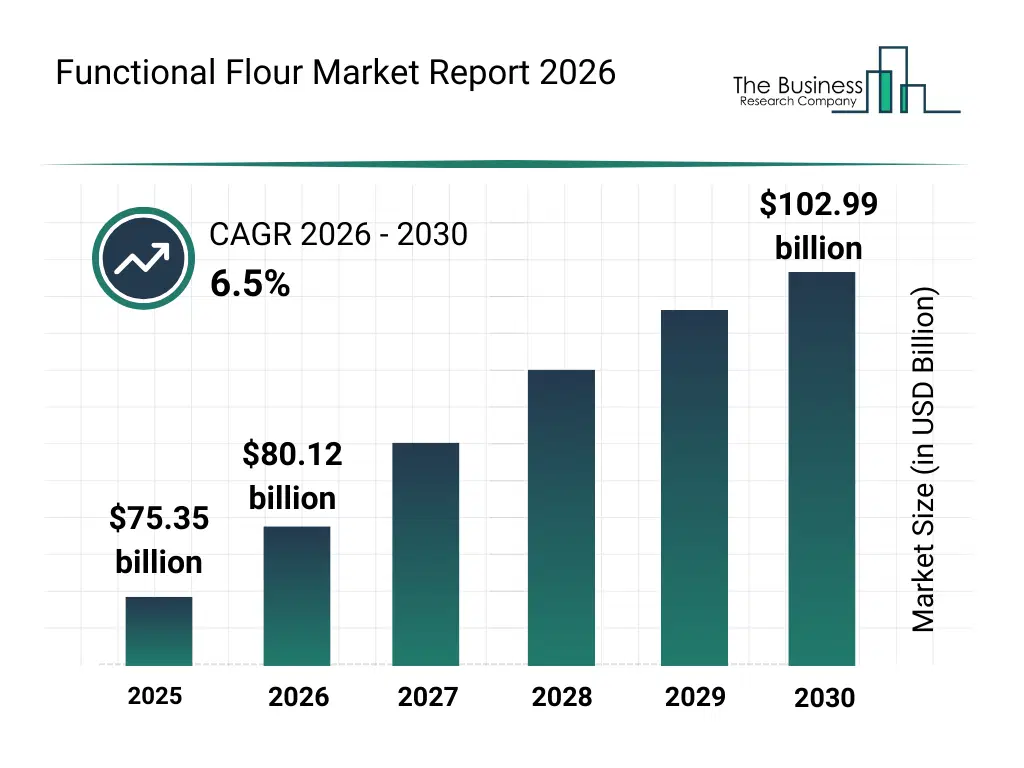
What Is The Functional Flour Market Size and Share 2026?
The functional flour market size has grown strongly in recent years. It will grow from $75.35 billion in 2025 to $80.12 billion in 2026 at a compound annual growth rate (CAGR) of 6.3%. The growth in the historic period can be attributed to rising consumer awareness of healthier food options, growth of artisanal and specialty bakery products, increasing demand for gluten-free diets, expansion of food processing industries, availability of diverse raw material sources.What Is The Functional Flour Market Growth Forecast?
The functional flour market size is expected to see strong growth in the next few years. It will grow to $102.99 billion in 2030 at a compound annual growth rate (CAGR) of 6.5%. The growth in the forecast period can be attributed to growing demand for plant-based and allergen-free foods, rising use of functional ingredients in processed foods, expansion of premium and fortified food categories, increasing innovation in flour processing technologies, growing focus on sustainable food production. Major trends in the forecast period include increasing adoption of clean-label functional flours, rising demand for gluten-free and specialty flours, expansion of enzyme-treated flour applications, growing use of functional flours in premium bakery products, enhanced focus on nutrient-dense ingredients.
Global Functional Flour Market Segmentation
1) By Type: Specialty Flours, Enzyme Treated, Gluten Free, Extruded And Partially Transformed, Pre-Gelatinized, Pre Cooked Flours 2) By Raw Material: Maize, Rice, Wheat, Other Raw Materials 3) By Application: Bakery Products, Noodles And Pasta, Other Applications Subsegments: 1) By Specialty Flours: Almond Flour, Coconut Flour, Chickpea Flour, Oat Flour 2) By Enzyme Treated: Diastatic Flour, Malted Flour 3) By Gluten Free: Rice Flour, Tapioca Flour, Potato Flour, Corn Flour 4) By Extruded And Partially Transformed: Extruded Corn Flour, Extruded Rice Flour 5) By Pre-Gelatinized: Pre-Gelatinized Starch Flours, Instant Flour Blends 6) By Pre-Cooked Flours: Pre-Cooked Rice Flour, Pre-Cooked Potato FlourWhat Is The Driver Of The Functional Flour Market?
The rise in health-conscious consumers is expected to propel the growth of the functional flour market going forward. Health-conscious consumers are individuals who prioritize and actively seek ways to maintain and improve their physical and mental well-being. These consumers are mindful of their lifestyle choices, paying attention to diet, exercise, mental health, and overall wellness. For health-conscious consumers, functional flour serves as a vital component, offering nutrient-rich alternatives that align with their preference for healthier ingredients and contributing to the creation of balanced and wholesome diets. For instance, in June 2024, according to the International Food Information Council (IFIC), a US‑based non‑profit organization, the proportion of Americans following a specific diet or eating pattern over the past year remains high at 54%. Most people are looking to increase their protein intake, with interest climbing from 59% in 2022 to 67% in 2023, and reaching 71% in 2024. Additionally, roughly half of consumers aim to eat more fresh foods, which are widely considered the healthiest options. Therefore, the rise in health-conscious consumers is driving the growth of the functional flour industry.Key Players In The Global Functional Flour Market
Major companies operating in the functional flour market are Cargill Incorporated, Archer Daniels Midland Company, Ingredion Incorporated, Tate & Lyle PLC, Associated British Foods PLC, General Mills Inc., Bunge Limited, AGRANA Beteiligungs-AG, Kerry Group PLC, Döhler GmbH, SunOpta Inc., MGP Ingredients Inc., Olam International Limited, Parrish and Heimbecker Limited, The Scoular Company, Limagrain Ingredients, Roquette Frères, Cosucra Groupe Warcoing, GLOBE Ingredients, Manildra Group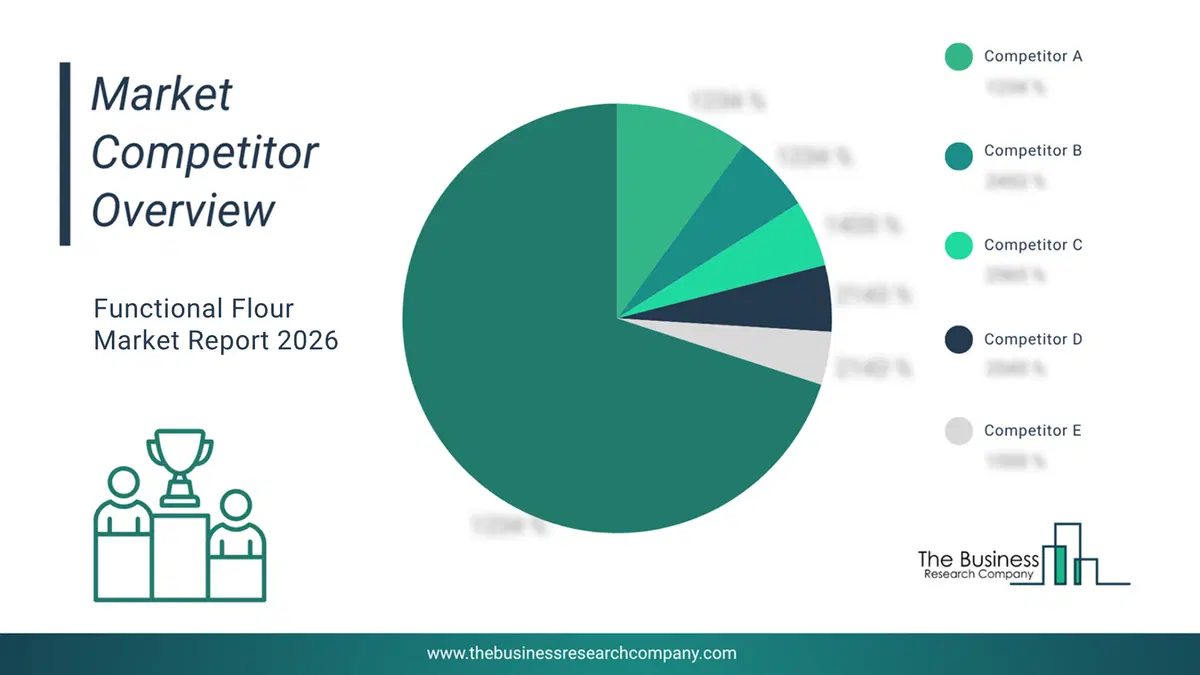
This chart is for illustrative purposes; the full report includes a detailed competitor analysis and comprehensive overview of the top 10 companies in the market.
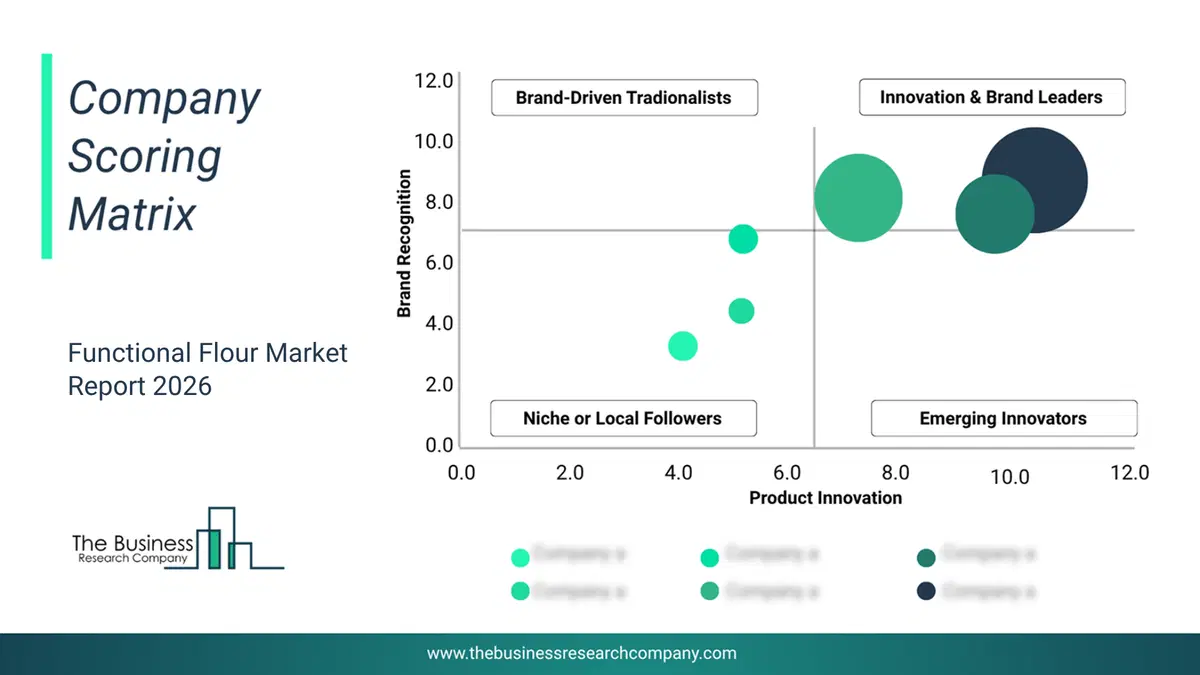
This chart maps companies by product innovation and brand strength, with bubble size indicating relative revenue, helping identify market leaders, challengers, and niche players. This is an illustrative chart; the full report provides a complete and accurate competitive analysis.
Global Functional Flour Market Trends and Insights
Major companies in the functional flour market are focused on developing advanced dietary solutions, such as State Milling's HealthSense High-Fiber Wheat Flour, to enhance nutritional value and cater to health-conscious consumers. State Milling's HealthSense High-Fiber Wheat Flour is designed to provide added nutritional benefits, helping consumers incorporate more fiber into their diets without sacrificing flavor or texture. For instance, in March 2023, Bay State Milling, a US-based firm that focuses on providing innovative grain solutions and ingredient products for the baking and food industries, launched Wingold Wellness multi-purpose flour. Wingold Wellness features Bay State Milling's HealthSense High-Fiber Wheat Flour, offering three times the fiber of traditional refined wheat flour while ensuring the same taste and functionality. This 1:1 replacement can be utilized in various products, including pizza and tortillas, without requiring additional fiber additives. Packaged in 50-pound sacks, it enables manufacturers and distributors to satisfy consumer demand for nutritious wheat-based options without sacrificing flavor.What Are Latest Mergers And Acquisitions In The Functional Flour Market?
In October 2025, Mennel Milling Company, a US-based manufacturing company, acquired Toledo Flour Mill form Mondelez International Inc for an undisclosed amount. With this acquisition, Mennel Milling Company aims to expand its flour production capacity and strengthen its supply chain to better serve industrial and commercial baking customers. Mondelez International Inc is a US-based manufacturing company that specializes in producing high-quality wheat flours for commercial bakeries and food manufacturers.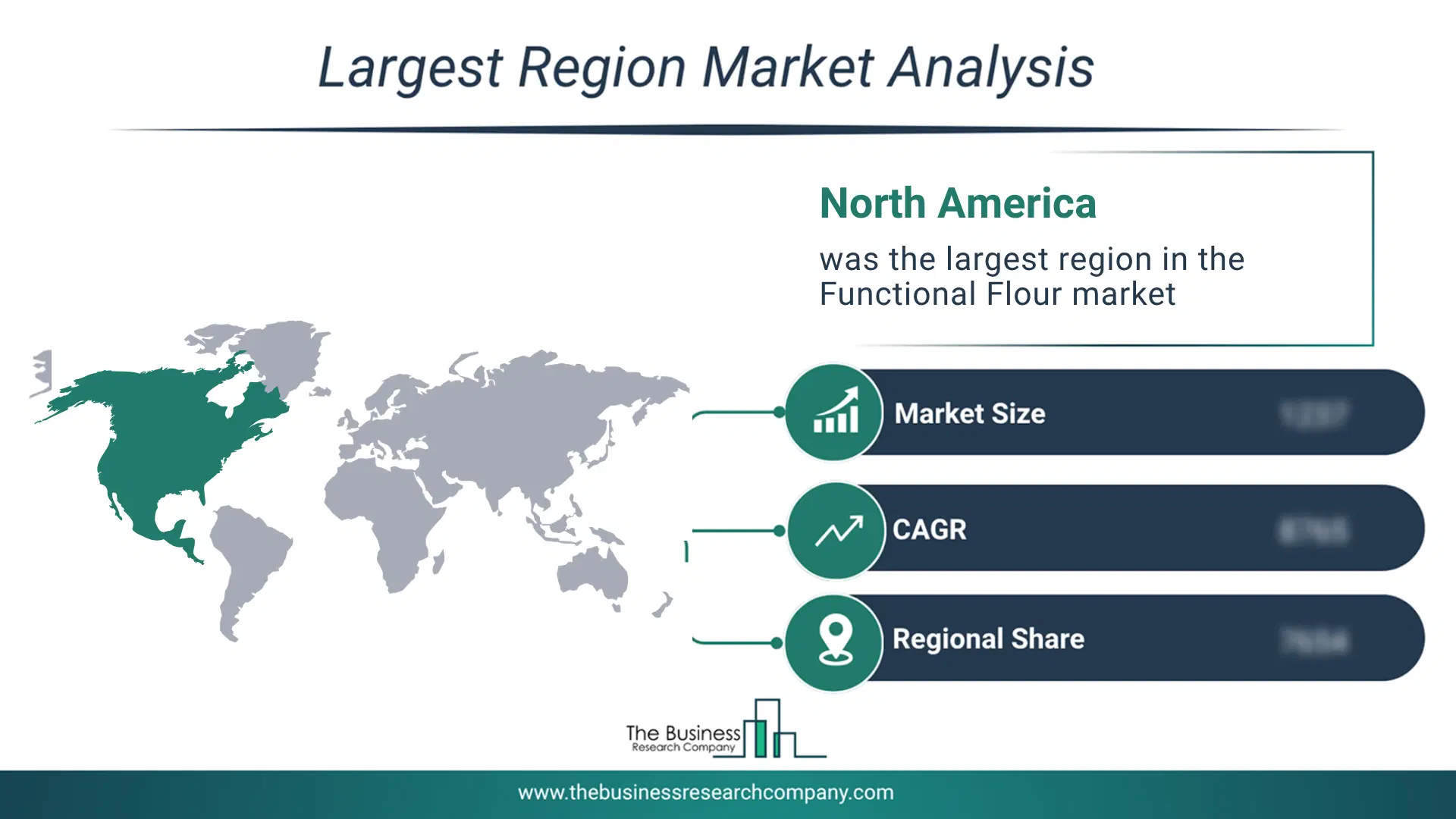
Regional Outlook
North America was the largest region in the functional flour market in 2025. Asia-Pacific is expected to be the fastest-growing region in the forecast period. The regions covered in this market report are Asia-Pacific, South East Asia, Western Europe, Eastern Europe, North America, South America, Middle East and Africa. The countries covered in this market report are Australia, Brazil, China, France, Germany, India, Indonesia, Japan, Taiwan, Russia, South Korea, UK, USA, Italy, Spain, CanadaWhat Defines the Functional Flour Market?
The functional flour market consists of sales of amaranth flour, wheat flour, arrowroot flour, buckwheat flour, cassava flour, chickpea flour, and chia flour. Values in this market are ‘factory gate’ values, that is, the value of goods sold by the manufacturers or creators of the goods, whether to other entities (including downstream manufacturers, wholesalers, distributors, and retailers) or directly to end customers. The value of goods in this market includes related services sold by the creators of the goods.How is Market Value Defined and Measured?
The market value is defined as the revenues that enterprises gain from the sale of goods and/or services within the specified market and geography through sales, grants, or donations in terms of the currency (in USD unless otherwise specified). The revenues for a specified geography are consumption values that are revenues generated by organizations in the specified geography within the market, irrespective of where they are produced. It does not include revenues from resales along the supply chain, either further along the supply chain or as part of other products.
This chart presents market attractiveness based on a quantitative evaluation of growth, competition, strategic alignment, and risk, offering a clear view of opportunity areas for decision-making. This chart is for illustrative purposes; the full report contains the complete analysis.

This chart highlights the Total Addressable Market (TAM) by estimating the maximum revenue opportunity using an assumption-driven approach, supporting strategic planning and opportunity sizing across markets. The chart is illustrative; the full report provides a more comprehensive analysis.
What Key Data and Analysis Are Included in the Functional Flour Market Report 2026?
The functional flour market research report is one of a series of new reports from The Business Research Company that provides market statistics, including industry global market size, regional shares, competitors with the market share, detailed market segments, market trends and opportunities, and any further data you may need to thrive in the functional flour industry. The market research report delivers a complete perspective of everything you need, with an in-depth analysis of the current and future state of the industry.Functional Flour Market Report Forecast Analysis
| Report Attribute | Details |
|---|---|
| Market Size Value In 2026 | $80.12 billion |
| Revenue Forecast In 2030 | $102.99 billion |
| Growth Rate | CAGR of 6.3% from 2026 to 2030 |
| Base Year For Estimation | 2025 |
| Actual Estimates/Historical Data | 2020-2025 |
| Forecast Period | 2026 - 2030 |
| Market Representation | Revenue in USD Billion and CAGR from 2026 to 2030 |
| Segments Covered | Type, Raw Material, Application |
| Regional Scope | Asia-Pacific, Western Europe, Eastern Europe, North America, South America, Middle East, Africa |
| Country Scope | The countries covered in the report are Australia, Brazil, China, France, Germany, India, Indonesia, Japan, Taiwan, Russia, South Korea, UK, USA, Canada, Italy, Spain. |
| Key Companies Profiled | Cargill Incorporated, Archer Daniels Midland Company, Ingredion Incorporated, Tate & Lyle PLC, Associated British Foods PLC, General Mills Inc., Bunge Limited, AGRANA Beteiligungs-AG, Kerry Group PLC, Döhler GmbH, SunOpta Inc., MGP Ingredients Inc., Olam International Limited, Parrish and Heimbecker Limited, The Scoular Company, Limagrain Ingredients, Roquette Frères, Cosucra Groupe Warcoing, GLOBE Ingredients, Manildra Group |
| Customization Scope | Request for Customization |
| Pricing And Purchase Options | Explore Purchase Options |