
Food Service Equipment Market Report 2026
Global Outlook – By Equipment (Food Preparation Equipment, Drink Preparation Equipment, Heating And Holding Equipment, Cooking Equipment, Refrigerators And Chillers, Baking Equipment, Merchandisers, Ware Washing Equipment, Other Food And Beverage Service Equipment), By Distribution Channel (Online, Offline ), By End-User (Full Service Restaurant, Quick Service Restaurant, Institutional, Other End-Users) – Market Size, Trends, Strategies, and Forecast to 2030
Food Service Equipment Market Overview
• Food Service Equipment market size has reached to $40.98 billion in 2025 • Expected to grow to $55.09 billion in 2030 at a compound annual growth rate (CAGR) of 6.1% • Growth Driver: The Impact Of The Growing Online Food Service Sector On The Food Service Equipment Market • Market Trend: Advancements In Robotic Mobile Kitchens For Scalable Foodservice Models • Asia-Pacific was the largest region in 2025 and North America is the fastest growing region.Market Gains By 2030 – Top Opportunities By Segment
Market Gain identifies the most promising market opportunities by highlighting the segments or products expected to generate the highest incremental revenue growth over the next five years.
What Is Covered Under Food Service Equipment Market?
Food service equipment refers to all tools and equipment such as utensils, crockery, and cutlery used to prepare and cook, store, serve, and wash food and beverage products. These come in multiple modes such as hand-operated, semi-automatic, and fully automatic. These aim to provide the correct quantity of food served at optimal temperature, ensuring higher end-user productivity levels. The main types of equipment in the food service equipment market are food preparation equipment, drink preparation equipment, heating & holding equipment, cooking equipment, refrigerators & chillers, baking equipment, merchandisers, ware washing equipment, and other F&B service equipment. Food preparation equipment refers to equipment used to process numerous foods efficiently. Food preparation equipment includes cooking utensils, food blenders, processors, slicers & peelers, mixers & grinders, and others. Food service equipment is distributed online and offline. Food service equipment is used by full-service restaurants, quick-service restaurants, institutions, and others.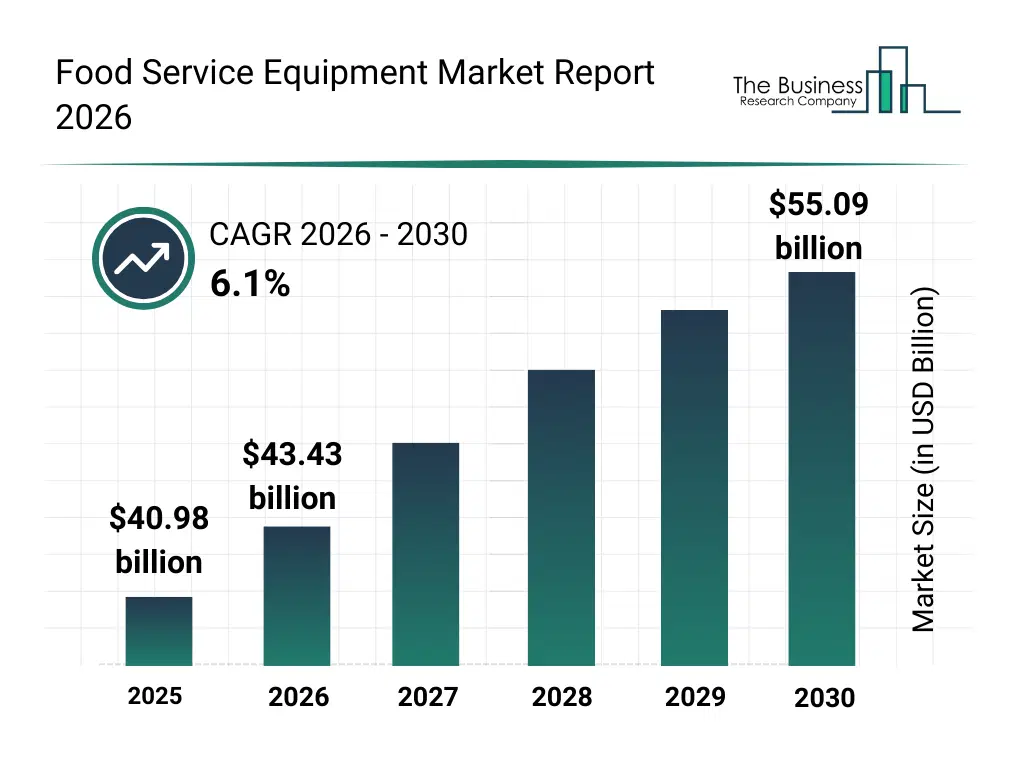
What Is The Food Service Equipment Market Size and Share 2026?
The food service equipment market size has grown strongly in recent years. It will grow from $40.98 billion in 2025 to $43.43 billion in 2026 at a compound annual growth rate (CAGR) of 6.0%. The growth in the historic period can be attributed to expansion of quick service restaurants, growth of urban food outlets, increasing commercial kitchen investments, rising demand for standardized food quality, availability of advanced cooking equipment.What Is The Food Service Equipment Market Growth Forecast?
The food service equipment market size is expected to see strong growth in the next few years. It will grow to $55.09 billion in 2030 at a compound annual growth rate (CAGR) of 6.1%. The growth in the forecast period can be attributed to increasing adoption of automated food service solutions, rising focus on energy-efficient appliances, expansion of cloud-connected kitchen equipment, growing investments in smart restaurant infrastructure, increasing regulatory focus on food safety. Major trends in the forecast period include smart kitchen automation adoption, energy efficient commercial equipment, integrated temperature control systems, modular food service equipment design, enhanced food safety compliance.
Global Food Service Equipment Market Segmentation
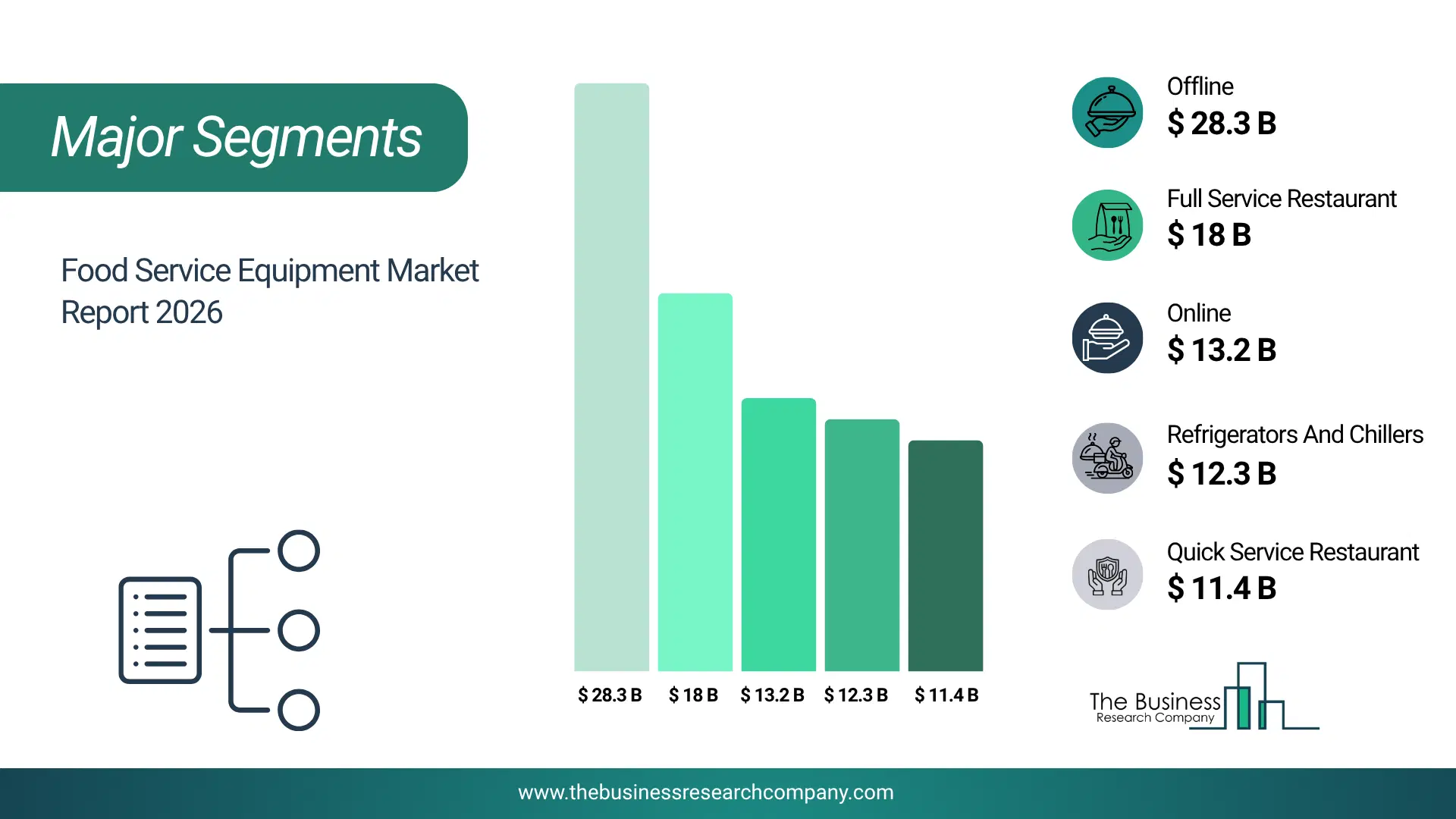
1) By Equipment: Food Preparation Equipment, Drink Preparation Equipment, Heating And Holding Equipment, Cooking Equipment, Refrigerators And Chillers, Baking Equipment, Merchandisers, Ware Washing Equipment, Other Food And Beverage Service Equipment 2) By Distribution Channel: Online, Offline 3) By End-User: Full Service Restaurant, Quick Service Restaurant, Institutional, Other End-Users Subsegments: 1) By Food Preparation Equipment: Food Processors, Mixers, Slicers And Cutters, Grinders 2) By Drink Preparation Equipment: Blenders, Coffee Makers, Juicers, Beverage Dispensers 3) By Heating and Holding Equipment: Warmers, Hot Holding Cabinets, Food Heat Lamps 4) By Cooking Equipment: Ovens, Grills and Griddles, Fryers, Steamers 5) By Refrigerators and Chillers: Walk-In Coolers, Display Refrigerators, Under-Counter Refrigerators 6) By Baking Equipment: Commercial Ovens, Proofing Cabinets, Dough Mixers 7) By Merchandisers: Display Cases, Salad Bars, Hot Food Merchandisers 8) By Ware Washing Equipment: Dishwashers, Glass Washers, Pot And Pan Washers 9) By Other F&B Service Equipment: Trolleys And Carts, Catering Equipment The top segments in the food service equipment market will be: • Offline will reach $28312.06 Million by 2025. • Full Service Restaurant will reach $18099.76 Million by 2025. • Online will reach $13211.8 Million by 2025. • Refrigerators And Chillers will reach $12343.8 Million by 2025. • Quick Service Restaurant will reach $11415.26 Million by 2025.What Is The Driver Of The Food Service Equipment Market?
The growing online food service sector is significantly contributing to the growth of the food service equipment market. Online food service is growing due to the convenience offered, accessibility to all, expanding choices, reasonable prices, and others. Specifically, during the COVID-19 pandemic, as people needed to maintain social distancing and follow safety guidelines, customers started online ordering more frequently to reduce physical interaction between the customer and facilitator. This growth of the online food service sector required more food service equipment to be deployed to fulfill the market demand, resulting in a significant demand for food service equipment. For instance, in 2024, according to Uber Eats, a US-based online food ordering and delivery, company, Uber, the platform reported that it had over 1.5 million active merchants globally and served 140 million customers, and in the United States it facilitated hundreds of millions of orders, generating $9.4 billion in new economic revenue and increasing its merchant base by more than 10%. Thus, the growing online foodservice sector will drive the growth of the food service equipment industry.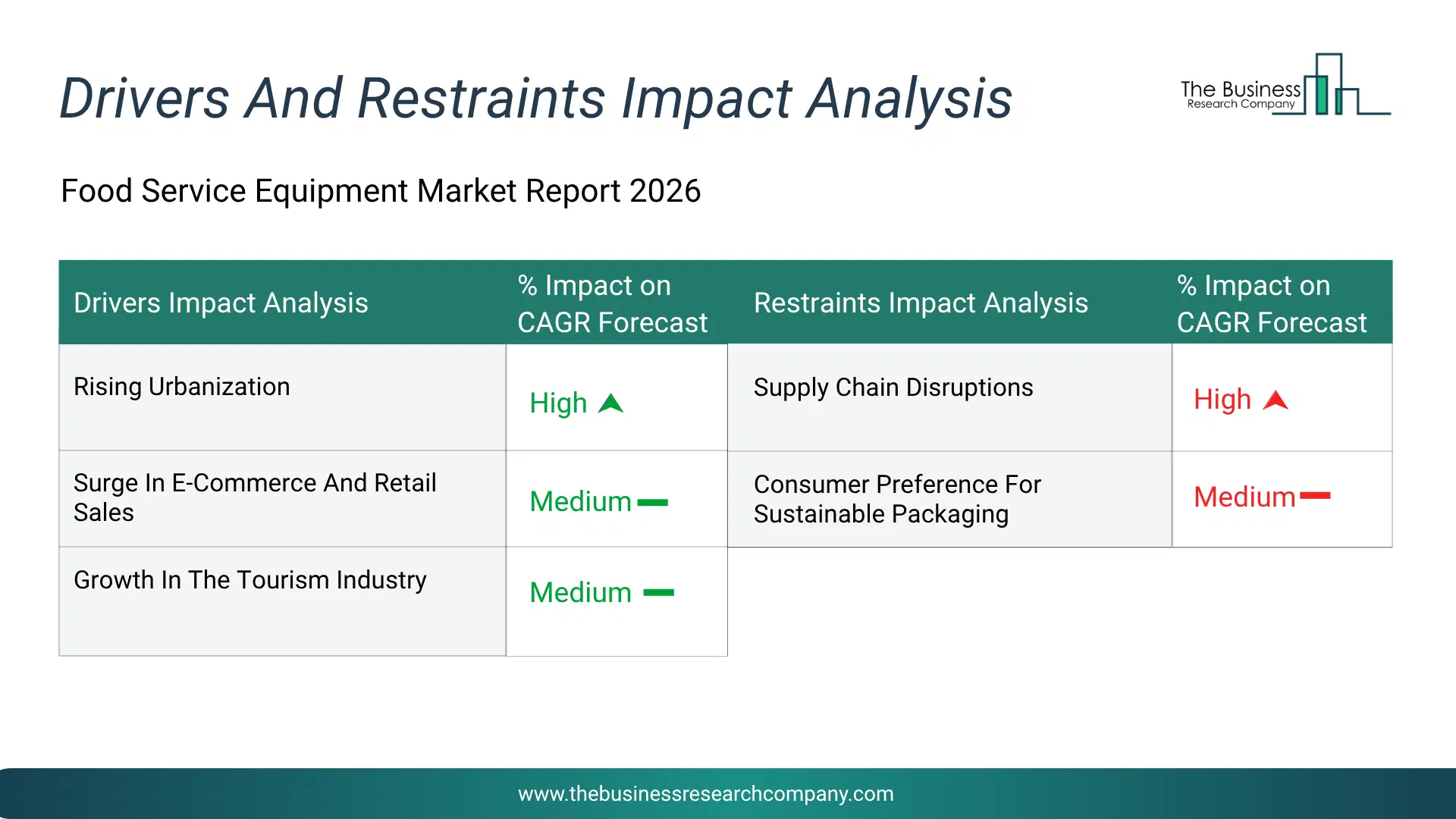
Infographic Chart Showing Key Market Drivers Analysis And Restraints For Food Service Equipment Market
The chart presents an impact analysis of key drivers and restraints, quantifying their relative influence on the market's growth rate and helping assess the balance between growth enablers and limiting factors. This chart offers a high-level perspective; the full report contains more detailed insights.
How Will The Drivers Impact Growth In The Global Food Service Equipment Market?
• Rising Urbanization (High) – The rising urbanization will become a key driver of growth in the food service equipment market by 2030. As urban areas expand, there is a surge in quick-service restaurants, cafes, hotels, and cloud kitchens, all of which require efficient and modern food service equipment to meet growing consumer demand. Urbanization fosters the development of commercial spaces, shopping malls, and food courts, further boosting the need for advanced cooking, refrigeration, and dishwashing solutions. As a result, rising urbanization is anticipated to contributing to a 2.0% annual growth in the market. • Surge In E-Commerce And Retail Sales (Medium) – The surge in e-commerce and retail sales will become a key driver of growth in the food service equipment market by 2030. With increasing consumer reliance on online food ordering and meal delivery services, restaurants, cloud kitchens, and food processing units are investing in high-performance cooking, refrigeration, and packaging equipment to streamline operations and meet rising demand. The growth of online grocery and fresh food retail requires advanced cold storage and food preparation equipment to ensure product freshness and quality. As a result, surge in e-commerce and retail sales is anticipated to contributing to a 1.5% annual growth in the market. • Growth In The Tourism Industry (Medium) – The growth in the tourism industry will serve as a key growth catalyst food service equipment market by 2030, As more tourists seek diverse dining experiences, hospitality businesses are expanding and upgrading their kitchen infrastructure with advanced cooking, refrigeration, and dishwashing equipment to enhance efficiency and service quality. Additionally, luxury hotels and fine-dining establishments are investing in high-end, energy-efficient food service equipment to maintain hygiene standards and optimize operations. Therefore, this growth in the tourism industry is projected to supporting to a 1.5% annual growth in the market. • Increase In Global Population (Low) – The increase in global population will serve as a key growth catalyst for food service equipment market by 2030, With more people requiring convenient and accessible food options, there is a growing need for efficient cooking, refrigeration, and dishwashing equipment in commercial kitchens, fast-food chains, and food production units. Urban population growth leads to the proliferation of food courts, cloud kitchens, and takeaway services, further increasing the demand for advanced and automated food service equipment. Therefore, this increase in global population will is projected to supporting to a 1.0% annual growth in the market.How Will The Restraints Impact Growth In The Global Food Service Equipment Market?
• Supply Chain Disruptions (High) – Supply Chain Disruptions will restrict the growth of the Food Service Equipment market during the forecast period. Food service equipment production depends on global supply chains for stainless steel, electronic components, and specialized materials. Supply disruptions can affect product availability, lead to price increases, and delay deliveries. Supply chain challenges impact the ability of manufacturers to meet demand from the growing food service sector, limiting market growth. • Consumer Preference For Sustainable Packaging (Medium) – Consumer Preference For Sustainable Packaging will restrict the growth of the Food Service Equipment market during the forecast period. Growing consumer preference for sustainable packaging and disposable alternatives affects demand for certain food service equipment. Shifts toward eco-friendly solutions may require equipment upgrades and changes in food service operations. Equipment manufacturers must adapt to changing consumer preferences, affecting product development and market dynamics.Key Players In The Global Food Service Equipment Market
Major companies operating in the food service equipment market are AB Electrolux, Ali Group Srl a Socio Unico, Dover Corporation, Duke Manufacturing, Haier Group Corporation, Smeg S.p.A., The Middleby Corporation, Meiko Maschinenbau GmbH & Co. KG, Hoshizaki Electric Co. Ltd., Fujimak Corporation, Tupperware Brands Corporation, Hobart Corporation, Manitowoc Company Inc., Alto-Shaam Inc., Cambro Manufacturing Co. Inc., Comstock-Castle Stove Co. Inc., Welbilt Inc., ITW Food Equipment Group, Standex International Corporation, The Vollrath Company LLC, The Vollrath Company, Rational AG, Hatco Corporation, Ice-O-Matic, Bunn-O-Matic Corporation, Grindmaster-Cecilware, Waring Commercial Inc., Robot Coupe USA Inc.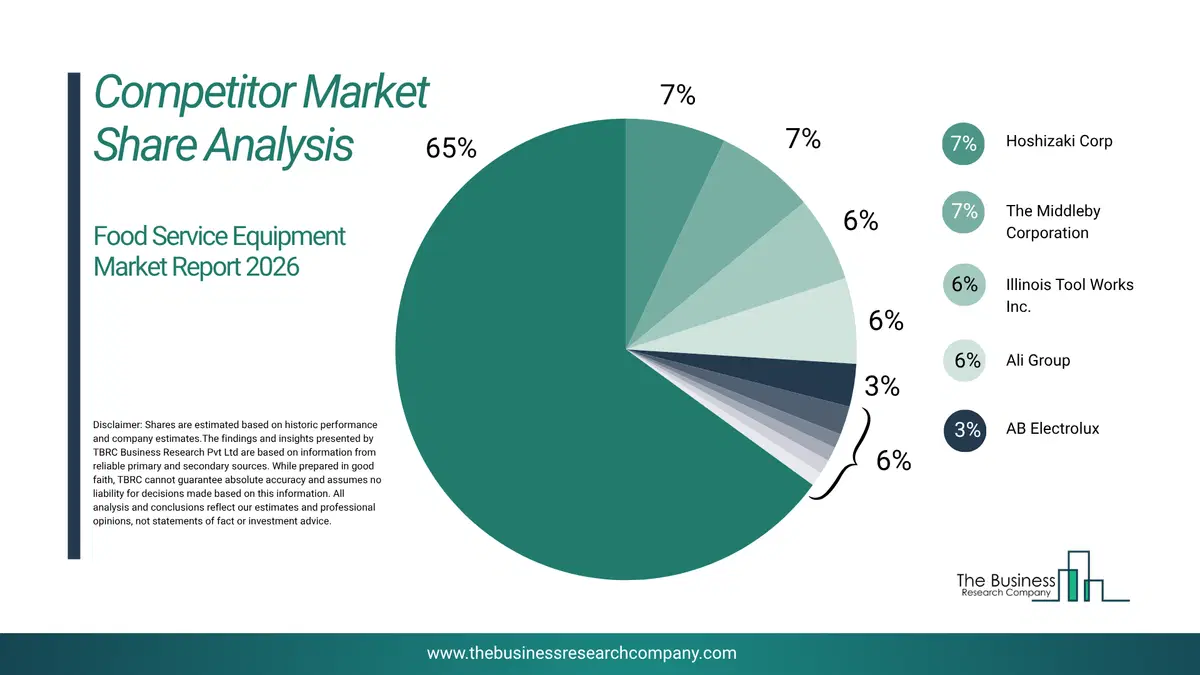
This chart is for illustrative purposes; the full report includes a detailed competitor analysis and comprehensive overview of the top 10 companies in the market.
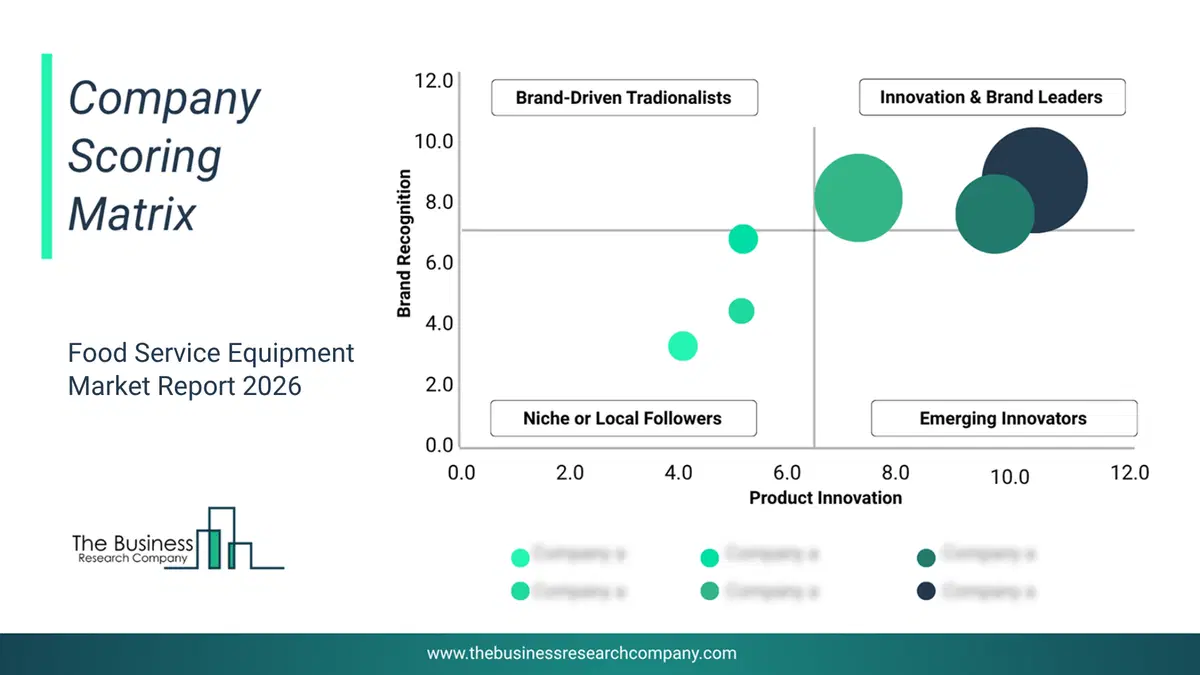
This chart maps companies by product innovation and brand strength, with bubble size indicating relative revenue, helping identify market leaders, challengers, and niche players. This is an illustrative chart; the full report provides a complete and accurate competitive analysis.
Global Food Service Equipment Market Trends and Insights
Major companies operating in the food service equipment market are focusing on developing innovative solutions, such as fully automated mobile kitchens and robotic cooking platforms, to address labor shortages, improve consistency, and enable scalable out-of-home foodservice models. Automated mobile kitchens combine robotic cooking hardware, including auto-woks, robotic arms, and automated dispensers, with integrated software for order management and route optimization, along with remote monitoring and maintenance capabilities. For instance, in August 2024, Shin Starr Presents Corp., a US-based company, launched a first-of-its-kind unmanned robotic mobile kitchen that cooks full meals en route via an app called Ohlso; the system uses “auto-woks” and prepped ingredients staged at an off-site kitchen, operates through an app to trigger meal programs and timing, maintains precise wok temperatures and stir-fry sequences to deliver hot, freshly prepared dishes as the truck arrives, includes remote diagnostics and maintenance workflows to keep units running with minimal on-site staff, and is designed for rapid expansion across the Bay Area, benefits include lower labor requirements, improved order consistency, faster delivery of hot meals, and new pathways for restaurant groups to scale delivery and fleet operations.What Are Latest Mergers And Acquisitions In The Food Service Equipment Market?
In February 2023, Marco Beverage Systems, an Ireland-based manufacturer company, acquired Middleby Corporation for an undisclosed amount. The aim of the acquisition is to expand Marco Beverage Systems beverage offerings by integrating innovative and energy-efficient beverage dispensing solutions that align with emerging trends in the food service industry. Middleby Corporation is a US-based manufacturing company that operates in the food service equipment industry. It designs and produces a wide range of commercial kitchen equipment, including cooking, food processing, and beverage dispensing solutions, catering to restaurants, hotels, and other food service establishments. The company is known for its focus on innovation and efficiency in its product offerings.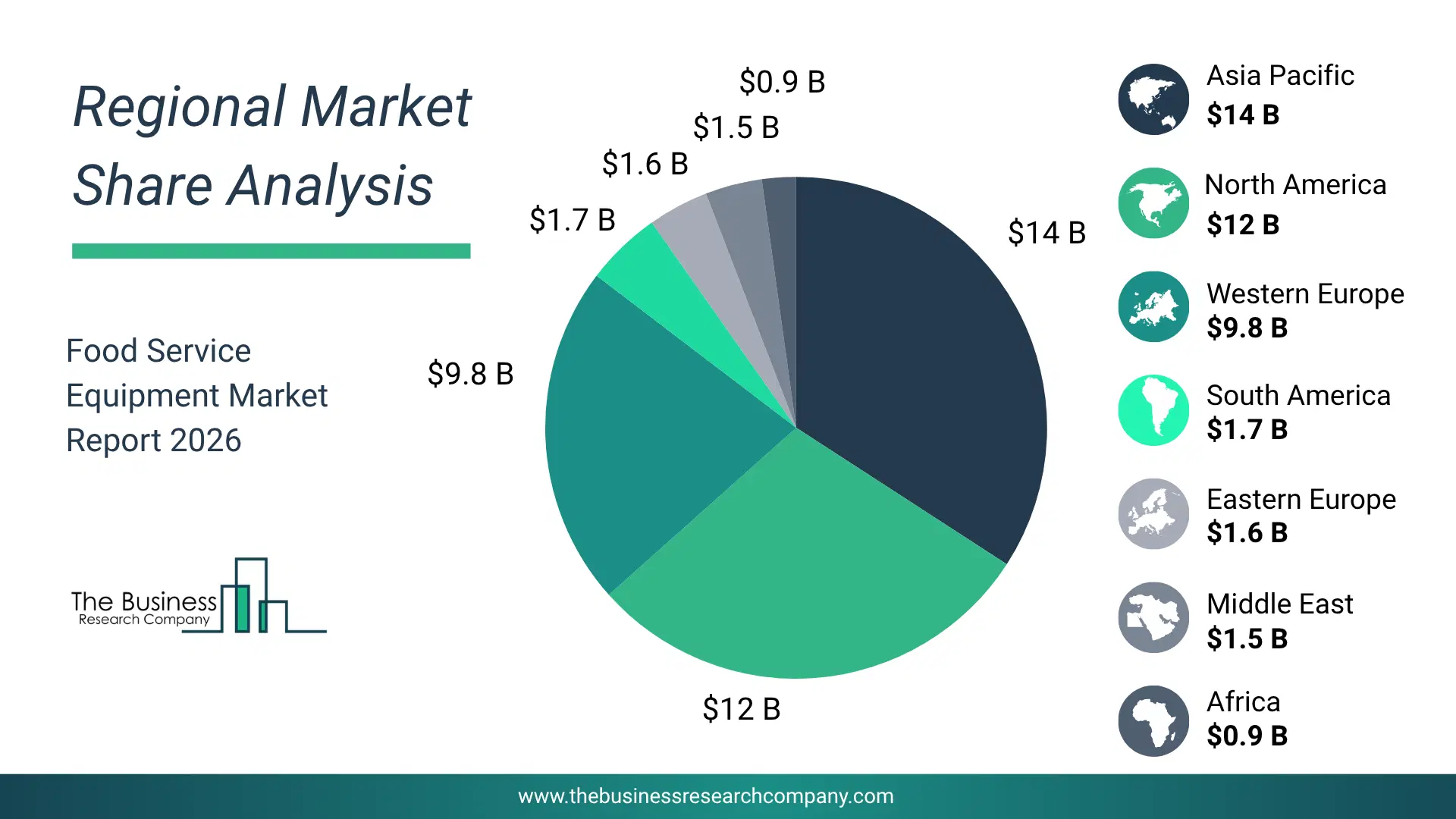
Regional Outlook
Asia-Pacific was the largest region in the food service equipment market in 2025. North America is expected to be the fastest-growing region in the forecast period. The regions covered in this market report are Asia-Pacific, South East Asia, Western Europe, Eastern Europe, North America, South America, Middle East, Africa The countries covered in this market report are Australia, Brazil, China, France, Germany, India, Indonesia, Japan, Taiwan, Russia, South Korea, UK, USA, Canada, Italy, Spain.What Defines the Food Service Equipment Market?
The food service equipment market consists of sales of utensils, pots, pans, bowls, and spoons, large equipment such as range, steamers, boiling pans, and refrigerators, mechanical equipment such as peelers, pin-cers, mixers, refrigerators. Values in this market are ‘factory gate’ values, that is the value of goods sold by the manufacturers or creators of the goods, whether to other entities (including downstream manufacturers, wholesalers, distributors, and retailers) or directly to end customers. The value of goods in this market includes related services sold by the creators of the goods.How is Market Value Defined and Measured?
The market value is defined as the revenues that enterprises gain from the sale of goods and/or services within the specified market and geography through sales, grants, or donations in terms of the currency (in USD unless otherwise specified). The revenues for a specified geography are consumption values that are revenues generated by organizations in the specified geography within the market, irrespective of where they are produced. It does not include revenues from resales along the supply chain, either further along the supply chain or as part of other products.
This chart presents market attractiveness based on a quantitative evaluation of growth, competition, strategic alignment, and risk, offering a clear view of opportunity areas for decision-making. This chart is for illustrative purposes; the full report contains the complete analysis.

This chart highlights the Total Addressable Market (TAM) by estimating the maximum revenue opportunity using an assumption-driven approach, supporting strategic planning and opportunity sizing across markets. The chart is illustrative; the full report provides a more comprehensive analysis.
What Key Data and Analysis Are Included in the Food Service Equipment Market Report 2026?
The food service equipment market research report is one of a series of new reports from The Business Research Company that provides market statistics, including industry global market size, regional shares, competitors with the market share, detailed market segments, market trends and opportunities, and any further data you may need to thrive in the food service equipment industry. The market research report delivers a complete perspective of everything you need, with an in-depth analysis of the current and future state of the industry.Food Service Equipment Market Report Forecast Analysis
| Report Attribute | Details |
|---|---|
| Market Size Value In 2026 | $43.43 billion |
| Revenue Forecast In 2030 | $55.09 billion |
| Growth Rate | CAGR of 6.0% from 2026 to 2030 |
| Base Year For Estimation | 2025 |
| Actual Estimates/Historical Data | 2020-2025 |
| Forecast Period | 2026 - 2030 |
| Market Representation | Revenue in USD Billion and CAGR from 2026 to 2030 |
| Segments Covered | Equipment, Distribution Channel, End-User |
| Regional Scope | Asia-Pacific, Western Europe, Eastern Europe, North America, South America, Middle East, Africa |
| Country Scope | The countries covered in the report are Australia, Brazil, China, France, Germany, India, Indonesia, Japan, Taiwan, Russia, South Korea, UK, USA, Canada, Italy, Spain. |
| Key Companies Profiled | AB Electrolux, Ali Group Srl a Socio Unico, Dover Corporation, Duke Manufacturing, Haier Group Corporation, Smeg S.p.A., The Middleby Corporation, Meiko Maschinenbau GmbH & Co. KG, Hoshizaki Electric Co. Ltd., Fujimak Corporation, Tupperware Brands Corporation, Hobart Corporation, Manitowoc Company Inc., Alto-Shaam Inc., Cambro Manufacturing Co. Inc., Comstock-Castle Stove Co. Inc., Welbilt Inc., ITW Food Equipment Group, Standex International Corporation, The Vollrath Company LLC, The Vollrath Company, Rational AG, Hatco Corporation, Ice-O-Matic, Bunn-O-Matic Corporation, Grindmaster-Cecilware, Waring Commercial Inc., Robot Coupe USA Inc. |
| Customization Scope | Request for Customization |
| Pricing And Purchase Options | Explore Purchase Options |