
Foodservice Coffee Market Report 2026
Global Outlook – By Type (Take Away Or Delivery, Dine-in), By Type Of Coffee Bean (Arabica, Robusta, Other Types Of Coffee Bean), By Coffee Machine (Traditional Coffee Machine, Automated Coffee Machine) – Market Size, Trends, Strategies, and Forecast to 2030
Foodservice Coffee Market Overview
• Foodservice Coffee market size has reached to $479.32 billion in 2025 • Expected to grow to $641.52 billion in 2030 at a compound annual growth rate (CAGR) of 6.2% • Growth Driver: Rising Demand For Specialty Coffee Drives Growth In Foodservice Coffee Market • Market Trend: Innovative Solutions In The Food Service Coffee Market Enhancing Quality And Sustainability • North America was the largest region in 2025.What Is Covered Under Foodservice Coffee Market?
Foodservice coffee refers to coffee products and services that are specifically designed for use in the food service industry, such as restaurants, cafes, hotels, and convenience stores. It is used to improve customer satisfaction and offers a range of coffee products and hot beverage services. The main types of foodservice coffee are take-away or delivery and dine-in. Takeaway and delivery refer to methods of getting food from a restaurant or food establishment to customers who are not dining in the establishment, where foodservice coffee is used for taking-away and delivery orders, allowing customers to enjoy coffee on the go or at their desired location. The various types of coffee beans used are arabica, robusta, and others in traditional coffee machines and automated coffee machines by various food services outlets such as restaurants, cafes, hotels, and others.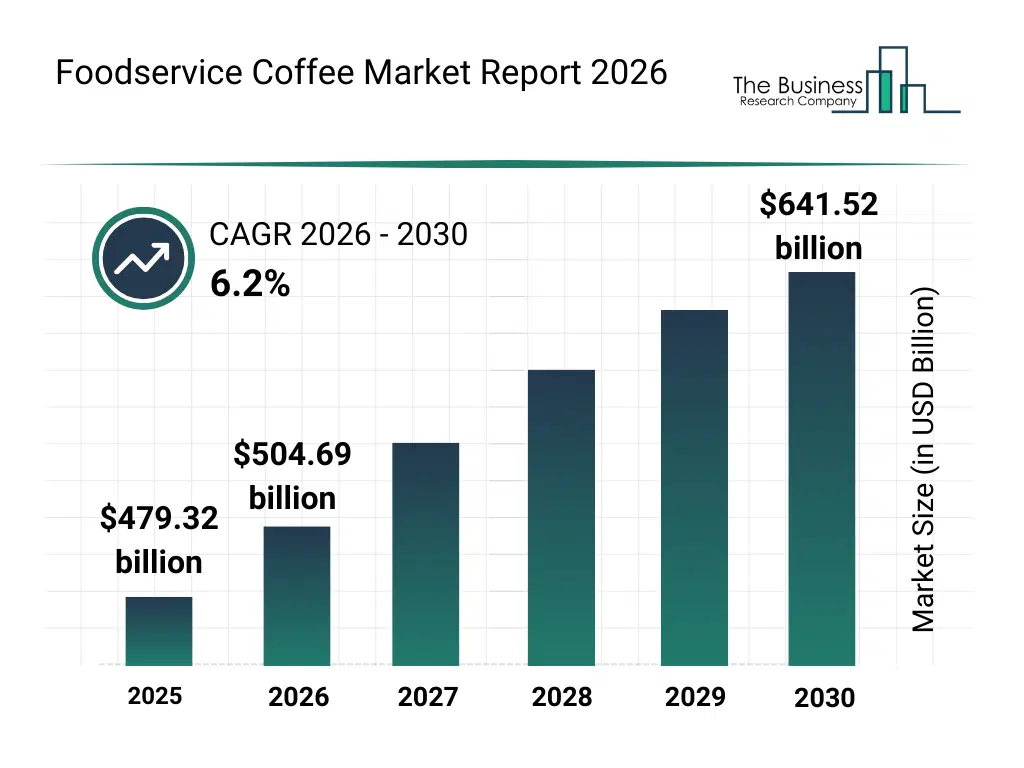
What Is The Foodservice Coffee Market Size and Share 2026?
The foodservice coffee market size has grown strongly in recent years. It will grow from $479.32 billion in 2025 to $504.69 billion in 2026 at a compound annual growth rate (CAGR) of 5.3%. The growth in the historic period can be attributed to expansion of café culture, growth in foodservice outlets, rising consumer coffee consumption outside home, increased availability of professional coffee equipment, growth of branded coffee chains.What Is The Foodservice Coffee Market Growth Forecast?
The foodservice coffee market size is expected to see strong growth in the next few years. It will grow to $641.52 billion in 2030 at a compound annual growth rate (CAGR) of 6.2%. The growth in the forecast period can be attributed to increasing demand for premium and craft coffee, rising investments in smart coffee machines, expansion of sustainable and ethical sourcing practices, growing focus on customer experience enhancement, increasing digital ordering integration. Major trends in the forecast period include increasing demand for specialty coffee offerings, growing adoption of automated coffee machines, expansion of premium coffee experiences, enhanced focus on sustainable coffee sourcing, increasing menu customization.
Global Foodservice Coffee Market Segmentation
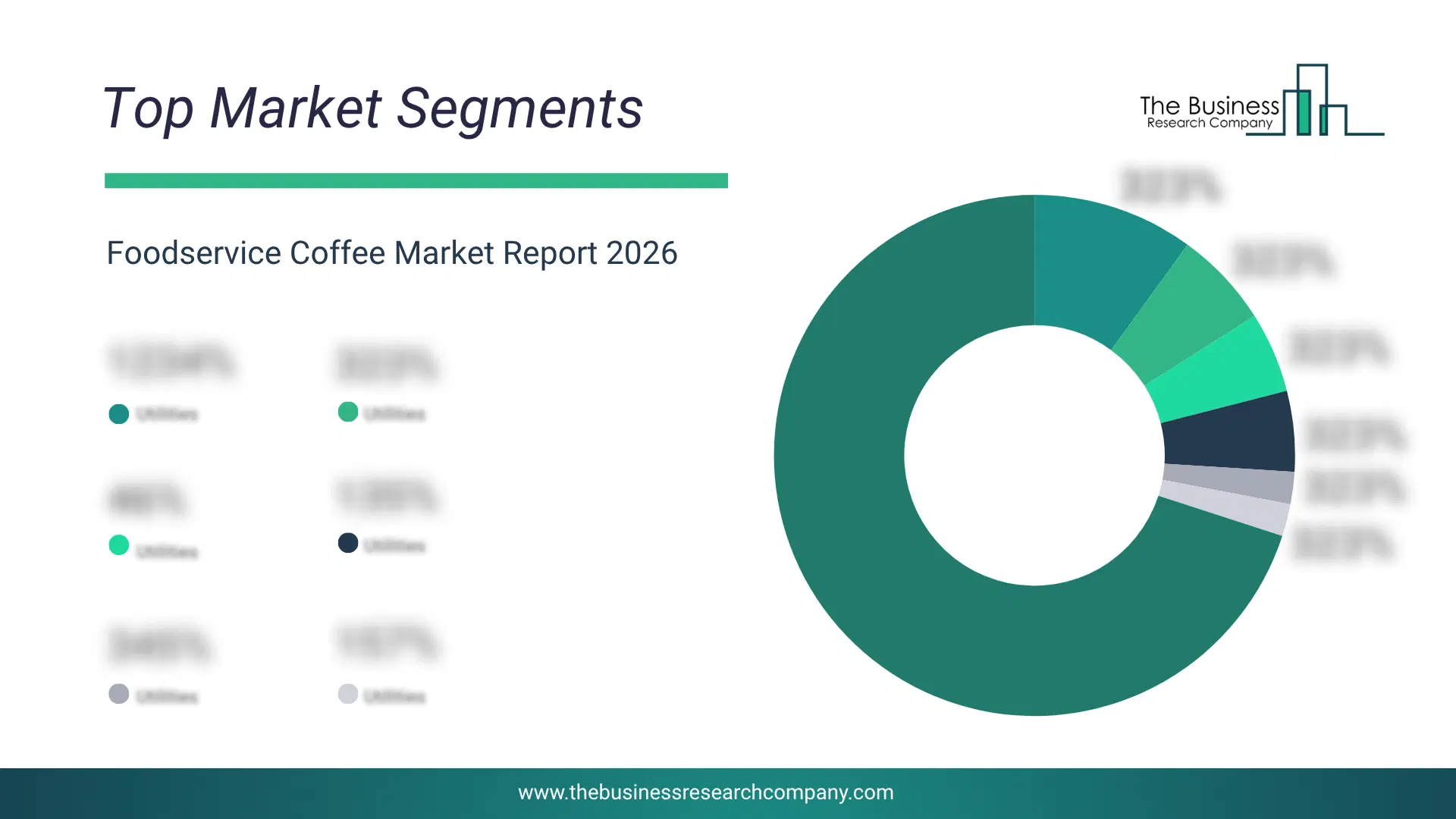
1) By Type: Take Away Or Delivery, Dine-in 2) By Type Of Coffee Bean: Arabica, Robusta, Other Types Of Coffee Bean 3) By Coffee Machine: Traditional Coffee Machine, Automated Coffee Machine Subsegments: 1) By Take Away Or Delivery: Coffee Shops, Drive-Thru Services, Online Delivery Services 2) By Dine-In: Cafés, Restaurants, Coffee LoungesWhat Is The Driver Of The Foodservice Coffee Market?
Increasing demand for specialty coffee is expected to propel the growth of the foodservice coffee market going forward. Specialty coffee are cultivated at the optimal altitude, time of year, and in the best soil that gives a unique flavor. Foodservice coffee providers often provide specialty coffee to consumers or clients to address the need for higher-quality coffee experiences, differentiate themselves from the competition, and perhaps increase revenue while providing customers with exceptional coffee options. For instance, in April 2024, according to the report published by Cafely, a US-based technology company that provides a platform for managing coffee subscriptions, in the United States, coffee consumption remained steady, with Americans consuming 27.3 million 60-kilogram bags in both 2023 and 2024. Therefore, the increasing demand for specialty coffee is driving the foodservice coffee industry.Key Players In The Global Foodservice Coffee Market
Major companies operating in the foodservice coffee market are Nestlé S.A., Sysco Corporation, Starbucks Corporation, Inspire Brands Inc., Kraft Heinz Foods Co., Aramark Corporation, Wawa Inc., Ajinomoto Co. Inc., J. M. Smucker Company, Tim Hortons Inc., Tchibo Coffee International Ltd., Luigi Lavazza S.p.A., Melitta Group Management GmbH & Co. KG., Tata Consumer Products Ltd., Massimo Zanetti Beverage Group S.p.A., Peet's Coffee & Tea Inc., Costa Limited, Westrock Coffee Company Inc., Illycaffe SpA, Bewley's Ltd., The Coffee Bean & Tea Leaf Philippines Inc., Jacobs Douwe Egberts GB Ltd., Caffè Nero Group PLC, Farmer Bros. Co., Caribou Coffee Company Inc., Juan Valdez Café, Ediya Co. Ltd., Ronnoco Coffee LLC, Foley Foodservice, SOHO Coffee Co.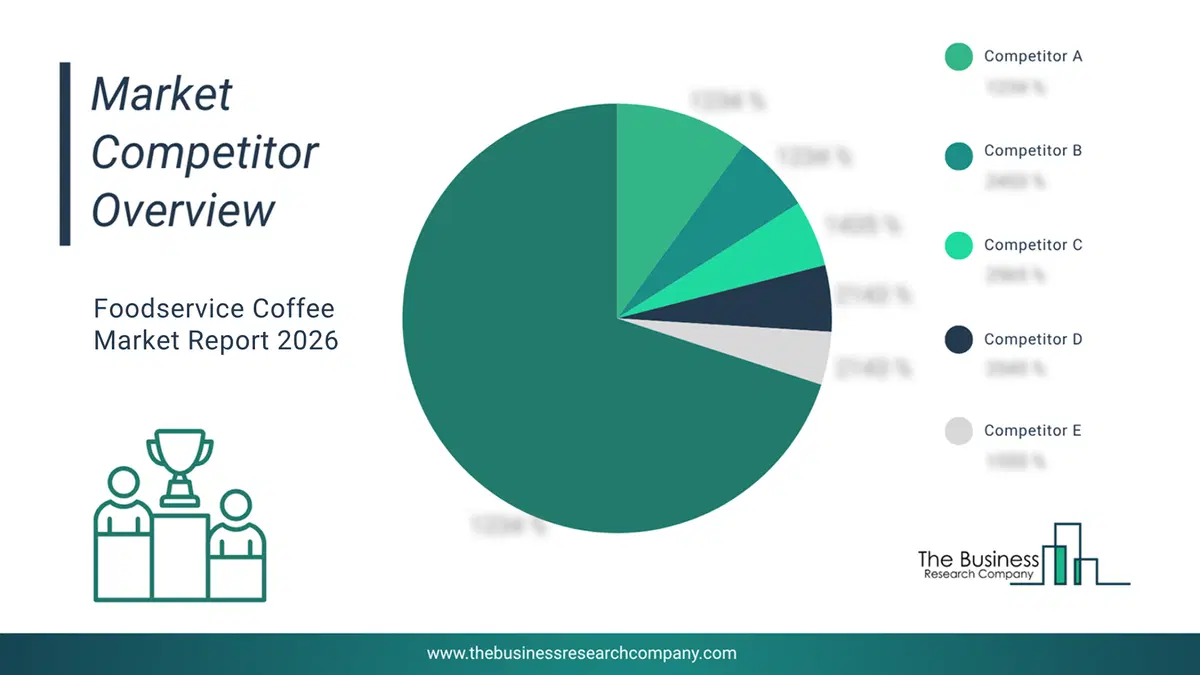
This chart is for illustrative purposes; the full report includes a detailed competitor analysis and comprehensive overview of the top 10 companies in the market.
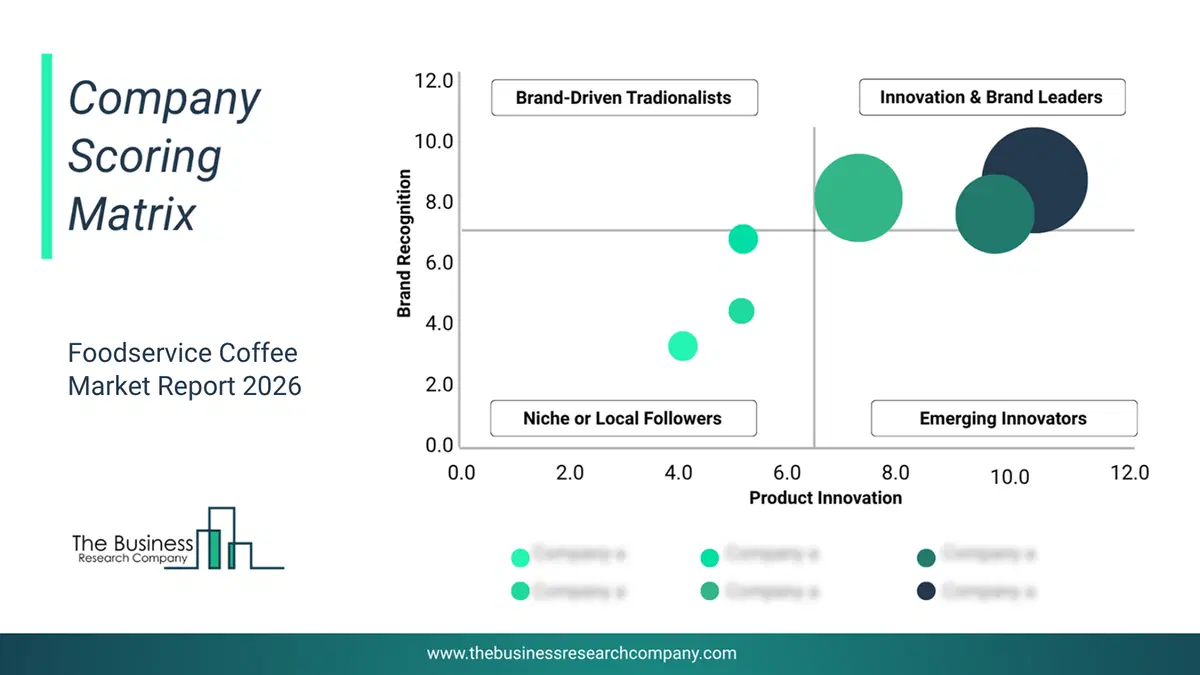
This chart maps companies by product innovation and brand strength, with bubble size indicating relative revenue, helping identify market leaders, challengers, and niche players. This is an illustrative chart; the full report provides a complete and accurate competitive analysis.
Global Foodservice Coffee Market Trends and Insights
Major companies operating in the food service coffee market are focusing on developing coffee gains through the use of proprietary technology such as bean-free coffee to enhance coffee quality and consistency, aiming to improve customer experience and streamline operations. Bean-free coffee refers to a coffee alternative made without traditional coffee beans, typically produced through methods like fermentation or molecular reconstruction to replicate the flavor, aroma, and experience of regular coffee. For instance, in July 2024, Voyage Foods, a US-based food manufacturing company, launched its bean-free coffee, a sustainable alternative made from roasted chickpeas, rice hulls, and green tea caffeine, available in various formats, including liquid, instant, and ground. Using proprietary technology, this product mimics the taste of traditional coffee while offering a stable, cost-effective solution for foodservice and manufacturing businesses. Its significance in the food service coffee market lies in its ability to address rising coffee prices and supply chain risks while providing a more sustainable option for businesses looking to meet environmental goals.What Are Latest Mergers And Acquisitions In The Foodservice Coffee Market?
In March 2024, JDE Peet’s, a Netherlands-based provider of coffee and tea products and brands, acquired the roasting operations of Caribou Coffee for an undisclosed amount. Through this acquisition, JDE Peet’s aims to expand its premium coffee portfolio and strengthen its presence in the U.S., the world’s largest coffee market, by gaining the license to manufacture, market, and sell Caribou-branded consumer and foodservice coffee products. Caribou Coffee is a US-based provider of retail coffeehouse services and branded coffee products.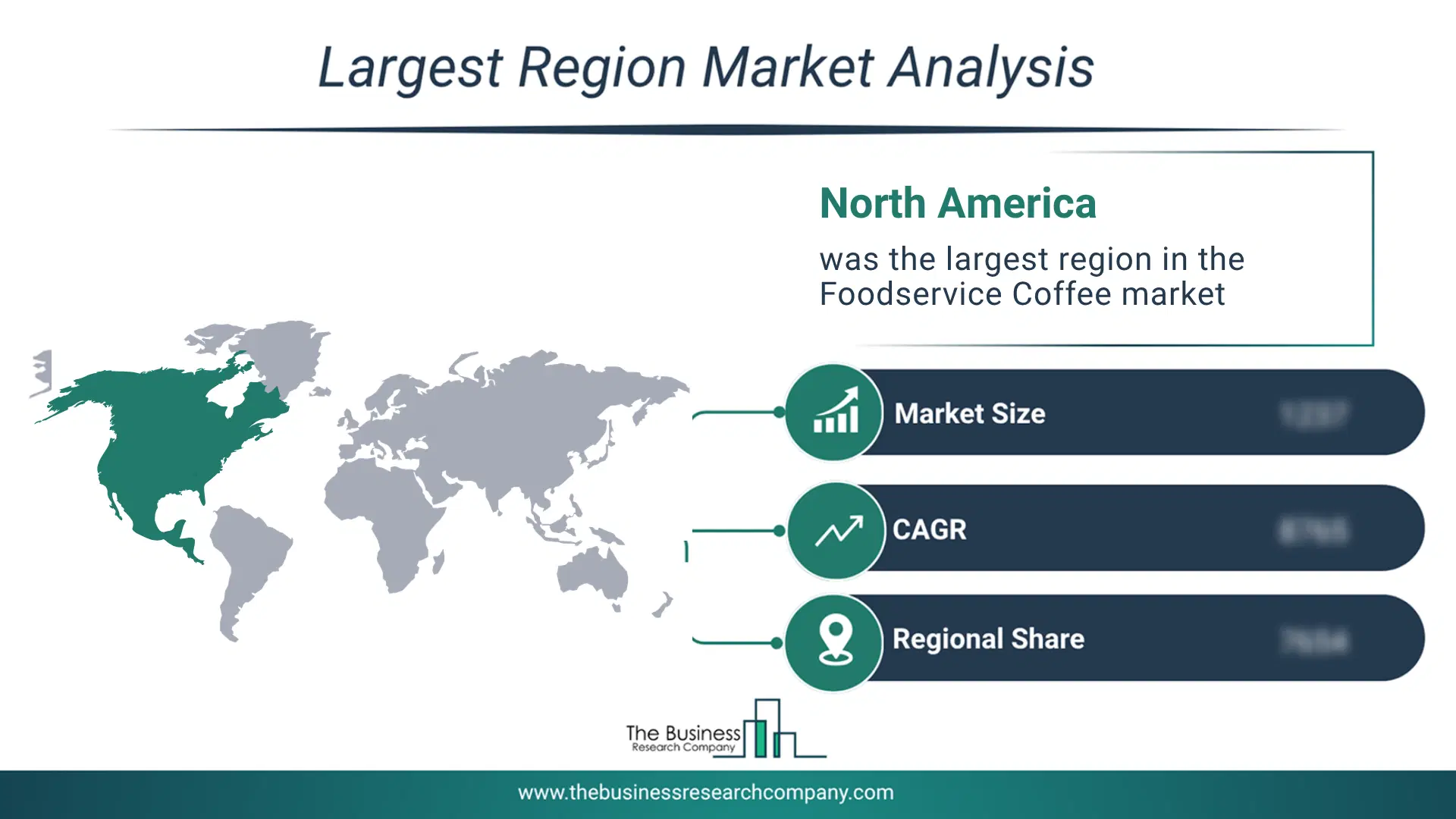
Regional Outlook
North America was the largest region in the foodservice coffee market in 2025. The regions covered in this market report are Asia-Pacific, South East Asia, Western Europe, Eastern Europe, North America, South America, Middle East and Africa. The countries covered in this market report are Australia, Brazil, China, France, Germany, India, Indonesia, Japan, Taiwan, Russia, South Korea, UK, USA, Italy, Spain, CanadaWhat Defines the Foodservice Coffee Market?
The food service coffee market consists of revenues earned by entities by providing full-service coffee bars, self-service coffee stations, tableside coffee services, and catering services. The market value includes the value of related goods sold by the service provider or included within the service offering. The food service coffee market also includes sales of drip coffee, cappuccino, lattes, mochas, espresso, Americano, macchiato, and breve. Values in this market are ‘factory gate’ values, that is, the value of goods sold by the manufacturers or creators of the goods, whether to other entities (including downstream manufacturers, wholesalers, distributors, and retailers) or directly to end customers. The value of goods in this market includes related services sold by the creators of the goods.How is Market Value Defined and Measured?
The market value is defined as the revenues that enterprises gain from the sale of goods and/or services within the specified market and geography through sales, grants, or donations in terms of the currency (in USD unless otherwise specified). The revenues for a specified geography are consumption values that are revenues generated by organizations in the specified geography within the market, irrespective of where they are produced. It does not include revenues from resales along the supply chain, either further along the supply chain or as part of other products.
This chart presents market attractiveness based on a quantitative evaluation of growth, competition, strategic alignment, and risk, offering a clear view of opportunity areas for decision-making. This chart is for illustrative purposes; the full report contains the complete analysis.

This chart highlights the Total Addressable Market (TAM) by estimating the maximum revenue opportunity using an assumption-driven approach, supporting strategic planning and opportunity sizing across markets. The chart is illustrative; the full report provides a more comprehensive analysis.
What Key Data and Analysis Are Included in the Foodservice Coffee Market Report 2026?
The foodservice coffee market research report is one of a series of new reports from The Business Research Company that provides market statistics, including industry global market size, regional shares, competitors with the market share, detailed market segments, market trends and opportunities, and any further data you may need to thrive in the foodservice coffee industry. The market research report delivers a complete perspective of everything you need, with an in-depth analysis of the current and future state of the industry.Foodservice Coffee Market Report Forecast Analysis
| Report Attribute | Details |
|---|---|
| Market Size Value In 2026 | $504.69 billion |
| Revenue Forecast In 2030 | $641.52 billion |
| Growth Rate | CAGR of 5.3% from 2026 to 2030 |
| Base Year For Estimation | 2025 |
| Actual Estimates/Historical Data | 2020-2025 |
| Forecast Period | 2026 - 2030 |
| Market Representation | Revenue in USD Billion and CAGR from 2026 to 2030 |
| Segments Covered | Type, Type Of Coffee Bean, Coffee Machine |
| Regional Scope | Asia-Pacific, Western Europe, Eastern Europe, North America, South America, Middle East, Africa |
| Country Scope | The countries covered in the report are Australia, Brazil, China, France, Germany, India, Indonesia, Japan, Taiwan, Russia, South Korea, UK, USA, Canada, Italy, Spain. |
| Key Companies Profiled | Nestlé S.A., Sysco Corporation, Starbucks Corporation, Inspire Brands Inc., Kraft Heinz Foods Co., Aramark Corporation, Wawa Inc., Ajinomoto Co. Inc., J. M. Smucker Company, Tim Hortons Inc., Tchibo Coffee International Ltd., Luigi Lavazza S.p.A., Melitta Group Management GmbH & Co. KG., Tata Consumer Products Ltd., Massimo Zanetti Beverage Group S.p.A., Peet's Coffee & Tea Inc., Costa Limited, Westrock Coffee Company Inc., Illycaffe SpA, Bewley's Ltd., The Coffee Bean & Tea Leaf Philippines Inc., Jacobs Douwe Egberts GB Ltd., Caffè Nero Group PLC, Farmer Bros. Co., Caribou Coffee Company Inc., Juan Valdez Café, Ediya Co. Ltd., Ronnoco Coffee LLC, Foley Foodservice, SOHO Coffee Co. |
| Customization Scope | Request for Customization |
| Pricing And Purchase Options | Explore Purchase Options |