

Alimentary Tract Implant Market Report 2026
Global Outlook – By Implant Type (Bariatric Restriction And Balloons, Gastric Electrical Stimulation Or Neuromodulation, Gastrointestinal (GI) Stents Or Endoluminal Scaffolds, Continence Or Anal Sphincter Implants), By Procedure Approach (Endoscopic Or Transoral, Laparoscopic Bariatric, Open Or Revision Surgery, Colorectal Or Perineal Implantation), By Indication (Obesity Or Metabolic Control, Motility Disorders, Gastrointestinal (GI) Stricture Or Obstruction Or Leak Management, Fecal Incontinence Or Continence Restoration) – Market Size, Trends, Strategies, and Forecast to 2030
Alimentary Tract Implant Market Overview
• Alimentary Tract Implant market size has reached to $5.13 billion in 2025 • Expected to grow to $7.12 billion in 2030 at a compound annual growth rate (CAGR) of 6.7% • Growth Driver: Rising Prevalence Of Gastrointestinal Disorders Fuelling The Growth Of The Market Amid Increasing Demand For Advanced Digestive Health Solutions • Market Trend: Integration Of Endoscopic Innovation In Next-Generation Therapeutic Implants • North America was the largest region in 2025 and Asia-Pacific is the fastest growing region.What Is Covered Under Alimentary Tract Implant Market?
An alimentary-tract implant is a medical device placed within the digestive system to support, enhance, or modify its function. It is typically positioned in areas such as the stomach or small intestine, where it can divert, restrict, or regulate the movement of food and digestive fluids, as well as their interaction with the intestinal lining. These implants play an important role in managing conditions such as obesity, diabetes, and malabsorption disorders by altering nutrient flow, digestion, or absorption in targeted ways. The main implant types of alimentary tract implants include bariatric restriction and balloons, gastric electrical stimulation or neuromodulation, gastrointestinal (GI) stents or endoluminal scaffolds, and continence or anal sphincter implants. Bariatric restriction and balloons refer to implantable or temporary devices designed to limit stomach capacity and promote weight loss by reducing food intake in individuals with obesity. The different procedure approaches used are endoscopic or transoral, laparoscopic bariatric, open or revision surgery, and colorectal or perineal implantation. The key indications involved are obesity or metabolic control, motility disorders, gastrointestinal (GI) stricture or obstruction or leak management, and fecal incontinence or continence restoration.
What Is The Alimentary Tract Implant Market Size and Share 2026?
The alimentary tract implant market size has grown strongly in recent years. It will grow from $5.13 billion in 2025 to $5.49 billion in 2026 at a compound annual growth rate (CAGR) of 7.0%. The growth in the historic period can be attributed to rising obesity rates, growth in metabolic disorders, advancements in endoscopic surgery, demand for non-pharmaceutical treatments, healthcare infrastructure expansion.What Is The Alimentary Tract Implant Market Growth Forecast?
The alimentary tract implant market size is expected to see strong growth in the next few years. It will grow to $7.12 billion in 2030 at a compound annual growth rate (CAGR) of 6.7%. The growth in the forecast period can be attributed to increase in diabetes management implants, minimally invasive procedure demand, innovation in implant materials, precision treatment approaches, aging population growth. Major trends in the forecast period include minimally invasive digestive implants, bariatric and metabolic implants, endoscopic implant procedures, neuromodulation for GI disorders, long-term implant biocompatibility.
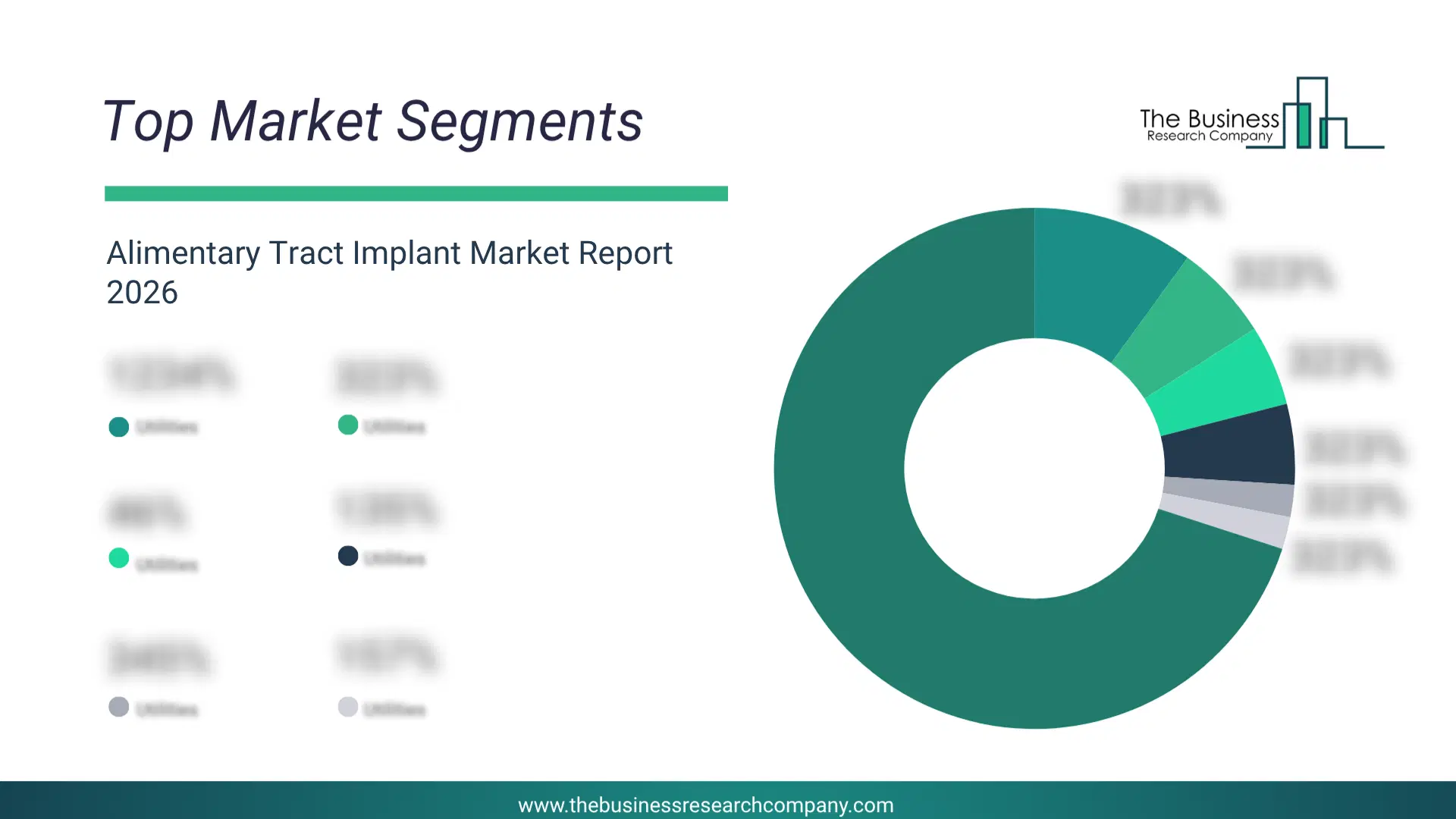
Global Alimentary Tract Implant Market Segmentation
1) By Implant Type: Bariatric Restriction And Balloons, Gastric Electrical Stimulation Or Neuromodulation, Gastrointestinal (GI) Stents Or Endoluminal Scaffolds, Continence Or Anal Sphincter Implants 2) By Procedure Approach: Endoscopic Or Transoral, Laparoscopic Bariatric, Open Or Revision Surgery, Colorectal Or Perineal Implantation 3) By Indication: Obesity Or Metabolic Control, Motility Disorders, Gastrointestinal (GI) Stricture Or Obstruction Or Leak Management, Fecal Incontinence Or Continence Restoration Subsegments: 1) By Bariatric Restriction And Balloons: Gastric Bands, Gastric Balloons, Adjustable Gastric Balloons, Non-Adjustable Gastric Balloons, Intragastric Balloons 2) By Gastric Electrical Stimulation Or Neuromodulation: Implantable Gastric Stimulators, Vagal Nerve Stimulators, Enteric Nerve Stimulators, Gastric Pacemakers 3) By Gastrointestinal Stents Or Endoluminal Scaffolds: Esophageal Stents, Gastric Stents, Duodenal Stents, Colonic Stents, Biliary Stents 4) By Continence Or Anal Sphincter Implants: Artificial Anal Sphincters, Sacral Nerve Stimulators, Magnetic Anal SphinctersWhat Is The Driver Of The Alimentary Tract Implant Market?
The rising prevalence of gastrointestinal disorders is expected to propel the growth of the alimentary tract implant market going forward. Gastrointestinal disorders are a wide range of conditions affecting the digestive tract, including the stomach, intestines, and associated organs, and can cause symptoms such as pain, inflammation, obstruction, or impaired motility. The prevalence of gastrointestinal disorders is rising primarily due to poor dietary habits, particularly the increased intake of processed and high-fat foods that disrupt gut microbiota balance and contribute to digestive dysfunction. Demand for alimentary tract implants is rising as the rapid increase in gastrointestinal disorders drives healthcare providers to adopt advanced implantable solutions for managing obesity, fecal incontinence, gastrointestinal obstruction, and other chronic digestive conditions. For instance, in September 2025, according to the UK Health Security Agency (UKHSA), a UK-based government public health body, England recorded a 27% increase in laboratory-confirmed Campylobacter infections, with rates rising from 96.1 per 100,000 people in 2022 to 122.0 per 100,000 in 2024. Therefore, the rising prevalence of gastrointestinal disorders is driving the growth of the alimentary tract implant industry.Key Players In The Global Alimentary Tract Implant Market
Major companies operating in the alimentary tract implant market are Medtronic Public Limited Company, Boston Scientific Corporation, Cook Group Incorporated, B. Braun Melsungen AG, Allurion Technologies Incorporated, ReShape Lifesciences Incorporated, Spatz Medical Limited, Hobbs Medical Incorporated, MICRO-TECH (Nanjing) Company Limited, M.I.Tech Company Limited, ELLA-CS s.r.o., BVM Medical Limited, EndoGastric Solutions Inc., EnteroMedics Inc., Inspire Medical Systems Inc., Coloplast A/S, Axonics Inc., Medica S.p.A., Taewoong Medical Co. Ltd., S&G Biotech Incorporated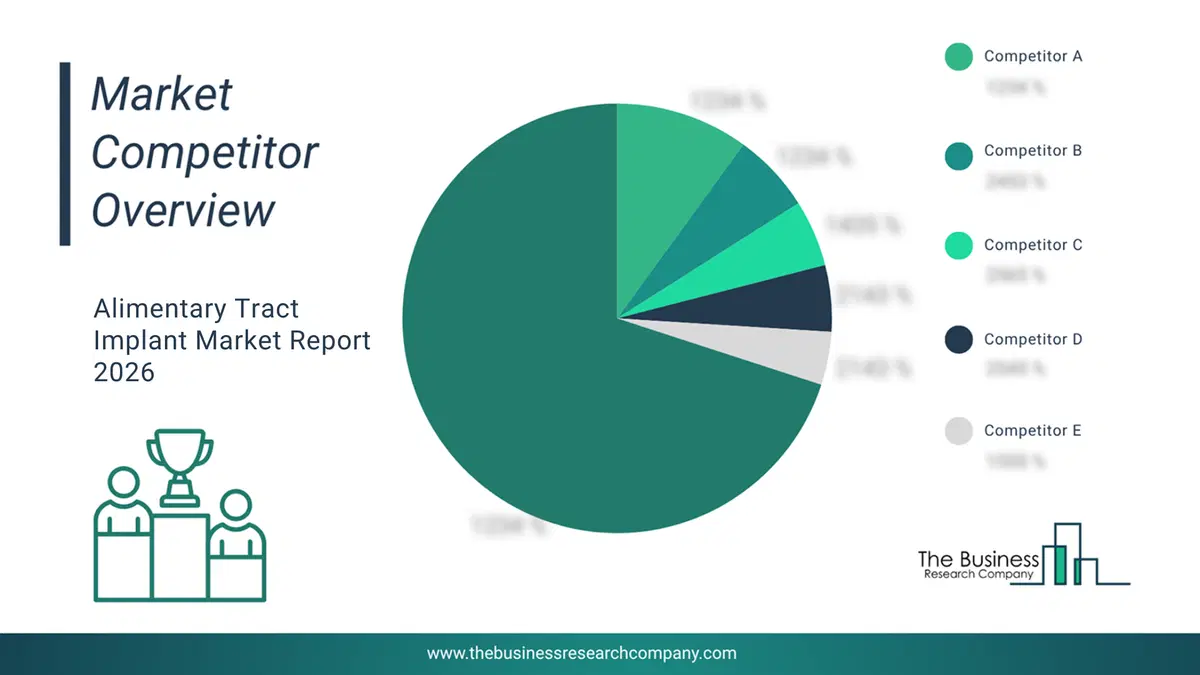
This chart is for illustrative purposes; the full report includes a detailed competitor analysis and comprehensive overview of the top 10 companies in the market.
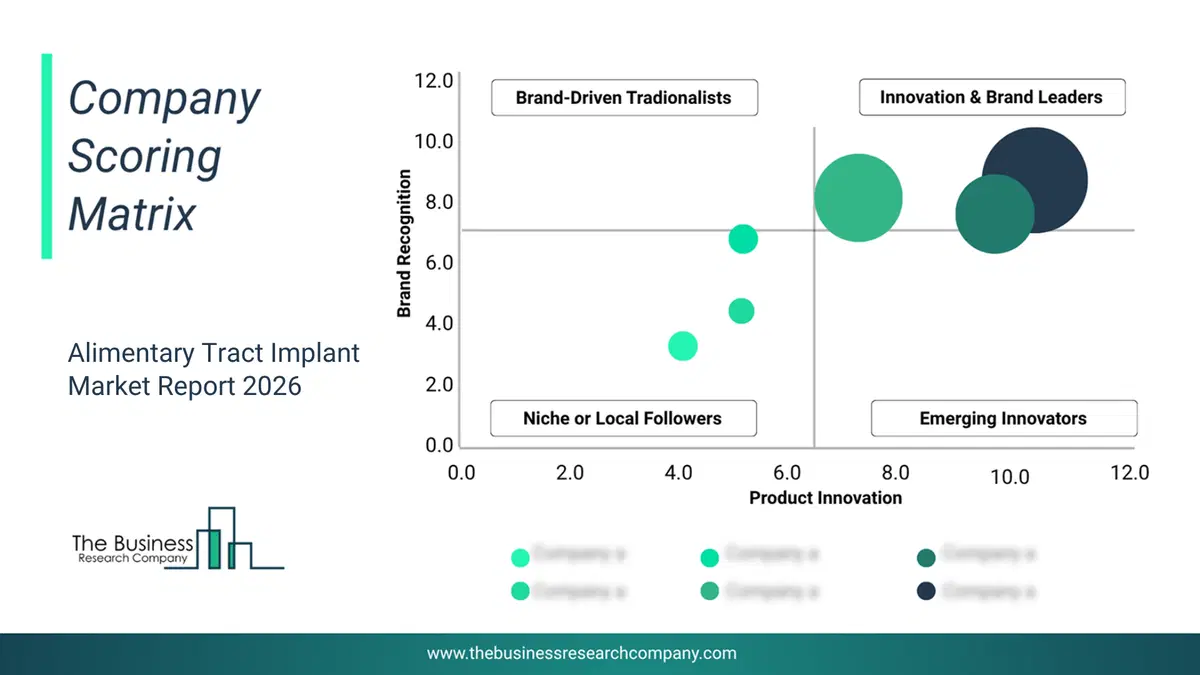
This chart maps companies by product innovation and brand strength, with bubble size indicating relative revenue, helping identify market leaders, challengers, and niche players. This is an illustrative chart; the full report provides a complete and accurate competitive analysis.
Global Alimentary Tract Implant Market Trends and Insights
Major companies operating in the alimentary tract implant market are focusing on the integration of advanced surgical processing and therapeutic implant technologies such as minimally invasive endoscopic technology to enhance treatment precision, patient safety, and recovery outcomes. Minimally invasive endoscopic technology is an advanced technique that uses a flexible endoscope equipped with imaging and surgical tools to access and treat internal organs through natural body openings, enabling real-time visualization and intervention without external incisions. For instance, in December 2024, Boston Scientific, a US-based medical device manufacturer specializing in minimally invasive therapies, launched the Apollo ESG System and Orbera365 Intragastric Balloon System, both leveraging endoscopic technology for weight-loss and gastrointestinal procedures. The products feature innovations such as incision-free endoscopic access, real-time visualization, and durable biocompatible materials to provide effective bariatric treatment with shorter recovery times and minimal complications. Apollo ESG System and Orbera365 improve clinical efficiency, patient comfort, and the long-term success rate of alimentary tract interventions.What Are Latest Mergers And Acquisitions In The Alimentary Tract Implant Market?
In January 2024, Olympus Corporation, a Japan-based medical technology provider specializing in endoscopic and therapeutic solutions, acquired Taewoong Medical Co., Ltd. for $370 million. With this acquisition, Olympus gained access to Taewoong’s advanced gastrointestinal (GI) metallic stent portfolio and manufacturing expertise, thereby strengthening its EndoTherapy business and expanding its presence in the alimentary tract implant sector. Taewoong Medical is a South Korea-based medical device company known for the Niti-S series of GI stents used in the biliary tract, esophagus, colon, and duodenum.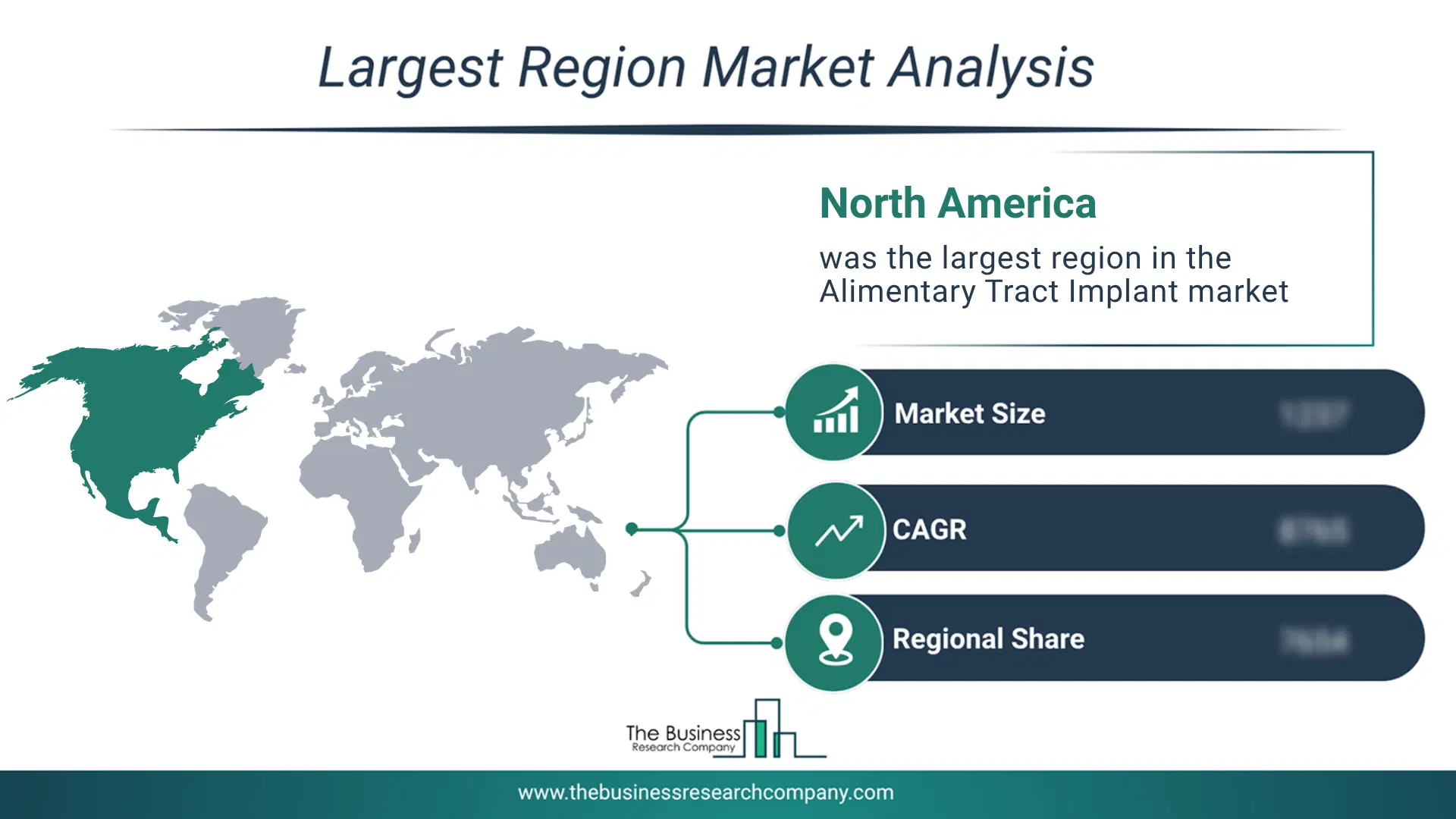
Regional Outlook
North America was the largest region in the alimentary tract implant market in 2025. Asia-Pacific is expected to be the fastest-growing region in the forecast period. The regions covered in this market report are Asia-Pacific, South East Asia, Western Europe, Eastern Europe, North America, South America, Middle East, Africa. The countries covered in this market report are Australia, Brazil, China, France, Germany, India, Indonesia, Japan, Taiwan, Russia, South Korea, UK, USA, Canada, Italy, SpainWhat Defines the Alimentary Tract Implant Market?
The alimentary-tract implant market consists of sales of endoscopic suturing systems, intestinal liners, duodenal sleeves, fecal diversion devices, anastomotic devices, and gastric emptying regulators. Values in this market are ‘factory gate’ values, that is the value of goods sold by the manufacturers or creators of the goods, whether to other entities (including downstream manufacturers, wholesalers, distributors and retailers) or directly to end customers. The value of goods in this market includes related services sold by the creators of the goods.How is Market Value Defined and Measured?
The market value is defined as the revenues that enterprises gain from the sale of goods and/or services within the specified market and geography through sales, grants, or donations in terms of the currency (in USD unless otherwise specified). The revenues for a specified geography are consumption values that are revenues generated by organizations in the specified geography within the market, irrespective of where they are produced. It does not include revenues from resales along the supply chain, either further along the supply chain or as part of other products.
This chart presents market attractiveness based on a quantitative evaluation of growth, competition, strategic alignment, and risk, offering a clear view of opportunity areas for decision-making. This chart is for illustrative purposes; the full report contains the complete analysis.

This chart highlights the Total Addressable Market (TAM) by estimating the maximum revenue opportunity using an assumption-driven approach, supporting strategic planning and opportunity sizing across markets. The chart is illustrative; the full report provides a more comprehensive analysis.
What Key Data and Analysis Are Included in the Alimentary Tract Implant Market Report 2026?
The alimentary tract implant market research report is one of a series of new reports from The Business Research Company that provides market statistics, including industry global market size, regional shares, competitors with the market share, detailed market segments, market trends and opportunities, and any further data you may need to thrive in the alimentary tract implant industry. The market research report delivers a complete perspective of everything you need, with an in-depth analysis of the current and future state of the industry.Alimentary Tract Implant Market Report Forecast Analysis
| Report Attribute | Details |
|---|---|
| Market Size Value In 2026 | $5.49 billion |
| Revenue Forecast In 2030 | $7.12 billion |
| Growth Rate | CAGR of 6.7% from 2026 to 2030 |
| Base Year For Estimation | 2025 |
| Actual Estimates/Historical Data | 2020-2025 |
| Forecast Period | 2026 - 2030 |
| Market Representation | Revenue in USD Billion and CAGR from 2026 to 2030 |
| Segments Covered | Implant Type, Procedure Approach, Indication |
| Regional Scope | Asia-Pacific, Western Europe, Eastern Europe, North America, South America, Middle East, Africa |
| Country Scope | The countries covered in the report are Australia, Brazil, China, France, Germany, India, Indonesia, Japan, Taiwan, Russia, South Korea, UK, USA, Canada, Italy, Spain. |
| Key Companies Profiled | Medtronic Public Limited Company, Boston Scientific Corporation, Cook Group Incorporated, B. Braun Melsungen AG, Allurion Technologies Incorporated, ReShape Lifesciences Incorporated, Spatz Medical Limited, Hobbs Medical Incorporated, MICRO-TECH (Nanjing) Company Limited, M.I.Tech Company Limited, ELLA-CS s.r.o., BVM Medical Limited, EndoGastric Solutions Inc., EnteroMedics Inc., Inspire Medical Systems Inc., Coloplast A/S, Axonics Inc., Medica S.p.A., Taewoong Medical Co. Ltd., S&G Biotech Incorporated |
| Customization Scope | Request for Customization |
| Pricing And Purchase Options | Explore Purchase Options |