
Wire Arc Additive Manufacturing Cell Market Report 2026
Global Outlook – By Component (Hardware, Software, Services), By Cell Type (Robotic, Gantry, Other Cell Types), By Application (Aerospace, Automotive, Construction, Marine, Energy, Other Applications), By End-User (Industrial, Research And Development, Other End-Users) – Market Size, Trends, Strategies, and Forecast to 2030
Wire Arc Additive Manufacturing Cell Market Overview
• Wire Arc Additive Manufacturing Cell market size has reached to $0.6 billion in 2025 • Expected to grow to $1.09 billion in 2030 at a compound annual growth rate (CAGR) of 12.5% • Growth Driver: Increasing Industrial Automation Driving Market Growth Due To Enhance Efficiency And Productivity • Market Trend: Smart Process Control Transforming Additive Manufacturing • North America was the largest region in 2025 and Asia-Pacific is the fastest growing region.Market Gains By 2030 – Top Opportunities By Segment
Market Gain identifies the most promising market opportunities by highlighting the segments or products expected to generate the highest incremental revenue growth over the next five years.
What Is Covered Under Wire Arc Additive Manufacturing Cell Market?
Wire arc additive manufacturing (WAAM) is an advanced 3D printing technique that uses an electric arc to melt metal wire, layer by layer, to create complex components. It combines principles of welding and additive manufacturing to produce large metal parts efficiently. WAAM offers advantages such as reduced material waste, lower production costs, and faster build times. The main components of wire arc additive manufacturing (WAAM) cell are hardware, software, and services. Hardware refers to the physical machinery and equipment that enables layer-by-layer metal part fabrication using an arc in a WAAM process. It includes various cell types such as robotic, gantry, and others. These components are used for applications including aerospace, automotive, construction, marine, and energy, and are utilized by end-users such as industrial companies, research and development organizations, and others.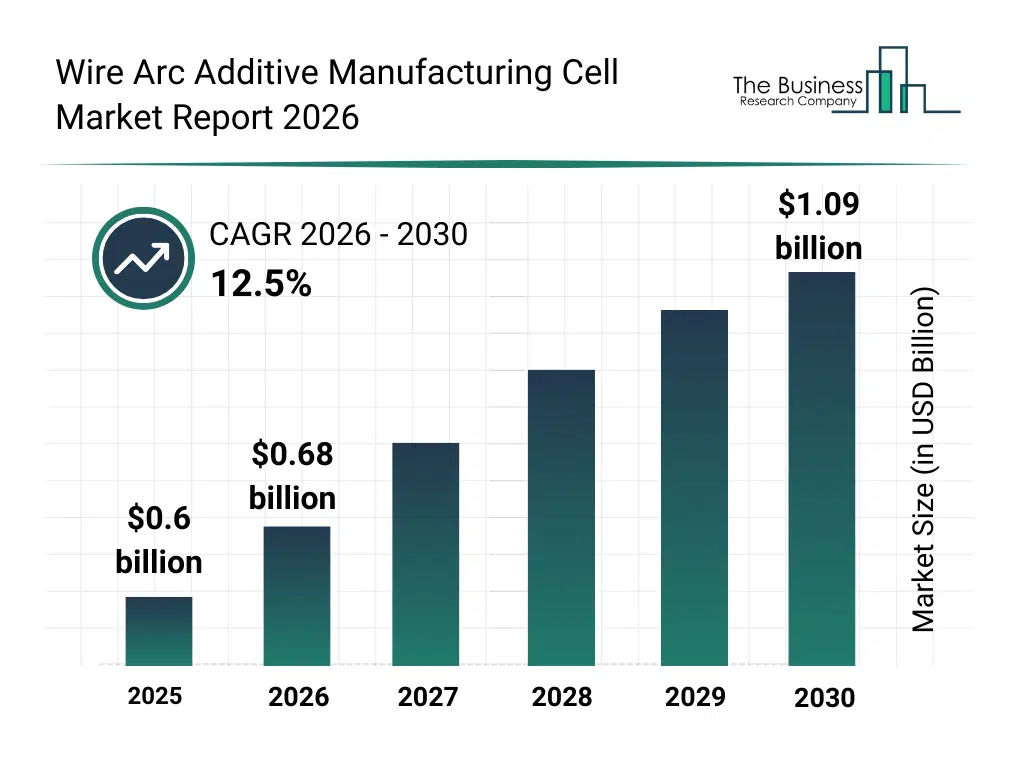
What Is The Wire Arc Additive Manufacturing Cell Market Size and Share 2026?
The wire arc additive manufacturing cell market size has grown rapidly in recent years. It will grow from $0.6 billion in 2025 to $0.68 billion in 2026 at a compound annual growth rate (CAGR) of 12.8%. The growth in the historic period can be attributed to demand for large metal components, need for material-efficient manufacturing, availability of advanced welding power sources, adoption of robotic fabrication techniques, growth in industrial prototyping.What Is The Wire Arc Additive Manufacturing Cell Market Growth Forecast?
The wire arc additive manufacturing cell market size is expected to see rapid growth in the next few years. It will grow to $1.09 billion in 2030 at a compound annual growth rate (CAGR) of 12.5%. The growth in the forecast period can be attributed to expanded use of additive manufacturing in aerospace and energy sectors, rising focus on supply chain localization, increasing adoption of digital manufacturing workflows, development of advanced waam materials, integration of real-time process analytics. Major trends in the forecast period include increasing adoption of large-scale metal additive manufacturing, rising integration of robotic waam cells, growing use of waam for structural components, expansion of hybrid manufacturing approaches, enhanced process monitoring and control.
Global Wire Arc Additive Manufacturing Cell Market Segmentation
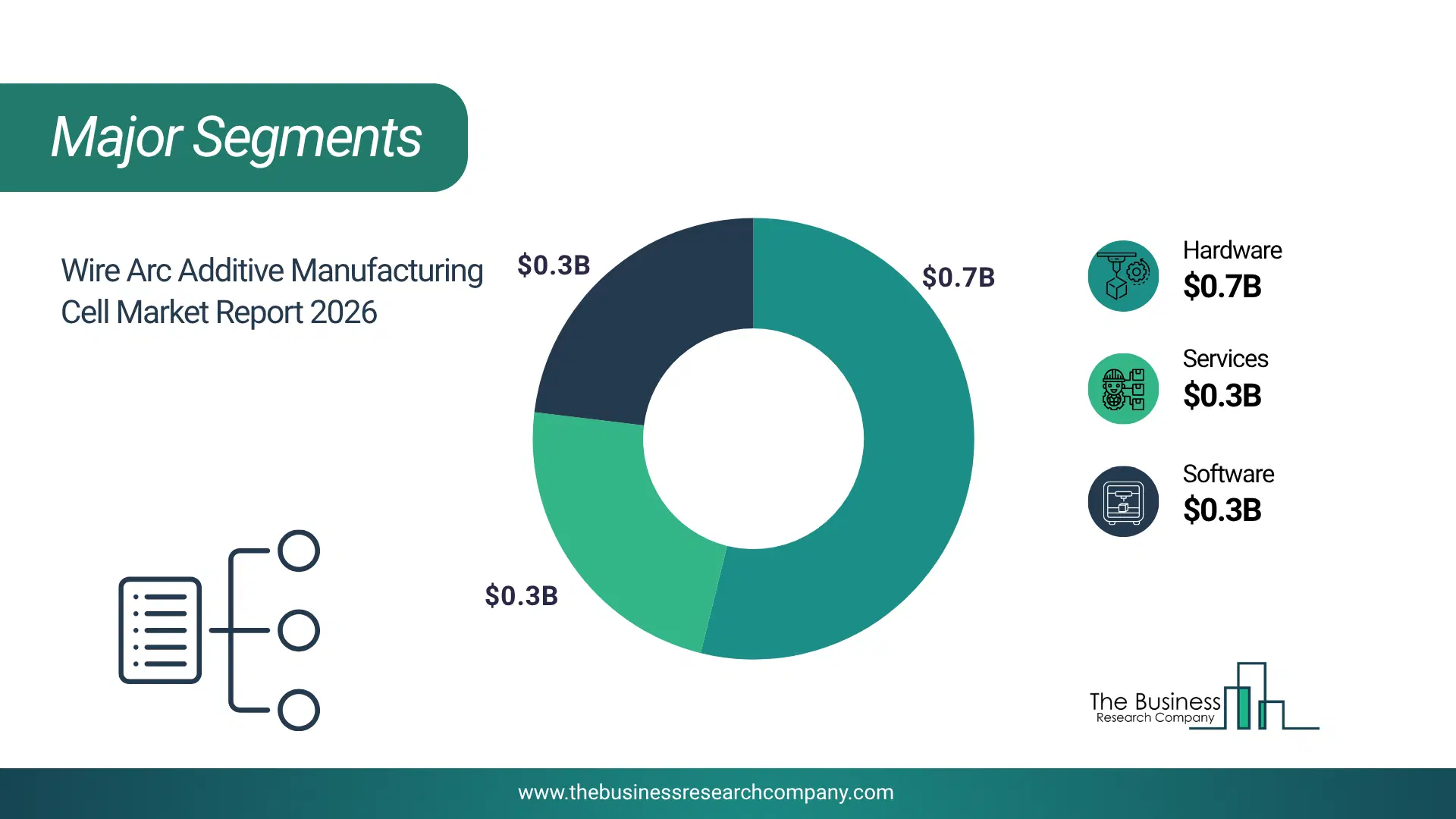
1) By Component: Hardware, Software, Services 2) By Cell Type: Robotic, Gantry, Other Cell Types 3) By Application: Aerospace, Automotive, Construction, Marine, Energy, Other Applications 4) By End-User: Industrial, Research And Development, Other End-Users Subsegments: 1) By Hardware: Wire Arc Additive Manufacturing (WAAM) Machines, Robotic Arms And Gantry Systems, Power Supply Units, Material Feeding Systems 2) By Software: Additive Manufacturing Design Software, Process Simulation Software, Monitoring And Control Software, Data Analytics And Visualization Software 3) By Services: Installation And Commissioning Services, Maintenance And Support Services, Training And Education Services, Consulting And Optimization Services The top segments in the wire arc additive manufacturing cell market will be: • Hardware will reach $0.7 billion by 2030. • Services will reach $0.23 billion by 2030. • Software will reach $0.23 billion by 2030.What Is The Driver Of The Wire Arc Additive Manufacturing Cell Market?
The increasing industrial automation is expected to propel the growth of the wire arc additive manufacturing cell market going forward. Industrial automation refers to the use of control systems, robotics, and information technologies to operate industrial processes and machinery with minimal human intervention. The rising adoption of industrial automation is driven by manufacturers' need to enhance production efficiency and address labor shortages in critical sectors. Industrial automation supports the growth of wire arc additive manufacturing cells, as automated systems enable precise, consistent, and efficient metal deposition processes essential for large-scale additive manufacturing operations. For instance, in April 2024, according to the International Federation of Robotics, a Germany-based international organization, manufacturing companies have significantly increased their automation efforts, with total industrial robot installations rising 12% to 44,303 units in 2023. Therefore, increasing industrial automation is driving the growth of the wire arc additive manufacturing cell industry.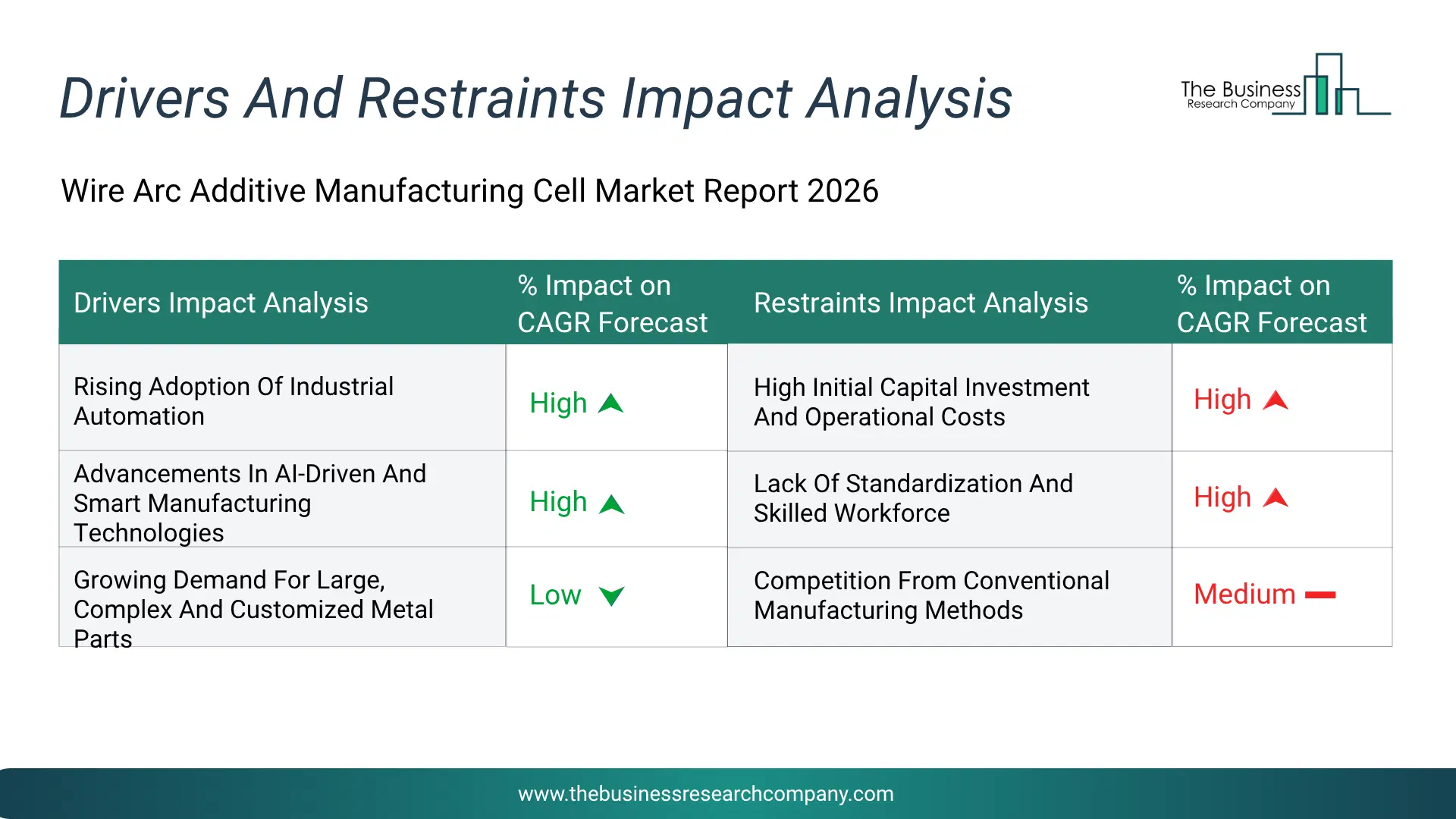
Infographic Chart Showing Key Market Drivers Analysis And Restraints For Wire Arc Additive Manufacturing Cell Market
The chart presents an impact analysis of key drivers and restraints, quantifying their relative influence on the market's growth rate and helping assess the balance between growth enablers and limiting factors. This chart offers a high-level perspective; the full report contains more detailed insights.
How Will The Drivers Impact Growth In The Global Wire Arc Additive Manufacturing Cell Market?
• Rising Adoption Of Industrial Automation (High) – During the forecast period, the rising adoption of industrial automation is expected to become a key growth driver for the wire arc additive manufacturing cell market by 2030. Manufacturers are increasingly integrating automated production systems to improve operational efficiency, reduce labor dependency, and enhance production consistency. Waam cells enable automated deposition of metal components with minimal human intervention, making them highly suitable for industrial environments focused on productivity and precision. The shift toward smart factories and industry 4.0 frameworks is further accelerating the deployment of automated additive manufacturing systems. • Advancements In AI-Driven And Smart Manufacturing Technologies (High) – During the forecast period, advancements in ai-driven and smart manufacturing technologies are expected to emerge as a major factor driving the expansion of the wire arc additive manufacturing cell market by 2030. The integration of artificial intelligence, machine learning, and real-time monitoring systems is enhancing process control, defect detection, and predictive maintenance capabilities in waam systems. These technologies enable optimized deposition paths, improved material utilization, and higher quality output. As digital manufacturing ecosystems evolve, the adoption of intelligent waam cells is expected to increase significantly. • Growing Demand For Large, Complex And Customized Metal Parts (Low) – During the forecast period, the growing demand for large, complex, and customized metal parts is expected to act as a key growth catalyst for the wire arc additive manufacturing cell market by 2030. Industries such as aerospace, construction, and energy require large-scale components with complex geometries that are difficult and costly to manufacture using traditional methods. Waam technology enables efficient production of such components with reduced lead times and material waste. Additionally, increasing demand for customized and low-volume production is further supporting the adoption of waam solutions.How Will The Restraints Impact Growth In The Global Wire Arc Additive Manufacturing Cell Market?
• High Initial Capital Investment And Operational Costs (High) – During the forecast period, the high initial investment and operational costs act as a major restraint for waam cell adoption. Setting up a waam system requires expensive robotic arms, power sources, and integrated software, making it difficult for smes to invest. In addition, operational costs such as energy consumption, shielding gases, and high-quality wire feedstock further increase expenses. These financial barriers limit market penetration, especially in cost-sensitive industries. As a result, adoption is often restricted to large enterprises with sufficient capital. • Lack Of Standardization And Skilled Workforce (High) – During the forecast period, the the lack of standardized processes and skilled professionals restrains the growth of the waam cell market. Waam involves complex metallurgy, robotics, and process control, requiring specialized expertise. Shortage of trained operators and engineers creates implementation challenges for companies. Additionally, absence of uniform standards and certification frameworks limits adoption in regulated industries like aerospace. These factors slow down commercialization and widespread industrial acceptance of waam technology. • Competition From Conventional Manufacturing Methods (Medium) – During the forecast period, the competition from conventional manufacturing methods acts as a restraint on waam cell market growth. Techniques such as casting and forging remain more cost-effective for mass production and high-volume applications. Waam is often economically viable only for low-volume, high-complexity parts. This limits its adoption in industries focused on large-scale production efficiency. Consequently, traditional manufacturing continues to dominate, restricting waam to niche and specialized use cases.Key Players In The Global Wire Arc Additive Manufacturing Cell Market
Major companies operating in the wire arc additive manufacturing cell market are WAAM3D, AML3D Limited, Norsk Titanium AS, Sciaky Incorporated, GEFERTEC GmbH, MX3D, RAMLAB BV, Addept3D, Addilan, InssTek Incorporated, VRC Metal Systems, One-Off Robotics, MELTIO, Relativity Space, Lincoln Electric Additive Solutions, DMG MORI Additive, GE Additive, Mitsubishi Heavy Industries Limited, MT Aerospace AG, Airbus Defence and Space, Boeing Additive Manufacturing, Hyundai Heavy Industries Additive Manufacturing Division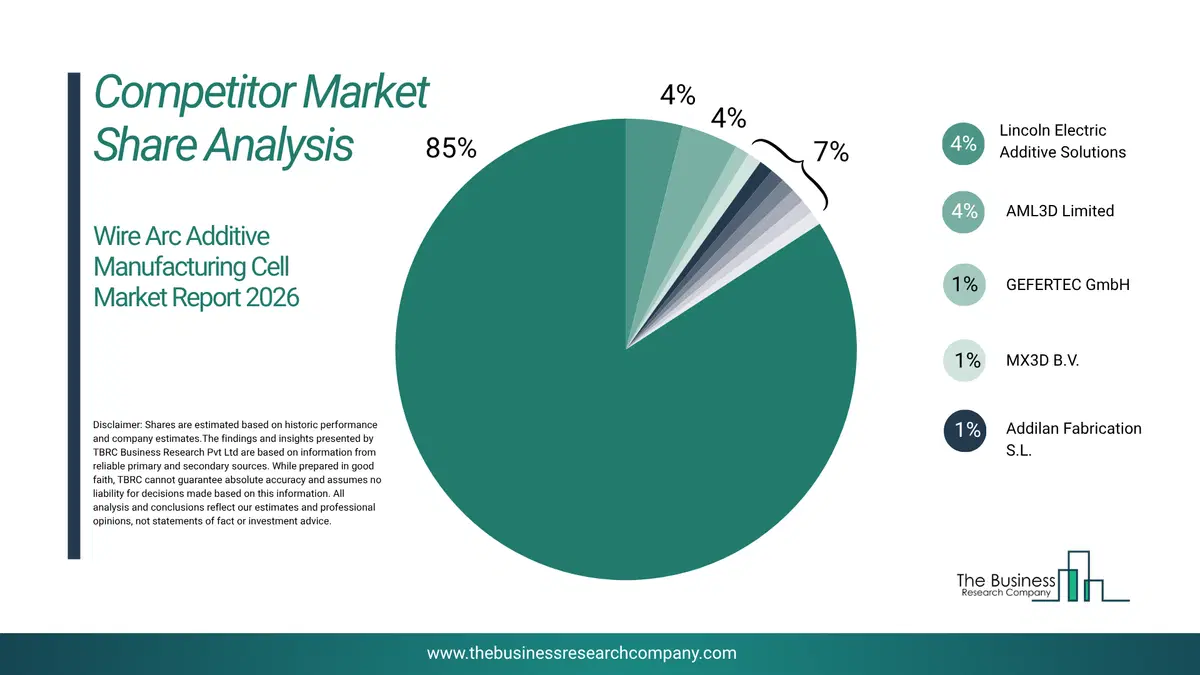
This chart is for illustrative purposes; the full report includes a detailed competitor analysis and comprehensive overview of the top 10 companies in the market.
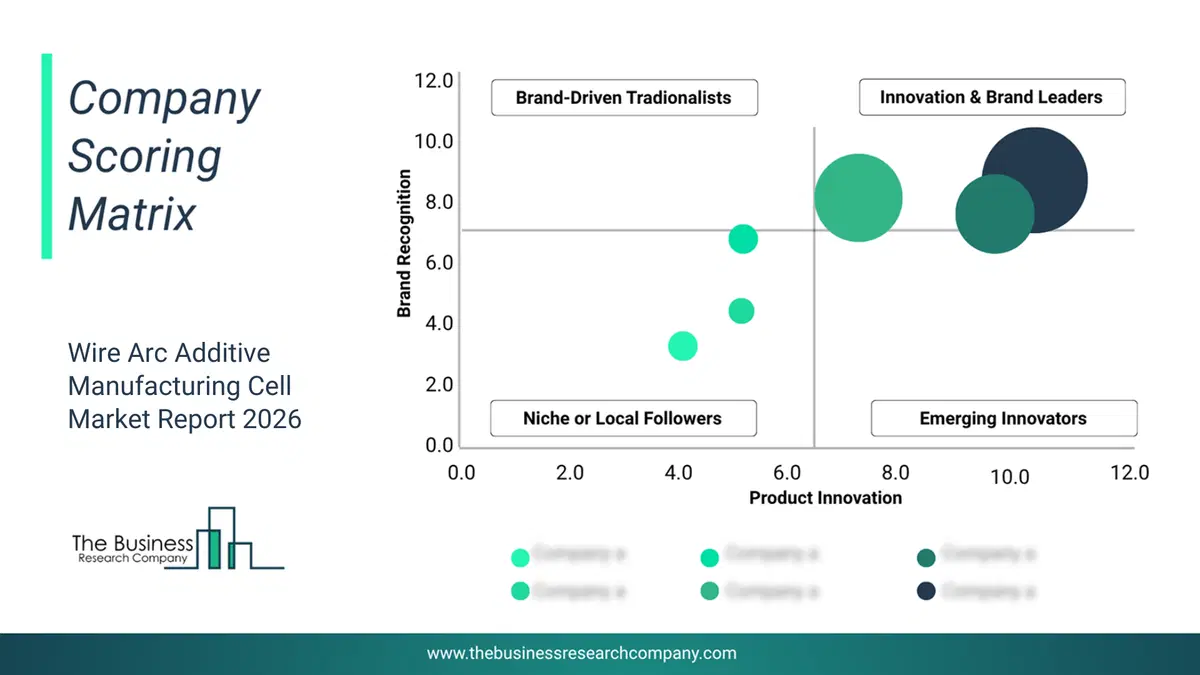
This chart maps companies by product innovation and brand strength, with bubble size indicating relative revenue, helping identify market leaders, challengers, and niche players. This is an illustrative chart; the full report provides a complete and accurate competitive analysis.
Global Wire Arc Additive Manufacturing Cell Market Trends and Insights
Major companies operating in the wire arc additive manufacturing cell market are focusing on developing innovative solutions, such as real-time closed-loop process control software, to enhance precision, ensure consistent quality, and optimize metal deposition rates. Real-time closed-loop process control software continuously monitors key manufacturing parameters and automatically adjusts the process in real time to maintain optimal conditions, helping improve part quality, reduce defects, and increase efficiency in wire arc additive manufacturing. For instance, in June 2023, WAAM3D Limited, a UK-based metal additive manufacturing company, launched WAAMCtrl v2, an advanced operating system for its RoboWAAM large format WAAM cell that leverages 60 on board sensors to monitor voltage, current, wire feed speed, travel speed, wire position, layer height, pre and post deposition temperature, oxygen level, gas flow and melt pool in real time, the software features a touchscreen interface and configurable dashboard, provides real time 3D visualizations of logged data mapped onto the actual tool path, supports new materials (such as Waspalloy and Inconel 718), integrates via API with ERP/MRP systems, and enables automatic cycles for shielding atmosphere establishment, maintenance and evacuation.What Are Latest Mergers And Acquisitions In The Wire Arc Additive Manufacturing Cell Market?
In January 2024, Accuron Technologies Pte. Ltd., a Singapore-based technology company, acquired a majority stake in WAAM3D Ltd for an undisclosed amount. With this acquisition, Accuron Technologies Pte. Ltd. aims to accelerate the development and commercialization of WAAM technology, enhancing its technological capabilities and expanding its presence in advanced manufacturing industries. WAAM3D Ltd is a UK-based technology company that specializes in providing large-format, energy-efficient additive manufacturing solutions, including WAAM equipment, dedicated software, wires, and parts-making expertise for sectors such as aerospace, oil and gas, and mining.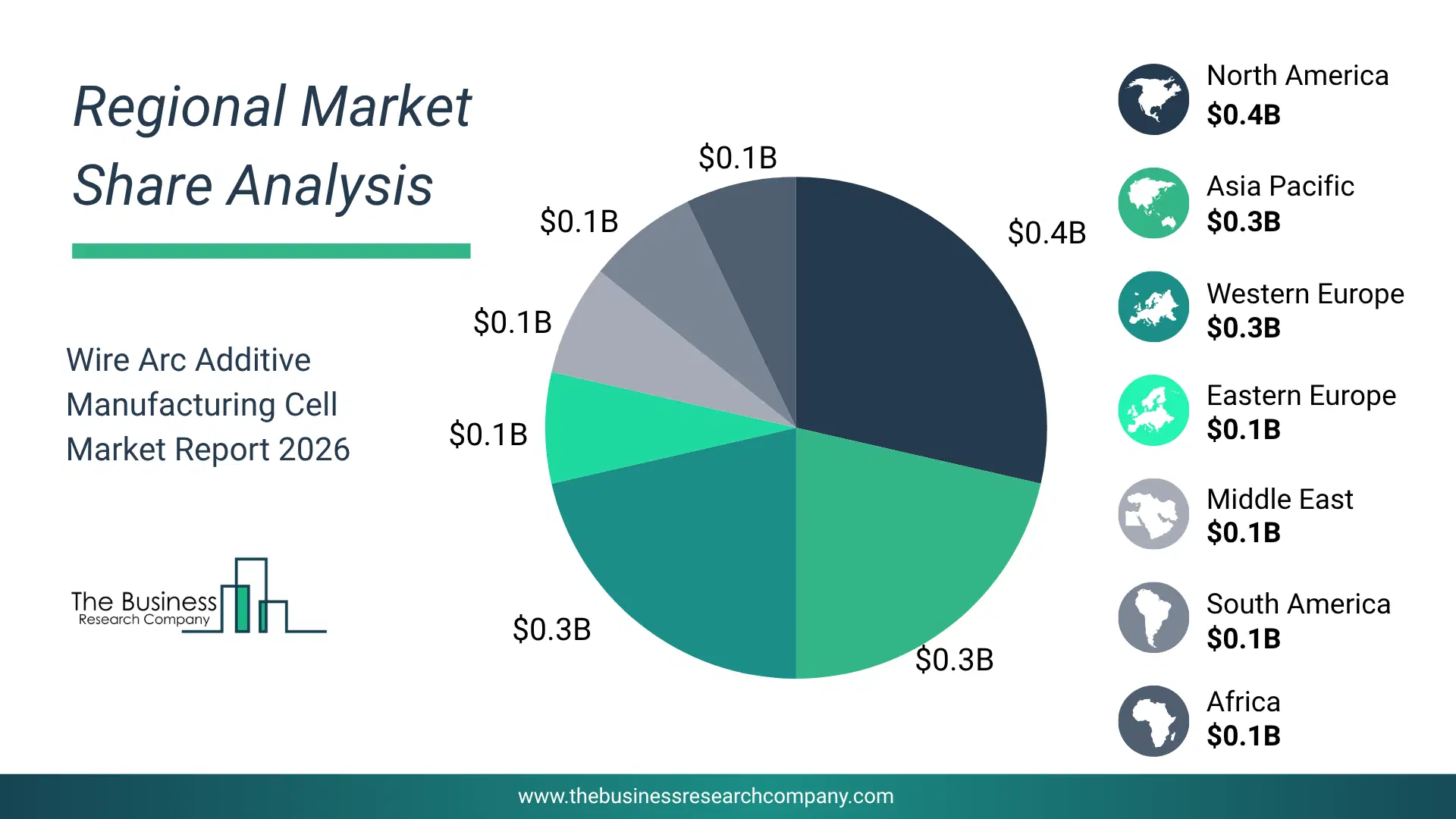
Regional Outlook
North America was the largest region in the wire arc additive manufacturing cell market in 2025. Asia-Pacific is expected to be the fastest-growing region in the forecast period. The regions covered in this market report are Asia-Pacific, South East Asia, Western Europe, Eastern Europe, North America, South America, Middle East, Africa The countries covered in this market report are Australia, Brazil, China, France, Germany, India, Indonesia, Japan, Taiwan, Russia, South Korea, UK, USA, Canada, Italy, Spain.What Defines the Wire Arc Additive Manufacturing Cell Market?
The wire arc additive manufacturing cell market consists of revenues earned by entities by providing services such as on-demand manufacturing, remote monitoring and software updates, process chain integration, feasibility studies, material development, and wire feedstock qualification. The market value includes the value of related goods sold by the service provider or included within the service offering. The wire arc additive manufacturing cell market also includes sales of welding torches, deposition heads, control units, sensors, monitoring systems, motion controllers, safety enclosures, shielding systems, fume extraction units, inert gas chambers, and build platforms. Values in this market are ‘factory gate’ values, that is the value of goods sold by the manufacturers or creators of the goods, whether to other entities (including downstream manufacturers, wholesalers, distributors and retailers) or directly to end customers. The value of goods in this market includes related services sold by the creators of the goods.How is Market Value Defined and Measured?
The market value is defined as the revenues that enterprises gain from the sale of goods and/or services within the specified market and geography through sales, grants, or donations in terms of the currency (in USD unless otherwise specified). The revenues for a specified geography are consumption values that are revenues generated by organizations in the specified geography within the market, irrespective of where they are produced. It does not include revenues from resales along the supply chain, either further along the supply chain or as part of other products.
This chart presents market attractiveness based on a quantitative evaluation of growth, competition, strategic alignment, and risk, offering a clear view of opportunity areas for decision-making. This chart is for illustrative purposes; the full report contains the complete analysis.

This chart highlights the Total Addressable Market (TAM) by estimating the maximum revenue opportunity using an assumption-driven approach, supporting strategic planning and opportunity sizing across markets. The chart is illustrative; the full report provides a more comprehensive analysis.
What Key Data and Analysis Are Included in the Wire Arc Additive Manufacturing Cell Market Report 2026?
The wire arc additive manufacturing cell market research report is one of a series of new reports from The Business Research Company that provides market statistics, including industry global market size, regional shares, competitors with the market share, detailed market segments, market trends and opportunities, and any further data you may need to thrive in the wire arc additive manufacturing cell industry. The market research report delivers a complete perspective of everything you need, with an in-depth analysis of the current and future state of the industry.Wire Arc Additive Manufacturing Cell Market Report Forecast Analysis
| Report Attribute | Details |
|---|---|
| Market Size Value In 2026 | $0.68 billion |
| Revenue Forecast In 2030 | $1.09 billion |
| Growth Rate | CAGR of 12.5% from 2026 to 2030 |
| Base Year For Estimation | 2025 |
| Actual Estimates/Historical Data | 2020-2025 |
| Forecast Period | 2026 - 2030 |
| Market Representation | Revenue in USD Billion and CAGR from 2026 to 2030 |
| Segments Covered | Component, Cell Type, Application, End-User |
| Regional Scope | Asia-Pacific, Western Europe, Eastern Europe, North America, South America, Middle East, Africa |
| Country Scope | The countries covered in the report are Australia, Brazil, China, France, Germany, India, ... |
| Key Companies Profiled | WAAM3D, AML3D Limited, Norsk Titanium AS, Sciaky Incorporated, GEFERTEC GmbH, MX3D, RAMLAB BV, Addept3D, Addilan, InssTek Incorporated, VRC Metal Systems, One-Off Robotics, MELTIO, Relativity Space, Lincoln Electric Additive Solutions, DMG MORI Additive, GE Additive, Mitsubishi Heavy Industries Limited, MT Aerospace AG, Airbus Defence and Space, Boeing Additive Manufacturing, Hyundai Heavy Industries Additive Manufacturing Division |
| Customization Scope | Request for Customization |
| Pricing And Purchase Options | Explore Purchase Options |