
Gluten-Free Cereals Market Report 2026
Global Outlook – By Type (Sorghum, Quinoa, Buckwheat, Amaranth, Teff, Corn, Brown Rice, Other Types), By Consumer (Adults, Kids), By Distribution Channel (Conventional Store, Hotels and Restaurants, Educational Institutes, Specialty Services, Hospitals And Drug Stores) – Market Size, Trends, Strategies, and Forecast to 2030
Gluten-Free Cereals Market Overview
• Gluten-Free Cereals market size has reached to $7.99 billion in 2025 • Expected to grow to $12.59 billion in 2030 at a compound annual growth rate (CAGR) of 9.3% • Growth Driver: Obesity Trends Fueling Growth In The Gluten-Free Cereal Market • Market Trend: Innovative Gluten-Free Corn Infant Cereals Meeting Nutritional Needs And Allergen-Friendly Demands • Asia-Pacific was the largest region in 2025.What Is Covered Under Gluten-Free Cereals Market?
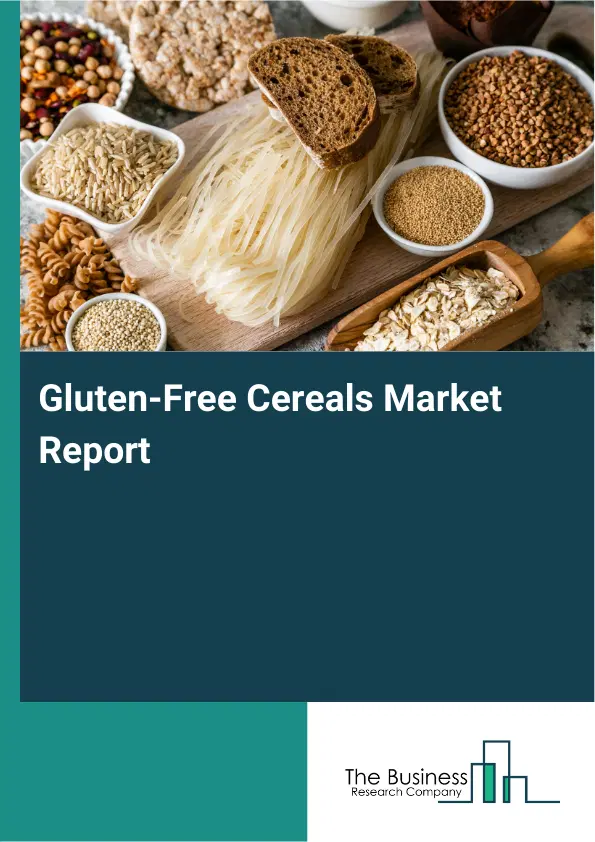
Gluten-free cereals are breakfast foods made from grains and ingredients that do not contain gluten, a protein found in wheat, barley, and rye. These cereals are suitable for individuals with celiac disease, gluten intolerance, or those who choose to avoid gluten for dietary reasons. The main types of gluten-free cereals are sorghum, quinoa, buckwheat, amaranth, teff, corn, brown rice, and others. Gluten-free sorghum is a versatile and nutritious grain that serves as an excellent alternative to gluten-containing grains. These are used by different consumers such as adults, and kids. These are distributed through conventional stores, hotels and restaurants, educational institutes, specialty services, hospitals, and drug stores.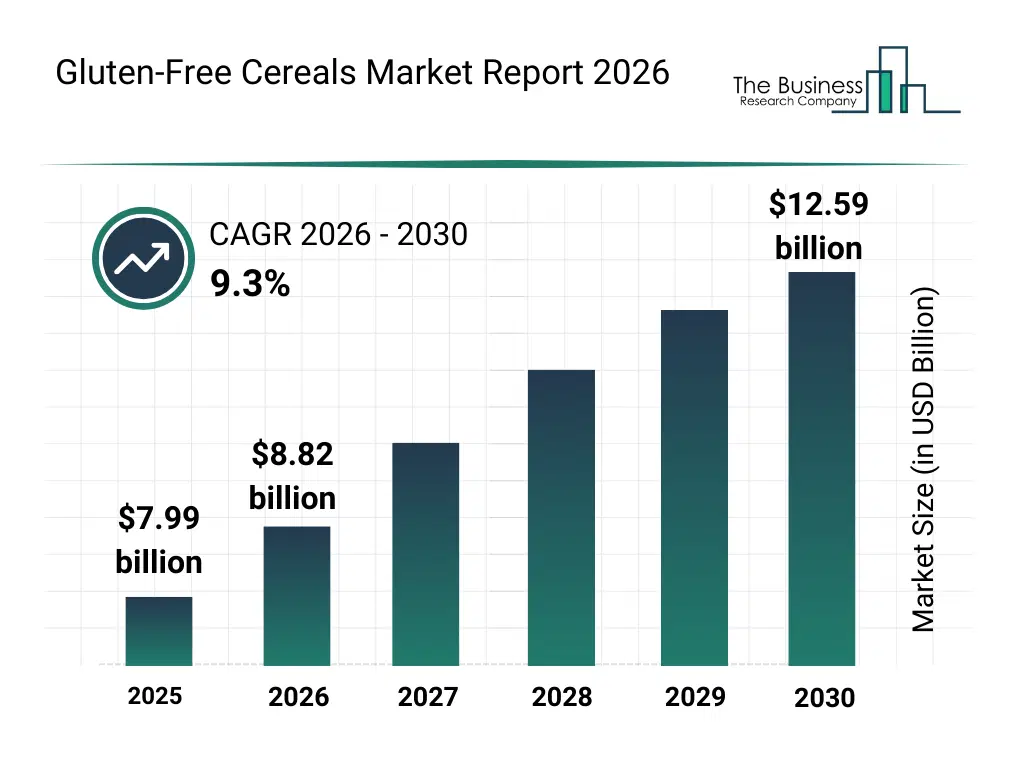
What Is The Gluten-Free Cereals Market Size and Share 2026?
The gluten-free cereals market size has grown rapidly in recent years. It will grow from $7.99 billion in 2025 to $8.82 billion in 2026 at a compound annual growth rate (CAGR) of 10.4%. The growth in the historic period can be attributed to rising diagnosis of gluten intolerance, increased consumer interest in specialty diets, expansion of health food retail channels, availability of alternative grains, growth of packaged breakfast consumption.What Is The Gluten-Free Cereals Market Growth Forecast?
The gluten-free cereals market size is expected to see strong growth in the next few years. It will grow to $12.59 billion in 2030 at a compound annual growth rate (CAGR) of 9.3%. The growth in the forecast period can be attributed to increasing adoption of functional and fortified cereals, rising demand for organic gluten-free products, expansion of e-commerce food sales, growing focus on protein-rich cereal formulations, increasing innovation in taste and texture improvement. Major trends in the forecast period include growing demand for clean-label breakfast foods, expansion of ancient grain-based cereals, rising product innovation for kids and adults, increasing focus on fortified gluten-free products, premiumization of free-from cereal offerings.
Global Gluten-Free Cereals Market Segmentation
1) By Type: Sorghum, Quinoa, Buckwheat, Amaranth, Teff, Corn, Brown Rice, Other Types 2) By Consumer: Adults, Kids 3) By Distribution Channel: Conventional Store, Hotels and Restaurants, Educational Institutes, Specialty Services, Hospitals And Drug Stores Subsegments: 1) By Sorghum: Whole Grain Sorghum, Sorghum Flour, Sorghum Flakes 2) By Quinoa: Quinoa Grain, Quinoa Flour, Quinoa Flakes 3) By Buckwheat: Whole Buckwheat, Buckwheat Flour, Buckwheat Groats 4) By Amaranth: Whole Amaranth Grain, Amaranth Flour, Amaranth Flakes 5) By Teff: Whole Teff Grain, Teff Flour, Teff Flakes 6) By Corn: Whole Corn, Corn Flour, Cornmeal 7) By Brown Rice: Whole Grain Brown Rice, Brown Rice Flour, Brown Rice Flakes 8) By Other Types: Millet, Oats (Certified Gluten-Free), Rice-based Cereal Products, TapiocaWhat Is The Driver Of The Gluten-Free Cereals Market?
The increasing obese population is expected to propel the growth of the gluten-free cereal market going forward. The obese population refers to a segment of people with high body fat, identified by a BMI of 30 or higher, influenced by genetics, lifestyle, and economic conditions. The obese population is growing due to factors such as changes in diet towards more processed and high-calorie foods, sedentary lifestyles with reduced physical activity, genetic predispositions, socioeconomic influences limiting access to healthy options, and environmental factors discouraging active living. Gluten-free cereals offer a range of nutritional benefits that can support individuals, including those who are obese, achieve and maintain a healthier weight and provide nutrient-dense, lower-calorie options supporting digestive health. For instance, in September 2024, according to the US Centers for Disease Control and Prevention (CDC), an US-based national public-health agency, in 2023, adult obesity rates reached 35% or higher in 23 US states, up from 22 states in 2022, indicating a worsening obesity trend. Therefore, the increasing obese population drives the gluten-free cereal industry.Key Players In The Global Gluten-Free Cereals Market
Major companies operating in the gluten-free cereals market are General Mills, Kellogg Canada Inc., Nestlé S.A., Post Consumer Brands, Nature’s Path Foods, Bob’s Red Mill, Dr. Schär AG/S.p.A, Hain Celestial Group, Freedom Foods LLC, Genius Foods, Erewhon, Alara Wholefoods, FARMO SpA, London Foods Ltd., Katz Gluten Free, Silly Yaks Foods Pty Ltd., Rachel Pauls Food, Barilla G. e R. Fratelli S.p.A, Conagra Brands Inc., Warburtons Limited, Enjoy Life Foods, Quaker (PepsiCo)
This chart is for illustrative purposes; the full report includes a detailed competitor analysis and comprehensive overview of the top 10 companies in the market.
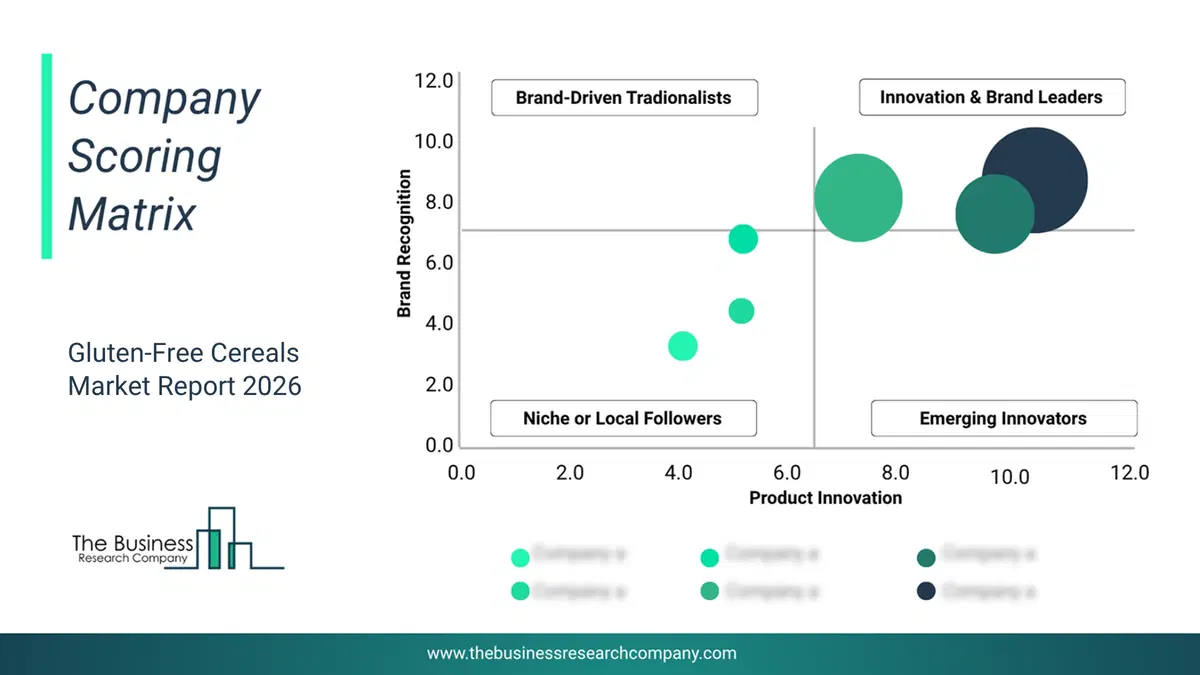
This chart maps companies by product innovation and brand strength, with bubble size indicating relative revenue, helping identify market leaders, challengers, and niche players. This is an illustrative chart; the full report provides a complete and accurate competitive analysis.
Global Gluten-Free Cereals Market Trends and Insights
Major companies operating in the gluten-free cereals market are developing gluten-free corn cereal to meet the growing demand for allergen-friendly and nutritionally balanced options for young children. Gluten-free corn cereal provides a nutritious and safe choice for those who require a gluten-free diet, ensuring they receive essential nutrients while supporting their digestive health and overall growth. For instance, in February 2023, Beech-Nut Baby Food, a US-based baby food company, launched Golden Corn Maize Cereal, a gluten-free corn infant cereal. This new gluten-free, nutrient-dense corn-based infant cereal provides parents with a healthy, allergen-friendly option when starting their babies on solid foods. The cereal can be mixed with breastmilk, formula, water, or Beech-Nut's baby food purees to create a nutritious and filling first food for babies.What Are Latest Mergers And Acquisitions In The Gluten-Free Cereals Market?
In September 2024, Bay State Milling Co., a US-based milling and ingredient solutions company, acquired the assets of Montana Gluten Free LLC for an undisclosed amount. Through this acquisition, Bay State Milling aims to enhance its gluten-free cereal and grain capabilities by integrating Montana Gluten Free’s processing expertise and expanding its portfolio of gluten-free oats and related products. Montana Gluten Free LLC is a US-based company that produces and processes gluten-free oats and grains for use in cereals, granola, bars, and other gluten-free food products.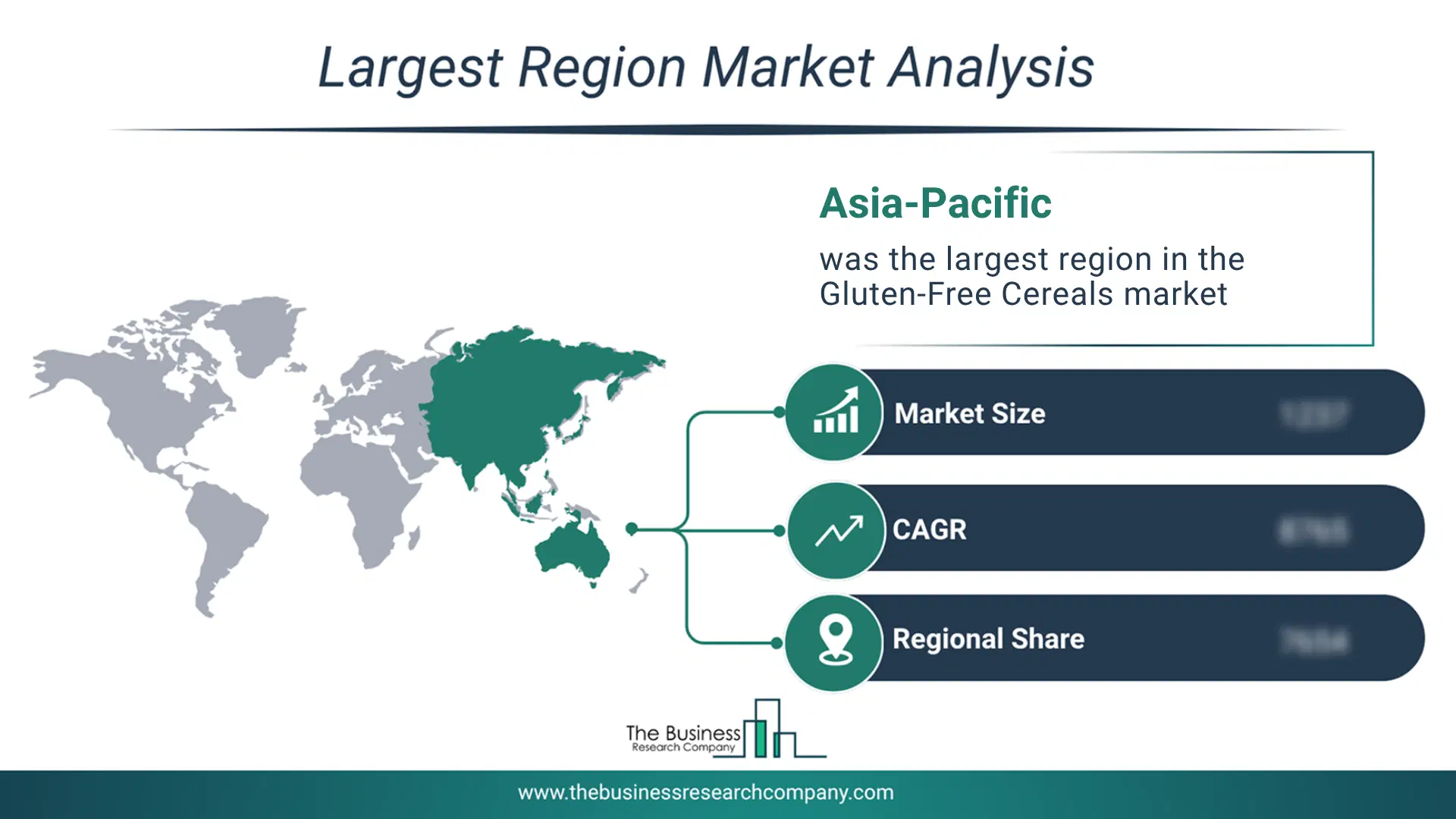
Regional Outlook
Asia-Pacific was the largest region in the gluten-free cereals Market in 2025. The regions covered in this market report are Asia-Pacific, South East Asia, Western Europe, Eastern Europe, North America, South America, Middle East and Africa. The countries covered in this market report are Australia, Brazil, China, France, Germany, India, Indonesia, Japan, Taiwan, Russia, South Korea, UK, USA, Italy, Spain, CanadaWhat Defines the Gluten-Free Cereals Market?
The gluten-free cereals market consists of sales of oat-based products, multi-grain products, and specialty grain products. Values in this market are ‘factory gate’ values, that is the value of goods sold by the manufacturers or creators of the goods, whether to other entities (including downstream manufacturers, wholesalers, distributors, and retailers) or directly to end customers. The value of goods in this market includes related services sold by the creators of the goods.How is Market Value Defined and Measured?
The market value is defined as the revenues that enterprises gain from the sale of goods and/or services within the specified market and geography through sales, grants, or donations in terms of the currency (in USD unless otherwise specified). The revenues for a specified geography are consumption values that are revenues generated by organizations in the specified geography within the market, irrespective of where they are produced. It does not include revenues from resales along the supply chain, either further along the supply chain or as part of other products.
This chart presents market attractiveness based on a quantitative evaluation of growth, competition, strategic alignment, and risk, offering a clear view of opportunity areas for decision-making. This chart is for illustrative purposes; the full report contains the complete analysis.

This chart highlights the Total Addressable Market (TAM) by estimating the maximum revenue opportunity using an assumption-driven approach, supporting strategic planning and opportunity sizing across markets. The chart is illustrative; the full report provides a more comprehensive analysis.
What Key Data and Analysis Are Included in the Gluten-Free Cereals Market Report 2026?
The gluten-free cereals market research report is one of a series of new reports from The Business Research Company that provides market statistics, including industry global market size, regional shares, competitors with the market share, detailed market segments, market trends and opportunities, and any further data you may need to thrive in the gluten-free cereals industry. The market research report delivers a complete perspective of everything you need, with an in-depth analysis of the current and future state of the industry.Gluten-Free Cereals Market Report Forecast Analysis
| Report Attribute | Details |
|---|---|
| Market Size Value In 2026 | $8.82 billion |
| Revenue Forecast In 2030 | $12.59 billion |
| Growth Rate | CAGR of 10.4% from 2026 to 2030 |
| Base Year For Estimation | 2025 |
| Actual Estimates/Historical Data | 2020-2025 |
| Forecast Period | 2026 - 2030 |
| Market Representation | Revenue in USD Billion and CAGR from 2026 to 2030 |
| Segments Covered | Type, Consumer, Distribution Channel |
| Regional Scope | Asia-Pacific, Western Europe, Eastern Europe, North America, South America, Middle East, Africa |
| Country Scope | The countries covered in the report are Australia, Brazil, China, France, Germany, India, Indonesia, Japan, Taiwan, Russia, South Korea, UK, USA, Canada, Italy, Spain. |
| Key Companies Profiled | General Mills, Kellogg Canada Inc., Nestlé S.A., Post Consumer Brands, Nature’s Path Foods, Bob’s Red Mill, Dr. Schär AG/S.p.A, Hain Celestial Group, Freedom Foods LLC, Genius Foods, Erewhon, Alara Wholefoods, FARMO SpA, London Foods Ltd., Katz Gluten Free, Silly Yaks Foods Pty Ltd., Rachel Pauls Food, Barilla G. e R. Fratelli S.p.A, Conagra Brands Inc., Warburtons Limited, Enjoy Life Foods, Quaker (PepsiCo) |
| Customization Scope | Request for Customization |
| Pricing And Purchase Options | Explore Purchase Options |