
Haptic Virtual Reality (VR) Fitness Suit Market Report 2026
Global Outlook – By Product Type (Full-Body Suits, Upper-Body Suits, Lower-Body Suits, Accessories), By Technology (Force Feedback, Vibrotactile, Electroactive Polymers, Other Technologies), By Distribution Channel (Online Stores, Specialty Stores, Retail Stores, Other Distribution Channels), By Application (Personal Fitness, Professional Training, Rehabilitation, Gaming, Other Applications), By End-User (Consumers, Fitness Centers, Rehabilitation Centers, Sports Institutes, Other End-Users) - Market Size, Trends, Strategies, and Forecast to 2030
Haptic Virtual Reality (VR) Fitness Suit Market Overview
• Haptic Virtual Reality (VR) Fitness Suit market size has reached to $1.6 billion in 2025 • Expected to grow to $5.4 billion in 2030 at a compound annual growth rate (CAGR) of 27.4% • Growth Driver: Rising Adoption Of Physical Activities And Regular Exercise Driving The Growth Of The Market Due To Enhanced Immersive Workouts • Market Trend: Enhancing User Engagement Through Haptic Feedback Boosting Market Growth • North America was the largest region in 2025 and Asia-Pacific is the fastest growing region.What Is Covered Under Haptic Virtual Reality (VR) Fitness Suit Market?
Haptic virtual reality fitness suit refers to a wearable device that provides immersive VR exercise experiences by delivering tactile feedback and motion-based interactions. Its purpose is to make virtual reality workouts more realistic and engaging by allowing users to feel movements, resistance, and physical interactions during exercise. The main product types of haptic virtual reality (vr) fitness suit include full-body suits, upper-body suits, lower-body suits, and accessories. Full-body suits refer to immersive wearable devices designed to provide haptic feedback across the entire body, enhancing the virtual fitness experience through realistic touch, resistance, and motion simulation. These suits leverage technologies such as force feedback, vibrotactile systems, electroactive polymers, and other advanced methods, and are distributed through online stores, specialty stores, retail stores, and other distribution channels. They are used for applications including personal fitness, professional training, rehabilitation, gaming, and others, with key end-users comprising consumers, fitness centers, rehabilitation centers, sports institutes, and others.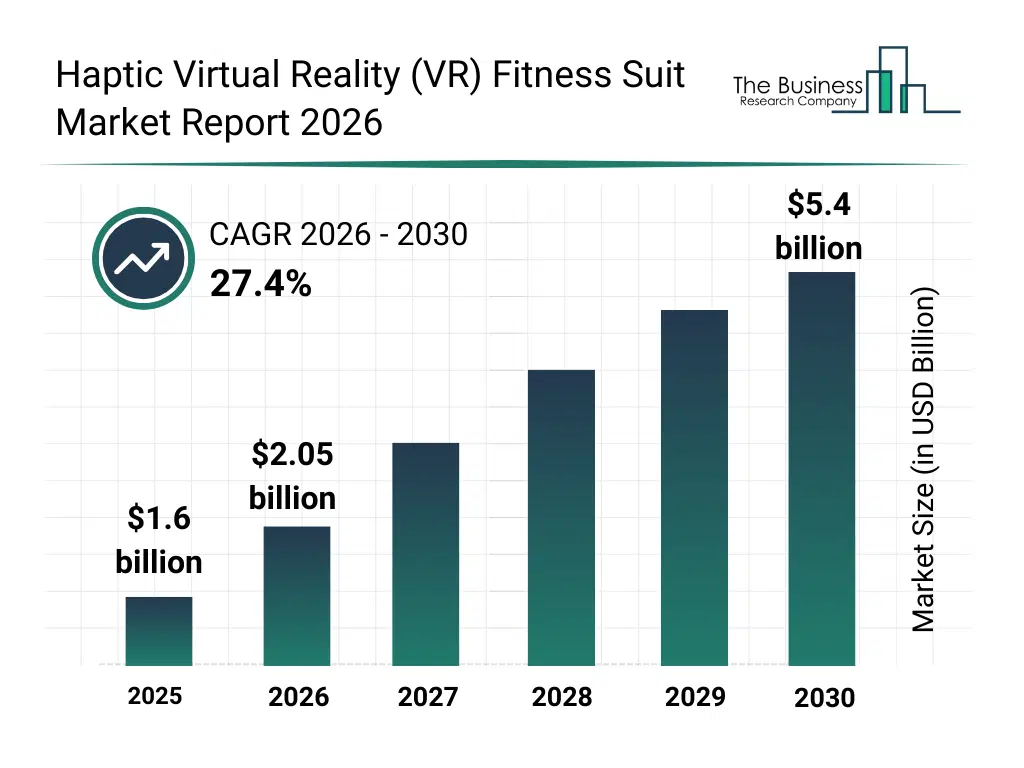
What Is The Haptic Virtual Reality (VR) Fitness Suit Market Size and Share 2026?
The haptic virtual reality (vr) fitness suit market size has grown exponentially in recent years. It will grow from $1.6 billion in 2025 to $2.05 billion in 2026 at a compound annual growth rate (CAGR) of 27.7%. The growth in the historic period can be attributed to rising popularity of virtual fitness applications, increasing consumer interest in immersive workouts, growth of wearable fitness technologies, expansion of home-based fitness solutions, improvements in haptic hardware capabilities.What Is The Haptic Virtual Reality (VR) Fitness Suit Market Growth Forecast?
The haptic virtual reality (vr) fitness suit market size is expected to see exponential growth in the next few years. It will grow to $5.4 billion in 2030 at a compound annual growth rate (CAGR) of 27.4%. The growth in the forecast period can be attributed to increasing adoption of ai-driven fitness personalization, rising demand for remote and virtual training solutions, expansion of rehabilitation and therapeutic vr applications, growing integration of biometric feedback systems, advancements in lightweight wearable materials. Major trends in the forecast period include increasing adoption of immersive vr-based fitness experiences, rising integration of advanced haptic feedback systems, growing demand for personalized vr training programs, expansion of motion tracking and sensor fusion technologies, enhanced focus on gamified fitness engagement.
Global Haptic Virtual Reality (VR) Fitness Suit Market Segmentation
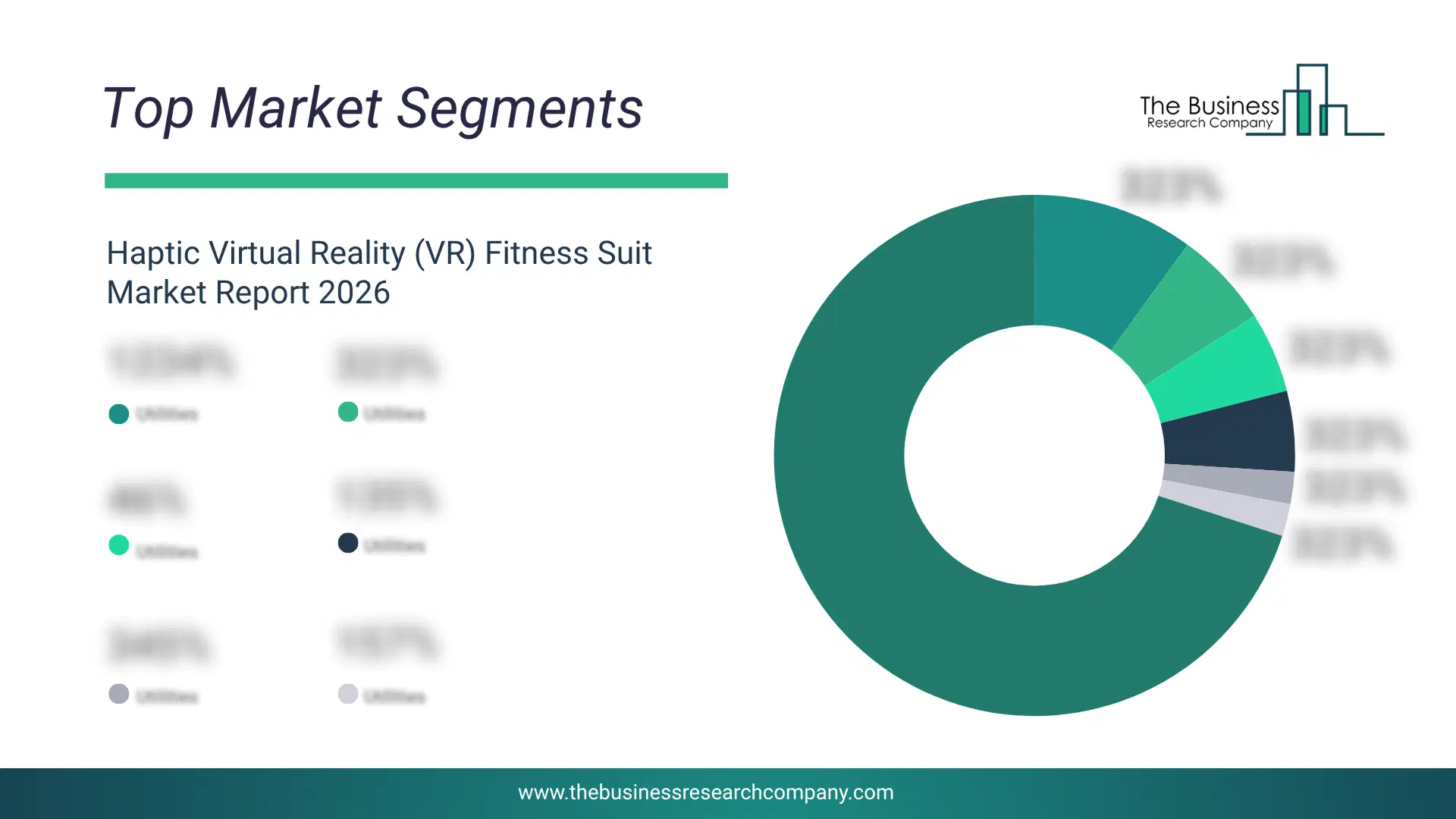
1) By Product Type: Full-Body Suits, Upper-Body Suits, Lower-Body Suits, Accessories 2) By Technology: Force Feedback, Vibrotactile, Electroactive Polymers, Other Technologies 3) By Distribution Channel: Online Stores, Specialty Stores, Retail Stores, Other Distribution Channels 4) By Application: Personal Fitness, Professional Training, Rehabilitation, Gaming, Other Applications 5) By End-User: Consumers, Fitness Centers, Rehabilitation Centers, Sports Institutes, Other End-Users Subsegments: 1) By Full-Body Suits: Haptic Feedback Suits, Motion Capture Suits, Exoskeleton Suits 2) By Upper-Body Suits: Haptic Vests, Haptic Arm Bands, Shoulder And Chest Harnesses 3) By Lower-Body Suits: Haptic Leg Bands, Haptic Pants, Foot And Ankle Haptic Modules 4) By Accessories: Haptic Gloves, Haptic Shoes Or Footwear, Wearable Sensors, Haptic Belts And StrapsWhat Is The Driver Of The Haptic Virtual Reality (VR) Fitness Suit Market?
The growing adoption of physical activities and regular exercise is expected to propel the growth of the haptic virtual reality (VR) fitness suit market going forward. Physical activities and regular exercises refer to structured and unstructured activities that enhance physical fitness, health, and well-being. The adoption of physical activities and regular exercise is rising due to growing awareness of their role in preventing lifestyle diseases, improving mental health, and enhancing overall well-being. Haptic virtual reality fitness suits enhance physical activities and regular exercise by providing real-time tactile feedback, improving posture, movement accuracy, and immersive engagement for more effective workouts. For instance, in November 2023, according to the UK Fitness Report published by PureGym Limited, a UK-based health club chain, the number of gym members in the UK has increased by 2% compared to last year, with 16% of the population currently being gym members. Additionally, another 16% of individuals have expressed their intention to join a gym in 2024. Therefore, the growing adoption of physical activities and regular exercise is driving the haptic virtual reality (VR) fitness suit industry.Key Players In The Global Haptic Virtual Reality (VR) Fitness Suit Market
Major companies operating in the haptic virtual reality (vr) fitness suit market are Shenzhen H&T Intelligent Control Co. Ltd, Ultraleap Limited, Dexta Robotics Inc., Woojer Ltd., Actronika SAS, HaptX Inc., SenseGlove B.V., Palladyne AI Inc., bHaptics Inc., Wave Company Inc., NeuroDigital Technologies S.L., AjnaLens Pvt. Ltd., Teslasuit Inc., SUBPAC Inc., VirZOOM Inc., AxonVR Inc., VRgluv Inc., Kaaya Tech Inc., Manus VR B.V., Valkyrie Industries Inc.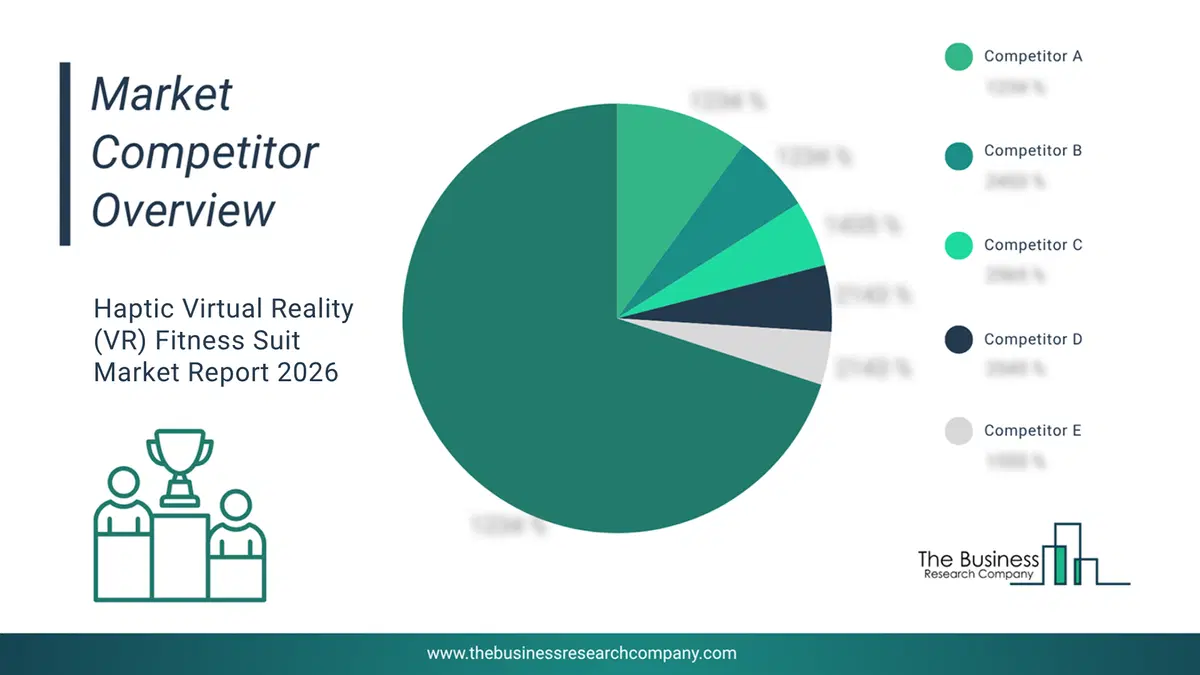
This chart is for illustrative purposes; the full report includes a detailed competitor analysis and comprehensive overview of the top 10 companies in the market.
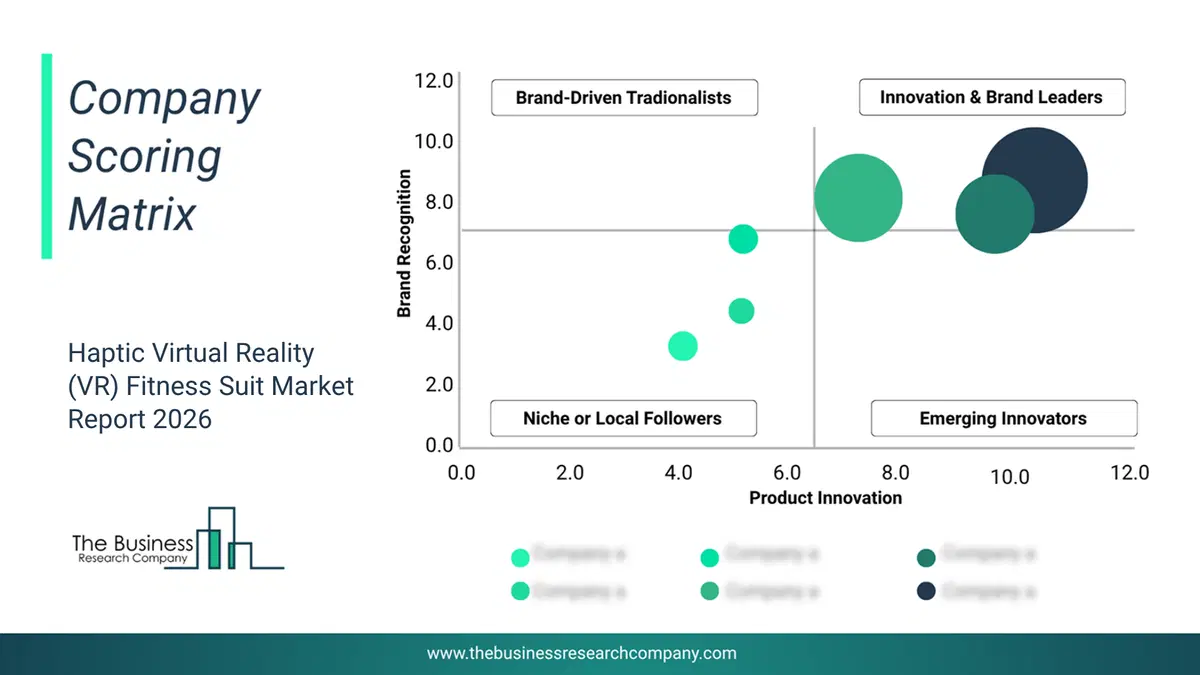
This chart maps companies by product innovation and brand strength, with bubble size indicating relative revenue, helping identify market leaders, challengers, and niche players. This is an illustrative chart; the full report provides a complete and accurate competitive analysis.
Global Haptic Virtual Reality (VR) Fitness Suit Market Trends and Insights
Major companies operating in the haptic virtual reality fitness suit market are focusing on technological advancements, such as full-body tactile actuation, to enhance immersive workout experiences, improve user engagement, and enable precise simulation of physical sensations for effective fitness training. Full-body tactile actuation uses distributed actuators across wearable textiles to deliver localized force or vibration feedback that augments motion and exercise cues, improving real-time training fidelity. For instance, in November 2024, bHaptics Inc., a South Korea-based VR haptics company, launched the TactSuit Pro. The TactSuit Pro offers a refined combination of immersive feedback, comfort, and accessibility for users engaging in virtual reality activities, including fitness applications. This is equipped with 32 haptic motors that deliver localized tactile sensations and enhance realism during workouts or interactive sessions. A thumbwheel with a light-emitting diode (LED) status ring on the chest allows users to easily adjust the intensity of sensations in real time, supporting both high-intensity exercise and lighter routines.What Are Latest Mergers And Acquisitions In The Haptic Virtual Reality (VR) Fitness Suit Market?
In June 2023, ASICS Ventures Corporation, a Japanese sportswear and fitness company specializing in strategic investments in sports and wellness technology startups, partnered with Valkyrie Industries Limited to develop immersive VR-powered fitness solutions that enhance training performance and user engagement. Through this partnership, ASICS aims to advance its virtual reality (VR) fitness initiatives by integrating Valkyrie’s haptic and electrical muscle stimulation (EMS) technology, enabling immersive workouts that combine real muscle engagement with VR environments. Valkyrie Industries Limited is a US-based technology company specializing in haptic virtual reality (VR) and electrical muscle stimulation (EMS) wearable technology for fitness.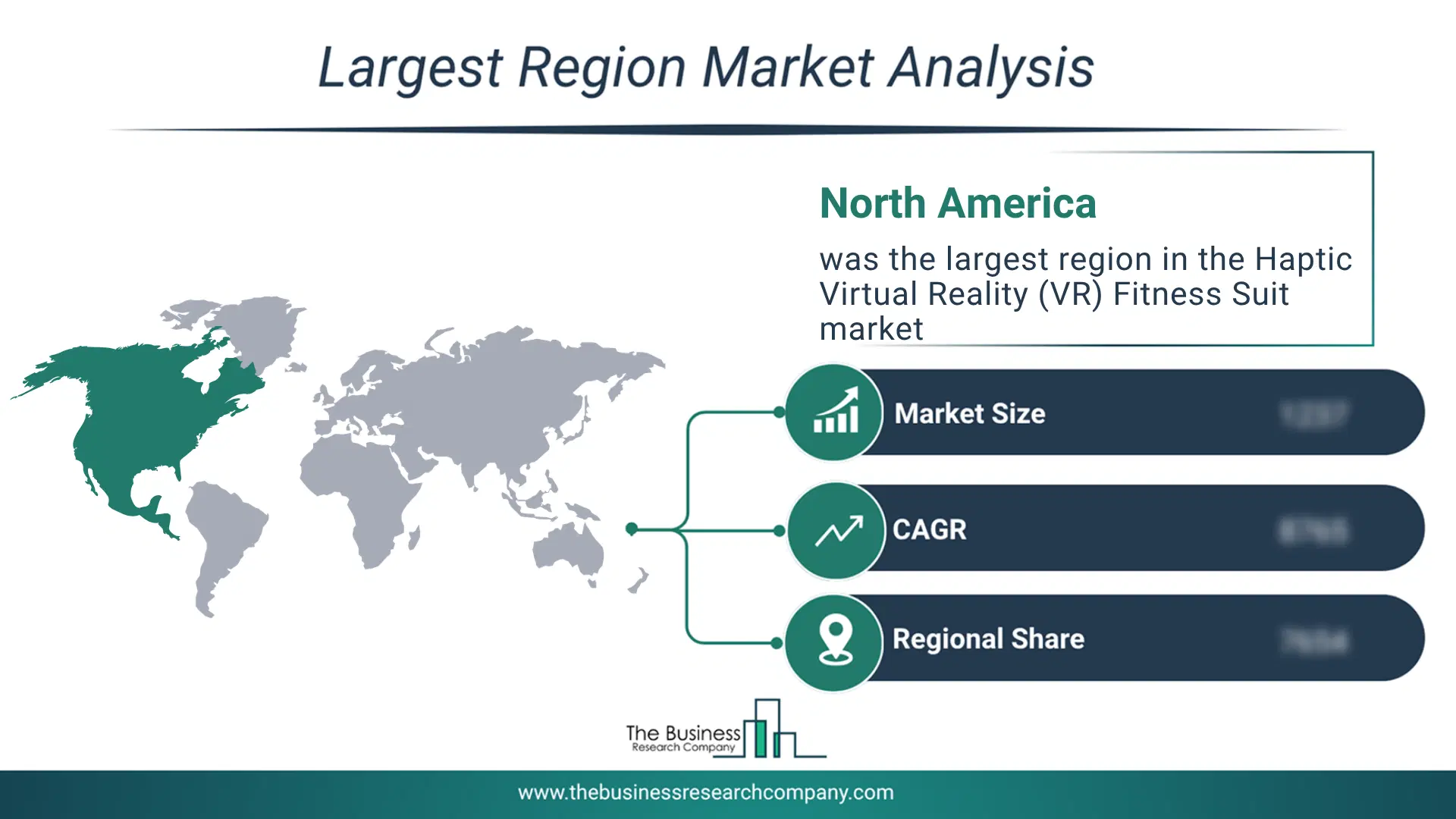
Regional Outlook
North America was the largest region in the haptic virtual reality (VR) fitness suit market in 2025. Asia-Pacific is expected to be the fastest-growing region in the forecast period. The regions covered in this market report are Asia-Pacific, South East Asia, Western Europe, Eastern Europe, North America, South America, Middle East, Africa. The countries covered in this market report are Australia, Brazil, China, France, Germany, India, Indonesia, Japan, Taiwan, Russia, South Korea, UK, USA, Canada, Italy, Spain.What Defines the Haptic Virtual Reality (VR) Fitness Suit Market?
The haptic virtual reality (VR) fitness suit market consists of revenues earned by entities by providing services such as remote coaching and personal training services, performance tracking and analytics services, and technical support and maintenance services. The market value includes the value of related goods sold by the service provider or included within the service offering. Only goods and services traded between entities or sold to end consumers are included. The haptic virtual reality (VR) fitness suit market also includes sales of wearable haptic suits, VR-compatible sensors and actuators, and related software for immersive fitness and training experiences. Values in this market are ‘factory gate’ values; that is, the value of goods sold by the manufacturers or creators of the goods, whether to other entities (including downstream manufacturers, wholesalers, distributors, and retailers) or directly to end customers. The value of goods in this market includes related services sold by the creators of the goods.How is Market Value Defined and Measured?
The market value is defined as the revenues that enterprises gain from the sale of goods and/or services within the specified market and geography through sales, grants, or donations in terms of the currency (in USD unless otherwise specified). The revenues for a specified geography are consumption values that are revenues generated by organizations in the specified geography within the market, irrespective of where they are produced. It does not include revenues from resales along the supply chain, either further along the supply chain or as part of other products.
This chart presents market attractiveness based on a quantitative evaluation of growth, competition, strategic alignment, and risk, offering a clear view of opportunity areas for decision-making. This chart is for illustrative purposes; the full report contains the complete analysis.

This chart highlights the Total Addressable Market (TAM) by estimating the maximum revenue opportunity using an assumption-driven approach, supporting strategic planning and opportunity sizing across markets. The chart is illustrative; the full report provides a more comprehensive analysis.
What Key Data and Analysis Are Included in the Haptic Virtual Reality (VR) Fitness Suit Market Report 2026?
The haptic virtual reality (vr) fitness suit market research report is one of a series of new reports from The Business Research Company that provides market statistics, including industry global market size, regional shares, competitors with the market share, detailed market segments, market trends and opportunities, and any further data you may need to thrive in the haptic virtual reality (vr) fitness suit industry. The market research report delivers a complete perspective of everything you need, with an in-depth analysis of the current and future state of the industry.Haptic Virtual Reality (VR) Fitness Suit Market Report Forecast Analysis
| Report Attribute | Details |
|---|---|
| Market Size Value In 2026 | $2.05 billion |
| Revenue Forecast In 2030 | $5.4 billion |
| Growth Rate | CAGR of 27.4% from 2026 to 2030 |
| Base Year For Estimation | 2025 |
| Actual Estimates/Historical Data | 2020-2025 |
| Forecast Period | 2026 - 2030 |
| Market Representation | Revenue in USD Billion and CAGR from 2026 to 2030 |
| Segments Covered | Product Type, Technology, Distribution Channel, Application, End-User |
| Regional Scope | Asia-Pacific, Western Europe, Eastern Europe, North America, South America, Middle East, Africa |
| Country Scope | The countries covered in the report are Australia, Brazil, China, France, Germany, India, Indonesia, Japan, Taiwan, Russia, South Korea, UK, USA, Canada, Italy, Spain |
| Key Companies Profiled | Shenzhen H&T Intelligent Control Co. Ltd, Ultraleap Limited, Dexta Robotics Inc., Woojer Ltd., Actronika SAS, HaptX Inc., SenseGlove B.V., Palladyne AI Inc., bHaptics Inc., Wave Company Inc., NeuroDigital Technologies S.L., AjnaLens Pvt. Ltd., Teslasuit Inc., SUBPAC Inc., VirZOOM Inc., AxonVR Inc., VRgluv Inc., Kaaya Tech Inc., Manus VR B.V., Valkyrie Industries Inc. |
| Customization Scope | Request for Customization |
| Pricing And Purchase Options | Explore Purchase Options |