
Heavy Duty Engines Market Report 2026
Global Outlook – By Vehicle Class (Class 7, Class 8), By Horsepower (Below 400HP, 400HP - 500HP, 500HP - 600HP, Above 600HP), By End-User (Agriculture, Mining, Construction, Transportation And Logistics, Other End Users) – Market Size, Trends, Strategies, and Forecast to 2030
Heavy Duty Engines Market Overview
• Heavy Duty Engines market size has reached to $54.84 billion in 2025 • Expected to grow to $78.37 billion in 2030 at a compound annual growth rate (CAGR) of 7.4% • Growth Driver: Construction Industry Expansion Fuels Growth In Heavy-Duty Engines Market • Market Trend: Cummins Unveils Next-Generation HELM 15-Liter Diesel Engine • Asia-Pacific was the largest region in 2025.Market Gains By 2030 – Top Opportunities By Segment
Market Gain identifies the most promising market opportunities by highlighting the segments or products expected to generate the highest incremental revenue growth over the next five years.
What Is Covered Under Heavy Duty Engines Market?
Heavy-duty engines refer to the engines that are used for heavy-duty vehicles. Heavy-duty vehicles usually have a gross vehicle weight of 10,000 pounds or more, which can be worked only with the help of heavy engines. The heavy-duty engine is used in producing power for heavy engines for many sectors, such as marine, locomotive, and mechanical drive applications and electrical power generation. The main types of heavy-duty engines are class 7 and class 8 vehicles. The class 7 heavy-duty engines are defined as vehicles designed to carry heavy loads. The class 7 vehicles usually have three or more axles, with a gross vehicle weight rating of between 26,001 pounds and 33,000 pounds. The most commonly used class 7 vehicles are garbage trucks, city transit buses, and street sweepers. The various horsepower include below 400hp, 400hp-500hp, 500hp-600hp, and above 600hp. It is employed by numerous end-users in such areas as agriculture, mining, construction, transportation and logistics, and others.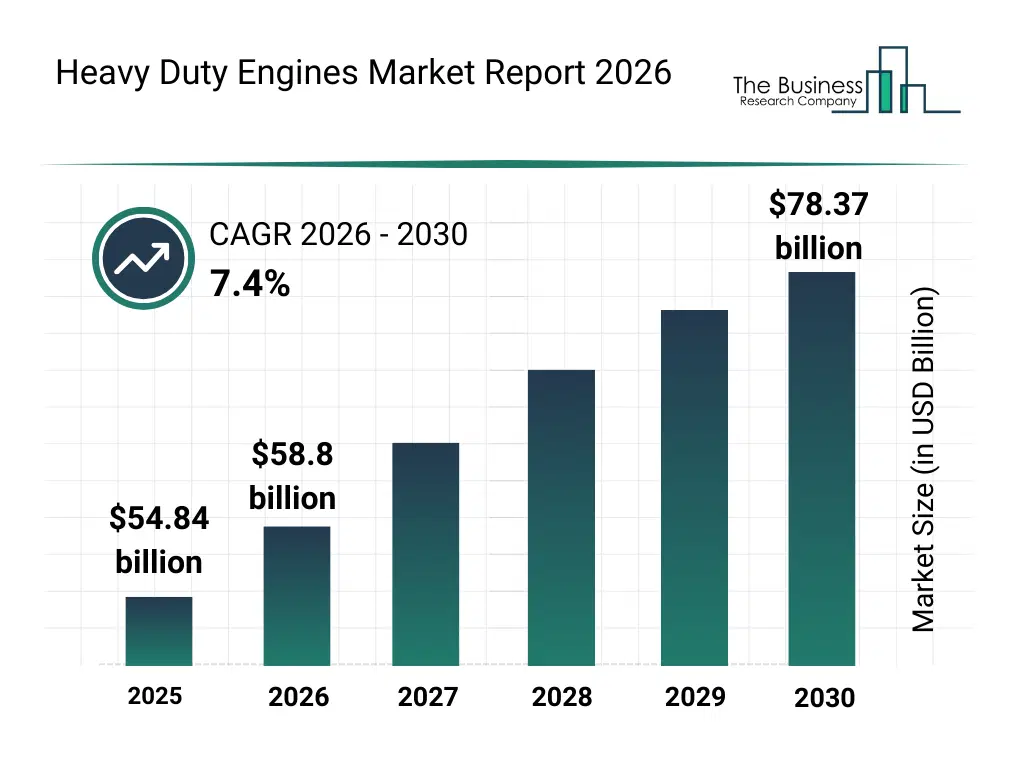
What Is The Heavy Duty Engines Market Size and Share 2026?
The heavy duty engines market size has grown strongly in recent years. It will grow from $54.84 billion in 2025 to $58.8 billion in 2026 at a compound annual growth rate (CAGR) of 7.2%. The growth in the historic period can be attributed to growth in infrastructure development, expansion of mining activities, demand for heavy commercial vehicles, reliance on diesel powered engines, growth in power generation projects.What Is The Heavy Duty Engines Market Growth Forecast?
The heavy duty engines market size is expected to see strong growth in the next few years. It will grow to $78.37 billion in 2030 at a compound annual growth rate (CAGR) of 7.4%. The growth in the forecast period can be attributed to stringent emission regulations, adoption of alternative fuel engines, growth in logistics and freight transport, modernization of heavy vehicle fleets, investments in industrial machinery. Major trends in the forecast period include rising demand for high horsepower engines, focus on fuel efficient engine designs, expansion of engines for construction equipment, growth of engines for power generation, increasing adoption of emission compliant engines.
Global Heavy Duty Engines Market Segmentation
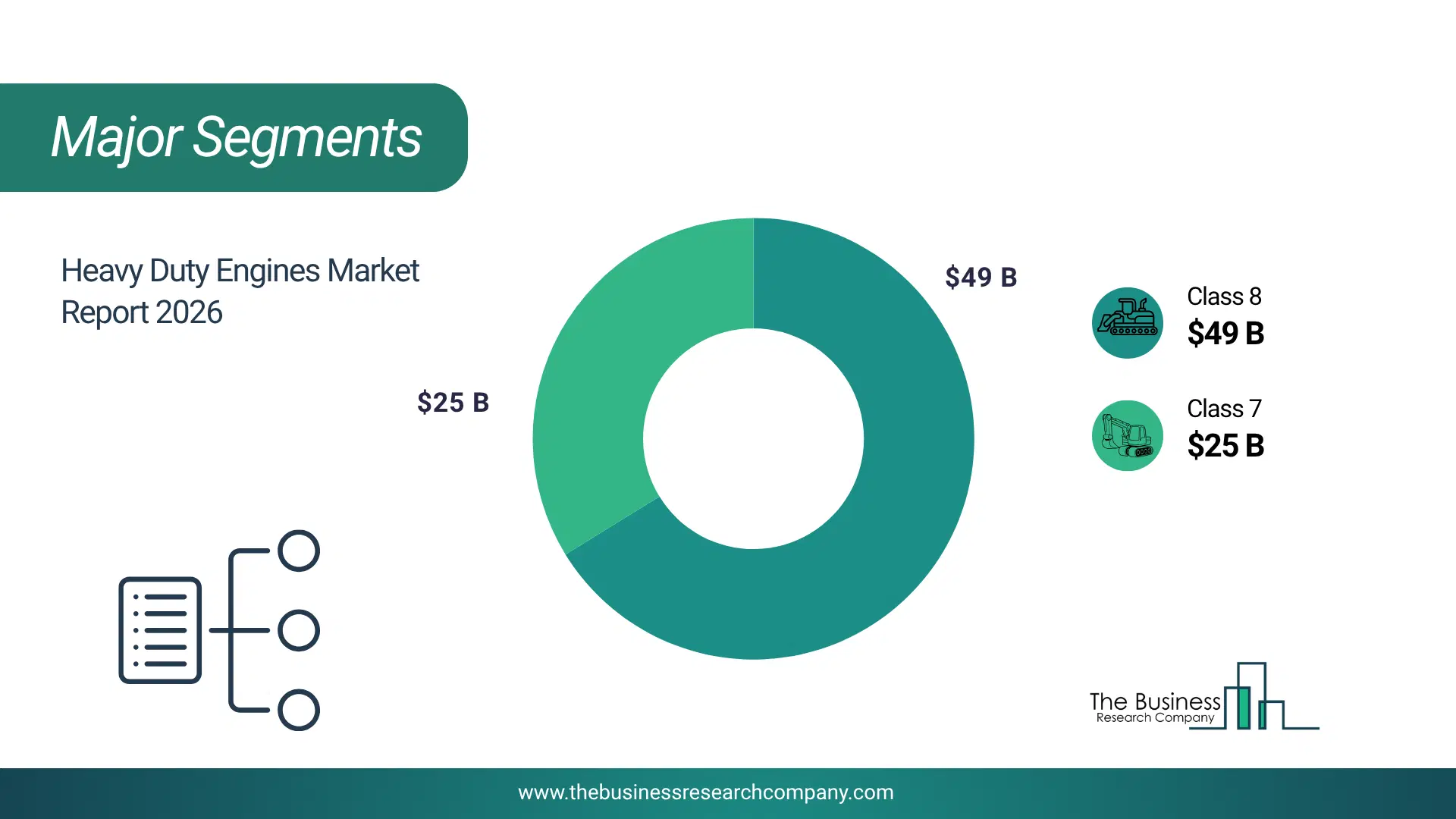
1) By Vehicle Class: Class 7, Class 8 2) By Horsepower: Below 400HP, 400HP - 500HP, 500HP - 600HP, Above 600HP 3) By End-User: Agriculture, Mining, Construction, Transportation And Logistics, Other End Users Subsegments: 1) By Class 7: Vehicles With A Gross Vehicle Weight Rating (GVWR) Of 26,001 To 33,000 Pounds, Medium-Duty Trucks, Buses, And Vocational Vehicles 2) By Class 8: Vehicles With A Gross Vehicle Weight Rating (GVWR) Of Over 33,000 Pounds, Heavy-Duty Trucks, Tractor-Trailers, And Larger Buses The top segments in the heavy duty engines market will be: • Class 8 will reach $49.44 Billion by 2030. • Class 7 will reach $24.89 Billion by 2030.What Is The Driver Of The Heavy Duty Engines Market?
The growing construction industry is expected to propel the growth of the heavy duty engines market going forward. Construction refers to the process, art, or manner of building some structure. Construction includes residential buildings, institutional and commercial buildings, and specialized industrial construction. Heavy-duty engines are used for preparing concrete mixes for big construction projects along with carrying big loads that make up the structure. For instance, in February 2025, according to US Census Bureau, a US-based government statistical agency, construction spending during December 2024 was estimated at a seasonally adjusted annual rate of $2,192.2 billion, 4.3 percent above the December 2023 estimate of $2,101.3 billion. Therefore, the rising construction industry is driving the growth of the heavy duty engines industry.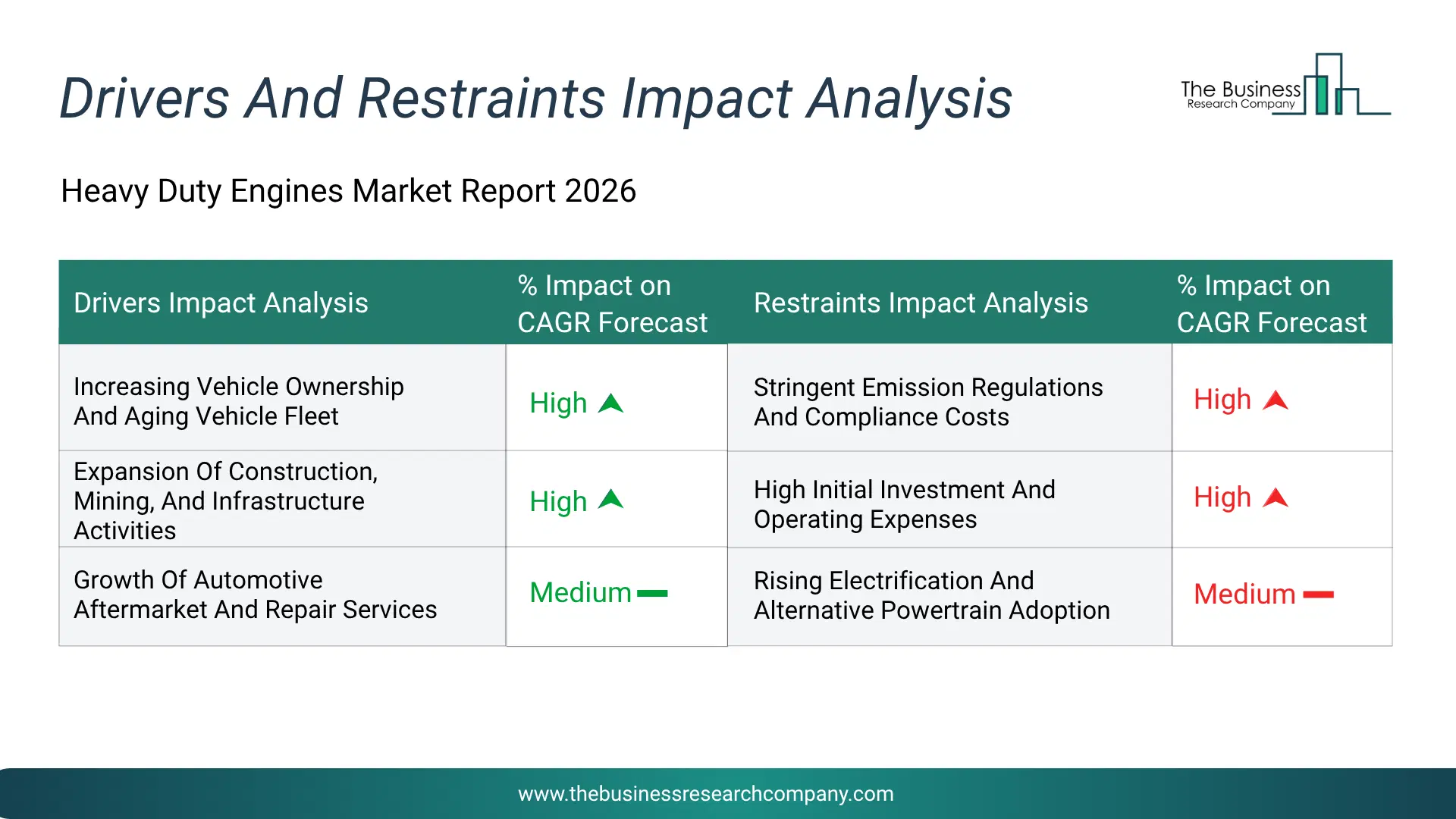
Infographic Chart Showing Key Market Drivers Analysis And Restraints For Heavy Duty Engines Market
The chart presents an impact analysis of key drivers and restraints, quantifying their relative influence on the market's growth rate and helping assess the balance between growth enablers and limiting factors. This chart offers a high-level perspective; the full report contains more detailed insights.
How Will The Drivers Impact Growth In The Global Heavy Duty Engines Market?
• Increasing Vehicle Ownership And Aging Vehicle Fleet (High) – During the forecast period, the increasing vehicle ownership and aging vehicle fleet is expected to become a key growth driver for the heavy duty engines market by 2030. Increasing vehicle ownership and aging vehicle fleet acts as a major driver for the heavy duty engines market because the expanding global commercial vehicle population increases the demand for engine replacements, overhauls, and performance upgrades. Older trucks, buses, construction equipment, and industrial vehicles require frequent engine maintenance and refurbishment to maintain operational efficiency. Fleet operators are investing in reliable heavy duty engines to extend vehicle life and reduce downtime. Growing transportation, logistics, mining, and infrastructure activities further accelerate engine demand. As a result, the market experiences sustained growth supported by an expanding and aging vehicle base. • Expansion Of Construction, Mining, And Infrastructure Activities (High) – During the forecast period, the expansion of construction, mining, and infrastructure activities is expected to act as a key growth catalyst for the heavy duty engines market by 2030. Expansion of construction, mining, and infrastructure activities acts as a major driver for the heavy duty engines market because heavy machinery, earthmoving equipment, mining vehicles, and power generation systems rely extensively on high-performance heavy duty engines. Governments and private sector organizations are increasing investments in transportation networks, urban development projects, and resource extraction operations worldwide. These activities require durable and fuel-efficient engines capable of operating in demanding environments. The growing utilization of heavy equipment across industrial sectors strengthens engine procurement and replacement demand. Consequently, rising infrastructure and industrial development directly supports the growth of the heavy duty engines market. • Growth Of Automotive Aftermarket And Repair Services (Medium) – During the forecast period, the growth of automotive aftermarket and repair services is expected to emerge as a major factor driving the expansion of the heavy duty engines market by 2030. Growth of automotive aftermarket and repair services acts as a major driver for the heavy duty engines market because increasing maintenance requirements for commercial vehicles and industrial equipment are creating strong demand for engine components, remanufactured engines, and replacement units. Service providers are expanding their repair capabilities to meet the needs of fleet operators seeking cost-effective solutions. The availability of specialized repair networks and engine refurbishment services improves engine lifecycle management. Rising focus on operational efficiency and reduced downtime further supports aftermarket engine demand. This expanding service ecosystem contributes significantly to market growth.How Will The Restraints Impact Growth In The Global Heavy Duty Engines Market?
• Stringent Emission Regulations And Compliance Costs (High) – During the forecast period, stringent emission regulations and compliance costs are expected to emerge as a major restraint for the heavy duty engines market by 2030. Stringent emission regulations and compliance costs act as a significant challenge because manufacturers must continuously invest in advanced technologies such as selective catalytic reduction systems, exhaust gas recirculation, and particulate filters to meet evolving environmental standards. These requirements increase production costs and engineering complexity. Fleet operators also face higher acquisition and maintenance expenses associated with compliant engines. As a result, regulatory pressures can slow market expansion and impact profit margins across the value chain. • High Initial Investment And Operating Expenses (High) – During the forecast period, high initial investment and operating expenses are expected to act as a key restraint for the heavy duty engines market by 2030. High initial investment and operating expenses act as a major challenge because heavy duty engines require substantial capital expenditure for procurement, installation, and maintenance. In addition, rising fuel prices, repair costs, and replacement part expenses increase the total cost of ownership for fleet operators. Small and medium-sized businesses often face financial constraints when upgrading or expanding their equipment fleets. This cost burden can delay purchasing decisions and limit market growth opportunities. • Rising Electrification And Alternative Powertrain Adoption (Medium) – During the forecast period, rising electrification and alternative powertrain adoption is expected to become a notable restraint for the heavy duty engines market by 2030. Rising electrification and alternative powertrain adoption acts as a challenge because transportation and industrial sectors are increasingly exploring battery-electric, hydrogen fuel cell, and hybrid technologies to reduce emissions and fuel dependency. Government incentives and sustainability initiatives are accelerating the deployment of these alternatives in selected applications. As technology improves and infrastructure expands, some demand may gradually shift away from conventional heavy duty engines. Consequently, the growing adoption of alternative propulsion systems may limit long-term market potential for traditional engine manufacturers.Key Players In The Global Heavy Duty Engines Market
Major companies operating in the heavy duty engines market report include Daimler AG, Mercedes-Benz, Caterpillar Inc., Deere & Company, Volvo Trucks Corporation, Mitsubishi Heavy Industries, PACCAR, Cummins Inc., Weichai Power Co. Ltd., Komatsu Ltd., Isuzu Motors Ltd., Kubota Corporation, Scania AB, MAN SE, Liebherr Group, Hino Motors Ltd., AGCO Corporation, YANMAR HOLDINGS CO. LTD., Navistar Inc., Wärtsilä Oyj Abp, Ashok Leyland Ltd., Rolls-Royce Power Systems AG, China Yuchai International Limited, Deutz AG, Doosan Infracore, Kirloskar Group, Perkins Engines Company Limited, J.C. Bamford Excavators Limited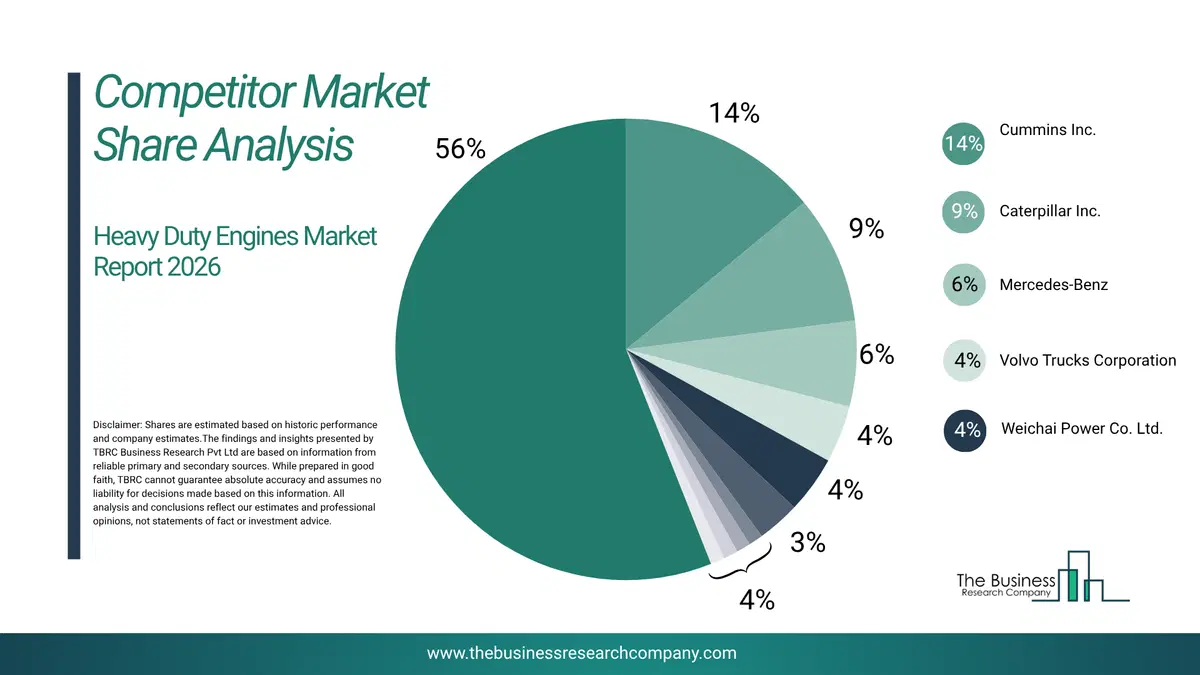
This chart is for illustrative purposes; the full report includes a detailed competitor analysis and comprehensive overview of the top 10 companies in the market.
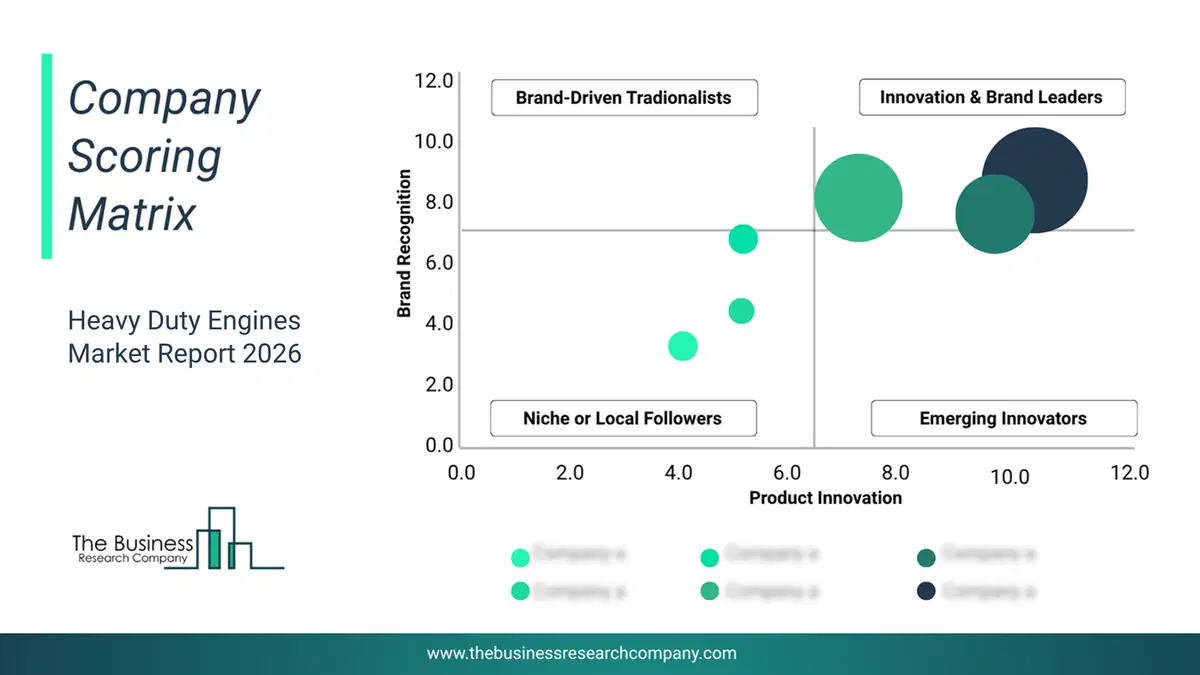
This chart maps companies by product innovation and brand strength, with bubble size indicating relative revenue, helping identify market leaders, challengers, and niche players. This is an illustrative chart; the full report provides a complete and accurate competitive analysis.
Global Heavy Duty Engines Market Trends and Insights
Major companies operating in the heavy-duty engines market are focusing on advanced solutions such as next-generation heavy-duty engines to improve efficiency, reduce emissions, and meet evolving industry standards. Next-generation heavy-duty engines refer to advanced powertrains designed for commercial vehicles that improve fuel efficiency, reduce emissions, and enhance performance through innovative technologies and materials. For instance, in March 2024, Cummins, a US-based company that designs, manufactures, and distributes engines, filtration systems, and power generation products launched its next-generation HELM 15-liter diesel engine, designed to be compliant with U.S. EPA and CARB 2027 regulations. This engine features a fuel-agnostic platform, allowing it to operate on various fuel types, including biodiesel blends and renewable diesel, enhancing both efficiency and environmental sustainability. The HELM platform is expected to meet future emissions standards without significant architectural changes, making it a crucial development in advancing performance and reducing the environmental impact of heavy-duty engines.What Are Latest Mergers And Acquisitions In The Heavy Duty Engines Market?
In July 2024, Cummins Inc., a US-based heavy-duty engine and power technology company, partnered with Vale SA to develop and test dual fuel haul trucks powered by a mixture of ethanol and diesel. With this collaboration, Cummins and Vale aim to integrate Cummins dual fuel engine technology into large Komatsu mining trucks to reduce direct CO₂ emissions by up to 70 percent to improve environmental performance and operational efficiency while enabling miners to retain their existing fleets and fueling infrastructure for greater scalability and cost effectiveness. Vale SA is a Brazil-based mining and metals company that specializes in iron ore production and other mineral resources.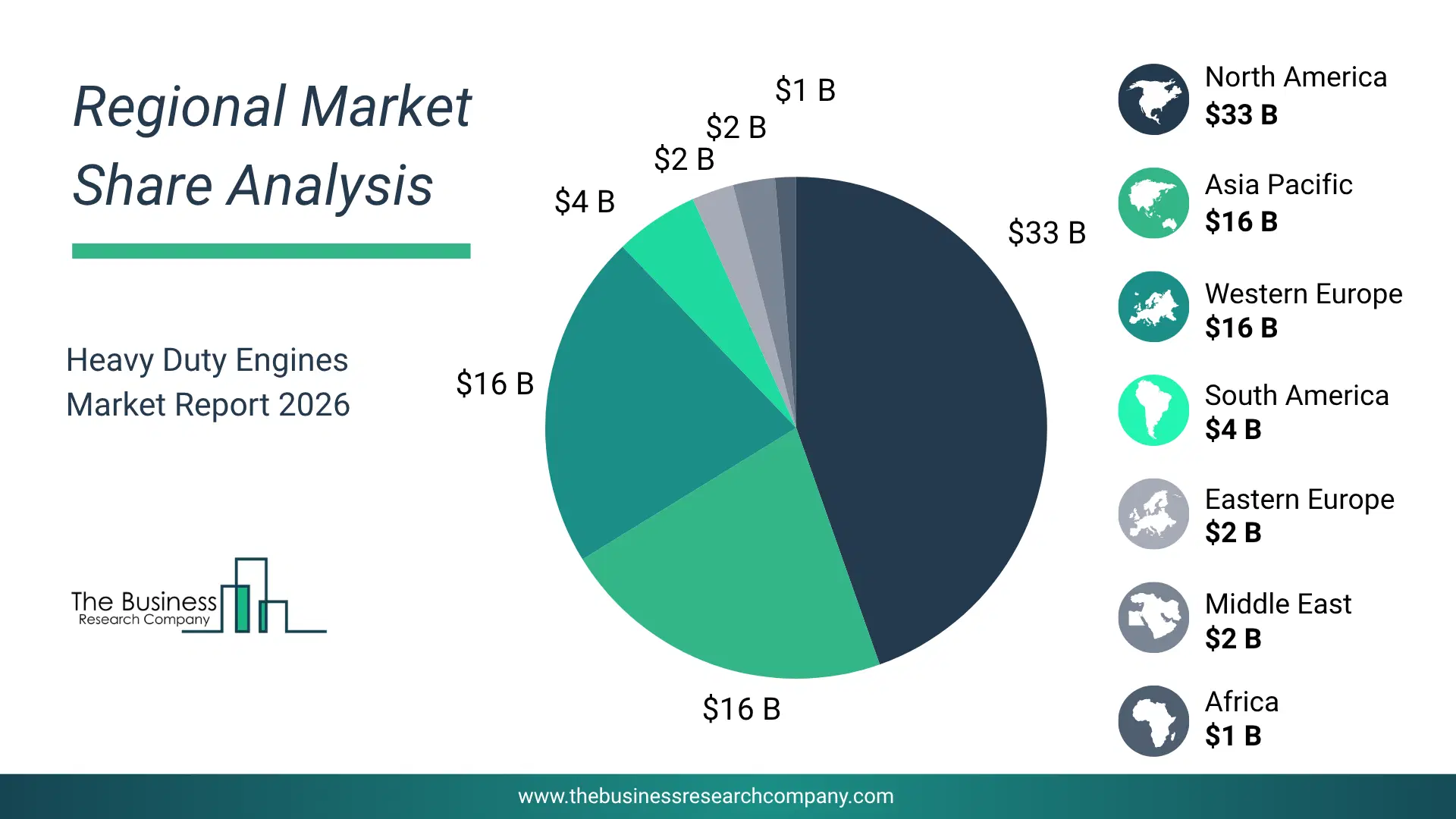
Regional Outlook
Asia-Pacific was the largest region in the heavy duty engines market in 2025. The regions covered in this market report include Asia-Pacific, South East Asia, Western Europe, Eastern Europe, North America, South America, Middle East, Africa. The countries covered in this market report include Australia, Brazil, China, France, Germany, India, Indonesia, Japan, Taiwan, Russia, South Korea, UK, USA, Canada, Italy, SpainWhat Defines the Heavy Duty Engines Market?
The heavy duty engines market consists of sales of semi-truck engines and heavy duty diesel truck engines. Values in this market are ‘factory gate’ values, that is the value of goods sold by the manufacturers or creators of the goods, whether to other entities (including downstream manufacturers, wholesalers, distributors and retailers) or directly to end customers. The value of goods in this market includes related services sold by the creators of the goods.How is Market Value Defined and Measured?
The market value is defined as the revenues that enterprises gain from the sale of goods and/or services within the specified market and geography through sales, grants, or donations in terms of the currency (in USD unless otherwise specified). The revenues for a specified geography are consumption values that are revenues generated by organizations in the specified geography within the market, irrespective of where they are produced. It does not include revenues from resales along the supply chain, either further along the supply chain or as part of other products.
This chart presents market attractiveness based on a quantitative evaluation of growth, competition, strategic alignment, and risk, offering a clear view of opportunity areas for decision-making. This chart is for illustrative purposes; the full report contains the complete analysis.

This chart highlights the Total Addressable Market (TAM) by estimating the maximum revenue opportunity using an assumption-driven approach, supporting strategic planning and opportunity sizing across markets. The chart is illustrative; the full report provides a more comprehensive analysis.
What Key Data and Analysis Are Included in the Heavy Duty Engines Market Report 2026?
The heavy duty engines market research report is one of a series of new reports from The Business Research Company that provides market statistics, including industry global market size, regional shares, competitors with the market share, detailed market segments, market trends and opportunities, and any further data you may need to thrive in the heavy duty engines industry. The market research report delivers a complete perspective of everything you need, with an in-depth analysis of the current and future state of the industry.Heavy Duty Engines Market Report Forecast Analysis
| Report Attribute | Details |
|---|---|
| Market Size Value In 2026 | $58.8 billion |
| Revenue Forecast In 2030 | $78.37 billion |
| Growth Rate | CAGR of 7.2% from 2026 to 2030 |
| Base Year For Estimation | 2025 |
| Actual Estimates/Historical Data | 2020-2025 |
| Forecast Period | 2026 - 2030 |
| Market Representation | Revenue in USD Billion and CAGR from 2026 to 2030 |
| Segments Covered | Vehicle Class, Horsepower, End-User |
| Regional Scope | Asia-Pacific, Western Europe, Eastern Europe, North America, South America, Middle East, Africa |
| Country Scope | The countries covered in the report are Australia, Brazil, China, France, Germany, India, Indonesia, Japan, Taiwan, Russia, South Korea, UK, USA, Canada, Italy, Spain. |
| Key Companies Profiled | Daimler AG, Mercedes-Benz, Caterpillar Inc., Deere & Company, Volvo Trucks Corporation, Mitsubishi Heavy Industries, PACCAR, Cummins Inc., Weichai Power Co. Ltd., Komatsu Ltd., Isuzu Motors Ltd., Kubota Corporation, Scania AB, MAN SE, Liebherr Group, Hino Motors Ltd., AGCO Corporation, YANMAR HOLDINGS CO. LTD., Navistar Inc., Wärtsilä Oyj Abp, Ashok Leyland Ltd., Rolls-Royce Power Systems AG, China Yuchai International Limited, Deutz AG, Doosan Infracore, Kirloskar Group, Perkins Engines Company Limited, J.C. Bamford Excavators Limited |
| Customization Scope | Request for Customization |
| Pricing And Purchase Options | Explore Purchase Options |