
Hereditary Testing Market Report 2026
Global Outlook – By Test Type (Predictive Testing, Carrier Testing, Prenatal Testing, Newborn Screening, Diagnostic Testing, Other Test Types), By Sample Type (Blood Samples, Saliva Samples, Tissue Samples, Buccal Swabs, Amniotic Fluid And Cord Blood Samples), By Technology Used (Next-Generation Sequencing (NGS), Polymerase Chain Reaction (PCR), Sanger Sequencing, Microarray Technology, Whole Genome Sequencing (WGS)), By Application (Oncology, Cardiovascular Diseases, Neurological Disorders, Metabolic Disorders, Other Applications), By End User (Hospitals, Diagnostic Laboratories, Research Institutes, Pharmaceutical Companies, Patients And Consumers) - Market Size, Trends, Strategies, and Forecast to 2030
Hereditary Testing Market Overview
• Hereditary Testing market size has reached to $6.62 billion in 2025 • Expected to grow to $10.17 billion in 2030 at a compound annual growth rate (CAGR) of 8.9% • Growth Driver: Increasing Prevalence Of Genetic Disorders Fueling The Growth Of The Market Due To Rising Demand For Early Diagnosis And Risk Identification • Market Trend: Technological Advancements In Genetic Test Kits Fuels The Market Growth Due To Enhanced Accuracy, Broader Mutation Detection, And Streamlined Lab Workflows • North America was the largest region in 2025 and Asia-Pacific is the fastest growing region.What Is Covered Under Hereditary Testing Market?
Hereditary testing, also known as genetic testing for inherited conditions, is a medical test that analyzes an individual's deoxyribonucleic acid (DNA) to identify genetic mutations or variations passed down from parents. These tests are used to assess the risk of developing or passing on inherited disorders, diagnose genetic diseases, and guide personalized treatment or preventive care decisions. The main types of hereditary testing are predictive testing, carrier testing, prenatal testing, newborn screening, diagnostic testing, and others. Predictive testing refers to the use of genetic or medical tests to identify the likelihood of an individual developing a specific disease or condition in the future before symptoms appear. The various sample types include blood samples, saliva samples, tissue samples, buccal swabs, and urine samples, with various technologies used, including next-generation sequencing (NGS), polymerase chain reaction (PCR), Sanger sequencing, microarray technology, and whole genome sequencing (WGS). These are used in various applications such as oncology, cardiovascular diseases, neurological disorders, metabolic disorders, and others and are also used by various end users, including hospitals, diagnostic laboratories, research institutes, pharmaceutical companies, patients, and consumers.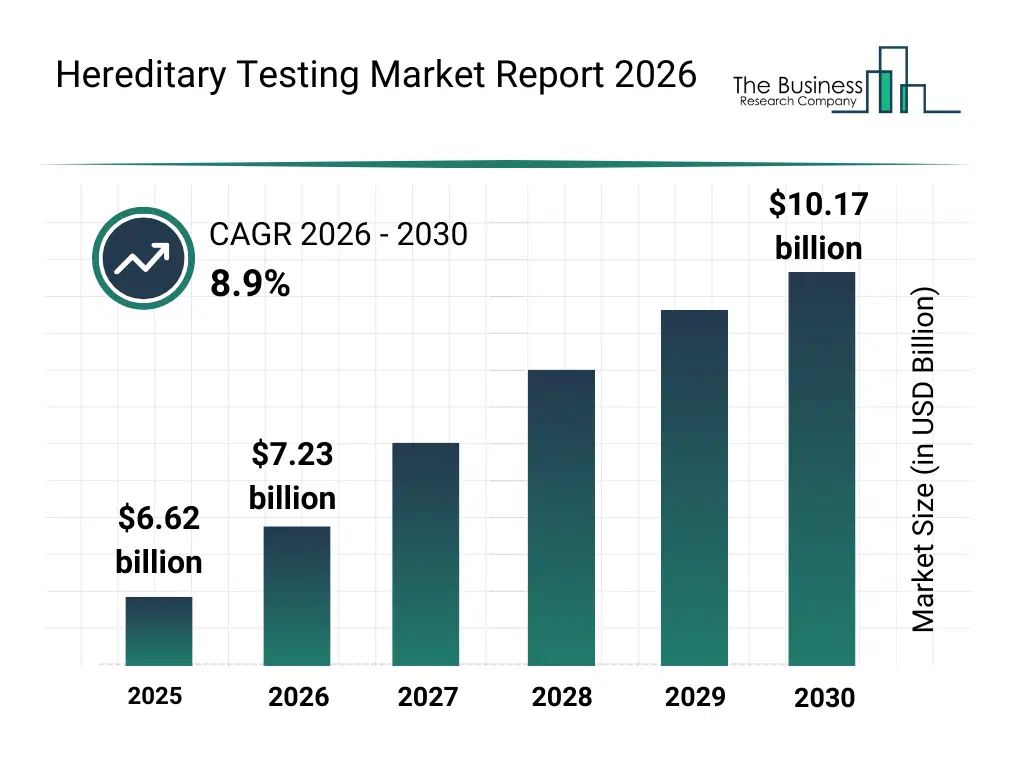
What Is The Hereditary Testing Market Size and Share 2026?
The hereditary testing market size has grown strongly in recent years. It will grow from $6.62 billion in 2025 to $7.23 billion in 2026 at a compound annual growth rate (CAGR) of 9.2%. The growth in the historic period can be attributed to advancements in genetic sequencing technologies, increasing awareness of inherited disorders, expansion of clinical genetics programs, declining cost of genetic testing, growth of diagnostic laboratory networks.What Is The Hereditary Testing Market Growth Forecast?
The hereditary testing market size is expected to see strong growth in the next few years. It will grow to $10.17 billion in 2030 at a compound annual growth rate (CAGR) of 8.9%. The growth in the forecast period can be attributed to increasing integration of genomics into routine care, rising demand for precision medicine applications, expansion of population-scale genetic screening, growing use of digital genetic data platforms, increasing focus on preventive healthcare genomics. Major trends in the forecast period include increasing adoption of next-generation sequencing tests, rising demand for predictive and carrier genetic testing, growing use of AI-based variant interpretation, expansion of prenatal and newborn screening programs, enhanced focus on personalized genetic counseling.
Global Hereditary Testing Market Segmentation
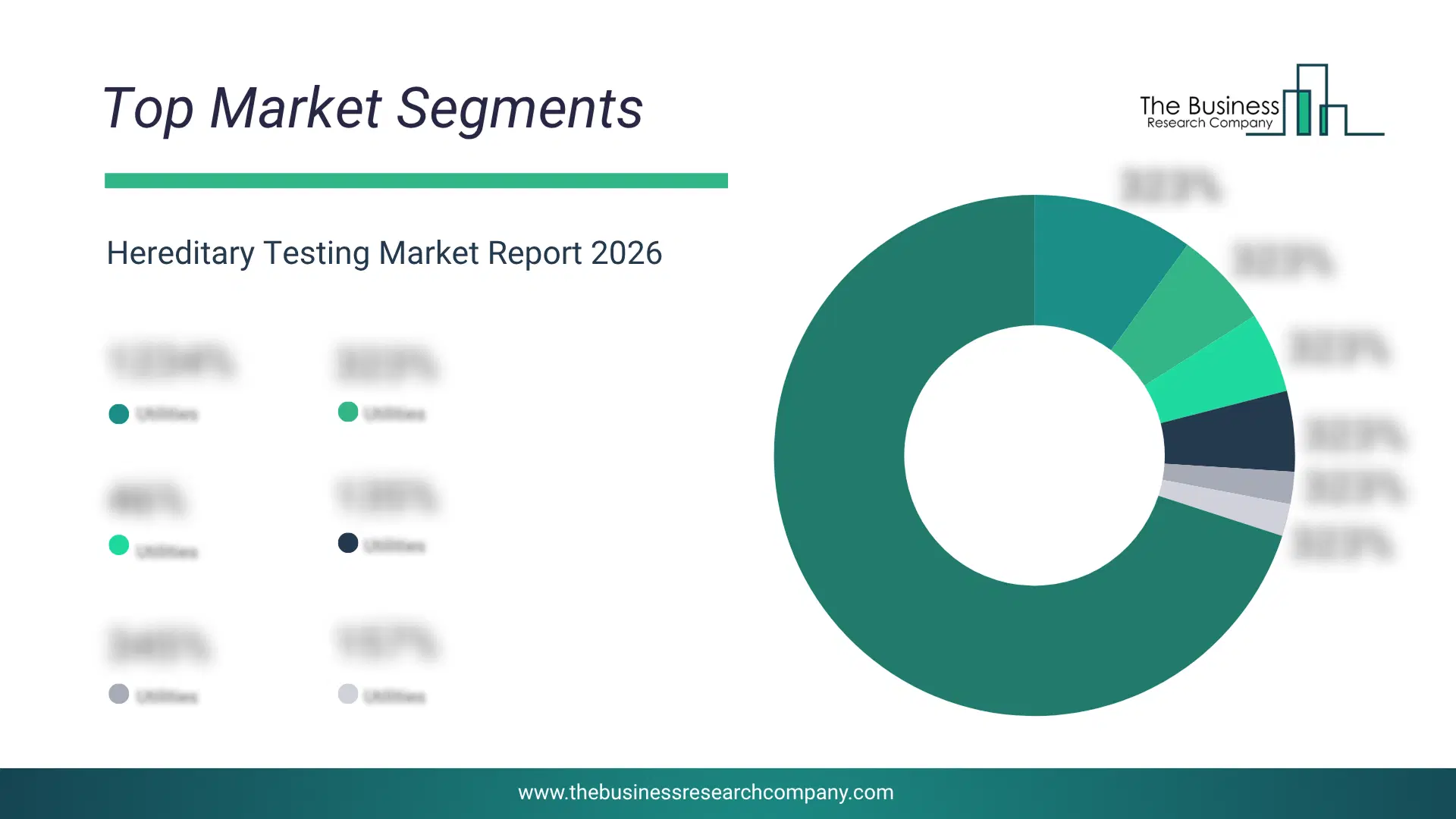
1) By Test Type: Predictive Testing, Carrier Testing, Prenatal Testing, Newborn Screening, Diagnostic Testing, Other Test Types 2) By Sample Type: Blood Samples, Saliva Samples, Tissue Samples, Buccal Swabs, Amniotic Fluid And Cord Blood Samples 3) By Technology Used: Next-Generation Sequencing (NGS), Polymerase Chain Reaction (PCR), Sanger Sequencing, Microarray Technology, Whole Genome Sequencing (WGS) 4) By Application: Oncology, Cardiovascular Diseases, Neurological Disorders, Metabolic Disorders, Other Applications 5) By End User: Hospitals, Diagnostic Laboratories, Research Institutes, Pharmaceutical Companies, Patients And Consumers Subsegments: 1) By Predictive Testing: Breast Cancer 1 (BRCA1) and Breast Cancer 2 (BRCA2) Gene Mutation Testing, Lynch Syndrome Testing, Familial Hypercholesterolemia Testing, Huntington’s Disease Testing, Cardiomyopathy Genetic Testing 2) By Carrier Testing: Cystic Fibrosis Carrier Screening, Tay-Sachs Carrier Screening, Spinal Muscular Atrophy (SMA) Carrier Screening, Thalassemia Carrier Screening, Sickle Cell Carrier Testing 3) By Prenatal Testing: Non-Invasive Prenatal Testing (NIPT), Chorionic Villus Sampling (CVS), Amniocentesis, Expanded Carrier Screening (Prenatal Context), Cell-Free Fetal Deoxyribonucleic Acid Testing 4) By Newborn Screening: Phenylketonuria (PKU) Screening, Congenital Hypothyroidism Screening, Cystic Fibrosis Screening, Sickle Cell Disease Screening, Hearing Loss and Metabolic Disorder Panels 5) By Diagnostic Testing: Rare Disease Genetic Testing, Inherited Cancer Diagnostic Testing, Cardiogenetic Diagnostic Panels, Neurogenetic Disorder Testing, Monogenic Disease Panels 6) By Other Test Types: Pharmacogenomics Testing, Preimplantation Genetic Diagnosis (PGD), Whole Exome Sequencing (WES), Whole Genome Sequencing (WGS), Mitochondrial Deoxyribonucleic Acid TestingWhat Is The Driver Of The Hereditary Testing Market?
The increasing prevalence of genetic disorders is expected to propel the growth of the hereditary testing market going forward. Genetic disorders refer to medical conditions resulting from abnormalities or mutations in an individual’s deoxyribonucleic acid, inherited from one or both parents or arising spontaneously. The rise in genetic disorders is partly due to increased parental age, which raises the likelihood of genetic mutations being passed on to offspring. Hereditary testing supports genetic disorder patients by enabling early diagnosis, guiding personalized treatment, and informing family planning decisions through the identification of inherited mutations. For instance, in October 2024, according to Cystic Fibrosis Trust, a UK-based charitable organization, the number of patients registered with cystic fibrosis rose to 11,318 in 2023, up from 11,148 in 2022. Therefore, the increasing prevalence of genetic disorders is driving the growth of the hereditary testing industry.Key Players In The Global Hereditary Testing Market
Major companies operating in the hereditary testing market are F. Hoffmann-La Roche Ltd., Thermo Fisher Scientific Inc., Laboratory Corporation of America Holdings, Quest Diagnostics Incorporated, Agilent Technologies Inc., Illumina Inc., CooperSurgical Inc., QIAGEN N.V, Natera Inc., Myriad Genetics Inc., Fulgent Genetics Inc, Invitae Corporation, GeneDx LLC, Twist Bioscience Corporation, Color Health Inc., MedGenome Inc, SOPHiA GENETICS SA, Gene By Gene Ltd., Dante Labs Inc., 23mofang Co. Ltd.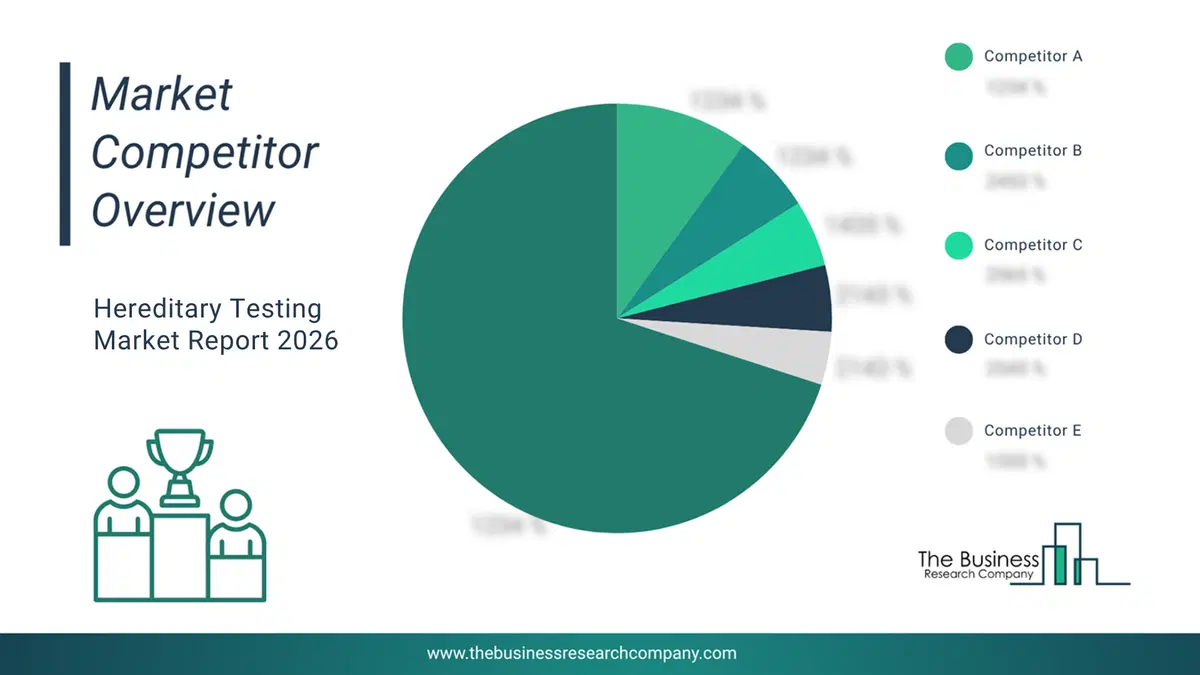
This chart is for illustrative purposes; the full report includes a detailed competitor analysis and comprehensive overview of the top 10 companies in the market.
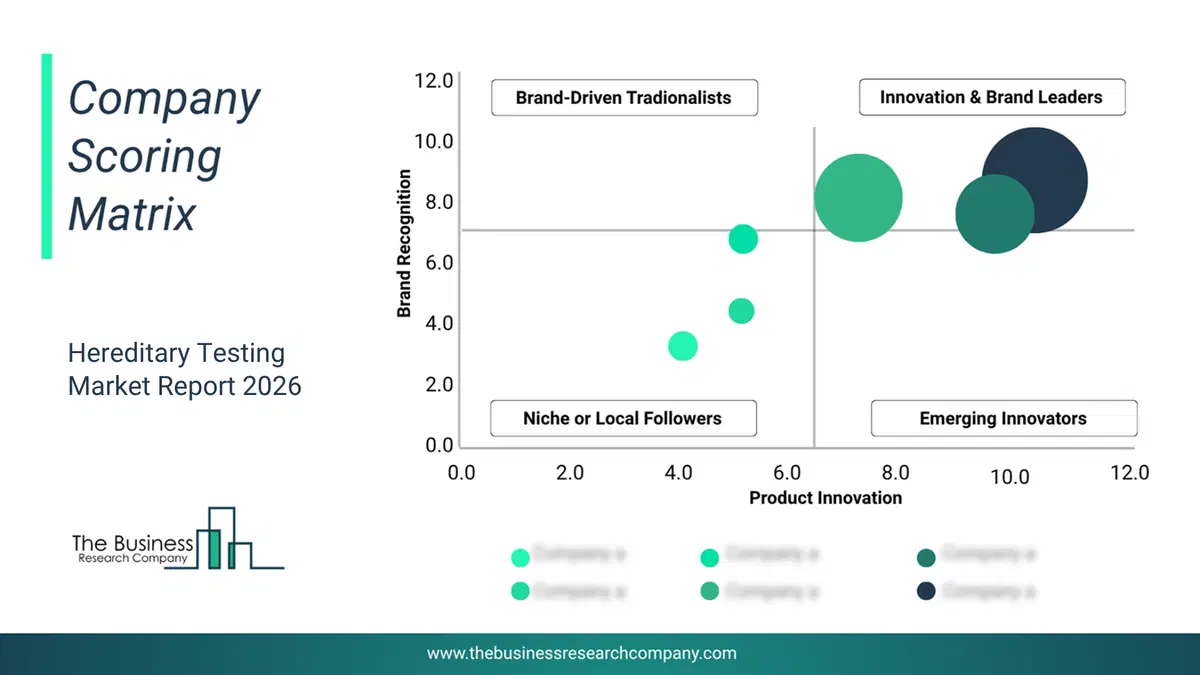
This chart maps companies by product innovation and brand strength, with bubble size indicating relative revenue, helping identify market leaders, challengers, and niche players. This is an illustrative chart; the full report provides a complete and accurate competitive analysis.
Global Hereditary Testing Market Trends and Insights
Major companies operating in the hereditary testing market are focusing on technological advancements in genetic test kits to enhance testing accuracy, reduce turnaround times, and improve the detection of a broader range of genetic mutations. Genetic test kits refer to diagnostic tools designed to analyze an individual’s deoxyribonucleic acid (DNA) to identify genetic mutations or variations linked to inherited conditions or disease risks. For instance, in July 2023, Devyser Diagnostics AB, a Sweden-based biotechnology company specializing in the development, manufacture, and sale of DNA diagnostic kits for hereditary disease testing, launched two new targeted next-generation sequencing kits, Devyser LynchFAP and Devyser BRCA PALB2. Devyser LynchFAP uniquely enables complete analysis of PMS2 (overcoming challenges posed by its pseudogene PMS2CL) along with nine other key genes linked to hereditary colorectal cancer syndromes. Devyser BRCA PALB2 is a seamless single-tube solution that screens BRCA1, BRCA2, and PALB2 mutations in both blood and tumor samples. This is designed for streamlined lab workflows, and offer efficient, user-friendly sequencing and dedicated software to support confident detection of hereditary cancer risks.What Are Latest Mergers And Acquisitions In The Hereditary Testing Market?
In May 2025, GeneDx LLC, a US-based biotechnology company specializing in genetic testing, acquired Fabric Genomics for an undisclosed amount. With this acquisition, GeneDx aims to enhance its genomic interpretation capabilities using Fabric Genomics’ AI-powered platform, strengthening its offerings in hereditary disease diagnostics and enabling faster, more scalable genetic analysis. Fabric Genomics is a US-based computational genomics company that offers hereditary testing.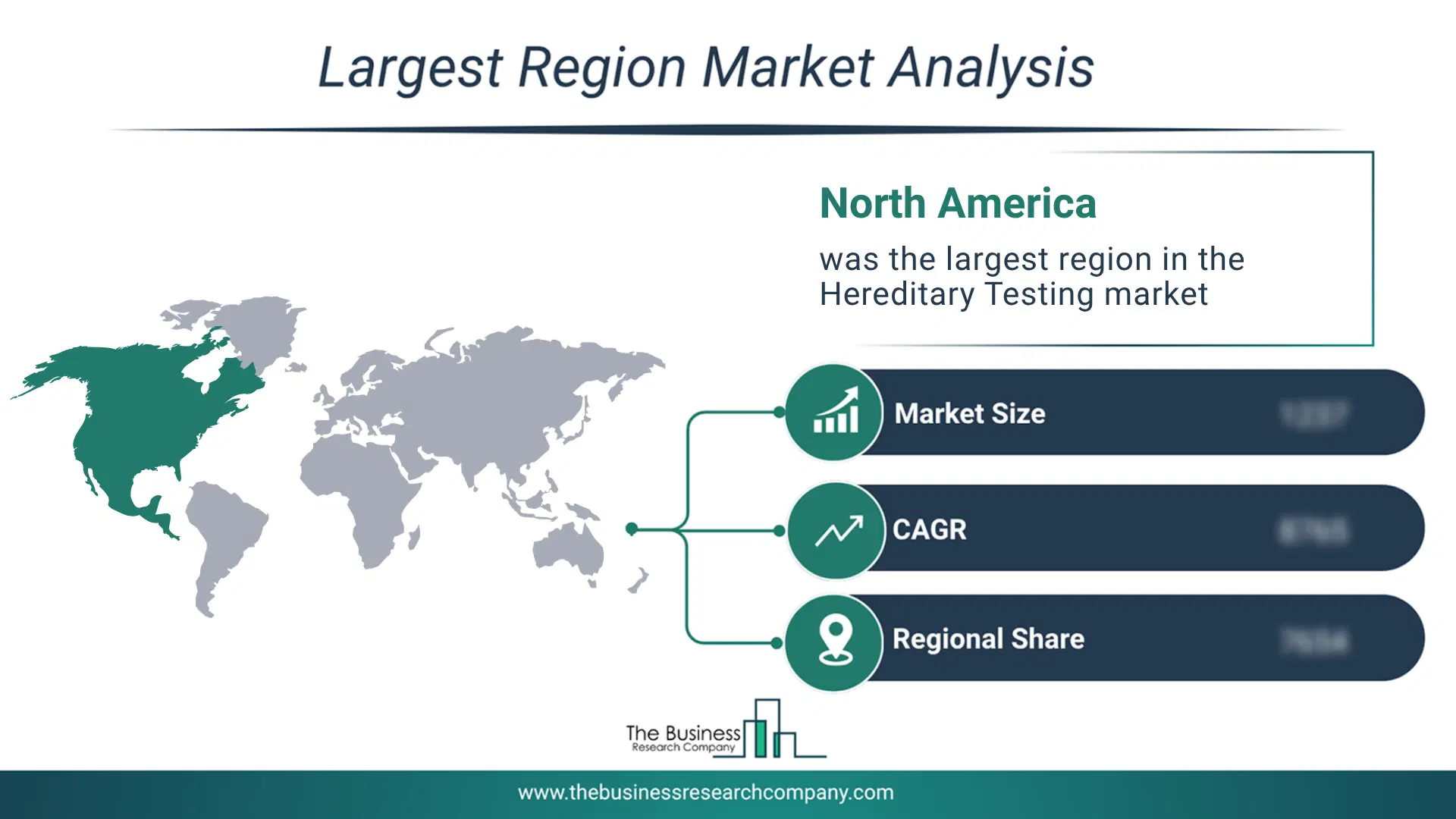
Regional Outlook
North America was the largest region in the hereditary testing market in 2025. Asia-Pacific is expected to be the fastest-growing region in the forecast period. The regions covered in this market report are Asia-Pacific, South East Asia, Western Europe, Eastern Europe, North America, South America, Middle East, Africa. The countries covered in this market report are Australia, Brazil, China, France, Germany, India, Indonesia, Japan, Taiwan, Russia, South Korea, UK, USA, Canada, Italy, Spain.What Defines the Hereditary Testing Market?
The hereditary testing market includes revenues earned by entities through services such as genetic screening, pharmacogenetic testing, and presymptomatic testing. The market value includes the value of related goods sold by the service provider or included within the service offering. Only goods and services traded between entities or sold to end consumers are included.How is Market Value Defined and Measured?
The market value is defined as the revenues that enterprises gain from the sale of goods and/or services within the specified market and geography through sales, grants, or donations in terms of the currency (in USD unless otherwise specified). The revenues for a specified geography are consumption values that are revenues generated by organizations in the specified geography within the market, irrespective of where they are produced. It does not include revenues from resales along the supply chain, either further along the supply chain or as part of other products.
This chart presents market attractiveness based on a quantitative evaluation of growth, competition, strategic alignment, and risk, offering a clear view of opportunity areas for decision-making. This chart is for illustrative purposes; the full report contains the complete analysis.

This chart highlights the Total Addressable Market (TAM) by estimating the maximum revenue opportunity using an assumption-driven approach, supporting strategic planning and opportunity sizing across markets. The chart is illustrative; the full report provides a more comprehensive analysis.
What Key Data and Analysis Are Included in the Hereditary Testing Market Report 2026?
The hereditary testing market research report is one of a series of new reports from The Business Research Company that provides market statistics, including industry global market size, regional shares, competitors with the market share, detailed market segments, market trends and opportunities, and any further data you may need to thrive in the hereditary testing industry. The market research report delivers a complete perspective of everything you need, with an in-depth analysis of the current and future state of the industry.Hereditary Testing Market Report Forecast Analysis
| Report Attribute | Details |
|---|---|
| Market Size Value In 2026 | $7.23 billion |
| Revenue Forecast In 2030 | $10.17 billion |
| Growth Rate | CAGR of 8.9% from 2026 to 2030 |
| Base Year For Estimation | 2025 |
| Actual Estimates/Historical Data | 2020-2025 |
| Forecast Period | 2026 - 2030 |
| Market Representation | Revenue in USD Billion and CAGR from 2026 to 2030 |
| Segments Covered | Test Type, Sample Type, Technology Used, Application, End User |
| Regional Scope | Asia-Pacific, Western Europe, Eastern Europe, North America, South America, Middle East, Africa |
| Country Scope | The countries covered in the report are Australia, Brazil, China, France, Germany, India, Indonesia, Japan, Taiwan, Russia, South Korea, UK, USA, Canada, Italy, Spain |
| Key Companies Profiled | F. Hoffmann-La Roche Ltd., Thermo Fisher Scientific Inc., Laboratory Corporation of America Holdings, Quest Diagnostics Incorporated, Agilent Technologies Inc., Illumina Inc., CooperSurgical Inc., QIAGEN N.V, Natera Inc., Myriad Genetics Inc., Fulgent Genetics Inc, Invitae Corporation, GeneDx LLC, Twist Bioscience Corporation, Color Health Inc., MedGenome Inc, SOPHiA GENETICS SA, Gene By Gene Ltd., Dante Labs Inc., 23mofang Co. Ltd. |
| Customization Scope | Request for Customization |
| Pricing And Purchase Options | Explore Purchase Options |