
Humira Biosimilar Market Report 2026
Global Outlook – By Product Type (Adalimumab Biosimilars, High-Concentration Adalimumab Biosimilars, Citrate-Free Adalimumab Biosimilars), By Distribution Channel (Hospital Pharmacies, Retail Pharmacies, Online Pharmacies, Other Distribution Channels), By Application (Rheumatoid Arthritis, Psoriasis, Crohn's Disease, Ulcerative Colitis, Ankylosing Spondylitis, Other Applications) - Market Size, Trends, Strategies, and Forecast to 2030
Humira Biosimilar Market Overview
• Humira Biosimilar market size has reached to $3.67 billion in 2025 • Expected to grow to $6.53 billion in 2030 at a compound annual growth rate (CAGR) of 12.2% • Growth Driver: The Increasing Prevalence Of Autoimmune Diseases Is Fueling The Growth Of The Market Due To Rising Demand For TNF-Blocking Therapies • Market Trend: Expansion Of Cost-Effective TNF Blocker Biosimilars For Autoimmune Disease Management • North America was the largest region in 2025.What Is Covered Under Humira Biosimilar Market?
A Humira biosimilar is a biologic drug developed to closely replicate humira in treating autoimmune disorders. It matches the original in safety, effectiveness, and quality but is typically more affordable. By offering a cost-effective alternative, these biosimilars enhance patient access to treatment and help lower overall healthcare costs. The main product types of humira biosimilars are adalimumab biosimilars and others. Adalimumab biosimilars are biologic medications closely resembling the reference anti-TNF drug Humira, providing equivalent safety, effectiveness, and quality in the treatment of autoimmune disorders. It is distributed through various distribution channels such as hospital pharmacies, retail pharmacies, online pharmacies, and others for several applications, including rheumatoid arthritis, psoriasis, Crohn's disease, ulcerative colitis, ankylosing spondylitis, and others.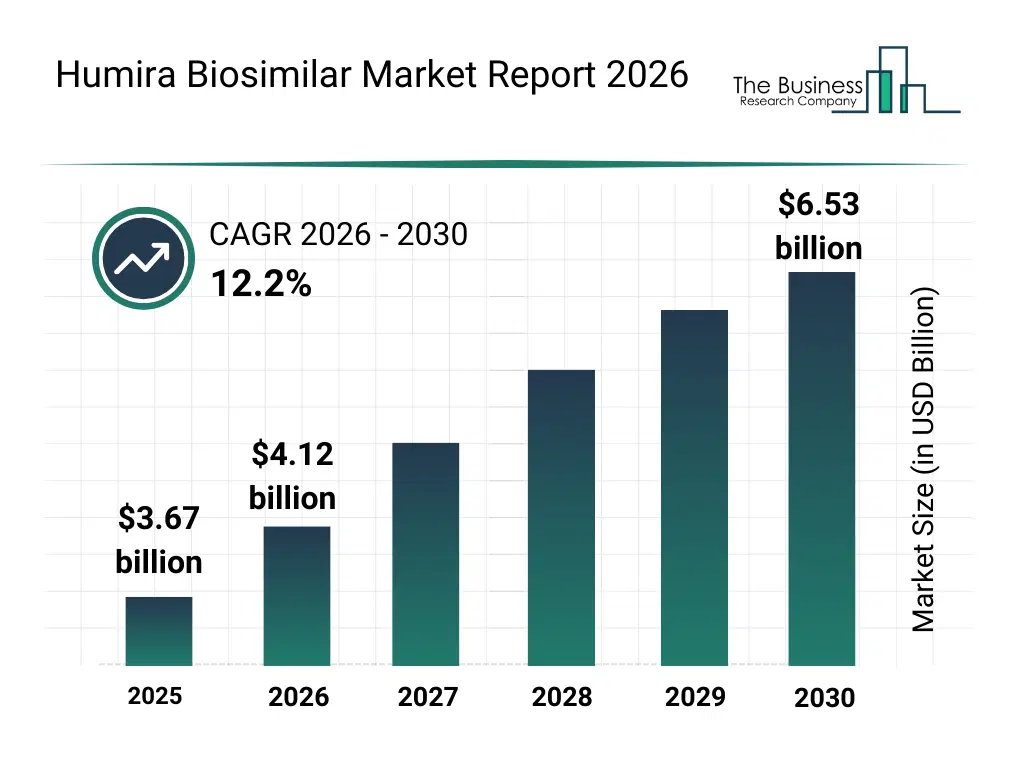
What Is The Humira Biosimilar Market Size and Share 2026?
The humira biosimilar market size has grown rapidly in recent years. It will grow from $3.67 billion in 2025 to $4.12 billion in 2026 at a compound annual growth rate (CAGR) of 12.3%. The growth in the historic period can be attributed to patent expiry of humira, high treatment costs of branded biologics, increasing prevalence of autoimmune diseases, regulatory support for biosimilar approvals, payer pressure to reduce biologic drug spending.What Is The Humira Biosimilar Market Growth Forecast?
The humira biosimilar market size is expected to see rapid growth in the next few years. It will grow to $6.53 billion in 2030 at a compound annual growth rate (CAGR) of 12.2%. The growth in the forecast period can be attributed to wider adoption of biosimilars in clinical practice, expansion of reimbursement support for biosimilars, increasing physician confidence in biosimilar efficacy, growth of interchangeable biosimilar approvals, rising patient access initiatives for affordable biologics. Major trends in the forecast period include expanding adoption of adalimumab biosimilars across autoimmune indications, increasing focus on cost containment in biologic therapies, growing acceptance of interchangeable biosimilars by healthcare providers, rising demand for high-concentration and citrate-free formulations, intensifying competition among biosimilar manufacturers.
Global Humira Biosimilar Market Segmentation
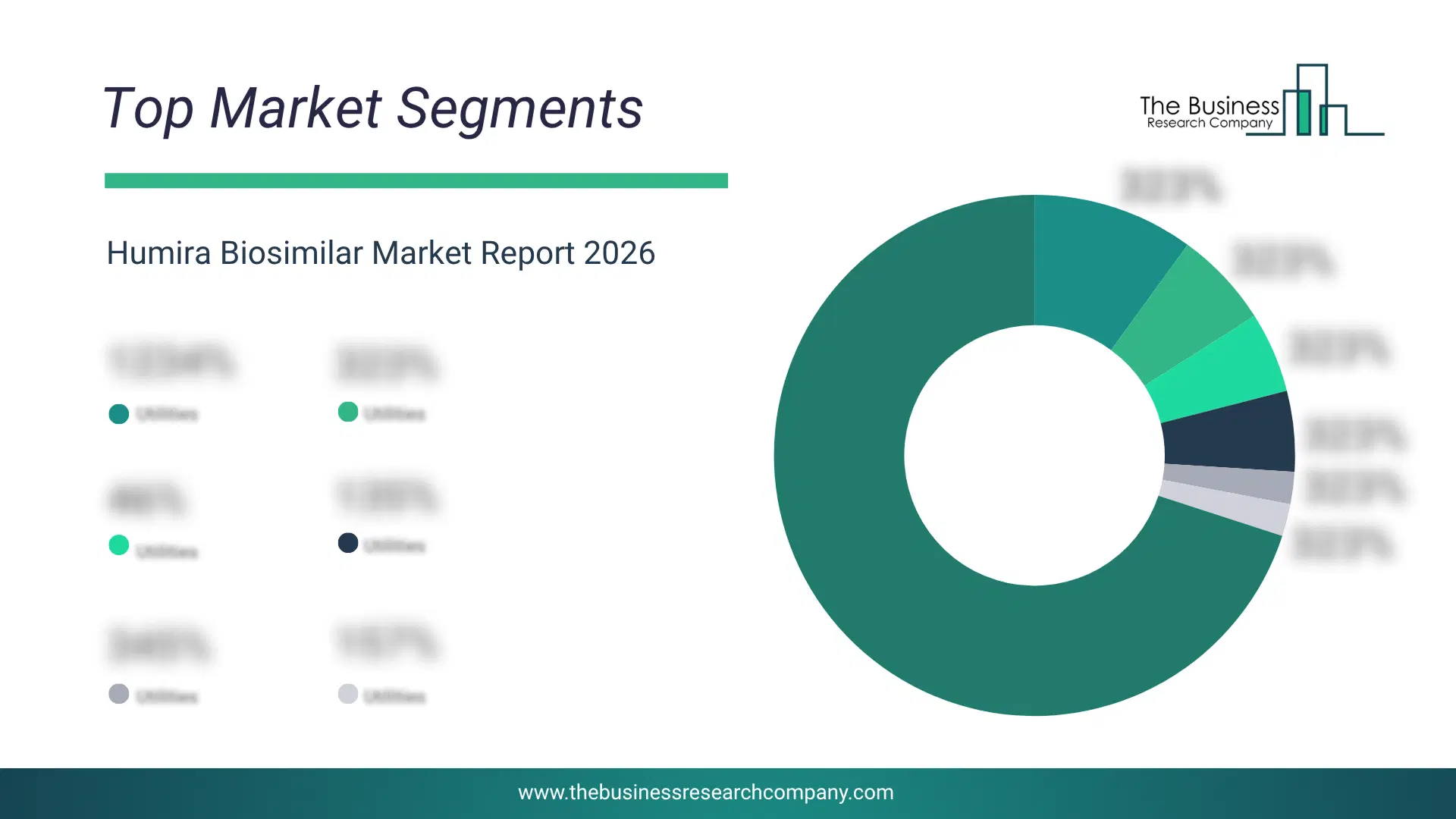
1) By Product Type: Adalimumab Biosimilars, High-Concentration Adalimumab Biosimilars, Citrate-Free Adalimumab Biosimilars 2) By Distribution Channel: Hospital Pharmacies, Retail Pharmacies, Online Pharmacies, Other Distribution Channels 3) By Application: Rheumatoid Arthritis, Psoriasis, Crohn's Disease, Ulcerative Colitis, Ankylosing Spondylitis, Other Applications Subsegments: 1) By Adalimumab Biosimilars: Citrate-Containing, Standard-Concentration Formulations, Citrate-Free, Standard-Concentration Formulations 2) By High-Concentration Adalimumab Biosimilars: Citrate-Containing High-Concentration Formulations, Citrate-Free High-Concentration Formulations 3) By Citrate-Free Adalimumab Biosimilars: Standard-Concentration Citrate-Free Formulations, High-Concentration Citrate-Free FormulationsWhat Is The Driver Of The Humira Biosimilar Market?
The increasing prevalence of autoimmune diseases is expected to propel the growth of the humira biosimilar market going forward. Autoimmune diseases occur when the immune system mistakenly targets and attacks the body’s healthy cells, tissues, or organs. The growing prevalence of autoimmune diseases is linked to environmental pollution, which disrupts the immune system and heightens the risk of autoimmune reactions. Humira biosimilars work by blocking tumor necrosis factor (TNF), a protein that causes inflammation in autoimmune diseases. This helps reduce immune response, alleviating symptoms and preventing damage to healthy tissues. For instance, in August 2024, according to the data from Public Health Scotland, a Scotland-based national organization, reported that in 2023, the Scottish Multiple Sclerosis Register (SMSR) recorded 455 newly diagnosed MS patients. Therefore, the increasing prevalence of autoimmune disorders is driving the growth of the humira biosimilar industry.Key Players In The Global Humira Biosimilar Market
Major companies operating in the humira biosimilar market are Amgen Inc., Pfizer Inc., Samsung Biologics, Biocon Limited, Celltrion Inc., Boehringer Ingelheim GmbH, Sandoz Group AG, Fresenius Kabi AG, Alvotech, Coherus BioSciences Inc., Zydus Lifesciences Ltd., Hetero Drugs Ltd., LG Chem Ltd., Torrent Pharmaceuticals Ltd., Fujifilm Holdings Corporation, Teva Pharmaceutical Industries Ltd., Merck KGaA, Organon & Co., Cipla Limited, Dr. Reddy’s Laboratories Ltd.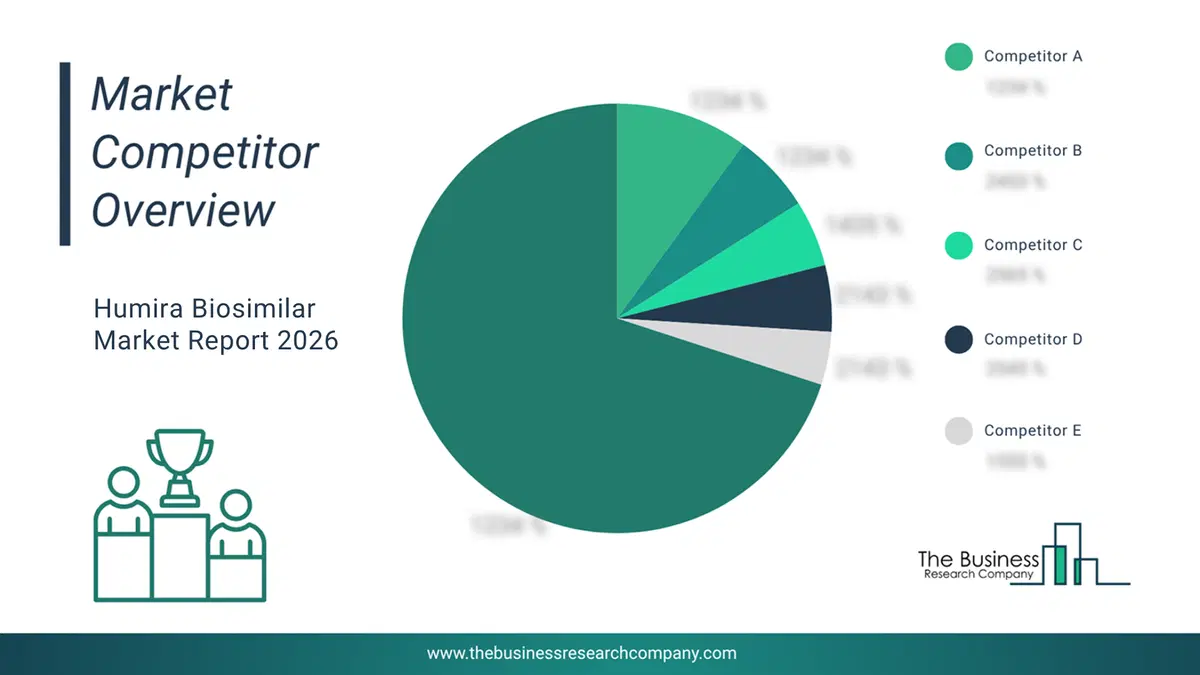
This chart is for illustrative purposes; the full report includes a detailed competitor analysis and comprehensive overview of the top 10 companies in the market.
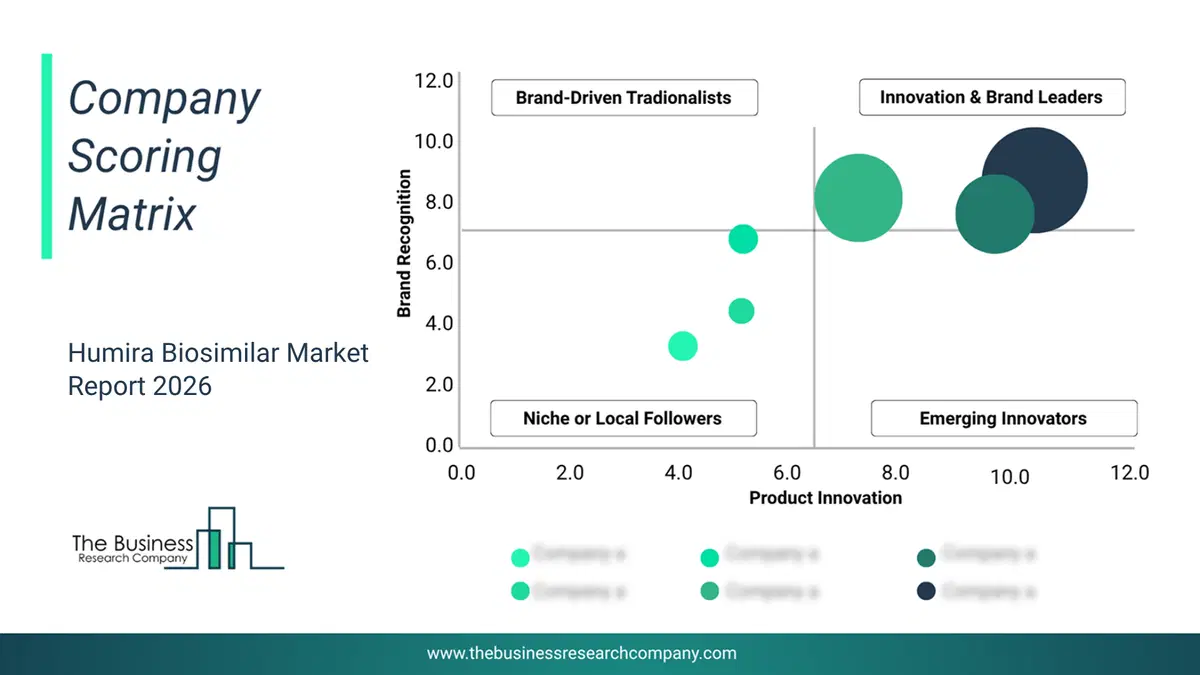
This chart maps companies by product innovation and brand strength, with bubble size indicating relative revenue, helping identify market leaders, challengers, and niche players. This is an illustrative chart; the full report provides a complete and accurate competitive analysis.
Global Humira Biosimilar Market Trends and Insights
Major companies operating in the humira biosimilar market are focusing on developing advanced products, such as tumor necrosis factor (TNF) blockers, to offer more affordable options for autoimmune disease management. Tumor necrosis factor (TNF) blockers are biologic medications that suppress the action of TNF, a key protein that promotes inflammation. For instance, in July 2023, Organon & Co., a US-based pharmaceutical company, partnered with Samsung Bioepis Co., Ltd., a South Korea-based biotech company, to launch HADLIMA, a biosimilar to Humira. HADLIMA is available in both citrate-free high-concentration (100 mg/mL) and citrate-containing low-concentration (50 mg/mL) presentations, matching the options of the originator Humira, and aims to improve patient access and affordability. The product is offered at a significant discount, about 85% lower than Humira’s list price, and includes support programs for patients. This launch follows a global settlement allowing U.S. supply and marks a major milestone in expanding treatment options for chronic autoimmune diseases in the U.S.What Are Latest Mergers And Acquisitions In The Humira Biosimilar Market?
In February 2024, Alvotech, a Luxembourg-based biotech company, partnered with Teva Pharmaceuticals to expand access to life-changing therapies through innovation. The partnership aims to provide patients with greater access to high-quality, affordable adalimumab treatment by introducing SIMLANDI as the first high-concentration, citrate-free interchangeable biosimilar to humira in the U.S. This collaboration seeks to foster biosimilar competition, reduce treatment costs, and improve patient outcomes through innovative therapeutic solutions. Teva Pharmaceuticals is a US-based pharmaceutical company.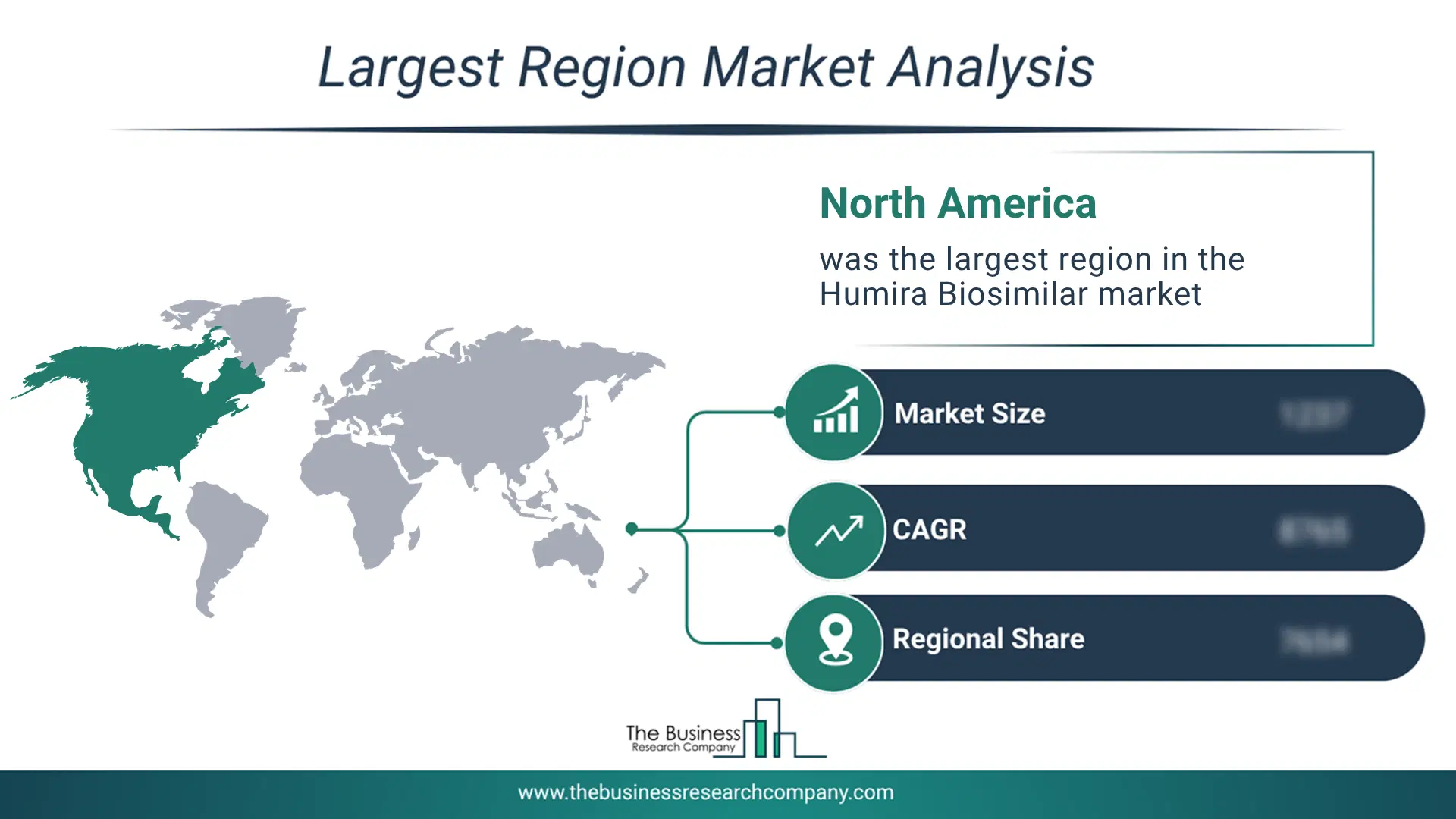
Regional Outlook
North America was the largest region in the humira biosimilar market in 2025. The regions covered in this market report are Asia-Pacific, South East Asia, Western Europe, Eastern Europe, North America, South America, Middle East, Africa. The countries covered in this market report are Australia, Brazil, China, France, Germany, India, Indonesia, Japan, Taiwan, Russia, South Korea, UK, USA, Canada, Italy, Spain.What Defines the Humira Biosimilar Market?
The humira biosimilar market consists of sales of prefilled syringes, autoinjector (AI) pens, and vials. Values in this market are ‘factory gate’ values, that is, the value of goods sold by the manufacturers or creators of the goods, whether to other entities (including downstream manufacturers, wholesalers, distributors, and retailers) or directly to end customers. The value of goods in this market includes related services sold by the creators of the goods.How is Market Value Defined and Measured?
The market value is defined as the revenues that enterprises gain from the sale of goods and/or services within the specified market and geography through sales, grants, or donations in terms of the currency (in USD unless otherwise specified). The revenues for a specified geography are consumption values that are revenues generated by organizations in the specified geography within the market, irrespective of where they are produced. It does not include revenues from resales along the supply chain, either further along the supply chain or as part of other products.
This chart presents market attractiveness based on a quantitative evaluation of growth, competition, strategic alignment, and risk, offering a clear view of opportunity areas for decision-making. This chart is for illustrative purposes; the full report contains the complete analysis.

This chart highlights the Total Addressable Market (TAM) by estimating the maximum revenue opportunity using an assumption-driven approach, supporting strategic planning and opportunity sizing across markets. The chart is illustrative; the full report provides a more comprehensive analysis.
What Key Data and Analysis Are Included in the Humira Biosimilar Market Report 2026?
The humira biosimilar market research report is one of a series of new reports from The Business Research Company that provides market statistics, including industry global market size, regional shares, competitors with the market share, detailed market segments, market trends and opportunities, and any further data you may need to thrive in the humira biosimilar industry. The market research report delivers a complete perspective of everything you need, with an in-depth analysis of the current and future state of the industry.Humira Biosimilar Market Report Forecast Analysis
| Report Attribute | Details |
|---|---|
| Market Size Value In 2026 | $4.12 billion |
| Revenue Forecast In 2030 | $6.53 billion |
| Growth Rate | CAGR of 12.2% from 2026 to 2030 |
| Base Year For Estimation | 2025 |
| Actual Estimates/Historical Data | 2020-2025 |
| Forecast Period | 2026 - 2030 |
| Market Representation | Revenue in USD Billion and CAGR from 2026 to 2030 |
| Segments Covered | Product Type, Distribution Channel, Application |
| Regional Scope | Asia-Pacific, Western Europe, Eastern Europe, North America, South America, Middle East, Africa |
| Country Scope | The countries covered in the report are Australia, Brazil, China, France, Germany, India, Indonesia, Japan, Taiwan, Russia, South Korea, UK, USA, Canada, Italy, Spain |
| Key Companies Profiled | Amgen Inc., Pfizer Inc., Samsung Biologics, Biocon Limited, Celltrion Inc., Boehringer Ingelheim GmbH, Sandoz Group AG, Fresenius Kabi AG, Alvotech, Coherus BioSciences Inc., Zydus Lifesciences Ltd., Hetero Drugs Ltd., LG Chem Ltd., Torrent Pharmaceuticals Ltd., Fujifilm Holdings Corporation, Teva Pharmaceutical Industries Ltd., Merck KGaA, Organon & Co., Cipla Limited, Dr. Reddy’s Laboratories Ltd. |
| Customization Scope | Request for Customization |
| Pricing And Purchase Options | Explore Purchase Options |