
Insulin Drugs Market Report 2026
Global Outlook – By Product Type (Basal Or Long-Acting Insulins, Bolus Or Fast-Acting Insulins, Pre-Mixed, Intermediate And Short Acting Insulins), By Source Type (Insulin Analogs, And Human Insulin), By Drug Classification (Branded Drugs, And Generic Drugs), By Application (Type 2 Diabetes, Type 1 Diabetes, And Gestational Diabetes), By Distribution Channel (Hospital Pharmacies, Retail Pharmacies, And Online) – Market Size, Trends, Strategies, and Forecast to 2030
Insulin Drugs Market Overview
• Insulin Drugs market size has reached to $37.76 billion in 2025 • Expected to grow to $60.15 billion in 2030 at a compound annual growth rate (CAGR) of 10% • Growth Driver: Role Of Rising Obesity Fueling The Insulin Drugs Market • Market Trend: Innovative Long-Acting Therapies Transforming Diabetes Management • North America was the largest region in 2025 and Middle East is the fastest growing region.Market Gains By 2030 – Top Opportunities By Segment
Market Gain identifies the most promising market opportunities by highlighting the segments or products expected to generate the highest incremental revenue growth over the next five years.
What Is Covered Under Insulin Drugs Market?
Insulin drugs refer to medications that used to treat diabetes. Insulin is a medication prescribed to treat type 1 diabetes and type 2 diabetes mellitus. There are several types, preparations, and dosage amount of insulin. Insulin is a hormone that is produced naturally in our bodies. Its main role is to allow cells throughout the body to uptake glucose (sugar) and convert it into a form that can be used by these cells for energy. The main product types of insulin drugs are basal or long-acting insulins, bolus or fast-acting insulins, pre-mixed, and intermediate and short-acting insulins. Basal or long-acting insulins are a type of insulin used in diabetes management to provide a slow, steady release of insulin throughout the day and night. The source types are insulin analogs and human insulin, and the drugs are classified into branded drugs and generic drugs that are distributed by hospital pharmacies, retail pharmacies, and online. The various applications include type II diabetes, type I diabetes, and gestational diabetes.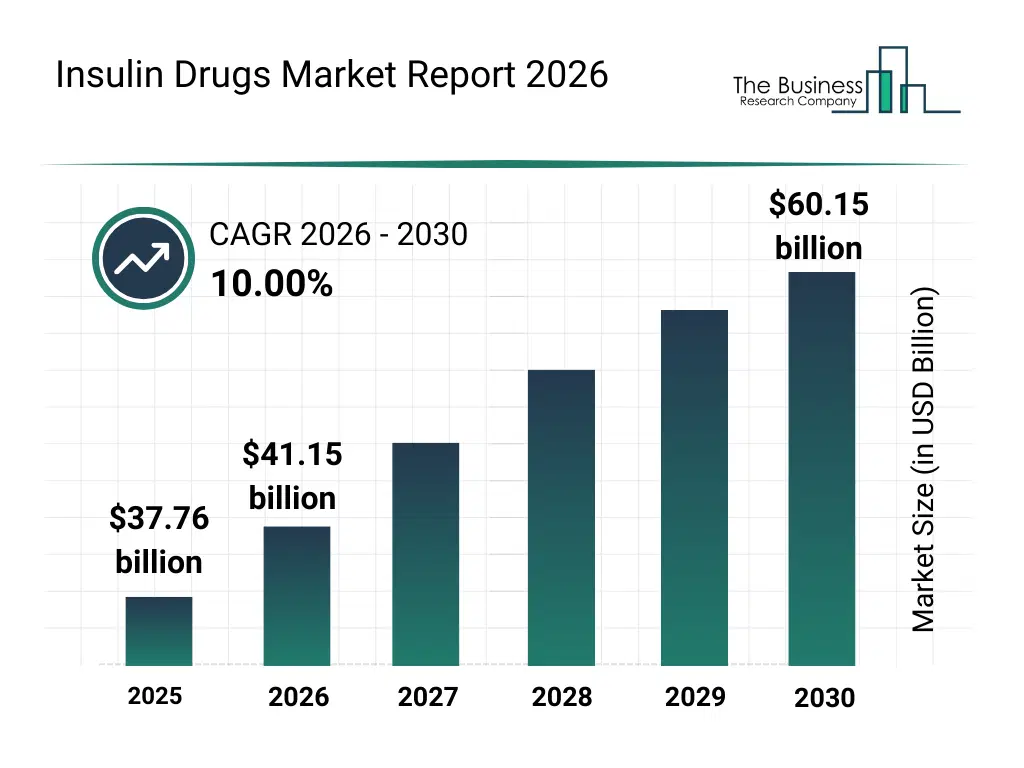
What Is The Insulin Drugs Market Size and Share 2026?
The insulin drugs market size has grown strongly in recent years. It will grow from $37.76 billion in 2025 to $41.15 billion in 2026 at a compound annual growth rate (CAGR) of 9.0%. The growth in the historic period can be attributed to limited availability of insulin analogs, reliance on human insulin, rising incidence of type 2 diabetes, growing hospital and retail pharmacy networks, increasing awareness about diabetes management.What Is The Insulin Drugs Market Growth Forecast?
The insulin drugs market size is expected to see strong growth in the next few years. It will grow to $60.15 billion in 2030 at a compound annual growth rate (CAGR) of 10.0%. The growth in the forecast period can be attributed to development of ultra-long-acting and fast-acting insulins, expansion of digital health monitoring tools, increasing adoption of pre-mixed insulin therapies, rising government initiatives for diabetes care, integration of insulin therapy with personalized medicine. Major trends in the forecast period include rising adoption of insulin analogs and branded drugs, increasing use of pre-mixed and combination insulin formulations, growth in diabetes prevalence and type 2 diabetes management, expansion of online pharmacies and retail distribution channels, integration of continuous glucose monitoring and digital health platforms.
Global Insulin Drugs Market Segmentation
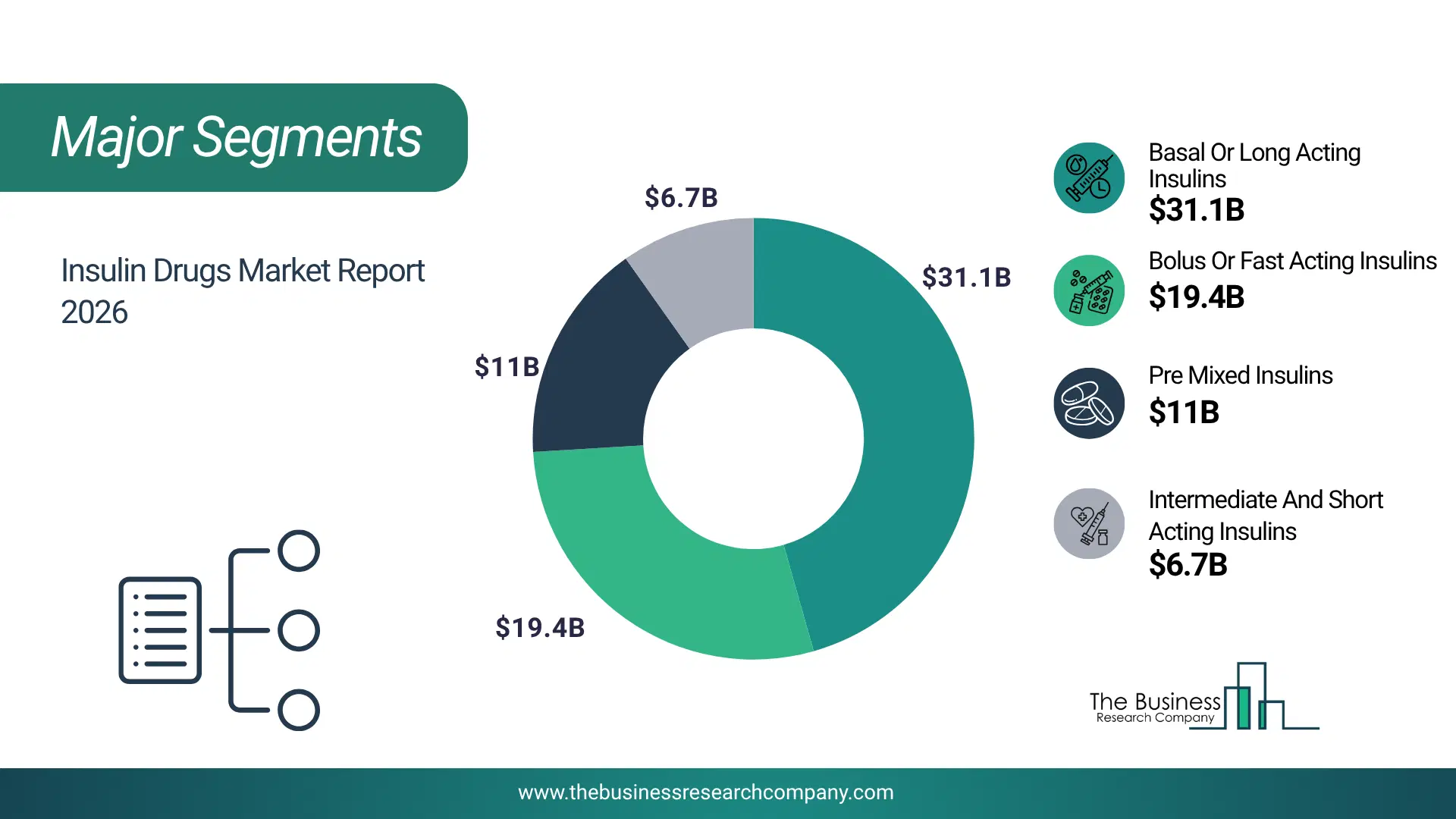
1) By Product Type: Basal Or Long-Acting Insulins, Bolus Or Fast-Acting Insulins, Pre-Mixed, Intermediate And Short Acting Insulins 2) By Source Type: Insulin Analogs, And Human Insulin 3) By Drug Classification: Branded Drugs, And Generic Drugs 4) By Application: Type 2 Diabetes, Type 1 Diabetes, And Gestational Diabetes 5) By Distribution Channel: Hospital Pharmacies, Retail Pharmacies, And Online Subsegments: 1) By Basal Or Long-Acting Insulins: Insulin Glargine, Insulin Detemir, Insulin Degludec 2) By Bolus Or Fast-Acting Insulins: Insulin Aspart, Insulin Lispro, Insulin Glulisine 3) By Pre-Mixed: Biphasic Insulin Formulations, Pre-Mixed Combinations Of Long-Acting And Fast-Acting Insulins 4) By Intermediate And Short-Acting Insulins: Insulin NPH (Neutral Protamine Hagedorn), Regular Insulin (Short-Acting) The top segments in the insulin drugs market will be: • Basal Or Long Acting Insulins will reach $31 billion by 2030. • Bolus Or Fast Acting Insulins will reach $19.39 billion by 2030. • Pre Mixed Insulins will reach $10.91 billion by 2030. • Intermediate And Short Acting Insulins will reach $6.61 billion by 2030.What Is The Driver Of The Insulin Drugs Market?
The rising prevalence of obesity is expected to propel the growth of the insulin drugs market going forward. Obesity refers to a condition in which an individual has excess body fat that may impair health, typically measured using body mass index (BMI). The increase in obesity is fueled by sedentary lifestyles and increased consumption of high-calorie, processed foods, which increase the risk of type 2 diabetes. The insulin drugs market supports this shift by providing therapeutic solutions that help manage blood glucose levels and prevent diabetes-related complications in obese patients. For instance, in May 2025, according to a report published by the Office for Health Improvement & Disparities (OHID), a UK-based government public health organization, in 2023–2024, 26.5% of adults were obese, slightly up from 26.2% in 2022–2023; obesity was higher in women (26.9%) than men (26.2%), peaked at 32.5% in ages 55–64, and across local authorities ranged 11.0–37.9%. Therefore, the rising prevalence of obesity is driving the growth of the insulin drugs industry.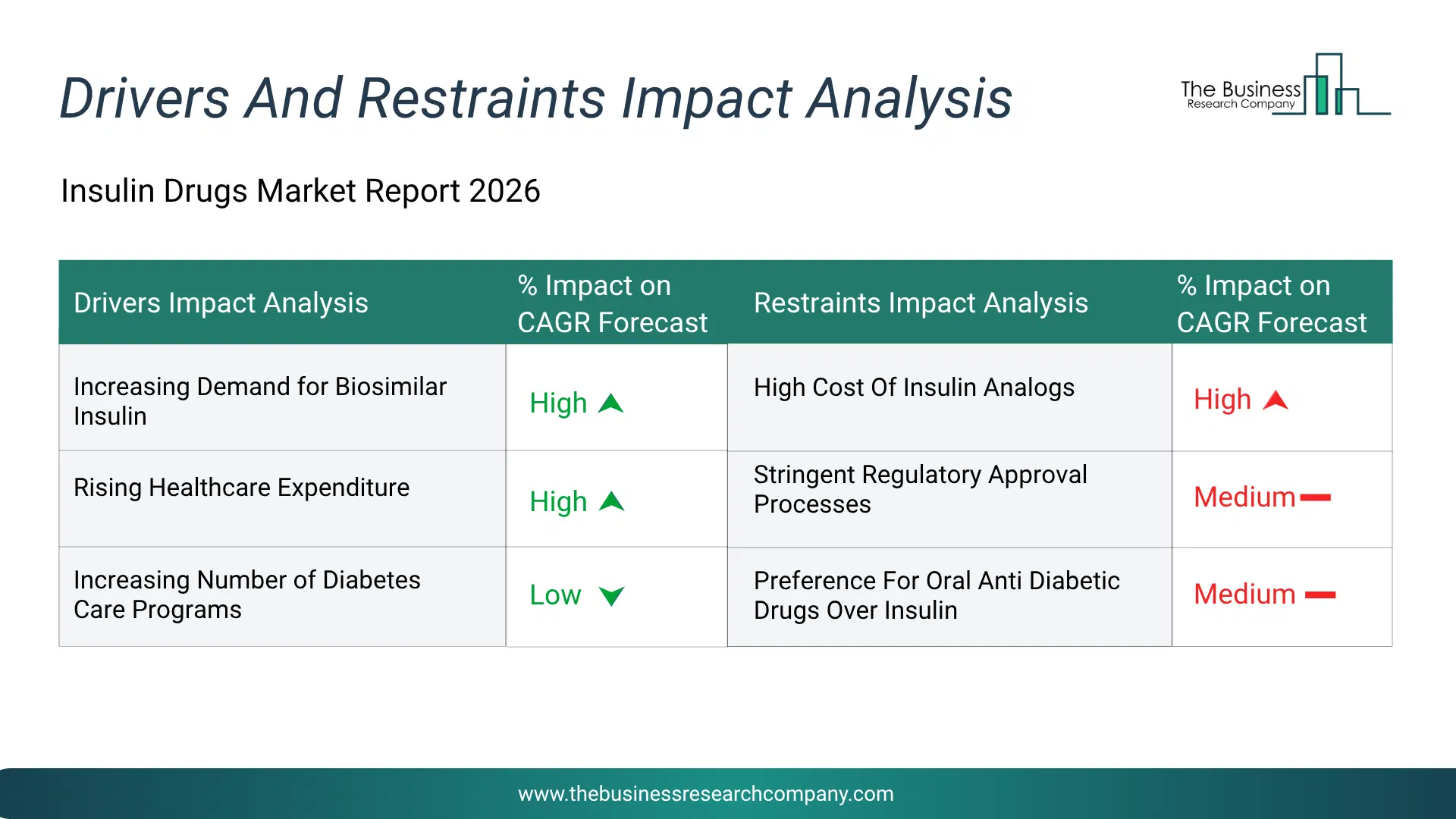
Infographic Chart Showing Key Market Drivers Analysis And Restraints For Insulin Drugs Market
The chart presents an impact analysis of key drivers and restraints, quantifying their relative influence on the market's growth rate and helping assess the balance between growth enablers and limiting factors. This chart offers a high-level perspective; the full report contains more detailed insights.
How Will The Drivers Impact Growth In The Global Insulin Drugs Market?
• Increasing Demand for Biosimilar Insulin (High) – During the forecast period, the increasing demand for biosimilar insulin is expected to become a key growth driver for the insulin drugs market by 2030. The rising demand for biosimilar insulin is driving the insulin drugs market by improving affordability and expanding patient access to essential diabetes treatments. Biosimilar versions offer comparable therapeutic efficacy to branded insulin but at lower costs, encouraging wider adoption across both developed and emerging healthcare systems. Governments and healthcare providers are increasingly promoting biosimilars to reduce healthcare spending while maintaining treatment quality. This trend also intensifies competition among pharmaceutical manufacturers, leading to broader product availability. • Rising Healthcare Expenditure (High) – During the forecast period, the rising healthcare expenditure is expected to emerge as a major factor driving the expansion of the insulin drugs market by 2030. Increasing healthcare expenditure across many countries is contributing significantly to the growth of the insulin drugs market. Governments and private healthcare systems are allocating larger budgets to manage chronic diseases such as diabetes, which requires long-term insulin therapy for many patients. Higher healthcare spending improves access to advanced insulin formulations, including rapid-acting and long-acting insulin analogues. It also supports expanded insurance coverage and reimbursement policies that make insulin treatments more accessible to patients. • Increasing Number of Diabetes Care Programs (Low) – During the forecast period, the increasing number of diabetes care programs is expected to act as a key growth catalyst for the insulin drugs market by 2030. The growing number of diabetes care programs worldwide is playing a key role in driving demand for insulin drugs. Public health initiatives and awareness campaigns encourage early diagnosis and proper disease management, leading to higher treatment rates among diabetic patients. Many programs provide education on glucose control, medication adherence, and the importance of insulin therapy for individuals with uncontrolled blood sugar levels. These initiatives are often supported by governments, healthcare organizations, and pharmaceutical companies to reduce diabetes-related complications. As more patients are enrolled in structured diabetes management programs, the utilization of insulin drugs continues to expand.How Will The Restraints Impact Growth In The Global Insulin Drugs Market?
• High Cost Of Insulin Analogs (High) – During the forecast period, the the high cost of insulin analogs acts as a major restraint in the insulin drugs market by limiting affordability for many patients, especially in low- and middle-income countries. Advanced insulin formulations often involve complex manufacturing processes and significant research investments, which increases their market price. As a result, some patients delay treatment initiation or rely on less effective alternatives due to financial constraints. High costs also place pressure on healthcare systems and insurers to manage reimbursement budgets carefully. This pricing challenge can slow widespread adoption of newer insulin drugs in several regions. • Stringent Regulatory Approval Processes (Medium) – During the forecast period, the strict regulatory approval processes can slow the growth of the insulin drugs market by extending the time required for new products to reach commercialization. Pharmaceutical companies must comply with rigorous safety, efficacy, and quality standards set by regulatory authorities before launching insulin therapies. These lengthy approval timelines increase development costs and create barriers for new market entrants. In addition, regulatory complexity across different countries requires manufacturers to conduct multiple compliance procedures. Such factors can delay product launches and limit the speed of market expansion. • Preference For Oral Anti Diabetic Drugs Over Insulin (Medium) – During the forecast period, the the preference for oral antidiabetic drugs over insulin therapy can restrain the growth of the insulin drugs market. Many patients and healthcare providers initially favor oral medications because they are easier to administer and do not require injections. This preference is particularly common in early-stage diabetes management, where oral therapies are often prescribed before insulin treatment becomes necessary. The convenience and perceived comfort of oral drugs can delay the transition to insulin therapy. As a result, the demand for insulin drugs may grow more slowly in some patient populations.Key Players In The Global Insulin Drugs Market
Major companies operating in the insulin drugs market are Novo Nordisk, Sanofi S.A., Eli Lilly And Company, Biocon Ltd, and Gan & Lee Pharmaceuticals, Bioton, Wockhardt Ltd, Julphar, Tonghua Dongbao Pharmaceutical, AJA Pharma, SEDICO Pharmaceutical Company, Pfizer.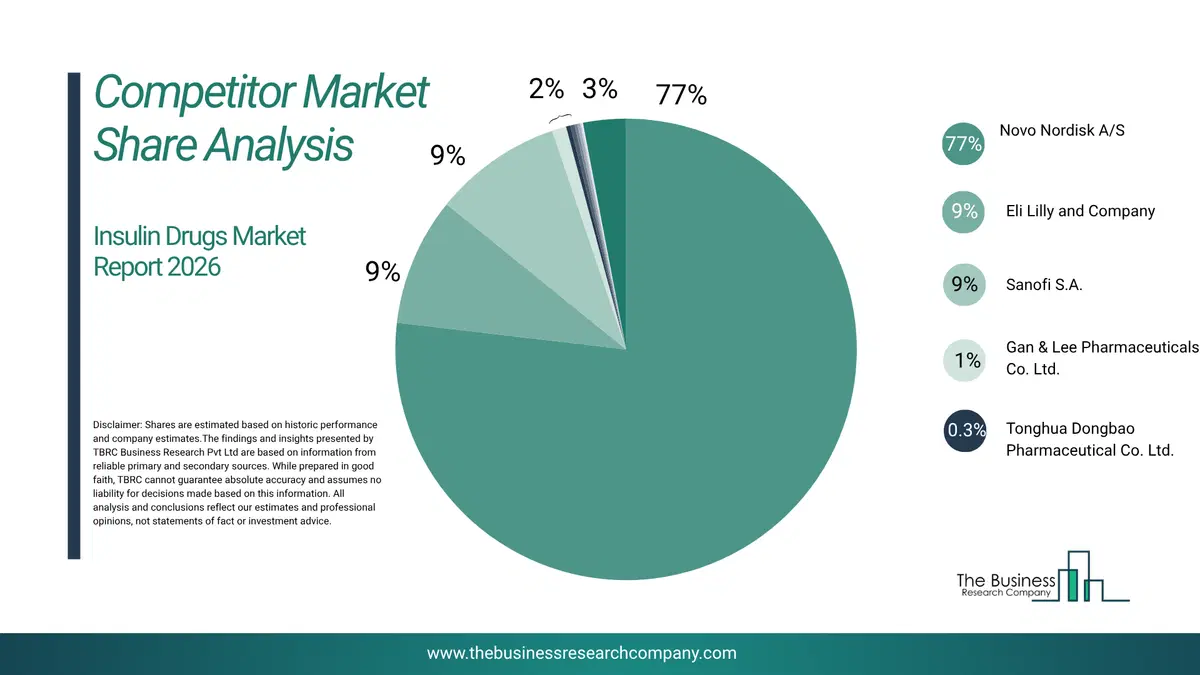
This chart is for illustrative purposes; the full report includes a detailed competitor analysis and comprehensive overview of the top 10 companies in the market.
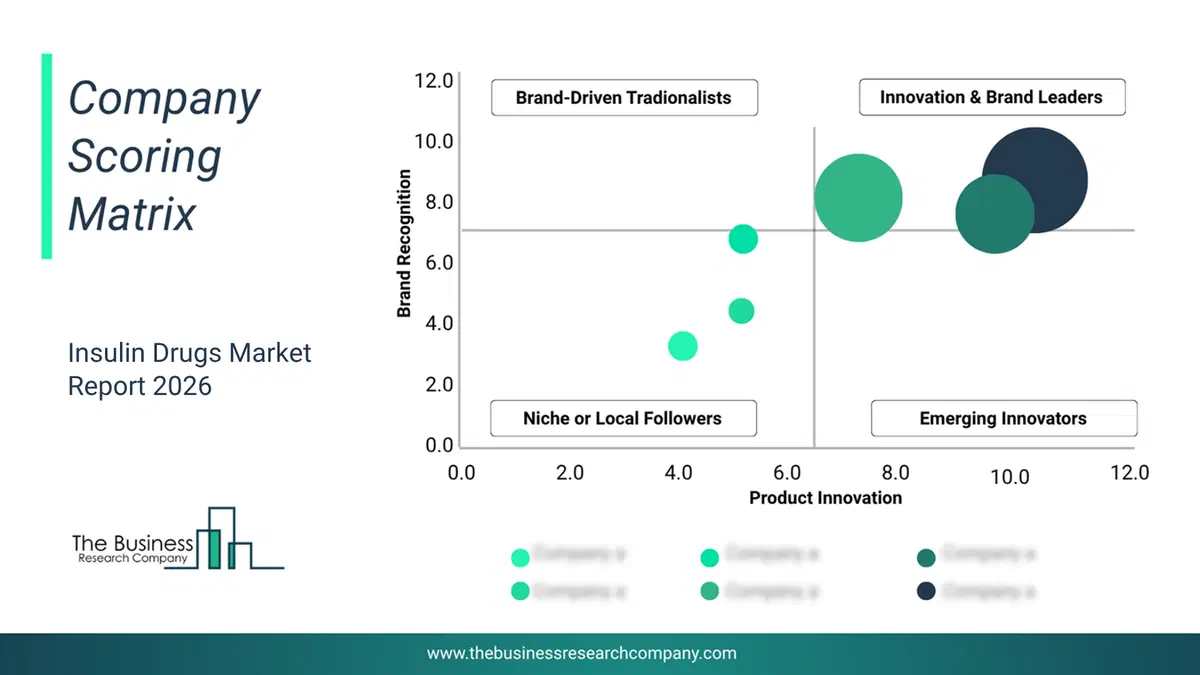
This chart maps companies by product innovation and brand strength, with bubble size indicating relative revenue, helping identify market leaders, challengers, and niche players. This is an illustrative chart; the full report provides a complete and accurate competitive analysis.
Global Insulin Drugs Market Trends and Insights
Major companies operating in the insulin drug market are focusing on innovation in diabetes treatment, such as long-acting insulin, which provides sustained blood glucose control with reduced injection frequency and improved patient adherence. Long-acting insulin refers to formulations designed to release slowly over an extended period, maintaining stable blood glucose levels throughout the day. For instance, in November 2023, Sanofi S.A., a France-based pharmaceutical company, launched Soliqua in India. Soliqua is a fixed-ratio combination of long-acting insulin glargine and lixisenatide, delivered via a once-daily pre-filled pen. It enables patients with type 2 diabetes who are insufficiently controlled on oral or injectable therapies to manage both fasting and post-meal blood glucose levels more effectively, simplifying treatment while reducing the risk of hypoglycemia and weight gain.What Are Latest Mergers And Acquisitions In The Insulin Drugs Market?
In March 2024, Eris Lifesciences Ltd., an India-based pharmaceutical company, acquired Biocon Biologics for $169 million. With this acquisition, Eris aims to expand its portfolio by incorporating Biocon Biologics's expertise in providing insulin drugs. Biocon Biologics Limited is an India-based company that manufactures insulin drugs.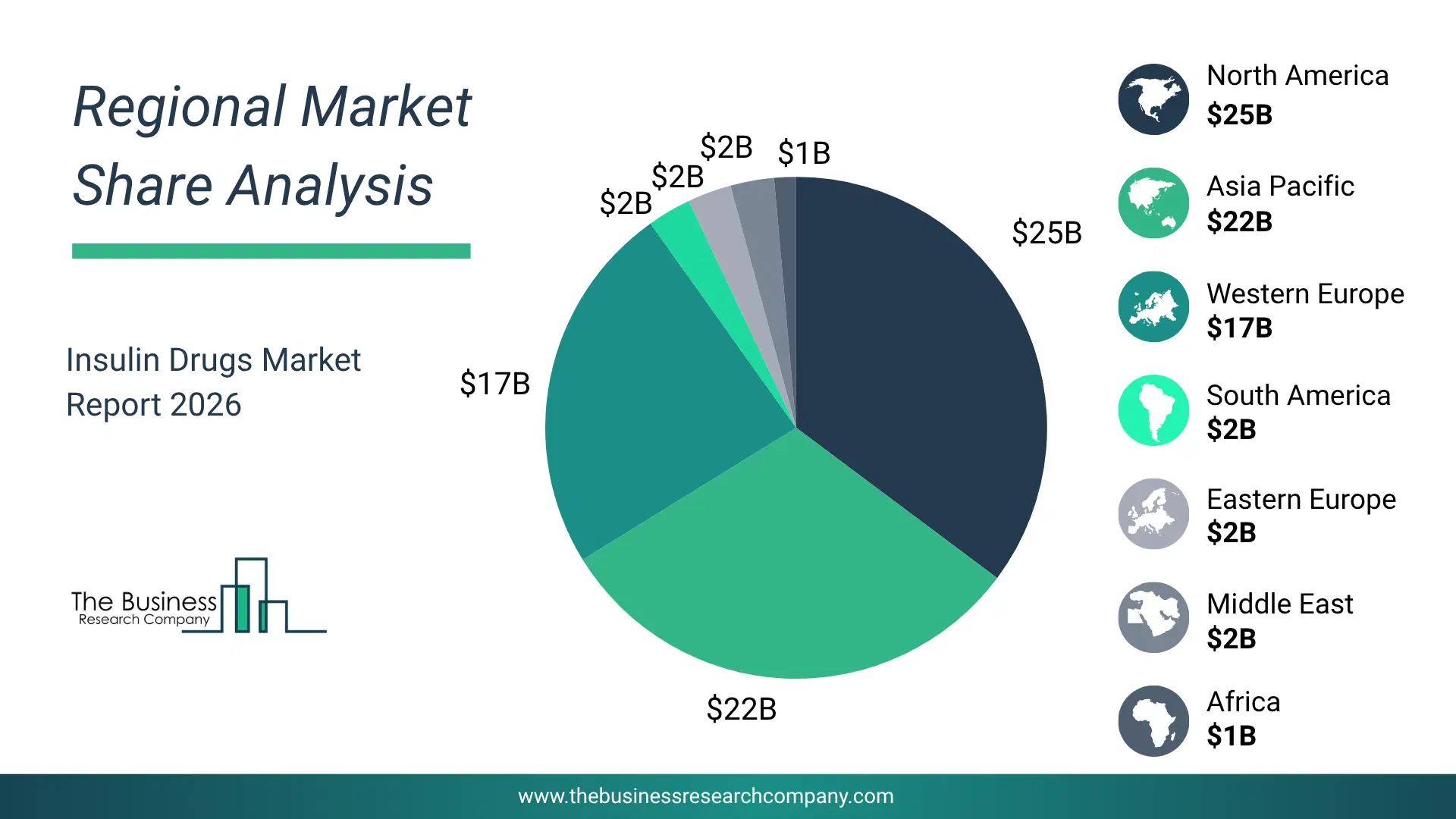
Regional Insights
North America was the largest region in the insulin drugs market in 2025. Middle East is expected to be the largest growing region in the global insulin drugs market share during the forecast period. The regions covered in this market report are Asia-Pacific, South East Asia, Western Europe, Eastern Europe, North America, South America, Middle East, Africa. The countries covered in this market report are Australia, Brazil, China, France, Germany, India, Indonesia, Japan, Taiwan, Russia, South Korea, UK, USA, Canada, Italy, Spain.What Defines the Insulin Drugs Market?
The insulin drugs market consists of sales of rapid-acting insulin, short-acting insulin, and mixed insulin. Values in this market are factory gate values, that is the value of goods sold by the manufacturers or creators of the goods, whether to other entities (including downstream manufacturers, wholesalers, distributors and retailers) or directly to end customers. The value of goods in this market includes related services sold by the creators of the goods.How is Market Value Defined and Measured?
The market value is defined as the revenues that enterprises gain from the sale of goods and/or services within the specified market and geography through sales, grants, or donations in terms of the currency (in USD unless otherwise specified). The revenues for a specified geography are consumption values that are revenues generated by organizations in the specified geography within the market, irrespective of where they are produced. It does not include revenues from resales along the supply chain, either further along the supply chain or as part of other products.
This chart presents market attractiveness based on a quantitative evaluation of growth, competition, strategic alignment, and risk, offering a clear view of opportunity areas for decision-making. This chart is for illustrative purposes; the full report contains the complete analysis.

This chart highlights the Total Addressable Market (TAM) by estimating the maximum revenue opportunity using an assumption-driven approach, supporting strategic planning and opportunity sizing across markets. The chart is illustrative; the full report provides a more comprehensive analysis.
What Key Data and Analysis Are Included in the Insulin Drugs Market Report 2026?
The insulin drugs market research report is one of a series of new reports from The Business Research Company that provides market statistics, including industry global market size, regional shares, competitors with the market share, detailed market segments, market trends and opportunities, and any further data you may need to thrive in the insulin drugs industry. The market research report delivers a complete perspective of everything you need, with an in-depth analysis of the current and future state of the industry.Insulin Drugs Market Report Forecast Analysis
| Report Attribute | Details |
|---|---|
| Market Size Value In 2026 | $41.15 billion |
| Revenue Forecast In 2030 | $60.15 billion |
| Growth Rate | CAGR of 10% from 2026 to 2030 |
| Base Year For Estimation | 2025 |
| Actual Estimates/Historical Data | 2020-2025 |
| Forecast Period | 2026 - 2030 |
| Market Representation | Revenue in USD Billion and CAGR from 2026 to 2030 |
| Segments Covered | Product Type, Source Type, Drug Classification, Application, Distribution Channel |
| Regional Scope | Asia-Pacific, Western Europe, Eastern Europe, North America, South America, Middle East, Africa |
| Country Scope | The countries covered in the report are Australia, Brazil, China, France, Germany, India, ... |
| Key Companies Profiled | Novo Nordisk, Sanofi S.A., Eli Lilly And Company, Biocon Ltd, and Gan & Lee Pharmaceuticals, Bioton, Wockhardt Ltd, Julphar, Tonghua Dongbao Pharmaceutical, AJA Pharma, SEDICO Pharmaceutical Company, Pfizer. |
| Customization Scope | Request for Customization |
| Pricing And Purchase Options | Explore Purchase Options |