
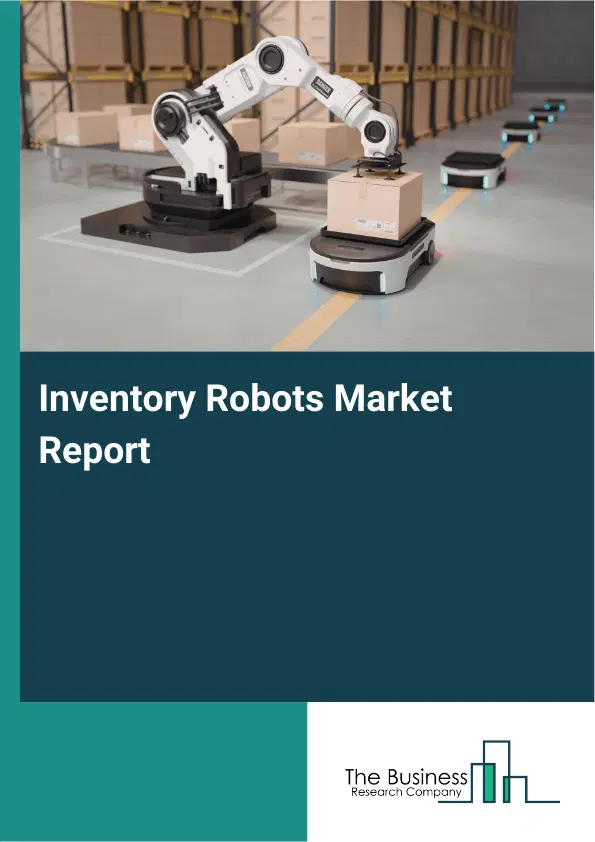
Inventory Robots Market Report 2026
Global Outlook – By Product (Mobile Robotics, Fixed Robotics), By Component (Hardware, Software, Services), By End-User (Automotive, Metal And Machinery, Retail And E-Commerce, Food And Beverages, Pharmaceuticals, Other End Users) – Market Size, Trends, Strategies, and Forecast to 2030
Inventory Robots Market Overview
• Inventory Robots market size has reached to $132.15 billion in 2025 • Expected to grow to $226.46 billion in 2030 at a compound annual growth rate (CAGR) of 11.3% • Growth Driver: Rising Demand For E-Commerce Drives Growth In Inventory Robots Market • Market Trend: Advancements In Inventory Robots With Automation And Remote Monitoring • North America was the largest region in 2025 and Asia-Pacific is the fastest growing region.What Is Covered Under Inventory Robots Market?
Inventory robots are automated systems designed to manage, track, and organize inventory in warehouses, retail stores, or distribution centers. These robots improve efficiency, accuracy, and speed in managing inventory, reducing the need for manual labor and minimizing human error. The main product types of inventory robots are mobile robotics and fixed robotics. Mobile robotics refers to robots designed to move around in their environment, often used for tasks like delivery or inspection, allowing them to navigate through various locations autonomously or semi-autonomously. The components include hardware, software, services for end user types such as automotive, metal and machinery, retail and e-commerce, food and beverages, pharmaceuticals, and others.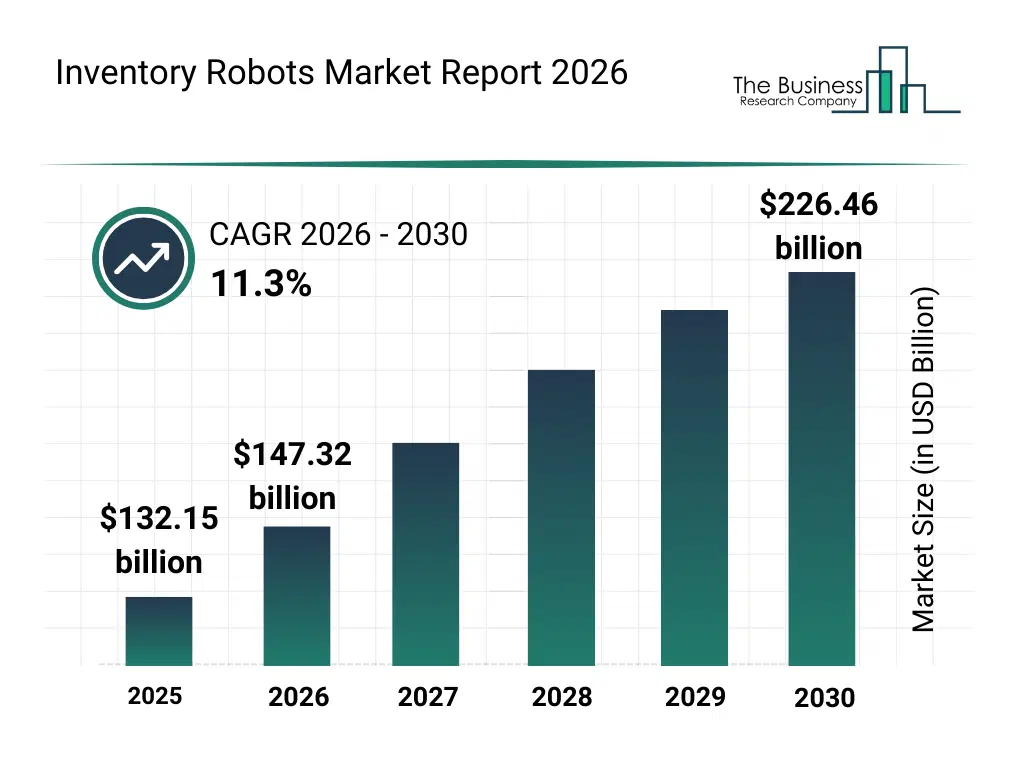
What Is The Inventory Robots Market Size and Share 2026?
The inventory robots market size has grown rapidly in recent years. It will grow from $132.15 billion in 2025 to $147.32 billion in 2026 at a compound annual growth rate (CAGR) of 11.5%. The growth in the historic period can be attributed to e-commerce warehouse growth, labor shortages, barcode-based inventory systems, demand for accuracy, early robotics adoption.What Is The Inventory Robots Market Growth Forecast?
The inventory robots market size is expected to see rapid growth in the next few years. It will grow to $226.46 billion in 2030 at a compound annual growth rate (CAGR) of 11.3%. The growth in the forecast period can be attributed to smart warehouse development, ai-driven inventory analytics, omnichannel fulfillment growth, labor cost optimization, real-time data demand. Major trends in the forecast period include automation of inventory audits, adoption of amrs and drones, integration with warehouse management systems, real-time inventory visibility, expansion in e-commerce warehouses.Tariff Impact On Inventory Robots Market
Tariffs are affecting the inventory robots market by increasing the cost of imported sensors, cameras, processors, batteries, and navigation systems. Retail, e-commerce, and manufacturing warehouses in North America and Europe are most impacted due to reliance on imported robotic platforms, while Asia-Pacific suppliers face pricing pressure. These tariffs are raising deployment costs and slowing automation projects. However, they are also supporting local assembly, modular robot designs, and software-centric innovation that reduces hardware dependence.
Global Inventory Robots Market Segmentation
1) By Product: Mobile Robotics, Fixed Robotics 2) By Component: Hardware, Software, Services 3) By End-User: Automotive, Metal And Machinery, Retail And E-Commerce, Food And Beverages, Pharmaceuticals, Other End Users Subsegments: 1) By Mobile Robotics: Automated Guided Vehicles (AGVs), Autonomous Mobile Robots (AMRs), Robotic Cart Systems, Drones For Inventory Management, Robotic Tuggers And Transporters 2) By Fixed Robotics: Conveyor Belt Robots, Robotic Arms For Inventory Handling, Fixed-Position Sorting Robots, Robotic Shelving and Retrieval SystemsWhat Is The Driver Of The Inventory Robots Market?
The growth of e-commerce is expected to propel the growth of the inventory robots market going forward. E-commerce refers to buying and selling goods or services online through digital platforms. It encompasses all transactions conducted over the internet, including shopping, payment, and delivery processes, enabling businesses and consumers to interact and conduct transactions electronically. The growth of e-commerce is due to the convenience of online shopping, extensive product variety, and the ability to easily compare prices, along with technological advancements and broader internet access. Inventory robots support e-commerce by automating tasks such as sorting, retrieving, and managing products, which boost efficiency, minimize errors, and speed up warehouse order fulfillment. For instance, in August 2024, according to data published by the United States Census Bureau, a US-based government agency, e-commerce sales reached $282.3 billion in the second quarter of 2024, marking a 5.3% increase compared to the first quarter of 2023. Moreover, e-commerce sales represented 16% of retail sales for the second quarter of 2024. Therefore, the growth of e-commerce is driving the growth of the inventory robots industry.Key Players In The Global Inventory Robots Market
Major companies operating in the inventory robots market are Jabil Inc., Kion Group AG, Zebra Technologies Corporation, Daifuku Co. Ltd., KUKA AG, Ocado Group plc, Amazon Robotics LLC, Knapp AG, Bastian Solutions LLC, 6 River Systems Inc., Grenzebach Maschinenbau GmbH, Geek+ Technology Co. Ltd., Locus Robotics Inc., Bossa Nova Robotics Inc., Brain Corp., Fetch Robotics Inc., Clearpath Robotics Inc., GreyOrange Pte. Ltd., RightHand Robotics Inc., Simbe Robotics Inc., IAM Robotics Inc., MetraLabs GmbH, PAL Robotics S.L., Keonn Technologies S.L.
This chart is for illustrative purposes; the full report includes a detailed competitor analysis and comprehensive overview of the top 10 companies in the market.
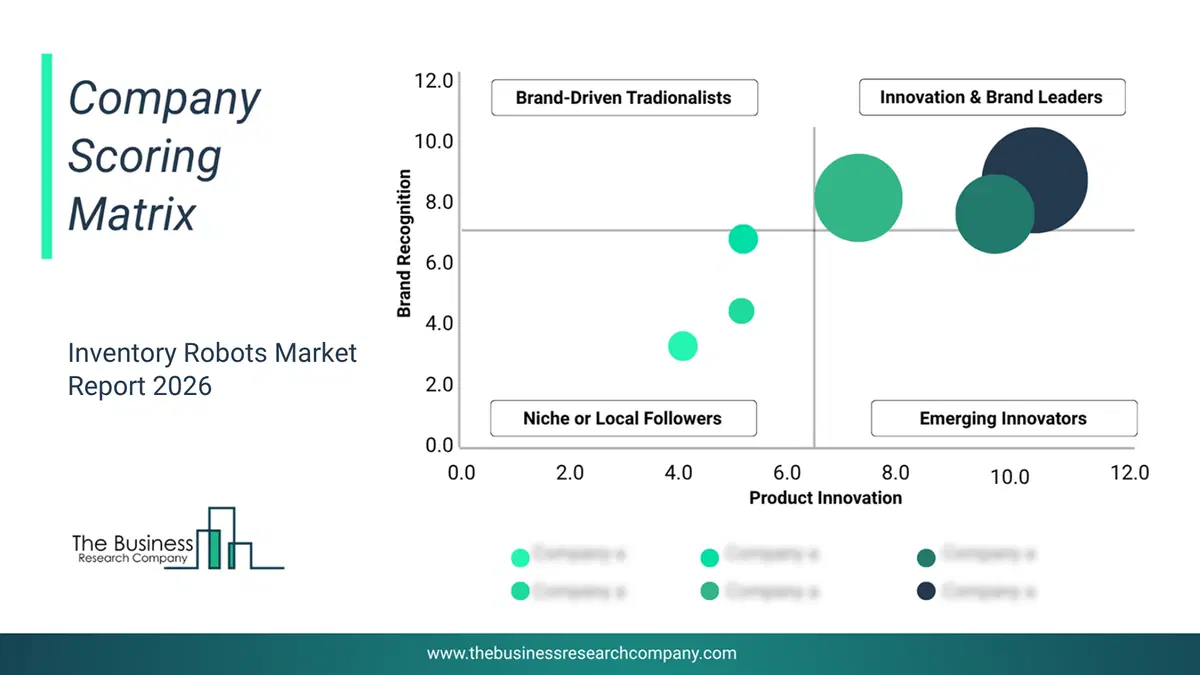
This chart maps companies by product innovation and brand strength, with bubble size indicating relative revenue, helping identify market leaders, challengers, and niche players. This is an illustrative chart; the full report provides a complete and accurate competitive analysis.
Global Inventory Robots Market Trends and Insights
Major companies operating in the inventory robots market are focusing on developing advanced robots, such as autonomous aisle-scanning robots, to optimize inventory management, improve store operations, and enhance customer experience. Autonomous aisle-scanning robots are self-navigating machines that move through store aisles to monitor inventory levels, product placement, and shelf conditions, enhancing retail efficiency and accuracy. For instance, in July 2024, Simbe Robotics, a US-based automation technology company, introduced Tally Robot, a new capability that allows retailers to remotely monitor store shelves using imagery captured by the company's autonomous aisle-scanning robots. This technology lets personnel view store conditions on mobile devices or desktops with high-definition snapshots and time-lapse footage of store shelves at various heights. Simbe's Tally robots collect the imagery and data, which can now be accessed and analyzed through mobile apps, allowing store staff and managers to monitor inventory levels, product layouts, and other store aspects in real time. This advancement reflects the growing reliance of retailers on data analysis for efficient store management.What Are Latest Mergers And Acquisitions In The Inventory Robots Market?
In October 2023, Rockwell Automation Inc., a US-based industrial automation solutions provider, acquired Clearpath Robotics and its OTTO Motors division for an undisclosed amount. This acquisition aims to enhance Rockwell's offerings in end-to-end autonomous production logistics solutions, which are crucial for optimizing operations in manufacturing environments. Clearpath Robotics Inc. is a Canada-based robotic technology company specializing in inventory robots.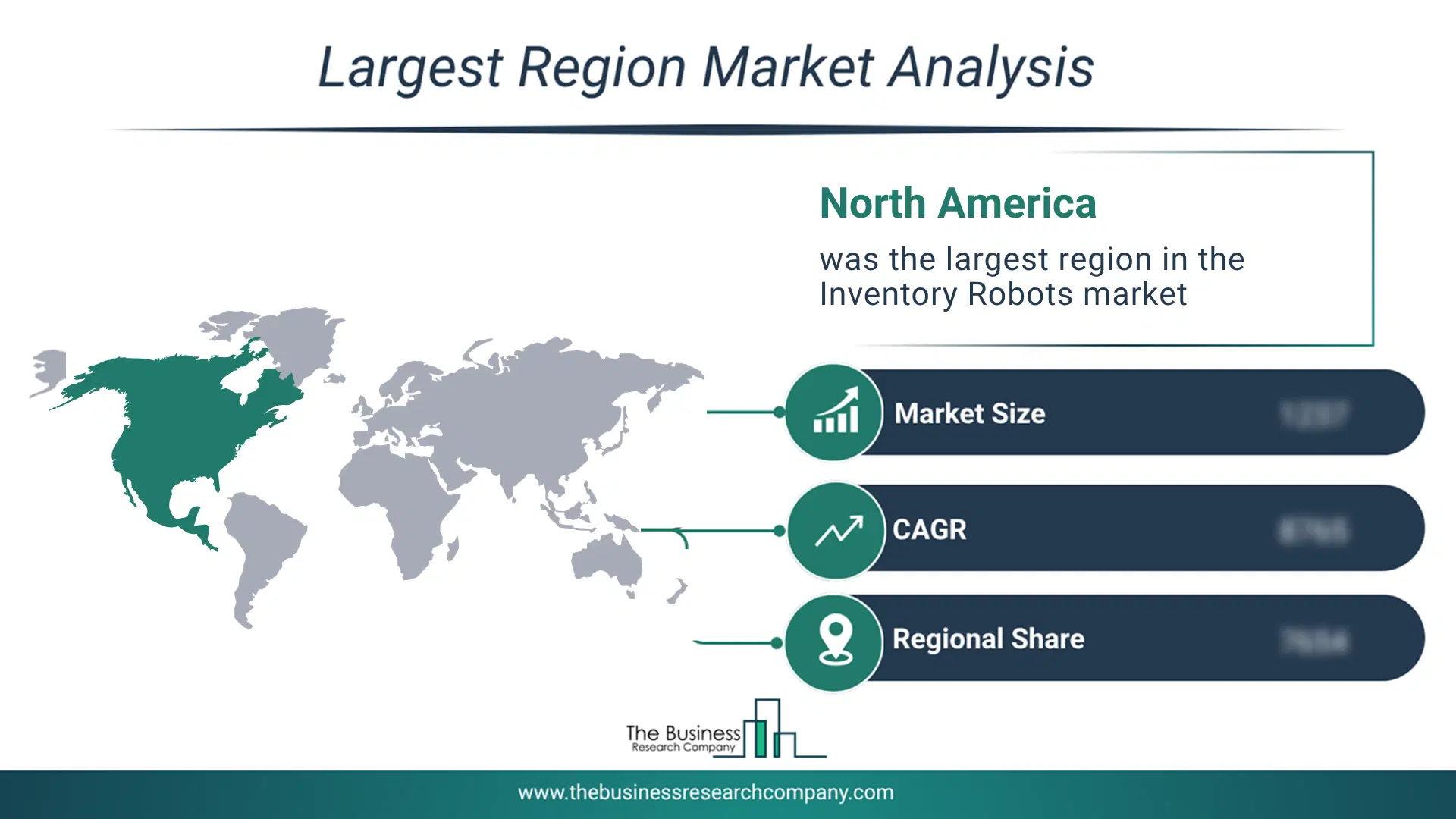
Regional Outlook
North America was the largest region in the inventory robots market in 2025. Asia-Pacific is expected to be the fastest-growing region in the forecast period. The regions covered in this market report are Asia-Pacific, South East Asia, Western Europe, Eastern Europe, North America, South America, Middle East, Africa The countries covered in this market report are Australia, Brazil, China, France, Germany, India, Indonesia, Japan, Taiwan, Russia, South Korea, UK, USA, Canada, Italy, Spain.What Defines the Inventory Robots Market?
The inventory robots market consists of revenues earned by entities providing services such as Installation services, maintenance and support, data analytics and reporting, software updates and upgrades, training and education, and consulting services. The market value includes the value of related goods sold by the service provider or included within the service offering. The inventory robots market also includes sales of autonomous robots, sensors and cameras, navigation and localization systems, charging stations, data storage units, and communication modules. Values in this market are ‘factory gate’ values, that is, the value of goods sold by the manufacturers or creators of the goods, whether to other entities (including downstream manufacturers, wholesalers, distributors, and retailers) or directly to end customers. The value of goods in this market includes related services sold by the creators of the goods.How is Market Value Defined and Measured?
The market value is defined as the revenues that enterprises gain from the sale of goods and/or services within the specified market and geography through sales, grants, or donations in terms of the currency (in USD unless otherwise specified). The revenues for a specified geography are consumption values that are revenues generated by organizations in the specified geography within the market, irrespective of where they are produced. It does not include revenues from resales along the supply chain, either further along the supply chain or as part of other products.
This chart presents market attractiveness based on a quantitative evaluation of growth, competition, strategic alignment, and risk, offering a clear view of opportunity areas for decision-making. This chart is for illustrative purposes; the full report contains the complete analysis.

This chart highlights the Total Addressable Market (TAM) by estimating the maximum revenue opportunity using an assumption-driven approach, supporting strategic planning and opportunity sizing across markets. The chart is illustrative; the full report provides a more comprehensive analysis.
What Key Data and Analysis Are Included in the Inventory Robots Market Report 2026?
The inventory robots market research report is one of a series of new reports from The Business Research Company that provides market statistics, including industry global market size, regional shares, competitors with the market share, detailed market segments, market trends and opportunities, and any further data you may need to thrive in the inventory robots industry. The market research report delivers a complete perspective of everything you need, with an in-depth analysis of the current and future state of the industry.Inventory Robots Market Report Forecast Analysis
| Report Attribute | Details |
|---|---|
| Market Size Value In 2026 | $147.32 billion |
| Revenue Forecast In 2030 | $226.46 billion |
| Growth Rate | CAGR of 11.3% from 2026 to 2030 |
| Base Year For Estimation | 2025 |
| Actual Estimates/Historical Data | 2020-2025 |
| Forecast Period | 2026 - 2030 |
| Market Representation | Revenue in USD Billion and CAGR from 2026 to 2030 |
| Segments Covered | Product, Component, End-User |
| Regional Scope | Asia-Pacific, Western Europe, Eastern Europe, North America, South America, Middle East, Africa |
| Key Companies Profiled | Jabil Inc., Kion Group AG, Zebra Technologies Corporation, Daifuku Co. Ltd., KUKA AG, Ocado Group plc, Amazon Robotics LLC, Knapp AG, Bastian Solutions LLC, 6 River Systems Inc., Grenzebach Maschinenbau GmbH, Geek+ Technology Co. Ltd., Locus Robotics Inc., Bossa Nova Robotics Inc., Brain Corp., Fetch Robotics Inc., Clearpath Robotics Inc., GreyOrange Pte. Ltd., RightHand Robotics Inc., Simbe Robotics Inc., IAM Robotics Inc., MetraLabs GmbH, PAL Robotics S.L., Keonn Technologies S.L. |
| Customization Scope | Request for Customization |
| Pricing And Purchase Options | Explore Purchase Options |