
Low Calorie Snacks Market Report 2026
Global Outlook – By Type (Sweet Snacks, Savory Snacks), By Nature (Organic, Conventional), By Packaging (Bags, Boxes, Pouches, Cans, Jars, Other Packaging), By Distribution Channel (Supermarket Or Hypermarket, Specialty Stores, Other Online Stores) – Market Size, Trends, Strategies, and Forecast to 2030
Low Calorie Snacks Market Overview
• Low Calorie Snacks market size has reached to $14.52 billion in 2025 • Expected to grow to $30.15 billion in 2030 at a compound annual growth rate (CAGR) of 15.8% • Growth Driver: Rising Consumer Awareness About Health And Fitness Drives Low-Calorie Snacks Market Growth • Market Trend: PepsiCo Introduces A New Range Of Healthier Chickpea Based Snack Products To Enhance Consumer Choice • North America was the largest region in 2025.What Is Covered Under Low Calorie Snacks Market?
Low-calorie snacks refer to food products with the label low calorie that contains 40 calories and have no detrimental impact on the body. Low-calorie snacks provide a convenient and portable option for satisfying hunger and controlling calorie intake, making it easier to maintain or lose weight without feeling deprived. The main types of low-calorie snacks include sweet snacks, savory snacks, and others. Sweet snacks are made with whole foods such as nuts, seeds, dates, and coconut, fresh, frozen, or dried fruit, dark chocolate, smoothies, and treats. The different sources include plant-based, animal-based, marine, and others, derived from organic and conventional methods. The packaging forms include bags, boxes, pouches, cans, jars, and others, which are distributed in supermarkets, hypermarkets, specialty stores, and other online stores.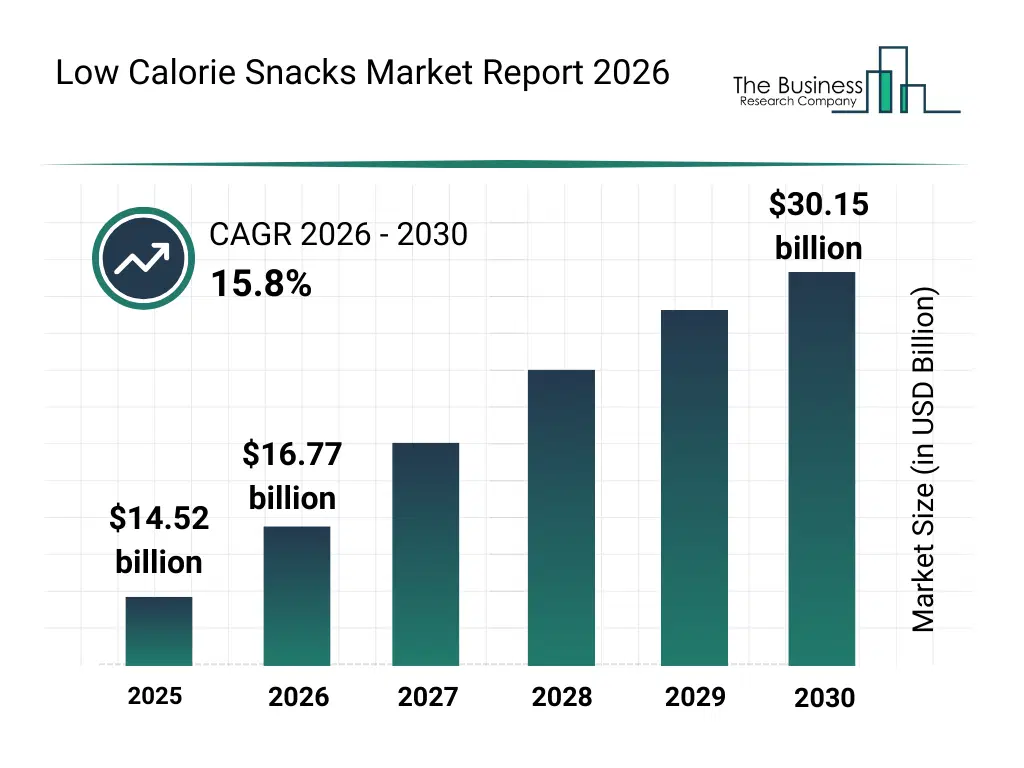
What Is The Low Calorie Snacks Market Size and Share 2026?
The low calorie snacks market size has grown rapidly in recent years. It will grow from $14.52 billion in 2025 to $16.77 billion in 2026 at a compound annual growth rate (CAGR) of 15.5%. The growth in the historic period can be attributed to rising obesity awareness, increasing snacking frequency, growth of packaged food consumption, expansion of health-focused food brands, improved food labeling regulations.What Is The Low Calorie Snacks Market Growth Forecast?
The low calorie snacks market size is expected to see rapid growth in the next few years. It will grow to $30.15 billion in 2030 at a compound annual growth rate (CAGR) of 15.8%. The growth in the forecast period can be attributed to increasing consumer focus on weight management, rising demand for functional snack foods, expansion of online snack retail platforms, growing innovation in alternative sweeteners, increasing clean-label snack development. Major trends in the forecast period include increasing demand for portion-controlled snack products, rising use of natural and low-calorie ingredients, expansion of protein-enriched low-calorie snacks, growing popularity of plant-based snack options, enhanced focus on convenient packaging formats.
Global Low Calorie Snacks Market Segmentation
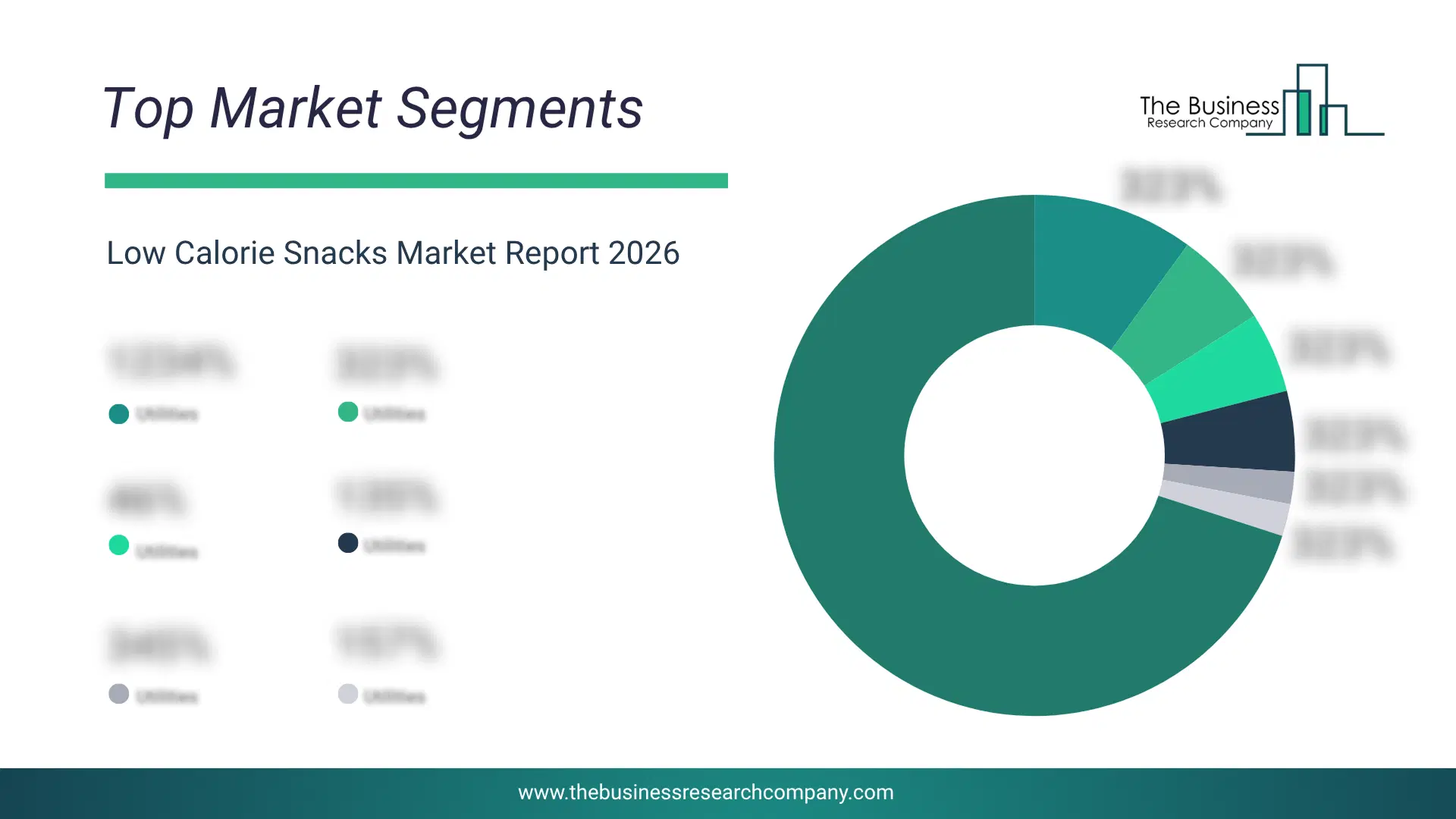
1) By Type: Sweet Snacks, Savory Snacks 2) By Nature: Organic, Conventional 3) By Packaging: Bags, Boxes, Pouches, Cans, Jars, Other Packaging 4) By Distribution Channel: Supermarket Or Hypermarket, Specialty Stores, Other Online Stores Subsegments: 1) By Sweet Snacks: Low-Calorie Cookies, Sugar-Free Candies, Fruit-Based Snacks, Yogurt-Based Snacks, Dark Chocolate Treats 2) By Savory Snacks: Baked Chips, Popcorn, Rice Cakes, Vegetable Chips, Seasoned NutsWhat Is The Driver Of The Low Calorie Snacks Market?
Rising consumer awareness about health and fitness is expected to propel the growth of the low-calorie snacks market going forward. Customers are choosing low-calorie snacks and other items due to growing health and fitness awareness. Obesity is a disease that primarily involves a relatively higher body fat percentage. A low-calorie diet can be very beneficial in obesity and diabetes treatment as it makes the fat-burning process faster and puts the body in a catabolic state. For instance, in June 2024, according to the International Food Information Council (IFIC), a US‑based non‑profit organization, the proportion of Americans following a specific diet or eating pattern over the past year remains high at 54%. Most people are looking to increase their protein intake, with interest climbing from 59% in 2022 to 67% in 2023, and reaching 71% in 2024. Additionally, roughly half of consumers aim to eat more fresh foods, which are widely considered the healthiest options Therefore, the rising consumer awareness about health and fitness is driving the low-calorie snacks market.Key Players In The Global Low Calorie Snacks Market
Major companies operating in the low calorie snacks market are Nestlé SA, Conagra Brands Inc., Danone SA, PepsiCo Inc., General Mills Inc., Mondelez International Inc., The Kraft Heinz Company, The Hain Celestial Group Inc., Bernard Food Industries Inc., Warrell Corporation, Halo Top Creamery, Kind LLC, Amplify Snack Brands Inc., Popchips Inc., PopCorners, Quest Nutrition LLC, Rhythm Superfoods LLC, Sahale Snacks Inc., Simply 7 Snacks LLC, SimplyProtein LLC, The Skinny Cow, SkinnyPop Popcorn LLC, Smartfood Popcorn, Snikiddy LLC, SunButter LLC, The Better Chip LLC, The Good Bean Inc.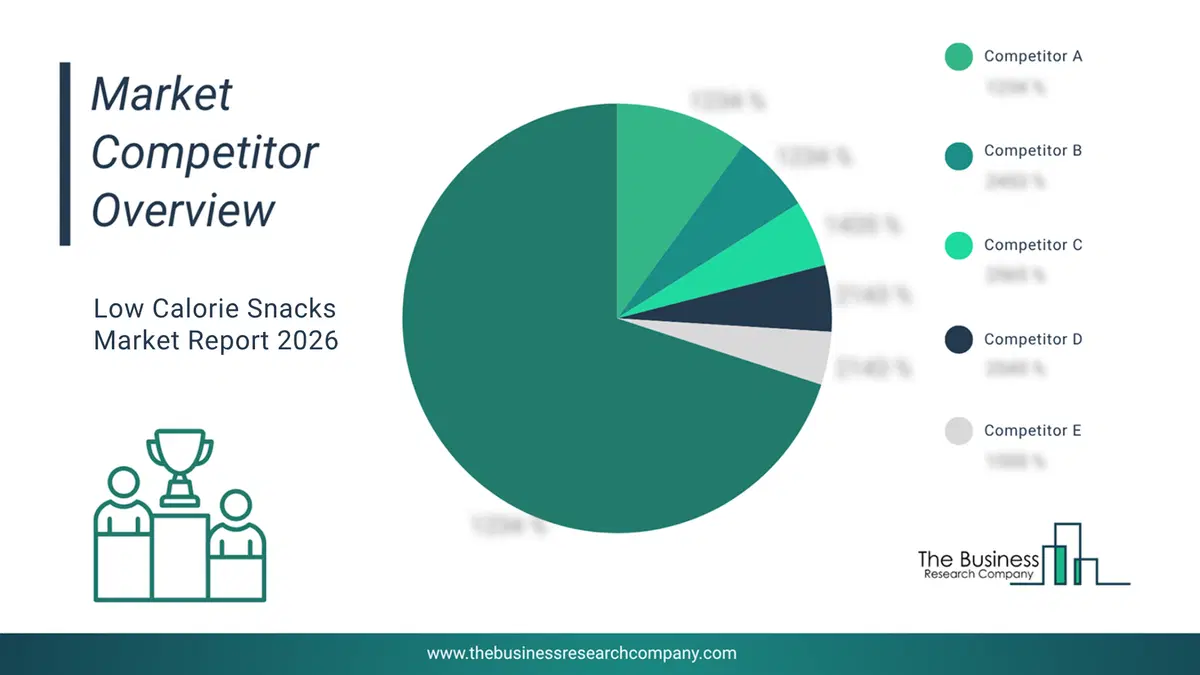
This chart is for illustrative purposes; the full report includes a detailed competitor analysis and comprehensive overview of the top 10 companies in the market.
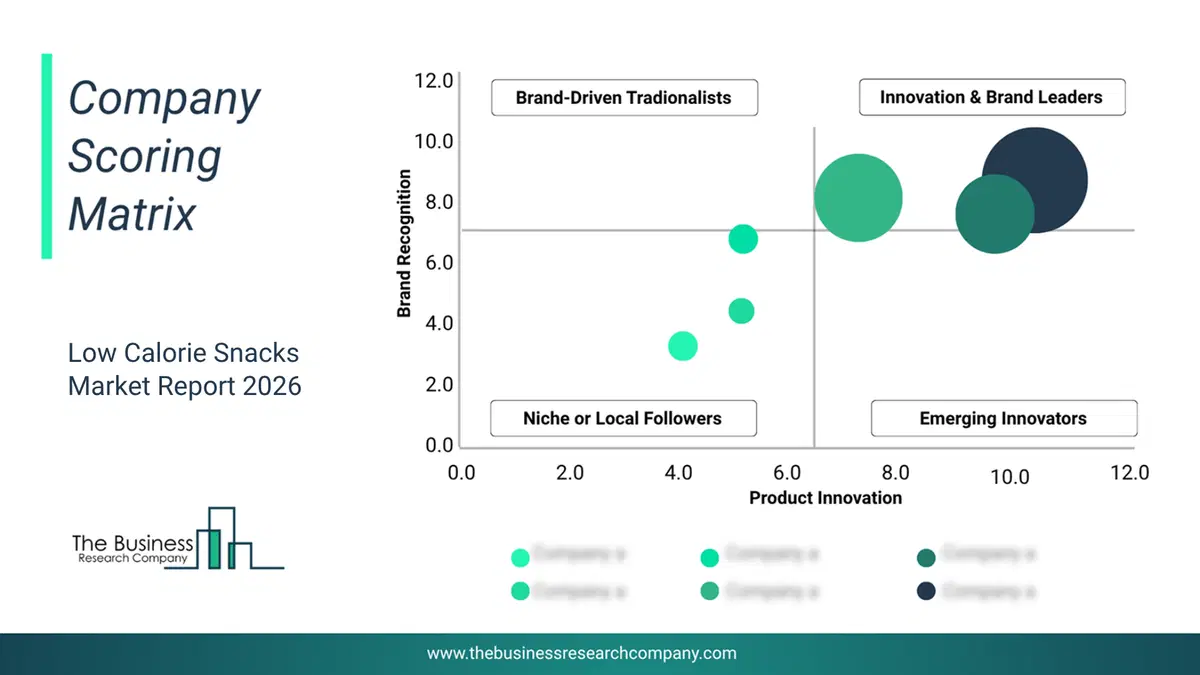
This chart maps companies by product innovation and brand strength, with bubble size indicating relative revenue, helping identify market leaders, challengers, and niche players. This is an illustrative chart; the full report provides a complete and accurate competitive analysis.
Global Low Calorie Snacks Market Trends and Insights
Major companies operating in the low-calorie snack market are focusing on developing advanced solutions, such as chickpea-based snacks, to provide healthier alternatives to traditional crisps and snacks. A healthier snack solution refers to a product that reduces calorie, fat, salt, and sugar content while providing nutritional benefits such as fiber, supporting consumer health and smarter snacking choices. For instance, in July 2024, PepsiCo Inc a US-based food and beverage company, launched a new range of Walkers snacks made with chickpea. This innovation includes Wotsits Cheese Toastie, Wotsits Crispy Bacon, and Monster Munch BBQ Sauce, all under 100 calories per pack and 25% lower in salt than the average extruded product. The range delivers real taste and enjoyment while allowing consumers to make healthier snack choices without compromising flavor. Supported by a £58 million investment in the Walkers factory in Leicester, the rollout leverages upgraded manufacturing facilities to increase production. Integrated with PepsiCo’s broader health initiatives, the new chickpea-based snacks contribute to the company’s goal of having 50% of snack sales coming from non-HFSS or 100-calorie portions by 2025. The launch improves consumer satisfaction, expands product variety, and strengthens PepsiCo’s commitment to promoting positive dietary choices.What Are Latest Mergers And Acquisitions In The Low Calorie Snacks Market?
In January 2024, Ghodawat Consumer Limited, an India-based consumer goods (FMCG) sector, acquired To Be Honest for an undisclosed amount. The acquisition enables GCL to enter the growing health snack market. TBH's innovative vacuum cooking process delivers products with both high nutritional value and functional benefits, going beyond typical low-calorie options. To Be Honest is an India-based healthy snack brand that produces low-calorie snacks.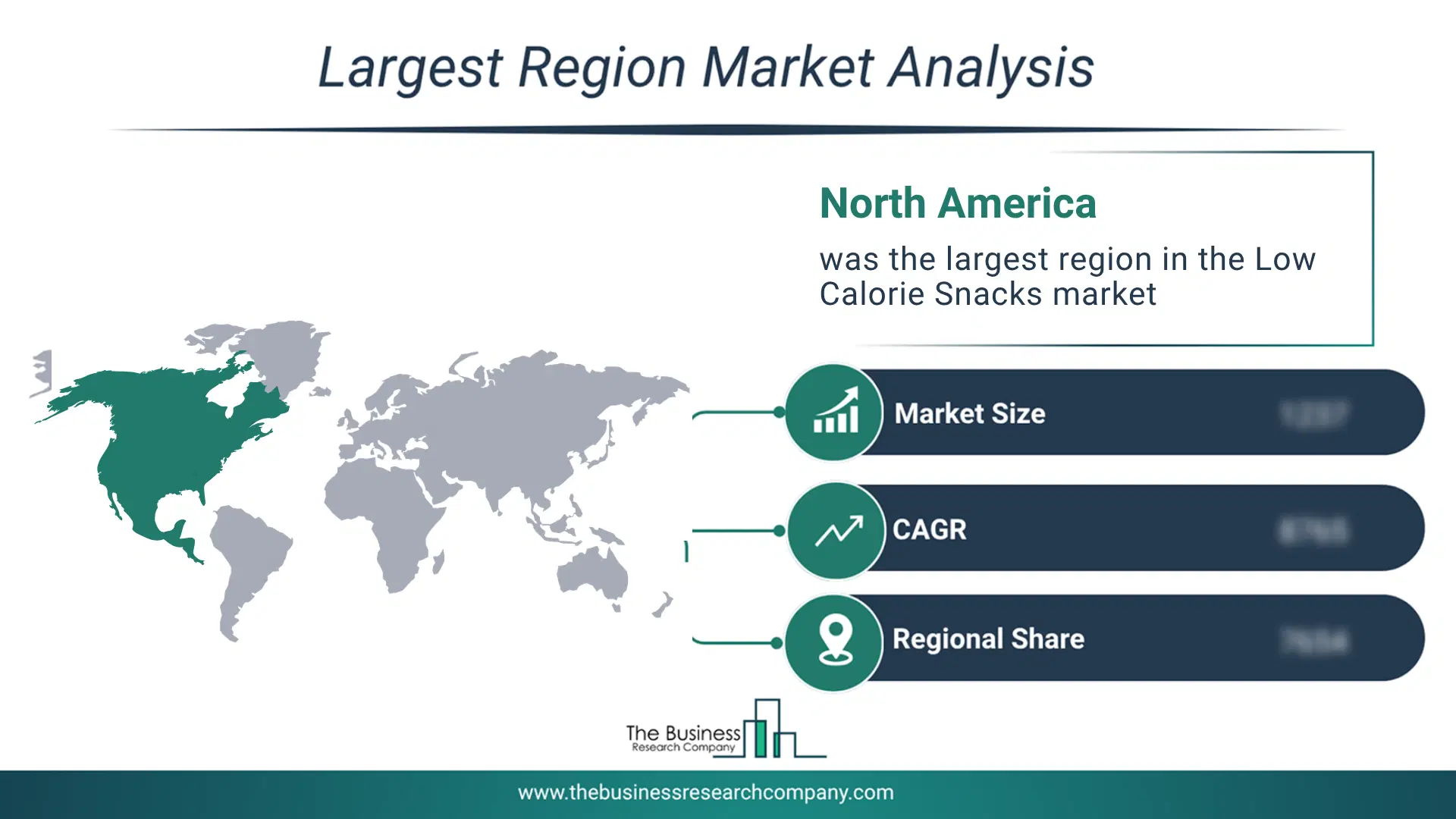
Regional Outlook
North America was the largest region in the low-calorie snacks market in 2025. The regions covered in this market report are Asia-Pacific, South East Asia, Western Europe, Eastern Europe, North America, South America, Middle East and Africa. The countries covered in this market report are Australia, Brazil, China, France, Germany, India, Indonesia, Japan, Taiwan, Russia, South Korea, UK, USA, Italy, Spain, CanadaWhat Defines the Low Calorie Snacks Market?
The low-calorie snacks market consists of sales of bakery snacks, nuts, and dried fruits. Values in this market are ‘factory gate’ values, that is the value of goods sold by the manufacturers or creators of the goods, whether to other entities (including downstream manufacturers, wholesalers, distributors, and retailers) or directly to end customers. The value of goods in this market includes related services sold by the creators of the goods.How is Market Value Defined and Measured?
The market value is defined as the revenues that enterprises gain from the sale of goods and/or services within the specified market and geography through sales, grants, or donations in terms of the currency (in USD unless otherwise specified). The revenues for a specified geography are consumption values that are revenues generated by organizations in the specified geography within the market, irrespective of where they are produced. It does not include revenues from resales along the supply chain, either further along the supply chain or as part of other products.
This chart presents market attractiveness based on a quantitative evaluation of growth, competition, strategic alignment, and risk, offering a clear view of opportunity areas for decision-making. This chart is for illustrative purposes; the full report contains the complete analysis.

This chart highlights the Total Addressable Market (TAM) by estimating the maximum revenue opportunity using an assumption-driven approach, supporting strategic planning and opportunity sizing across markets. The chart is illustrative; the full report provides a more comprehensive analysis.
What Key Data and Analysis Are Included in the Low Calorie Snacks Market Report 2026?
The low calorie snacks market research report is one of a series of new reports from The Business Research Company that provides market statistics, including industry global market size, regional shares, competitors with the market share, detailed market segments, market trends and opportunities, and any further data you may need to thrive in the low calorie snacks industry. The market research report delivers a complete perspective of everything you need, with an in-depth analysis of the current and future state of the industry.Low Calorie Snacks Market Report Forecast Analysis
| Report Attribute | Details |
|---|---|
| Market Size Value In 2026 | $16.77 billion |
| Revenue Forecast In 2030 | $30.15 billion |
| Growth Rate | CAGR of 15.5% from 2026 to 2030 |
| Base Year For Estimation | 2025 |
| Actual Estimates/Historical Data | 2020-2025 |
| Forecast Period | 2026 - 2030 |
| Market Representation | Revenue in USD Billion and CAGR from 2026 to 2030 |
| Segments Covered | Type, Nature, Packaging, Distribution Channel |
| Regional Scope | Asia-Pacific, Western Europe, Eastern Europe, North America, South America, Middle East, Africa |
| Country Scope | The countries covered in the report are Australia, Brazil, China, France, Germany, India, Indonesia, Japan, Taiwan, Russia, South Korea, UK, USA, Canada, Italy, Spain. |
| Key Companies Profiled | Nestlé SA, Conagra Brands Inc., Danone SA, PepsiCo Inc., General Mills Inc., Mondelez International Inc., The Kraft Heinz Company, The Hain Celestial Group Inc., Bernard Food Industries Inc., Warrell Corporation, Halo Top Creamery, Kind LLC, Amplify Snack Brands Inc., Popchips Inc., PopCorners, Quest Nutrition LLC, Rhythm Superfoods LLC, Sahale Snacks Inc., Simply 7 Snacks LLC, SimplyProtein LLC, The Skinny Cow, SkinnyPop Popcorn LLC, Smartfood Popcorn, Snikiddy LLC, SunButter LLC, The Better Chip LLC, The Good Bean Inc. |
| Customization Scope | Request for Customization |
| Pricing And Purchase Options | Explore Purchase Options |