
Low-calorie Food Market Report 2026
Global Outlook – By Sweetener Category (Sugar Substitutes, Sugar Alcohol Substitutes), By Product (Aspartame, Sucralose, Stevia, Saccharin, Cyclamate), By Application (Dairy Products, Dietary Beverages, Bakery Products, Snacks, Other Applications) – Market Size, Trends, Strategies, and Forecast to 2030
Low-calorie Food Market Overview
• Low-calorie Food market size has reached to $15.69 billion in 2025 • Expected to grow to $23.79 billion in 2030 at a compound annual growth rate (CAGR) of 8.8% • Growth Driver: Increasing Prevalence Of Obesity And Diabetes Drives Low-Calorie Food Market Growth • Market Trend: PepsiCo Launches A New Range Of Chickpea Based Snack Products To Promote Healthier Eating Choices • North America was the largest region in 2025 and Asia-Pacific is the fastest growing region.What Is Covered Under Low-calorie Food Market?
Low-calorie foods include food products that have relatively few calories per serving. These products are low in calories and thus very helpful in fat loss. Low-calorie food refers to meal substitutes that meet the required daily needs for minerals, vitamins, protein, and other energy needs. The main types of low-calorie food are sugar substitutes, sugar alcohol substitutes, and nutrient based substitutes. Sugar substitutes refer to ingredients used instead of sugar for sweetening food products. These sugar substitutes are low in calories and sweeter than sugar. The product involved are aspartame, sucralose, stevia, saccharin, cyclamate, that are applied in dairy products, dietary beverages, bakery products, snacks, and others.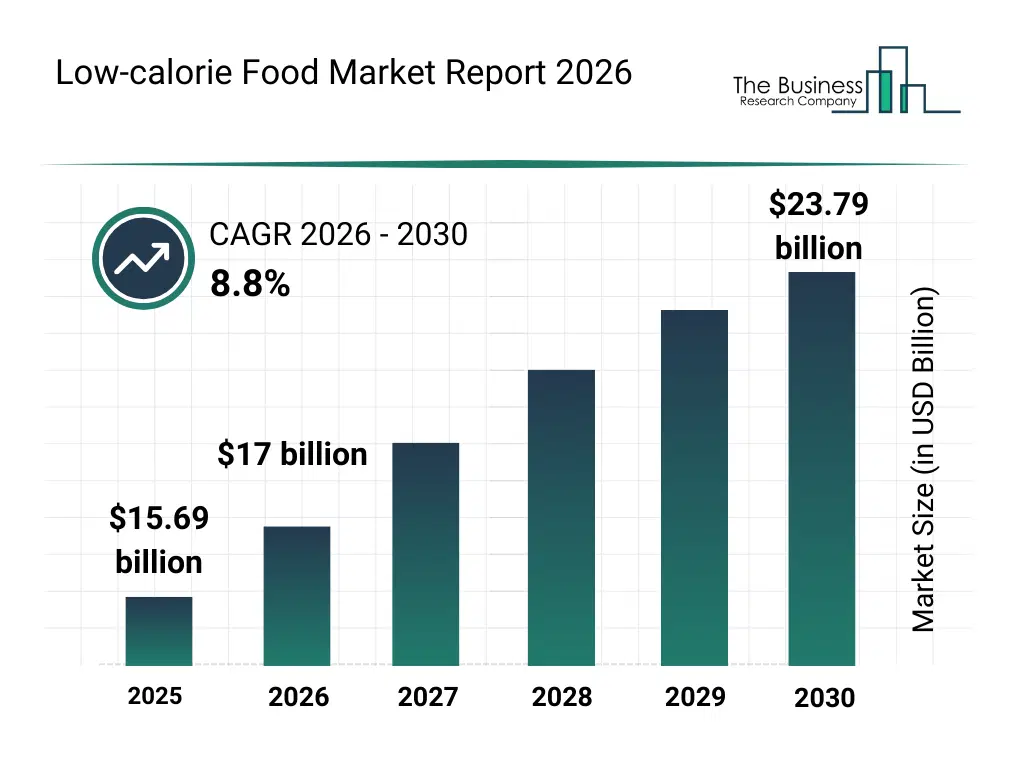
What Is The Low-calorie Food Market Size and Share 2026?
The low-calorie food market size has grown strongly in recent years. It will grow from $15.69 billion in 2025 to $17 billion in 2026 at a compound annual growth rate (CAGR) of 8.4%. The growth in the historic period can be attributed to rising consumer awareness of obesity and lifestyle diseases, increasing penetration of diet-focused food products, growth of health-conscious consumer segments, expansion of functional food categories, wider availability of sugar substitute ingredients.What Is The Low-calorie Food Market Growth Forecast?
The low-calorie food market size is expected to see strong growth in the next few years. It will grow to $23.79 billion in 2030 at a compound annual growth rate (CAGR) of 8.8%. The growth in the forecast period can be attributed to increasing demand for personalized nutrition, growing preference for plant-based low-calorie foods, expansion of diabetic-friendly product offerings, rising investments in food formulation technologies, increasing regulatory support for healthier food labeling. Major trends in the forecast period include increasing demand for clean-label low-calorie products, rising adoption of natural sugar alternatives, expansion of nutrient-dense meal replacement foods, growing product innovation in reduced-calorie snacks, enhanced focus on functional low-calorie formulations.
Global Low-calorie Food Market Segmentation
1) By Sweetener Category: Sugar Substitutes, Sugar Alcohol Substitutes 2) By Product: Aspartame, Sucralose, Stevia, Saccharin, Cyclamate 3) By Application: Dairy Products, Dietary Beverages, Bakery Products, Snacks, Other Applications Subsegments: 1) By Sugar Substitutes: Stevia, Aspartame, Sucralose, Monk Fruit Extract, Acesulfame Potassium 2) By Sugar Alcohol Substitutes: Erythritol, Xylitol, Maltitol, Sorbitol, IsomaltWhat Is The Driver Of The Low-calorie Food Market?
The increasing prevalence of obesity and diabetes around the globe is expected to drive the low-calorie food market going forward. Obesity is a disease that primarily involves a relatively higher body fat percentage. Diabetes is a disease caused by very high blood glucose levels. Obesity and diabetes are interrelated and occur together. A low-calorie diet can be very beneficial in obesity and diabetes treatment as it makes the fat-burning process faster and puts the body in a catabolic state. For instance, in June 2024, according to the National Health Service (NHS), a UK-based publicly funded healthcare system, in the past year, over half a million (549,000) more people in England have been identified by the NHS as at risk of developing type 2 diabetes. Among those under 40, the increase is even more pronounced, rising by nearly a quarter, from 173,166 in 2022 to 216,440 in 2023. Therefore, the increasing prevalence of diabetes and obesity is driving the low-calorie food industry.Key Players In The Global Low-calorie Food Market
Major companies operating in the low-calorie food market are Ajinomoto Co. Inc., Beneo Group, Ingredion Incorporated, Abbott Laboratories, Galam Ltd., PepsiCo Inc., Zydus Wellness Limited, Bernard Food Industries Inc., Danisco A/S, Archer Daniels Midland Company, The Coca-Cola Company, Cargill Incorporated, Groupe Danone SA, Nestlé S.A., McNeil Nutritionals LLC, Dr Pepper Snapple Group Inc., Heartland Food Products Group, Kellogg Company, General Mills Inc., The Hershey Company, Mars Incorporated, Mondelez International Inc., Unilever PLC, Kraft Heinz Company, Campbell Soup Company, Conagra Brands Inc., The J.M. Smucker Company
This chart is for illustrative purposes; the full report includes a detailed competitor analysis and comprehensive overview of the top 10 companies in the market.
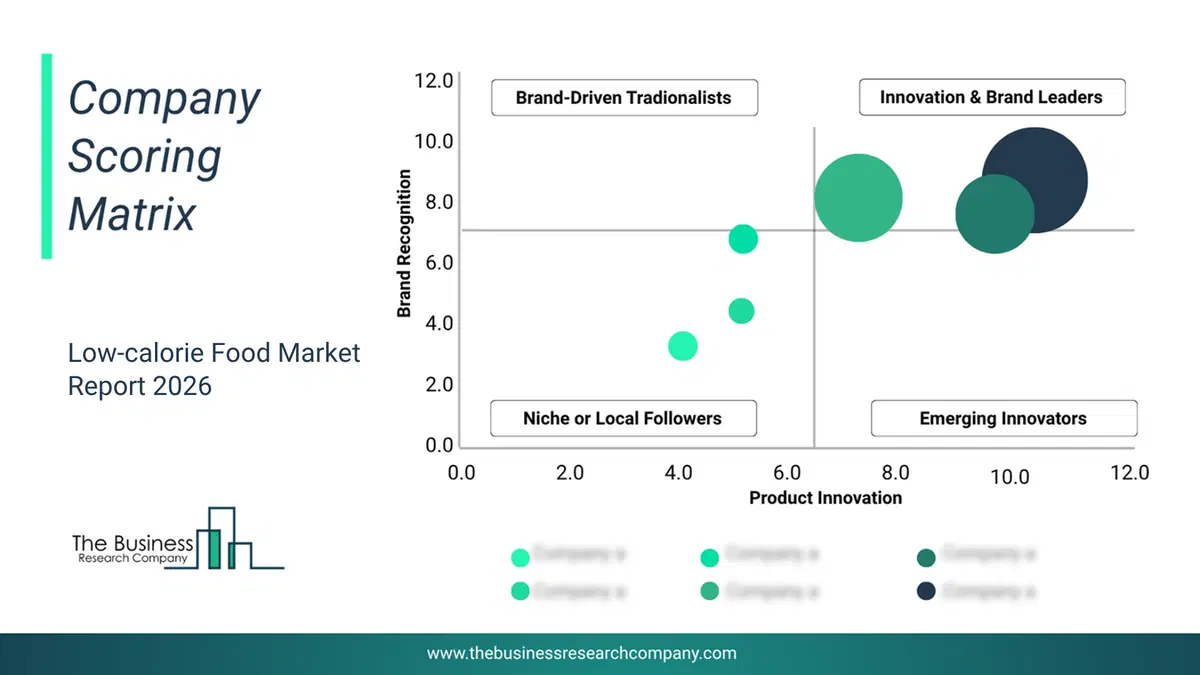
This chart maps companies by product innovation and brand strength, with bubble size indicating relative revenue, helping identify market leaders, challengers, and niche players. This is an illustrative chart; the full report provides a complete and accurate competitive analysis.
Global Low-calorie Food Market Trends and Insights
Major companies operating in the low-calorie food market are focusing on developing advanced solutions, such as chickpea-based snacks, to provide healthier alternatives to traditional crisps and snacks. A healthier snack solution refers to a product that reduces calorie, fat, salt, and sugar content while providing nutritional benefits such as fiber, supporting consumer health and smarter snacking choices. For instance, in July 2024, PepsiCo Inc a US-based food and beverage company, launched a new range of Walkers snacks made with chickpea. This innovation includes Wotsits Cheese Toastie, Wotsits Crispy Bacon, and Monster Munch BBQ Sauce, all under 100 calories per pack and 25% lower in salt than the average extruded product. The range delivers real taste and enjoyment while allowing consumers to make healthier snack choices without compromising flavor. Supported by a £58 million investment in the Walkers factory in Leicester, the rollout leverages upgraded manufacturing facilities to increase production. Integrated with PepsiCo’s broader health initiatives, the new chickpea-based snacks contribute to the company’s goal of having 50 percent of snack sales coming from non-high fat, sugar, and salt products or 100-calorie portions by 2025. The launch improves consumer satisfaction, expands product variety, and strengthens PepsiCo’s commitment to promoting positive dietary choices.What Are Latest Mergers And Acquisitions In The Low-calorie Food Market?
In January 2024, Ghodawat Consumer Limited, an India-based consumer goods (FMCG) sector, acquired To Be Honest for an undisclosed amount. The acquisition enables GCL to enter the growing health snack market. TBH's innovative vacuum cooking process delivers products with both high nutritional value and functional benefits, going beyond typical low-calorie options. To Be Honest is an India-based healthy snack brand that produces low-calorie foods.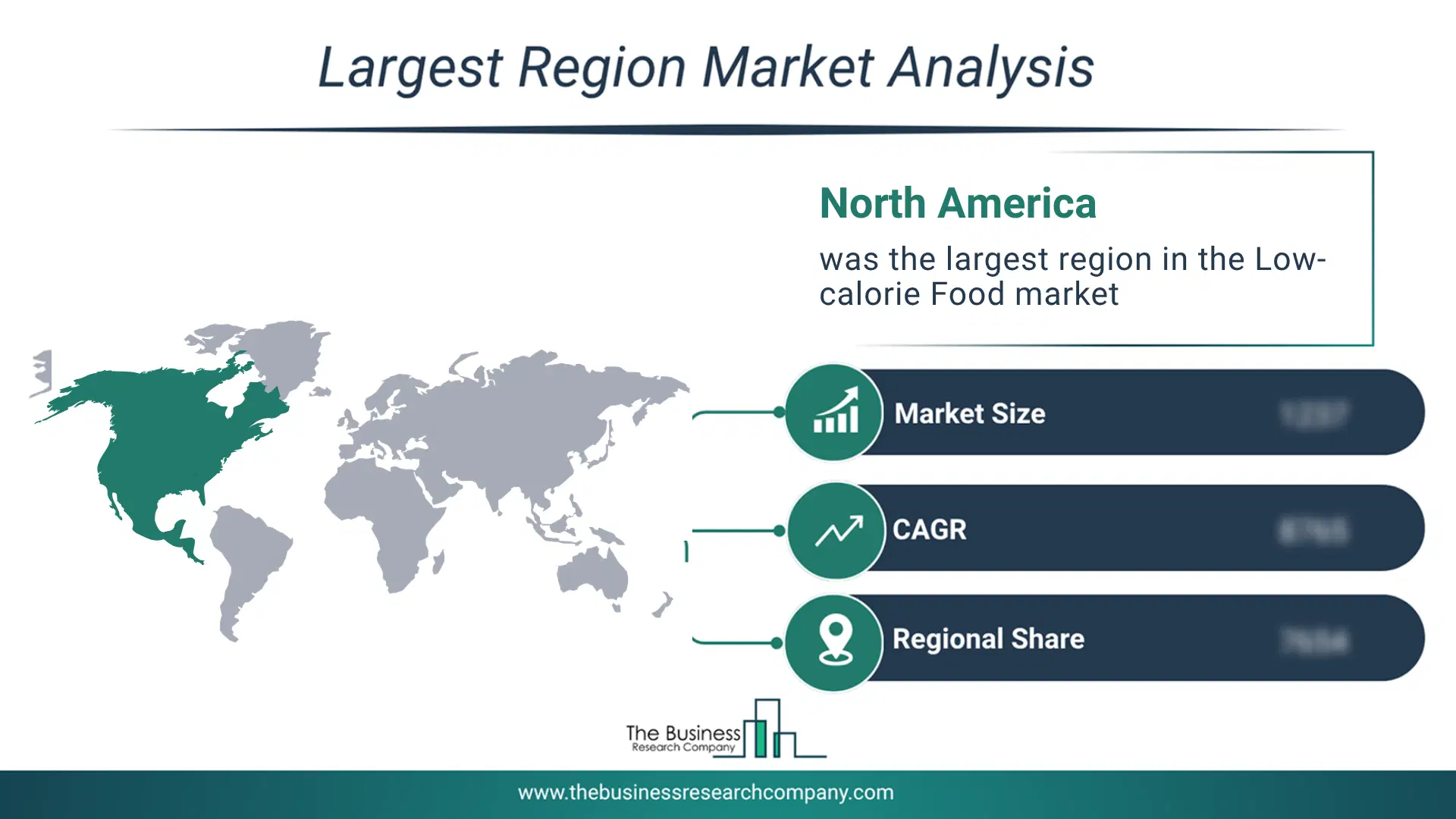
Regional Outlook
North America was the largest region in the low-calorie food market in 2025. Asia-Pacific is expected to be the fastest-growing region in the forecast period. The regions covered in this market report are Asia-Pacific, South East Asia, Western Europe, Eastern Europe, North America, South America, Middle East and Africa. The countries covered in this market report are Australia, Brazil, China, France, Germany, India, Indonesia, Japan, Taiwan, Russia, South Korea, UK, USA, Italy, Spain, CanadaWhat Defines the Low-calorie Food Market?
The low-calorie food market consists of sales of sugar substitutes, sugar alcohol substitutes, and nutrient-based substitutes. Values in this market are ‘factory gate’ values, that is the value of goods sold by the manufacturers or creators of the goods, whether to other entities (including downstream manufacturers, wholesalers, distributors, and retailers) or directly to end customers. The value of goods in this market includes related services sold by the manufacturers of the goods.How is Market Value Defined and Measured?
The market value is defined as the revenues that enterprises gain from the sale of goods and/or services within the specified market and geography through sales, grants, or donations in terms of the currency (in USD unless otherwise specified). The revenues for a specified geography are consumption values that are revenues generated by organizations in the specified geography within the market, irrespective of where they are produced. It does not include revenues from resales along the supply chain, either further along the supply chain or as part of other products.
This chart presents market attractiveness based on a quantitative evaluation of growth, competition, strategic alignment, and risk, offering a clear view of opportunity areas for decision-making. This chart is for illustrative purposes; the full report contains the complete analysis.

This chart highlights the Total Addressable Market (TAM) by estimating the maximum revenue opportunity using an assumption-driven approach, supporting strategic planning and opportunity sizing across markets. The chart is illustrative; the full report provides a more comprehensive analysis.
What Key Data and Analysis Are Included in the Low-calorie Food Market Report 2026?
The low-calorie food market research report is one of a series of new reports from The Business Research Company that provides market statistics, including industry global market size, regional shares, competitors with the market share, detailed market segments, market trends and opportunities, and any further data you may need to thrive in the low-calorie food industry. The market research report delivers a complete perspective of everything you need, with an in-depth analysis of the current and future state of the industry.Low-calorie Food Market Report Forecast Analysis
| Report Attribute | Details |
|---|---|
| Market Size Value In 2026 | $17 billion |
| Revenue Forecast In 2030 | $23.79 billion |
| Growth Rate | CAGR of 8.4% from 2026 to 2030 |
| Base Year For Estimation | 2025 |
| Actual Estimates/Historical Data | 2020-2025 |
| Forecast Period | 2026 - 2030 |
| Market Representation | Revenue in USD Billion and CAGR from 2026 to 2030 |
| Segments Covered | Sweetener Category, Product, Application |
| Regional Scope | Asia-Pacific, Western Europe, Eastern Europe, North America, South America, Middle East, Africa |
| Country Scope | The countries covered in the report are Australia, Brazil, China, France, Germany, India, Indonesia, Japan, Taiwan, Russia, South Korea, UK, USA, Canada, Italy, Spain. |
| Key Companies Profiled | Ajinomoto Co. Inc., Beneo Group, Ingredion Incorporated, Abbott Laboratories, Galam Ltd., PepsiCo Inc., Zydus Wellness Limited, Bernard Food Industries Inc., Danisco A/S, Archer Daniels Midland Company, The Coca-Cola Company, Cargill Incorporated, Groupe Danone SA, Nestlé S.A., McNeil Nutritionals LLC, Dr Pepper Snapple Group Inc., Heartland Food Products Group, Kellogg Company, General Mills Inc., The Hershey Company, Mars Incorporated, Mondelez International Inc., Unilever PLC, Kraft Heinz Company, Campbell Soup Company, Conagra Brands Inc., The J.M. Smucker Company |
| Customization Scope | Request for Customization |
| Pricing And Purchase Options | Explore Purchase Options |