
Mammalian Cell Banking Market Report 2026
Global Outlook – By Product Type (Master Cell Bank, Working Cell Bank), By Cell Type (Chinese Hamster Ovary Mammalian Cell Banking (CHO), Baby Hamster Kidney (BHK), Non-Secreting 0 (NS0), YB2/0 And P2/0, Human Embryonic Kidney 293 (HEK29, And Derivatives, Henrietta Lacks (HELA)), By Storage Type (Liquid Nitrogen, Controlled Rate Freezer, Flash Freezing), By Application (Drug Development, Vaccine Production, Gene Therapy, Monoclonal Antibody Production), By End User (Academic And Research Laboratories, Biopharmaceutical Companies, Contract Research Organizations (CROs)) – Market Size, Trends, Strategies, and Forecast to 2030
Mammalian Cell Banking Market Overview
• Mammalian Cell Banking market size has reached to $3.14 billion in 2025 • Expected to grow to $5.31 billion in 2030 at a compound annual growth rate (CAGR) of 11% • Growth Driver: Rising Demand For Cell-Based Therapies Fueling The Growth Of The Market Due To Increasing Prevalence Of Chronic And Rare Diseases • Market Trend: Expansion Of Healthcare Infrastructure Fueling The Market Growth Due To Increasing Demand For Medical Equipment And Facility Upgrades • North America was the largest region in 2025.What Is Covered Under Mammalian Cell Banking Market?
Mammalian cell banking refers to the systematic process of creating, preserving, and storing well-characterized stocks of mammalian cells under carefully controlled conditions, usually at very low temperatures, to maintain their long-term viability, genetic stability, and functional integrity. This process ensures that the cells remain consistent, uncontaminated, and true to their original characteristics over extended periods, providing a dependable and standardized resource for future use. The main types of products in mammalian cell banking are master cell bank and working cell bank. A master cell bank (MCB) is a carefully prepared and thoroughly characterized collection of cells stored in multiple vials under controlled, cryogenic conditions. It includes various cell types, including chinese hamster ovary mammalian cell banking (CHO), baby hamster kidney (BHK), non-secreting 0 (NS0), YB2/0 And P2/0, human embryonic kidney 293 (HEK293) and derivatives,henrietta lacks (HELA) and storage types, such as liquid nitrogen, controlled rate freezer, and flash freezing. It finds applications in drug development, vaccine production, gene therapy, and monoclonal antibody production, serving end users such as academic and research laboratories, biopharmaceutical companies, and contract research organizations (CROs).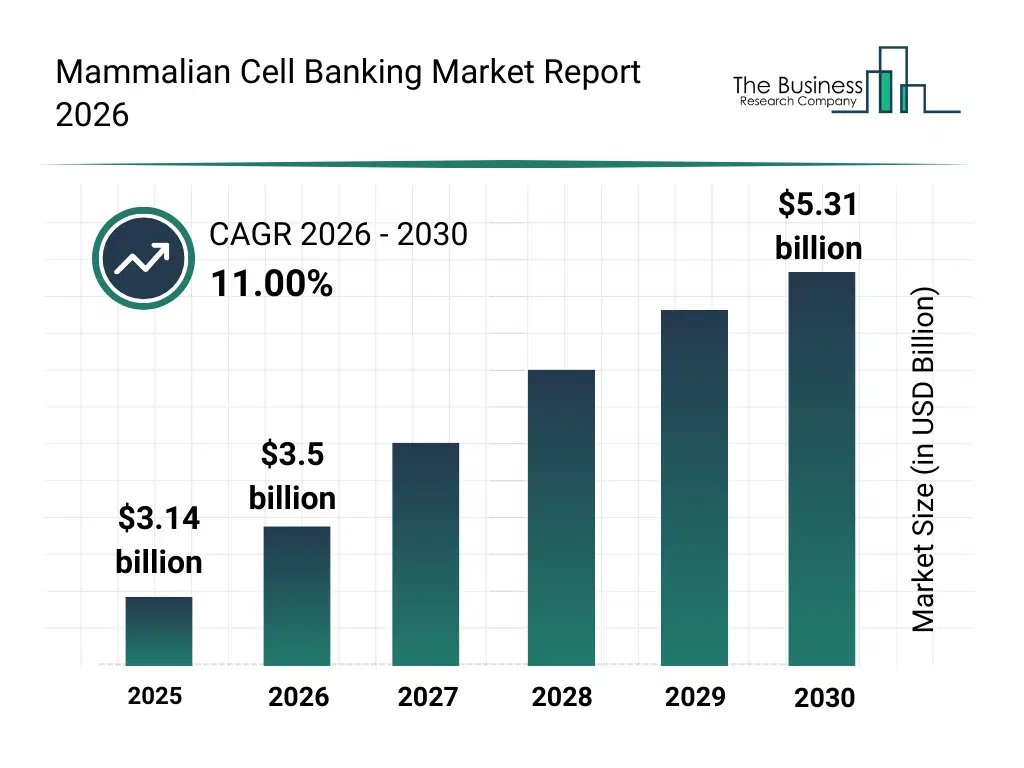
What Is The Mammalian Cell Banking Market Size and Share 2026?
The mammalian cell banking market size has grown rapidly in recent years. It will grow from $3.14 billion in 2025 to $3.5 billion in 2026 at a compound annual growth rate (CAGR) of 11.3%. The growth in the historic period can be attributed to monoclonal antibody development, vaccine manufacturing growth, regulatory quality requirements, academic research expansion, biologics commercialization.What Is The Mammalian Cell Banking Market Growth Forecast?
The mammalian cell banking market size is expected to see rapid growth in the next few years. It will grow to $5.31 billion in 2030 at a compound annual growth rate (CAGR) of 11.0%. The growth in the forecast period can be attributed to gene therapy advancements, personalized medicine growth, biosimilar development, cell-based therapy pipelines, long-term cell traceability needs. Major trends in the forecast period include standardization of cell line preservation, growth of biopharmaceutical pipelines, expansion of CGMP-compliant cell banks, increased focus on genetic stability, rising outsourcing to specialized facilities.
Global Mammalian Cell Banking Market Segmentation
1) By Product Type: Master Cell Bank, Working Cell Bank 2) By Cell Type: Chinese Hamster Ovary Mammalian Cell Banking (CHO), Baby Hamster Kidney (BHK), Non-Secreting 0 (NS0), YB2/0 And P2/0, Human Embryonic Kidney 293 (HEK293) And Derivatives, Henrietta Lacks (HELA) 3) By Storage Type: Liquid Nitrogen, Controlled Rate Freezer, Flash Freezing 4) By Application: Drug Development, Vaccine Production, Gene Therapy, Monoclonal Antibody Production 5) By End User: Academic And Research Laboratories, Biopharmaceutical Companies, Contract Research Organizations (CROs) Subsegments: 1) By Master Cell Bank: Recombinant Cell Lines, Hybridoma Cell Lines, Primary Cell Lines, Genetically Engineered Cell Lines, Viral Vector Producing Cell Lines 2) By Working Cell Bank: Current Good Manufacturing Practice (CGMP)-Compliant Cell Banks, Research-Grade Cell Banks, Clinical Trial Cell Banks, Commercial Production Cell Banks, Stability Testing Cell BanksWhat Is The Driver Of The Mammalian Cell Banking Market?
The rising demand for cell-based therapies is expected to propel the growth of the mammalian cell banking market going forward. Cell-based therapies refer to advanced medical treatments that use living cells, often modified or engineered, to repair, replace, or regenerate damaged tissues and organs, offering targeted solutions for a wide range of diseases. The demand for cell-based therapies is rising as the growing prevalence of chronic and rare diseases creates an urgent need for more effective and targeted treatment options. Mammalian cell banking supports cell-based therapies by providing a reliable, standardized source of high-quality cells, ensuring consistency, safety, and scalability in the development and manufacturing of regenerative treatments. For instance, in April 2024, according to the American Society of Gene and Cell Therapy, a US-based non-profit medical and scientific organization, the number of therapies across all clinical pipeline phases has grown since the end of 2023, with Phase I showing the strongest increase of 11% since before the fourth quarter of 2022. Therefore, the rising demand for cell-based therapies is driving the growth of the mammalian cell banking industry.Key Players In The Global Mammalian Cell Banking Market
Major companies operating in the mammalian cell banking market are Merck KGaA, Thermo Fisher Scientific Inc., Lonza Group AG, Eurofins Scientific SE, Charles River Laboratories International Inc., Catalent Inc., Sartorius Stedim Biotech S A, Samsung Biologics Co Ltd, CMIC Holdings Co Ltd, WuXi Biologics Inc., Evotec SE, AGC Biologics Inc., GenScript ProBio Co Ltd, Syngene International Limited, KBI Biopharma Inc., Rentschler Biopharma SE, Polpharma Biologics S A, Abzena plc, 53Biologics, Cellistic, GBI Biomanufacturing, ABL Inc, OmniaBio, uBriGene Biosciences
This chart is for illustrative purposes; the full report includes a detailed competitor analysis and comprehensive overview of the top 10 companies in the market.
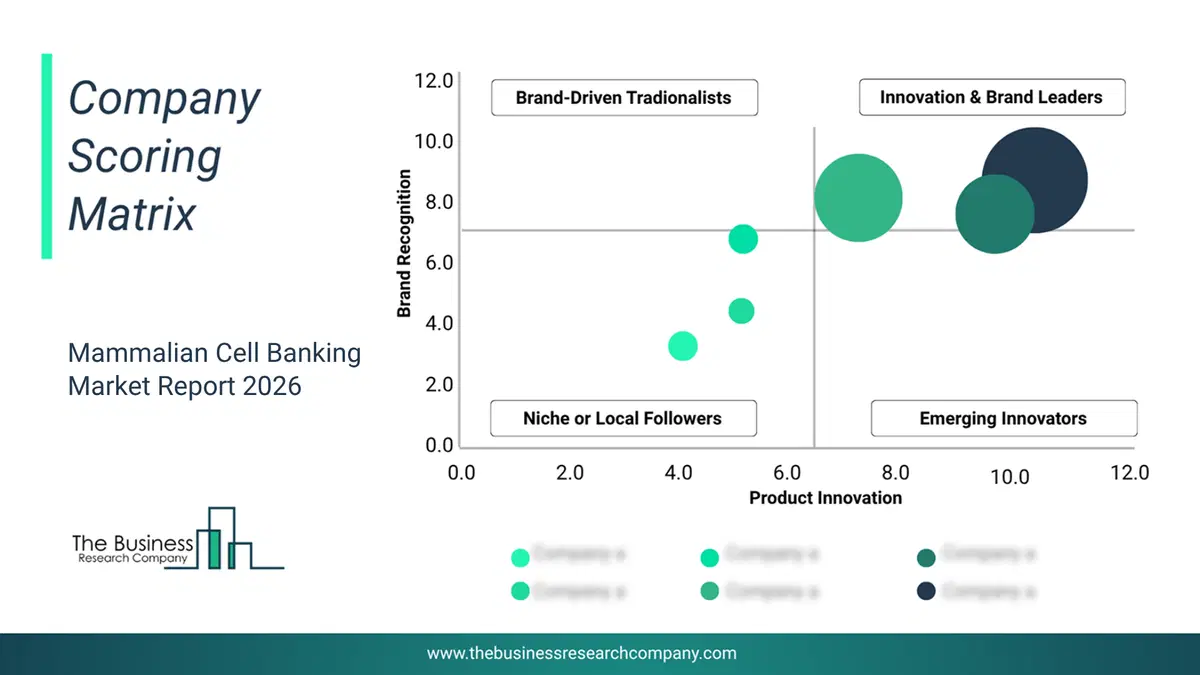
This chart maps companies by product innovation and brand strength, with bubble size indicating relative revenue, helping identify market leaders, challengers, and niche players. This is an illustrative chart; the full report provides a complete and accurate competitive analysis.
Global Mammalian Cell Banking Market Trends and Insights
Major companies operating in the mammalian cell banking market are focusing on developing innovative solutions, such as innovative stable cell line systems, to enhance cell line productivity, ensure long-term genetic stability, and streamline biopharmaceutical production processes. Stable cell line systems are genetically engineered mammalian cells designed to consistently produce a desired protein or therapeutic molecule over multiple generations with high genetic stability and reproducibility. For instance, in August 2024, WuXi Biologics, a China-based biopharmaceutical company, launched the WuXia293 Stable platform, an innovative HEK293-based stable cell line system designed specifically for the development and manufacturing of difficult-to-express biologic molecules. Utilizing proprietary mammalian cell line development technology, this platform ensures stable expression and consistent quality across long-term cell passages. The WuXia293 Stable platform overcomes challenges related to low yields and compromised quality seen with traditional CHO cell systems by delivering high protein titers, improved human-like glycosylation, and scalable production suited for clinical and commercial manufacturing.What Are Latest Mergers And Acquisitions In The Mammalian Cell Banking Market?
In April 2025, Sartorius, a Germany-based life sciences technology provider, entered into a strategic CDMO cooperation with Mabion S.A. to support end-to-end biopharmaceutical development leveraging mammalian cell systems. Through this partnership, Sartorius aims to strengthen its mammalian cell banking–related capabilities by integrating advanced cell line development, upstream process optimization, and proprietary cell culture media with Mabion’s GMP-compliant process development, scale-up, and large-scale biologics manufacturing. Mabion is a Poland-based biopharmaceutical CDMO specializing in mammalian cell culture–based protein production and GMP manufacturing of drug substances and drug products.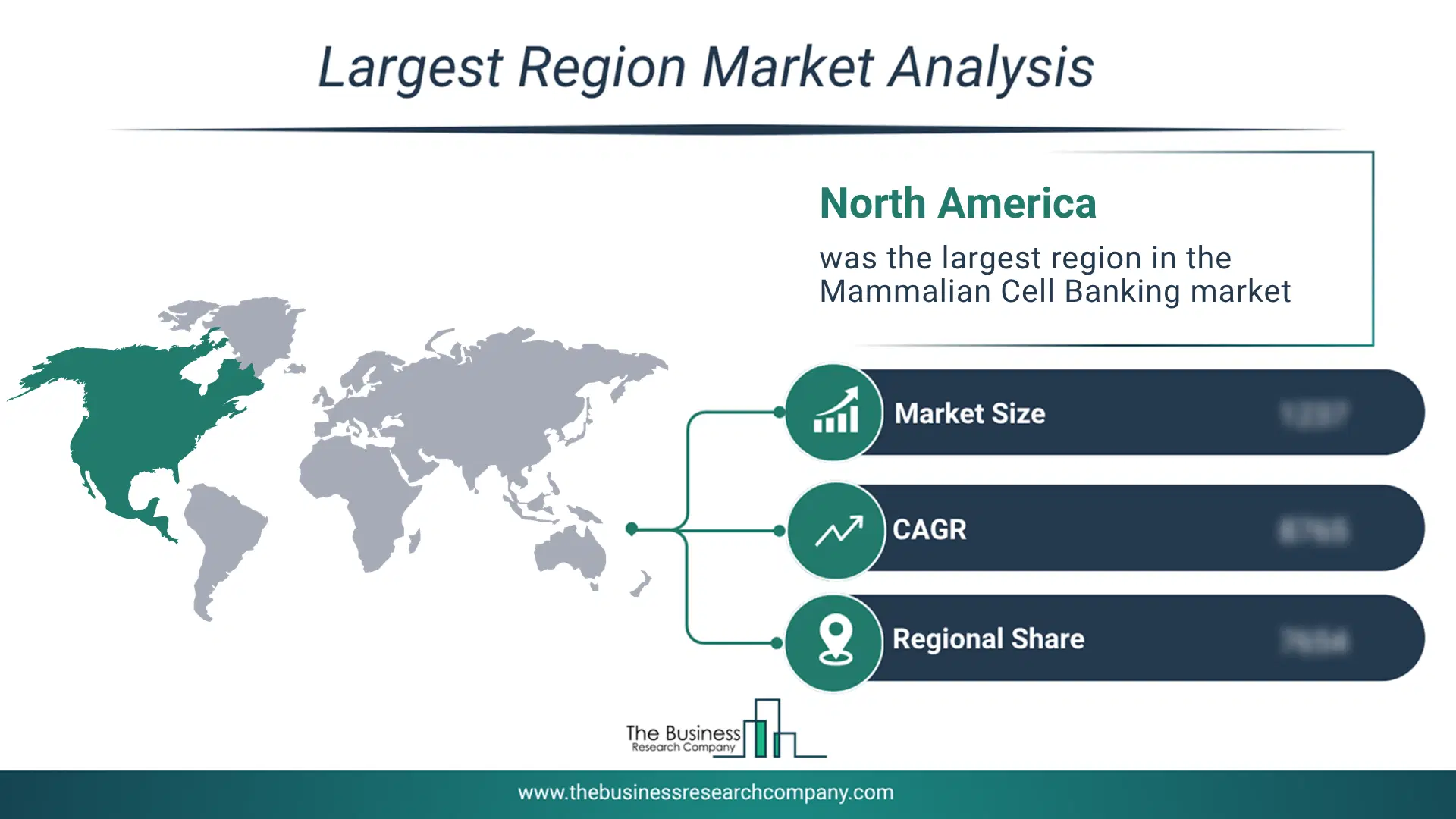
Regional Outlook
North America was the largest region in the mammalian cell banking market in 2025. The regions covered in this market report are Asia-Pacific, South East Asia, Western Europe, Eastern Europe, North America, South America, Middle East, Africa. The countries covered in this market report are Australia, Brazil, China, France, Germany, India, Indonesia, Japan, Taiwan, Russia, South Korea, UK, USA, Canada, Italy, SpainWhat Defines the Mammalian Cell Banking Market?
The mammalian cell banking market consists of sales of cryopreservation media, cell culture reagents, storage vials, cryogenic storage equipment, and quality control kits. Values in this market are ‘factory gate’ values, that is, the value of goods sold by the manufacturers or creators of the goods, whether to other entities (including downstream manufacturers, wholesalers, distributors, and retailers) or directly to end customers. The value of goods in this market includes related services sold by the creators of the goods.How is Market Value Defined and Measured?
The market value is defined as the revenues that enterprises gain from the sale of goods and/or services within the specified market and geography through sales, grants, or donations in terms of the currency (in USD unless otherwise specified). The revenues for a specified geography are consumption values that are revenues generated by organizations in the specified geography within the market, irrespective of where they are produced. It does not include revenues from resales along the supply chain, either further along the supply chain or as part of other products.
This chart presents market attractiveness based on a quantitative evaluation of growth, competition, strategic alignment, and risk, offering a clear view of opportunity areas for decision-making. This chart is for illustrative purposes; the full report contains the complete analysis.

This chart highlights the Total Addressable Market (TAM) by estimating the maximum revenue opportunity using an assumption-driven approach, supporting strategic planning and opportunity sizing across markets. The chart is illustrative; the full report provides a more comprehensive analysis.
What Key Data and Analysis Are Included in the Mammalian Cell Banking Market Report 2026?
The mammalian cell banking market research report is one of a series of new reports from The Business Research Company that provides market statistics, including industry global market size, regional shares, competitors with the market share, detailed market segments, market trends and opportunities, and any further data you may need to thrive in the mammalian cell banking industry. The market research report delivers a complete perspective of everything you need, with an in-depth analysis of the current and future state of the industry.Mammalian Cell Banking Market Report Forecast Analysis
| Report Attribute | Details |
|---|---|
| Market Size Value In 2026 | $3.5 billion |
| Revenue Forecast In 2030 | $5.31 billion |
| Growth Rate | CAGR of 11% from 2026 to 2030 |
| Base Year For Estimation | 2025 |
| Actual Estimates/Historical Data | 2020-2025 |
| Forecast Period | 2026 - 2030 |
| Market Representation | Revenue in USD Billion and CAGR from 2026 to 2030 |
| Segments Covered | Product Type, Cell Type, Storage Type, Application, End User |
| Regional Scope | Asia-Pacific, Western Europe, Eastern Europe, North America, South America, Middle East, Africa |
| Country Scope | The countries covered in the report are Australia, Brazil, China, France, Germany, India, Indonesia, Japan, Taiwan, Russia, South Korea, UK, USA, Canada, Italy, Spain. |
| Key Companies Profiled | Merck KGaA, Thermo Fisher Scientific Inc., Lonza Group AG, Eurofins Scientific SE, Charles River Laboratories International Inc., Catalent Inc., Sartorius Stedim Biotech S A, Samsung Biologics Co Ltd, CMIC Holdings Co Ltd, WuXi Biologics Inc., Evotec SE, AGC Biologics Inc., GenScript ProBio Co Ltd, Syngene International Limited, KBI Biopharma Inc., Rentschler Biopharma SE, Polpharma Biologics S A, Abzena plc, 53Biologics, Cellistic, GBI Biomanufacturing, ABL Inc, OmniaBio, uBriGene Biosciences |
| Customization Scope | Request for Customization |
| Pricing And Purchase Options | Explore Purchase Options |