
Cell Harvesting Market Report 2026
Global Outlook – By Type (Manual Cell Harvesters, Automated Cell Harvesters), By Distribution Channel (Retail, Direct Tenders), By End-Users (Biotechnology And Biopharmaceutical Companies, Research Institute, Other End-Users) - Market Size, Trends, Strategies, and Forecast to 2030
Cell Harvesting Market Overview
• Cell Harvesting market size has reached to $11.51 billion in 2025 • Expected to grow to $16.22 billion in 2030 at a compound annual growth rate (CAGR) of 7% • Growth Driver: Cell Harvesting Market Surge Fueled By Escalating Cancer Prevalence • Market Trend: Innovative Sustainable Solutions In Cell Harvesting Market • North America was the largest region in 2025.What Is Covered Under Cell Harvesting Market?
Cell harvesting is an essential unit operation that involves removing cells, cell fragments, and other soluble and insoluble impurities that are hazardous to subsequent chromatographic separation processes. It is an essential step in linking upstream monoclonal antibody synthesis to downstream purification. The main types of cell harvesting are manual cell harvesters and automated cell harvesters. Manual cell harvesters refer to medical device that is used to collect cells from a cell culture medium without utilizing any instrument and picking the cells manually. These are used by various end-users such as biotechnology and biopharmaceutical companies, research institutes and others, and are distributed through various distribution channels such as retail and direct tenders.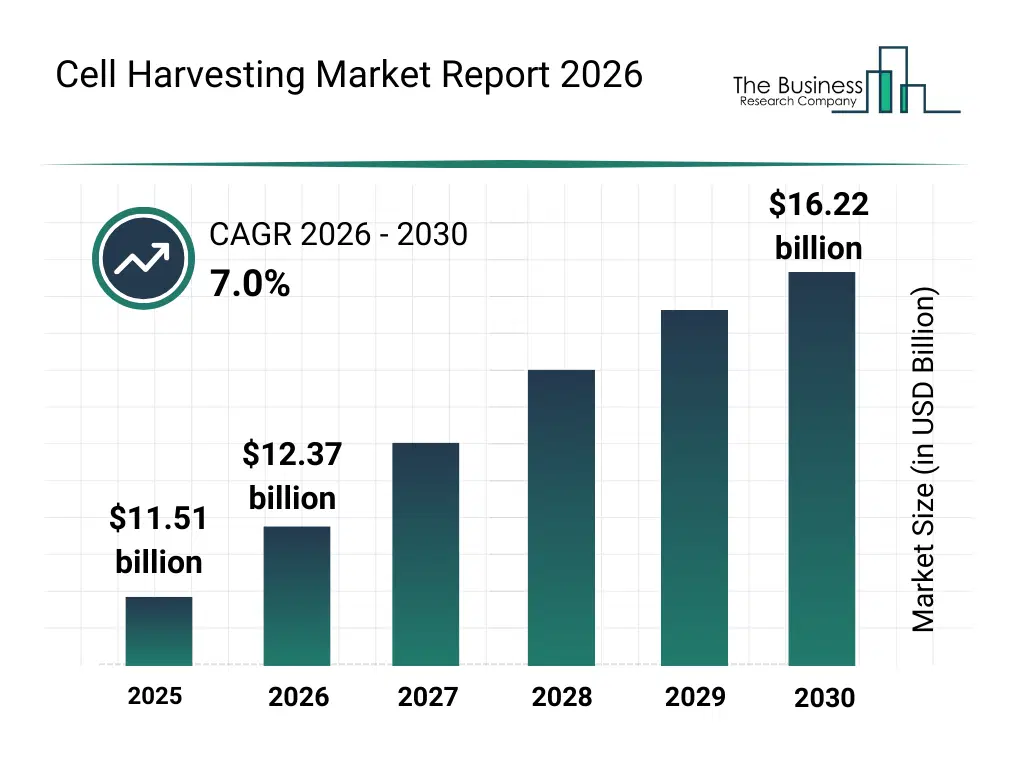
What Is The Cell Harvesting Market Size and Share 2026?
The cell harvesting market size has grown strongly in recent years. It will grow from $11.51 billion in 2025 to $12.37 billion in 2026 at a compound annual growth rate (CAGR) of 7.4%. The growth in the historic period can be attributed to increasing monoclonal antibody production, expansion of biopharmaceutical manufacturing capacity, rising adoption of cell-based therapeutics, increased focus on downstream process efficiency, growing use of centrifugation-based harvesting.What Is The Cell Harvesting Market Growth Forecast?
The cell harvesting market size is expected to see strong growth in the next few years. It will grow to $16.22 billion in 2030 at a compound annual growth rate (CAGR) of 7.0%. The growth in the forecast period can be attributed to increasing investments in biologics manufacturing, rising demand for scalable cell processing solutions, growing adoption of continuous bioprocessing, increasing use of single-use technologies, expansion of advanced cell therapy pipelines. Major trends in the forecast period include increasing adoption of automated cell harvesting systems, rising demand for high-throughput cell processing, growing use of closed-system harvesting solutions, expansion of microfluidic harvesting technologies, enhanced focus on process consistency and yield optimization.
Global Cell Harvesting Market Segmentation
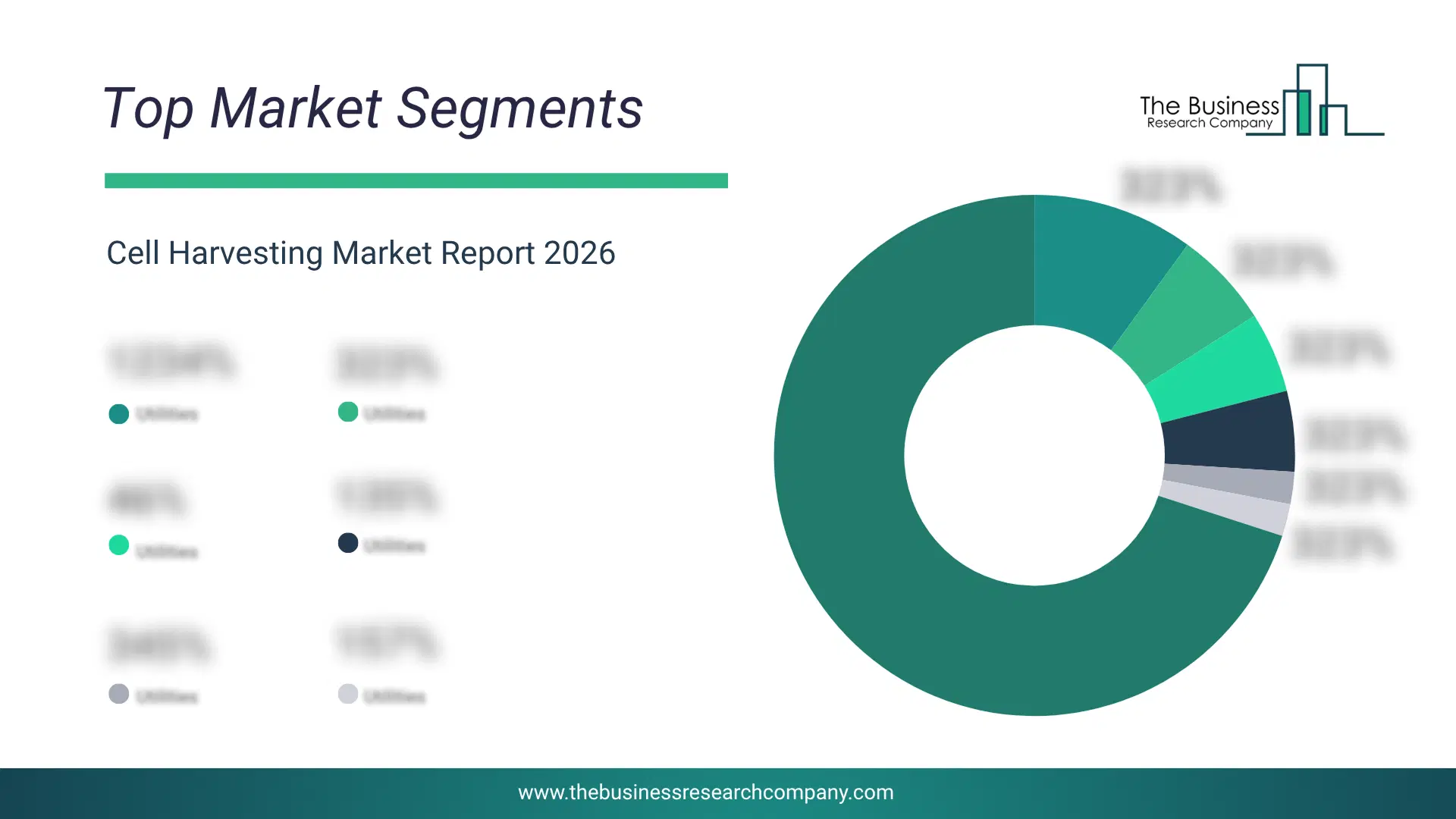
1) By Type: Manual Cell Harvesters, Automated Cell Harvesters 2) By Distribution Channel: Retail, Direct Tenders 3) By End-Users: Biotechnology And Biopharmaceutical Companies, Research Institute, Other End-Users Subsegments: 1) By Manual Cell Harvesters: Syringe-Based Harvesters, Centrifuge-Based Harvesters, Filtration Devices 2) By Automated Cell Harvesters: Robotic Cell Harvesting Systems, Automated Centrifuges, Microfluidic Harvesting DevicesWhat Is The Driver Of The Cell Harvesting Market?
The rising prevalence of cancer is expected to propel the growth of the cell harvesting market going forward. Cancer is a group of diseases characterized by the uncontrolled and abnormal growth of cells, often forming a mass or lump called a tumor. The increasing occurrence of cancer drives demand for cell harvesting, playing a pivotal role in research initiatives, diagnostic applications, therapeutic development, and advancing the overall understanding of cancer biology, thereby propelling the growth of the cell harvesting market as a crucial component in diverse aspects of cancer-related research and medical interventions. For instance, in July 2024, according to the Australian Institute of Health and Welfare, an Australia-based government agency, in 2023, an estimated 165,000 Australians were newly diagnosed with cancer, which equates to over 450 cases each day, and males represented about 55% of these diagnoses. Therefore, the rising prevalence of cancer is driving the growth of the cell harvesting industry.Key Players In The Global Cell Harvesting Market
Major companies operating in the cell harvesting market are Sartorius AG, Danaher Corporation, Merck & Co. Inc., Pall Corporation, Thermo Fisher Scientific Inc., GE Healthcare, Esco Lifesciences Group, CESCO Bioengineering Co. Ltd., Alfa Laval Corporate AB, GEA Group Aktiengesellschaft, SPX Flow Inc., Parker Hannifin Corporation, PBS Biotech Inc., Lonza Group AG, Becton Dickinson and Company, Bio‑Rad Laboratories Inc., STEMCELL Technologies Inc., Corning Incorporated, Nikon Corporation (Healthcare Business Unit), PromoCell GmbH, Flottweg SE, Repligen Corporation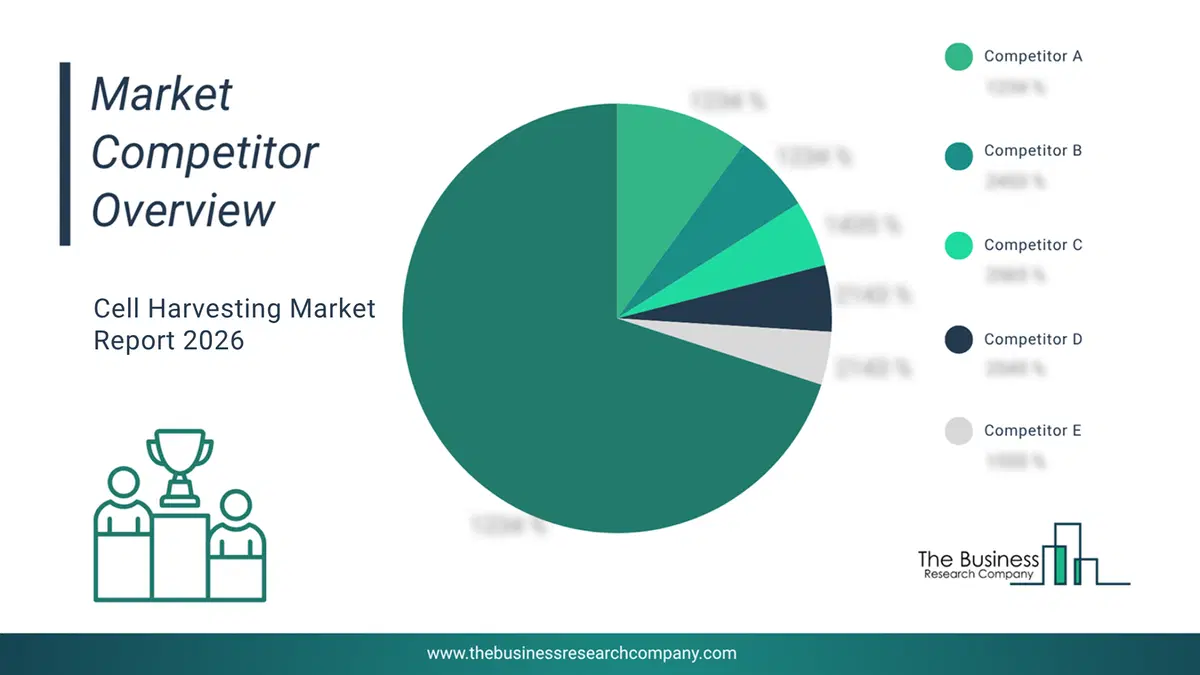
This chart is for illustrative purposes; the full report includes a detailed competitor analysis and comprehensive overview of the top 10 companies in the market.
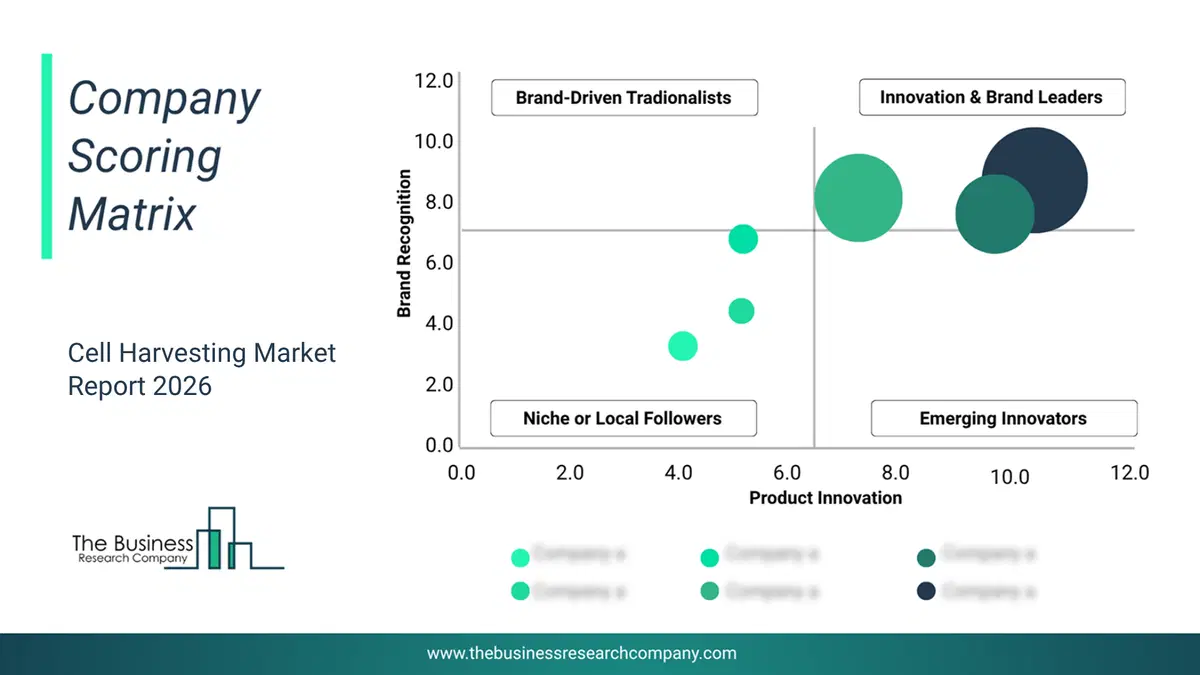
This chart maps companies by product innovation and brand strength, with bubble size indicating relative revenue, helping identify market leaders, challengers, and niche players. This is an illustrative chart; the full report provides a complete and accurate competitive analysis.
Global Cell Harvesting Market Trends and Insights
Major companies operating in the cell harvesting market are focusing on developing advanced automated platforms to enhance efficiency, throughput, and reproducibility in single-cell isolation and analysis. Automated cell processing systems integrate microfluidics, robotics, and imaging technologies to streamline workflows from cell sorting to recovery. For instance, in March 2025, Sphere Fluidics, a UK-based life sciences technology company, launched the Cyto-Mine Chroma platform and announced an Early Access Program. The platform enables high-throughput single-cell screening and harvesting with improved accuracy and speed, supporting research and biomanufacturing applications in drug discovery, cell line development, and precision medicine.What Are Latest Mergers And Acquisitions In The Cell Harvesting Market?
In January 2024, AstraZeneca plc, a UK-based pharmaceutical industry company, acquired Gracell Biotechnologies for $1.0 billion. With this acquisition, AstraZeneca aims to enhance its cell therapy portfolio and leverage innovative manufacturing processes to develop best-in-class treatments for hematologic malignancies and autoimmune diseases. Gracell Biotechnologies is a China-based biopharmaceutical company that develops cell therapies for cancer and autoimmune diseases.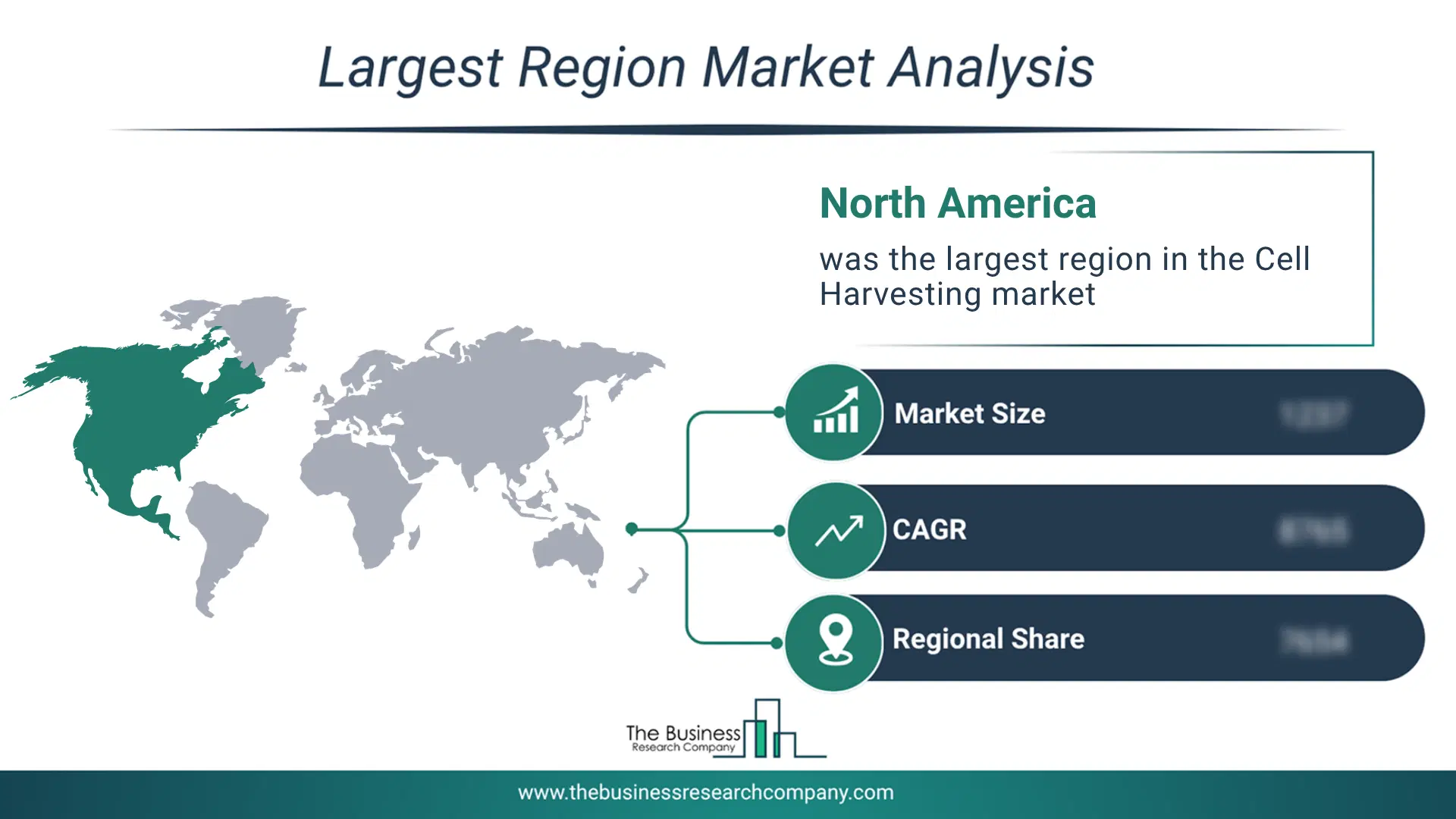
Regional Outlook
North America was the largest region in the cell harvesting market share in 2025. The regions covered in this market report are Asia-Pacific, South East Asia, Western Europe, Eastern Europe, North America, South America, Middle East, Africa. The countries covered in this market report are Australia, Brazil, China, France, Germany, India, Indonesia, Japan, Taiwan, Russia, South Korea, UK, USA, Canada, Italy, Spain.What Defines the Cell Harvesting Market?
The cell harvesting includes revenues earned by entities by centrifugation, filtration, and microfiltration. The market value includes the value of related goods sold by the service provider or included within the service offering. Only goods and services traded between entities or sold to end consumers are included.How is Market Value Defined and Measured?
The market value is defined as the revenues that enterprises gain from the sale of goods and/or services within the specified market and geography through sales, grants, or donations in terms of the currency (in USD unless otherwise specified). The revenues for a specified geography are consumption values that are revenues generated by organizations in the specified geography within the market, irrespective of where they are produced. It does not include revenues from resales along the supply chain, either further along the supply chain or as part of other products.
This chart presents market attractiveness based on a quantitative evaluation of growth, competition, strategic alignment, and risk, offering a clear view of opportunity areas for decision-making. This chart is for illustrative purposes; the full report contains the complete analysis.

This chart highlights the Total Addressable Market (TAM) by estimating the maximum revenue opportunity using an assumption-driven approach, supporting strategic planning and opportunity sizing across markets. The chart is illustrative; the full report provides a more comprehensive analysis.
What Key Data and Analysis Are Included in the Cell Harvesting Market Report 2026?
The cell harvesting market research report is one of a series of new reports from The Business Research Company that provides market statistics, including industry global market size, regional shares, competitors with the market share, detailed market segments, market trends and opportunities, and any further data you may need to thrive in the cell harvesting industry. The market research report delivers a complete perspective of everything you need, with an in-depth analysis of the current and future state of the industry.Cell Harvesting Market Report Forecast Analysis
| Report Attribute | Details |
|---|---|
| Market Size Value In 2026 | $12.37 billion |
| Revenue Forecast In 2030 | $16.22 billion |
| Growth Rate | CAGR of 7% from 2026 to 2030 |
| Base Year For Estimation | 2025 |
| Actual Estimates/Historical Data | 2020-2025 |
| Forecast Period | 2026 - 2030 |
| Market Representation | Revenue in USD Billion and CAGR from 2026 to 2030 |
| Segments Covered | Type, Distribution Channel, End-Users |
| Regional Scope | Asia-Pacific, Western Europe, Eastern Europe, North America, South America, Middle East, Africa |
| Country Scope | The countries covered in the report are Australia, Brazil, China, France, Germany, India, Indonesia, Japan, Taiwan, Russia, South Korea, UK, USA, Canada, Italy, Spain |
| Key Companies Profiled | Sartorius AG, Danaher Corporation, Merck & Co. Inc., Pall Corporation, Thermo Fisher Scientific Inc., GE Healthcare, Esco Lifesciences Group, CESCO Bioengineering Co. Ltd., Alfa Laval Corporate AB, GEA Group Aktiengesellschaft, SPX Flow Inc., Parker Hannifin Corporation, PBS Biotech Inc., Lonza Group AG, Becton Dickinson and Company, Bio‑Rad Laboratories Inc., STEMCELL Technologies Inc., Corning Incorporated, Nikon Corporation (Healthcare Business Unit), PromoCell GmbH, Flottweg SE, Repligen Corporation |
| Customization Scope | Request for Customization |
| Pricing And Purchase Options | Explore Purchase Options |