

Micro-Perforated Films Market Report 2026
Global Outlook – By Material (Polypropylene (PP), Polyethylene (PE), Polyvinyl Chloride (PVC), Polyethylene Terephthalate (PET)), By Hole Size (Less Than 0.1 mm, 0.1-0.5 mm, 0.5-1.0 mm, More Than 1.0 mm), By Application (Packaging, Agriculture, Automotive, Electronics, Construction) – Market Size, Trends, Strategies, and Forecast to 2030
Micro-Perforated Films Market Overview
• Micro-Perforated Films market size has reached to $1.78 billion in 2025 • Expected to grow to $2.65 billion in 2030 at a compound annual growth rate (CAGR) of 8.3% • Growth Driver: Rising Demand For Sustainable Packaging Fuels Market Growth • Market Trend: Innovative Linerless Label Technology Transforming The Market • Asia-Pacific was the largest region in 2025 and North America is the fastest growing region.What Is Covered Under Micro-Perforated Films Market?
Micro-perforated films are thin, flexible materials embedded with small, evenly spaced holes designed to regulate gas exchange and moisture levels, enabling controlled atmospheres that enhance the shelf life and quality of packaged goods in industries such as food, pharmaceuticals, and agriculture. These films are widely utilized to preserve the freshness of perishable goods, such as fruits, vegetables, bakery products, and flowers, by preventing condensation, maintaining optimal respiration and humidity conditions, and reducing spoilage during storage and transportation. The main materials of micro-perforated film are polypropylene (PP), polyethylene (PE), polyvinyl chloride (PVC), and polyethylene terephthalate (PET). Polypropylene (PP) is a lightweight, durable, and versatile thermoplastic material widely used in micro-perforated films for its excellent moisture resistance and mechanical strength. They have various hole sizes, such as less than 0.1 mm, 0.1-0.5 mm, 0.5-1.0 mm, and more than 1.0 mm, and are used in packaging, agriculture, automotive, electronics, and construction.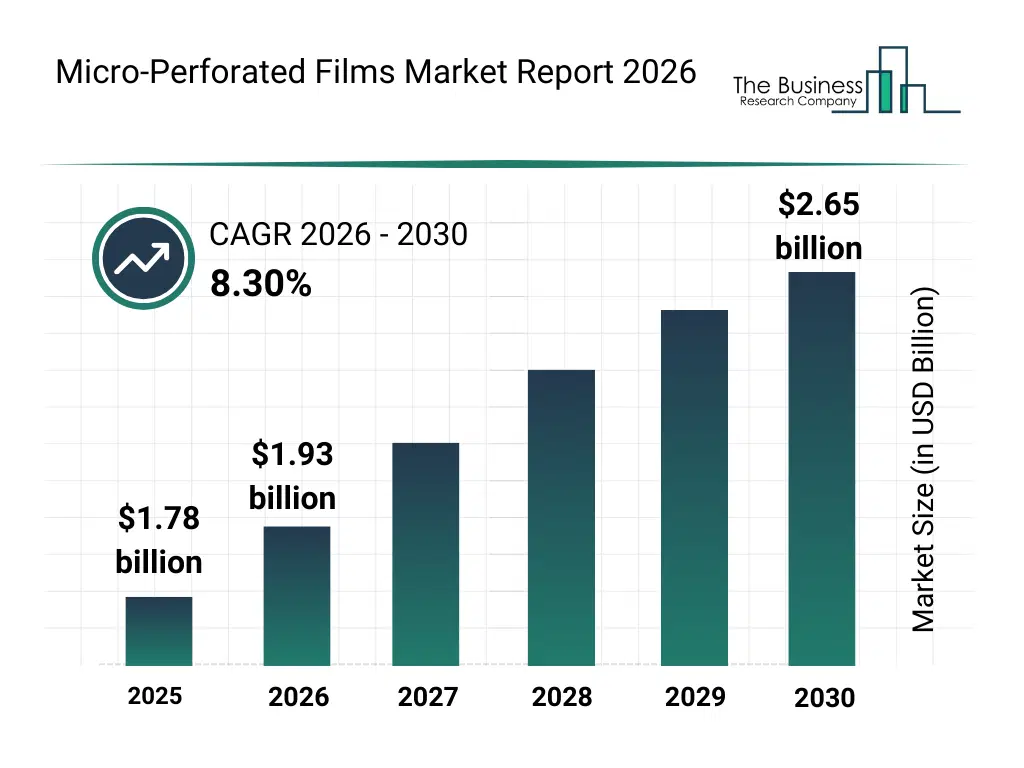
What Is The Micro-Perforated Films Market Size and Share 2026?
The micro-perforated films market size has grown strongly in recent years. It will grow from $1.78 billion in 2025 to $1.93 billion in 2026 at a compound annual growth rate (CAGR) of 8.5%. The growth in the historic period can be attributed to growth of packaged food consumption, demand for fresh produce packaging, expansion of cold chain logistics, agricultural export growth, cost-effective plastic films.What Is The Micro-Perforated Films Market Growth Forecast?
The micro-perforated films market size is expected to see strong growth in the next few years. It will grow to $2.65 billion in 2030 at a compound annual growth rate (CAGR) of 8.3%. The growth in the forecast period can be attributed to shift toward sustainable packaging, demand for recyclable films, precision perforation technology adoption, food waste reduction initiatives, growth in pharmaceutical packaging. Major trends in the forecast period include controlled atmosphere packaging, shelf-life extension solutions, moisture regulation films, customized hole size engineering, lightweight flexible packaging.
Global Micro-Perforated Films Market Segmentation
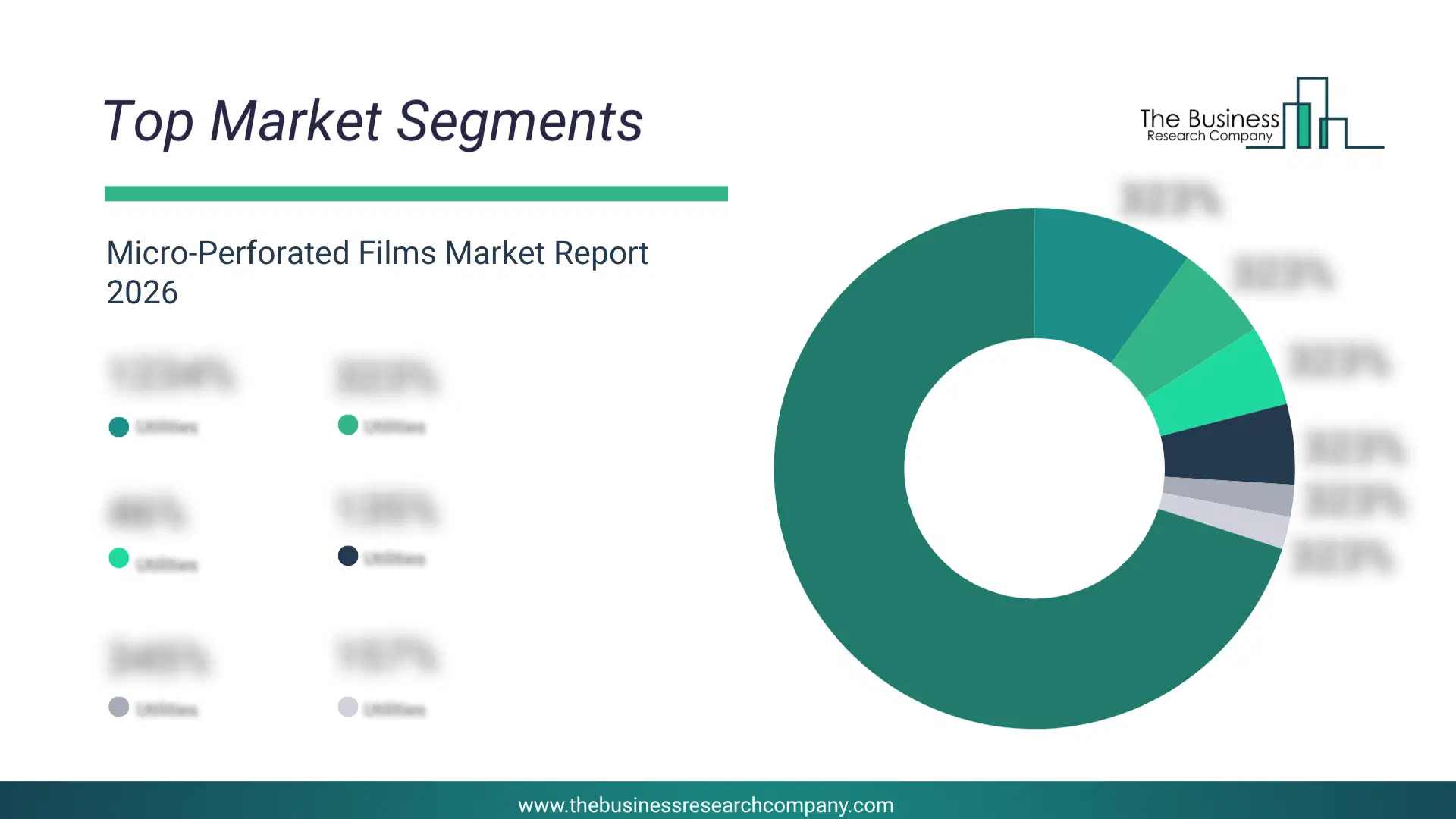
1) By Material: Polypropylene (PP), Polyethylene (PE), Polyvinyl Chloride (PVC), Polyethylene Terephthalate (PET) 2) By Hole Size: Less Than 0.1 mm, 0.1-0.5 mm, 0.5-1.0 mm, More Than 1.0 mm 3) By Application: Packaging, Agriculture, Automotive, Electronics, Construction Subsegments: 1) By Polypropylene (PP): BOPP (Biaxially Oriented Polypropylene), CPP (Cast Polypropylene) 2) By Polyethylene (PE): LDPE (Low-Density Polyethylene), HDPE (High-Density Polyethylene), LLDPE (Linear Low-Density Polyethylene) 3) By Polyvinyl Chloride (PVC): Rigid PVC, Flexible PVC 4) By Polyethylene Terephthalate (PET): APET (Amorphous PET), RPET (Recycled PET), PETG (Glycol-Modified PET)What Is The Driver Of The Micro-Perforated Films Market?
The rising demand for sustainable packaging solutions is expected to propel the growth of the micro-perforated films market going forward. Sustainable packaging solutions focus on using eco-friendly materials and methods that minimize environmental impact across their entire lifecycle, emphasizing recyclability, biodegradability, and resource conservation. The growing demand for these solutions is fueled by heightened consumer awareness of environmental issues, stricter regulations, corporate responsibility, and the desire to reduce plastic waste and carbon emissions. Micro-perforated films in sustainable packaging enhance breathability and shelf life while reducing waste and supporting eco-friendly material use. For instance, in April 2023, according to the 2023 Buying Green Report published by Trivium Packaging, a Netherlands-based packaging company, a total of 82% of respondents are willing to pay a premium for sustainable packaging, showing a 4-point increase from 2022, with younger consumers (18-24 years old) leading at 90%, highlighting the continued importance of environmental concerns despite economic challenges. Therefore, the rising demand for sustainable packaging solutions is driving the growth of the micro-perforated films industry.Key Players In The Global Micro-Perforated Films Market
Major companies operating in the micro-perforated films market are The 3M Company, Mitsubishi Chemical Corporation, Bolloré SE, Amcor Plc, Avery Dennison Corporation, ProAmpac, Coveris, Jindal Films, RKW Group, Printpack, TCL Packaging, Hexis graphics, Amerplast, Speciality polyfilms, Now Plastics Inc., FlexPak Services, Jiangyin Bairuijia Plastics Science & Technology Co. Ltd., Penguin Plastics, Folene Packaging, A-Roo Company, Golden Eagle Extrusions Inc., Aristo Flexi Pack, Aera Sa, Hipex Group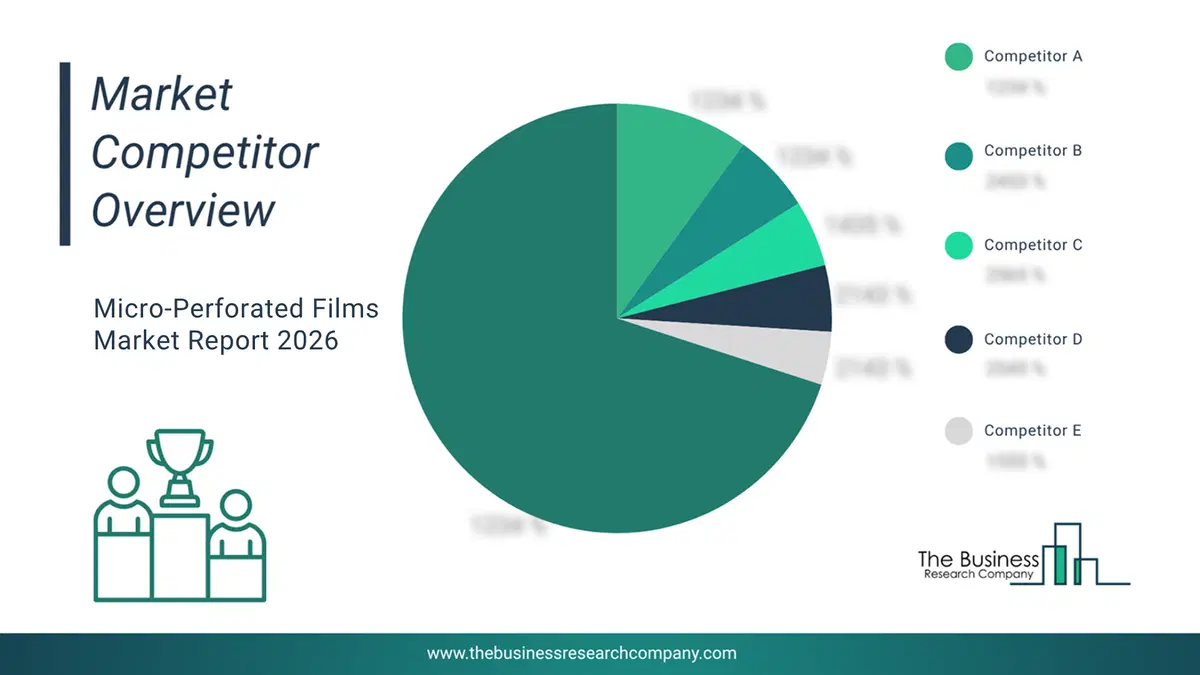
This chart is for illustrative purposes; the full report includes a detailed competitor analysis and comprehensive overview of the top 10 companies in the market.
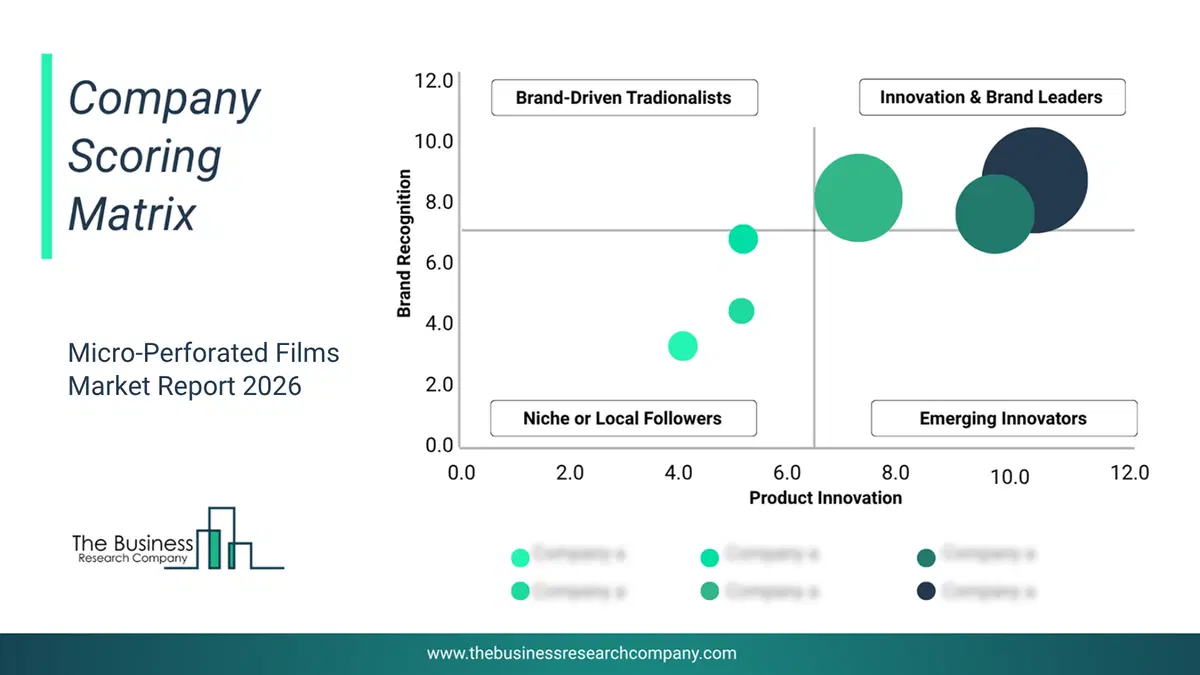
This chart maps companies by product innovation and brand strength, with bubble size indicating relative revenue, helping identify market leaders, challengers, and niche players. This is an illustrative chart; the full report provides a complete and accurate competitive analysis.
Global Micro-Perforated Films Market Trends and Insights
Major companies operating in the micro-perforated films market are focusing on innovative technologies, such as linerless label technology, to transform the pressure-sensitive label sector. Linerless label technology eliminates the backing paper typically used in traditional labels, allowing labels to be printed and applied directly without a liner. This practice reduces waste and improves efficiency. For instance, in September 2023, Avery Dennison, a US-based labeling and packaging materials and solutions company, launched its AD LinrSave technology. This new decorative linerless labeling system aims to revolutionize the pressure-sensitive prime label market. Key features of this innovation include micro-perforations that facilitate efficient label application without producing liner waste, along with a versatile adhesive and release system compatible with existing converting equipment. This development is crucial for the packaging industry as it supports sustainability efforts by eliminating liner waste and reducing carbon footprints. Additionally, it provides brands with an innovative solution to enhance operational efficiency and decrease costs in their labeling processes.What Are Latest Mergers And Acquisitions In The Micro-Perforated Films Market?
In November 2024, Amcor Plc, an Australia-based packaging company, announced a merger with Berry Global Group Inc. to create a global leader in consumer packaging solutions by combining complementary businesses to expand product offerings and innovation capabilities. This merger will enhance sustainability efforts, accelerate growth, and deliver greater value through a more complete and scalable portfolio for customers and consumers. Berry Global Group, Inc. is a US-based manufacturer of plastic consumer packaging, nonwoven specialty materials, and engineered materials.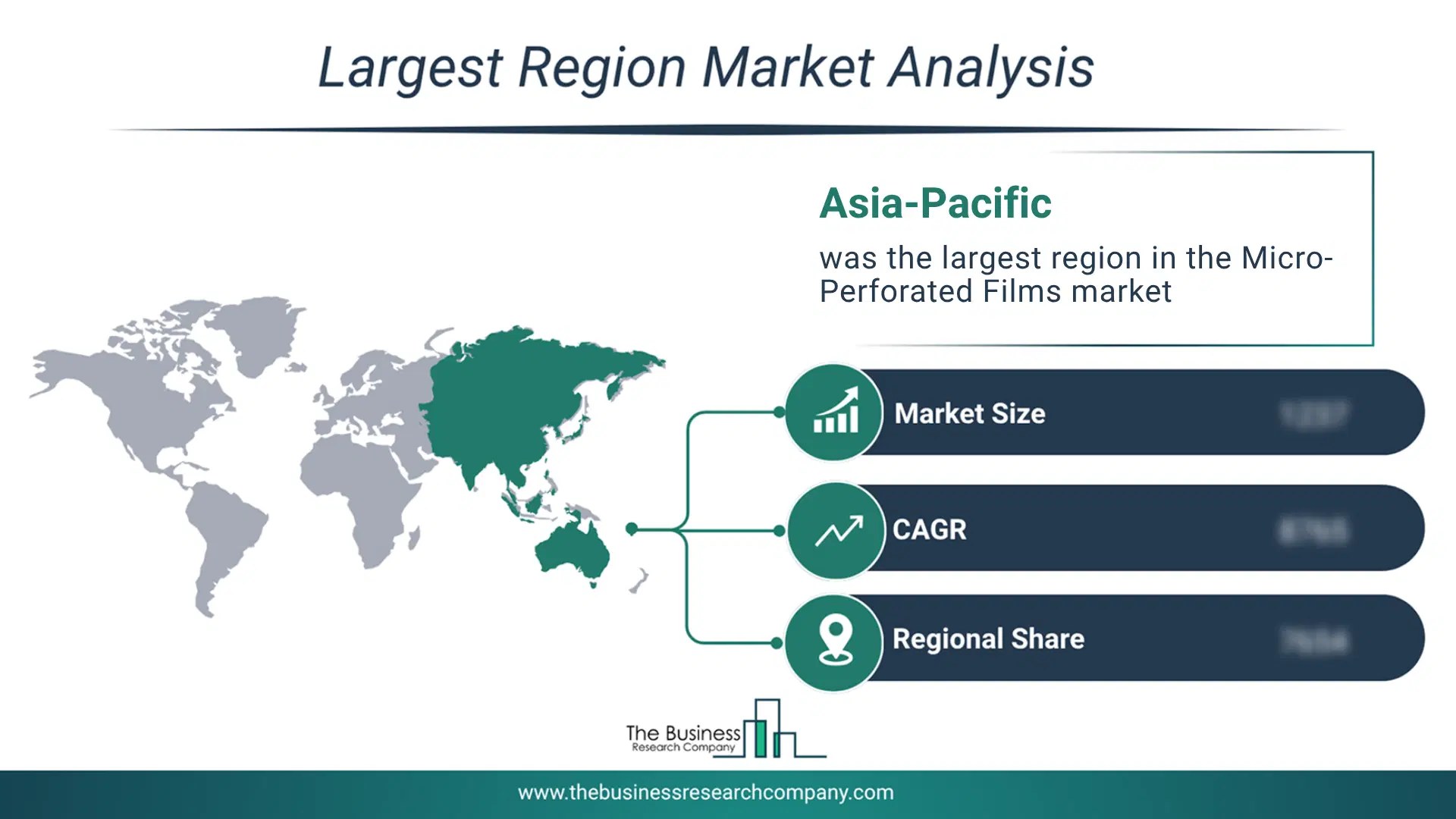
Regional Outlook
Asia-Pacific was the largest region in the micro-perforated films market in 2025. North America is expected to be the fastest-growing region in the forecast period. The regions covered in this market report are Asia-Pacific, South East Asia, Western Europe, Eastern Europe, North America, South America, Middle East, Africa. The countries covered in this market report are Australia, Brazil, China, France, Germany, India, Indonesia, Japan, Taiwan, Russia, South Korea, UK, USA, Canada, Italy, SpainWhat Defines the Micro-Perforated Films Market?
The micro-perforated films market consists of sales of polyvinyl films, cling films and specialty films. Values in this market are ‘factory gate’ values, that is, the value of goods sold by the manufacturers or creators of the goods, whether to other entities (including downstream manufacturers, wholesalers, distributors, and retailers) or directly to end customers. The value of goods in this market includes related services sold by the creators of the goods.How is Market Value Defined and Measured?
The market value is defined as the revenues that enterprises gain from the sale of goods and/or services within the specified market and geography through sales, grants, or donations in terms of the currency (in USD unless otherwise specified). The revenues for a specified geography are consumption values that are revenues generated by organizations in the specified geography within the market, irrespective of where they are produced. It does not include revenues from resales along the supply chain, either further along the supply chain or as part of other products.
This chart presents market attractiveness based on a quantitative evaluation of growth, competition, strategic alignment, and risk, offering a clear view of opportunity areas for decision-making. This chart is for illustrative purposes; the full report contains the complete analysis.

This chart highlights the Total Addressable Market (TAM) by estimating the maximum revenue opportunity using an assumption-driven approach, supporting strategic planning and opportunity sizing across markets. The chart is illustrative; the full report provides a more comprehensive analysis.
What Key Data and Analysis Are Included in the Micro-Perforated Films Market Report 2026?
The micro-perforated films market research report is one of a series of new reports from The Business Research Company that provides market statistics, including industry global market size, regional shares, competitors with the market share, detailed market segments, market trends and opportunities, and any further data you may need to thrive in the micro-perforated films industry. The market research report delivers a complete perspective of everything you need, with an in-depth analysis of the current and future state of the industry.Micro-Perforated Films Market Report Forecast Analysis
| Report Attribute | Details |
|---|---|
| Market Size Value In 2026 | $1.93 billion |
| Revenue Forecast In 2030 | $2.65 billion |
| Growth Rate | CAGR of 8.3% from 2026 to 2030 |
| Base Year For Estimation | 2025 |
| Actual Estimates/Historical Data | 2020-2025 |
| Forecast Period | 2026 - 2030 |
| Market Representation | Revenue in USD Billion and CAGR from 2026 to 2030 |
| Segments Covered | Material, Hole Size, Application |
| Regional Scope | Asia-Pacific, Western Europe, Eastern Europe, North America, South America, Middle East, Africa |
| Country Scope | The countries covered in the report are Australia, Brazil, China, France, Germany, India, Indonesia, Japan, Taiwan, Russia, South Korea, UK, USA, Canada, Italy, Spain. |
| Key Companies Profiled | The 3M Company, Mitsubishi Chemical Corporation, Bolloré SE, Amcor Plc, Avery Dennison Corporation, ProAmpac, Coveris, Jindal Films, RKW Group, Printpack, TCL Packaging, Hexis graphics, Amerplast, Speciality polyfilms, Now Plastics Inc., FlexPak Services, Jiangyin Bairuijia Plastics Science & Technology Co. Ltd., Penguin Plastics, Folene Packaging, A-Roo Company, Golden Eagle Extrusions Inc., Aristo Flexi Pack, Aera Sa, Hipex Group |
| Customization Scope | Request for Customization |
| Pricing And Purchase Options | Explore Purchase Options |