
Natural Food Colors And Flavors Market Report 2026
Global Outlook – By Color Type (Caramel, Carotenoids, Anthocyanins, Curcumin, Annatto, Copper Chlorophyllin, Capsanthin, Other Color Types), By Flavor Type (Natural Extracts, Aroma Chemicals, Essential Oils, Other Flavor Types), By Form (Liquid And Gel, Dry), By Application (Beverages, Bakery, Confectionery, Dairy And Frozen, Meat Products, Other Applications) – Market Size, Trends, Strategies, and Forecast to 2030
Natural Food Colors And Flavors Market Overview
• Natural Food Colors And Flavors market size has reached to $6.9 billion in 2025 • Expected to grow to $10.75 billion in 2030 at a compound annual growth rate (CAGR) of 9.2% • Growth Driver: Growing Health Concerns Propel Surge In Natural Food Colors And Flavors Market • Market Trend: Sensient Advances Natural Flavor Innovation Through Biotransformation • Europe was the largest region in 2025 and Asia-Pacific is the fastest growing region.Market Gains By 2030 – Top Opportunities By Segment
Market Gain identifies the most promising market opportunities by highlighting the segments or products expected to generate the highest incremental revenue growth over the next five years.
What Is Covered Under Natural Food Colors And Flavors Market?
Natural food colors and flavors are extracted from plants, animals, and other organic materials by using physical or chemical methods. Natural food colors and flavors come in many forms like liquids, powders, gels, and pastes and these are used in commercial food production as well as domestic cooking. The main types of natural food colors are caramel, carotenoids, anthocyanins, curcumin, annatto, copper chlorophyllin, capsanthin, and others. The main types of flavors are natural extracts, aroma chemicals, essential oils, and others. Caramel color is one of the oldest and most used food colors in food and beverages. Carotenoids are plant pigments that produce bright yellow, red, and orange colors and these colors are used as natural coloring agents in foods and beverages. Annatto is an orange-red food color or condiment made from the seeds of the achiote tree that grows in tropical regions in South and Central America. The natural food colors and flavors are available in liquid and dry form and used in various applications such as beverages, bakery, confectionery, dairy and frozen products, meat products, and others.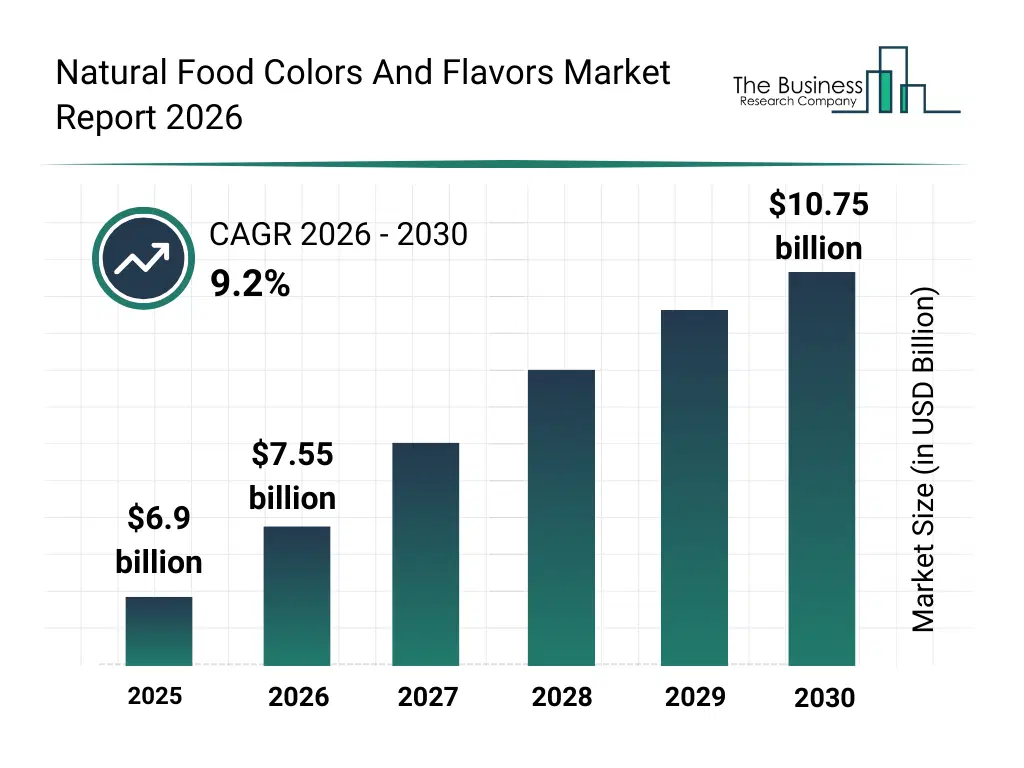
What Is The Natural Food Colors And Flavors Market Size and Share 2026?
The natural food colors and flavors market size has grown strongly in recent years. It will grow from $6.9 billion in 2025 to $7.55 billion in 2026 at a compound annual growth rate (CAGR) of 9.4%. The growth in the historic period can be attributed to growth of processed food consumption, rising consumer preference for natural ingredients, expansion of beverage manufacturing, availability of agricultural raw materials, increasing regulatory scrutiny on synthetic additives.What Is The Natural Food Colors And Flavors Market Growth Forecast?
The natural food colors and flavors market size is expected to see strong growth in the next few years. It will grow to $10.75 billion in 2030 at a compound annual growth rate (CAGR) of 9.2%. The growth in the forecast period can be attributed to increasing demand for organic food products, rising adoption of natural ingredients in emerging markets, expansion of functional beverage segments, growing investments in extraction technologies, increasing focus on sustainable sourcing. Major trends in the forecast period include increasing shift toward clean-label ingredients, rising demand for plant-based colorants, growing use of natural flavors in beverages, expansion of organic and functional food products, enhanced focus on ingredient traceability.
Global Natural Food Colors And Flavors Market Segmentation
1) By Color Type: Caramel, Carotenoids, Anthocyanins, Curcumin, Annatto, Copper Chlorophyllin, Capsanthin, Other Color Types 2) By Flavor Type: Natural Extracts, Aroma Chemicals, Essential Oils, Other Flavor Types 3) By Form: Liquid And Gel, Dry 4) By Application: Beverages, Bakery, Confectionery, Dairy And Frozen, Meat Products, Other Applications Subsegments: 1) By Caramel: Caramel Color Type I (Plain Caramel), Caramel Color Type II (Caustic Sulfite Caramel), Caramel Color Type III (Ammonia Caramel), Caramel Color Type IV (Sulfite Caramel) 2) By Carotenoids: Beta-Carotene, Lutein, Zeaxanthin, Astaxanthin 3) By Anthocyanins: Red Cabbage Extract, Black Carrot Extract, Elderberry Extract, Berry Extracts 4) By Curcumin: Turmeric Extract, Curcumin Powder, Curcumin Micelles 5) By Annatto: Annatto Seed Extract, Bixin, Norbixin 6) By Copper Chlorophyllin: Liquid Chlorophyllin, Powdered Chlorophyllin 7) By Capsanthin: Red Pepper Extract, Paprika Extract 8) By Other Color Types: Spirulina Extract, Beetroot Powder, Hibiscus Extract, Moringa Powder The top segments in the natural food colors and flavors market will be: • Carotenoids will reach $3.31 Billion by 2030. • Anthocyanins will reach $1.98 Billion by 2030. • Caramel will reach $1.91 Billion by 2030. • Copper Chlorophyllin will reach $1.14 Billion by 2030. • Curcumin will reach $0.56 Billion by 2030.What Is The Driver Of The Natural Food Colors And Flavors Market?
Rising concerns regarding the health hazards posed by the consumption of synthetic colors drove the market for natural food colors and flavors. Synthetic food colors and flavors are chemicals that originate from coal tar derivatives, petroleum, or crude oil and cause health hazards such as high blood pressure, DNA mutation, obesity, infertility and others. For instance, Auramine is a food color known to retard growth and damages kidneys, liver. Lead chromate is yellow food color that can be dangerous to health causing anemia, abdominal pain, hypertension, neurological problem. For instance, in June 2025, according to The George Institute for Global Health, an Australia-based medical research institute, 19% of packaged foods and beverages contain synthetic dyes, with certain product categories reaching 28%, and items using these dyes averaging 141% more sugar than those without. Therefore, the rising health hazards from the consumption of synthetic colors have raised concerns in consumers and this, in turn, drove the market for natural food colors and flavors.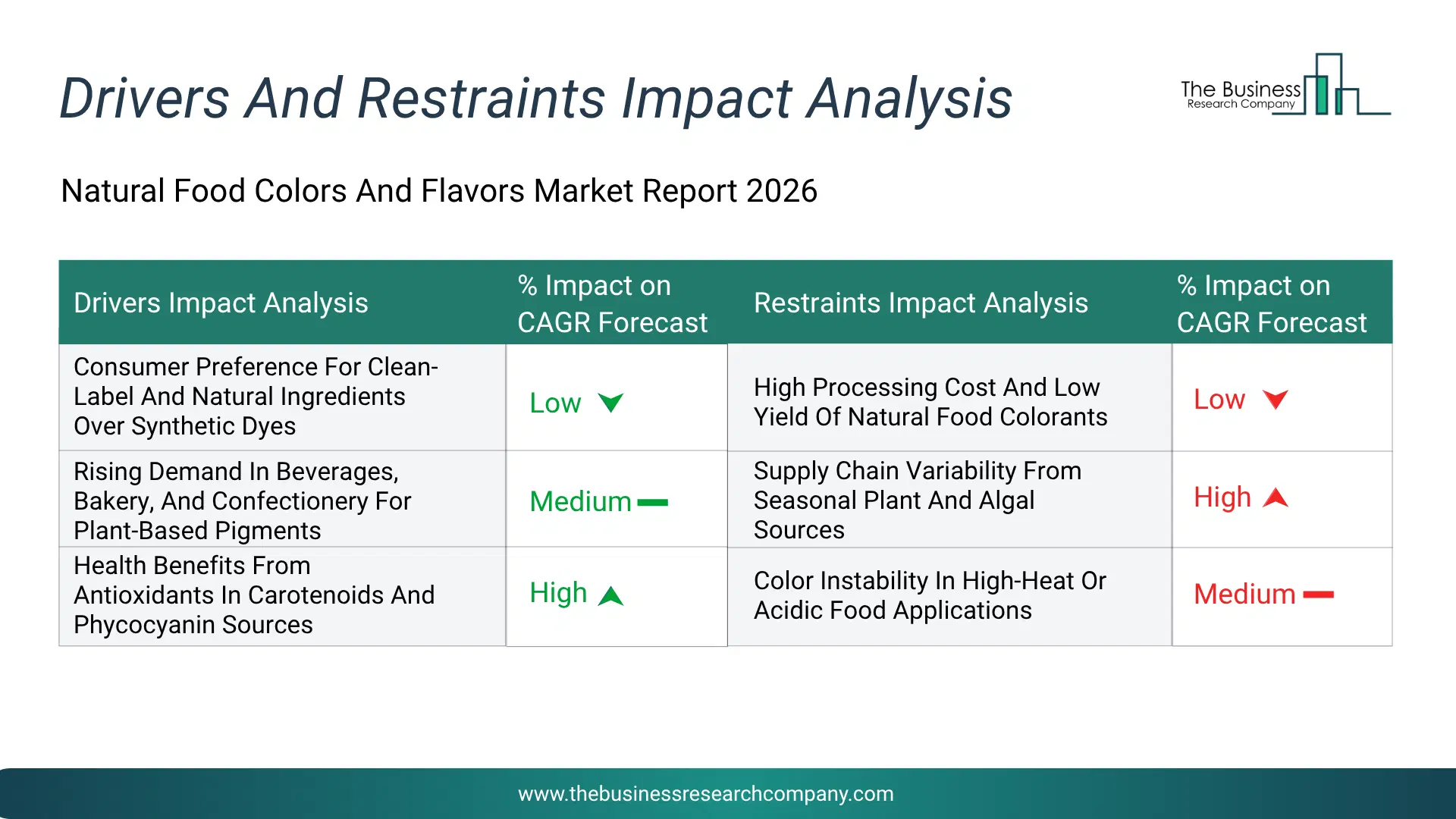
Infographic Chart Showing Key Market Drivers Analysis And Restraints For Natural Food Colors And Flavors Market
The chart presents an impact analysis of key drivers and restraints, quantifying their relative influence on the market's growth rate and helping assess the balance between growth enablers and limiting factors. This chart offers a high-level perspective; the full report contains more detailed insights.
How Will The Drivers Impact Growth In The Global Natural Food Colors And Flavors Market?
• Consumer Preference For Clean-Label And Natural Ingredients Over Synthetic Dyes (Low) – During the forecast period, the consumer preference for clean-label and natural ingredients over synthetic dyes is expected to become a key growth driver for the natural food colors and flavors market by 2030. Consumer preference for clean-label and natural ingredients over synthetic dyes is a major driver for the natural food colorants market as consumers are increasingly becoming health-conscious and aware of ingredient transparency. Clean-label products, which contain simple and recognizable ingredients, are gaining strong traction globally. Synthetic dyes are often associated with potential health risks, prompting consumers to shift toward safer and natural alternatives. This transition is encouraging manufacturers to reformulate products using plant-based and naturally derived colorants. Additionally, regulatory pressure and labeling requirements are further pushing brands toward natural ingredients. As a result, demand for natural food colorants is expanding across multiple food and beverage categories. • Rising Demand In Beverages, Bakery, And Confectionery For Plant-Based Pigments (Medium) – During the forecast period, the rising demand in beverages, bakery, and confectionery for plant-based pigments is expected to emerge as a major factor driving the expansion of the natural food colors and flavors market by 2030. Rising Demand in Beverages, Bakery, and Confectionery for Plant-Based Pigments acts as a key growth driver as these industries are among the largest users of food colorants. Consumers are increasingly attracted to visually appealing products made with natural ingredients, especially in premium and artisanal segments. Plant-based pigments such as those derived from fruits, vegetables, and algae are being widely adopted to replace artificial colors. Beverage manufacturers, in particular, are incorporating natural colorants to align with health-focused branding. Similarly, bakery and confectionery products are shifting toward natural alternatives to meet evolving consumer expectations. This widespread application is significantly boosting the market growth of natural food colorants. • Health Benefits From Antioxidants In Carotenoids And Phycocyanin Sources (High) – During the forecast period, the health benefits from antioxidants in carotenoids and phycocyanin sources is expected to act as a key growth catalyst for the natural food colors and flavors market by 2030. Consumer Preference for Clean-Label and Natural Ingredients Over Synthetic Dyes is a major driver for the natural food colorants market as consumers are increasingly becoming health-conscious and aware of ingredient transparency. Clean-label products, which contain simple and recognizable ingredients, are gaining strong traction globally. Synthetic dyes are often associated with potential health risks, prompting consumers to shift toward safer and natural alternatives. This transition is encouraging manufacturers to reformulate products using plant-based and naturally derived colorants. Additionally, regulatory pressure and labeling requirements are further pushing brands toward natural ingredients. As a result, demand for natural food colorants is expanding across multiple food and beverage categories.How Will The Restraints Impact Growth In The Global Natural Food Colors And Flavors Market?
• High Processing Cost And Low Yield Of Natural Food Colorants (Low) – During the forecast period, the high Processing Cost and Low Yield of Natural Food Colorants acts as a significant restraint in the market due to the complex extraction and purification processes involved. Natural colorants are derived from plant and algal sources, which require extensive processing to achieve the desired color intensity and stability. Compared to synthetic dyes, the production cost is substantially higher, making them less economical for mass production. Additionally, the yield from raw materials is often low, further increasing costs. These factors limit the affordability and scalability of natural food colorants, especially for small and medium manufacturers. As a result, price-sensitive markets may continue to rely on synthetic alternatives, restricting overall market growth. • Supply Chain Variability From Seasonal Plant And Algal Sources (Medium) – During the forecast period, the supply chain variability from seasonal plant and algal sources poses a major challenge as the availability of raw materials is highly dependent on climatic conditions and harvest cycles. Natural sources such as fruits, vegetables, and algae are subject to seasonal fluctuations, which can lead to inconsistent supply. This variability affects production planning and can result in price volatility in the market. Manufacturers may face difficulties in maintaining a steady supply of raw materials, leading to potential disruptions. Additionally, geographic dependency further complicates sourcing and logistics. These uncertainties hinder the stability and reliability of the natural food colorants market. • Color Instability In High-Heat Or Acidic Food Applications (High) – During the forecast period, the color instability in high-heat or acidic food applications is a critical restraint as natural colorants are often less stable than synthetic dyes under extreme processing conditions. Many natural pigments tend to degrade when exposed to high temperatures, light, or varying pH levels, resulting in color fading or alteration. This limits their application in processed foods that require heat treatment or have acidic formulations. Manufacturers must invest in advanced stabilization techniques, which can increase production costs. The inconsistency in color performance can also impact product quality and consumer perception. Consequently, this technical limitation restricts the widespread adoption of natural food colorants across all food categories.Key Players In The Global Natural Food Colors And Flavors Market
Major companies operating in the natural food colors and flavors market are Archer-Daniels-Midland Company, CHR. Hansen Holding A/S, Kerry Group plc, San-Ei Gen F.F.I. Inc., Symrise AG, International Flavors & Fragrances Inc., Sensient Technologies Corporation, Givaudan SA, FMC Corporation, GNT International B.V., Kalsec Inc., Royal DSM N.V., Döhler, Naturex Group, ROHA Dyechem Pvt. Ltd., DDW The Color House, Aromata Group, BASF SE, Takasago International Corporation, DuPont de Nemours Inc., Mane SA, T. Hasegawa Co. Ltd., Firmenich SA, Robertet SA, Synergy Flavors Inc., Amar Bio-Organics Pvt. Limited, Taiyo International Inc., Besmoke Ltd., Gulf Flavors and Food Ingredients fzco, Seluz Fragrances & Flavors Company, Amway Corporation, Bell Flavors & Fragrances Inc., Frutarom Industries Ltd., Akay Natural Ingredients Private Limited, Plant Lipids Pvt. Ltd., AVT Natural Products Ltd., Colorcon Inc., Kancor Ingredients Limited, Kolorjet Chemicals Pvt. Ltd., Synthite Industries Ltd., Flavex Naturextracte GmbH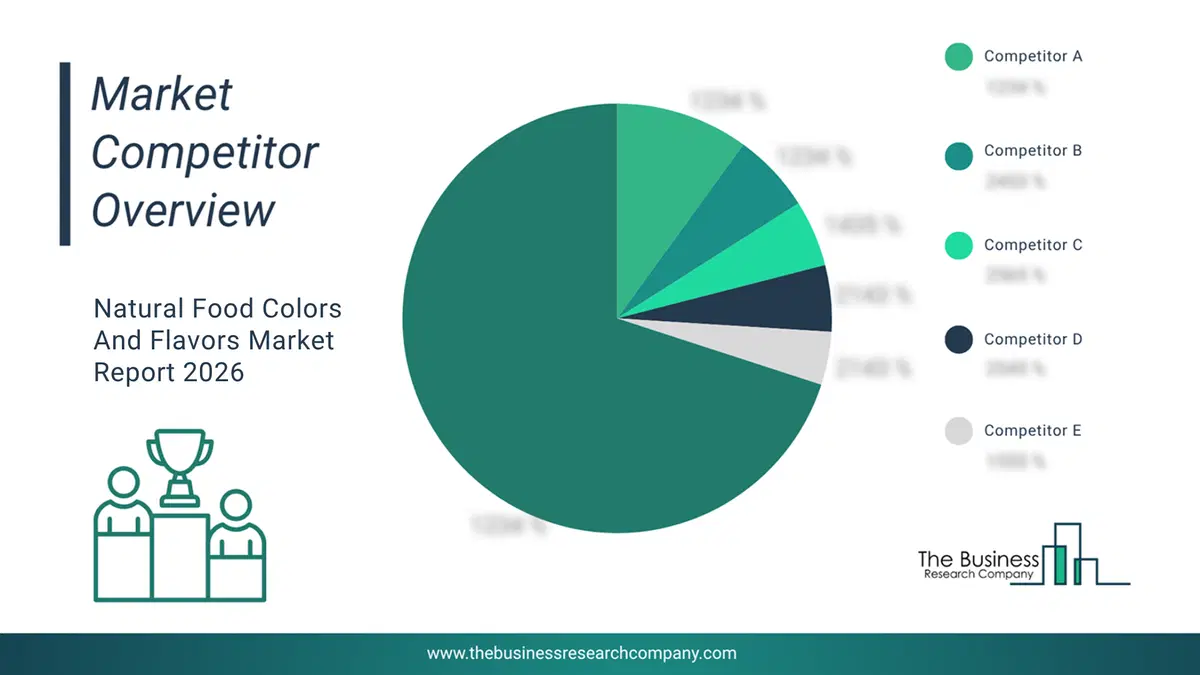
This chart is for illustrative purposes; the full report includes a detailed competitor analysis and comprehensive overview of the top 10 companies in the market.
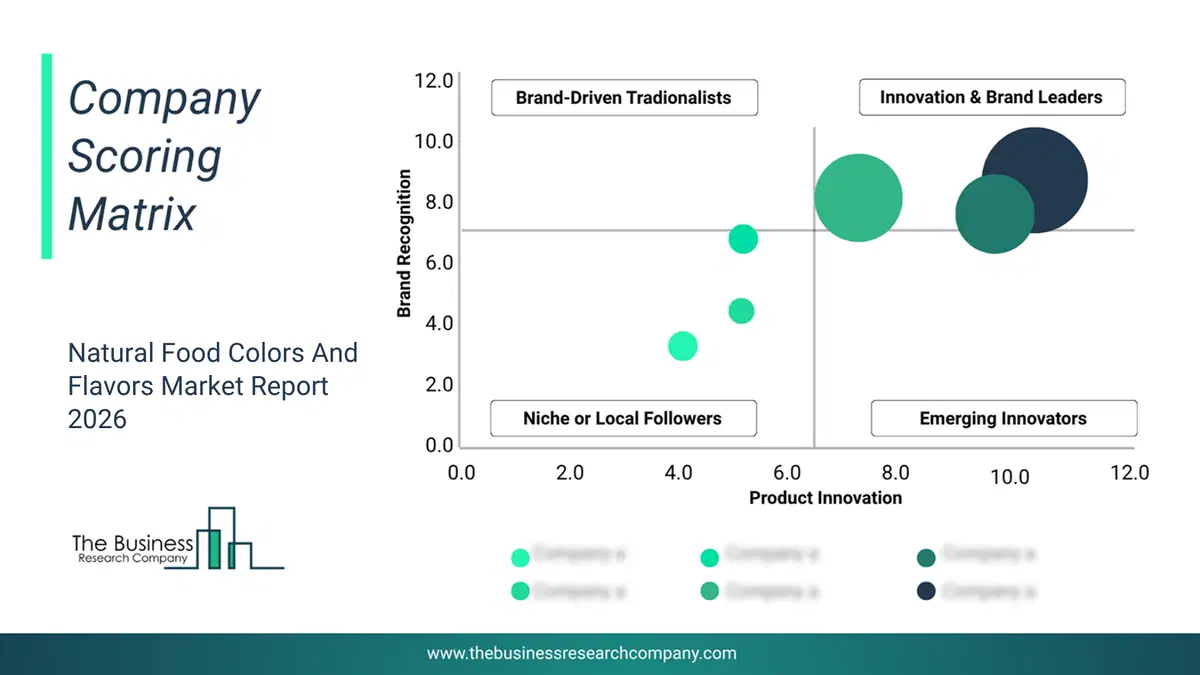
This chart maps companies by product innovation and brand strength, with bubble size indicating relative revenue, helping identify market leaders, challengers, and niche players. This is an illustrative chart; the full report provides a complete and accurate competitive analysis.
Global Natural Food Colors And Flavors Market Trends and Insights
Major companies operating in the natural food colors and flavors market are focusing on developing advanced solutions such as biotransformation-based natural flavor platforms to enhance flexibility and efficiency for food and beverage manufacturers. Biotransformation-based natural flavor platforms use nature-derived ingredients and biological processes to create authentic and high-impact flavor compounds that avoid artificial additives while simplifying regulatory compliance and labeling. For instance, in June 2025, Sensient Flavors & Extracts, a US-based customized flavor solutions company, launched BioSymphony, a new portfolio of natural flavor compounds featuring a biotransformation-driven flavor system. BioSymphony uses ingredients sourced from nature and is globally recognized as a natural flavor, which removes the need for special regional labeling and simplifies formulation for multinational brands. The platform aims to deliver value through premiumization by adding deeper, more sophisticated flavor profiles; it enables flavor expansion by adding nuance and tonal complexity to existing flavor libraries; and it offers ingredient-challenge solutions by boosting the performance of key ingredients, enabling reduction or replacement of scarce or premium components while preserving intended flavor impact.What Are Latest Mergers And Acquisitions In The Natural Food Colors And Flavors Market?
In September 2025, ROHA Group, an India-based provider of food color and ingredient solutions, acquired Tebracc for an undisclosed amount. With this acquisition, ROHA aimed to enhance its global natural-colors capabilities and secure a resilient, sustainable supply chain by integrating Tebracc’s annatto-extraction operations strengthening its position as a global leader in natural food-color solutions. Tebracc is a Brazil-based manufacturer specializing in the extraction and production of natural food.Regional Insights
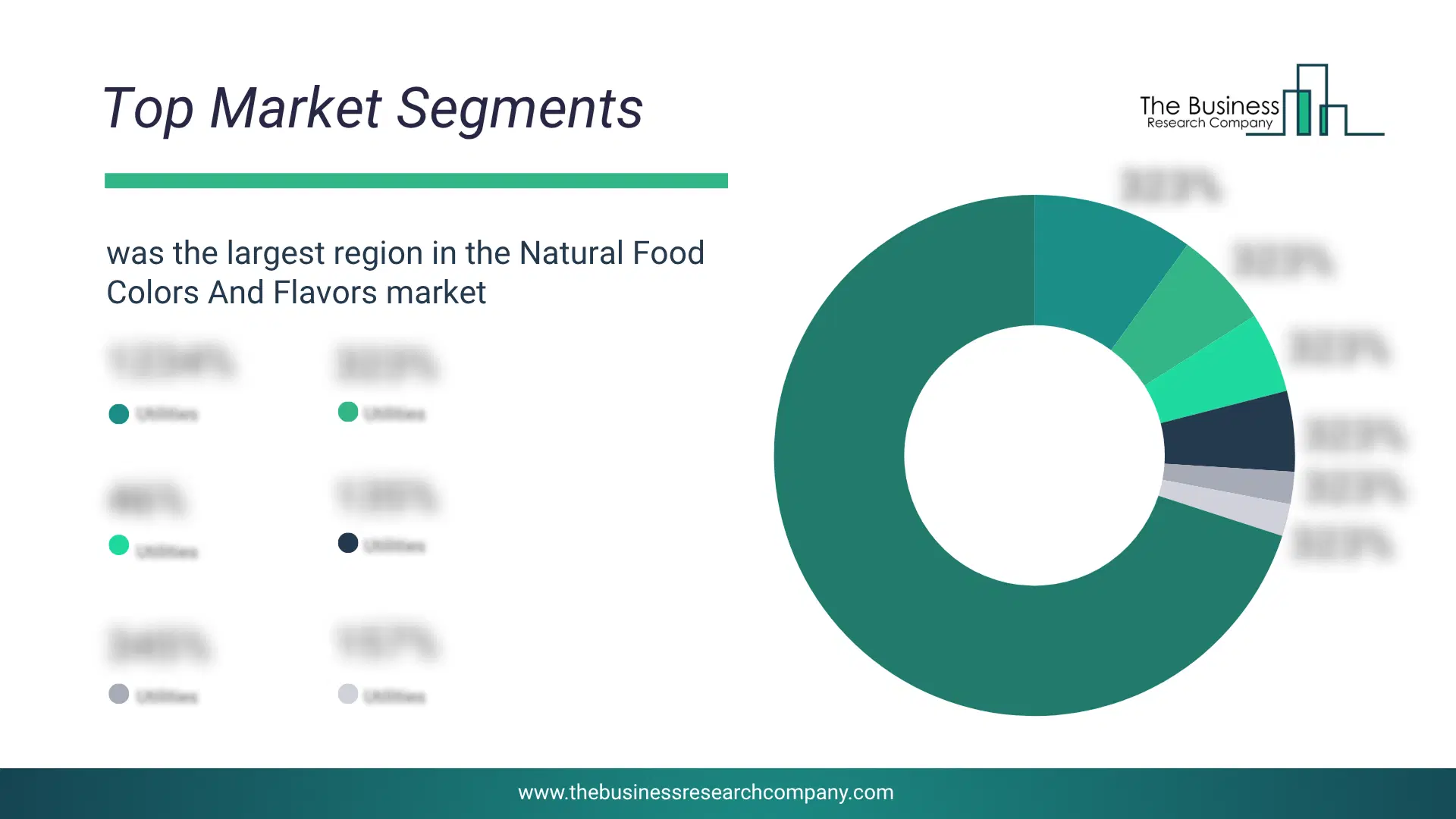
Europe was the largest region in the natural food colors and flavors market in 2025. Asia-Pacific is expected to continue to be the fastest growing region in the forecast period. The regions covered in this market report are Asia-Pacific, South East Asia, Western Europe, Eastern Europe, North America, South America, Middle East, Africa The countries covered in this market report are Australia, Brazil, China, France, Germany, India, Indonesia, Japan, Taiwan, Russia, South Korea, UK, USA, Canada, Italy, SpainWhat Defines the Natural Food Colors And Flavors Market?
The natural food colors and flavors market consists of sales of natural food colors including betalains and anthraquinones. Values in this market are ‘factory gate’ values, that is the value of goods sold by the manufacturers or creators of the goods, whether to other entities (including downstream manufacturers, wholesalers, distributors, and retailers) or directly to end customers. The value of goods in this market includes related services sold by the creators of the goods.How is Market Value Defined and Measured?
The market value is defined as the revenues that enterprises gain from the sale of goods and/or services within the specified market and geography through sales, grants, or donations in terms of the currency (in USD unless otherwise specified). The revenues for a specified geography are consumption values that are revenues generated by organizations in the specified geography within the market, irrespective of where they are produced. It does not include revenues from resales along the supply chain, either further along the supply chain or as part of other products.
This chart presents market attractiveness based on a quantitative evaluation of growth, competition, strategic alignment, and risk, offering a clear view of opportunity areas for decision-making. This chart is for illustrative purposes; the full report contains the complete analysis.

This chart highlights the Total Addressable Market (TAM) by estimating the maximum revenue opportunity using an assumption-driven approach, supporting strategic planning and opportunity sizing across markets. The chart is illustrative; the full report provides a more comprehensive analysis.
What Key Data and Analysis Are Included in the Natural Food Colors And Flavors Market Report 2026?
The natural food colors and flavors market research report is one of a series of new reports from The Business Research Company that provides market statistics, including industry global market size, regional shares, competitors with the market share, detailed market segments, market trends and opportunities, and any further data you may need to thrive in the natural food colors and flavors industry. The market research report delivers a complete perspective of everything you need, with an in-depth analysis of the current and future state of the industry.Natural Food Colors And Flavors Market Report Forecast Analysis
| Report Attribute | Details |
|---|---|
| Market Size Value In 2026 | $7.55 billion |
| Revenue Forecast In 2030 | $10.75 billion |
| Growth Rate | CAGR of 9.4% from 2026 to 2030 |
| Base Year For Estimation | 2025 |
| Actual Estimates/Historical Data | 2020-2025 |
| Forecast Period | 2026 - 2030 |
| Market Representation | Revenue in USD Billion and CAGR from 2026 to 2030 |
| Segments Covered | Color Type, Flavor Type, Form, Application |
| Regional Scope | Asia-Pacific, Western Europe, Eastern Europe, North America, South America, Middle East, Africa |
| Country Scope | The countries covered in the report are Australia, Brazil, China, France, Germany, India, Indonesia, Japan, Taiwan, Russia, South Korea, UK, USA, Canada, Italy, Spain. |
| Key Companies Profiled | Archer-Daniels-Midland Company, CHR. Hansen Holding A/S, Kerry Group plc, San-Ei Gen F.F.I. Inc., Symrise AG, International Flavors & Fragrances Inc., Sensient Technologies Corporation, Givaudan SA, FMC Corporation, GNT International B.V., Kalsec Inc., Royal DSM N.V., Döhler, Naturex Group, ROHA Dyechem Pvt. Ltd., DDW The Color House, Aromata Group, BASF SE, Takasago International Corporation, DuPont de Nemours Inc., Mane SA, T. Hasegawa Co. Ltd., Firmenich SA, Robertet SA, Synergy Flavors Inc., Amar Bio-Organics Pvt. Limited, Taiyo International Inc., Besmoke Ltd., Gulf Flavors and Food Ingredients fzco, Seluz Fragrances & Flavors Company, Amway Corporation, Bell Flavors & Fragrances Inc., Frutarom Industries Ltd., Akay Natural Ingredients Private Limited, Plant Lipids Pvt. Ltd., AVT Natural Products Ltd., Colorcon Inc., Kancor Ingredients Limited, Kolorjet Chemicals Pvt. Ltd., Synthite Industries Ltd., Flavex Naturextracte GmbH |
| Customization Scope | Request for Customization |
| Pricing And Purchase Options | Explore Purchase Options |