
Food Colors Market Report 2026
Global Outlook – By Type (Natural, Synthetic, Nature Identical), By Form (Liquid, Powder, Gel), By Application (Dairy, Meat Products, Beverages, Bakery And Confectionery, Processed Food And Vegetables, Oils And Fats, Other Applications) – Market Size, Trends, Strategies, and Forecast to 2030
Food Colors Market Overview
• Food Colors market size has reached to $4 billion in 2025 • Expected to grow to $5.9 billion in 2030 at a compound annual growth rate (CAGR) of 8.1% • Growth Driver: Growing Demand From The Food And Beverage Industry Boosts The Food Colors Market • Market Trend: Adoption Of Ultrafine Natural Powder Colorants To Enhance Food Color Performance • North America was the largest region in 2025.What Is Covered Under Food Colors Market?
Food colors are chemical and natural additive dye, pigment, or substance that imparts color when added to food or drink. Food coloring (dye) is frequently used in processed foods, beverages, and condiments. They are used to keep or enhance the appearance of food. The main types of food colors are natural colors, synthetic colors, and nature-identical colors. Natural colors are derived from vegetables, fruits, plants, minerals, and other natural sources by physical or chemical extraction. The different forms include liquid, powder, gel and are used in dairy products, meat products, beverages, bakery and confectionery, processed food and vegetables, oils and fats, others.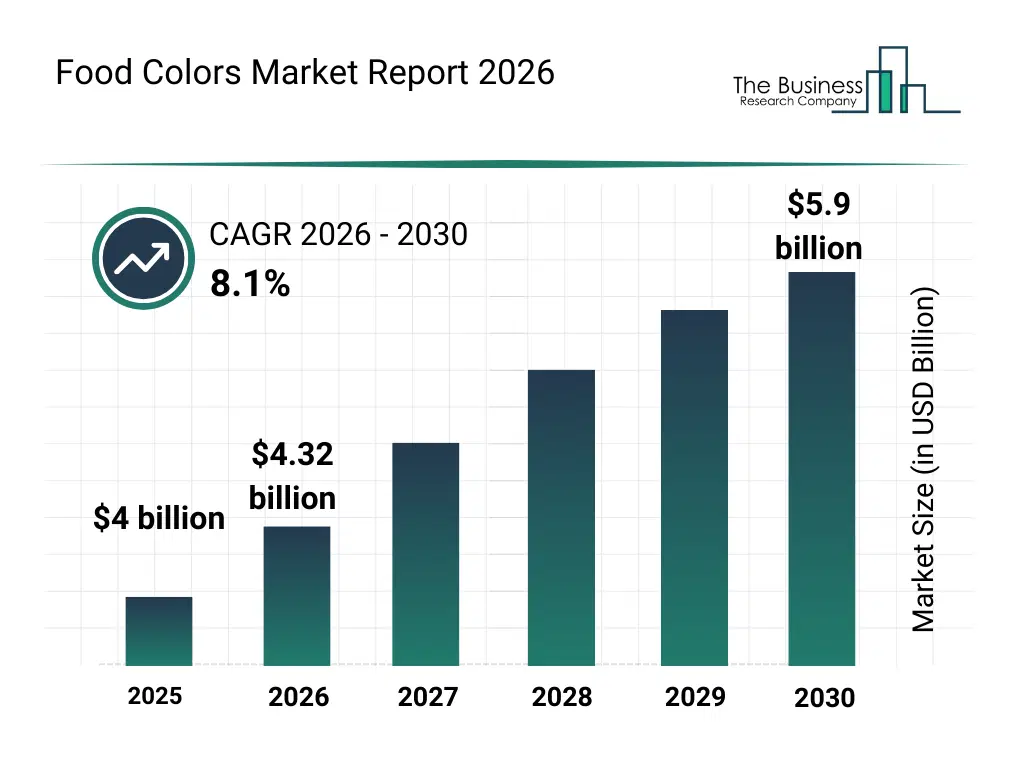
What Is The Food Colors Market Size and Share 2026?
The food colors market size has grown strongly in recent years. It will grow from $4 billion in 2025 to $4.32 billion in 2026 at a compound annual growth rate (CAGR) of 7.9%. The growth in the historic period can be attributed to growth of processed food consumption, rising use of visual appeal in packaged foods, expansion of beverage manufacturing, availability of synthetic color additives, increasing standardization in food processing.What Is The Food Colors Market Growth Forecast?
The food colors market size is expected to see strong growth in the next few years. It will grow to $5.9 billion in 2030 at a compound annual growth rate (CAGR) of 8.1%. The growth in the forecast period can be attributed to increasing consumer preference for natural ingredients, rising regulatory scrutiny on synthetic dyes, expansion of clean-label food products, growing investments in natural color extraction technologies, increasing demand from premium food segments. Major trends in the forecast period include increasing adoption of natural and plant-based food colors, rising demand for clean-label coloring solutions, growing use of microbial and fermentation-derived colors, expansion of heat-stable and light-stable color formulations, enhanced focus on regulatory-compliant color additives.
Global Food Colors Market Segmentation
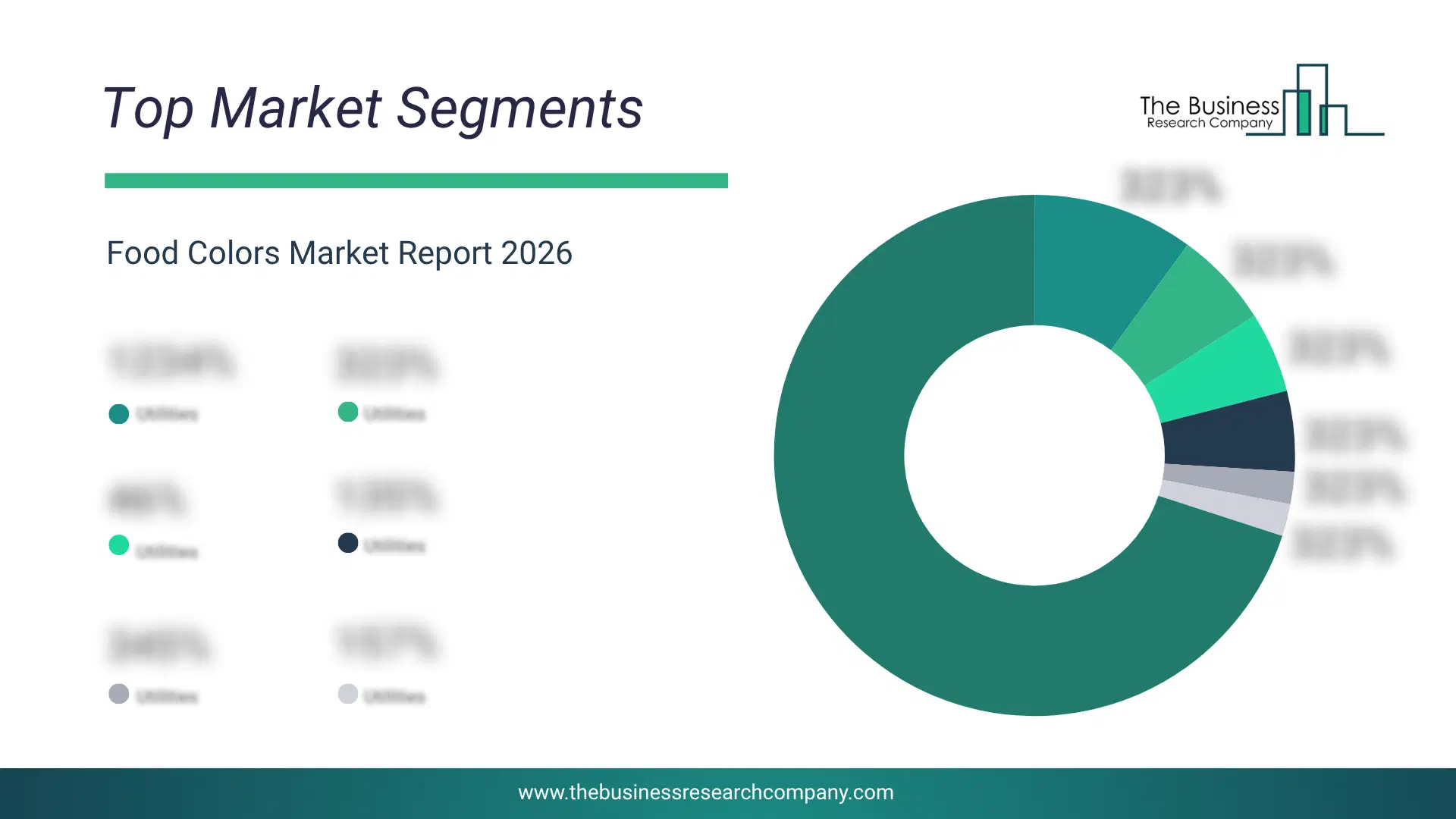
1) By Type: Natural, Synthetic, Nature Identical 2) By Form: Liquid, Powder, Gel 3) By Application: Dairy, Meat Products, Beverages, Bakery And Confectionery, Processed Food And Vegetables, Oils And Fats, Other Applications Subsegments: 1) By Natural: Plant-Based Colors, Animal-Based Colors, Microbial Colors 2) By Synthetic: Azo Dyes, Non-Azo Dyes 3) By Nature Identical: Synthetic Versions of Natural Colors, Isolated Natural CompoundsWhat Is The Driver Of The Food Colors Market?
Increasing demand from the food and beverage industry is expected to drive the growth of the food colors market in the coming years. The food and beverage sector encompasses all businesses engaged in the production, packaging, and distribution of raw food materials. This includes both fresh and processed foods, as well as alcoholic and non - alcoholic drinks. Food colors are added to foods and beverages to preserve their original color and texture, which can be lost during cooking and preparation due to a variety of chemical and physical processes. For instance, according to the Ministry of Finance and Economy, a Brunei-based government ministry, in terms of volume, food & beverages recorded a positive growth of 12.7% year-on-year in Q1 2023, after increasing by 33.3 per cent in Q4 2022. Therefore, the increasing demand from the food and beverage industry is significantly driving the growth of the food colors industry.Key Players In The Global Food Colors Market
Major companies operating in the food colors market are D.D. Williamson & Co Inc., Kalsec Inc., Döhler GmbH, International Flavors & Fragrances Inc., Koninklijke DSM NV, Sensient Technologies Corporation, Archer-Daniels-Midland Company, LycoRed Ltd., Givaudan SA, Naturex Ltd., GNT Group BV, San-Ei Gen., Roha Dyechem Pvt Ltd., Kolor Jet Chemical Pvt Ltd., Vidhi Specialty Food Ingredients Ltd., Vinayak Ingredients India Pvt Ltd., Neelikon Food Dyes and Chemicals Ltd., Aarkay Food Products Ltd., Natural Food Colors Inc., Ingredion Incorporated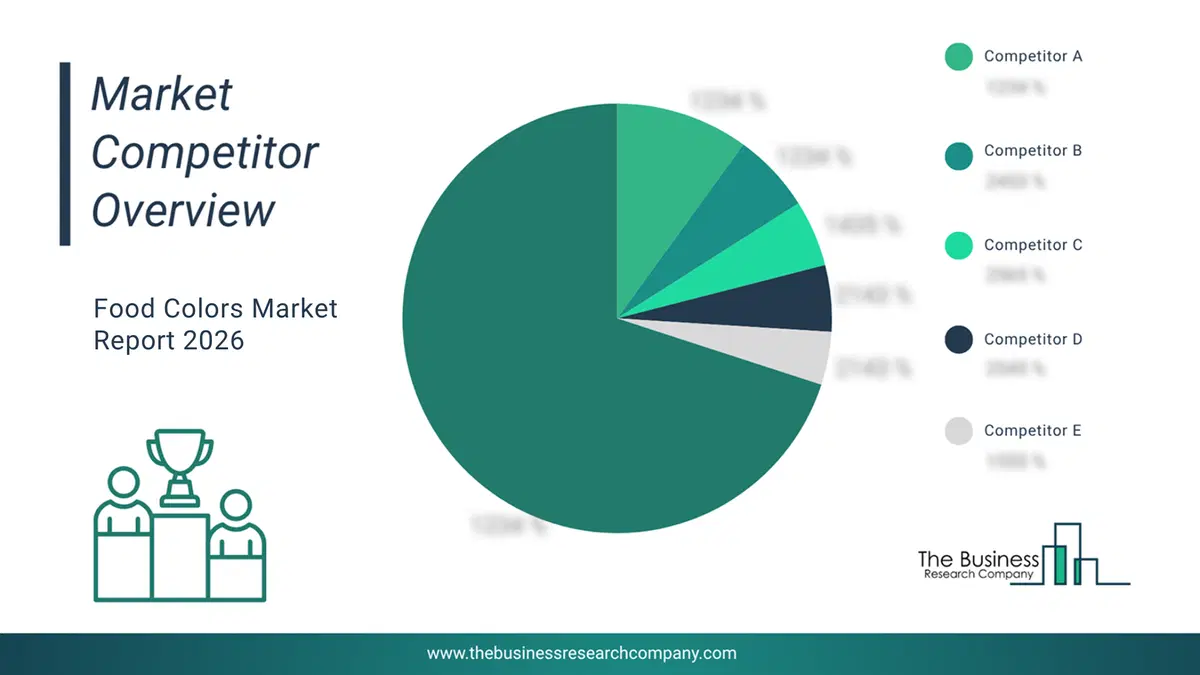
This chart is for illustrative purposes; the full report includes a detailed competitor analysis and comprehensive overview of the top 10 companies in the market.
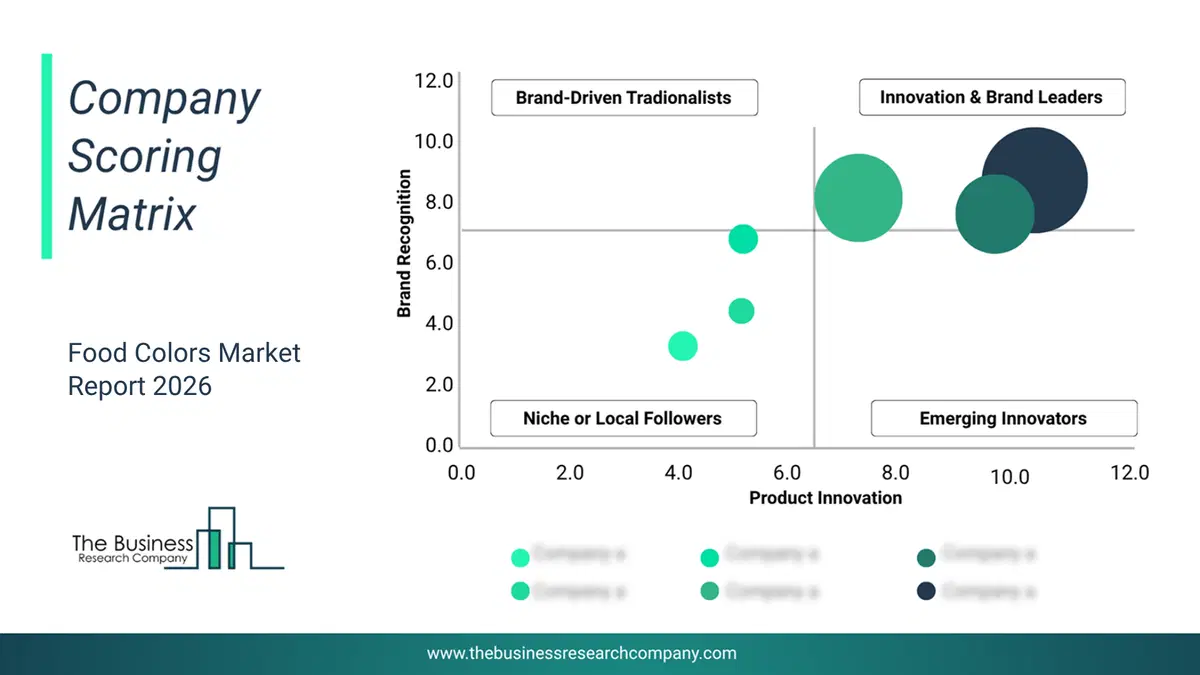
This chart maps companies by product innovation and brand strength, with bubble size indicating relative revenue, helping identify market leaders, challengers, and niche players. This is an illustrative chart; the full report provides a complete and accurate competitive analysis.
Global Food Colors Market Trends and Insights
Major companies are operating the food colors market focusing on developing innovation such as ultrafine milled natural powder colorant systems to meet the rising demand for clean label, vibrant, and sustainable food colouration that appeals to health conscious consumers and food manufacturers’ need for high-performance, easy-to-use colour solutions. An ultrafine natural powder colorant system uses milled plant-based pigments with very small particle sizes, which increases surface area, enhances light reflection, and improves dispersion resulting in more intense, uniform color even at lower dosages compared to traditional natural color powders. For instance, in September 2024, Oterra, a Denmark-based natural-color supplier, launched I-Colors Bold a range of ten ultrafine, milled powders designed to deliver deeper, richer shades while reducing the quantity of colorant required. The powders are derived from plant-based raw materials (e.g., sweet potato, anthocyanin- or beet-based pigments) and are suitable for applications including powder-based beverages, snack seasonings, coatings, bakery toppings, fat-based fillings, confectionery, and compressed candy. Unlike older natural-color solutions which often gave muted tones, required higher dosages, or had uneven dispersion I-Colors Bold offers synthetic-level color impact with natural-label ingredients, better stability, lower dosage usage, and improved process efficiency.What Are Latest Mergers And Acquisitions In The Food Colors Market?
In October 2025, ROHA Group, an India-based food color solutions manufacturing company, acquired Tebracc for an undisclosed amount. With this acquisition, ROHA aims to expand and secure its global natural colors capabilities and supply chain resilience by integrating Tebracc’s expertise in annatto extraction and processing across food, beverage, nutraceutical, and pet food markets. Tebracc is a Brazil-based natural color manufacturer that specializes in the extraction and production of natural food colors with deep expertise in annatto and sustainable pigment solutions.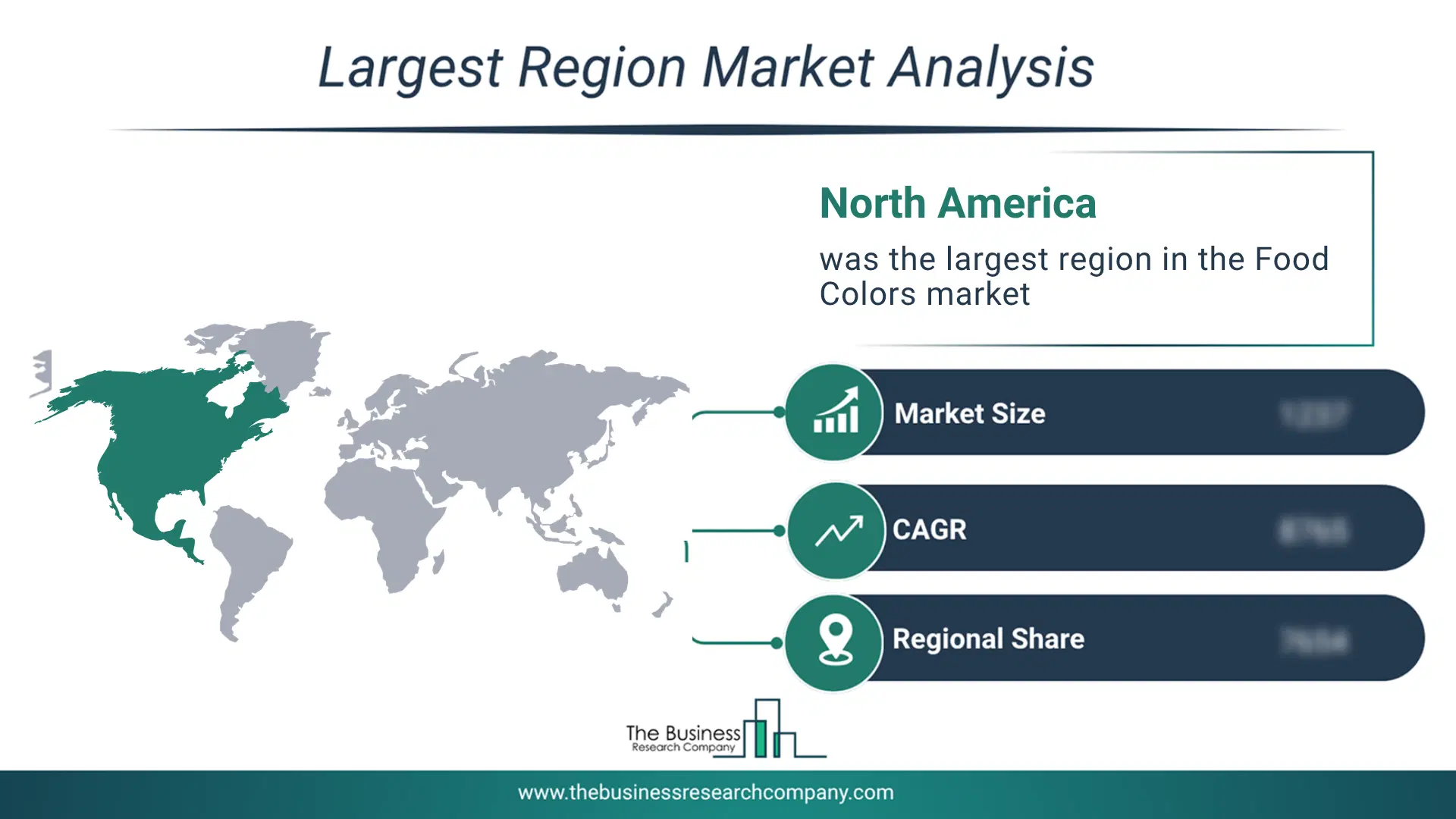
Regional Outlook
North America was the largest region in the food colors market in 2025. The regions covered in this market report are Asia-Pacific, South East Asia, Western Europe, Eastern Europe, North America, South America, Middle East and Africa. The countries covered in this market report are Australia, Brazil, China, France, Germany, India, Indonesia, Japan, Taiwan, Russia, South Korea, UK, USA, Italy, Spain, CanadaWhat Defines the Food Colors Market?
The food colors market consists of sales of synthetic colors, natural colors, and nature-identical colors. Values in this market are ‘factory gate’ values, that is the value of goods sold by the manufacturers or creators of the goods, whether to other entities (including downstream manufacturers, wholesalers, distributors and retailers) or directly to end customers. The value of goods in this market includes related services sold by the creators of the goods.How is Market Value Defined and Measured?
The market value is defined as the revenues that enterprises gain from the sale of goods and/or services within the specified market and geography through sales, grants, or donations in terms of the currency (in USD unless otherwise specified). The revenues for a specified geography are consumption values that are revenues generated by organizations in the specified geography within the market, irrespective of where they are produced. It does not include revenues from resales along the supply chain, either further along the supply chain or as part of other products.
This chart presents market attractiveness based on a quantitative evaluation of growth, competition, strategic alignment, and risk, offering a clear view of opportunity areas for decision-making. This chart is for illustrative purposes; the full report contains the complete analysis.

This chart highlights the Total Addressable Market (TAM) by estimating the maximum revenue opportunity using an assumption-driven approach, supporting strategic planning and opportunity sizing across markets. The chart is illustrative; the full report provides a more comprehensive analysis.
What Key Data and Analysis Are Included in the Food Colors Market Report 2026?
The food colors market research report is one of a series of new reports from The Business Research Company that provides market statistics, including industry global market size, regional shares, competitors with the market share, detailed market segments, market trends and opportunities, and any further data you may need to thrive in the food colors industry. The market research report delivers a complete perspective of everything you need, with an in-depth analysis of the current and future state of the industry.Food Colors Market Report Forecast Analysis
| Report Attribute | Details |
|---|---|
| Market Size Value In 2026 | $4.32 billion |
| Revenue Forecast In 2030 | $5.9 billion |
| Growth Rate | CAGR of 7.9% from 2026 to 2030 |
| Base Year For Estimation | 2025 |
| Actual Estimates/Historical Data | 2020-2025 |
| Forecast Period | 2026 - 2030 |
| Market Representation | Revenue in USD Billion and CAGR from 2026 to 2030 |
| Segments Covered | Type, Form, Application |
| Regional Scope | Asia-Pacific, Western Europe, Eastern Europe, North America, South America, Middle East, Africa |
| Country Scope | The countries covered in the report are Australia, Brazil, China, France, Germany, India, Indonesia, Japan, Taiwan, Russia, South Korea, UK, USA, Canada, Italy, Spain. |
| Key Companies Profiled | D.D. Williamson & Co Inc., Kalsec Inc., Döhler GmbH, International Flavors & Fragrances Inc., Koninklijke DSM NV, Sensient Technologies Corporation, Archer-Daniels-Midland Company, LycoRed Ltd., Givaudan SA, Naturex Ltd., GNT Group BV, San-Ei Gen., Roha Dyechem Pvt Ltd., Kolor Jet Chemical Pvt Ltd., Vidhi Specialty Food Ingredients Ltd., Vinayak Ingredients India Pvt Ltd., Neelikon Food Dyes and Chemicals Ltd., Aarkay Food Products Ltd., Natural Food Colors Inc., Ingredion Incorporated |
| Customization Scope | Request for Customization |
| Pricing And Purchase Options | Explore Purchase Options |