
Next Generation Antibody Drug Market Report 2026
Global Outlook – By Product Type (Monoclonal Antibodies, Bispecific Antibodies, Antibody-Drug Conjugates, Other Types), By Mechanism Of Action (Checkpoint Inhibitors, Immune Modulators, Receptor Blockers, Targeted Cytotoxic Agents, Neutralizing Antibodies), By Delivery Method (Intravenous (IV) Administration, Subcutaneous Administration, Intramuscular Administration), By Application (Oncology, Autoimmune Diseases, Infectious Diseases, Other Applications), By End User (Hospitals, Research Institutes, Specialty Clinics, Other End Users) – Market Size, Trends, Strategies, and Forecast to 2030
Next Generation Antibody Drug Market Overview
• Next Generation Antibody Drug market size has reached to $16.4 billion in 2025 • Expected to grow to $33.53 billion in 2030 at a compound annual growth rate (CAGR) of 15.4% • Growth Driver: Rising Adoption Of Personalized Medicine Fueling The Growth Of The Market Due To Advancements In Genomic Sequencing • Market Trend: Innovation In Antibody-Drug Conjugates Advancing Targeted Cancer Therapies And Treatment Efficacy • North America was the largest region in 2025.Market Gains By 2030 – Top Opportunities By Segment
Market Gain identifies the most promising market opportunities by highlighting the segments or products expected to generate the highest incremental revenue growth over the next five years.
What Is Covered Under Next Generation Antibody Drug Market?
Next-generation antibody drugs refer to advanced therapeutic antibodies designed to target specific antigens with higher precision and efficacy, often incorporating innovative technologies such as bispecific antibodies or antibody-drug conjugates. These drugs aim to improve disease treatment outcomes by enhancing targeting capabilities and minimizing side effects. The main product types of next-generation antibody drugs are monoclonal antibodies, bispecific antibodies, antibody-drug conjugates, and other types. Monoclonal antibodies are identical copies of a single antibody, created by cloning a unique immune cell, and are used to treat various conditions such as cancer and autoimmune disorders. Their mechanisms of action encompass checkpoint inhibitors, immune modulators, receptor blockers, targeted cytotoxic agents, and neutralizing antibodies. Delivery methods for these drugs include intravenous (IV), subcutaneous, intramuscular administration, oral formulations, and transdermal delivery systems. The various applications include oncology, autoimmune diseases, infectious diseases, and others and are used by several end users, such as hospitals, research institutes, specialty clinics, and other healthcare providers.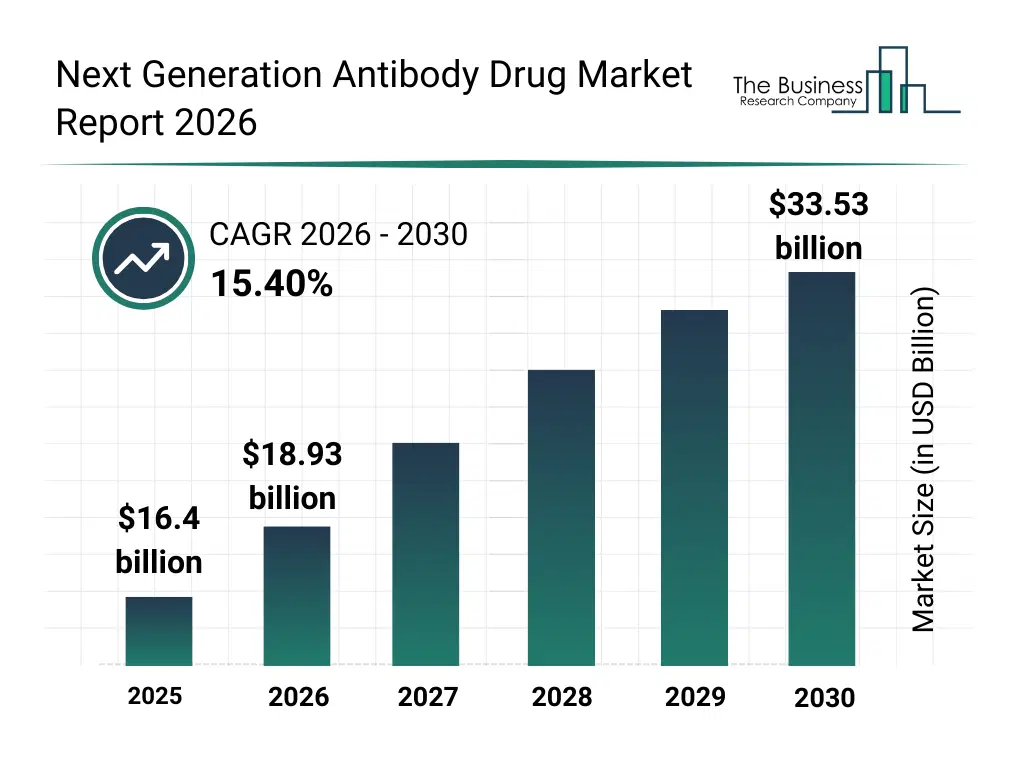
What Is The Next Generation Antibody Drug Market Size and Share 2026?
The next generation antibody drug market size has grown rapidly in recent years. It will grow from $16.4 billion in 2025 to $18.93 billion in 2026 at a compound annual growth rate (CAGR) of 15.4%. The growth in the historic period can be attributed to success of monoclonal antibody therapies, rising cancer prevalence, advancements in antibody engineering, increased biologics r&d investment, regulatory approvals of antibody drugs.What Is The Next Generation Antibody Drug Market Growth Forecast?
The next generation antibody drug market size is expected to see rapid growth in the next few years. It will grow to $33.53 billion in 2030 at a compound annual growth rate (CAGR) of 15.4%. The growth in the forecast period can be attributed to growth in precision medicine adoption, increasing demand for targeted biologics, advancements in conjugation technologies, expansion of autoimmune disease treatments, rising oncology drug pipelines. Major trends in the forecast period include rapid development of bispecific antibodies, increasing adoption of antibody-drug conjugates, growing focus on precision targeted therapies, expansion of antibody applications beyond oncology, rising clinical trials for advanced antibody platforms.
Global Next Generation Antibody Drug Market Segmentation
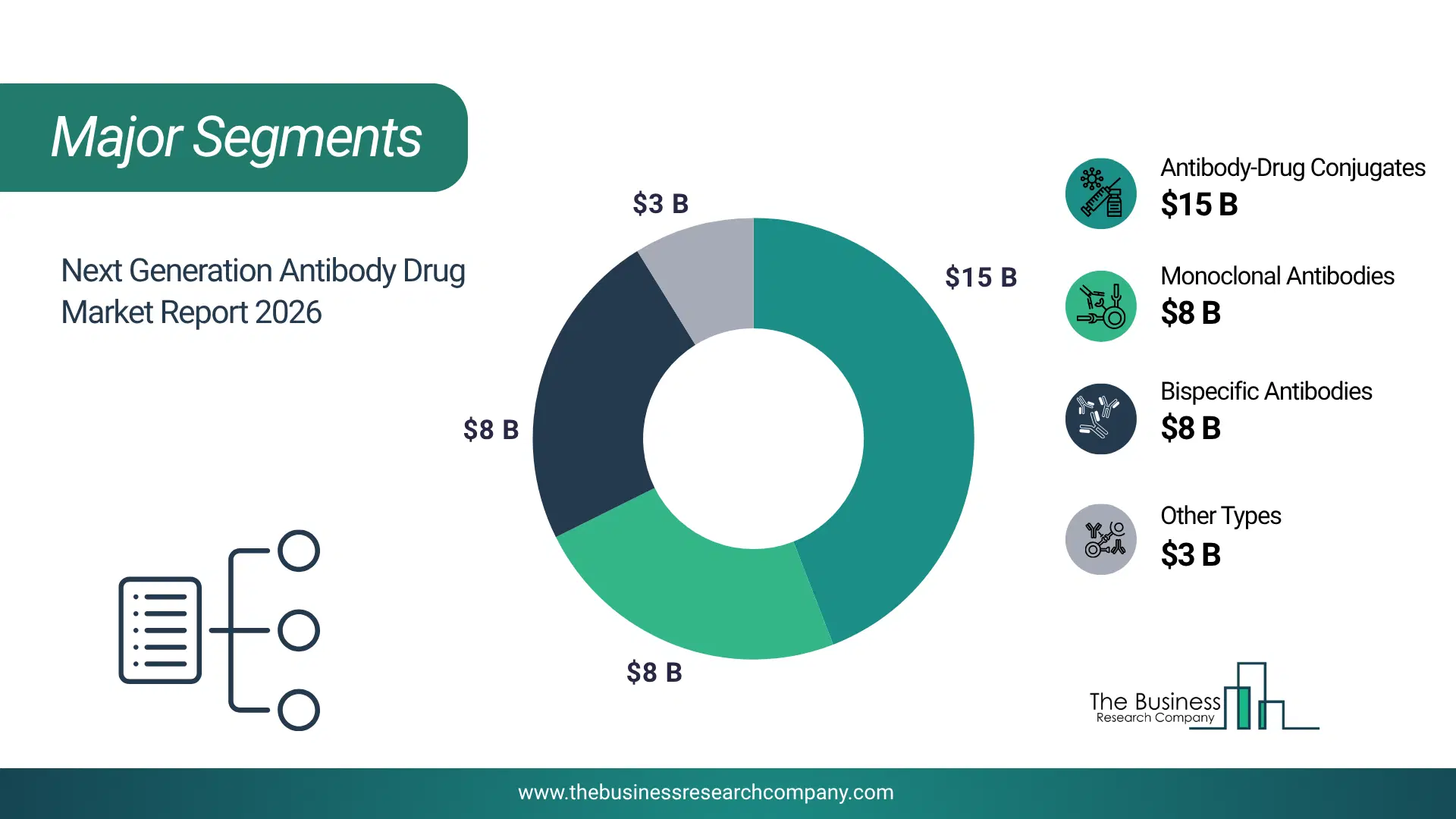
1) By Product Type: Monoclonal Antibodies, Bispecific Antibodies, Antibody-Drug Conjugates, Other Types 2) By Mechanism Of Action: Checkpoint Inhibitors, Immune Modulators, Receptor Blockers, Targeted Cytotoxic Agents, Neutralizing Antibodies 3) By Delivery Method: Intravenous (IV) Administration, Subcutaneous Administration, Intramuscular Administration 4) By Application: Oncology, Autoimmune Diseases, Infectious Diseases, Other Applications 5) By End User: Hospitals, Research Institutes, Specialty Clinics, Other End Users Subsegments: 1) By Monoclonal Antibodies: Human Monoclonal Antibodies, Murine Monoclonal Antibodies, Humanized Monoclonal Antibodies, Chimeric Monoclonal Antibodies 2) By Bispecific Antibodies: Checkpoint Inhibitor-Based Bispecifics, Bispecific Antibodies For Cytokine Modulation, Bispecific Antibodies With Extended Half-Life Technologies 3) By Antibody-Drug Conjugates: Cleavable Linker Antibody-Drug Conjugates, Non-Cleavable Linker Antibody-Drug Conjugates, Site-Specific Conjugated Antibody-Drug Conjugates The top segments in the next generation antibody drug market will be: • Antibody-Drug Conjugates will reach $14.98 Billion by 2030. • Monoclonal Antibodies will reach $7.63 Billion by 2030. • Bispecific Antibodies will reach $7.62 Billion by 2030. • Other Types will reach $2.59 Billion by 2030.What Is The Driver Of The Next Generation Antibody Drug Market?
The increasing focus on personalized medicine is expected to propel the growth of the next-generation antibody-drug market going forward. Personalized medicine refers to a medical approach that tailors treatment and healthcare strategies to individual patients based on their genetic, environmental, and lifestyle factors, ensuring more effective and targeted therapies. Personalized medicine is rising due to advancements in genomic sequencing, which enable more precise diagnosis and targeted treatment strategies. Next-generation antibody drugs help increase the focus on personalized medicine by allowing the development of targeted therapies customized to individual patients' genetic profiles and disease characteristics, improving efficacy and minimizing adverse effects. For instance, in February 2024, according to the Personalized Medicine Coalition, a US-based organization promoting the adoption of personalized medicine, in 2023, the United States Food and Drug Administration (FDA) approved 16 new personalized treatments for rare disease patients, up from 6 in 2022. Therefore, increasing focus on personalized medicine drives the next-generation antibody drug market.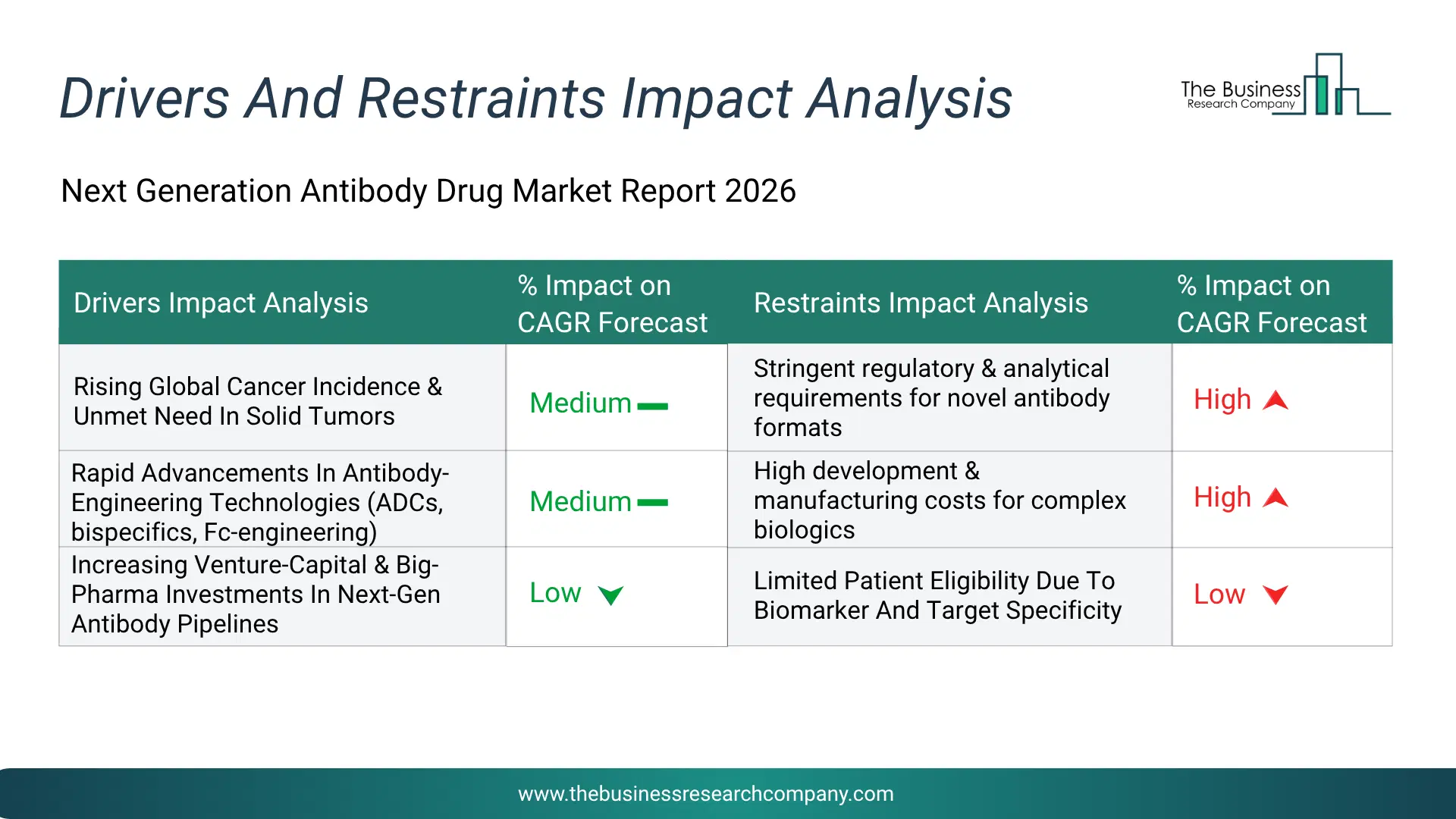
Infographic Chart Showing Key Market Drivers Analysis And Restraints For Next Generation Antibody Drug Market
The chart presents an impact analysis of key drivers and restraints, quantifying their relative influence on the market's growth rate and helping assess the balance between growth enablers and limiting factors. This chart offers a high-level perspective; the full report contains more detailed insights.
How Will The Drivers Impact Growth In The Global Next Generation Antibody Drug Market?
• Rising Global Cancer Incidence & Unmet Need In Solid Tumors (Medium) – During the forecast period, the rising global cancer incidence & unmet need in solid tumors is expected to become a key growth driver for the next generation antibody drug market by 2030. The growing global burden of cancer, particularly difficult-to-treat solid tumors, is increasing demand for highly targeted therapies with improved efficacy. Next-generation antibody drugs offer precision targeting and differentiated mechanisms of action compared with conventional therapies. This expanding patient pool directly supports sustained market growth and pipeline prioritization. • Rapid Advancements In Antibody-Engineering Technologies (ADCs, bispecifics, Fc-engineering) (Medium) – During the forecast period, the rapid advancements in antibody-engineering technologies (ADCs, bispecifics, Fc-engineering) is expected to emerge as a major factor driving the expansion of the next generation antibody drug market by 2030. Continuous innovation in antibody engineering is significantly improving therapeutic precision, payload delivery, and immune system engagement. Technologies such as antibody-drug conjugates and bispecific antibodies are expanding clinical applications across oncology and immunology. These advancements accelerate product differentiation and commercial adoption. • Increasing Venture-Capital & Big-Pharma Investments In Next-Gen Antibody Pipelines (Low) – During the forecast period, the increasing venture-capital & big-pharma investments in next-gen antibody pipelines is expected to act as a key growth catalyst for the next generation antibody drug market by 2030. Strong capital inflows from venture investors and strategic pharmaceutical companies are accelerating discovery, clinical development, and commercialization of advanced antibody therapeutics. Partnership activity and licensing deals are expanding innovation pipelines globally. Increased funding reduces development bottlenecks and improves speed to market.How Will The Restraints Impact Growth In The Global Next Generation Antibody Drug Market?
• Stringent regulatory & analytical requirements for novel antibody formats (Medium) – During the forecast period, the novel antibody constructs face rigorous regulatory scrutiny due to complex mechanisms, characterization requirements, and evolving approval standards. Developers must generate extensive analytical and clinical validation data before commercialization. This increases timelines, compliance burden, and development uncertainty. • High development & manufacturing costs for complex biologics (Medium) – During the forecast period, the next-generation antibody drugs require sophisticated discovery platforms, biologics manufacturing infrastructure, and complex quality control processes, leading to substantial development costs. Manufacturing scale-up remains technically demanding and capital intensive. These economics can restrict participation and pressure profitability. • Limited Patient Eligibility Due To Biomarker And Target Specificity (Low) – During the forecast period, the limited patient eligibility due to biomarker and target specificity is expected to restrain the growth of the next generation antibody drug market. Many next-generation antibody therapies are designed to target highly specific biomarkers or genetic mutations, making them suitable only for selected patient populations. Successful treatment often depends on advanced diagnostic testing to identify eligible patients, which may not be widely available across all healthcare settings. Variations in biomarker expression and disease heterogeneity can further limit the proportion of patients who benefit from these therapies. In addition, restricted patient eligibility may reduce commercial adoption and slow market penetration in certain therapeutic areas. These challenges constrain the broader utilization of next-generation antibody drugs despite their strong clinical potential.Key Players In The Global Next Generation Antibody Drug Market
Major companies operating in the next generation antibody drug market are Pfizer Inc., F. Hoffmann-La Roche Ltd., Bristol-Myers Squibb Company, AstraZeneca plc, GlaxoSmithKline plc, Takeda Pharmaceutical Company Limited, Gilead Sciences Inc., Amgen Inc., Boehringer Ingelheim International GmbH, Regeneron Pharmaceuticals Inc., Biogen Inc., Kyowa Hakko Kirin Co. Ltd., Samsung Biologics Co. Ltd., WuXi Biologics Inc., Akeso Inc., Xencor Inc., ImmunoGen Inc., Philogen S.p.A., Telix Pharmaceuticals Limited, Actinium Pharmaceuticals Inc.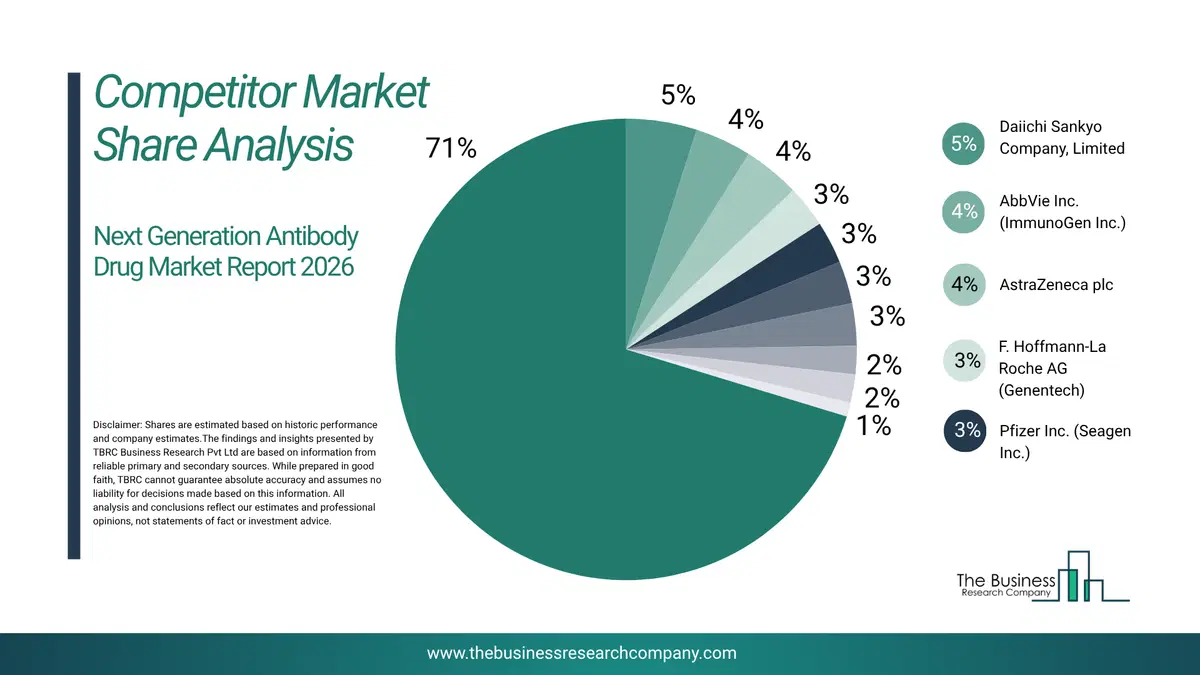
This chart is for illustrative purposes; the full report includes a detailed competitor analysis and comprehensive overview of the top 10 companies in the market.
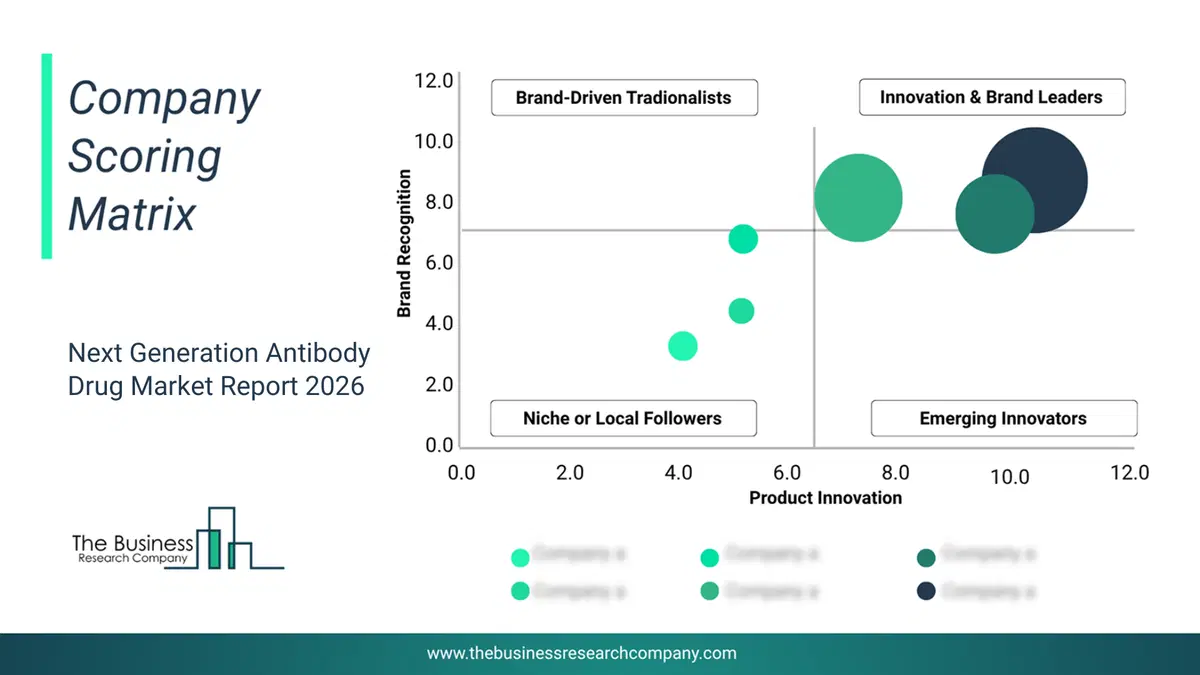
This chart maps companies by product innovation and brand strength, with bubble size indicating relative revenue, helping identify market leaders, challengers, and niche players. This is an illustrative chart; the full report provides a complete and accurate competitive analysis.
Global Next Generation Antibody Drug Market Trends and Insights
Major companies operating in the next generation antibody drug market are focusing on developing innovative solutions, such as antibody-drug conjugates, to enhance targeted cancer therapies, improve therapeutic efficacy, and reduce systemic toxicity. An antibody-drug conjugate (ADC) is a targeted cancer therapy that combines a monoclonal antibody with a cytotoxic drug via a linker to selectively deliver the drug to tumor cells while minimizing damage to healthy tissue. For instance, in January 2024, BioNTech SE, a Germany-based biotechnology company, partnered with Duality Biologics (Suzhou) Co. Ltd., a China-based pharmaceutical company, and received a Fast Track designation from the U.S. Food and Drug Administration (FDA) for their next-generation antibody-drug conjugate (ADC) candidate, BNT325/DB-1305, aimed at treating platinum-resistant ovarian cancer. The drug utilizes DualityBio's innovative DITAC (Duality Immune Toxin Antibody Conjugates) platform, which combines a highly potent cytotoxic payload with a monoclonal antibody, enabling precision in delivering treatment directly to cancer cells. BNT325/DB-1305's ability to precisely target cancer cells while minimizing damage to healthy tissues stands out as a key advantage in enhancing treatment efficacy and reducing side effects.What Are Latest Mergers And Acquisitions In The Next Generation Antibody Drug Market?
In March 2024, Johnson & Johnson, a US-based pharmaceutical company, acquired Ambrx Biopharma for an undisclosed amount. With this acquisition, Johnson and Johnson aims to advance its oncology portfolio by developing innovative, targeted antibody-drug conjugates that improve treatment outcomes and reduce side effects for patients with difficult-to-treat cancers. Ambrx Biopharma Inc. is a US-based company dedicated to advancing the development of next-generation antibody-drug conjugates (ADCs).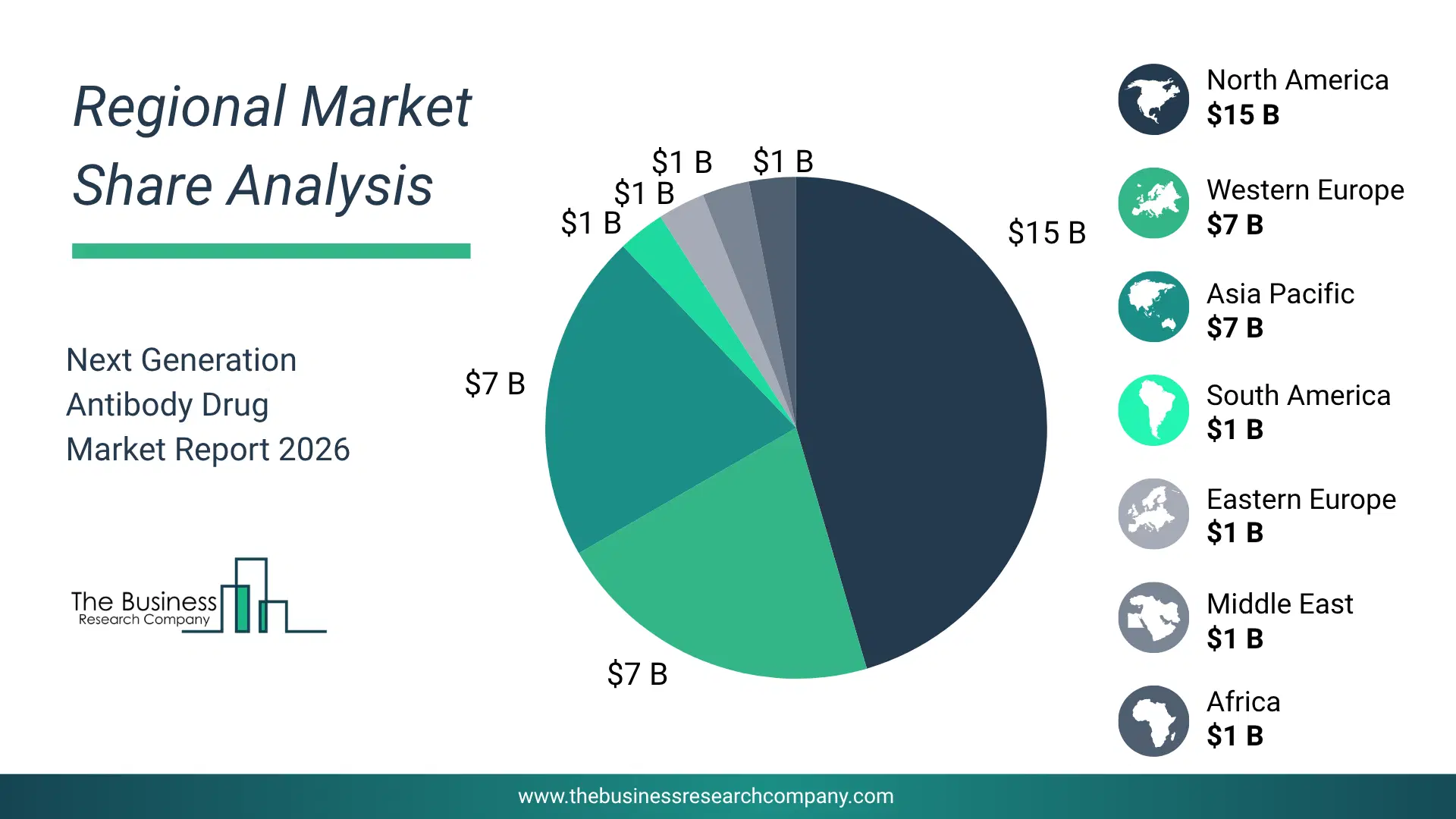
Regional Insights
North America was the largest region in the next generation antibody drug market in 2025. The regions covered in this market report are Asia-Pacific, South East Asia, Western Europe, Eastern Europe, North America, South America, Middle East, Africa. The countries covered in this market report are Australia, Brazil, China, France, Germany, India, Indonesia, Japan, Taiwan, Russia, South Korea, UK, USA, Canada, Italy, Spain.What Defines the Next Generation Antibody Drug Market?
The next generation antibody drug market consists of sales of engineered monoclonal antibodies, antibody-drug conjugates (ADCs), bispecific antibodies, and related biologic therapies. Values in this market are ‘factory gate’ values, that is the value of goods sold by the manufacturers or creators of the goods, whether to other entities (including downstream manufacturers, wholesalers, distributors and retailers) or directly to end customers. The value of goods in this market includes related services sold by the creators of the goods.How is Market Value Defined and Measured?
The market value is defined as the revenues that enterprises gain from the sale of goods and/or services within the specified market and geography through sales, grants, or donations in terms of the currency (in USD unless otherwise specified). The revenues for a specified geography are consumption values that are revenues generated by organizations in the specified geography within the market, irrespective of where they are produced. It does not include revenues from resales along the supply chain, either further along the supply chain or as part of other products.
This chart presents market attractiveness based on a quantitative evaluation of growth, competition, strategic alignment, and risk, offering a clear view of opportunity areas for decision-making. This chart is for illustrative purposes; the full report contains the complete analysis.

This chart highlights the Total Addressable Market (TAM) by estimating the maximum revenue opportunity using an assumption-driven approach, supporting strategic planning and opportunity sizing across markets. The chart is illustrative; the full report provides a more comprehensive analysis.
What Key Data and Analysis Are Included in the Next Generation Antibody Drug Market Report 2026?
The next generation antibody drug market research report is one of a series of new reports from The Business Research Company that provides market statistics, including industry global market size, regional shares, competitors with the market share, detailed market segments, market trends and opportunities, and any further data you may need to thrive in the next generation antibody drug industry. The market research report delivers a complete perspective of everything you need, with an in-depth analysis of the current and future state of the industry.Next Generation Antibody Drug Market Report Forecast Analysis
| Report Attribute | Details |
|---|---|
| Market Size Value In 2026 | $18.93 billion |
| Revenue Forecast In 2030 | $33.53 billion |
| Growth Rate | CAGR of 15.4% from 2026 to 2030 |
| Base Year For Estimation | 2025 |
| Actual Estimates/Historical Data | 2020-2025 |
| Forecast Period | 2026 - 2030 |
| Market Representation | Revenue in USD Billion and CAGR from 2026 to 2030 |
| Segments Covered | Product Type, Mechanism Of Action, Delivery Method, Application, End User |
| Regional Scope | Asia-Pacific, Western Europe, Eastern Europe, North America, South America, Middle East, Africa |
| Country Scope | The countries covered in the report are Australia, Brazil, China, France, Germany, India, Indonesia, Japan, Taiwan, Russia, South Korea, UK, USA, Canada, Italy, Spain. |
| Key Companies Profiled | Pfizer Inc., F. Hoffmann-La Roche Ltd., Bristol-Myers Squibb Company, AstraZeneca plc, GlaxoSmithKline plc, Takeda Pharmaceutical Company Limited, Gilead Sciences Inc., Amgen Inc., Boehringer Ingelheim International GmbH, Regeneron Pharmaceuticals Inc., Biogen Inc., Kyowa Hakko Kirin Co. Ltd., Samsung Biologics Co. Ltd., WuXi Biologics Inc., Akeso Inc., Xencor Inc., ImmunoGen Inc., Philogen S.p.A., Telix Pharmaceuticals Limited, Actinium Pharmaceuticals Inc. |
| Customization Scope | Request for Customization |
| Pricing And Purchase Options | Explore Purchase Options |