

Omega-3 Market Report 2026
Global Outlook – By Type (Alpha-Linolenic Acid (ALA), Docosahexaenoic Acid (DHA), Eicosapentaenoic Acid (EPA)), By Source (Plant Source, Vegetable Oil, Nuts and Seeds, Soy, Marine Source, Other Sources), By Distribution Channel (Supermarkets/Hypermarkets, Pharmacies and Drug Stores, Online Retailers, Other Distribution Channels ), By Application (Supplements & Functional Foods, Pharmaceuticals, Infant Formula, Animal Feed & Pet Food, Other Applications) – Market Size, Trends, Strategies, and Forecast to 2030
Omega-3 Market Overview
• Omega-3 market size has reached to $3.59 billion in 2025 • Expected to grow to $5.75 billion in 2030 at a compound annual growth rate (CAGR) of 10% • Growth Driver: Omega-3 Market Growth Fueled By Escalating Chronic Disease Rates • Market Trend: Innovative Algae Oil Products Transforming The Dietary Supplements Offering • North America was the largest region in 2025 and Asia-Pacific is the fastest growing region.What Is Covered Under Omega-3 Market?
Omega 3 refers to the sort of fatty acids that play an important role in the human body. Omega 3 is available in fatty fish, fish oils, flax seeds, chia seeds, linseed oil, and walnuts. It provides a variety of health benefits, such as lower blood pressure, reducing triglycerides, slowing the occurrence of plaque within the arteries, reducing the prospect of abnormal cardiac rhythm, reducing the likelihood of coronary failure and stroke, and lessening the possibility of sudden cardiac death in people with a heart condition. The main types of omega-3 include ALA (alpha-linolenic acid), DHA (docosahexaenoic acid), and EPA (eicosapentaenoic acid). Alpha-linolenic acid (ALA) products refer to products derived from short-chain omega-3 fatty acids, which are found in plant products such as flaxseed and soybean oils. These products are used for diseases of the heart and blood vessels, such as hardening of the arteries, heart disease, and high blood pressure. These are extracted from various sources, including plants, vegetable oil, nuts and seeds, soy, marine sources, and others. These Omega-3 supplements are distributed through various channels, which include supermarkets and hypermarkets, pharmacies and drug stores, online retailers, and other distribution channels. Applications of omega-3 products include supplements & functional foods, pharmaceuticals, infant formula, animal feed & pet food, and others.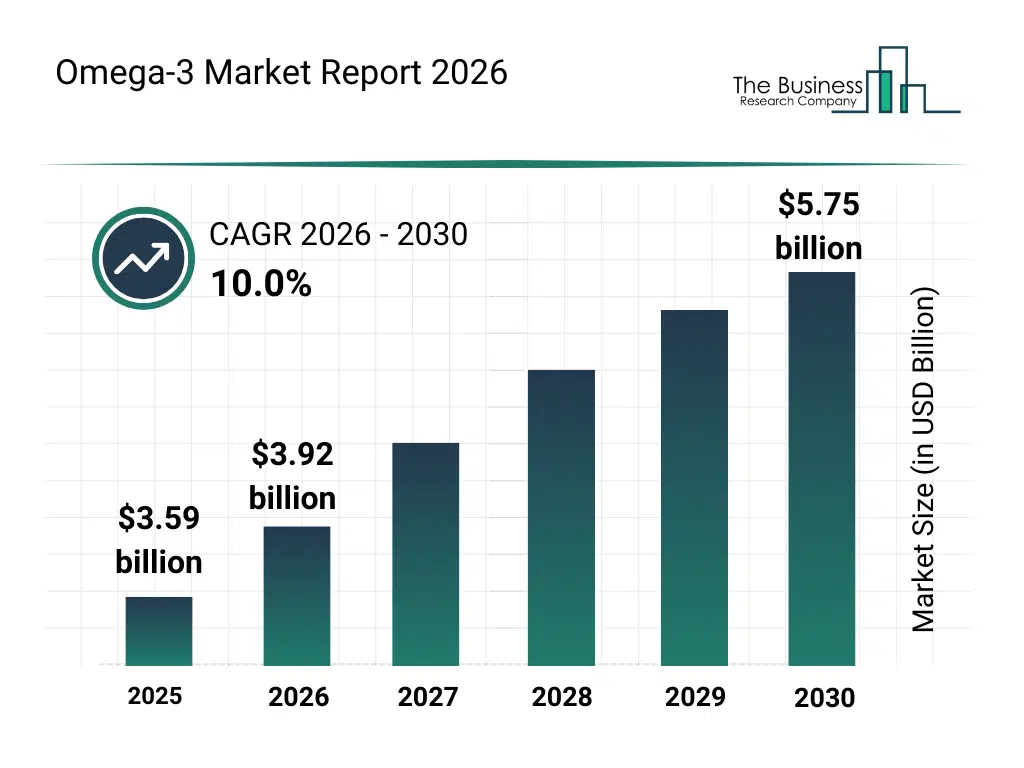
What Is The Omega-3 Market Size and Share 2026?
The omega-3 market size has grown strongly in recent years. It will grow from $3.59 billion in 2025 to $3.92 billion in 2026 at a compound annual growth rate (CAGR) of 9.4%. The growth in the historic period can be attributed to increased awareness of cardiovascular health benefits, expansion of dietary supplement consumption, rising use of fish oil products, growth of pharmaceutical omega-3 applications, improved extraction and purification technologies.What Is The Omega-3 Market Growth Forecast?
The omega-3 market size is expected to see rapid growth in the next few years. It will grow to $5.75 billion in 2030 at a compound annual growth rate (CAGR) of 10.0%. The growth in the forecast period can be attributed to increasing demand for plant-based omega-3 alternatives, rising focus on preventive healthcare, expansion of functional and fortified food markets, growing investments in sustainable omega-3 production, increasing use in pet nutrition and animal feed. Major trends in the forecast period include increasing demand for omega-3 enriched foods and supplements, rising adoption of algal-based omega-3 sources, growing use of omega-3 in infant nutrition, expansion of functional food applications, enhanced focus on purity and bioavailability.

Global Omega-3 Market Segmentation
1) By Type: Alpha-Linolenic Acid (ALA), Docosahexaenoic Acid (DHA), Eicosapentaenoic Acid (EPA) 2) By Source: Plant Source, Vegetable Oil, Nuts and Seeds, Soy, Marine Source, Other Sources 3) By Distribution Channel: Supermarkets/Hypermarkets, Pharmacies and Drug Stores, Online Retailers, Other Distribution Channels 4) By Application: Supplements & Functional Foods, Pharmaceuticals, Infant Formula, Animal Feed & Pet Food, Other Applications Subsegments: 1) By Alpha-Linolenic Acid (ALA): Plant-Based ALA Sources, ALA Supplements 2) By Docosahexaenoic Acid (DHA): Fish Oil-Based DHA, Algal Oil-Based DHA, DHA-Enriched Food Products 3) By Eicosapentaenoic Acid (EPA): Fish Oil-Based EPA, Algal Oil-Based EPA, EPA-Enriched Food ProductsWhat Is The Driver Of The Omega-3 Market?
The rise in chronic diseases is expected to propel the growth of the omega-3 market going forward. Chronic diseases are long-term medical conditions that persist over an extended period, typically three months or more. Omega-3 fatty acids, specifically EPA and DHA, are in demand as heart-healthy supplements due to their proven ability to reduce triglycerides, lower blood pressure, and enhance cardiovascular function, addressing the rising prevalence of heart-related chronic diseases. For instance, in July 2024, according to the Australian Institute of Health and Welfare (AIHW), an Australia based government health statistics agency, chronic conditions accounted for 78% of fatal burden, up from previous years. Therefore, the rise in chronic diseases will drive the growth of the omega-3 industry.Key Players In The Global Omega-3 Market
Major companies operating in the omega-3 market are Royal DSM Naamloze Vennootschap, BASF SE, Lonza Group AG, Epax Norway AS, Croda International PLC, Reckitt Benckiser Group PLC, Sanofi SA, Unilever PLC, Amway Corp., Nestle SA, Aker Biomarine Antarctic AS, Orkla Health, Omega Protein Corp., GC Reiber Oils, BioProcess Algae LLC, Koninklijke DSM N.V., Cargill Incorporated, FMC Corporation, Corbion, KD Pharma, Nordic Naturals, Pharmavite LLC, Carlson Laboratories, Garden of Life, NOW Foods, Solgar Inc., Source Naturals Inc., Barlean's Organic Oils, Jarrow Formulas, Bluestar Adisseo Company
This chart is for illustrative purposes; the full report includes a detailed competitor analysis and comprehensive overview of the top 10 companies in the market.
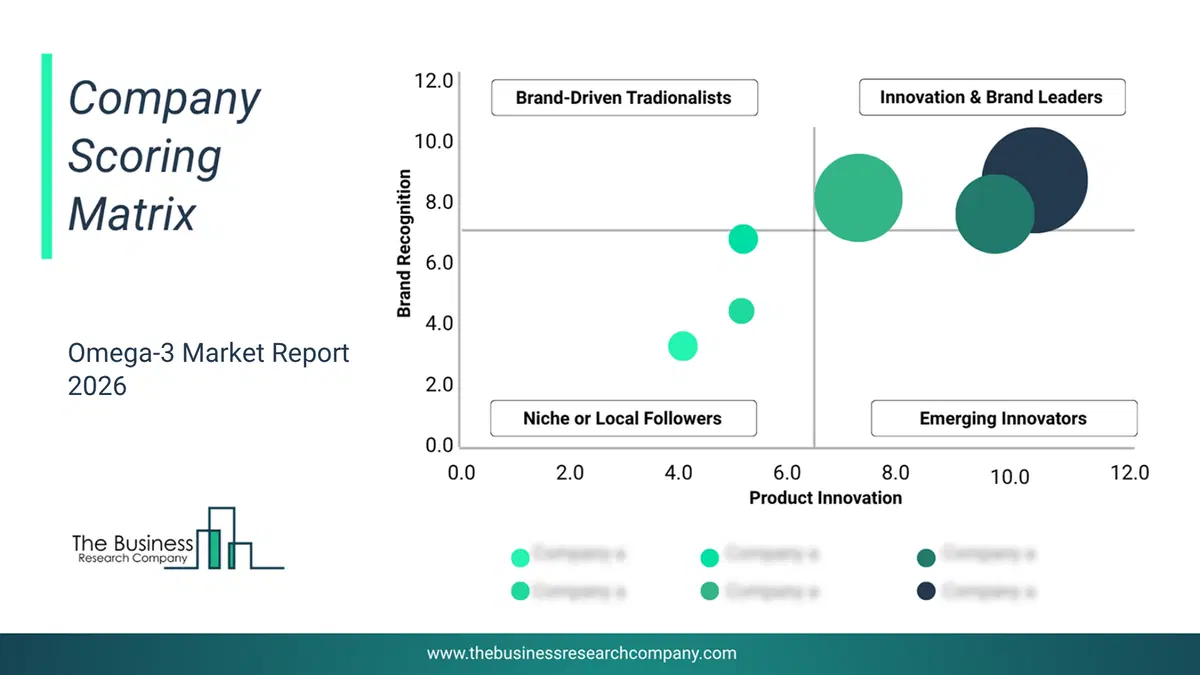
This chart maps companies by product innovation and brand strength, with bubble size indicating relative revenue, helping identify market leaders, challengers, and niche players. This is an illustrative chart; the full report provides a complete and accurate competitive analysis.
Global Omega-3 Market Trends and Insights
Major companies operating in the market are developing algae oil products, such as AlgaVia, to gain a competitive advantage and enhance their dietary supplement offerings. AlgaVia is a product line offering ingredients rich in omega-3 and omega-9 fatty acids produced through algal fermentation, with a focus on reducing the environmental impact and supporting human health. For instance, in August 2023, Corbion N.V., a Netherlands-based food and biochemicals company, introduced its AlgaVia product line, which features ingredients high in omega-3 and omega-9 fatty acids. These ingredients are produced via algal fermentation, aimed at reducing the environmental impact on marine resources and the carbon footprint associated with dietary supplement production. The algae oil portfolio offers high concentrations of omega-3s and omega-9s, supporting human health in areas such as brain function, immune support, vision, and heart health. These ingredients are accessible to supplement manufacturers through leading omega refiners and concentrators.What Are Latest Mergers And Acquisitions In The Omega-3 Market?
In April 2023, Cerea Partners, a France-based food and beverage investing company, acquired Polaris for an undisclosed amount. Through this acquisition, Polaris will focus on three core objectives: strengthening expertise in microalgae oils, expanding its global presence, especially in North America and Asia, and exploring new applications in areas such as infant nutrition and food, which may involve targeted external growth. Polaris is a France-based dietary supplement manufacturer specializing in omega-3 solutions.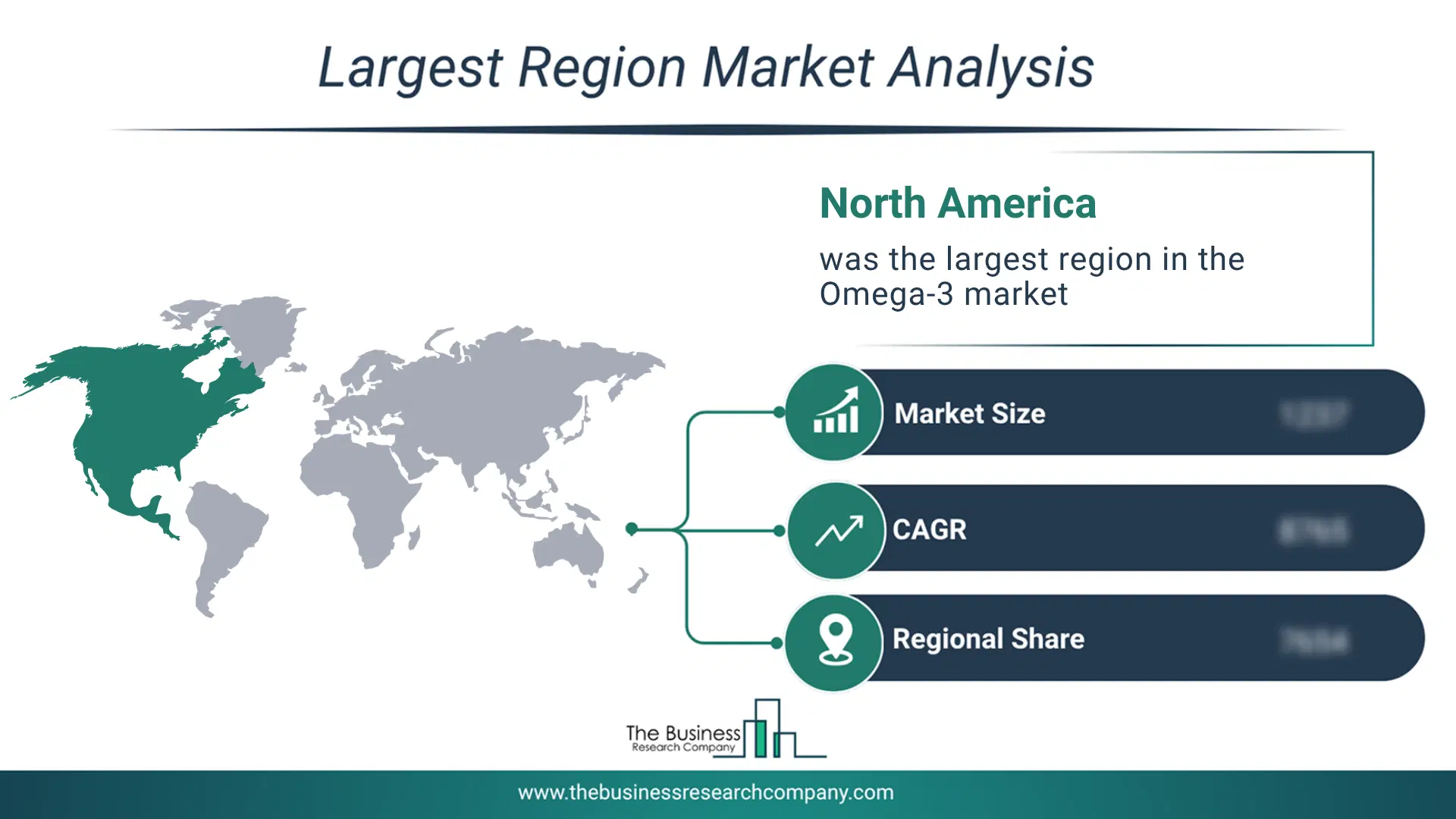
Regional Outlook
North America was the largest region in the omega-3 market in 2025. Asia-Pacific is expected to be the fastest-growing region in the forecast period. The regions covered in this market report are Asia-Pacific, South East Asia, Western Europe, Eastern Europe, North America, South America, Middle East and Africa. The countries covered in this market report are Australia, Brazil, China, France, Germany, India, Indonesia, Japan, Taiwan, Russia, South Korea, UK, USA, Italy, Spain, CanadaWhat Defines the Omega-3 Market?
The omega 3 market consists of sales of fish and seafood, nut, seeds, plant oils. Values in this market are ‘factory gate’ values, that is the value of goods sold by the manufacturers or creators of the goods, whether to other entities (including downstream manufacturers, wholesalers, distributors and retailers) or directly to end customers. The value of goods in this market includes related services sold by the creators of the goods.How is Market Value Defined and Measured?
The market value is defined as the revenues that enterprises gain from the sale of goods and/or services within the specified market and geography through sales, grants, or donations in terms of the currency (in USD unless otherwise specified). The revenues for a specified geography are consumption values that are revenues generated by organizations in the specified geography within the market, irrespective of where they are produced. It does not include revenues from resales along the supply chain, either further along the supply chain or as part of other products.
This chart presents market attractiveness based on a quantitative evaluation of growth, competition, strategic alignment, and risk, offering a clear view of opportunity areas for decision-making. This chart is for illustrative purposes; the full report contains the complete analysis.

This chart highlights the Total Addressable Market (TAM) by estimating the maximum revenue opportunity using an assumption-driven approach, supporting strategic planning and opportunity sizing across markets. The chart is illustrative; the full report provides a more comprehensive analysis.
What Key Data and Analysis Are Included in the Omega-3 Market Report 2026?
The omega-3 market research report is one of a series of new reports from The Business Research Company that provides market statistics, including industry global market size, regional shares, competitors with the market share, detailed market segments, market trends and opportunities, and any further data you may need to thrive in the omega-3 industry. The market research report delivers a complete perspective of everything you need, with an in-depth analysis of the current and future state of the industry.Omega-3 Market Report Forecast Analysis
| Report Attribute | Details |
|---|---|
| Market Size Value In 2026 | $3.92 billion |
| Revenue Forecast In 2030 | $5.75 billion |
| Growth Rate | CAGR of 9.4% from 2026 to 2030 |
| Base Year For Estimation | 2025 |
| Actual Estimates/Historical Data | 2020-2025 |
| Forecast Period | 2026 - 2030 |
| Market Representation | Revenue in USD Billion and CAGR from 2026 to 2030 |
| Segments Covered | Type, Source, Distribution Channel, Application |
| Regional Scope | Asia-Pacific, Western Europe, Eastern Europe, North America, South America, Middle East, Africa |
| Country Scope | The countries covered in the report are Australia, Brazil, China, France, Germany, India, Indonesia, Japan, Taiwan, Russia, South Korea, UK, USA, Canada, Italy, Spain. |
| Key Companies Profiled | Royal DSM Naamloze Vennootschap, BASF SE, Lonza Group AG, Epax Norway AS, Croda International PLC, Reckitt Benckiser Group PLC, Sanofi SA, Unilever PLC, Amway Corp., Nestle SA, Aker Biomarine Antarctic AS, Orkla Health, Omega Protein Corp., GC Reiber Oils, BioProcess Algae LLC, Koninklijke DSM N.V., Cargill Incorporated, FMC Corporation, Corbion, KD Pharma, Nordic Naturals, Pharmavite LLC, Carlson Laboratories, Garden of Life, NOW Foods, Solgar Inc., Source Naturals Inc., Barlean's Organic Oils, Jarrow Formulas, Bluestar Adisseo Company |
| Customization Scope | Request for Customization |
| Pricing And Purchase Options | Explore Purchase Options |