

Online Fashion Retail Market Report 2026
Global Outlook – By Product Type (Clothes, Footwear, Jewelry, Cosmetics, Bag And Accessories), By Model Type (Business To Business, Business To Consumer), By End User (Children, Men, Women) – Market Size, Trends, Strategies, and Forecast to 2030
Online Fashion Retail Market Overview
• Online Fashion Retail market size has reached to $776.6 billion in 2025 • Expected to grow to $1311.02 billion in 2030 at a compound annual growth rate (CAGR) of 11.1% • Growth Driver: Digital Shopping Trends Driving Growth In Online Fashion Retail • Market Trend: AI-Driven Personalization Transforming Digital Fashion Shopping Experiences • North America was the largest region in 2025.Market Gains By 2030 – Top Opportunities By Segment
Market Gain identifies the most promising market opportunities by highlighting the segments or products expected to generate the highest incremental revenue growth over the next five years.
What Is Covered Under Online Fashion Retail Market?
Online fashion retail refers to the business of selling fashion products such as clothing, accessories, shoes, and cosmetics through internet platforms. It allows customers to browse, select, and purchase items from a wide range of brands and designers without visiting physical stores. It often includes features such as virtual fitting rooms, detailed product descriptions, customer reviews, and convenient payment options, making it a popular choice for shopping among consumers worldwide. The main product types of online fashion retail include clothes, footwear, jewelry, cosmetics, bags, and accessories. Clothes such as garments and apparel items available for purchase online, catering to various styles, sizes, and seasonal trends as online platforms offer a wide array of clothing options, from casual wear to formal attire, accessible to global consumers seeking convenience and diverse choices. The model types are business-to-business and business-to-consumer, and end users include children, men, and women.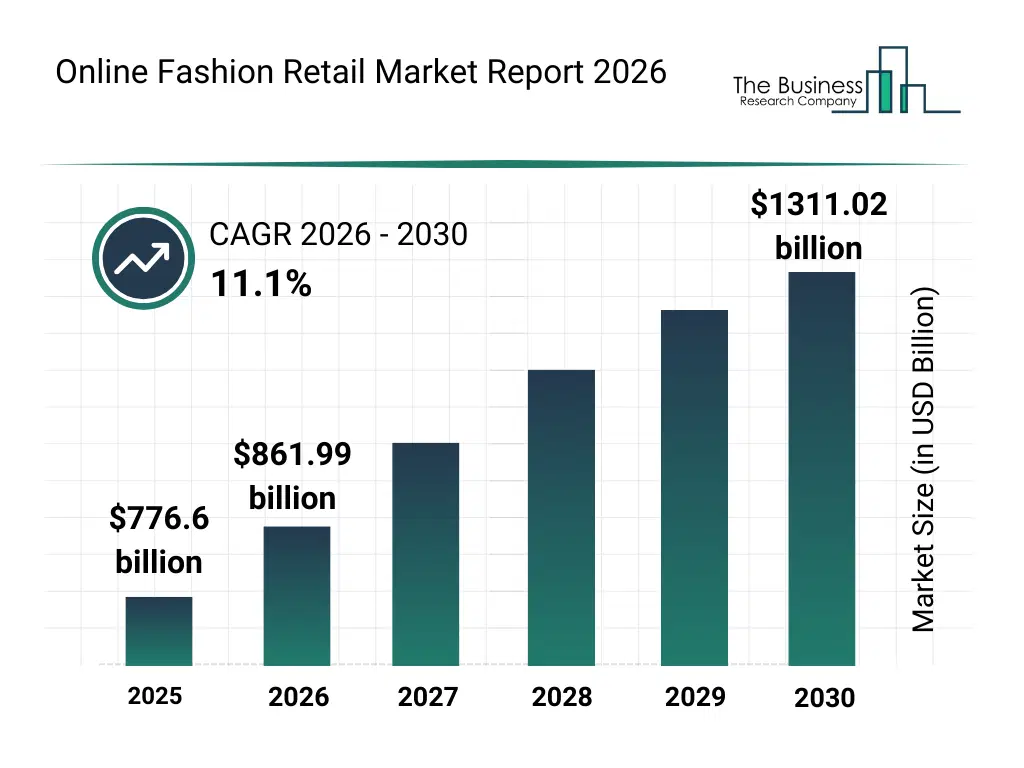
What Is The Online Fashion Retail Market Size and Share 2026?
The online fashion retail market size has grown rapidly in recent years. It will grow from $776.6 billion in 2025 to $861.99 billion in 2026 at a compound annual growth rate (CAGR) of 11.0%. The growth in the historic period can be attributed to rising internet penetration, growth of smartphones, increasing urbanization, expansion of global fashion brands, improvement in online payment infrastructure.What Is The Online Fashion Retail Market Growth Forecast?
The online fashion retail market size is expected to see rapid growth in the next few years. It will grow to $1311.02 billion in 2030 at a compound annual growth rate (CAGR) of 11.1%. The growth in the forecast period can be attributed to increasing disposable income, demand for convenience shopping, growth of cross-border e-commerce, rising youth population, expansion of omni-channel retail strategies. Major trends in the forecast period include AI-powered personalized fashion recommendations, sustainable and ethical online fashion offerings, ar-based virtual try-on and fit visualization, data-driven dynamic pricing and inventory optimization, digital wallets and buy now pay later integration.
Global Online Fashion Retail Market Segmentation
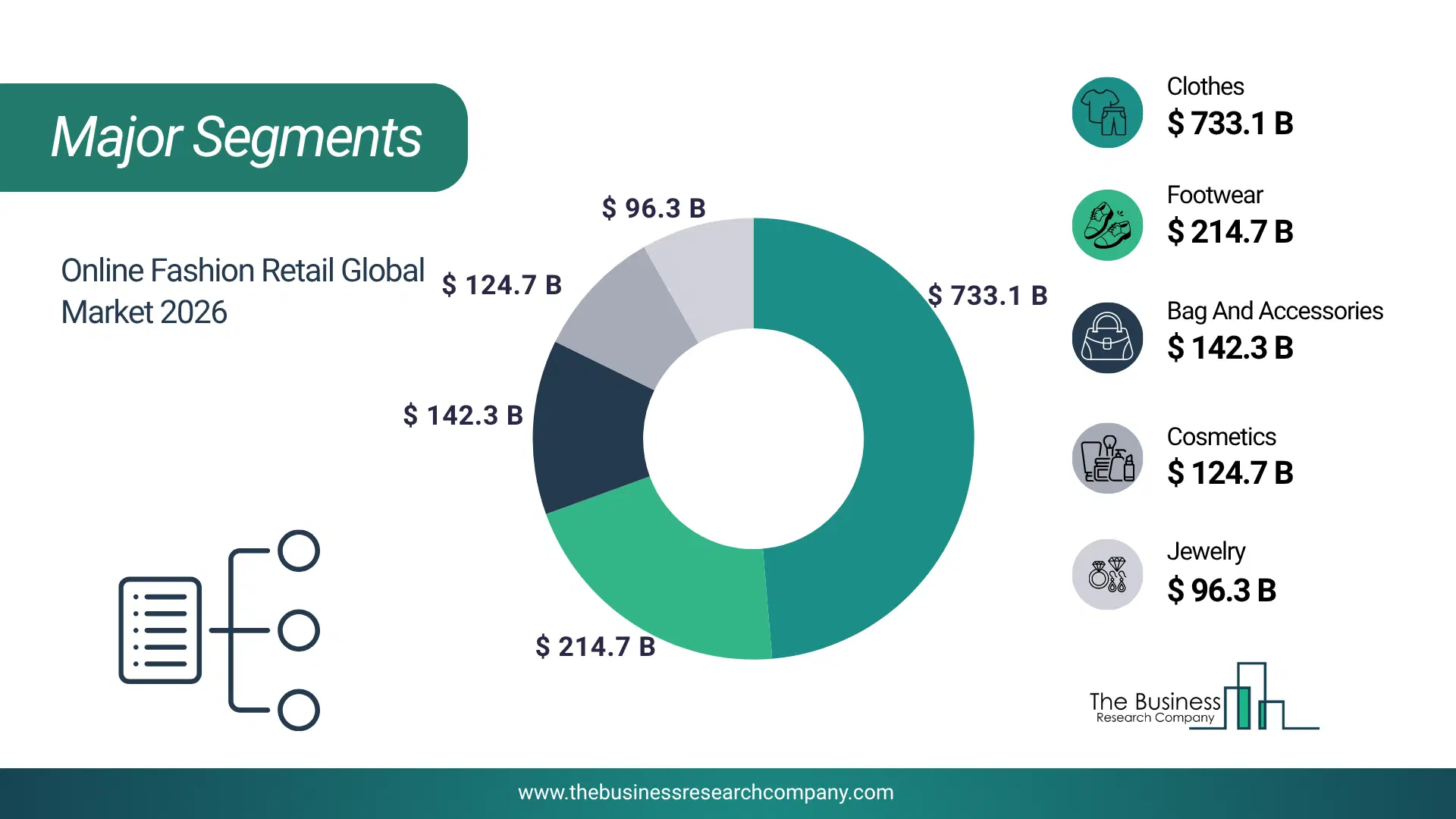
1) By Product Type: Clothes, Footwear, Jewelry, Cosmetics, Bag And Accessories 2) By Model Type: Business To Business, Business To Consumer 3) By End User: Children, Men, Women Subsegments: 1) By Clothes: Women's Apparel, Men's Apparel, Kids' Apparel, Sportswear, Lingerie And Sleepwear, Outerwear (Jackets, Coats), Swimwear 2) By Footwear: Women's Footwear, Men's Footwear, Kids' Footwear, Sports Footwear (Running Shoes, Sneakers), Casual Shoes, Formal Shoes, Boots 3) By Jewelry: Necklaces And Pendants, Earrings, Bracelets And Bangles, Rings, Watches, Brooches And Pins 4) By Cosmetics: Skincare, Makeup (Face, Eyes, Lips), Haircare Products, Fragrances, Nail Care Products, Beauty Tools And Accessories 5) By Bags And Accessories: Handbags, Backpacks, Wallets And Purses, Belts, Sunglasses, Scarves And Shawls, Hats And Caps, Gloves, Travel Bags The top segments in the online fashion retail market will be: • Clothes will reach $733.09 billion by 2030. • Footwear will reach $214.65 billion by 2030. • Cosmetics will reach $142.29 billion by 2030. • Jewelry will reach $124.73 billion by 2030. • Bag And Accessories will reach $96.26 billion by 2030.What Is The Driver Of The Online Fashion Retail Market?
A shifting preference towards digital shopping for convenience and safety is expected to propel the growth of the online fashion retail market in the coming years. Digital shopping, often known as shopping online, is the process of buying products or services via an internet connection using a mobile app or a website. The convenience of shopping from home drives the shifting preference towards digital shopping, the wide variety of online products, and the ability to easily compare prices and find deals, making it a more appealing and efficient option for consumers. Digital shopping in fashion retail offers convenience, extensive product selection, and personalized shopping experiences enabled by advanced technologies such as artificial intelligence and virtual try-ons. For instance, in December 2025, according to US Census Bureau, a US-based government agency, e-commerce sales in the third quarter of 2025, adjusted for seasonal variation but not for price changes, reached US$ 310.3 billion, reflecting a 5.1% increase from the third quarter of 2024 and accounted for 16.4% of total retail sales. therefore, shifting preferences towards digital shopping for convenience and safety drives the online fashion retail industry.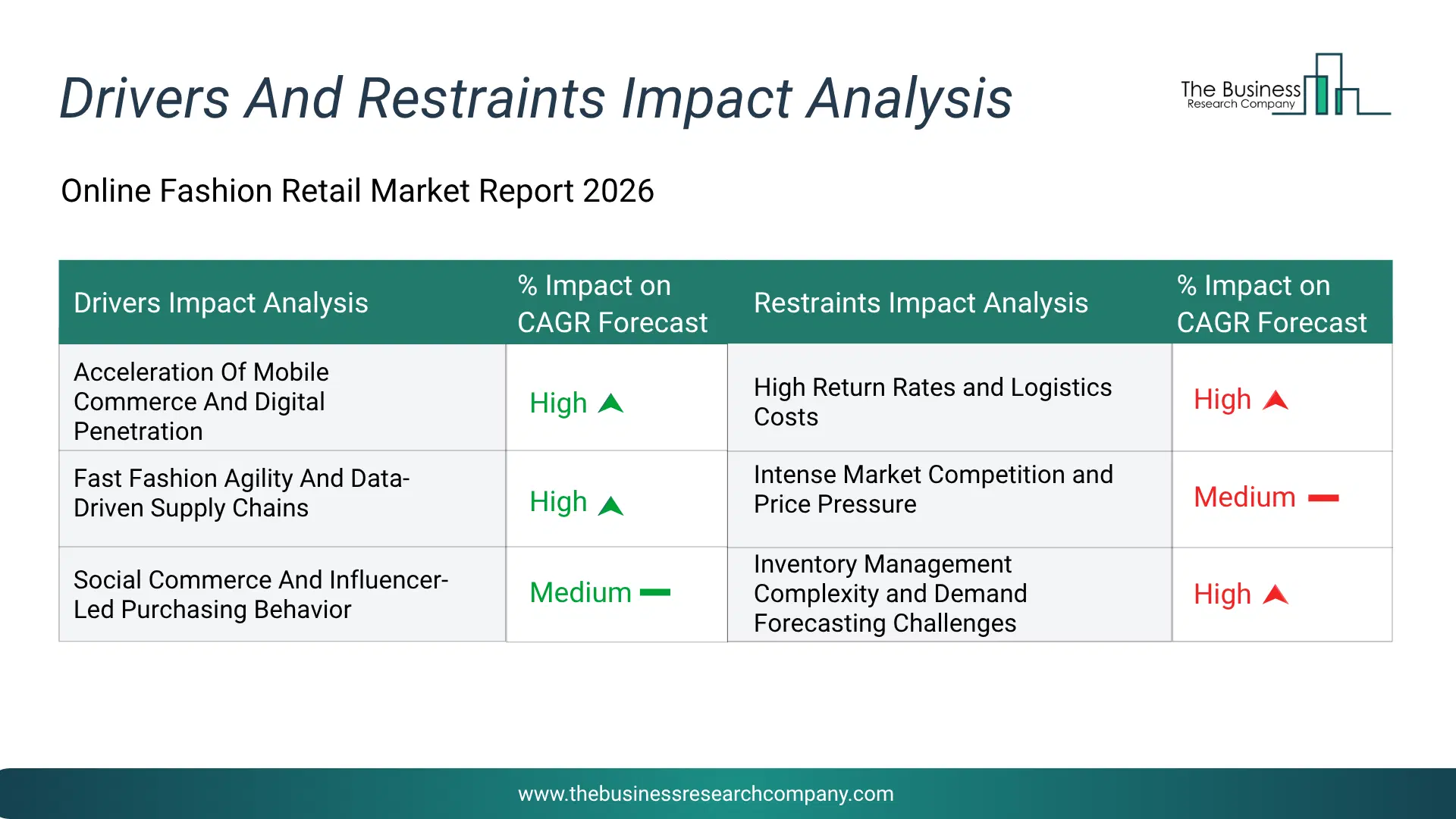
Infographic Chart Showing Key Market Drivers Analysis And Restraints For Online Fashion Retail Market
The chart presents an impact analysis of key drivers and restraints, quantifying their relative influence on the market's growth rate and helping assess the balance between growth enablers and limiting factors. This chart offers a high-level perspective; the full report contains more detailed insights.
How Will The Drivers Impact Growth In The Global Online Fashion Retail Market?
• Acceleration Of Mobile Commerce And Digital Penetration (High) – During the forecast period, the acceleration of mobile commerce and digital penetration is expected to become a key growth driver for the online fashion retail market by 2030. The rapid expansion of smartphone penetration and high -speed internet access is significantly accelerating mobile -first shopping behavior. Consumers increasingly prefer app -based purchasing due to convenience, real -time promotions, and seamless digital payment integration. Retailers are optimizing platforms with ai -driven personalization, frictionless checkout systems, and omnichannel synchronization, which improves conversion rates and customer retention. This sustained shift toward mobile commerce remains the strongest structural growth catalyst during the forecast period. • Fast Fashion Agility And Data-Driven Supply Chains (High) – During the forecast period, the fast fashion agility and data-driven supply chains is expected to emerge as a major factor driving the expansion of the online fashion retail market by 2030. Advanced demand forecasting tools, real-time trend analytics, and flexible sourcing networks allow online retailers to reduce lead times and rapidly respond to evolving consumer preferences. Digital-native brands leverage big data insights to launch micro-collections and limited releases, minimizing excess inventory and maximizing margins. Agile supply chains and cross-border fulfillment capabilities enhance scalability and competitive positioning. This operational efficiency directly contributes to revenue expansion and market share gains. • Social Commerce And Influencer-Led Purchasing Behavior (Medium) – During the forecast period, the social commerce and influencer-led purchasing behavior is expected to act as a key growth catalyst for the online fashion retail market by 2030. The integration of shopping capabilities within social media platforms is transforming product discovery and customer acquisition strategies. Live-stream shopping, influencer collaborations, and algorithm-driven content recommendations increase engagement and accelerate purchase decisions, particularly among gen z and millennial consumers. The blending of entertainment and commerce shortens buying cycles and drives impulse purchases. This digital engagement ecosystem continues to be a measurable growth driver across leading online fashion retailers.How Will The Restraints Impact Growth In The Global Online Fashion Retail Market?
• High Return Rates and Logistics Costs (High) – During the forecast period, the online fashion retail experiences significantly higher product return rates compared to other e-commerce categories due to sizing issues, fit concerns, and style mismatches. Managing reverse logistics, quality checks, and refunds increases operational costs and affects profit margins. Free return policies, while attractive to customers, add financial pressure on retailers. Rising fuel prices and warehouse management expenses further increase logistics costs. These operational challenges act as a key restraint for sustained profitability in the market. • Intense Market Competition and Price Pressure (Medium) – During the forecast period, the online fashion retail market is highly competitive, with numerous global brands, private labels, and marketplace sellers competing on price, variety, and delivery speed. Frequent discounting strategies and promotional campaigns reduce margins. Customer acquisition costs through digital advertising and influencer partnerships are rising. Smaller retailers may struggle to compete with established platforms that benefit from economies of scale and brand recognition. These competitive pressures act as a structural restraint in the market. • Inventory Management Complexity and Demand Forecasting Challenges (High) – During the forecast period, the inventory management complexity and demand forecasting challenges act as a restraint for the online fashion retail market by making it difficult for retailers to accurately predict consumer preferences and seasonal trends. Rapidly changing fashion cycles and shifting customer tastes often lead to overstocking or stockouts, both of which negatively impact profitability. Unsold inventory increases storage costs and forces heavy discounting, while stock shortages result in lost sales opportunities. Additionally, managing a wide variety of sizes, styles, and skus across multiple channels increases operational inefficiency. These factors collectively limit scalability and reduce overall market efficiency.Key Players In The Global Online Fashion Retail Market
Major companies operating in the online fashion retail market are Amazon.com Inc, Alibaba Group Holding Limited, Adidas AG, H & M Hennes & Mauritz AB, Nordstrom Inc, Levi Strauss & Co, Flipkart Private Limited, Saks Fifth Avenue LLC, Farfetch UK Limited, Ssense Inc, YOOX Net-a-Porter Group S.p.A., Depop Limited, Myntra Designs Private Limited, Shoppers Stop Ltd, Lane Crawford Joyce Group, MATCHESFASHION Limited, LimeRoad, Lyst Ltd, Paytm Mall, Styletag, Koovs plc, Yepme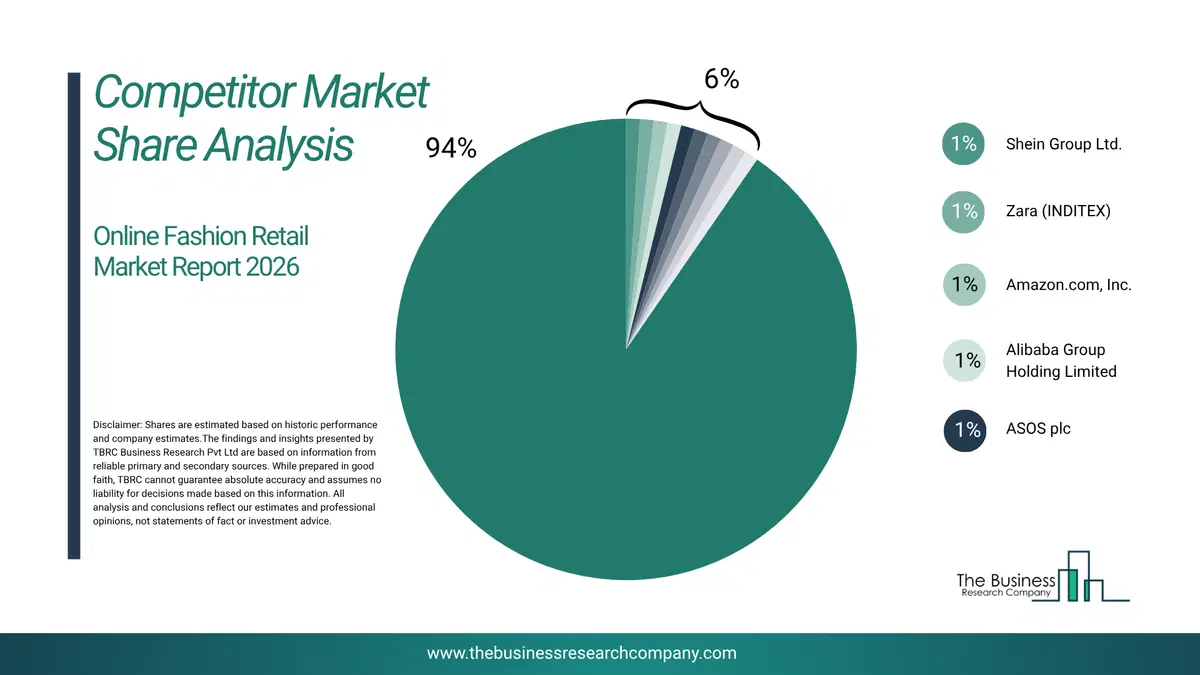
This chart is for illustrative purposes; the full report includes a detailed competitor analysis and comprehensive overview of the top 10 companies in the market.
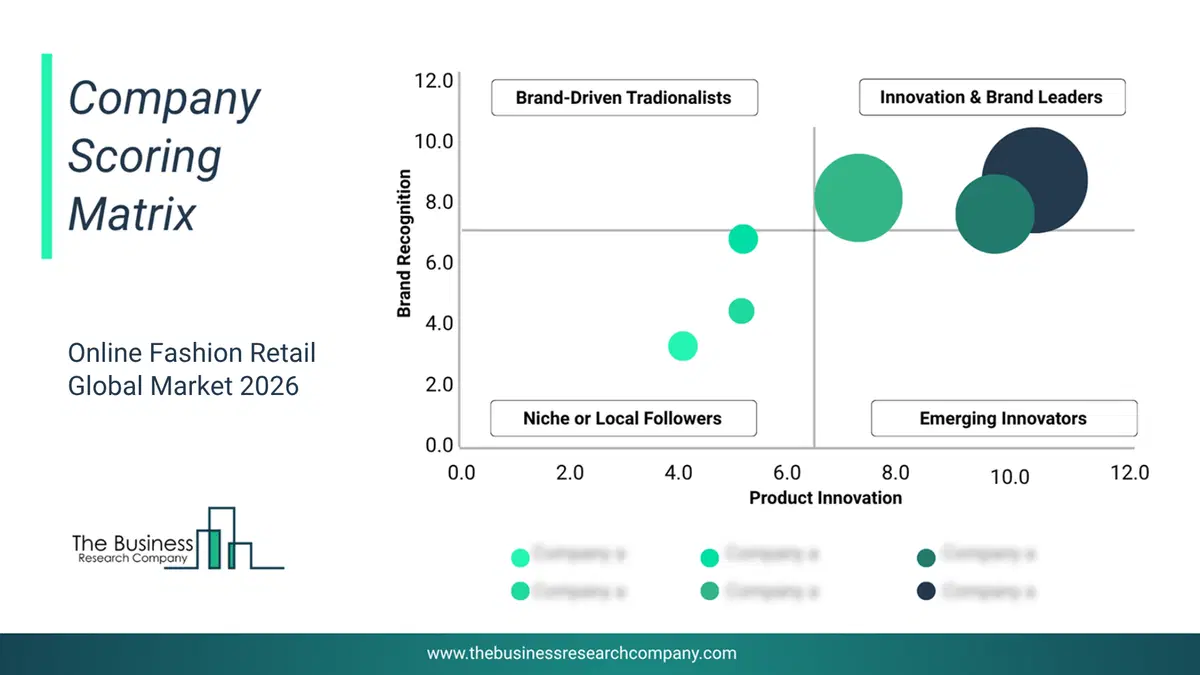
This chart maps companies by product innovation and brand strength, with bubble size indicating relative revenue, helping identify market leaders, challengers, and niche players. This is an illustrative chart; the full report provides a complete and accurate competitive analysis.
Global Online Fashion Retail Market Trends and Insights
Major companies operating in the online fashion retail market are focusing on developing innovative solutions, such as AI powered virtual try on tools and chat-based shopping platforms, to address rising demand for personalization and more engaging digital shopping journeys driven by consumer preference for seamless, intuitive online retail experiences. AI powered virtual try on tools and chat-based shopping platforms use artificial intelligence and machine learning, along with technologies such as computer vision and natural language processing, to help customers visualize products digitally or interact through conversational interfaces that understand user intent, offering a more interactive experience compared to traditional static product listings and filter-based search. For instance, in June 2025, Daydream, a US based fashion technology company, launched its AI powered chat-based shopping platform, an innovative online fashion retail solution designed to transform how consumers discover products by enabling personalized conversational search and recommendations across millions of products and thousands of brands using natural language and image inputs. Daydream’s technology integrates generative AI to interpret user preferences and shopping intent in a conversational manner, functioning like a digital personal stylist and improving upon conventional e commerce search by delivering more intuitive, context aware product discovery and tailored suggestions, thereby enhancing convenience and relevance in online fashion shopping.What Are Latest Mergers And Acquisitions In The Online Fashion Retail Market?
In February 2024, Coupang Inc, a South Korean-based e-commerce company, acquired Farfetch for $500 million. This acquisition will enhance Coupang's global presence and diversify its product offerings by integrating Farfetch's luxury fashion portfolio, attracting high-end shoppers, and expanding its reach beyond South Korea, aligning with its goal to become a leading global e-commerce platform. Farfetch Ltd. is a UK-based e-commerce company focused on luxury clothing and beauty products.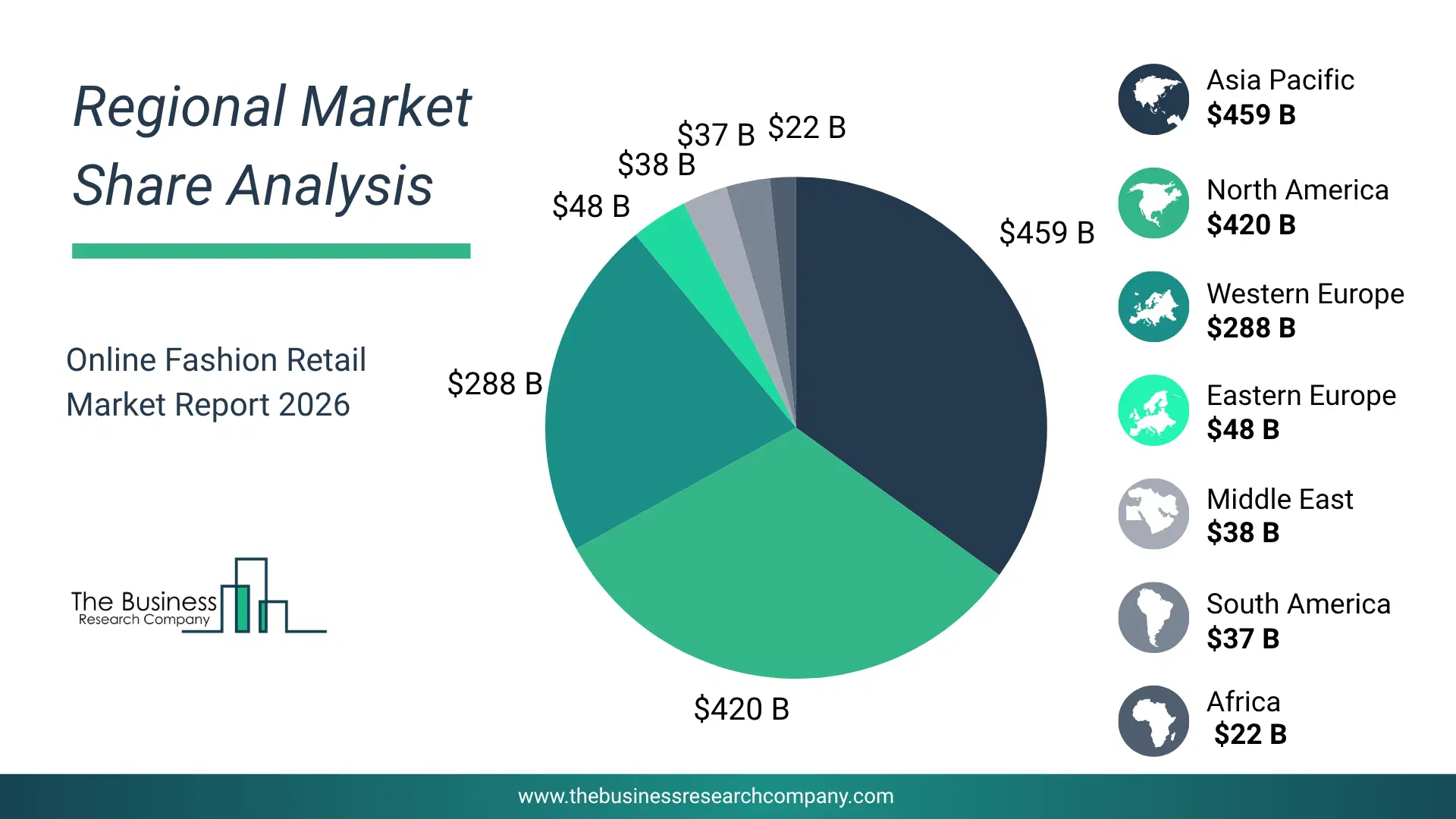
Regional Outlook
North America was the largest region in the online fashion retail market in 2025. The regions covered in this market report are Asia-Pacific, South East Asia, Western Europe, Eastern Europe, North America, South America, Middle East and Africa. The countries covered in this market report are Australia; Brazil; China; France; Germany; India; Indonesia; Japan; Taiwan; Russia; South Korea; UK; USA; Canada; Italy; Spain.What Defines the Online Fashion Retail Market?
The online fashion retail market consists of revenues earned by entities by providing services such as personal styling services, customization, and subscription services. The market value includes the value of related goods sold by the service provider or included within the service offering. The online fashion retail market also includes sales for athletic wear, home textiles, apparel items, and beauty products. Values in this market are ‘factory gate’ values, that is, the value of goods sold by the manufacturers or creators of the goods, whether to other entities (including downstream manufacturers, wholesalers, distributors, and retailers) or directly to end customers. The value of goods in this market includes related services sold by the creators of the goods.How is Market Value Defined and Measured?
The market value is defined as the revenues that enterprises gain from the sale of goods and/or services within the specified market and geography through sales, grants, or donations in terms of the currency (in USD unless otherwise specified). The revenues for a specified geography are consumption values that are revenues generated by organizations in the specified geography within the market, irrespective of where they are produced. It does not include revenues from resales along the supply chain, either further along the supply chain or as part of other products.
This chart presents market attractiveness based on a quantitative evaluation of growth, competition, strategic alignment, and risk, offering a clear view of opportunity areas for decision-making. This chart is for illustrative purposes; the full report contains the complete analysis.

This chart highlights the Total Addressable Market (TAM) by estimating the maximum revenue opportunity using an assumption-driven approach, supporting strategic planning and opportunity sizing across markets. The chart is illustrative; the full report provides a more comprehensive analysis.
What Key Data and Analysis Are Included in the Online Fashion Retail Market Report 2026?
The online fashion retail market research report is one of a series of new reports from The Business Research Company that provides market statistics, including industry global market size, regional shares, competitors with the market share, detailed market segments, market trends and opportunities, and any further data you may need to thrive in the online fashion retail industry. The market research report delivers a complete perspective of everything you need, with an in-depth analysis of the current and future state of the industry.Online Fashion Retail Market Report Forecast Analysis
| Report Attribute | Details |
|---|---|
| Market Size Value In 2026 | $861.99 billion |
| Revenue Forecast In 2030 | $1311.02 billion |
| Growth Rate | CAGR of 11.1% from 2026 to 2030 |
| Base Year For Estimation | 2025 |
| Actual Estimates/Historical Data | 2020-2025 |
| Forecast Period | 2026 - 2030 |
| Market Representation | Revenue in USD Billion and CAGR from 2026 to 2030 |
| Segments Covered | Product Type, Model Type, End User |
| Regional Scope | Asia-Pacific, Western Europe, Eastern Europe, North America, South America, Middle East, Africa |
| Country Scope | The countries covered in the report are Australia, Brazil, China, France, Germany, India, Indonesia, Japan, Taiwan, Russia, South Korea, UK, USA, Canada, Italy, Spain. |
| Key Companies Profiled | Amazon.com Inc, Alibaba Group Holding Limited, Adidas AG, H & M Hennes & Mauritz AB, Nordstrom Inc, Levi Strauss & Co, Flipkart Private Limited, Saks Fifth Avenue LLC, Farfetch UK Limited, Ssense Inc, YOOX Net-a-Porter Group S.p.A., Depop Limited, Myntra Designs Private Limited, Shoppers Stop Ltd, Lane Crawford Joyce Group, MATCHESFASHION Limited, LimeRoad, Lyst Ltd, Paytm Mall, Styletag, Koovs plc, Yepme |
| Customization Scope | Request for Customization |
| Pricing And Purchase Options | Explore Purchase Options |