
Oral Biologics & Biosimilars Market Report 2026
Global Outlook – By Therapy (Lymphocyte Modulators, Immunostimulants, GPCR Modulators, Other Therapies), By Disease (Diabetes, Arthritis and Crohn’s Disease, Cancer, Infectious Disease, Other Autoimmune Disease, Other Diseases), By Molecule Type (Vaccines, Proteins and Peptides, Other Molecule Types), By Distribution Channel (Hospital Pharmacies, Retail Pharmacies, Online Pharmacies) – Market Size, Trends, Strategies, and Forecast to 2030
Oral Biologics & Biosimilars Market Overview
• Oral Biologics & Biosimilars market size has reached to $9.37 billion in 2025 • Expected to grow to $24.69 billion in 2030 at a compound annual growth rate (CAGR) of 21.6% • Growth Driver: Surging Prevalence Of Chronic Diseases Fuels Growth In Oral Biologics And Biosimilar Market • Market Trend: Advancements In Smart Capsule Technologies For Oral Biologics And Biosimilars • North America was the largest region in 2025 and Middle East is the fastest growing region.Market Gains By 2030 – Top Opportunities By Segment
Market Gain identifies the most promising market opportunities by highlighting the segments or products expected to generate the highest incremental revenue growth over the next five years.
What Is Covered Under Oral Biologics & Biosimilars Market?
Biologics are drugs made from living cells using highly complex technology, while biosimilars are created to function similarly to biologics but are not identical to biologics. The oral biologics and biosimilars comprise biologics and biosimilar drugs taken orally for the targeted treatment of Alzheimer's, multiple sclerosis, HIV or AIDS, and other serious conditions and are used to treat chronic diseases such as diabetes, arthritis, and cancer. The main therapy types of oral biologics and biosimilar lymphocytes are modulators, interleukin inhibitors, tumor necrosis factor-alpha inhibitors, immunostimulants, GPCR modulators, and others. Interleukin inhibitors are immunosuppressive drugs that stop interleukins from working. The various diseases include asthma, Crohn's disease, cancer, infectious disease, other autoimmune disease, and others that are treated by molecular types such as vaccines, proteins and peptides, monoclonal antibodies, and other therapies. These are distributed through hospital pharmacies, retail pharmacies, and online pharmacies.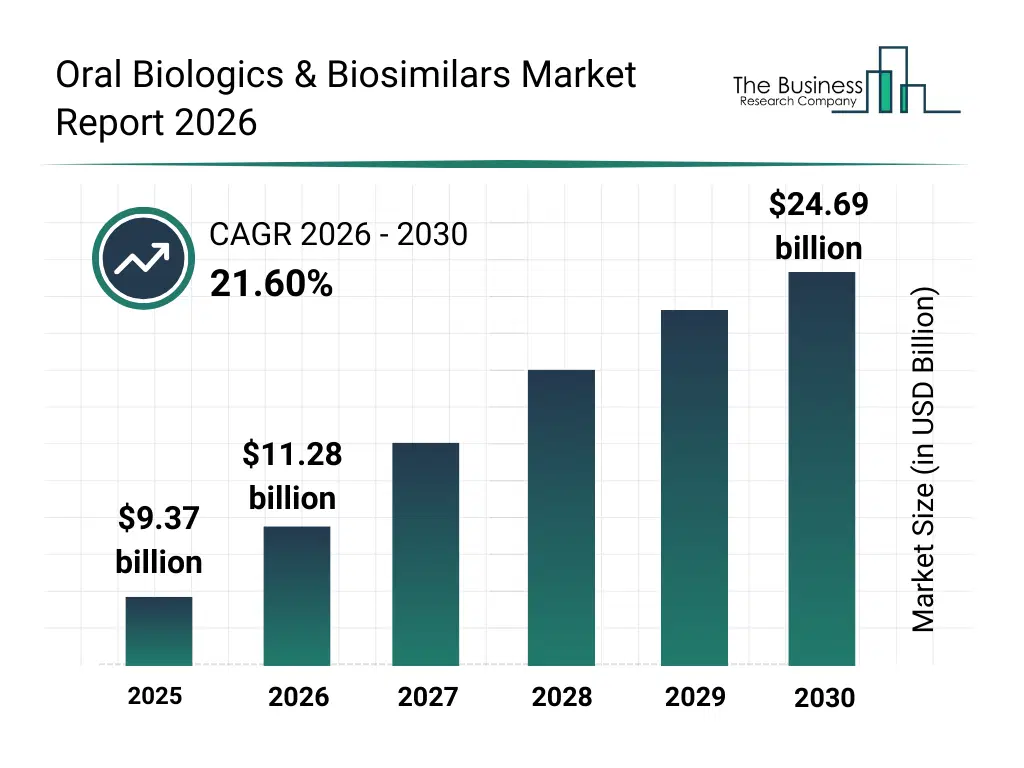
What Is The Oral Biologics & Biosimilars Market Size and Share 2026?
The oral biologics & biosimilars market size has grown exponentially in recent years. It will grow from $9.37 billion in 2025 to $11.28 billion in 2026 at a compound annual growth rate (CAGR) of 20.3%. The growth in the historic period can be attributed to limited availability of oral biologics, high cost of biologic therapies, reliance on injectable formulations, increasing prevalence of chronic diseases, growing hospital and retail pharmacy networks.What Is The Oral Biologics & Biosimilars Market Growth Forecast?
The oral biologics & biosimilars market size is expected to see exponential growth in the next few years. It will grow to $24.69 billion in 2030 at a compound annual growth rate (CAGR) of 21.6%. The growth in the forecast period can be attributed to development of biosimilars and combination therapies, expansion of oral biologics pipelines, increasing patient preference for oral medications, rising adoption of digital adherence tools, growing government support and reimbursement policies. Major trends in the forecast period include rising adoption of oral biologics and biosimilars for chronic diseases, growth in targeted therapies for diabetes, arthritis, and cancer, increasing development of monoclonal antibody-based oral treatments, expansion of hospital, retail, and online pharmacy distribution channels, focus on patient adherence and personalized treatment plans.
Global Oral Biologics & Biosimilars Market Segmentation
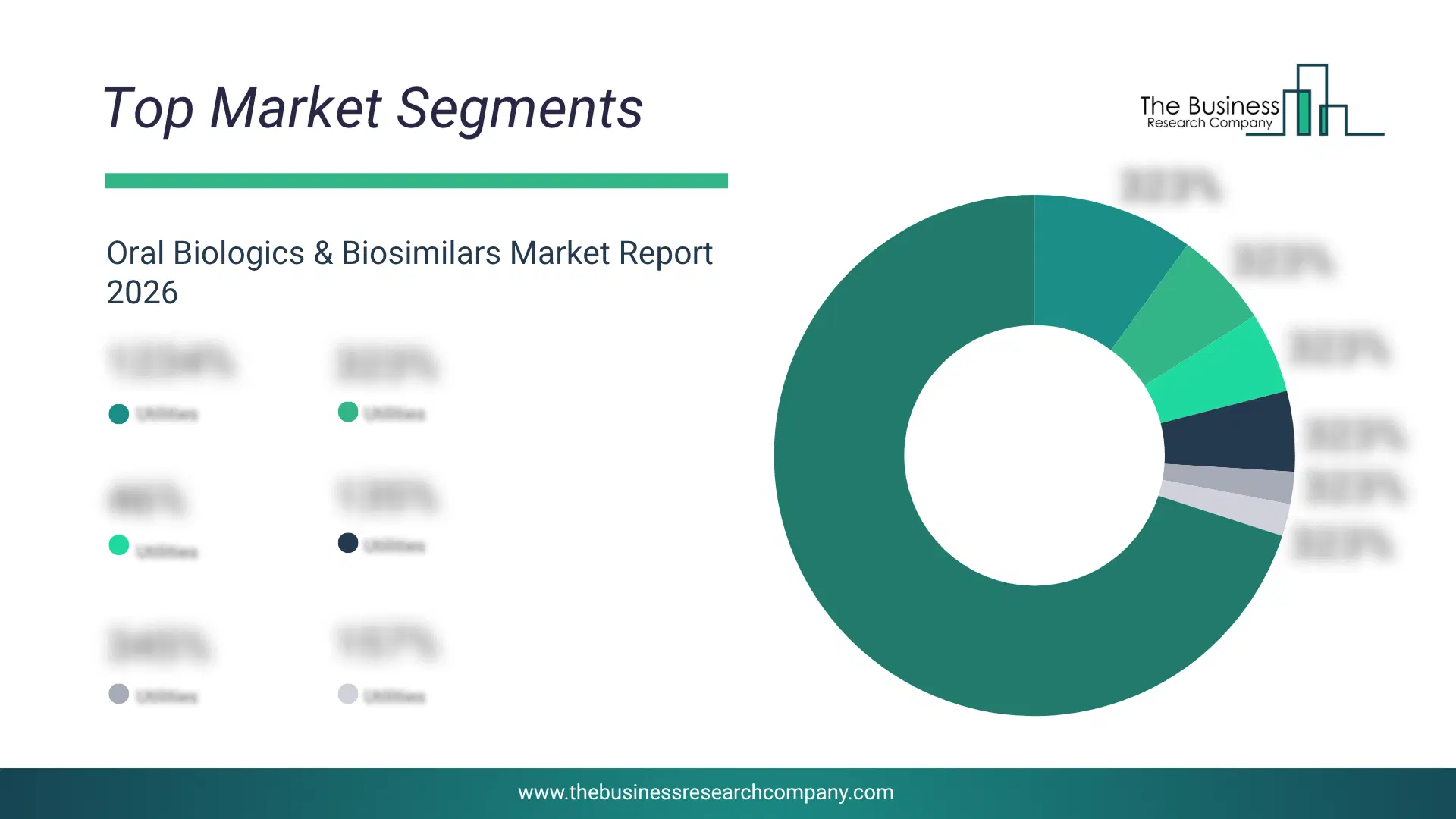
1) By Therapy: Lymphocyte Modulators, Immunostimulants, GPCR Modulators, Other Therapies 2) By Disease: Diabetes, Arthritis and Crohn’s Disease, Cancer, Infectious Disease, Other Autoimmune Disease, Other Diseases 3) By Molecule Type: Vaccines, Proteins and Peptides, Other Molecule Types 4) By Distribution Channel: Hospital Pharmacies, Retail Pharmacies, Online Pharmacies Subsegments: 1) By Lymphocyte Modulators: T-Cell Modulators, B-Cell Modulators, Sphingosine-1-Phosphate Receptor Modulators 2) By Immunostimulants: Cytokines, Immune Checkpoint Inhibitors, Adjuvants 3) By GPCR Modulators: Agonists, Antagonists, Biased Ligands 4) By Other Therapies: Cell-Based Therapies, Gene Therapies, Combination Therapies The top segments in the oral biologics and biosimilars market will be: • Retail Pharmacies will reach $2.47 Billion by 2030. • Hospital Pharmacies will reach $0.99 Billion by 2030. • Online Pharmacies will reach $0.76 Billion by 2030.What Is The Driver Of The Oral Biologics & Biosimilars Market?
The rising prevalence of chronic diseases is expected to propel the growth of the oral biologics and biosimilar market going forward. Chronic diseases refer to long-lasting medical conditions that typically progress slowly, such as diabetes, cardiovascular diseases, and respiratory disorders. The rise in chronic diseases is largely driven by sedentary lifestyles, as prolonged physical inactivity increases the risk of obesity, heart disease, type 2 diabetes, and certain cancers. Oral biologics and biosimilars support this shift by providing more accessible, cost-effective, and convenient treatment options for patients managing chronic conditions. For instance, in January 2023, according to the Centers for Disease Control and Prevention (CDC), a US-based federal agency, in 2023, 76.4% of U.S. adults (approximately 194 million people) reported having at least one chronic condition, with prevalence rates of 59.5% among young adults, 78.4% among midlife adults, and 93.0% among older adults. Therefore, the rising prevalence of chronic diseases is driving the growth of the oral biologics and biosimilar market.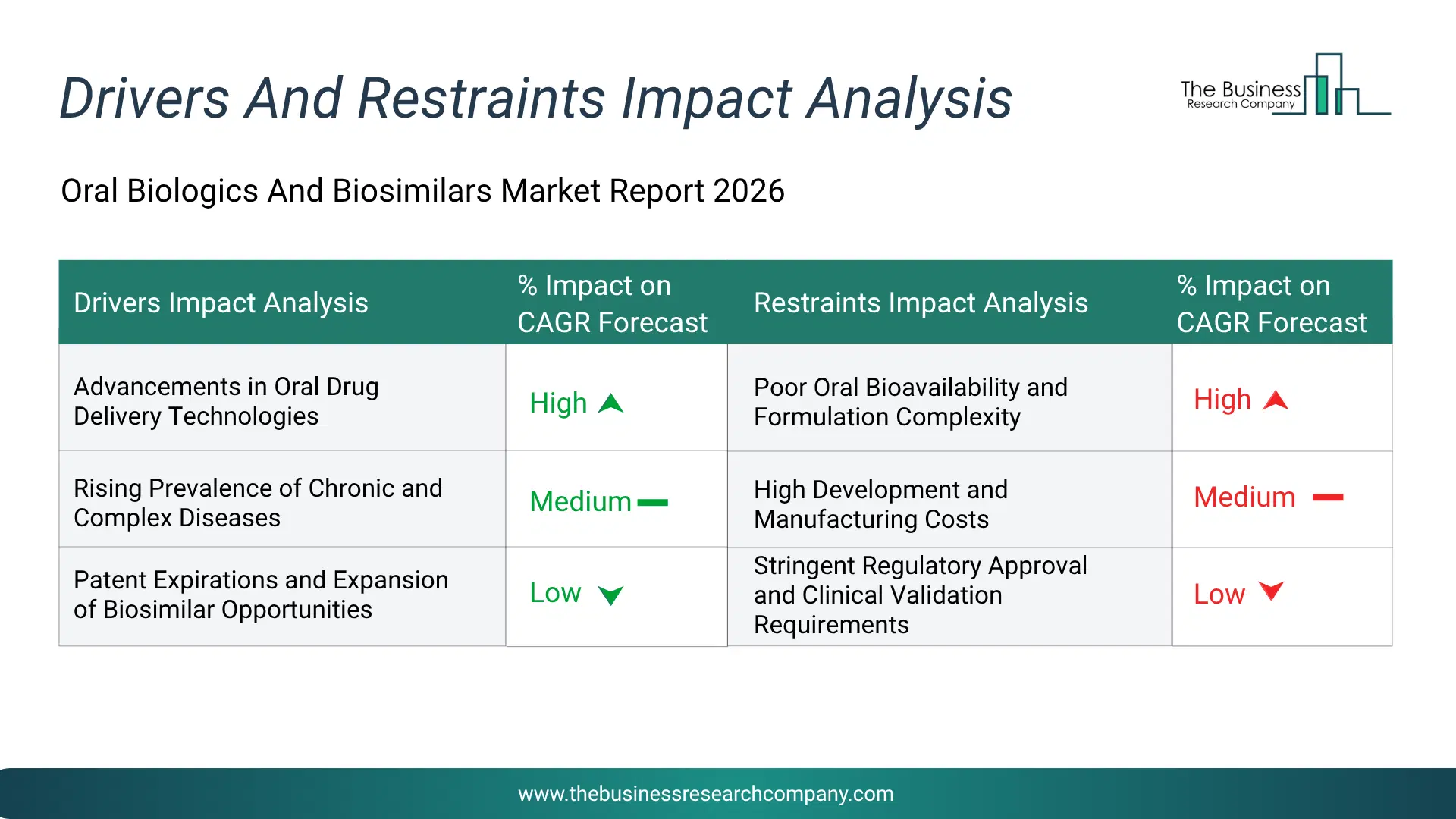
Infographic Chart Showing Key Market Drivers Analysis And Restraints For Oral Biologics & Biosimilars Market
The chart presents an impact analysis of key drivers and restraints, quantifying their relative influence on the market's growth rate and helping assess the balance between growth enablers and limiting factors. This chart offers a high-level perspective; the full report contains more detailed insights.
How Will The Drivers Impact Growth In The Global Oral Biologics And Biosimilars Market?
• Advancements in Oral Drug Delivery Technologies (High) – During the forecast period, the advancements in oral drug delivery technologies are expected to become a key growth driver for the oral biologics and biosimilars market by 2030. Pharmaceutical companies are developing advanced formulation technologies that improve biologic stability, absorption efficiency, and bioavailability for oral administration. Novel carrier systems and protective delivery platforms are helping overcome challenges associated with degradation in the gastrointestinal environment. These innovations are improving treatment convenience while reducing dependence on injectable therapies. The continued evolution of oral biologic delivery platforms is strengthening long-term market development. • Rising Prevalence of Chronic and Complex Diseases (Medium) – During the forecast period, the rising prevalence of chronic and complex diseases is expected to emerge as a major factor driving the expansion of the oral biologics and biosimilars market by 2030. Growing patient populations affected by diabetes, autoimmune disorders, oncology conditions, and inflammatory diseases are increasing demand for advanced therapeutic interventions. Oral biologics and biosimilars offer opportunities to expand treatment accessibility while supporting long-term disease management requirements. Healthcare systems are increasingly emphasizing scalable therapeutic approaches capable of addressing rising disease burdens. • Patent Expirations and Expansion of Biosimilar Opportunities (Low) – During the forecast period, the patent expirations and expansion of biosimilar opportunities are expected to act as a key growth catalyst for the oral biologics and biosimilars market by 2030. The loss of exclusivity for major biologic products is creating pathways for biosimilar manufacturers to introduce competitive alternatives across multiple therapeutic categories. Expanding biosimilar availability is supporting broader patient access while encouraging pricing competition across healthcare systems. Pharmaceutical companies are strengthening biosimilar pipelines to capture emerging commercial opportunities and diversify biologic portfolios.How Will The Restraints Impact Growth In The Global Oral Biologics And Biosimilars Market?
• Poor Oral Bioavailability and Formulation Complexity (High) – During the forecast period, the a major restraint in the oral biologics and biosimilars market is the inherent difficulty of delivering large biologic molecules through the gastrointestinal tract. Many proteins and peptides degrade in acidic stomach conditions or fail to cross intestinal barriers efficiently, reducing bioavailability. Addressing these challenges often requires complex formulation technologies that raise development costs and prolong timelines. Even when technologies improve absorption, variability in patient response remains a concern. These scientific and technical barriers continue to slow broader market penetration • High Development and Manufacturing Costs (Medium) – During the forecast period, the oral biologics and biosimilars require sophisticated formulation processes, specialized manufacturing capabilities, and extensive clinical validation, leading to high development expenditures. Biosimilars also face additional analytical comparability requirements, increasing regulatory and production complexity. These elevated costs can reduce profit margins, especially for companies targeting price-sensitive biosimilar segments. Smaller developers may face barriers to entry due to capital intensity and scale requirements. This cost burden acts as a significant restraint on widespread market expansion. • Stringent Regulatory Approval and Clinical Validation Requirements (Low) – During the forecast period, the oral biologics and biosimilars market faces significant restraints due to stringent regulatory approval and clinical validation requirements. Regulatory agencies require extensive evidence demonstrating safety, efficacy, bioavailability, and therapeutic equivalence, particularly for biosimilar products utilizing novel oral delivery technologies. Developers must conduct complex clinical studies to validate absorption performance and ensure consistent treatment outcomes across diverse patient populations. These requirements can prolong development timelines, increase compliance costs, and delay product commercialization. The regulatory uncertainty associated with emerging oral biologic delivery platforms may further discourage investment and slow market growth.Key Players In The Global Oral Biologics & Biosimilars Market
Major companies operating in the oral biologics & biosimilars market are Merck & Co. Inc., GlaxoSmithKline, Novo Nordisk, BiosanaPharma, AstraZeneca, Bayer, Boehringer Ingelheim, Sanofi, Microgen, Geropharm, Valenta, NovaMedica, SynBio, Roche, Rani Therapeutics, Eli Lilly and Company, Emisphere Technologies Inc., Enteris BioPharma, Allena Pharmaceuticals, Abbvie, Johnson & Johnson, Pfizer Inc., Biogen Inc., Aché, Eurofarma, Teva Pharmaceuticals, Oramed Pharmaceuticals, Entera Bio, Julphar, Hikma Pharmaceuticals, Altis Biologics, Cipla Medpro South Africa, Genzyme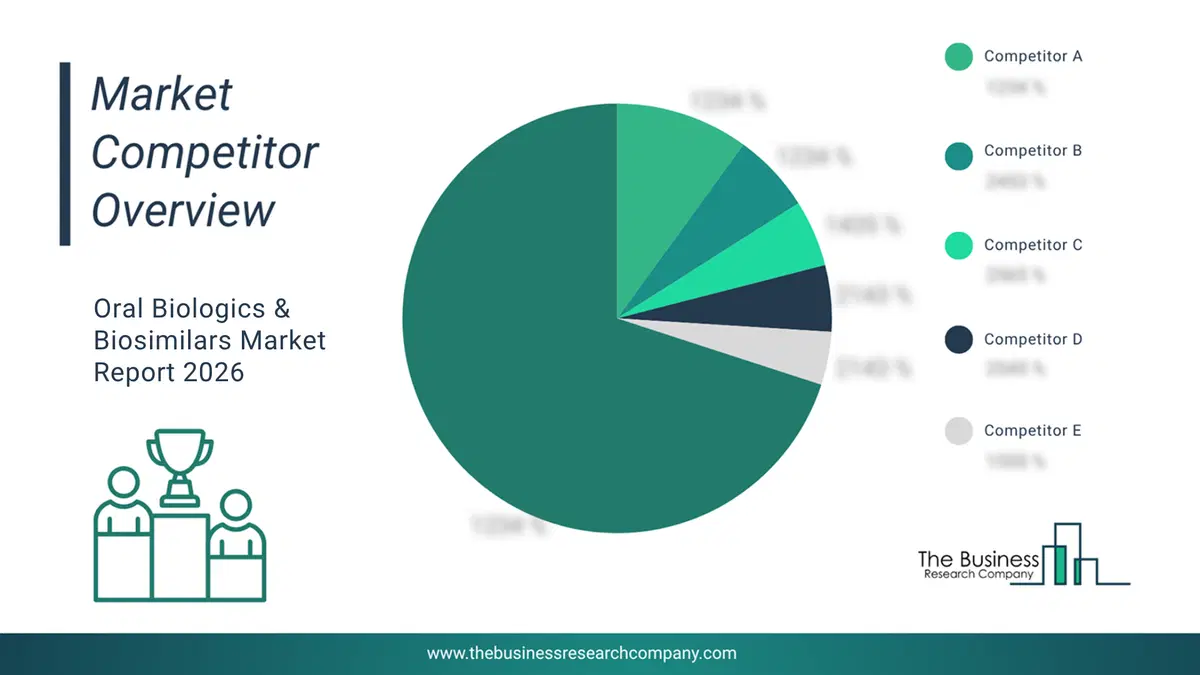
This chart is for illustrative purposes; the full report includes a detailed competitor analysis and comprehensive overview of the top 10 companies in the market.
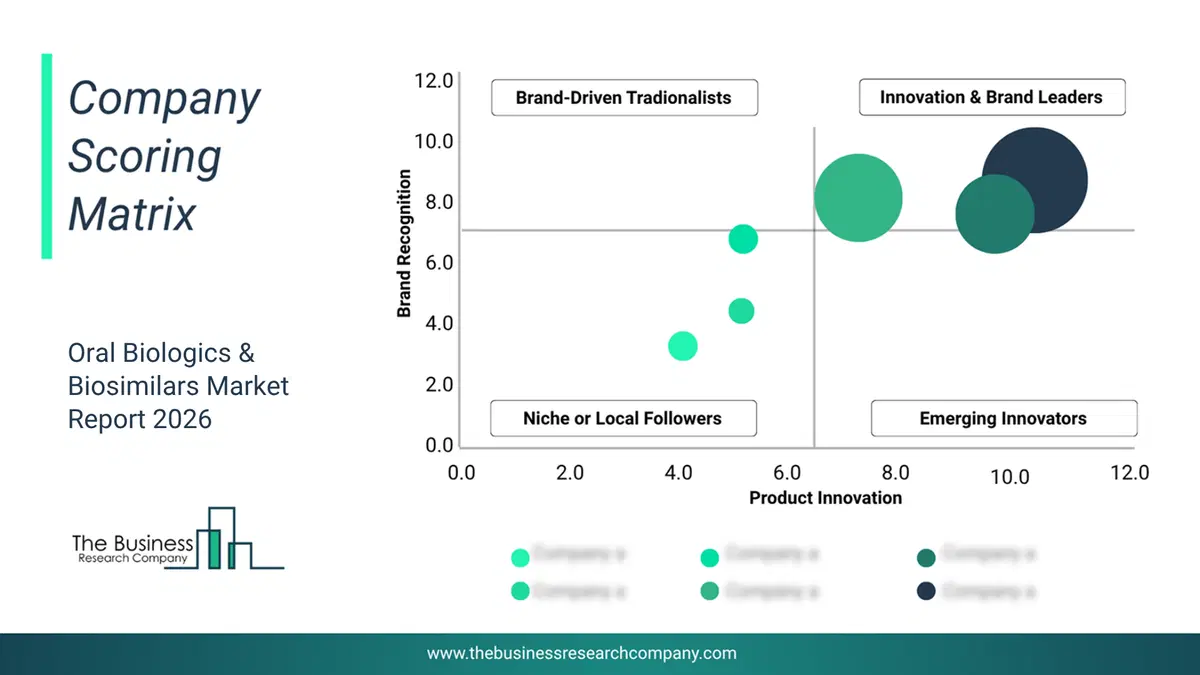
This chart maps companies by product innovation and brand strength, with bubble size indicating relative revenue, helping identify market leaders, challengers, and niche players. This is an illustrative chart; the full report provides a complete and accurate competitive analysis.
Global Oral Biologics & Biosimilars Market Trends and Insights
Major companies operating in the oral biologics & biosimilars market are focusing on developing innovative solutions, such as tailored smart capsule development services, to improve oral delivery of biologics, enhance bioavailability, and enable patient-friendly administration compared with traditional injectable formulations. Smart capsules are designed with advanced coatings, controlled-release matrices, or protective excipients that safeguard biologics from degradation in the gastrointestinal tract and optimize absorption in targeted regions of the intestine, offering a non-invasive alternative to injections and improving patient adherence. For instance, in December 2024, Lonza Group AG, a Switzerland-based contract development and manufacturing organization (CDMO), launched a tailored service for smart capsule development, specifically supporting oral biologics development. The service encompasses customized formulation design, protective excipient selection, and capsule engineering to ensure stability and targeted release of biologics; it functions by enhancing the oral bioavailability of sensitive biomolecules while maintaining therapeutic efficacy; unique features include end-to-end support from concept to preclinical testing, compatibility with multiple biologic modalities (proteins, peptides, nucleic acids), and scalable manufacturing solutions; applications span oral delivery of monoclonal antibodies, therapeutic peptides, and vaccines; benefits include improved patient convenience, reduced reliance on injections, enhanced compliance, and accelerated development timelines for oral biologic therapies.What Are Latest Mergers And Acquisitions In The Oral Biologics & Biosimilars Market?
In September 2023, Biocon Limited., an India-based pharmaceutical company, acquired Eywa Pharma Inc. for an amount of $7.7 million. The acquisition additionally enables businesses to diversify their manufacturing infrastructure, ensuring supply continuity and providing oral solid dosage capacities for new products ahead of schedule. Eywa Pharma Inc. is a US-based pharmaceutical company that specializes in oral biologics and biosimilars.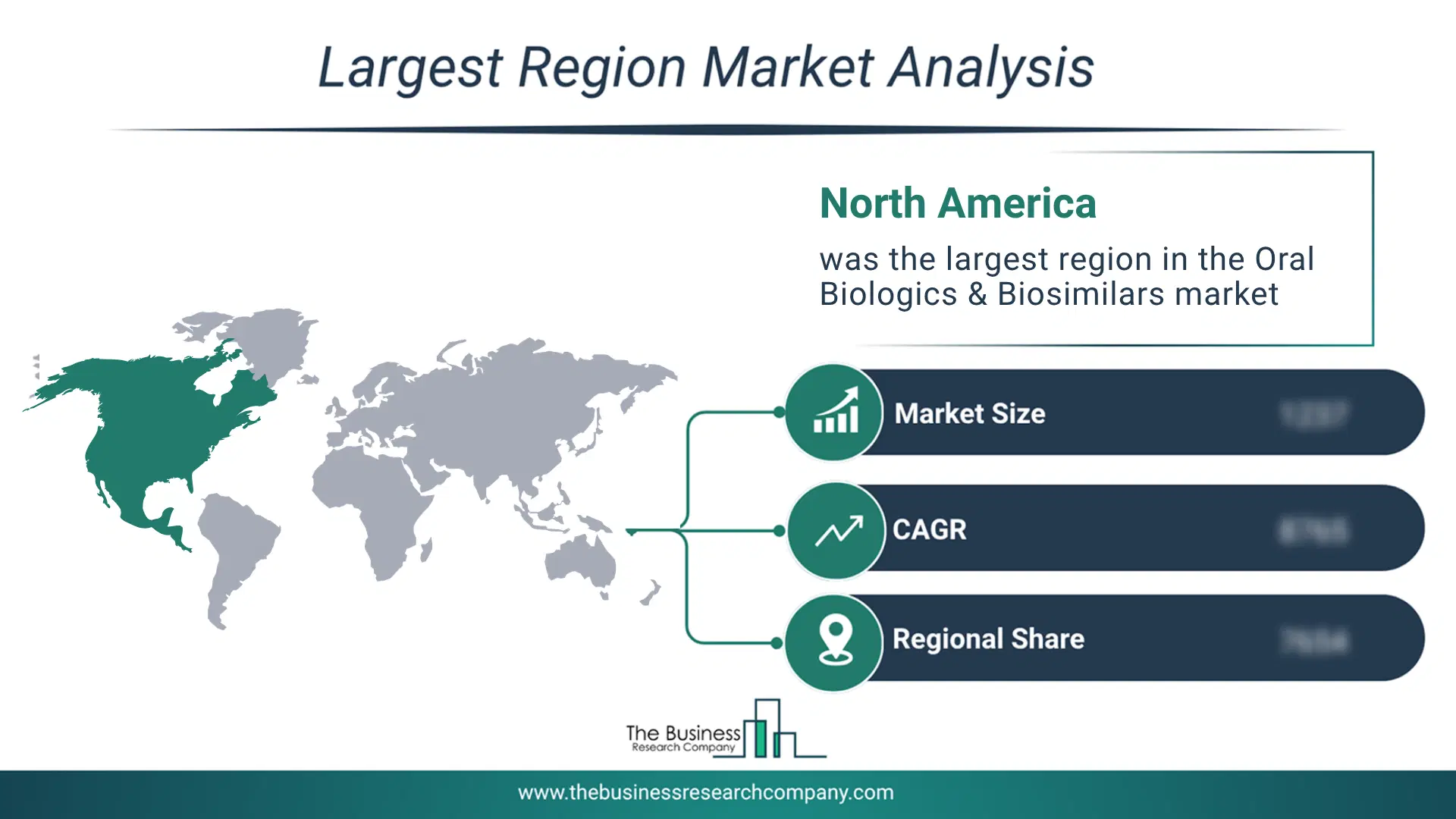
Regional Insights
North America was the largest region in the oral biologics and biosimilar drugs market in 2025. The Middle East is expected to be the fastest-growing region in the forecast period. The regions covered in this market report are Asia-Pacific, South East Asia, Western Europe, Eastern Europe, North America, South America, Middle East, Africa. The countries covered in this market report are Australia, Brazil, China, France, Germany, India, Indonesia, Japan, Taiwan, Russia, South Korea, UK, USA, Canada, Italy, Spain.What Defines the Oral Biologics & Biosimilars Market?
The oral biologics and biosimilar market consists of sales of receptor modulators, biological agents, and biosimilar lymphocytes. Values in this market are ‘factory gate’ values, that is the value of goods sold by the manufacturers or creators of the goods, whether to other entities (including downstream manufacturers, wholesalers, distributors, and retailers) or directly to end customers. The value of goods in this market includes related services sold by the creators of the goods.How is Market Value Defined and Measured?
The market value is defined as the revenues that enterprises gain from the sale of goods and/or services within the specified market and geography through sales, grants, or donations in terms of the currency (in USD unless otherwise specified). The revenues for a specified geography are consumption values that are revenues generated by organizations in the specified geography within the market, irrespective of where they are produced. It does not include revenues from resales along the supply chain, either further along the supply chain or as part of other products.
This chart presents market attractiveness based on a quantitative evaluation of growth, competition, strategic alignment, and risk, offering a clear view of opportunity areas for decision-making. This chart is for illustrative purposes; the full report contains the complete analysis.

This chart highlights the Total Addressable Market (TAM) by estimating the maximum revenue opportunity using an assumption-driven approach, supporting strategic planning and opportunity sizing across markets. The chart is illustrative; the full report provides a more comprehensive analysis.
What Key Data and Analysis Are Included in the Oral Biologics & Biosimilars Market Report 2026?
The oral biologics & biosimilars market research report is one of a series of new reports from The Business Research Company that provides market statistics, including industry global market size, regional shares, competitors with the market share, detailed market segments, market trends and opportunities, and any further data you may need to thrive in the oral biologics & biosimilars industry. The market research report delivers a complete perspective of everything you need, with an in-depth analysis of the current and future state of the industry.Oral Biologics & Biosimilars Market Report Forecast Analysis
| Report Attribute | Details |
|---|---|
| Market Size Value In 2026 | $11.28 billion |
| Revenue Forecast In 2030 | $24.69 billion |
| Growth Rate | CAGR of 20.3% from 2026 to 2030 |
| Base Year For Estimation | 2025 |
| Actual Estimates/Historical Data | 2020-2025 |
| Forecast Period | 2026 - 2030 |
| Market Representation | Revenue in USD Billion and CAGR from 2026 to 2030 |
| Segments Covered | Therapy, Disease, Molecule Type, Distribution Channel |
| Regional Scope | Asia-Pacific, Western Europe, Eastern Europe, North America, South America, Middle East, Africa |
| Country Scope | The countries covered in the report are Australia, Brazil, China, France, Germany, India, Indonesia, Japan, Taiwan, Russia, South Korea, UK, USA, Canada, Italy, Spain. |
| Key Companies Profiled | Merck & Co. Inc., GlaxoSmithKline, Novo Nordisk, BiosanaPharma, AstraZeneca, Bayer, Boehringer Ingelheim, Sanofi, Microgen, Geropharm, Valenta, NovaMedica, SynBio, Roche, Rani Therapeutics, Eli Lilly and Company, Emisphere Technologies Inc., Enteris BioPharma, Allena Pharmaceuticals, Abbvie, Johnson & Johnson, Pfizer Inc., Biogen Inc., Aché, Eurofarma, Teva Pharmaceuticals, Oramed Pharmaceuticals, Entera Bio, Julphar, Hikma Pharmaceuticals, Altis Biologics, Cipla Medpro South Africa, Genzyme |
| Customization Scope | Request for Customization |
| Pricing And Purchase Options | Explore Purchase Options |