
Organic Pigments Market Report 2026
Global Outlook – By Type (Azo Pigments, Pthalocyanine Pigments, High Performance Pigments (HPPs), Alizarin, Arylide, Other Types), By Source (Synthetic, Natural), By End-Use (Textile, Paints And Coatings, Automotive, Plastics, Printing Inks, Packaging, Other End-Uses) – Market Size, Trends, Strategies, and Forecast to 2030
Organic Pigments Market Overview
• Organic Pigments market size has reached to $16.15 billion in 2025 • Expected to grow to $23.17 billion in 2030 at a compound annual growth rate (CAGR) of 7.6% • Growth Driver: Surge In Textile Industry Boosts The Organic Pigments Market • Market Trend: Product Innovations Transforming The Organic Pigments Market • Asia-Pacific was the largest region in 2025 and North America is the fastest growing region.What Is Covered Under Organic Pigments Market?
Organic pigment is a colored substance composed of organic compounds that have pigment qualities. It is made up of carbon chains and rings, and it is typically bright, pure, lightweight, and rich in tinting strength. They typically exist in animal, vegetable, and synthetic organic chemistry and establish strong, stable chemical connections. The main types of organic pigments are azo pigments, pthalocyanine pigments, high-performance pigments (HPPS), alizarin, arylide, and others. Azo pigments refer to dye molecules with a diazo functional group located between two aromatic rings. It includes sources such as synthetic and natural pigments, that are used various end users such as textile, paints and coatings, automotive, plastics, printing inks, packaging, and others.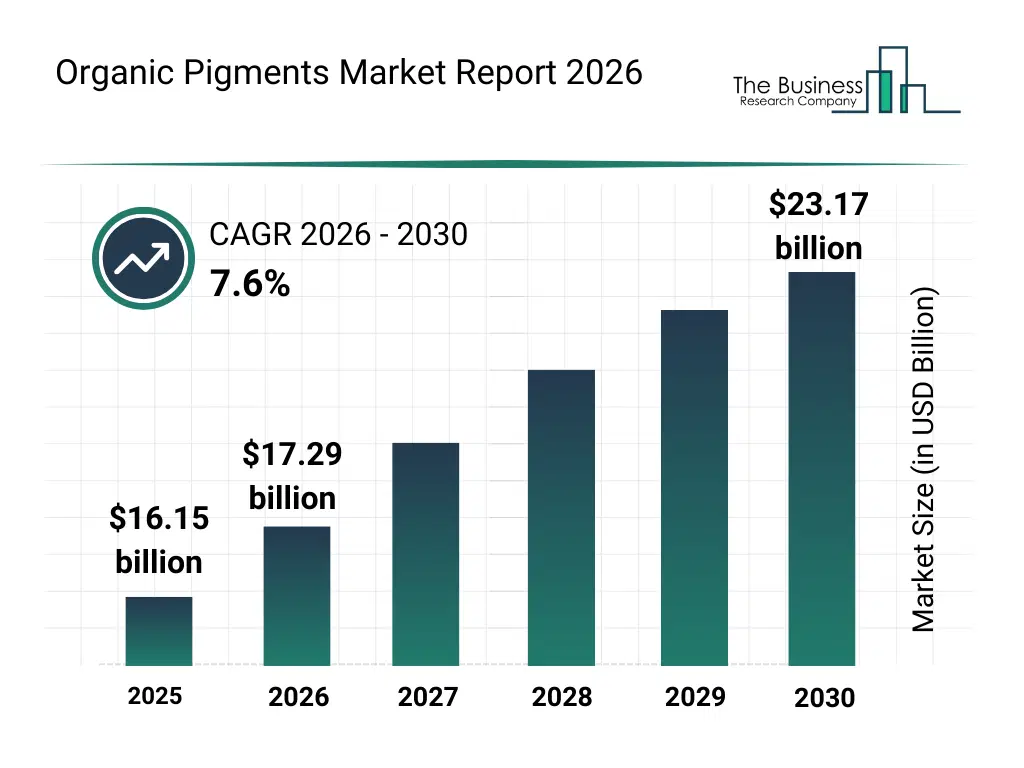
What Is The Organic Pigments Market Size and Share 2026?
The organic pigments market size has grown strongly in recent years. It will grow from $16.15 billion in 2025 to $17.29 billion in 2026 at a compound annual growth rate (CAGR) of 7.1%. The growth in the historic period can be attributed to growth of textile and printing industries, expansion of paints and coatings production, increasing plastics manufacturing, rising demand for vibrant colorants, availability of synthetic organic pigments.What Is The Organic Pigments Market Growth Forecast?
The organic pigments market size is expected to see strong growth in the next few years. It will grow to $23.17 billion in 2030 at a compound annual growth rate (CAGR) of 7.6%. The growth in the forecast period can be attributed to stricter environmental regulations on inorganic pigments, rising demand for sustainable color solutions, expansion of packaging and labeling applications, increasing automotive production with advanced coatings, growing adoption of high performance pigments. Major trends in the forecast period include rising demand for high-performance organic pigments, increasing adoption in eco-friendly coatings, growing use in plastics and packaging applications, expansion of automotive color customization, enhanced focus on color strength and stability.
Global Organic Pigments Market Segmentation
1) By Type: Azo Pigments, Pthalocyanine Pigments, High Performance Pigments (HPPs), Alizarin, Arylide, Other Types 2) By Source: Synthetic, Natural 3) By End-Use: Textile, Paints And Coatings, Automotive, Plastics, Printing Inks, Packaging, Other End-Uses Subsegments: 1) By Azo Pigments: Monoazo Pigments, Disazo Pigments, Polyaromatic Azo Pigments 2) By Phthalocyanine Pigments: Phthalocyanine Blue, Phthalocyanine Green 3) By High Performance Pigments (HPPs): Bright HPPs, Non-Bright HPPs 4) By Alizarin: Natural Alizarin, Synthetic Alizarin 5) By Arylide: Arylide Yellow, Arylide Orange 6) By Other Types: Quinacridone Pigments, Diketopyrrolopyrrole Pigments, Benzimidazolone PigmentsWhat Is The Driver Of The Organic Pigments Market?
An increasing textile industry is expected to propel the growth of the organic pigments market going forward. The textile sector refers to the industries that are primarily concerned with the design or manufacture of clothing and the distribution and use of textiles. A textile is a stretchy material made of a web of synthetic or natural fibers. Organic pigments are used in textiles to give the product color, opaqueness, and other desirable features. This will drive market expansion for organic pigments, as these are widely employed in the textile industry for dyeing and printing. For instance, in September 2024, according to Textile Exchange, a US-based non profit, global fiber production reached 124 million tonnes in 2023, up 7% from 116 million tonnes in 2022. Therefore, the increasing textile industry is driving the growth of the organic pigments industry.Key Players In The Global Organic Pigments Market
Major companies operating in the organic pigments market are BASF SE, Clariant AG, DIC Corporation, Heubach GmbH, Sudarshan Chemical Industries Limited, Ferro Corporation, Trust Chem Co. Ltd., Dainichiseika Color & Chemicals Mfg. Co. Ltd., Toyocolor Co Ltd., Synthesia AS, Hangzhou Han-Color Chemical Co. Ltd., Dominion Colour Corporation, Koel Colours Pvt. Ltd., Vibfast Pigments Pvt. Ltd., Neochem Industries, LANXESS AG, Sun Chemical Corporation, Changzhou Longyu Pigment Chemical Co. Ltd., Sensient Technologies Corporation, Jeco Group, Xinguang Chemical Group Co. Ltd. , Sanyo Color Works Ltd., Shuangle Chemical Co. Ltd. , Flint Group, Cappelle Pigment NV, Sunshine Pigment Co. Ltd. , Apollo Colors Inc., Ruian Baoyuan Chemical Co. Ltd., KolorJet Chemicals Pvt. Ltd.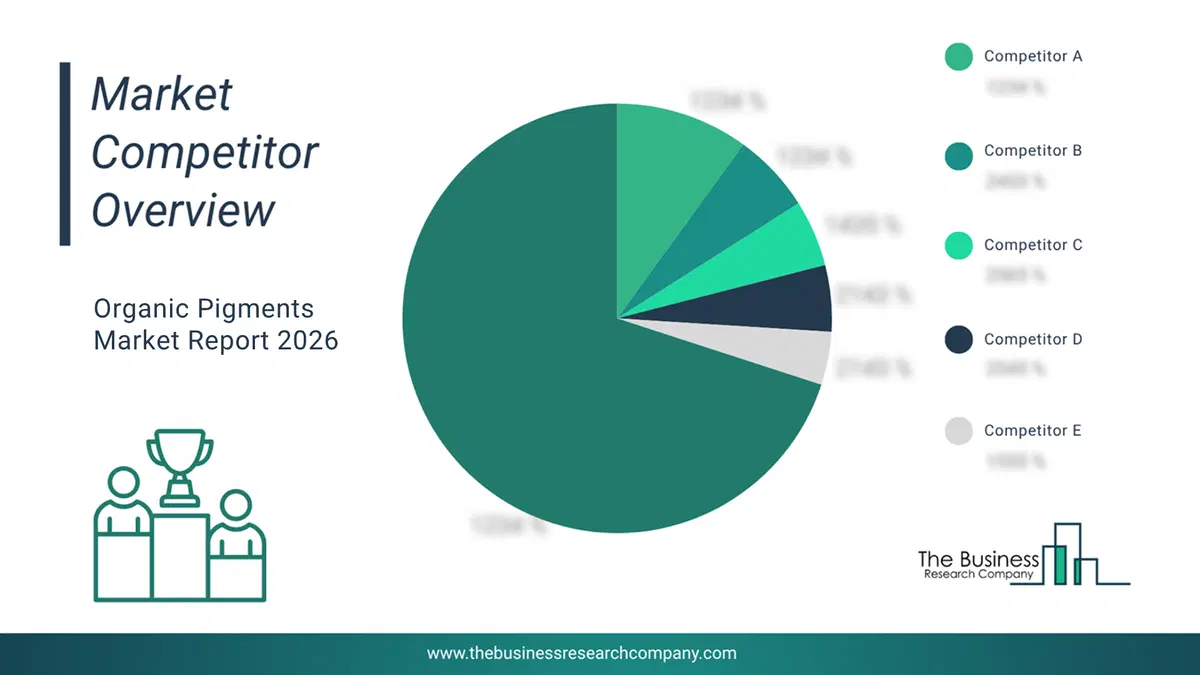
This chart is for illustrative purposes; the full report includes a detailed competitor analysis and comprehensive overview of the top 10 companies in the market.
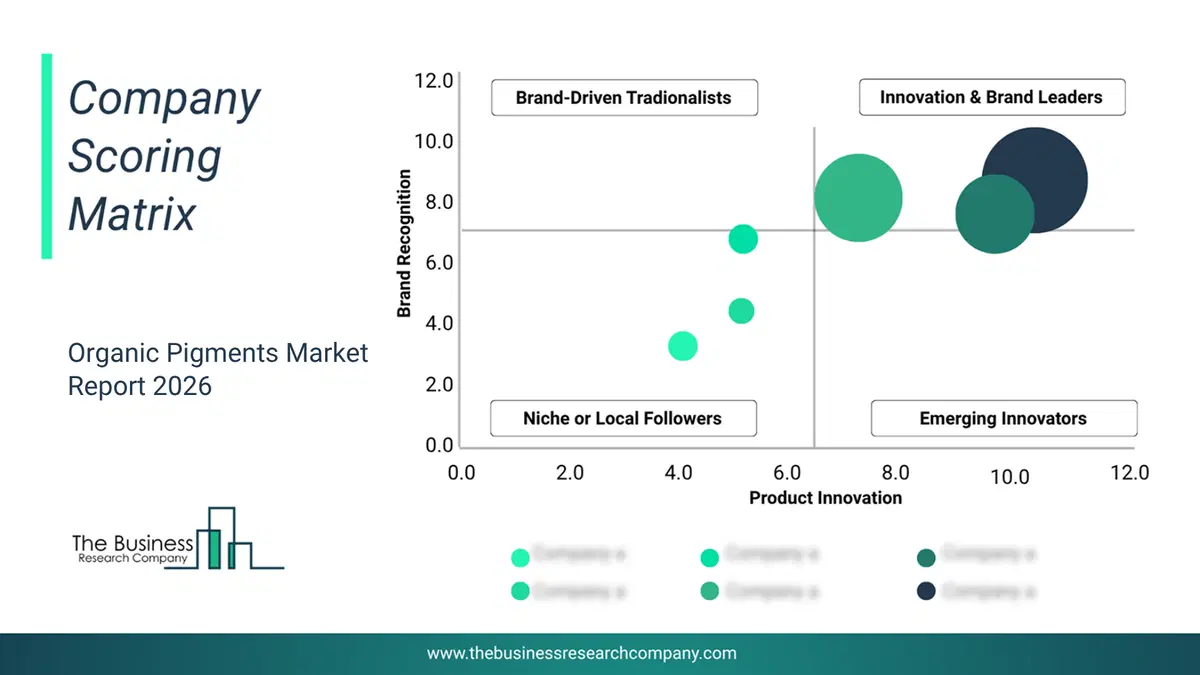
This chart maps companies by product innovation and brand strength, with bubble size indicating relative revenue, helping identify market leaders, challengers, and niche players. This is an illustrative chart; the full report provides a complete and accurate competitive analysis.
Global Organic Pigments Market Trends and Insights
Major companies operating in the organic pigments market are focusing on developing innovative solutions, such as sustainable ultramarine blue pigment technologies, to meet the rising demand for high-performance, environmentally friendly colorants with superior heat and light stability. These advanced pigments offer better dispersibility and durability compared to conventional alternatives, while aligning with sustainability and regulatory requirements. For instance, in January 2023, Heubach Group, a Germany-based manufacturer of pigments, pigment preparations, dyes, and specialty materials, launched Ultrazur, a new range of sustainable Ultramarine Blue pigments. Ultrazur exhibits excellent resistance to heat (up to 350°C) and light, ensuring long-lasting color performance. Its innovative final-stage manufacturing process enhances dispersibility, making it ideal for applications in thin films and fibers. Additionally, the production process incorporates state-of-the-art wastewater and air emissions treatment technologies, establishing Ultrazur as one of the most environmentally friendly ultramarine blue pigments available in the market.What Are Latest Mergers And Acquisitions In The Organic Pigments Market?
In October 2024, Sudarshan Chemical Industries Limited, an India-based chemical manufacturing company, acquired Heubach GmbH for an undisclosed amount. This acquisition aims to enhance Sudarshan's product portfolio in the specialty chemicals sector, particularly in color pigments and related applications. Heubach GmbH is a Germany-based chemical company, specializes in the development and production of high-performance organic pigments.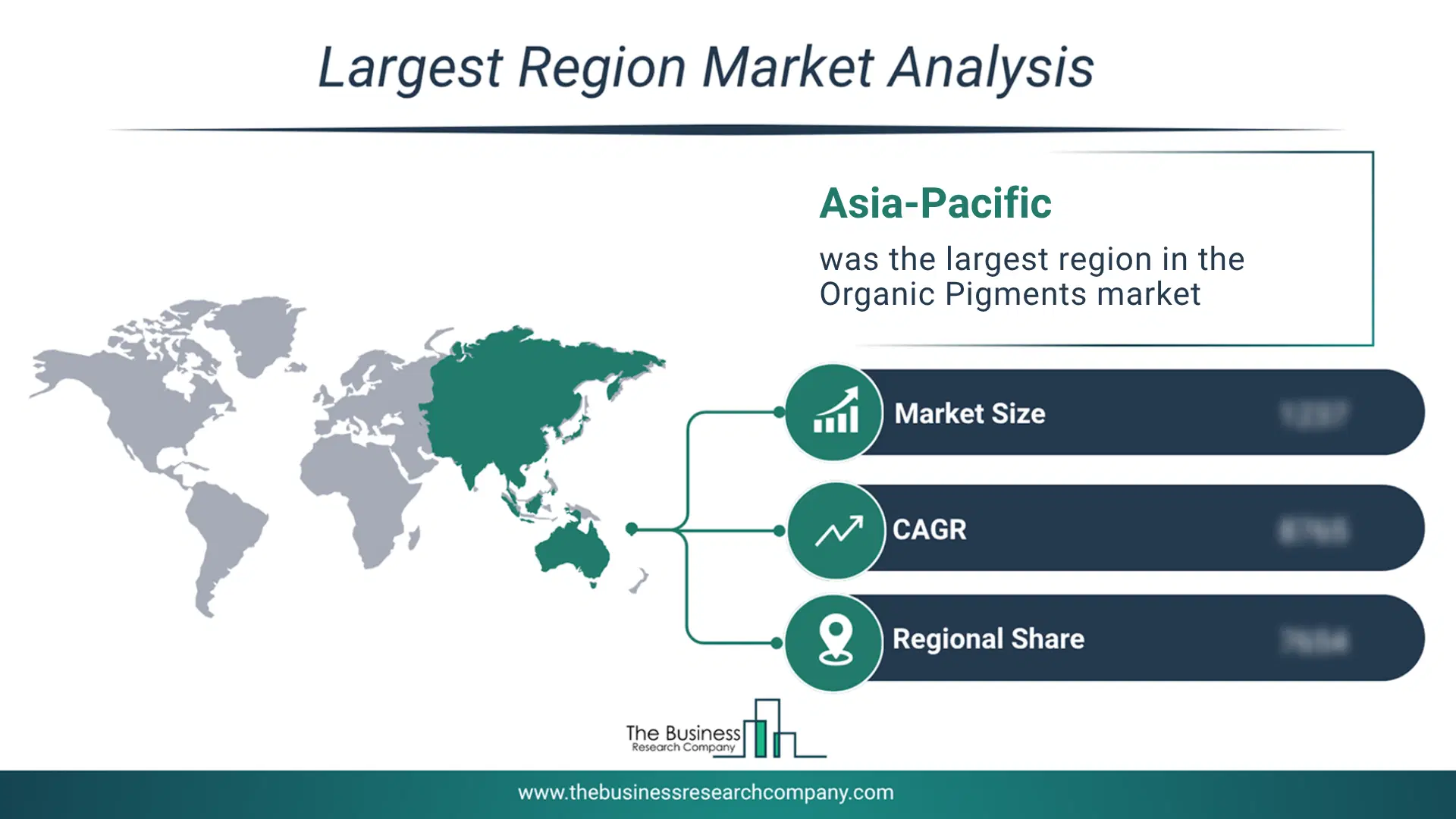
Regional Insights
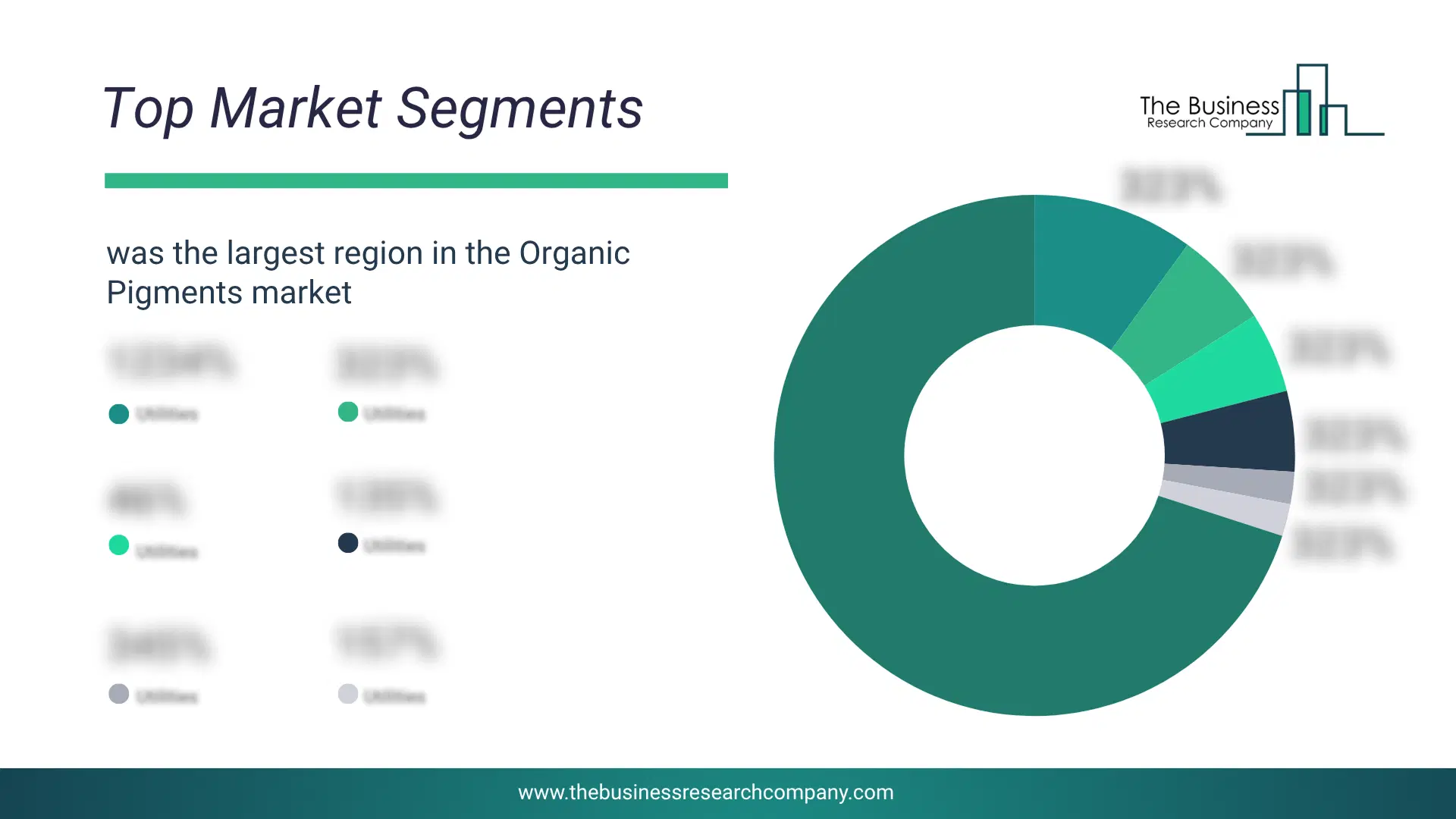
Asia-Pacific was the largest region in the organic pigment market in 2025 and is expected to be the fastest-growing region in the organic pigment market report during the forecast period. The regions covered in this market report are Asia-Pacific, South East Asia, Western Europe, Eastern Europe, North America, South America, Middle East, Africa The countries covered in this market report are Australia, Brazil, China, France, Germany, India, Indonesia, Japan, Taiwan, Russia, South Korea, UK, USA, Canada, Italy, SpainWhat Defines the Organic Pigments Market?
The organic pigment market consists of sales of quinacridone reds, quinacridone blues, quinacridones, and dioxazine. Values in this market are ‘factory gate’ values, that is the value of goods sold by the manufacturers or creators of the goods, whether to other entities (including downstream manufacturers, wholesalers, distributors and retailers) or directly to end customers. The value of goods in this market includes related services sold by the creators of the goods.How is Market Value Defined and Measured?
The market value is defined as the revenues that enterprises gain from the sale of goods and/or services within the specified market and geography through sales, grants, or donations in terms of the currency (in USD unless otherwise specified). The revenues for a specified geography are consumption values that are revenues generated by organizations in the specified geography within the market, irrespective of where they are produced. It does not include revenues from resales along the supply chain, either further along the supply chain or as part of other products.
This chart presents market attractiveness based on a quantitative evaluation of growth, competition, strategic alignment, and risk, offering a clear view of opportunity areas for decision-making. This chart is for illustrative purposes; the full report contains the complete analysis.

This chart highlights the Total Addressable Market (TAM) by estimating the maximum revenue opportunity using an assumption-driven approach, supporting strategic planning and opportunity sizing across markets. The chart is illustrative; the full report provides a more comprehensive analysis.
What Key Data and Analysis Are Included in the Organic Pigments Market Report 2026?
The organic pigments market research report is one of a series of new reports from The Business Research Company that provides market statistics, including industry global market size, regional shares, competitors with the market share, detailed market segments, market trends and opportunities, and any further data you may need to thrive in the organic pigments industry. The market research report delivers a complete perspective of everything you need, with an in-depth analysis of the current and future state of the industry.Organic Pigments Market Report Forecast Analysis
| Report Attribute | Details |
|---|---|
| Market Size Value In 2026 | $17.29 billion |
| Revenue Forecast In 2030 | $23.17 billion |
| Growth Rate | CAGR of 7.1% from 2026 to 2030 |
| Base Year For Estimation | 2025 |
| Actual Estimates/Historical Data | 2020-2025 |
| Forecast Period | 2026 - 2030 |
| Market Representation | Revenue in USD Billion and CAGR from 2026 to 2030 |
| Segments Covered | Type, Source, End-Use |
| Regional Scope | Asia-Pacific, Western Europe, Eastern Europe, North America, South America, Middle East, Africa |
| Country Scope | The countries covered in this market report are Australia, Brazil, China, France, Germany, India, Indonesia, Japan, Taiwan, Russia, South Korea, UK, USA, Canada, Italy, Spain |
| Key Companies Profiled | BASF SE, Clariant AG, DIC Corporation, Heubach GmbH, Sudarshan Chemical Industries Limited, Ferro Corporation, Trust Chem Co. Ltd., Dainichiseika Color & Chemicals Mfg. Co. Ltd., Toyocolor Co Ltd., Synthesia AS, Hangzhou Han-Color Chemical Co. Ltd., Dominion Colour Corporation, Koel Colours Pvt. Ltd., Vibfast Pigments Pvt. Ltd., Neochem Industries, LANXESS AG, Sun Chemical Corporation, Changzhou Longyu Pigment Chemical Co. Ltd., Sensient Technologies Corporation, Jeco Group, Xinguang Chemical Group Co. Ltd. , Sanyo Color Works Ltd., Shuangle Chemical Co. Ltd. , Flint Group, Cappelle Pigment NV, Sunshine Pigment Co. Ltd. , Apollo Colors Inc., Ruian Baoyuan Chemical Co. Ltd., KolorJet Chemicals Pvt. Ltd. |
| Customization Scope | Request for Customization |
| Pricing And Purchase Options | Explore Purchase Options |