
Synthetic Pigments Market Report 2026
Global Outlook – By Product Type (Inorganic Pigments, Organic Pigments ), By Form (Powder, Liquid, Paste / Dispersions), By End User Industry (Paints and Coatings, Plastics, Printing Inks, Textiles, Cosmetics and Personal Care, Other End Use Industries ) – Market Size, Trends, Strategies, and Forecast to 2030
Synthetic Pigments Market Overview
• Synthetic Pigments market size has reached to $46.99 billion in 2025 • Expected to grow to $65.19 billion in 2030 at a compound annual growth rate (CAGR) of 6.9% • Growth Driver: Rising Automotive Industry Drives Growth In The Synthetic Pigments Market • Market Trend: Lumina Hd Pigments Setting New Standards In The Synthetic Pigment Industry • Asia-Pacific was the largest region and fastest growing region.What Is Covered Under Synthetic Pigments Market?
The synthetic pigment is a carbon-based molecule made from petroleum compounds, acids, and other chemicals. The synthetic pigments are used in products containing insoluble materials and minerals to endure high heat, intense light, and exposure to weather or chemical agents. The main product types of synthetic pigments market are inorganic pigments and organic pigments. Inorganic pigments are metal oxides and/or synthetic chemicals, which have very simple compositions but are finding wide use in paints and coatings. The various end-use industries are paints and coatings, plastics, printing inks, textiles, cosmetics, personal care, and other end-use industries.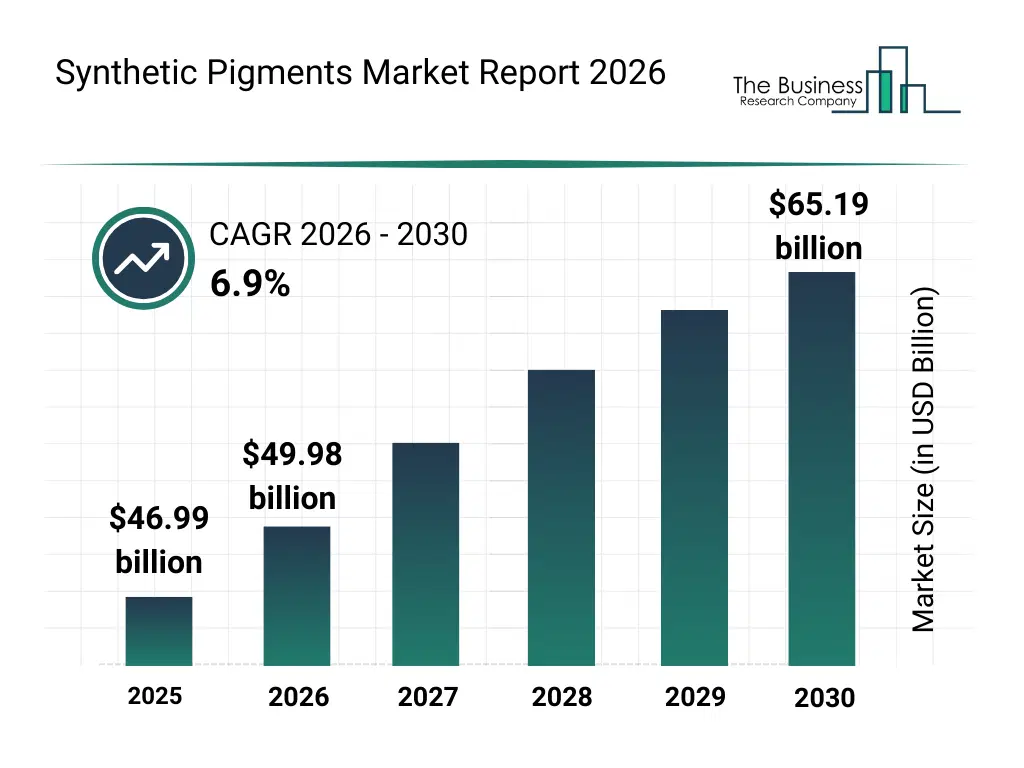
What Is The Synthetic Pigments Market Size and Share 2026?
The synthetic pigments market size has grown strongly in recent years. It will grow from $46.99 billion in 2025 to $49.98 billion in 2026 at a compound annual growth rate (CAGR) of 6.4%. The growth in the historic period can be attributed to growth of paints and coatings industry, expansion of plastics manufacturing, long term use in inks, rising construction activity, industrial pigment demand.What Is The Synthetic Pigments Market Growth Forecast?
The synthetic pigments market size is expected to see strong growth in the next few years. It will grow to $65.19 billion in 2030 at a compound annual growth rate (CAGR) of 6.9%. The growth in the forecast period can be attributed to growth of automotive coatings, increasing infrastructure projects, expansion of plastic packaging, rising demand for durable pigments, innovation in specialty pigments. Major trends in the forecast period include growing demand for heat resistant pigments, rising use in automotive coatings, expansion of organic pigment applications, increasing adoption in printing inks, rising focus on weather resistance.
Global Synthetic Pigments Market Segmentation
1) By Product Type: Inorganic Pigments, Organic Pigments 2) By Form: Powder, Liquid, Paste / Dispersions 3) By End User Industry: Paints and Coatings, Plastics, Printing Inks, Textiles, Cosmetics and Personal Care, Other End Use Industries Subsegments: 1) By Inorganic Pigments: Titanium Dioxide (TiO2), Iron Oxides, Chromium Oxide, Cadmium Pigments, Ultramarine Blue, Other Inorganic Pigments 2) By Organic Pigments: Azo Pigments, Phthalocyanine Pigments, Quinacridone Pigments, Diketopyrrolopyrrole (DPP) Pigments, Other Organic PigmentsWhat Is The Driver Of The Synthetic Pigments Market?
The rising automotive industry is expected to propel the growth of the synthetic pigments market going forward. The automotive industry encompasses the design, development, manufacturing, marketing, and selling of motor vehicles, including cars, trucks, and motorcycles, along with their components and associated services. The automotive industry is rising due to increasing global demand for vehicles, advancements in electric and autonomous technologies, and the growing need for sustainable and efficient transportation solutions. Synthetic pigments are required in the automotive industry to provide durable, vibrant, and customizable colors with enhanced resistance to environmental factors like UV radiation, heat, and chemicals. For instance, in January 2024, according to the European Automobile Manufacturers' Association (ACEA), a Belgium-based lobbying and standards group for the automobile industry, the EU car market experienced a robust growth of 13.9% in 2023, with sales reaching 867,052 units compared to 2022, culminating in a total annual volume of 10.5 million units. Most markets saw double-digit increases, notably three of the largest: Italy (+18.9%), Spain (+16.7%), and France (+16.1%). In contrast, Germany reported a more modest year-on-year growth of 7.3%. Therefore, the rising automotive industry is driving the growth of the synthetic pigments industry.Key Players In The Global Synthetic Pigments Market
Major companies operating in the synthetic pigments market are The Chemours Company, Tronox Holdings plc, BASF SE, Kronos Worldwide Inc., Venator Materials PLC, Lanxess AG, Clariant, Merck Group, Altana AG, DIC Corporation, Hangzhou Tiankun Chem Co. Ltd, Qingdao Haiwan Specialty Chemicals Co. Ltd, Hangzhou Chungyo Chemicals, Hangzhou Han-color Chemical Co. Ltd., Kiri Industries Ltd., Heubach India, Atul Ltd., Clariant Chemicals (India) Ltd., K. Sakai & Co. Ltd., Asahi Songwon Colors Ltd., Sudarshan Chemical Industries Ltd., Taoka Chemical Co. Ltd., Toyo Ink SC Holdings Co. Ltd., Dainichiseika Color & Chemicals Mfg. Co. Ltd.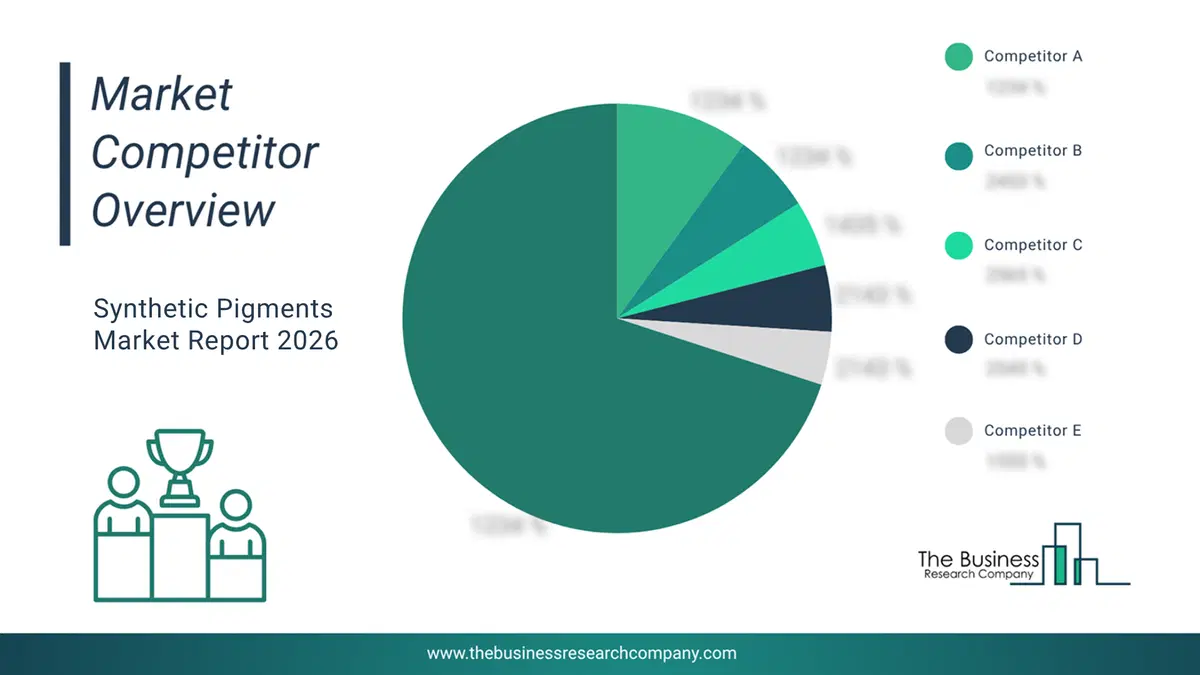
This chart is for illustrative purposes; the full report includes a detailed competitor analysis and comprehensive overview of the top 10 companies in the market.
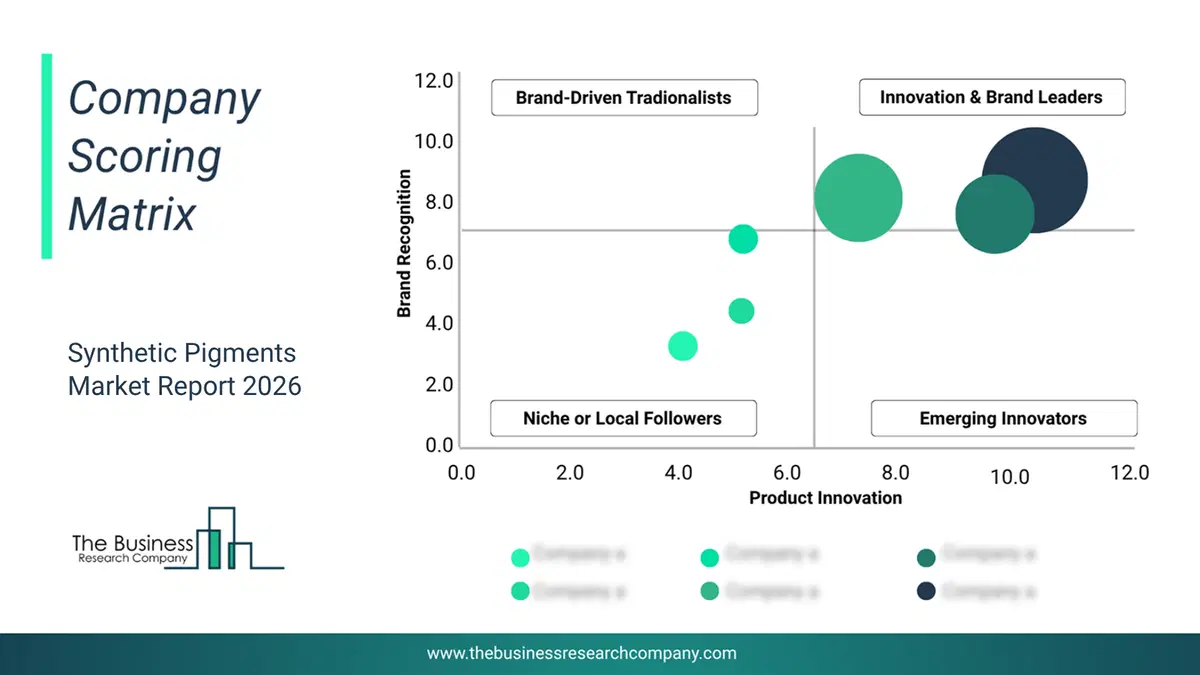
This chart maps companies by product innovation and brand strength, with bubble size indicating relative revenue, helping identify market leaders, challengers, and niche players. This is an illustrative chart; the full report provides a complete and accurate competitive analysis.
Global Synthetic Pigments Market Trends and Insights
Major companies operating in synthetic pigments are developing innovative pigments such as Lumina HD to gain a competitive edge in the market. Lumina HD pigments are high-definition effect pigments based on fine fraction synthetic mica useful for automotive stylings and other coatings applications, including aerospace, general industrial and powder coatings. For instance, in May 2023, Sun Chemical, a US-based chemical company launched Lumina HD, a new family of high-definition effect pigments based on fine fraction synthetic mica. These deliver the highest performance properties including exceptional chroma, enhanced distinctness of image and subtle sparkle and provide designers new latitude to create unique shades in the red to maroon and blue color areas.What Are Latest Mergers And Acquisitions In The Synthetic Pigments Market?
In April 2023, Cathay Industries, a US-based manufacturer and supplier of iron oxide pigments, acquired the Iron Oxide business of Venator Materials PLC for a deal of $140 million. As a result of the acquisition, Cathay will gain eight manufacturing sites and one administrative site, spanning six countries across four continents. This significant investment reflects Cathay's dedication to expanding its global network and enhancing customization capabilities to better serve its customers and partners. Venator Materials PLC is a UK-based manufacturer of synthetic pigments.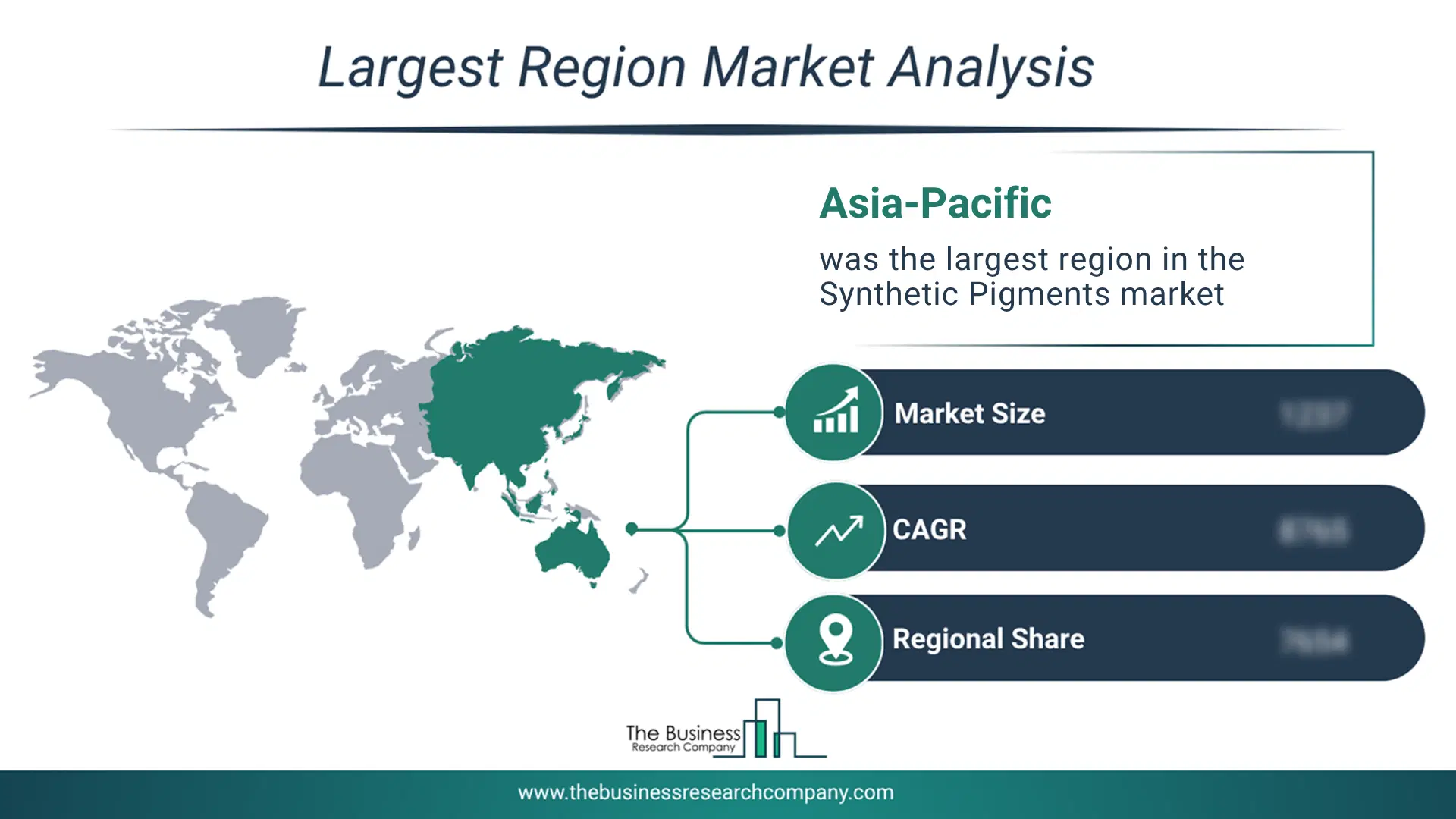
Regional Insights
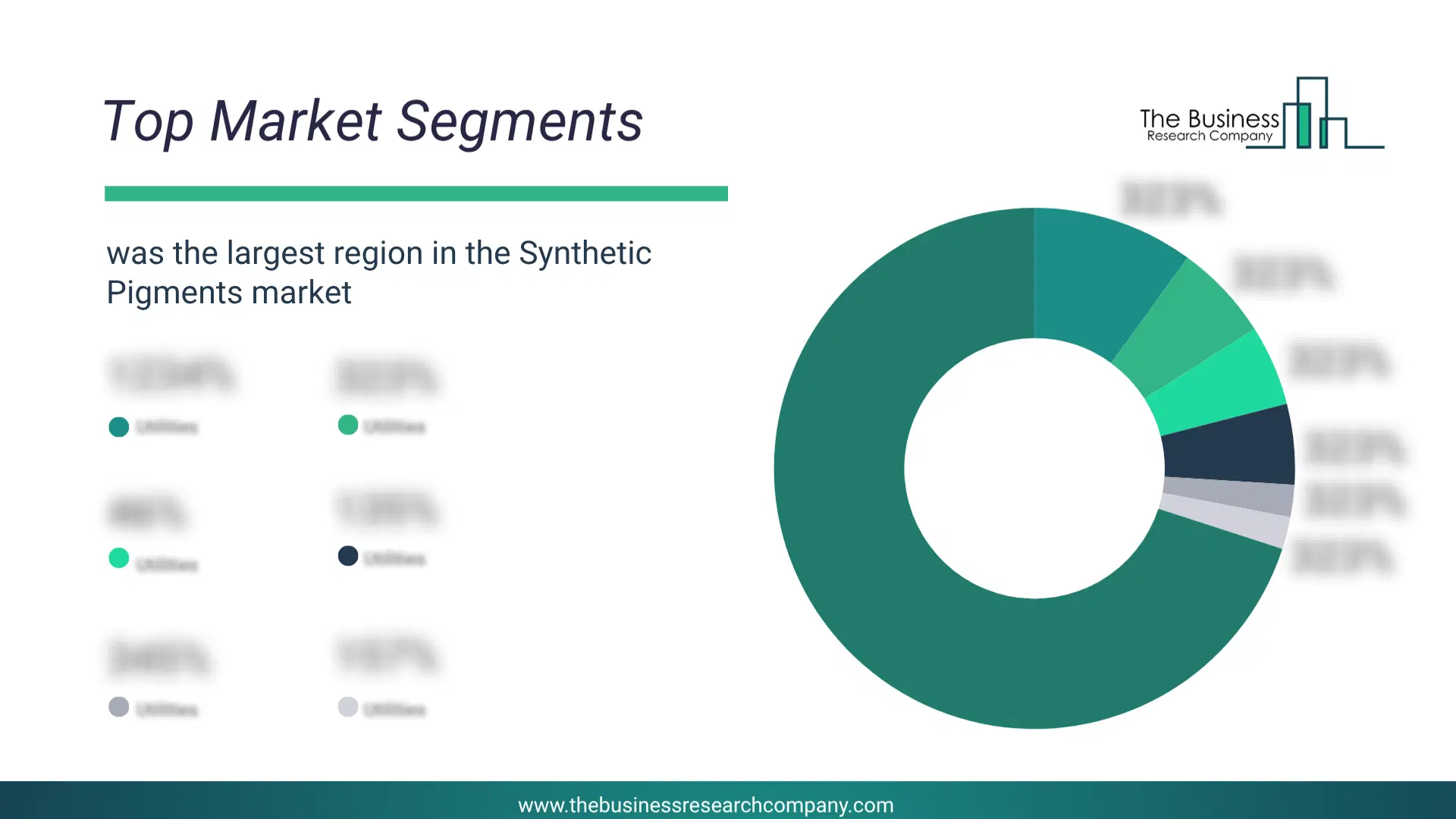
Asia-Pacific was the largest region in the synthetic pigments market in 2025. Western Europe was the second-largest region in the synthetic pigments market report. The regions covered in this market report are Asia-Pacific, South East Asia, Western Europe, Eastern Europe, North America, South America, Middle East, Africa The countries covered in this market report are Australia, Brazil, China, France, Germany, India, Indonesia, Japan, Taiwan, Russia, South Korea, UK, USA, Canada, Italy, SpainWhat Defines the Synthetic Pigments Market?
The synthetic pigments market consists of the sales of alizarin, azo-pigments, phthalocyanine, quinacridone, and metal compounds. Values in this market are factory gate values, that is the value of goods sold by the manufacturers or creators of the goods, whether to other entities (including downstream manufacturers, wholesalers, distributors, and retailers) or directly to end customers. The value of goods in this market includes related services sold by the creators of the goods.How is Market Value Defined and Measured?
The market value is defined as the revenues that enterprises gain from the sale of goods and/or services within the specified market and geography through sales, grants, or donations in terms of the currency (in USD unless otherwise specified). The revenues for a specified geography are consumption values that are revenues generated by organizations in the specified geography within the market, irrespective of where they are produced. It does not include revenues from resales along the supply chain, either further along the supply chain or as part of other products.
This chart presents market attractiveness based on a quantitative evaluation of growth, competition, strategic alignment, and risk, offering a clear view of opportunity areas for decision-making. This chart is for illustrative purposes; the full report contains the complete analysis.

This chart highlights the Total Addressable Market (TAM) by estimating the maximum revenue opportunity using an assumption-driven approach, supporting strategic planning and opportunity sizing across markets. The chart is illustrative; the full report provides a more comprehensive analysis.
What Key Data and Analysis Are Included in the Synthetic Pigments Market Report 2026?
The synthetic pigments market research report is one of a series of new reports from The Business Research Company that provides market statistics, including industry global market size, regional shares, competitors with the market share, detailed market segments, market trends and opportunities, and any further data you may need to thrive in the synthetic pigments industry. The market research report delivers a complete perspective of everything you need, with an in-depth analysis of the current and future state of the industry.Synthetic Pigments Market Report Forecast Analysis
| Report Attribute | Details |
|---|---|
| Market Size Value In 2026 | $49.98 billion |
| Revenue Forecast In 2030 | $65.19 billion |
| Growth Rate | CAGR of 6.4% from 2026 to 2030 |
| Base Year For Estimation | 2025 |
| Actual Estimates/Historical Data | 2020-2025 |
| Forecast Period | 2026 - 2030 |
| Market Representation | Revenue in USD Billion and CAGR from 2026 to 2030 |
| Segments Covered | Product Type, Form, End User Industry |
| Regional Scope | Asia-Pacific, Western Europe, Eastern Europe, North America, South America, Middle East, Africa |
| Country Scope | The countries covered in this market report are Australia, Brazil, China, France, Germany, India, Indonesia, Japan, Taiwan, Russia, South Korea, UK, USA, Canada, Italy, Spain |
| Key Companies Profiled | The Chemours Company, Tronox Holdings plc, BASF SE, Kronos Worldwide Inc., Venator Materials PLC, Lanxess AG, Clariant, Merck Group, Altana AG, DIC Corporation, Hangzhou Tiankun Chem Co. Ltd, Qingdao Haiwan Specialty Chemicals Co. Ltd, Hangzhou Chungyo Chemicals, Hangzhou Han-color Chemical Co. Ltd., Kiri Industries Ltd., Heubach India, Atul Ltd., Clariant Chemicals (India) Ltd., K. Sakai & Co. Ltd., Asahi Songwon Colors Ltd., Sudarshan Chemical Industries Ltd., Taoka Chemical Co. Ltd., Toyo Ink SC Holdings Co. Ltd., Dainichiseika Color & Chemicals Mfg. Co. Ltd. |
| Customization Scope | Request for Customization |
| Pricing And Purchase Options | Explore Purchase Options |