
Petroleum Coke Market Report 2026
Global Outlook – By Type (Fuel Grade, Calcined Coke), By Physical Form (Needle Coke, Sponge Coke, Shot Coke, Honeycomb Coke), By Application (Power Plants, Cement Kilns, Steel, Aluminium, Fertilizer, Other Applications) – Market Size, Trends, Strategies, and Forecast to 2030
Petroleum Coke Market Overview
• Petroleum Coke market size has reached to $35.5 billion in 2025 • Expected to grow to $68.82 billion in 2030 at a compound annual growth rate (CAGR) of 14.3% • Growth Driver: Surge In Global Steel Production Boosts Petroleum Coke Market Growth • Market Trend: EGA And BP Collaborate To Explore Carbon Reduction Initiatives In Calcined Petroleum Coke • Asia-Pacific was the largest region in 2025.What Is Covered Under Petroleum Coke Market?
Petroleum coke (also known as pet coke) is a by-product produced when tar sands bitumen is processed into crude oil. It is known as green coke until it is thermally processed and converted into crystalline or calcined pet coke, which is utilized in the production of electrodes for steel and aluminum extraction. The main types of petroleum coke are fuel grade and calcined coke. Calcined coke is created by placing high-quality raw green petroleum coke into rotary kilns when it is heated to temperatures ranging from 1200 to 1350 degrees Celsius (2192 to 2460 degrees Fahrenheit). Calcined petroleum coke is an important component in the manufacturing of aluminum. The various physical forms of petroleum coke include needle coke, sponge coke, catalyst coke, shot coke, and purge coke that is used in power plants, cement kilns, steel, aluminum, fertilizer, and other applications.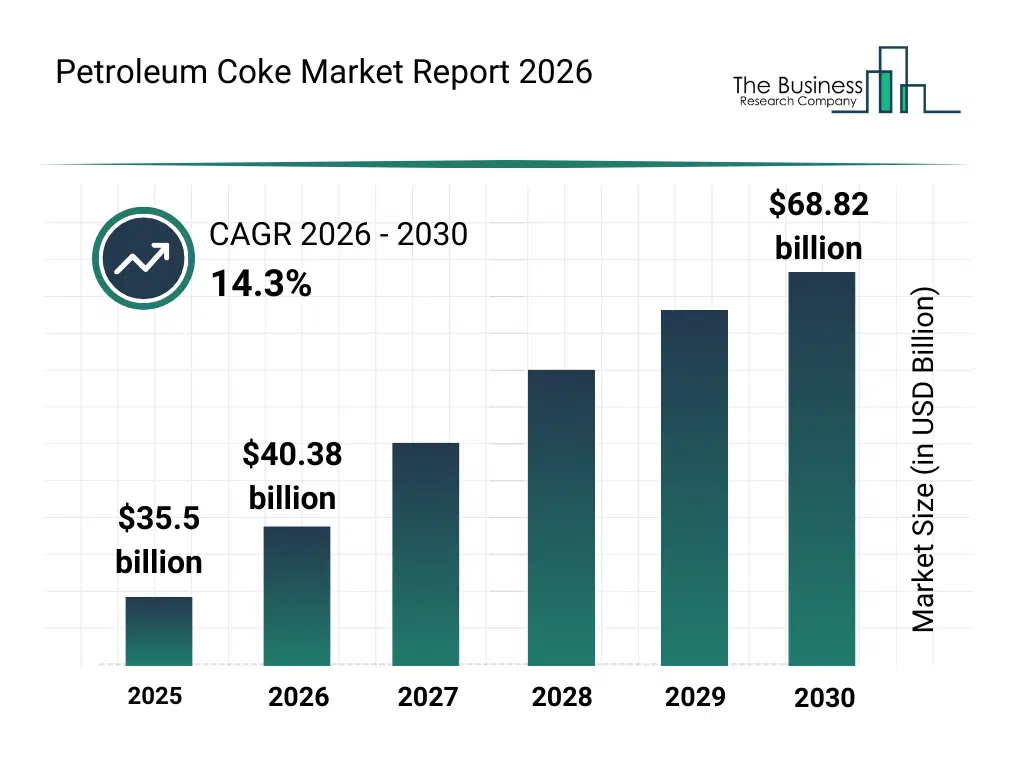
What Is The Petroleum Coke Market Size and Share 2026?
The petroleum coke market size has grown rapidly in recent years. It will grow from $35.5 billion in 2025 to $40.38 billion in 2026 at a compound annual growth rate (CAGR) of 13.8%. The growth in the historic period can be attributed to growth in aluminium production, expansion of steel manufacturing, availability of refinery by-products, demand for cost-effective fuel sources, industrial energy consumption.What Is The Petroleum Coke Market Growth Forecast?
The petroleum coke market size is expected to see rapid growth in the next few years. It will grow to $68.82 billion in 2030 at a compound annual growth rate (CAGR) of 14.3%. The growth in the forecast period can be attributed to increasing aluminium smelting capacity, demand for needle coke in electrodes, growth of cement industry, focus on high purity coke, industrial infrastructure expansion. Major trends in the forecast period include rising demand for calcined petroleum coke, growing use in aluminium and steel industries, shift toward low sulfur pet coke, increasing utilization in cement kilns, focus on energy cost optimization.
Global Petroleum Coke Market Segmentation
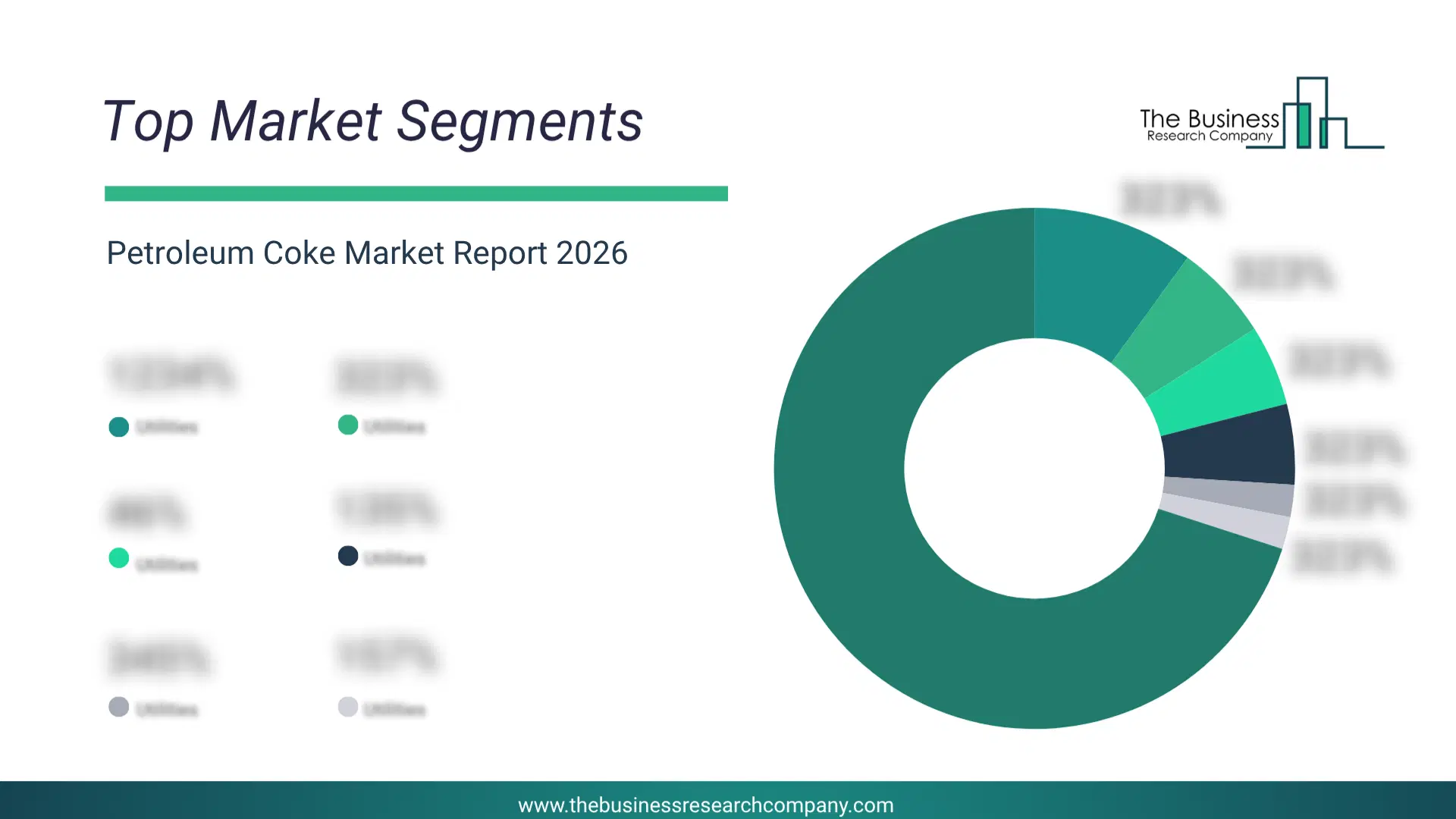
1) By Type: Fuel Grade, Calcined Coke 2) By Physical Form: Needle Coke, Sponge Coke, Shot Coke, Honeycomb Coke 3) By Application: Power Plants, Cement Kilns, Steel, Aluminium, Fertilizer, Other Applications Subsegments: 1) By Fuel Grade: Green Petroleum Coke, Low Sulfur Fuel Grade Coke, High Sulfur Fuel Grade Coke 2) By Calcined Coke: Needle Coke, Shot Coke, Spherical CokeWhat Is The Driver Of The Petroleum Coke Market?
The rise in the production of steel is expected to propel the growth of the petroleum coke market going forward. Steel output has risen globally, owing to growing demand from railways, highway buildings, and automobiles. Petcoke is used as a feedstock in the iron and steel industry, where it is blended with coking coal during the coke-making process. The use of pet coke results in a 16% reduction in coking coal use and a net reduction in energy intensity of just over 1%. For instance, in February 2025, Census.gov, a US-based government organization, the year-to-date final statistics throug December 2024 showed steel imports of 26.2 million metric tons compared with 25.6 million metric tons through December 2023. Therefore, the rise in the production of steel owing to the development of railways, highway construction, automobiles, and transportation segments is driving the growth of the petroleum coke industry.What Is The Driver Of The Petroleum Coke Market?
The increasing energy demand is expected to propel the growth of the petroleum coke market going forward. Energy refers to the ability to do work or cause change. The rise in energy demand is driven by industrialization, as expanding industries require more power to operate machinery and sustain production. Petroleum coke helps meet energy demand by serving as a high-calorific fuel that provides a cost-effective and reliable source of power for energy-intensive industries. For instance, in December 2025, the Department for Energy Security and Net Zero, a US-based government organization, reported that energy consumption in the domestic sector in 2024 increased compared to the record low seen in 2023 by 3.8 percent to 34.0 mtoe. Therefore, the increasing energy demand is driving the growth of the petroleum coke industry.Key Players In The Global Petroleum Coke Market
Major companies operating in the petroleum coke market are BP PLC, Saudi Arabian Oil Co., Phillips 66 Company, Reliance Industries Limited, Valero Energy Corporation, Indian Oil Corporation Ltd., Chevron Corporation, Marathon Petroleum Corporation, HPCL - Mittal Energy Limited, Bharat Petroleum Corporation Ltd., Hindustan Petroleum Corporation Ltd., China National Petroleum Corporation, Sinopec, ExxonMobil, Lukoil-Zapadnaya Sibir, ConocoPhillips, Oxbow Brasil Energia Industries, Petrocoque: Indústria Petroquímica, Rain Carbon Inc., Rain CII Carbon, LA Ash Inc., Carbograf, Asbury Carbons, Carbon Graphite Materials Inc., Anker Industries, River Materials Inc., World Metal Alloys Fzc, Unimetal Industria Comercio E Empreendimentos Ltda, PBF Energy, WD Energy Group, Gazprom Pererabotka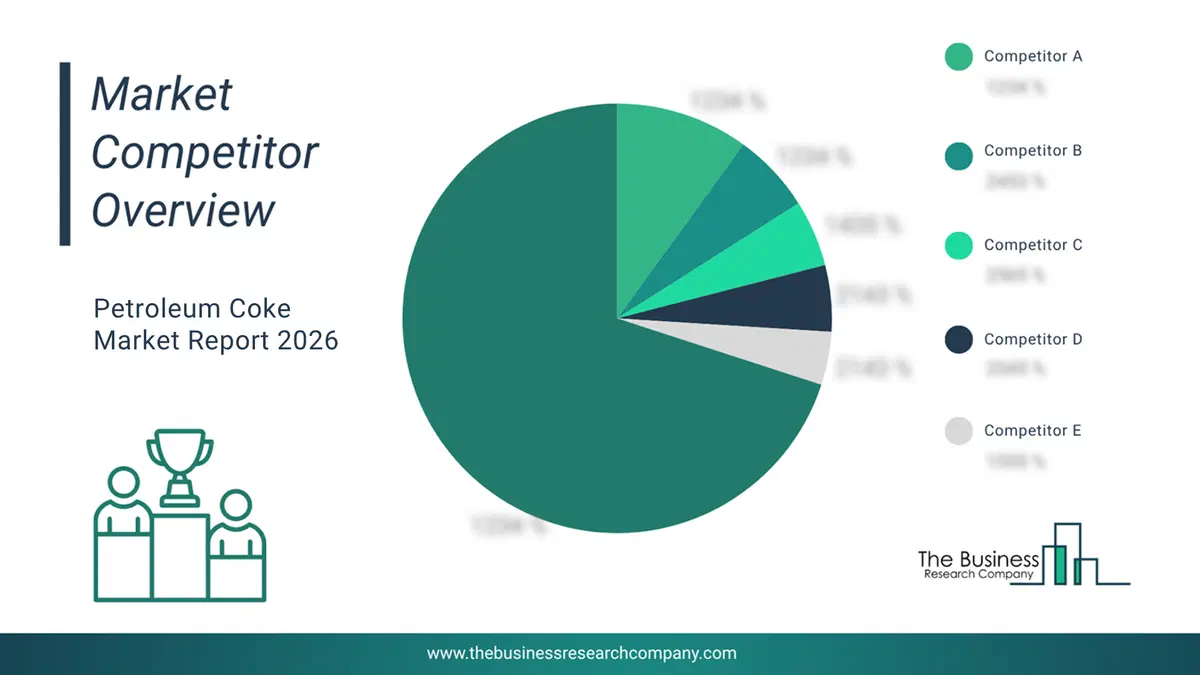
This chart is for illustrative purposes; the full report includes a detailed competitor analysis and comprehensive overview of the top 10 companies in the market.
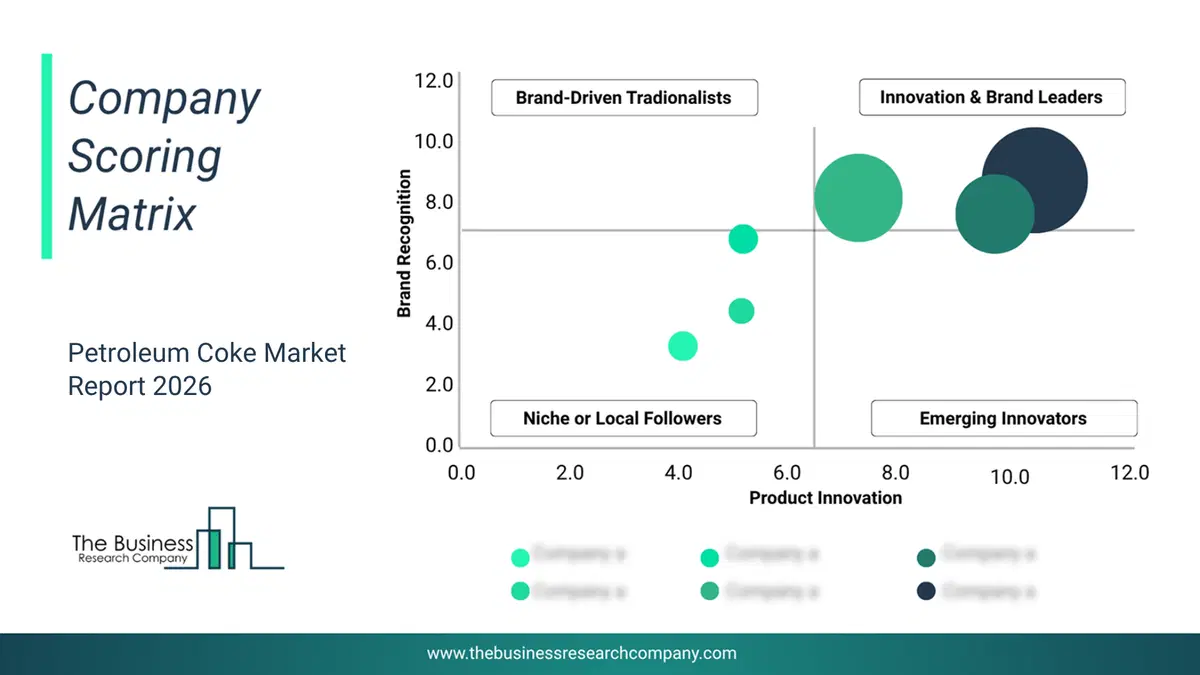
This chart maps companies by product innovation and brand strength, with bubble size indicating relative revenue, helping identify market leaders, challengers, and niche players. This is an illustrative chart; the full report provides a complete and accurate competitive analysis.
Global Petroleum Coke Market Trends and Insights
Major companies operating in the petroleum coke market are focusing on entering strategic partnerships and collaborations to expand their offerings and explore opportunities in new markets. Strategic partnerships and collaborations enable companies to leverage combined resources, enhance product capabilities, and pursue sustainability initiatives. For example, in May 2023, Emirates Global Aluminum (EGA), a UAE-based aluminum producer, signed a memorandum of understanding with BP. The goal of the collaboration is to investigate prospective initiatives and chances that could lower the carbon content of EGA's supply of calcined petroleum coke. The collaboration could result in the establishment of a calcined petroleum coke mixing factory in the UAE. BP is an England-based oil and gas company.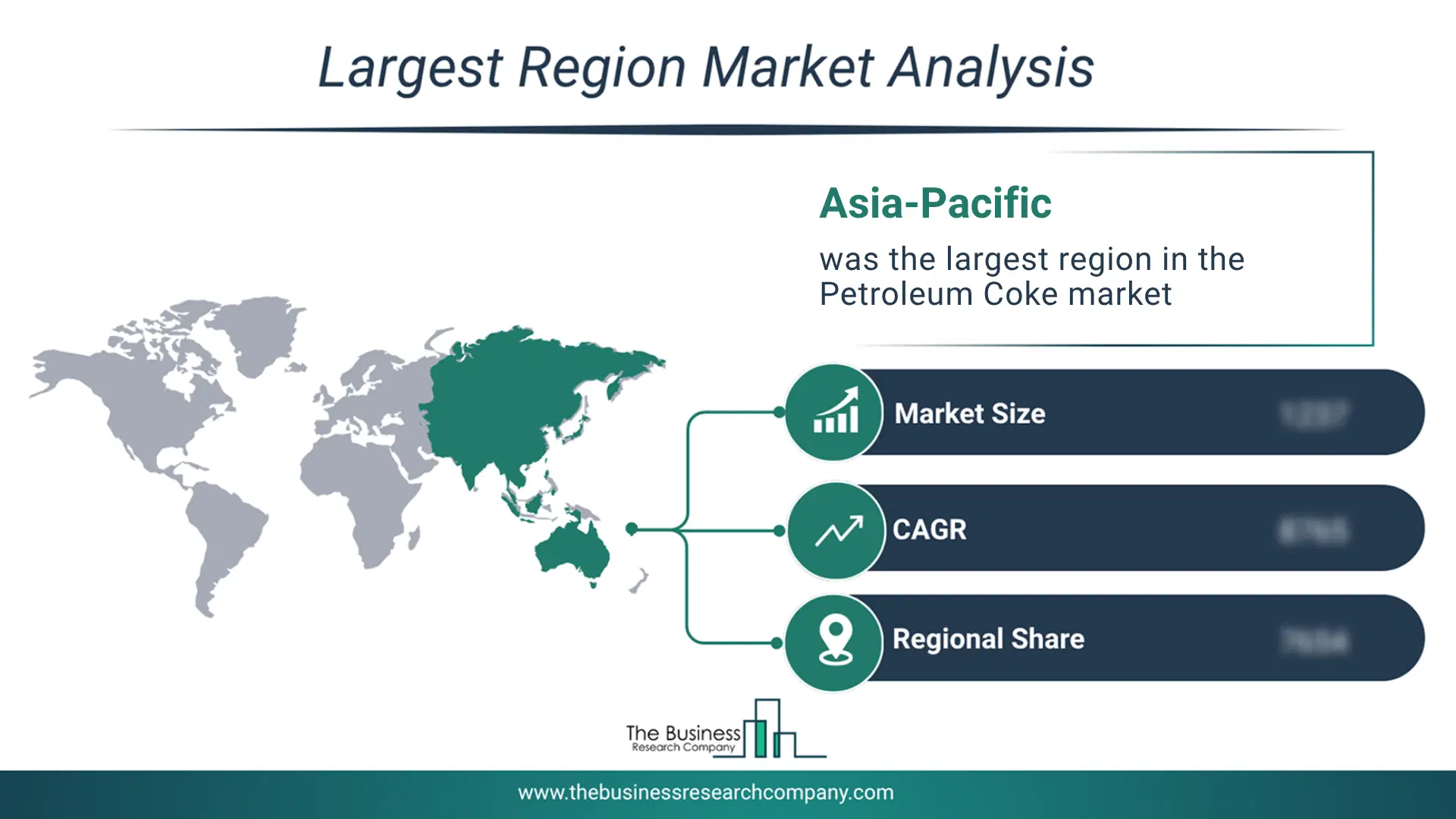
Regional Outlook
Asia-Pacific was the largest region in the petroleum coke market in 2025. The regions covered in this market report are Asia-Pacific, South East Asia, Western Europe, Eastern Europe, North America, South America, Middle East, Africa. The countries covered in this market report are Australia, Brazil, China, France, Germany, India, Indonesia, Japan, Taiwan, Russia, South Korea, UK, USA, Canada, Italy, SpainWhat Defines the Petroleum Coke Market?
The petroleum coke market consists of sales of needle coke, honeycomb coke, sponge coke, and shot coke. Values in this market are ‘factory gate’ values, that is the value of goods sold by the manufacturers or creators of the goods, whether to other entities (including downstream manufacturers, wholesalers, distributors and retailers) or directly to end customers. The value of goods in this market includes related services sold by the creators of the goods.How is Market Value Defined and Measured?
The market value is defined as the revenues that enterprises gain from the sale of goods and/or services within the specified market and geography through sales, grants, or donations in terms of the currency (in USD unless otherwise specified). The revenues for a specified geography are consumption values that are revenues generated by organizations in the specified geography within the market, irrespective of where they are produced. It does not include revenues from resales along the supply chain, either further along the supply chain or as part of other products.
This chart presents market attractiveness based on a quantitative evaluation of growth, competition, strategic alignment, and risk, offering a clear view of opportunity areas for decision-making. This chart is for illustrative purposes; the full report contains the complete analysis.

This chart highlights the Total Addressable Market (TAM) by estimating the maximum revenue opportunity using an assumption-driven approach, supporting strategic planning and opportunity sizing across markets. The chart is illustrative; the full report provides a more comprehensive analysis.
What Key Data and Analysis Are Included in the Petroleum Coke Market Report 2026?
The petroleum coke market research report is one of a series of new reports from The Business Research Company that provides market statistics, including industry global market size, regional shares, competitors with the market share, detailed market segments, market trends and opportunities, and any further data you may need to thrive in the petroleum coke industry. The market research report delivers a complete perspective of everything you need, with an in-depth analysis of the current and future state of the industry.Petroleum Coke Market Report Forecast Analysis
| Report Attribute | Details |
|---|---|
| Market Size Value In 2026 | $40.38 billion |
| Revenue Forecast In 2030 | $68.82 billion |
| Growth Rate | CAGR of 14.3% from 2026 to 2030 |
| Base Year For Estimation | 2025 |
| Actual Estimates/Historical Data | 2020-2025 |
| Forecast Period | 2026 - 2030 |
| Market Representation | Revenue in USD Billion and CAGR from 2026 to 2030 |
| Segments Covered | Type, Physical Form, Application |
| Regional Scope | Asia-Pacific, Western Europe, Eastern Europe, North America, South America, Middle East, Africa |
| Country Scope | The countries covered in the report are Australia, Brazil, China, France, Germany, India, Indonesia, Japan, Taiwan, Russia, South Korea, UK, USA, Canada, Italy, Spain. |
| Key Companies Profiled | BP PLC, Saudi Arabian Oil Co., Phillips 66 Company, Reliance Industries Limited, Valero Energy Corporation, Indian Oil Corporation Ltd., Chevron Corporation, Marathon Petroleum Corporation, HPCL - Mittal Energy Limited, Bharat Petroleum Corporation Ltd., Hindustan Petroleum Corporation Ltd., China National Petroleum Corporation, Sinopec, ExxonMobil, Lukoil-Zapadnaya Sibir, ConocoPhillips, Oxbow Brasil Energia Industries, Petrocoque: Indústria Petroquímica, Rain Carbon Inc., Rain CII Carbon, LA Ash Inc., Carbograf, Asbury Carbons, Carbon Graphite Materials Inc., Anker Industries, River Materials Inc., World Metal Alloys Fzc, Unimetal Industria Comercio E Empreendimentos Ltda, PBF Energy, WD Energy Group, Gazprom Pererabotka |
| Customization Scope | Request for Customization |
| Pricing And Purchase Options | Explore Purchase Options |