
Rare Disease Genetic Testing Market Report 2026
Global Outlook – By Disease Type (Immunological Disorders, Cardiovascular Disorders, Neurological Disease, Endocrine And Metabolism Disorders Diseases, Hematological Diseases, Dermatological Disease, Other Disease Types), By Technology (Next-Generation Sequencing, Sanger Sequencing, Polymerase Chain Reaction Based Testing, Array Based Testing, Fluorescence In Situ Hybridization, Other Technologies), By Specialty (Molecular Genetic Tests, Chromosomal Genetic Tests, Biochemical Genetic Tests), By End-User (Hospitals And Clinics, Research Laboratories And Contract Research Organizations, Diagnostic Laboratories, Other End Users) - Market Size, Trends, Strategies, and Forecast to 2030
Rare Disease Genetic Testing Market Overview
• Rare Disease Genetic Testing market size has reached to $1.17 billion in 2025 • Expected to grow to $2.18 billion in 2030 at a compound annual growth rate (CAGR) of 13.1% • Growth Driver: Increasing Genetic Disorders Fueling The Growth Of The Market Due To Rising Parental Age And Inherited Mutations • Market Trend: Digital Genomics Platforms Enhance Accuracy And Speed Of Testing • North America was the largest region in 2025 and Asia-Pacific is the fastest growing region.What Is Covered Under Rare Disease Genetic Testing Market?
Rare disease genetic testing refers to the analysis of a person’s DNA to identify genetic mutations or variations that may cause or contribute to a rare disease. This testing helps in accurate diagnosis, early intervention, and personalized treatment planning for individuals with rare or undiagnosed conditions. The main disease types in rare disease genetic testing include immunological disorders, cardiovascular disorders, neurological diseases, endocrine and metabolism disorders, hematological diseases, dermatological diseases, and others. Immunological disorders refer to conditions in which the immune system functions abnormally, either by overreacting, underreacting, or attacking the body’s own tissues. These disorders are diagnosed using various technologies such as next-generation sequencing, Sanger sequencing, polymerase chain reaction (PCR) based testing, array-based testing, fluorescence in situ hybridization (FISH), and others. In terms of specialty testing, it is classified into molecular genetic tests, chromosomal genetic tests, and biochemical genetic tests, serving a wide range of end users such as hospitals and clinics, research laboratories and contract research organizations, diagnostic laboratories, and other end users.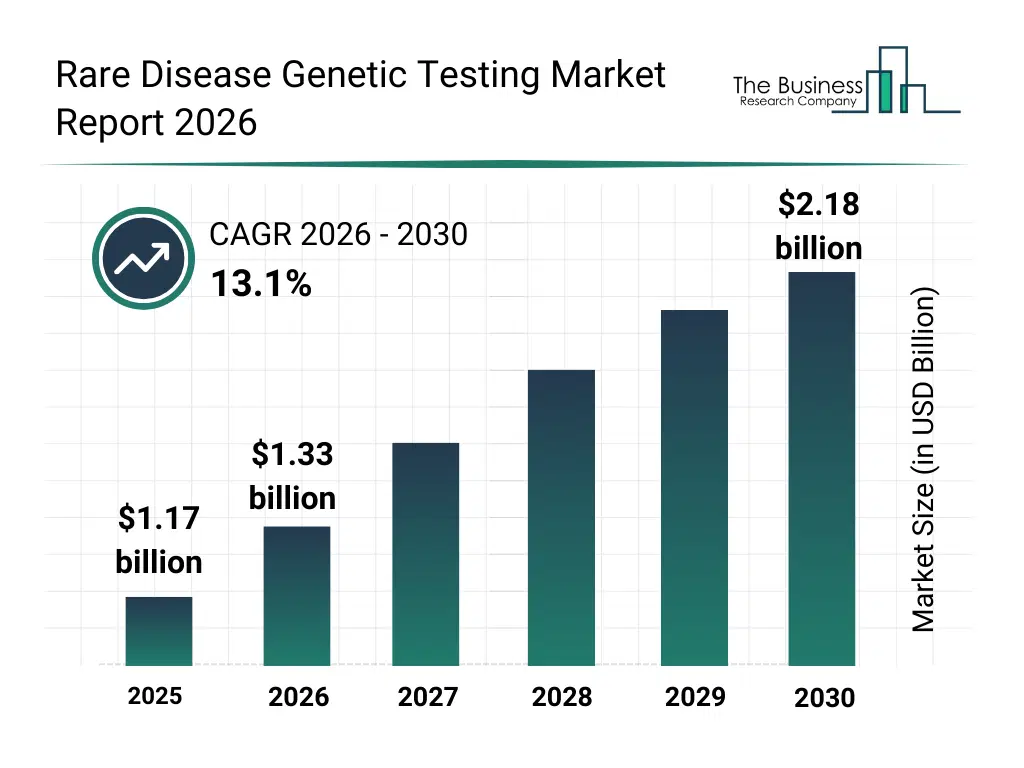
What Is The Rare Disease Genetic Testing Market Size and Share 2026?
The rare disease genetic testing market size has grown rapidly in recent years. It will grow from $1.17 billion in 2025 to $1.33 billion in 2026 at a compound annual growth rate (CAGR) of 13.7%. The growth in the historic period can be attributed to improvements in genomic sequencing technologies, expansion of rare disease research initiatives, rising awareness of genetic disorders, availability of specialized diagnostic laboratories, growth in clinical genetics programs.What Is The Rare Disease Genetic Testing Market Growth Forecast?
The rare disease genetic testing market size is expected to see rapid growth in the next few years. It will grow to $2.18 billion in 2030 at a compound annual growth rate (CAGR) of 13.1%. The growth in the forecast period can be attributed to increasing demand for personalized medicine, rising investments in genomic data analytics, expansion of population-scale genetic screening, growing integration of genetics into routine clinical care, advancements in bioinformatics platforms. Major trends in the forecast period include increasing adoption of next-generation sequencing for rare diseases, growing use of AI-driven variant interpretation, expansion of comprehensive genetic testing panels, rising integration of genetic data with clinical decision systems, enhanced focus on early and accurate diagnosis.
Global Rare Disease Genetic Testing Market Segmentation
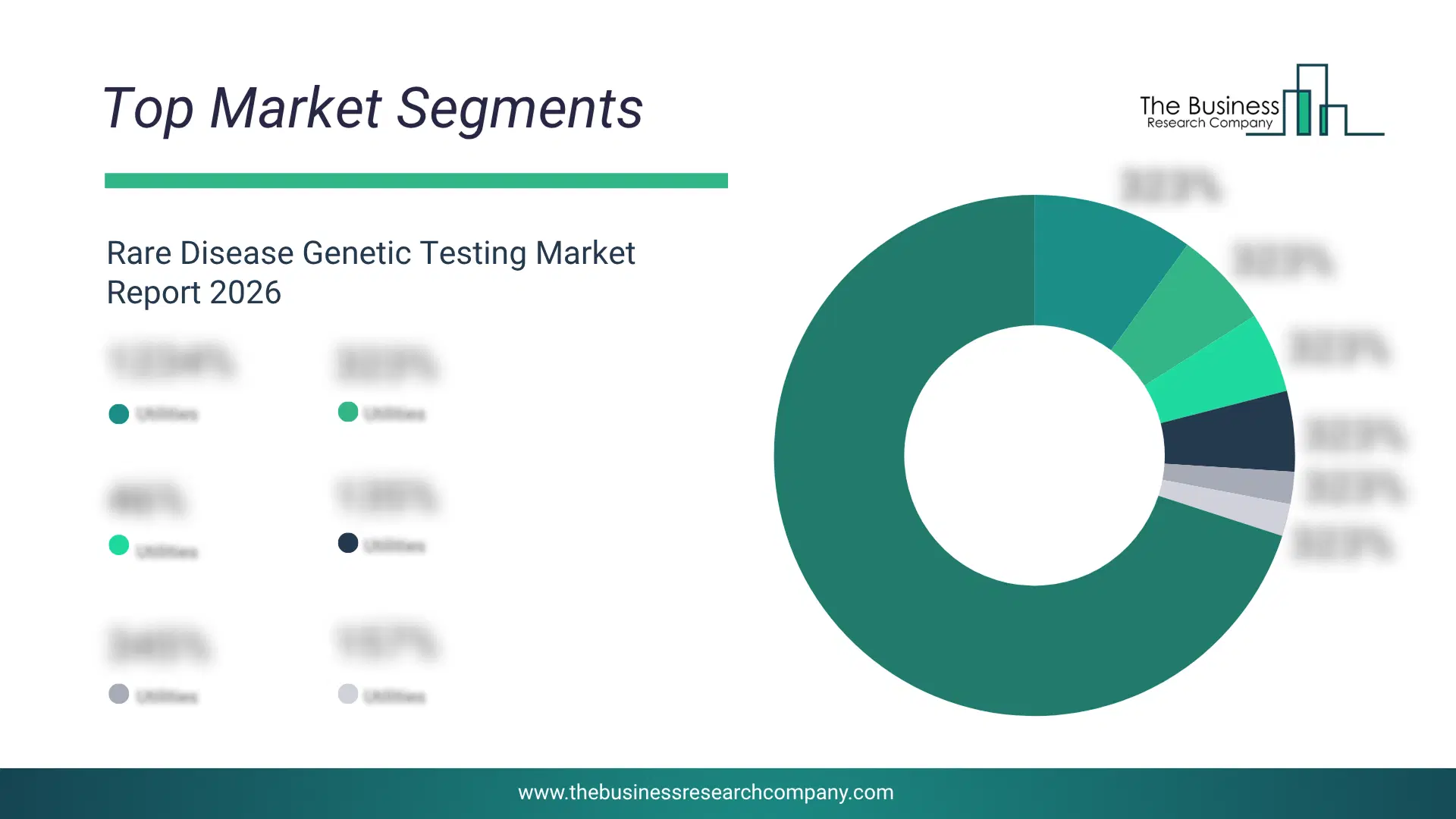
1) By Disease Type: Immunological Disorders, Cardiovascular Disorders, Neurological Disease, Endocrine And Metabolism Disorders Diseases, Hematological Diseases, Dermatological Disease, Other Disease Types 2) By Technology: Next-Generation Sequencing, Sanger Sequencing, Polymerase Chain Reaction Based Testing, Array Based Testing, Fluorescence In Situ Hybridization, Other Technologies 3) By Specialty: Molecular Genetic Tests, Chromosomal Genetic Tests, Biochemical Genetic Tests 4) By End-User: Hospitals And Clinics, Research Laboratories And Contract Research Organizations, Diagnostic Laboratories, Other End Users Subsegments: 1) By Immunological Disorders: Autoimmune Disorders, Allergic Conditions, Primary Immunodeficiency Disorders, Inflammatory Disorders 2) By Cardiovascular Disorders: Congenital Heart Defects, Cardiomyopathies, Aortic Aneurysms, Pulmonary Hypertension 3) By Neurological Disease: Neurodegenerative Disorders, Neuromuscular Disorders, Epileptic Syndromes, Movement Disorders 4) By Endocrine And Metabolism Disorders Diseases: Inherited Metabolic Disorders, Thyroid Disorders, Adrenal Disorders, Diabetes Related Genetic Conditions 5) By Hematological Diseases: Hemophilia, Thalassemia, Sickle Cell Disease, Clotting Disorders 6) By Dermatological Disease: Genetic Skin Disorders, Connective Tissue Disorders, Pigmentary Disorders, Keratinization Disorders 7) By Other Disease Types: Skeletal Dysplasia, Renal Genetic Disorders, Ophthalmic Genetic Conditions, Gastrointestinal Genetic ConditionsWhat Is The Driver Of The Rare Disease Genetic Testing Market?
The increasing genetic disorders are expected to propel the growth of the rare disease genetic testing market going forward. Genetic disorders refer to medical conditions caused by abnormalities in an individual's deoxyribonucleic acid, inherited from one or both parents or arising from new mutations. The increasing genetic disorders are increasing due to rising parental age, as older parents have a higher risk of passing on genetic mutations to their children. Rare disease genetic testing helps in the diagnosis of genetic disorders by identifying specific mutations, enabling accurate and early detection. It supports personalized treatment planning, enhancing patient care and improving long-term health outcomes. For instance, in May 2024, according to the National Health Service, a UK-based government department, there are 17,000 people living with sickle cell disease, an inherited genetic blood disorder, with around 250 new cases diagnosed each year. Therefore, the increasing genetic disorders are driving the growth of the rare disease genetic testing industry.Key Players In The Global Rare Disease Genetic Testing Market
Major companies operating in the rare disease genetic testing market are Thermo Fisher Scientific Inc., Quest Diagnostics Inc., Eurofins Scientific SE, Agilent Technologies Inc., Illumina Inc., QIAGEN N.V., Natera Inc., OPKO Health Inc., Myriad Genetics Inc., Fulgent Genetics Inc., BioReference Laboratories Inc., Invitae Corporation, Ambry Genetics Corporation, Centogene N.V., Baylor Genetics Company, PreventionGenetics, Blueprint Genetics Oy, Artemis DNA Inc., BGI Genomics Co. Ltd., GeneDx Inc., Genomics England Ltd.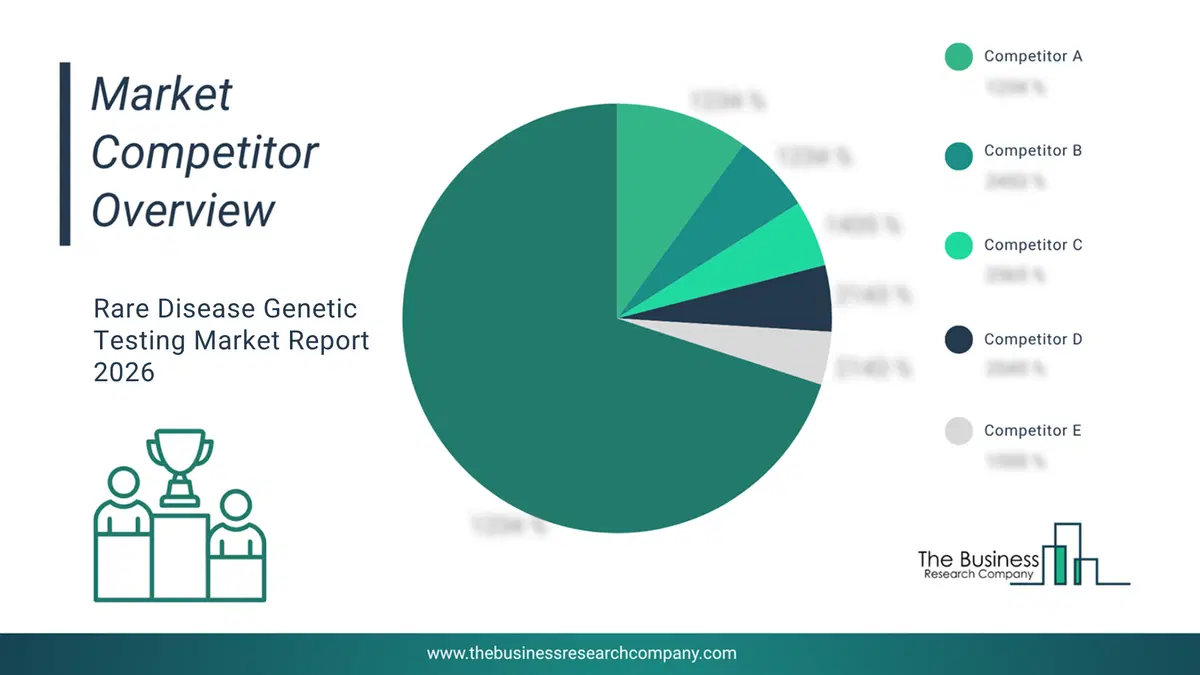
This chart is for illustrative purposes; the full report includes a detailed competitor analysis and comprehensive overview of the top 10 companies in the market.
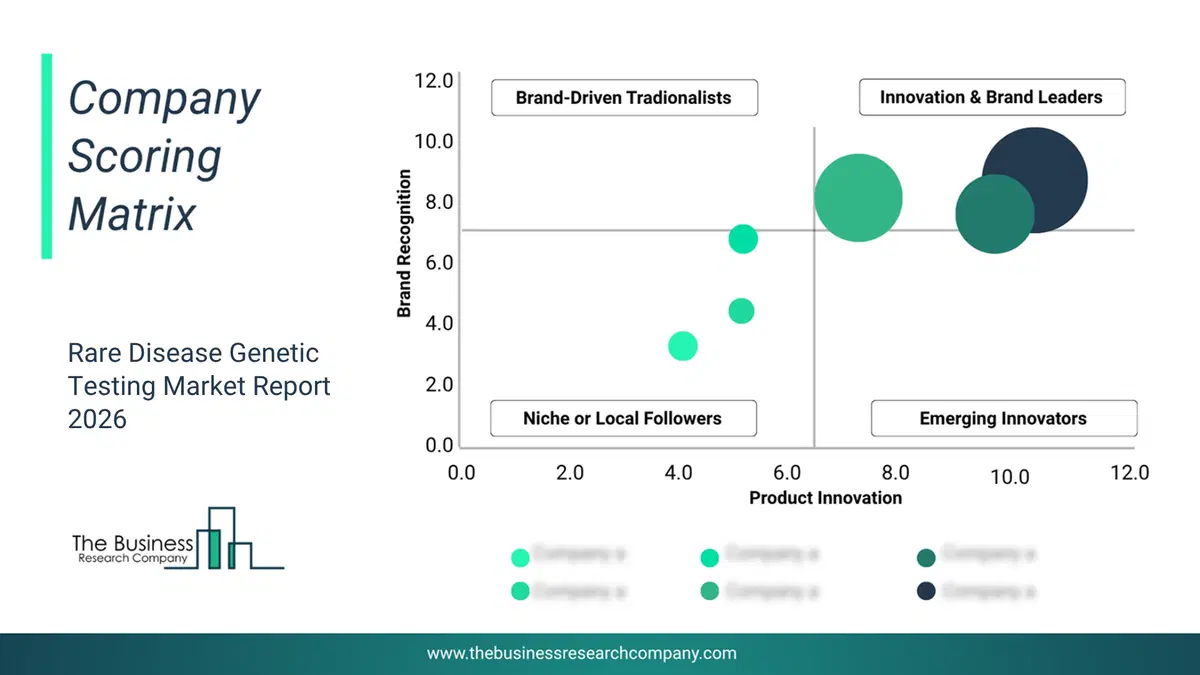
This chart maps companies by product innovation and brand strength, with bubble size indicating relative revenue, helping identify market leaders, challengers, and niche players. This is an illustrative chart; the full report provides a complete and accurate competitive analysis.
Global Rare Disease Genetic Testing Market Trends and Insights
Major companies operating in the rare disease genetic testing market are focusing on developing technologically advanced solutions, such as digital genomics platforms, to enhance the speed, accuracy, and scalability of rare disease diagnosis. Digital genomics platforms are advanced software systems that integrate genomic data analysis, interpretation, and reporting to streamline and accelerate genetic testing and diagnosis. For instance, in March 2025, Strand Life Sciences Private Limited, an India-based computer software company, launched StrandOmics Portal, a digital platform aimed at enhancing the efficiency and accuracy of rare disease diagnosis. The portal offers clinicians in-depth insights into genetic variants, enabling quicker and more precise diagnoses. It supports advanced variant interpretation, including prenatal diagnostics, and facilitates independent reviews of genetic data. This launch underscores a strong commitment to advancing precision medicine and providing healthcare professionals with effective tools to enhance patient outcomes.What Are Latest Mergers And Acquisitions In The Rare Disease Genetic Testing Market?
In August 2024, Labcorp, a US-based provider of laboratory diagnostics and life sciences services, acquired select assets of Invitae for an undisclosed amount. Through this acquisition, Labcorp aims to expand its genetic testing capabilities by incorporating Invitae’s advanced technologies in oncology and select rare diseases, enabling more comprehensive genomic insights to support diagnosis, treatment decision-making, and personalized patient care. Invitae Corporation is a US-based company specializing in medical and hereditary genetic testing across a broad range of inherited and rare conditions.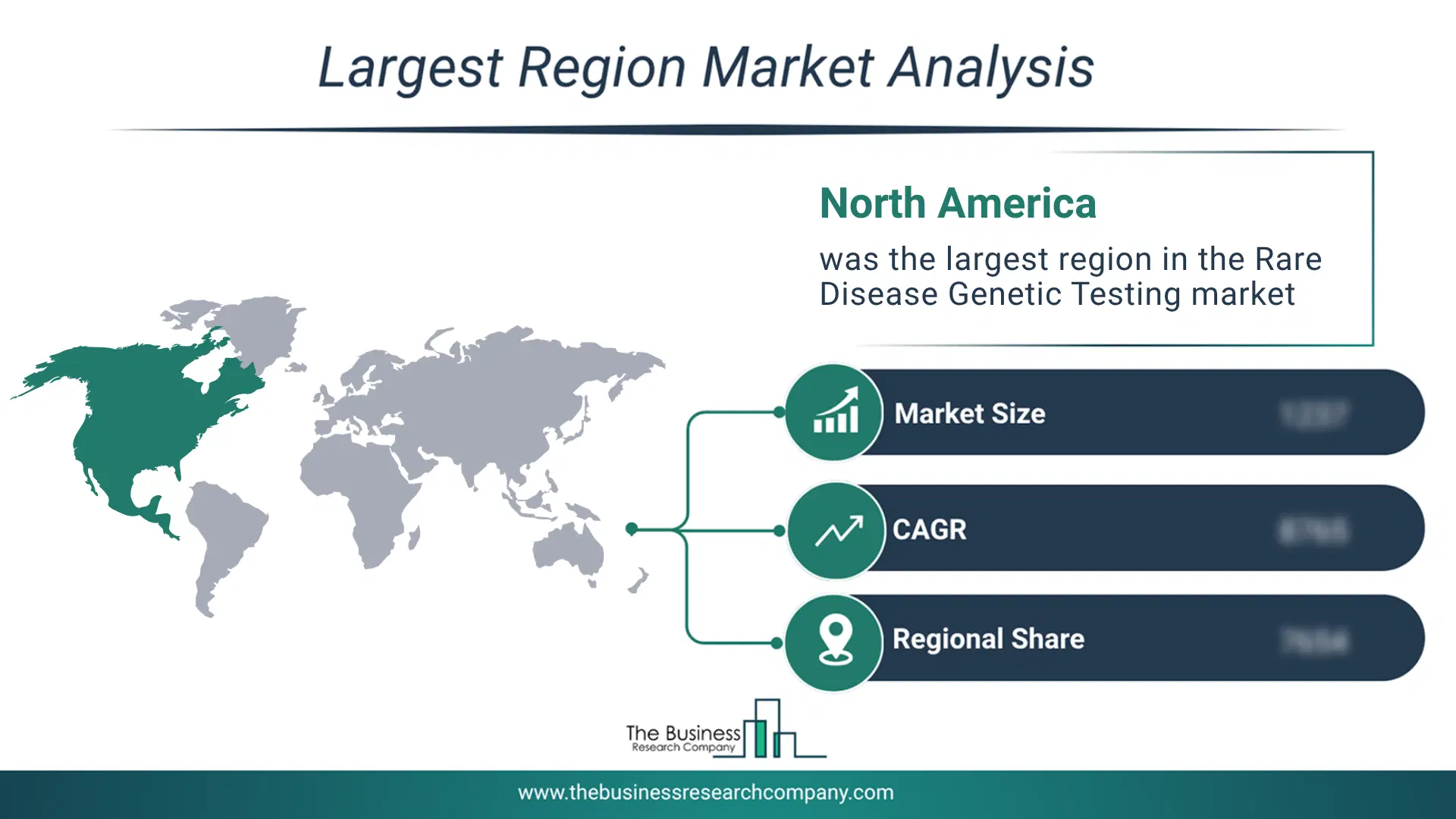
Regional Outlook
North America was the largest region in the rare disease genetic testing market in 2025. Asia-Pacific is expected to be the fastest-growing region in the forecast period. The regions covered in this market report are Asia-Pacific, South East Asia, Western Europe, Eastern Europe, North America, South America, Middle East, Africa. The countries covered in this market report are Australia, Brazil, China, France, Germany, India, Indonesia, Japan, Taiwan, Russia, South Korea, UK, USA, Canada, Italy, Spain.What Defines the Rare Disease Genetic Testing Market?
The rare disease genetic testing market consists of revenues earned by entities by providing services such as whole exome sequencing, targeted gene panel testing, whole genome sequencing, carrier screening, and newborn genetic screening. The market value includes the value of related goods sold by the service provider or included within the service offering. The rare disease genetic testing market also includes sales of genetic testing kits, bioinformatics software, next-generation sequencing (NGS) platforms, laboratory reagents and consumables, and targeted gene panels. Values in this market are ‘factory gate’ values; that is, the value of goods sold by the manufacturers or creators of the goods, whether to other entities (including downstream manufacturers, wholesalers, distributors, and retailers) or directly to end customers. The value of goods in this market includes related services sold by the creators of the goods.How is Market Value Defined and Measured?
The market value is defined as the revenues that enterprises gain from the sale of goods and/or services within the specified market and geography through sales, grants, or donations in terms of the currency (in USD unless otherwise specified). The revenues for a specified geography are consumption values that are revenues generated by organizations in the specified geography within the market, irrespective of where they are produced. It does not include revenues from resales along the supply chain, either further along the supply chain or as part of other products.
This chart presents market attractiveness based on a quantitative evaluation of growth, competition, strategic alignment, and risk, offering a clear view of opportunity areas for decision-making. This chart is for illustrative purposes; the full report contains the complete analysis.

This chart highlights the Total Addressable Market (TAM) by estimating the maximum revenue opportunity using an assumption-driven approach, supporting strategic planning and opportunity sizing across markets. The chart is illustrative; the full report provides a more comprehensive analysis.
What Key Data and Analysis Are Included in the Rare Disease Genetic Testing Market Report 2026?
The rare disease genetic testing market research report is one of a series of new reports from The Business Research Company that provides market statistics, including industry global market size, regional shares, competitors with the market share, detailed market segments, market trends and opportunities, and any further data you may need to thrive in the rare disease genetic testing industry. The market research report delivers a complete perspective of everything you need, with an in-depth analysis of the current and future state of the industry.Rare Disease Genetic Testing Market Report Forecast Analysis
| Report Attribute | Details |
|---|---|
| Market Size Value In 2026 | $1.33 billion |
| Revenue Forecast In 2030 | $2.18 billion |
| Growth Rate | CAGR of 13.1% from 2026 to 2030 |
| Base Year For Estimation | 2025 |
| Actual Estimates/Historical Data | 2020-2025 |
| Forecast Period | 2026 - 2030 |
| Market Representation | Revenue in USD Billion and CAGR from 2026 to 2030 |
| Segments Covered | Disease Type, Technology, Specialty, End-User |
| Regional Scope | Asia-Pacific, Western Europe, Eastern Europe, North America, South America, Middle East, Africa |
| Country Scope | The countries covered in the report are Australia, Brazil, China, France, Germany, India, Indonesia, Japan, Taiwan, Russia, South Korea, UK, USA, Canada, Italy, Spain |
| Key Companies Profiled | Thermo Fisher Scientific Inc., Quest Diagnostics Inc., Eurofins Scientific SE, Agilent Technologies Inc., Illumina Inc., QIAGEN N.V., Natera Inc., OPKO Health Inc., Myriad Genetics Inc., Fulgent Genetics Inc., BioReference Laboratories Inc., Invitae Corporation, Ambry Genetics Corporation, Centogene N.V., Baylor Genetics Company, PreventionGenetics, Blueprint Genetics Oy, Artemis DNA Inc., BGI Genomics Co. Ltd., GeneDx Inc., Genomics England Ltd. |
| Customization Scope | Request for Customization |
| Pricing And Purchase Options | Explore Purchase Options |