
Rare Hematology Market Report 2026
Global Outlook – By Disease Type (Hemophilia, Sickle Cell Disease, Thalassemia, Myelodysplastic Syndromes, Other Disease Types), By Treatment Type (Gene Therapy, Stem Cell Transplantation, Blood Transfusion, Pharmacotherapy), By Diagnostic Technique (Laboratory Tests, Blood Tests, Bone Marrow Biopsies, Imaging Techniques, Magnetic Resonance Imaging (MRI) Scans, Ultrasounds, Genetic Testing, Carrier Screening, Whole Genome Sequencing), By Application (Pediatric, Adult), By End-User (Hospitals, Specialty Clinics, Research Institutes) - Market Size, Trends, Strategies, and Forecast to 2030
Rare Hematology Market Overview
• Rare Hematology market size has reached to $15.47 billion in 2025 • Expected to grow to $21.25 billion in 2030 at a compound annual growth rate (CAGR) of 6.5% • Growth Driver: Increasing Prevalence Of Rare Blood Disorders Fueling The Growth Of The Market Due To Genetic Mutations And Inherited Conditions • Market Trend: Advocacy Councils Enhance Care And Awareness For Rare Blood Disorders • North America was the largest region in 2025.What Is Covered Under Rare Hematology Market?
Rare hematology refers to the study, diagnosis, and treatment of uncommon blood disorders, including rare anemias, clotting disorders, bone marrow failure syndromes, and rare blood cancers. These conditions often have limited treatment options and affect small patient populations. It helps to advance understanding, improve diagnosis, and develop targeted therapies to enhance patient outcomes and quality of life. The main disease types of rare hematology are hemophilia, sickle cell disease, thalassemia, myelodysplastic syndromes, and others. Hemophilia refers to a genetic bleeding disorder in which the blood does not clot properly due to the deficiency or absence of certain clotting factors, leading to excessive bleeding and difficulty in stopping hemorrhages. The various treatment types include gene therapy, stem cell transplantation, blood transfusion, and pharmacotherapy and utilize different diagnostic techniques such as laboratory tests, blood tests, bone marrow biopsies, imaging techniques, magnetic resonance imaging (MRI) scans, ultrasounds, genetic testing, carrier screening, and whole genome sequencing. It finds applications in pediatric and adult, serving end users such as hospitals, specialty clinics, and research institutes.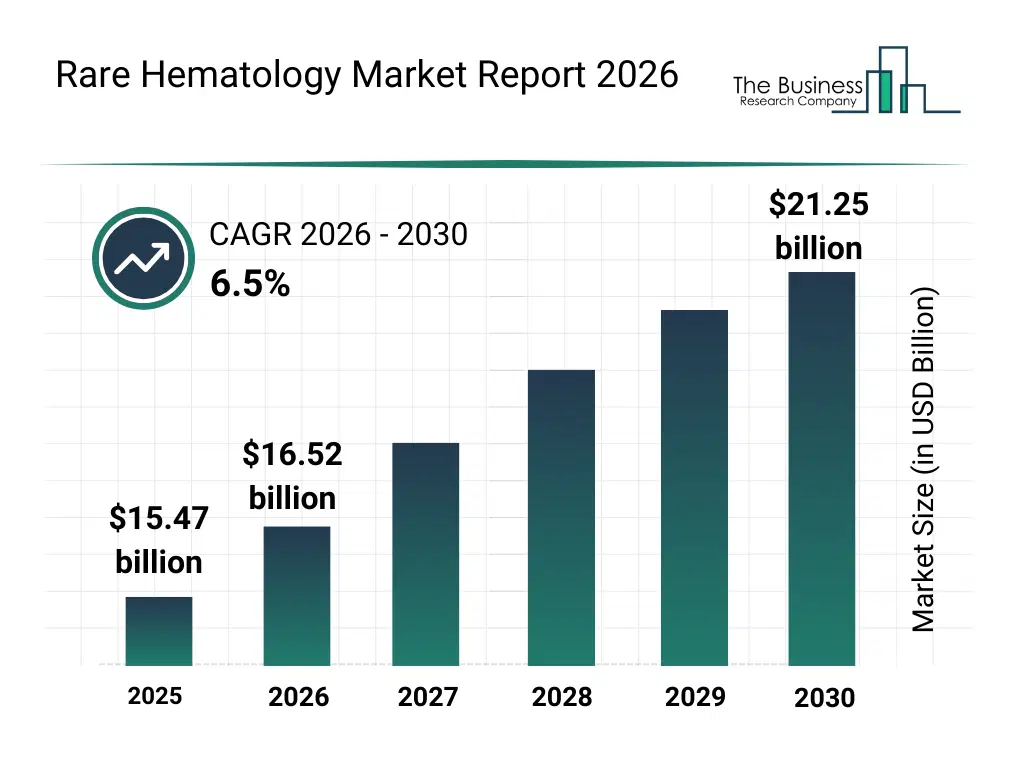
What Is The Rare Hematology Market Size and Share 2026?
The rare hematology market size has grown strongly in recent years. It will grow from $15.47 billion in 2025 to $16.52 billion in 2026 at a compound annual growth rate (CAGR) of 6.8%. The growth in the historic period can be attributed to limited availability of effective therapies, expansion of rare disease research initiatives, increasing awareness of rare blood disorders, improvements in diagnostic laboratory capabilities, growth in specialized hematology clinics.What Is The Rare Hematology Market Growth Forecast?
The rare hematology market size is expected to see strong growth in the next few years. It will grow to $21.25 billion in 2030 at a compound annual growth rate (CAGR) of 6.5%. The growth in the forecast period can be attributed to rising investments in gene therapy development, increasing focus on precision medicine for rare diseases, expansion of newborn and carrier screening programs, growing collaboration between research institutes and pharma companies, advances in genomic sequencing technologies. Major trends in the forecast period include increasing adoption of gene and cell therapies, growing use of advanced genetic diagnostics, rising focus on personalized treatment pathways, expansion of specialized rare disease centers, enhanced integration of digital patient monitoring.
Global Rare Hematology Market Segmentation
1) By Disease Type: Hemophilia, Sickle Cell Disease, Thalassemia, Myelodysplastic Syndromes, Other Disease Types 2) By Treatment Type: Gene Therapy, Stem Cell Transplantation, Blood Transfusion, Pharmacotherapy 3) By Diagnostic Technique: Laboratory Tests, Blood Tests, Bone Marrow Biopsies, Imaging Techniques, Magnetic Resonance Imaging (MRI) Scans, Ultrasounds, Genetic Testing, Carrier Screening, Whole Genome Sequencing 4) By Application: Pediatric, Adult 5) By End-User: Hospitals, Specialty Clinics, Research Institutes Subsegments: 1) By Hemophilia: Hemophilia A, Hemophilia B, Hemophilia C, Acquired Hemophilia 2) By Sickle Cell Disease: Sickle Cell Anemia, Sickle Hemoglobin C Disease, Sickle Beta Thalassemia 3) By Thalassemia: Alpha Thalassemia, Beta Thalassemia 4) By Myelodysplastic Syndromes: Refractory Anemia (RA), Refractory Anemia With Ring Sideroblasts (RARS), Refractory Cytopenia With Multilineage Dysplasia (RCMD), Refractory Anemia With Excess Blasts (RAEB), Myelodysplastic Syndrome With Isolated Del(5Q), Unclassified Myelodysplastic Syndromes 5) By Other Disease Types: Aplastic Anemia, Paroxysmal Nocturnal Hemoglobinuria, Rare Coagulation DisordersWhat Is The Driver Of The Rare Hematology Market?
The increasing prevalence of rare blood disorders is expected to propel the growth of the rare hematology market going forward. Rare blood disorders refer to uncommon medical conditions that affect the production, function, or lifespan of blood cells or clotting factors, leading to anemia, bleeding disorders, or hemolysis. The prevalence of these disorders is increasing due to genetic mutations and inherited conditions passed from parents to children. The rare hematology market supports this trend by providing specialized diagnostics and targeted therapies that help manage complex and uncommon blood conditions while reducing complications and improving long-term patient outcomes. For instance, in March 2024, according to the National Institute for Health and Care Excellence, a UK-based non-departmental public body, in 2022 and 2023, there were 2,069 individuals in the UK diagnosed with haemophilia B, including 374 with severe disease and 351 with moderate disease. Therefore, the increasing prevalence of rare blood disorders is driving the growth of the rare hematology industry.Key Players In The Global Rare Hematology Market
Major companies operating in the rare hematology market are F. Hoffmann-La Roche Ltd, Pfizer Inc., Abbvie Inc., Bayer AG, Sanofi S.A., Novartis AG, Astrazeneca Plc, Bristol-Myers Squibb Company, Takeda Pharmaceutical Company Limited, Amgen Inc., CSL Behring LLC, Biogen Inc., Jazz Pharmaceuticals Plc, Octapharma AG, PharmaEssentia Corporation, Disc Medicine Inc., BioInvent International AB, Mustang Bio Inc., BlueSphere Bio Inc., Rallybio LLC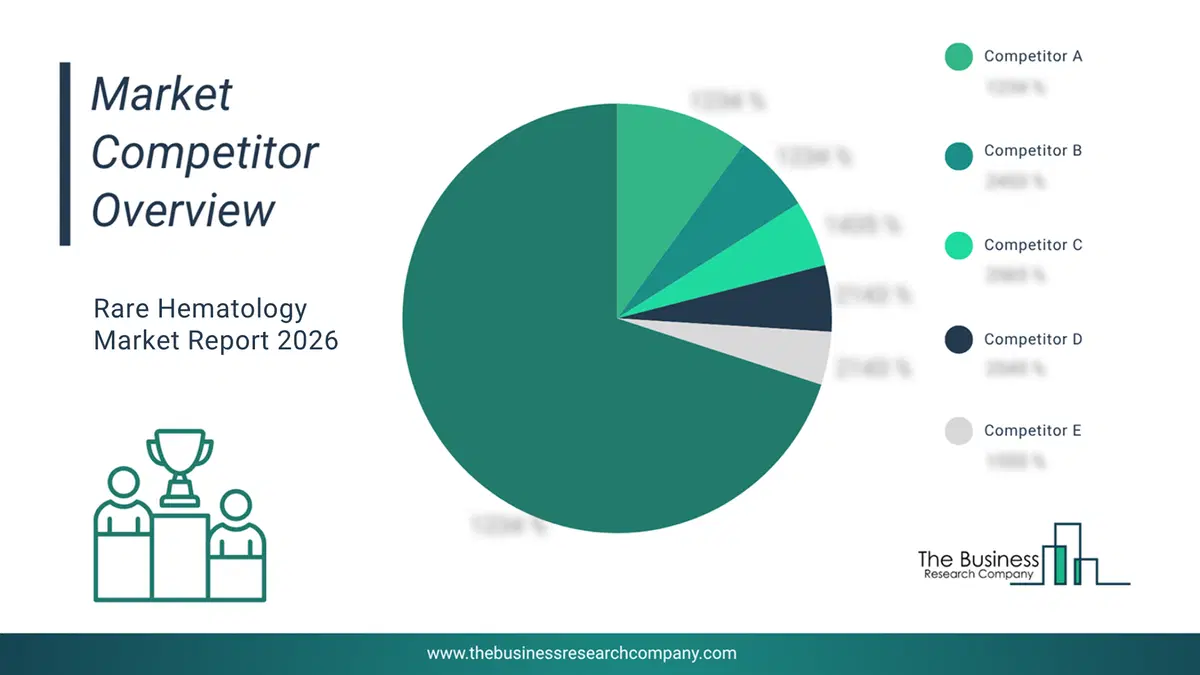
This chart is for illustrative purposes; the full report includes a detailed competitor analysis and comprehensive overview of the top 10 companies in the market.
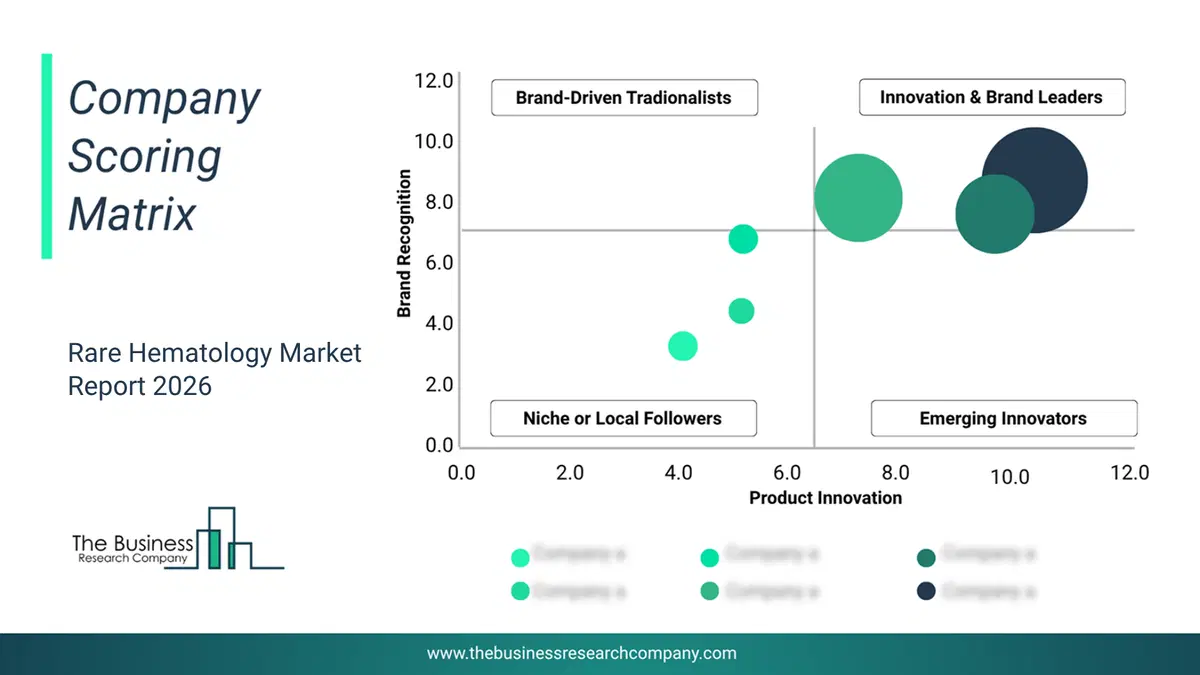
This chart maps companies by product innovation and brand strength, with bubble size indicating relative revenue, helping identify market leaders, challengers, and niche players. This is an illustrative chart; the full report provides a complete and accurate competitive analysis.
Global Rare Hematology Market Trends and Insights
Major companies operating in the rare hematology market are focusing on developing innovative therapies and strategic initiatives, such as multi-stakeholder advocacy councils, to address unmet medical needs, enhance patient support, and drive cross-indication solutions. Multi-stakeholder advocacy councils are groups of patients, caregivers, and experts collaborating to improve care, awareness, and solutions for a specific health condition. For instance, in February 2023, Agios Pharmaceuticals Inc., a US-based biopharmaceutical company, launched the Red Cell Revolution advocacy advisory council. This initiative brings together patients, caregivers, and healthcare professionals affected by rare hemolytic anemias such as pyruvate kinase deficiency, thalassemia, and sickle cell disease. Its goal is to strengthen community connections, generate published evidence, design practical solutions, and raise awareness of shared challenges. It includes initiatives such as sponsored podcasts, video content, and partnerships with organizations like the National Organization for Rare Disorders to support health equity and education.What Are Latest Mergers And Acquisitions In The Rare Hematology Market?
In August 2025, Norgine B.V., a Netherlands-based specialty pharmaceutical and consumer healthcare company, acquired Theravia for an undisclosed amount. With this acquisition, Norgine aims to expand and strengthen its portfolio of rare disease medicines and accelerate access to therapies for patients with high unmet medical needs. Theravia Pharmaceuticals is a France-based international pharmaceutical company specializing in providing treatments for rare hematology conditions.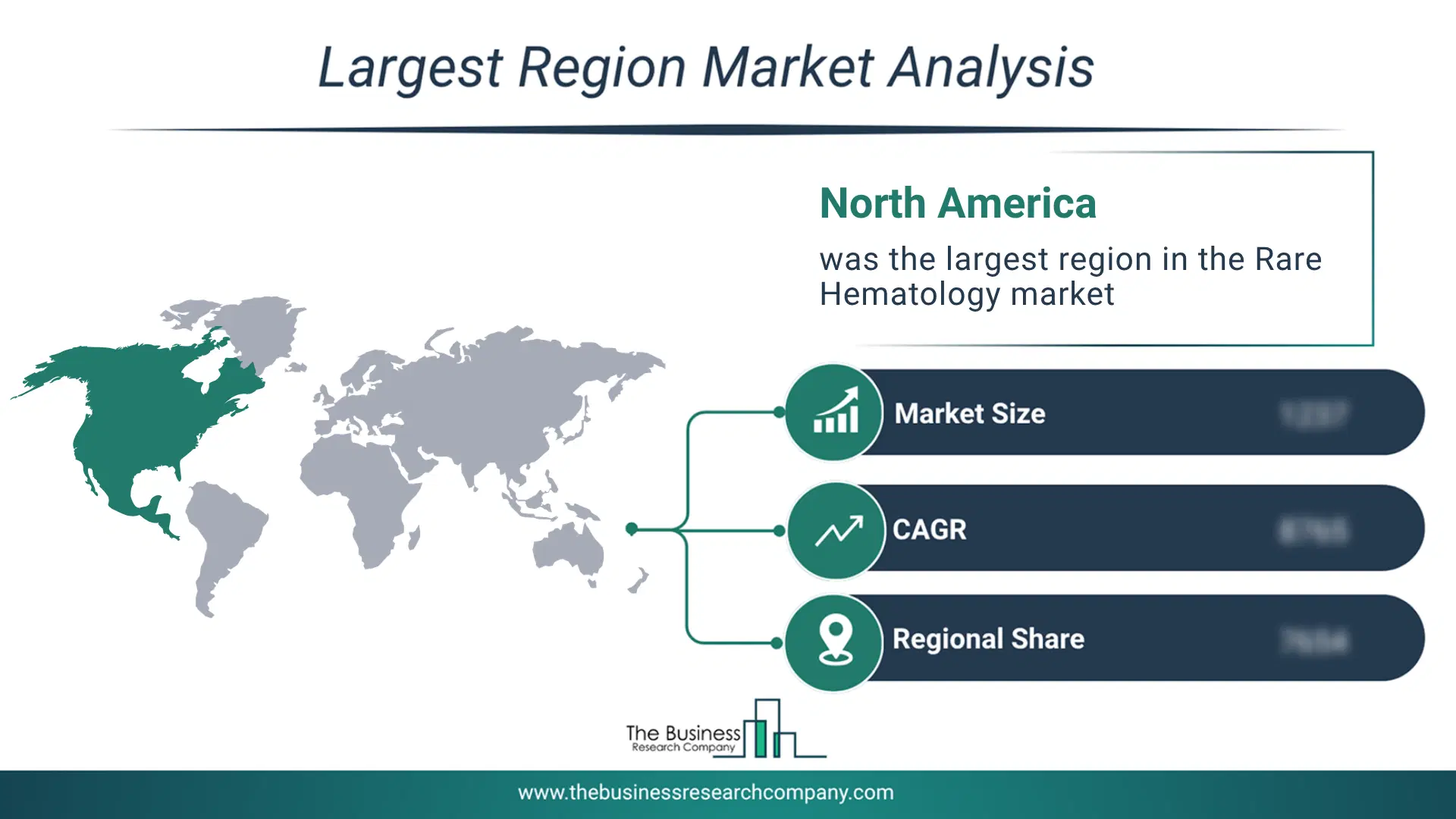
Regional Outlook
North America was the largest region in the rare hematology market in 2025. Asia-Pacific is expected to be the fastest-growing region in the forecast period. The regions covered in this market report are Asia-Pacific, South East Asia, Western Europe, Eastern Europe, North America, South America, Middle East, Africa. The countries covered in this market report are Australia, Brazil, China, France, Germany, India, Indonesia, Japan, Taiwan, Russia, South Korea, UK, USA, Canada, Italy, Spain.What Defines the Rare Hematology Market?
The rare hematology market includes revenues earned by entities through genetic testing, disease monitoring, blood transfusion support, patient care management, and clinical trial services. The market value includes the value of related goods sold by the service provider or included within the service offering. Only goods and services traded between entities or sold to end consumers are included.How is Market Value Defined and Measured?
The market value is defined as the revenues that enterprises gain from the sale of goods and/or services within the specified market and geography through sales, grants, or donations in terms of the currency (in USD unless otherwise specified). The revenues for a specified geography are consumption values that are revenues generated by organizations in the specified geography within the market, irrespective of where they are produced. It does not include revenues from resales along the supply chain, either further along the supply chain or as part of other products.
This chart presents market attractiveness based on a quantitative evaluation of growth, competition, strategic alignment, and risk, offering a clear view of opportunity areas for decision-making. This chart is for illustrative purposes; the full report contains the complete analysis.

This chart highlights the Total Addressable Market (TAM) by estimating the maximum revenue opportunity using an assumption-driven approach, supporting strategic planning and opportunity sizing across markets. The chart is illustrative; the full report provides a more comprehensive analysis.
What Key Data and Analysis Are Included in the Rare Hematology Market Report 2026?
The rare hematology market research report is one of a series of new reports from The Business Research Company that provides market statistics, including industry global market size, regional shares, competitors with the market share, detailed market segments, market trends and opportunities, and any further data you may need to thrive in the rare hematology industry. The market research report delivers a complete perspective of everything you need, with an in-depth analysis of the current and future state of the industry.Rare Hematology Market Report Forecast Analysis
| Report Attribute | Details |
|---|---|
| Market Size Value In 2026 | $16.52 billion |
| Revenue Forecast In 2030 | $21.25 billion |
| Growth Rate | CAGR of 6.5% from 2026 to 2030 |
| Base Year For Estimation | 2025 |
| Actual Estimates/Historical Data | 2020-2025 |
| Forecast Period | 2026 - 2030 |
| Market Representation | Revenue in USD Billion and CAGR from 2026 to 2030 |
| Segments Covered | Disease Type, Treatment Type, Diagnostic Technique, Application, End-User |
| Regional Scope | Asia-Pacific, Western Europe, Eastern Europe, North America, South America, Middle East, Africa |
| Country Scope | The countries covered in the report are Australia, Brazil, China, France, Germany, India, Indonesia, Japan, Taiwan, Russia, South Korea, UK, USA, Canada, Italy, Spain |
| Key Companies Profiled | F. Hoffmann-La Roche Ltd, Pfizer Inc., Abbvie Inc., Bayer AG, Sanofi S.A., Novartis AG, Astrazeneca Plc, Bristol-Myers Squibb Company, Takeda Pharmaceutical Company Limited, Amgen Inc., CSL Behring LLC, Biogen Inc., Jazz Pharmaceuticals Plc, Octapharma AG, PharmaEssentia Corporation, Disc Medicine Inc., BioInvent International AB, Mustang Bio Inc., BlueSphere Bio Inc., Rallybio LLC |
| Customization Scope | Request for Customization |
| Pricing And Purchase Options | Explore Purchase Options |