
Routine Health Screening Market Report 2026
Global Outlook – By Test Type (Blood Glucose Test, Kidney Function Test, Bone Profile Test, Electrolyte Test, Liver Function Test, Lipid Profile Test, Other Test Types), By Sample Type (Blood, Urine, Serum, Saliva, Other Sample Types), By Technology (Quantitative Polymerase Chain Reaction (QPCR), Quantitative Fluorescence In Situ Hybridization (Q-FISH), Immunoassays, Medical Imaging, Single Telomere Length Analysis (STELA), Other Technologies), By Sample Collection Sites (Hospitals, Homes, Diagnostic Laboratories, Offices, Other Sample Collection Sites) - Market Size, Trends, Strategies, and Forecast to 2030
Routine Health Screening Market Overview
• Routine Health Screening market size has reached to $58.45 billion in 2025 • Expected to grow to $83.35 billion in 2030 at a compound annual growth rate (CAGR) of 7.3% • Growth Driver: Increasing Preventive Healthcare Awareness Driving Growth In Routine Health Screenings Market • Market Trend: Innovative Developments In Lung Cancer Screening Tests Enhance Routine Health Screenings Market • North America was the largest region in 2025 and Asia-Pacific is the fastest growing region.What Is Covered Under Routine Health Screening Market?
Routine health screening refers to regular medical tests and check-ups aimed at detecting potential health issues early before symptoms appear. These screenings help monitor overall health, identify risk factors, and prevent the development of serious conditions such as heart disease, diabetes, or cancer. They are typically recommended based on age, gender, and health history and are crucial for maintaining long-term health and well-being. The main test types of routine health screening are blood glucose test, kidney function test, bone profile test, electrolyte test, liver function test, lipid profile test, and others. A blood glucose test measures the amount of glucose (sugar) in the blood to check for diabetes or monitor its management. The sample types are blood, urine, serum, saliva, and others, and the technology is quantitative polymerase chain reaction (QPCR), quantitative fluorescence in situ hybridization (Q-fish), immunoassays, medical imaging, single telomere length analysis (STELA), and others. The sample collection sites include hospitals, homes, diagnostic laboratories, offices, and others.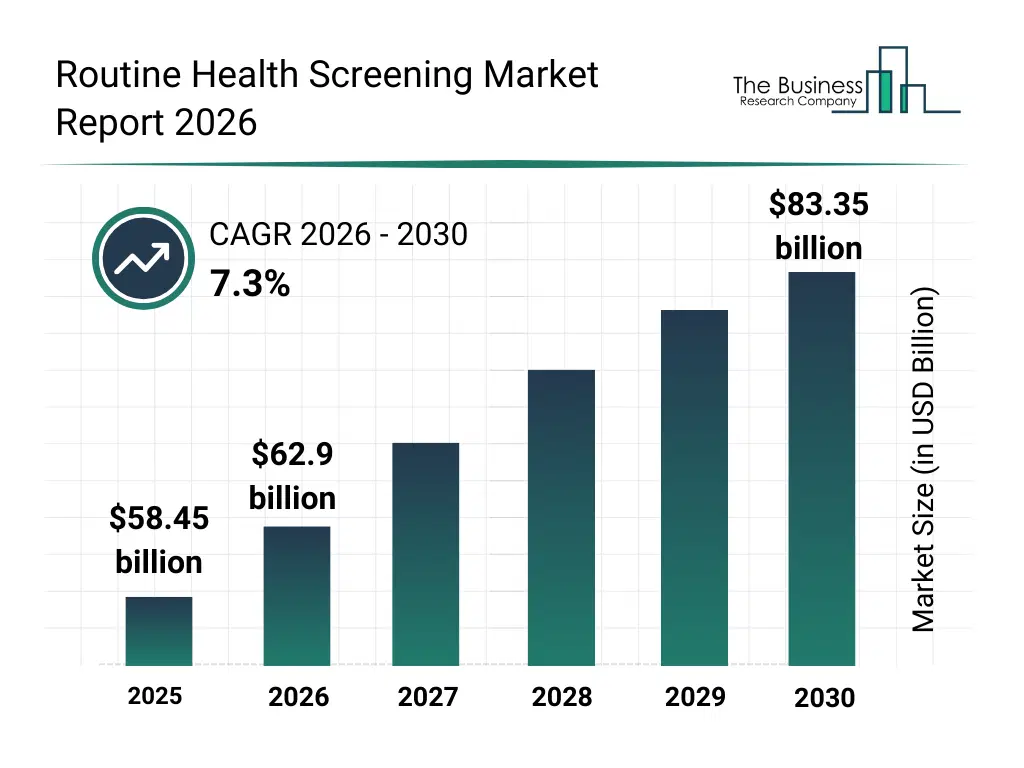
What Is The Routine Health Screening Market Size and Share 2026?
The routine health screening market size has grown strongly in recent years. It will grow from $58.45 billion in 2025 to $62.9 billion in 2026 at a compound annual growth rate (CAGR) of 7.6%. The growth in the historic period can be attributed to increasing public health awareness, expansion of diagnostic laboratory networks, rising incidence of chronic diseases, improved access to basic healthcare services, growing employer-sponsored health screening initiatives.What Is The Routine Health Screening Market Growth Forecast?
The routine health screening market size is expected to see strong growth in the next few years. It will grow to $83.35 billion in 2030 at a compound annual growth rate (CAGR) of 7.3%. The growth in the forecast period can be attributed to growing adoption of personalized preventive care, rising demand for remote and home-based diagnostics, expansion of digital health platforms, increasing use of advanced screening technologies, growing emphasis on population health management. Major trends in the forecast period include increasing adoption of preventive health screening programs, growing use of home-based diagnostic testing, expansion of digital health records integration, rising focus on early disease detection, enhanced accessibility of routine screening services.
Global Routine Health Screening Market Segmentation
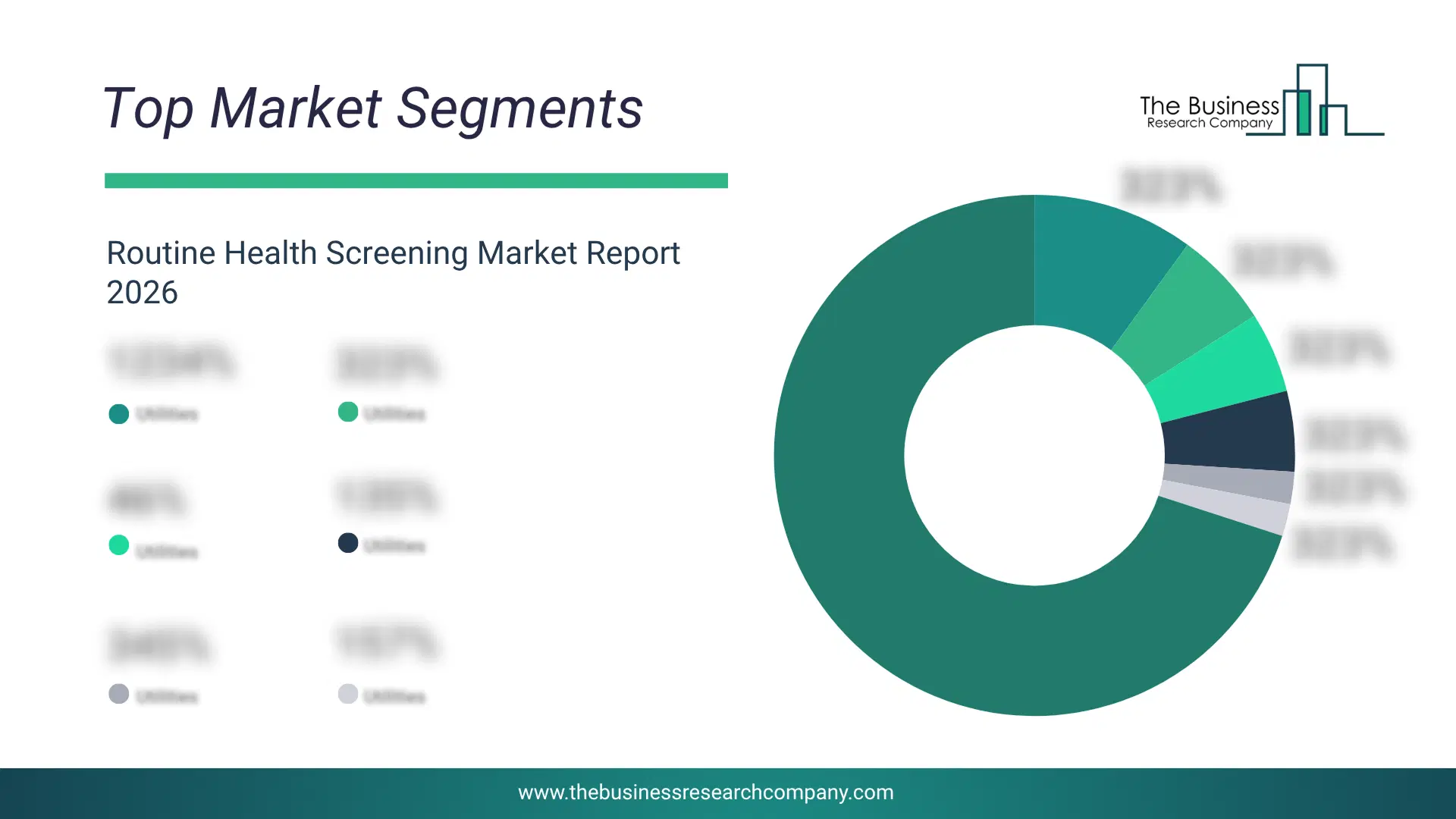
1) By Test Type: Blood Glucose Test, Kidney Function Test, Bone Profile Test, Electrolyte Test, Liver Function Test, Lipid Profile Test, Other Test Types 2) By Sample Type: Blood, Urine, Serum, Saliva, Other Sample Types 3) By Technology: Quantitative Polymerase Chain Reaction (QPCR), Quantitative Fluorescence In Situ Hybridization (Q-FISH), Immunoassays, Medical Imaging, Single Telomere Length Analysis (STELA), Other Technologies 4) By Sample Collection Sites: Hospitals, Homes, Diagnostic Laboratories, Offices, Other Sample Collection Sites Subsegments: 1) By Blood Glucose Test: Fasting Blood Glucose Test, HbA1c Test, Continuous Glucose Monitoring 2) By Kidney Function Test: Serum Creatinine Test, Blood Urea Nitrogen (BUN) Test, Urinalysis 3) By Bone Profile Test: Serum Calcium Test, Phosphate Test, Bone Mineral Density (BMD) Test 4) By Electrolyte Test: Serum Sodium Test, Serum Potassium Test, Serum Chloride Test 5) By Liver Function Test: Alanine Aminotransferase (ALT) Test, Aspartate Aminotransferase (AST) Test, Bilirubin Test 6) By Lipid Profile Test: Total Cholesterol Test, Low-Density Lipoprotein (LDL) Test, High-Density Lipoprotein (HDL) Test 7) By Other Test Types: Thyroid Function Test, Complete Blood Count (CBC), Prostate-Specific Antigen (PSA) TestWhat Is The Driver Of The Routine Health Screening Market?
The increasing awareness of preventive healthcare is expected to propel the growth of the routine health screenings market going forward. Preventive healthcare refers to measures and practices aimed at preventing the onset or progression of diseases and health conditions through early detection, lifestyle modifications, and proactive interventions. Awareness of preventive healthcare is increasing due to its benefits in early disease detection, better health outcomes, and cost savings, driven by improved public education and medical advancements. Routine health screenings aid preventive healthcare by identifying potential health issues early, allowing for timely interventions, and reducing the risk of severe diseases. For instance, in May 2023, according to the National Health Service (NHS), a UK-based publicly funded healthcare system, a total of 2,302,400 diagnostic tests were conducted in March 2023, reflecting an increase of 223,100 tests compared to March 2022. At the end of March 2023, the number of patients waiting for a key diagnostic test reached 1,628,300, marking an increase of 59,400 compared to March 2022. Therefore, the increasing awareness of preventive healthcare is driving growth in the routine health screenings industry.Key Players In The Global Routine Health Screening Market
Major companies operating in the routine health screening market are Roche Holding AG, Thermo Fisher Scientific Inc., Siemens Healthineers, Laboratory Corporation, Quest Diagnostics Incorporated, Eurofins Scientific SE, Agilent Technologies Inc., Sonic Healthcare Limited, Hologic Inc., Illumina Inc., SYNLAB International GmbH, Sysmex Corporation, QIAGEN N.V., Exact Sciences Corporation, RadNet Inc., Opko Health Inc., UNILABS, Amedes Holding GmbH, Natera Inc., Grail Inc., Trinity Biotech PLC, Cerba HealthCare S.A.S., Quidel Corporation, Innova Medical Group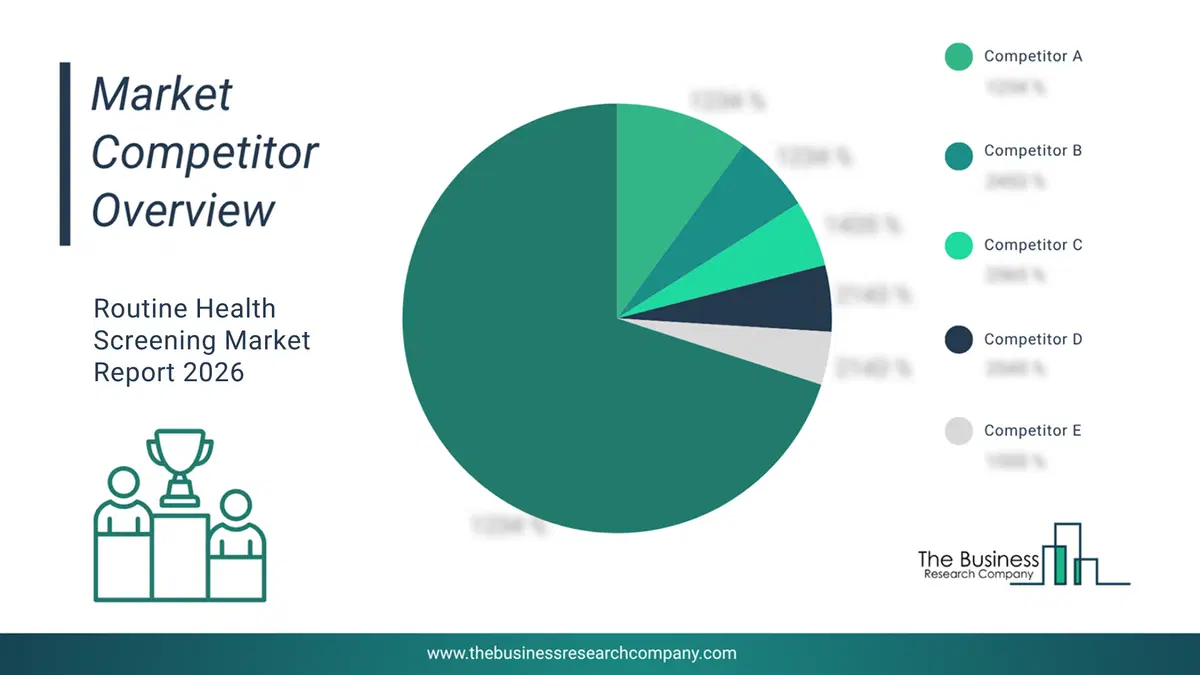
This chart is for illustrative purposes; the full report includes a detailed competitor analysis and comprehensive overview of the top 10 companies in the market.
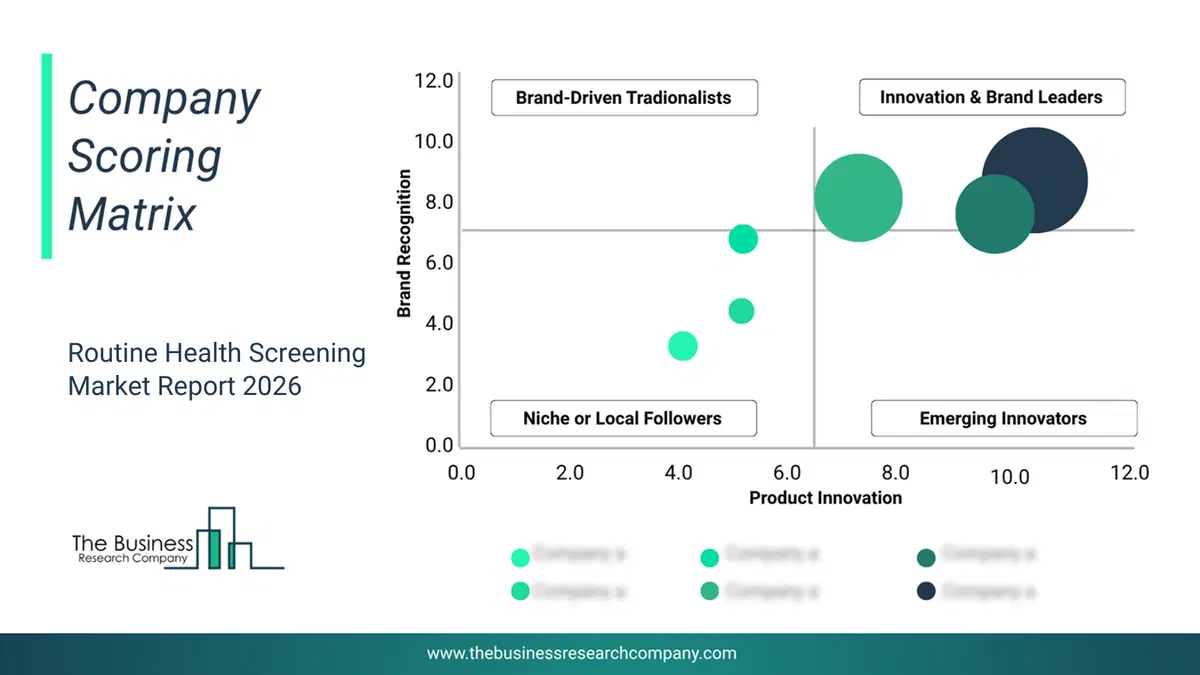
This chart maps companies by product innovation and brand strength, with bubble size indicating relative revenue, helping identify market leaders, challengers, and niche players. This is an illustrative chart; the full report provides a complete and accurate competitive analysis.
Global Routine Health Screening Market Trends and Insights
Major companies operating in the routine health screenings market are focusing on developing advanced solutions, such as lung cancer screening tests, to gain a competitive edge in the market. Lung cancer screening tests are medical evaluations designed to detect lung cancer at an early stage in individuals who may be at high risk, even before symptoms appear. For instance, in October 2023, DELFI Diagnostics Inc., a US-based diagnostic technology company, launched FirstLook Lung, an innovative blood test designed to improve lung cancer screening. Utilizing fragmentomics, FirstLook Lung analyzes patterns in cell-free DNA (cfDNA) from blood samples and employs advanced machine learning to differentiate between cancerous and non-cancerous patterns. With a 99.7% negative predictive value (NPV), the test effectively identifies potential lung cancer cases while minimizing the need for unnecessary low-dose CT (LDCT) scans. Integrated into routine blood tests, FirstLook Lung aims to enhance screening rates, particularly among underserved groups, and features a scalable whole-genome machine-learning platform with the potential for global expansion into other cancers and treatment monitoring.What Are Latest Mergers And Acquisitions In The Routine Health Screening Market?
In March 2024, Laboratory Corporation of America Holdings, a US-based healthcare and diagnostics company, acquired BioReference Health from OPKO Health Inc. for $237.5 million. The acquisition aims to expand Labcorp's access to and capabilities in routine health screening. BioReference Health is a US-based diagnostic laboratory company that provides testing services, including routine health screenings, oncology, urology, and reproductive and women's health tests.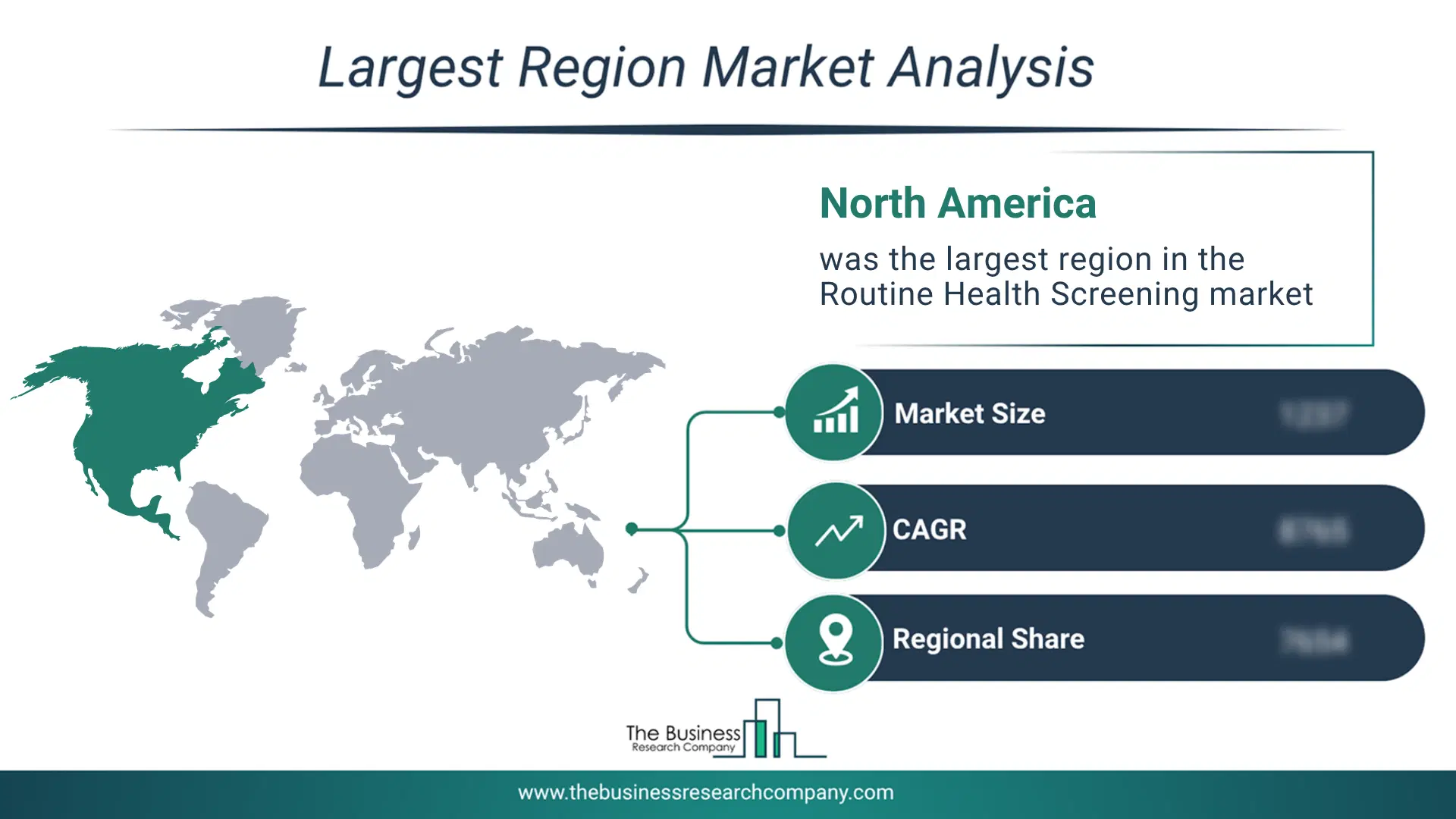
Regional Outlook
North America was the largest region in the routine health screening market in 2025. Asia-Pacific is expected to be the fastest-growing region in the forecast period. The regions covered in this market report are Asia-Pacific, South East Asia, Western Europe, Eastern Europe, North America, South America, Middle East, Africa. The countries covered in this market report are Australia, Brazil, China, France, Germany, India, Indonesia, Japan, Taiwan, Russia, South Korea, UK, USA, Canada, Italy, Spain.What Defines the Routine Health Screening Market?
The routine health screening market consists of revenues earned by entities by providing services such as health assessments, screening procedures, consultations, telehealth screenings, and corporate wellness programs. The market value includes the value of related goods sold by the service provider or included within the service offering. The routine health screening also includes sales of diagnostic test kits, medical devices, wearable health devices, and laboratory testing supplies. Values in this market are ‘factory gate’ values, that is, the value of goods sold by the manufacturers or creators of the goods, whether to other entities (including downstream manufacturers, wholesalers, distributors, and retailers) or directly to end customers. The value of goods in this market includes related services sold by the creators of the goods.How is Market Value Defined and Measured?
The market value is defined as the revenues that enterprises gain from the sale of goods and/or services within the specified market and geography through sales, grants, or donations in terms of the currency (in USD unless otherwise specified). The revenues for a specified geography are consumption values that are revenues generated by organizations in the specified geography within the market, irrespective of where they are produced. It does not include revenues from resales along the supply chain, either further along the supply chain or as part of other products.
This chart presents market attractiveness based on a quantitative evaluation of growth, competition, strategic alignment, and risk, offering a clear view of opportunity areas for decision-making. This chart is for illustrative purposes; the full report contains the complete analysis.

This chart highlights the Total Addressable Market (TAM) by estimating the maximum revenue opportunity using an assumption-driven approach, supporting strategic planning and opportunity sizing across markets. The chart is illustrative; the full report provides a more comprehensive analysis.
What Key Data and Analysis Are Included in the Routine Health Screening Market Report 2026?
The routine health screening market research report is one of a series of new reports from The Business Research Company that provides market statistics, including industry global market size, regional shares, competitors with the market share, detailed market segments, market trends and opportunities, and any further data you may need to thrive in the routine health screening industry. The market research report delivers a complete perspective of everything you need, with an in-depth analysis of the current and future state of the industry.Routine Health Screening Market Report Forecast Analysis
| Report Attribute | Details |
|---|---|
| Market Size Value In 2026 | $62.9 billion |
| Revenue Forecast In 2030 | $83.35 billion |
| Growth Rate | CAGR of 7.3% from 2026 to 2030 |
| Base Year For Estimation | 2025 |
| Actual Estimates/Historical Data | 2020-2025 |
| Forecast Period | 2026 - 2030 |
| Market Representation | Revenue in USD Billion and CAGR from 2026 to 2030 |
| Segments Covered | Test Type, Sample Type, Technology, Sample Collection Sites |
| Regional Scope | Asia-Pacific, Western Europe, Eastern Europe, North America, South America, Middle East, Africa |
| Country Scope | The countries covered in the report are Australia, Brazil, China, France, Germany, India, Indonesia, Japan, Taiwan, Russia, South Korea, UK, USA, Canada, Italy, Spain |
| Key Companies Profiled | Roche Holding AG, Thermo Fisher Scientific Inc., Siemens Healthineers, Laboratory Corporation, Quest Diagnostics Incorporated, Eurofins Scientific SE, Agilent Technologies Inc., Sonic Healthcare Limited, Hologic Inc., Illumina Inc., SYNLAB International GmbH, Sysmex Corporation, QIAGEN N.V., Exact Sciences Corporation, RadNet Inc., Opko Health Inc., UNILABS, Amedes Holding GmbH, Natera Inc., Grail Inc., Trinity Biotech PLC, Cerba HealthCare S.A.S., Quidel Corporation, Innova Medical Group |
| Customization Scope | Request for Customization |
| Pricing And Purchase Options | Explore Purchase Options |