
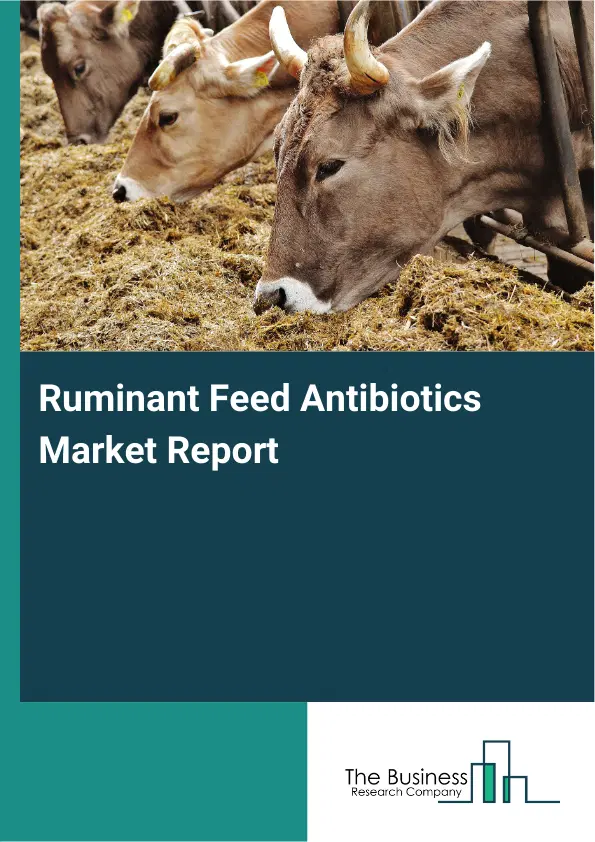
Ruminant Feed Antibiotics Market Report 2026
Global Outlook – By Type (Tetracycline, Penicillin, Sulphonamides, Macrolides, Aminoglycosides, Cephalosporin, Other Types ), By Animal Type (Dairy Cattle, Beef Cattle, Other Animal Types ), By End-User (Dairy Farm, Veterinary Hospitals, Other End-Users) – Market Size, Trends, Strategies, and Forecast to 2030
Ruminant Feed Antibiotics Market Overview
• Ruminant Feed Antibiotics market size has reached to $5.95 billion in 2025 • Expected to grow to $9.28 billion in 2030 at a compound annual growth rate (CAGR) of 9.3% • Growth Driver: Rising Demand for Dairy Products Drives Growth in Ruminant Feed Antibiotics Market • Asia-Pacific was the largest region in 2025.What Is Covered Under Ruminant Feed Antibiotics Market?
Ruminant feed antibiotics refer to a kind of feed that contains a variety of additives and raw elements. These are used to treat clinical illness, prevent, and manage common disease occurrences and improve animal growth. These are classified into three types of uses in animals such as therapeutic, prophylactic and subtherapeutic. The major types of ruminant feed antibiotics are tetracycline, penicillin, sulphonamides, macrolides, aminoglycosides, cephalosporins and others. Tetracycline refers to medication used to treat bacterial illnesses such as pneumonia and other respiratory tract diseases. Tetracyclines are typically bacteriostatic, and their effective use requires a responsive host defense mechanism. Various types of animals include dairy cattle, beef cattle and others. Major end-users are dairy farms, veterinary hospitals and others.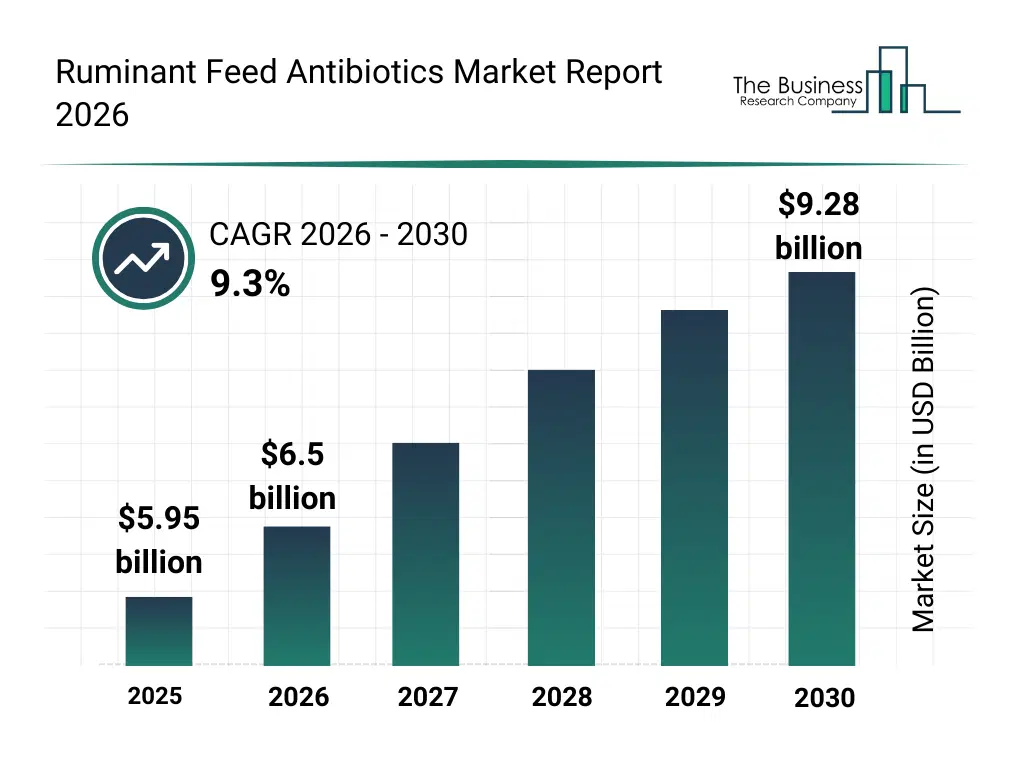
What Is The Ruminant Feed Antibiotics Market Size and Share 2026?
The ruminant feed antibiotics market size has grown strongly in recent years. It will grow from $5.95 billion in 2025 to $6.5 billion in 2026 at a compound annual growth rate (CAGR) of 9.3%. The growth in the historic period can be attributed to increasing incidence of livestock diseases, growth of dairy and beef cattle farming, rising awareness of animal health, development of broad-spectrum antibiotics, expansion of veterinary healthcare services.What Is The Ruminant Feed Antibiotics Market Growth Forecast?
The ruminant feed antibiotics market size is expected to see strong growth in the next few years. It will grow to $9.28 billion in 2030 at a compound annual growth rate (CAGR) of 9.3%. The growth in the forecast period can be attributed to adoption of precision feed antibiotics, regulatory support for safe antibiotic use, growth in preventive livestock healthcare, rising demand for dairy and beef products, integration of ai and data analytics in feed management. Major trends in the forecast period include targeted antibiotic feed formulations, growth of preventive animal healthcare, rise in prophylactic antibiotic usage, enhanced livestock growth performance, integration of nutritional supplements with antibiotics.
Global Ruminant Feed Antibiotics Market Segmentation
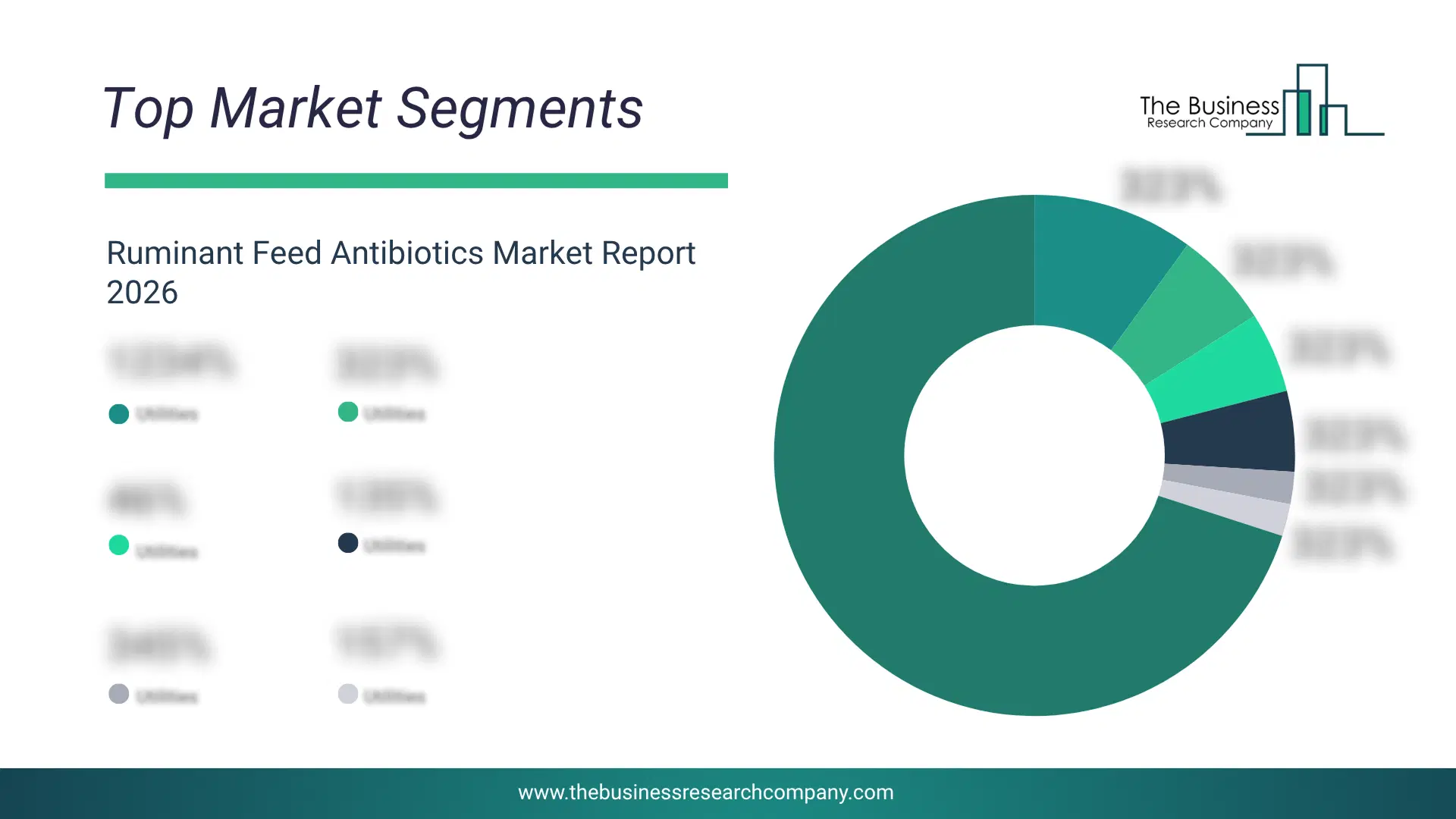
1) By Type: Tetracycline, Penicillin, Sulphonamides, Macrolides, Aminoglycosides, Cephalosporin, Other Types 2) By Animal Type: Dairy Cattle, Beef Cattle, Other Animal Types 3) By End-User: Dairy Farm, Veterinary Hospitals, Other End-Users Subsegments: 1) By Tetracycline: Oxytetracycline, Chlortetracycline, Doxycycline 2) By Penicillin: Benzylpenicillin, Procaine Penicillin 3) By Sulphonamides: Sulfadimidine, Sulfaguanidine, Sulfamethazine 4) By Macrolides: Tylosin, Erythromycin 5) By Aminoglycosides: Gentamicin, Neomycin, Streptomycin 6) By Cephalosporin: Cephalexin, Cefapirin 7) By Other Types: Quinolones, Lincosamides, NitrofuransWhat Are The Drivers Of The Ruminant Feed Antibiotics Market?
Rising demand for dairy products is expected to propel the growth of the ruminant feed antibiotics market going forward. Dairy products are milk and any of the foods made from milk, such as butter, cheese, ice cream, yogurt and condensed and dried milk. Antibiotics in ruminant feed can improve animal performance, as antibiotics allow farmers to produce more milk with less feed input. Ruminant feed antibiotics are used to promote milk production in dairy cows. Some antibiotics cause the rumen bacteria colony (one of four stomachs in ruminant cattle) to produce more of the compounds required by cattle for growth. For instance, in May 2024, according to the Food and Agriculture Organization (FAO), a US-based food authority, in 2023, global milk production reached about 965.7 million tonnes, up approximately 1.5 % from 2022, reflecting expanding consumption and production demand. Therefore, the rising demand for dairy products is expected to propel the growth of the ruminant feed antibiotics industry. Growing demand for meat and meat products is expected to propel the ruminant feed antibiotics market going forward. Meat refers to the flesh of animals, typically mammals or poultry, consumed as food. Meat products are processed or prepared items made from meat. Meat and meat products are rising because changing dietary preferences favor higher protein intake, which increases consumption as consumers seek more filling and nutritionally dense food options. Ruminant feed antibiotics are used to promote growth and prevent diseases in livestock, contributing to increased efficiency in meat production. For instance, in July 2024, according to Carlisle Technology, a US-based company providing software and hardware solutions for the food industry, chicken consumption, currently at 98.90 pounds per person, is projected to increase to 107.50 pounds by 2033, driven by its affordability and health benefits. In 2022, Americans consumed 98.90 pounds of broiler chicken per capita, with this figure set to rise significantly by 2033. Therefore, the growing demand for meat and meat products is driving the ruminant feed antibiotics industry.Key Players In The Global Ruminant Feed Antibiotics Market
Major companies operating in the ruminant feed antibiotics market are Elanco Animal Health Inc., Zoetis Inc., Merck And Co. Inc., Boehringer Ingelheim GmbH, Ceva Sante Animale SA, Bayer AG, Virbac SA, Phibro Animal Health Corp, Vetoquinol S.A., BASF SE, Cargill Incorporated, Koninklijke DSM N.V., Huvepharma Inc., Nutreco N.V., Provimi Holding B.V., Land O'Lakes Inc., Royal Agrifirm Group, Berg + Schmidt India Pvt. Ltd., Dow, Alltech Inc., Chr. Hansen Holding A/S, ForFarmers N.V., De Heus Animal Nutrition, Kent Nutrition Group Inc.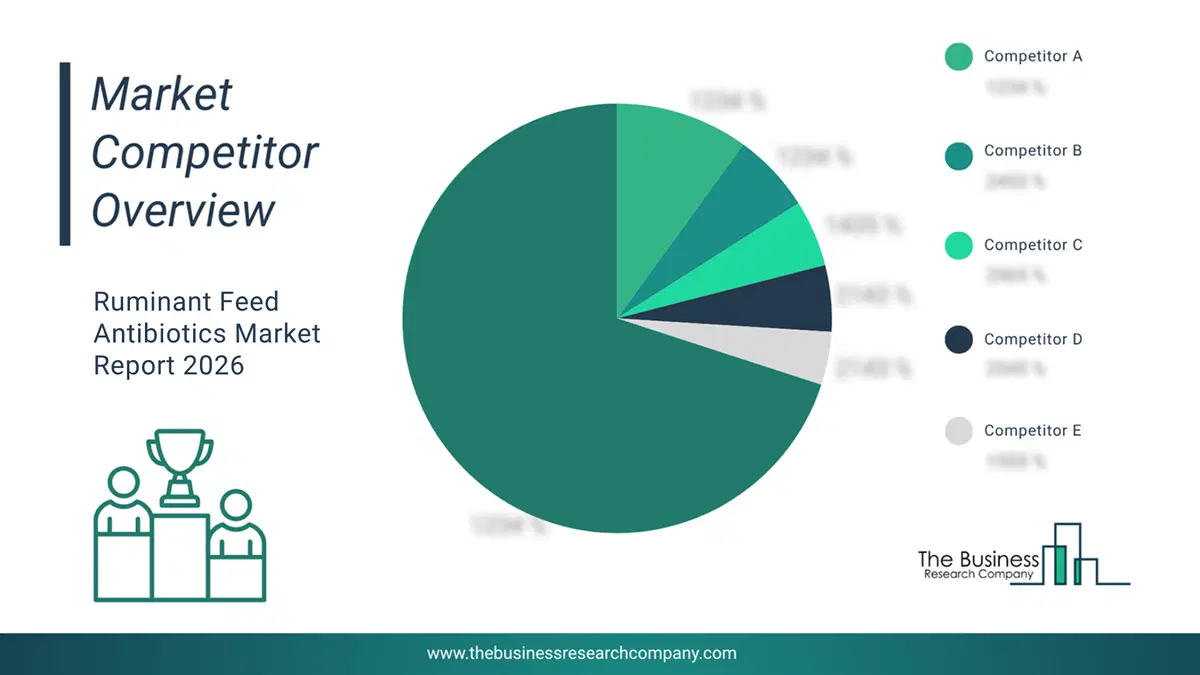
This chart is for illustrative purposes; the full report includes a detailed competitor analysis and comprehensive overview of the top 10 companies in the market.
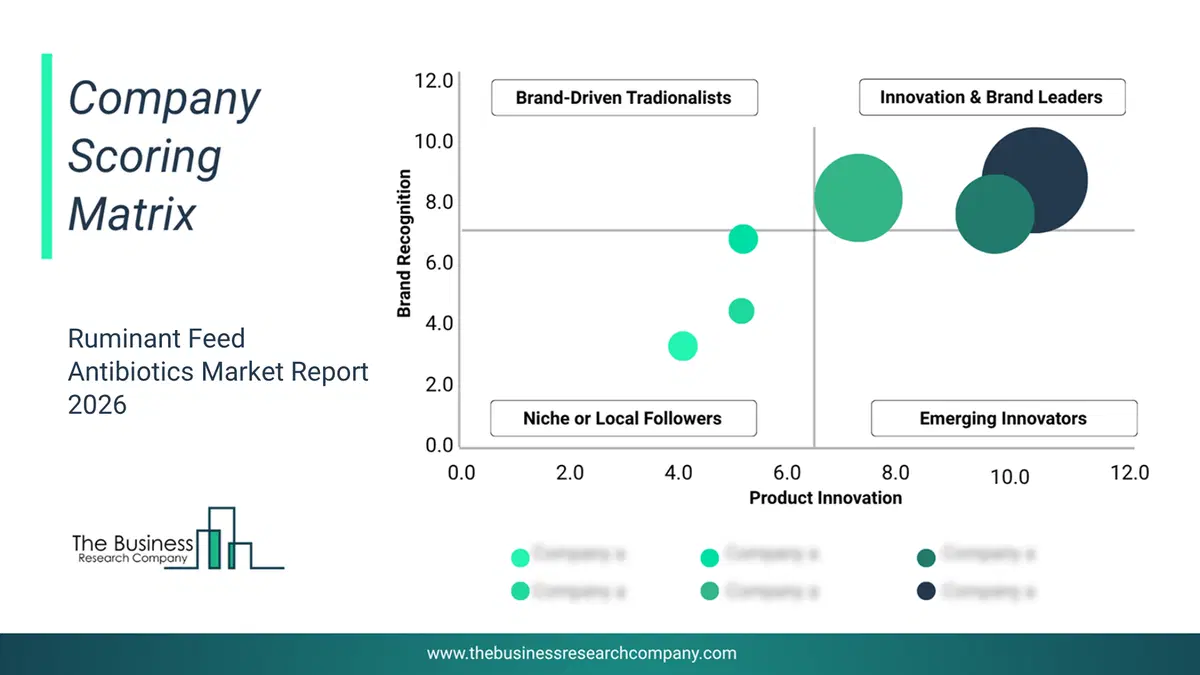
This chart maps companies by product innovation and brand strength, with bubble size indicating relative revenue, helping identify market leaders, challengers, and niche players. This is an illustrative chart; the full report provides a complete and accurate competitive analysis.
What Are Latest Mergers And Acquisitions In The Ruminant Feed Antibiotics Market?
In April 2024, Phibro Animal Health Corporation, a US-based animal health and nutrition company, acquired Zoetis Inc.’s medicated feed additive product portfolio and certain water-soluble products for $350 million. With this acquisition, Phibro aimed to expand and diversify its animal health product offerings and enhance its global reach in livestock nutrition and disease prevention by integrating more than 37 established product lines and related assets. Zoetis Inc. is a US-based animal health company that specializes in developing and commercializing medicines, vaccines, and other health solutions for livestock and companion animals, including the medicated feed additives and water-soluble products sold worldwide that were part of this portfolio.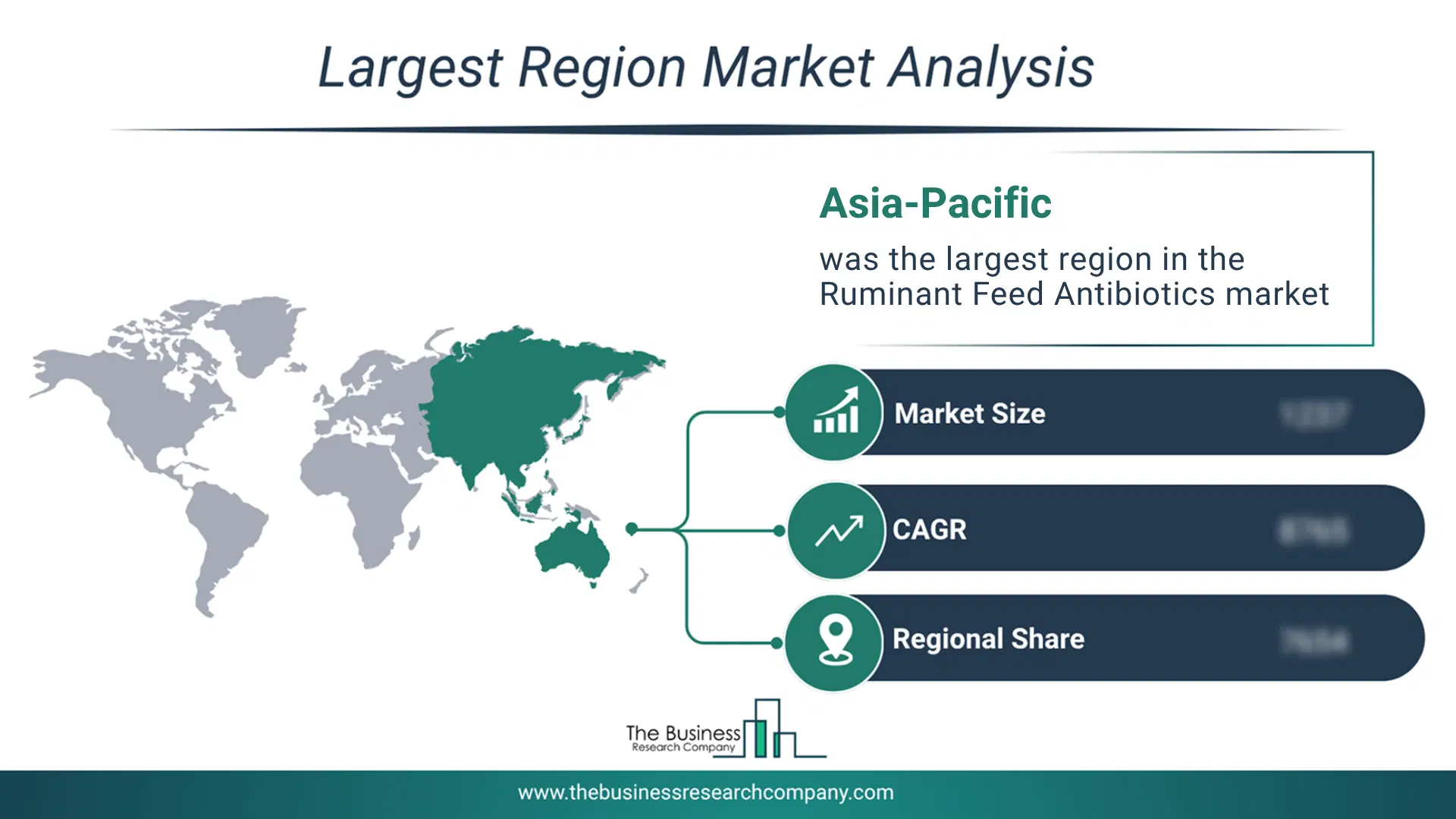
Regional Outlook
Asia-Pacific was the largest region in the ruminant feed antibiotics market in 2025. The regions covered in this market report are Asia-Pacific, South East Asia, Western Europe, Eastern Europe, North America, South America, Middle East, Africa. The countries covered in this market report are Australia, Brazil, China, France, Germany, India, Indonesia, Japan, Taiwan, Russia, South Korea, UK, USA, Canada, Italy, SpainWhat Defines the Ruminant Feed Antibiotics Market?
The ruminant feed antibiotics market consists of sales of Tetracycline, Penicillin, Sulphonamides, Macrolides, Aminoglycosides, Cephalosporin and Quinolones. Values in this market are ‘factory gate’ values, that is the value of goods sold by the manufacturers or creators of the goods, whether to other entities (including downstream manufacturers, wholesalers, distributors and retailers) or directly to end customers. The value of goods in this market includes related services sold by the creators of the goods.How is Market Value Defined and Measured?
The market value is defined as the revenues that enterprises gain from the sale of goods and/or services within the specified market and geography through sales, grants, or donations in terms of the currency (in USD unless otherwise specified). The revenues for a specified geography are consumption values that are revenues generated by organizations in the specified geography within the market, irrespective of where they are produced. It does not include revenues from resales along the supply chain, either further along the supply chain or as part of other products.
This chart presents market attractiveness based on a quantitative evaluation of growth, competition, strategic alignment, and risk, offering a clear view of opportunity areas for decision-making. This chart is for illustrative purposes; the full report contains the complete analysis.

This chart highlights the Total Addressable Market (TAM) by estimating the maximum revenue opportunity using an assumption-driven approach, supporting strategic planning and opportunity sizing across markets. The chart is illustrative; the full report provides a more comprehensive analysis.
What Key Data and Analysis Are Included in the Ruminant Feed Antibiotics Market Report 2026?
The ruminant feed antibiotics market research report is one of a series of new reports from The Business Research Company that provides market statistics, including industry global market size, regional shares, competitors with the market share, detailed market segments, market trends and opportunities, and any further data you may need to thrive in the ruminant feed antibiotics industry. The market research report delivers a complete perspective of everything you need, with an in-depth analysis of the current and future state of the industry.Ruminant Feed Antibiotics Market Report Forecast Analysis
| Report Attribute | Details |
|---|---|
| Market Size Value In 2026 | $6.5 billion |
| Revenue Forecast In 2030 | $9.28 billion |
| Growth Rate | CAGR of 9.3% from 2026 to 2030 |
| Base Year For Estimation | 2025 |
| Actual Estimates/Historical Data | 2020-2025 |
| Forecast Period | 2026 - 2030 - 2030 |
| Market Representation | Revenue in USD Billion and CAGR from 2026 to 2030 |
| Segments Covered | Type, Animal Type, End-User |
| Regional Scope | Asia-Pacific, Western Europe, Eastern Europe, North America, South America, Middle East, Africa |
| Country Scope | The countries covered in the report are Australia, Brazil, China, France, Germany, India, Indonesia, Japan, Taiwan, Russia, South Korea, UK, USA, Canada, Italy, Spain. |
| Key Companies Profiled | Elanco Animal Health Inc., Zoetis Inc., Merck And Co. Inc., Boehringer Ingelheim GmbH, Ceva Sante Animale SA, Bayer AG, Virbac SA, Phibro Animal Health Corp, Vetoquinol S.A., BASF SE, Cargill Incorporated, Koninklijke DSM N.V., Huvepharma Inc., Nutreco N.V., Provimi Holding B.V., Land O'Lakes Inc., Royal Agrifirm Group, Berg + Schmidt India Pvt. Ltd., Dow, Alltech Inc., Chr. Hansen Holding A/S, ForFarmers N.V., De Heus Animal Nutrition, Kent Nutrition Group Inc. |
| Customization Scope | Request for Customization |
| Pricing And Purchase Options | Explore Purchase Options |