
Scientific Instruments Market Report 2026
Global Outlook – By Type (Clinical Analyzers, Analytical Instruments), By Application (Research, Clinical And Diagnostics, Other Applications), By End User (Hospitals And Diagnostic Laboratories, Pharmaceutical And Biotechnology Companies, Other End-Users) – Market Size, Trends, Strategies, and Forecast to 2030
Scientific Instruments Market Overview
• Scientific Instruments market size has reached to $44.64 billion in 2025 • Expected to grow to $62.24 billion in 2030 at a compound annual growth rate (CAGR) of 6.9% • Growth Driver: Surging Testing And Research Facilities Propel The Scientific Instruments Market Amid Global Challenges • Market Trend: driving Innovation Through Precision And Efficiency • North America was the largest region in 2025 and Asia-Pacific is the fastest growing region.What Is Covered Under Scientific Instruments Market?
Scientific instruments are instruments designed in such a way that they can help achieve scientific purposes for the research of novel products. These instruments are essential for new product development and remodeling of existing products. Although they are a component of laboratory equipment, scientific instruments are thought to be more advanced and specialized than other measuring instruments. Scientific instruments are used to indicate, measure, and record physical quantities in science research labs and R&D facilities. The main types of scientific instruments market are clinical analyzers, analytical instruments, and others. The clinical analyzers refer to a device used to examine urine, plasma, and blood serum samples. Clinical analyzers are utilized in all laboratories, from tiny point-of-care clinics to high-throughput clinical labs, to test for analytes, including proteins, enzymes, and electrolytes. The scientific instruments are used for research, clinical and diagnostics, other applications in hospitals and diagnostic laboratories, pharmaceutical and biotechnology companies, and other sectors.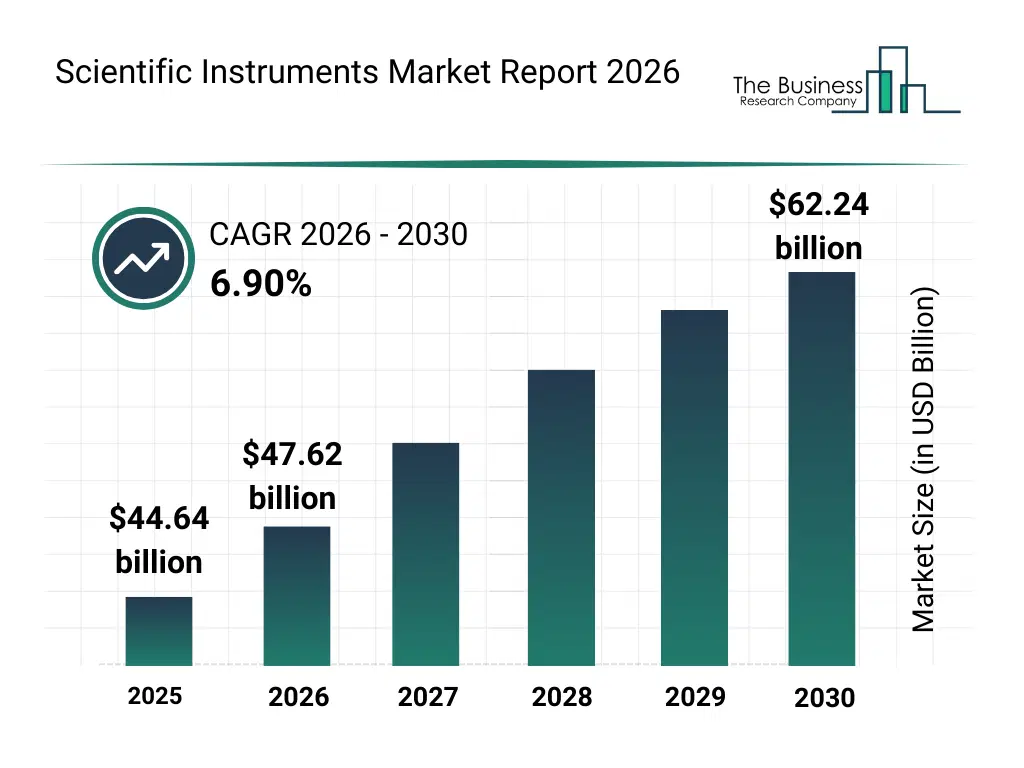
What Is The Scientific Instruments Market Size and Share 2026?
The scientific instruments market size has grown strongly in recent years. It will grow from $44.64 billion in 2025 to $47.62 billion in 2026 at a compound annual growth rate (CAGR) of 6.7%. The growth in the historic period can be attributed to expansion of scientific research activities, growth in pharmaceutical R&D spending, increasing demand for advanced diagnostics, adoption of modern laboratory infrastructure, rising investments in academic research facilities.What Is The Scientific Instruments Market Growth Forecast?
The scientific instruments market size is expected to see strong growth in the next few years. It will grow to $62.24 billion in 2030 at a compound annual growth rate (CAGR) of 6.9%. The growth in the forecast period can be attributed to increasing focus on precision medicine research, rising adoption of smart laboratories, expansion of life science research funding, growing demand for high-throughput analytical tools, increasing integration of digital laboratory ecosystems. Major trends in the forecast period include increasing adoption of ai-enabled analytical instruments, rising integration of automated laboratory systems, growing demand for high-precision measurement tools, expansion of advanced imaging technologies, enhanced focus on data-driven research platforms.
Global Scientific Instruments Market Segmentation
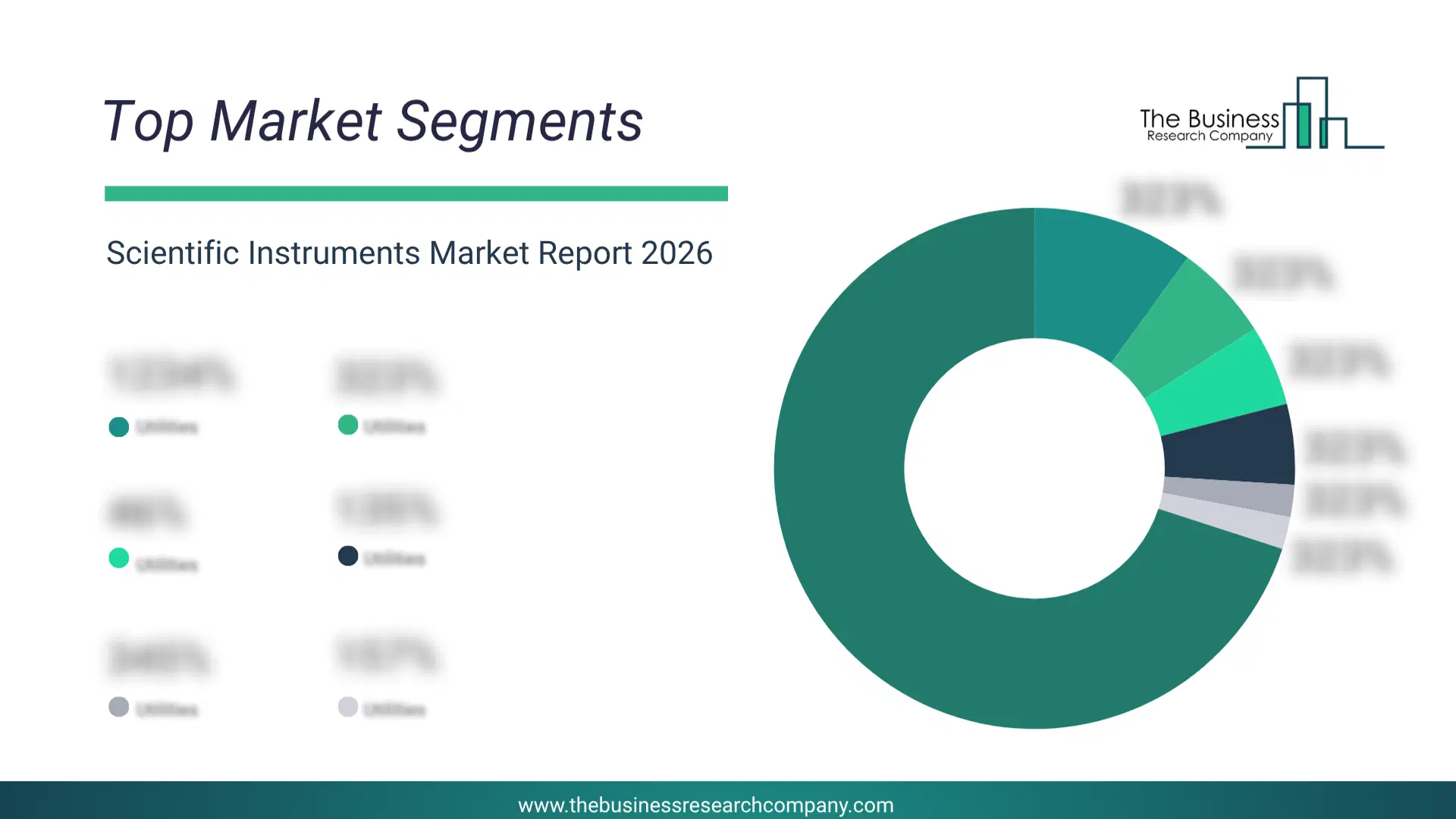
1) By Type: Clinical Analyzers, Analytical Instruments 2) By Application: Research, Clinical And Diagnostics, Other Applications 3) By End User: Hospitals And Diagnostic Laboratories, Pharmaceutical And Biotechnology Companies, Other End-Users Subsegments: 1) By Clinical Analyzers: Hematology Analyzers, Biochemistry Analyzers, Immunoassay Analyzers 2) By Analytical Instruments: Chromatography Instruments, Spectroscopy Instruments, Mass Spectrometry InstrumentsWhat Is The Driver Of The Scientific Instruments Market?
The increasing testing and research facilities drives the scientific instruments market. There has been a rapid increase in testing and research facilities due to the spreading virus and increasing efforts to combat its aftereffects. These testing and research facilities require scientific instruments for effective testing and the development of solutions. For instance, in April 2025, according to the Office for National Statistics, a UK-based government agency, the organization reported that UK government net expenditure on research and development (R&D) rose from USD 20.4 billion (£16.1 billion) in 2022 to USD 22 billion (£17.4 billion) in 2023, an increase of 8.2%. Therefore, an increase in testing and research facilities is driving the scientific instruments industry.Key Players In The Global Scientific Instruments Market
Major companies operating in the scientific instruments market are Thermo Fisher Scientific Inc., Agilent Technologies Inc., Bruker Corporation, Danaher Corporation, Waters Corporation, Horiba Limited, PerkinElmer Inc., Carl Zeiss AG, Shimadzu Corporation, Mettler-Toledo International Inc., Oxford Instruments PLC, Eppendorf AG, JEOL Ltd., Hitachi High-Technologies Corporation, Malvern Panalytical GmbH, Bio-Rad Laboratories Inc., Sartorius AG, Hamilton Company, The Merck Group, Becton Dickinson and Company, Illumina Inc., Bio-Techne Corporation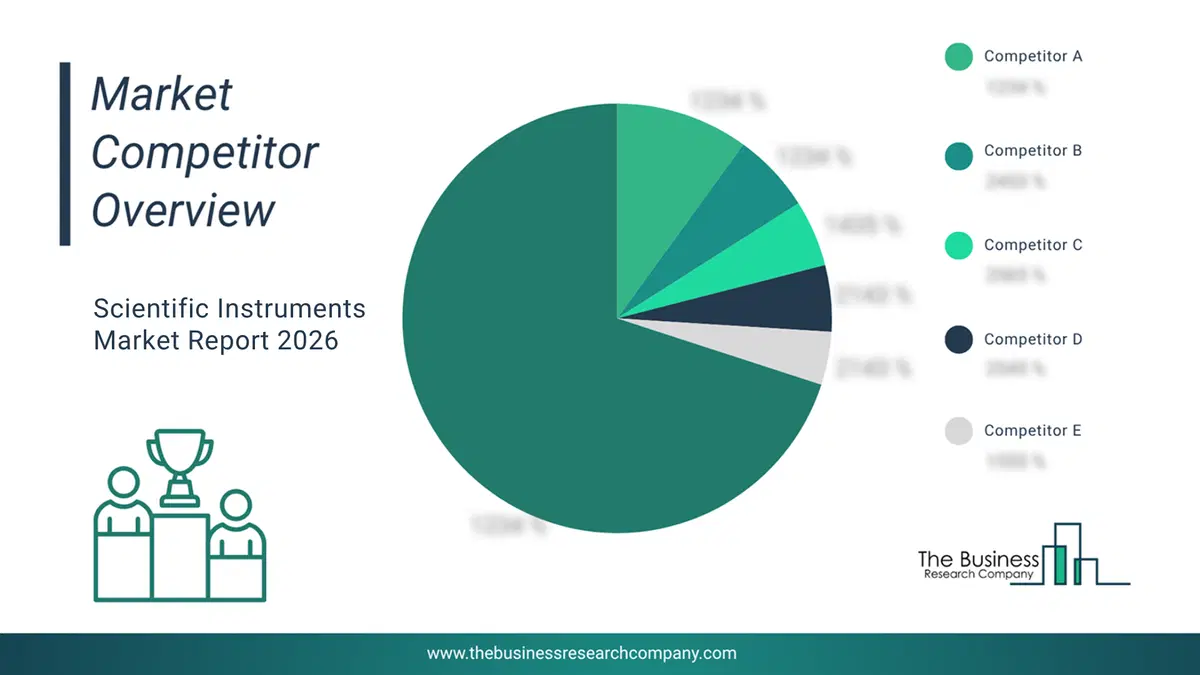
This chart is for illustrative purposes; the full report includes a detailed competitor analysis and comprehensive overview of the top 10 companies in the market.
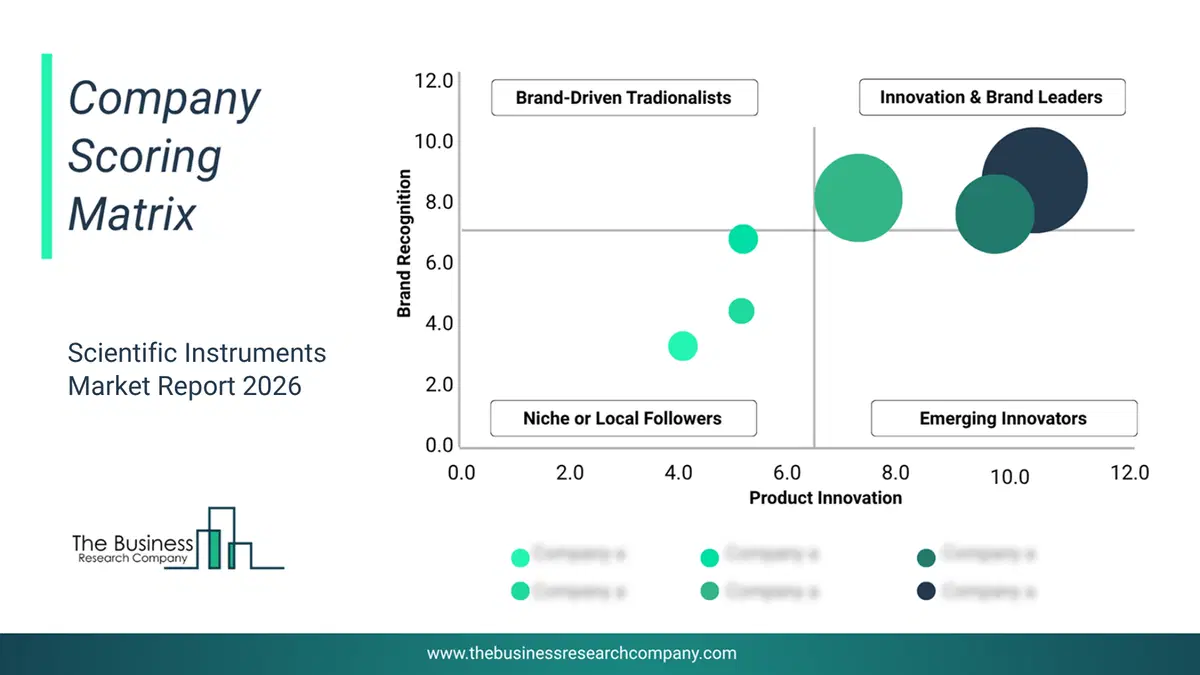
This chart maps companies by product innovation and brand strength, with bubble size indicating relative revenue, helping identify market leaders, challengers, and niche players. This is an illustrative chart; the full report provides a complete and accurate competitive analysis.
Global Scientific Instruments Market Trends and Insights
Major companies operating in the scientific instruments market are focusing on incorporating artificial intelligence (AI)-driven monitoring and low dispersion nebulizer nozzle technology to enhance sensitivity, robustness and operational efficiency. Low dispersion nebulizer nozzles are specialized electrospray ionization source components that generate finer, more uniform droplets and reduce nebulizer gas consumption, thereby improving ion intake efficiency. For instance, in August 2025, Shimadzu Scientific Instruments, a US based analytical instrumentation company, launched the LCMS 8065XE triple quadrupole mass spectrometer, a next generation analytical instrument designed to deliver world class sensitivity, long term stability and energy efficient performance featuring streamfocus ionization technology, performance concierge automated tuning and system monitoring intelligence, and Ecology Mode that reduces power consumption. The LCMS 8065XE improves analytical performance, uptime and operational cost efficiency.What Are Latest Mergers And Acquisitions In The Scientific Instruments Market?
In February 2024, Shimadzu Scientific Instruments, Inc. a US-based company, that manufactures scientific instruments, partnered with Telescope Innovations Corp. for an undisclosed amount. With this partnership, Shimadzu aims to expand its portfolio by incorporating Telescope's expertise in providing scientific instruments. Telescope Innovations Corp. is a Canada-based company that offers scientific instruments.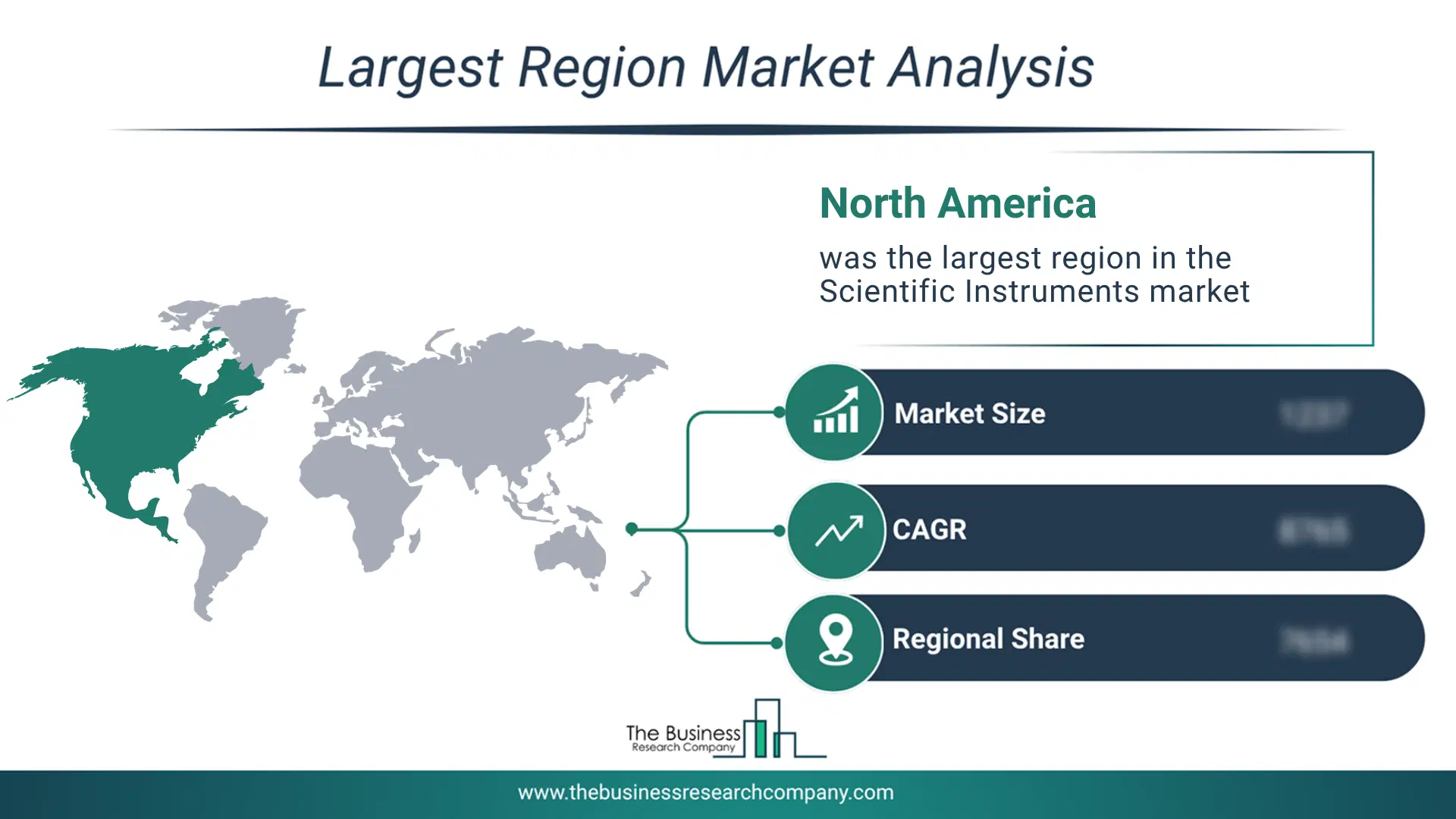
Regional Outlook
North America was the largest region in the scientific instruments market in 2025. Asia-Pacific is expected to be the fastest-growing region in the forecast period. The regions covered in this market report are Asia-Pacific, South East Asia, Western Europe, Eastern Europe, North America, South America, Middle East, Africa. The countries covered in this market report are Australia, Brazil, China, France, Germany, India, Indonesia, Japan, Taiwan, Russia, South Korea, UK, USA, Canada, Italy, SpainWhat Defines the Scientific Instruments Market?
The scientific instruments market consists of sales of scientific instruments that are used for natural phenomena and theoretical research. Values in this market are ‘factory gate’ values, that is, the value of goods sold by the manufacturers or creators of the goods, whether to other entities (including downstream manufacturers, wholesalers, distributors, and retailers) or directly to end customers. The value of goods in this market includes related services sold by the creators of the goods.How is Market Value Defined and Measured?
The market value is defined as the revenues that enterprises gain from the sale of goods and/or services within the specified market and geography through sales, grants, or donations in terms of the currency (in USD unless otherwise specified). The revenues for a specified geography are consumption values that are revenues generated by organizations in the specified geography within the market, irrespective of where they are produced. It does not include revenues from resales along the supply chain, either further along the supply chain or as part of other products.
This chart presents market attractiveness based on a quantitative evaluation of growth, competition, strategic alignment, and risk, offering a clear view of opportunity areas for decision-making. This chart is for illustrative purposes; the full report contains the complete analysis.

This chart highlights the Total Addressable Market (TAM) by estimating the maximum revenue opportunity using an assumption-driven approach, supporting strategic planning and opportunity sizing across markets. The chart is illustrative; the full report provides a more comprehensive analysis.
What Key Data and Analysis Are Included in the Scientific Instruments Market Report 2026?
The scientific instruments market research report is one of a series of new reports from The Business Research Company that provides market statistics, including industry global market size, regional shares, competitors with the market share, detailed market segments, market trends and opportunities, and any further data you may need to thrive in the scientific instruments industry. The market research report delivers a complete perspective of everything you need, with an in-depth analysis of the current and future state of the industry.Scientific Instruments Market Report Forecast Analysis
| Report Attribute | Details |
|---|---|
| Market Size Value In 2026 | $47.62 billion |
| Revenue Forecast In 2030 | $62.24 billion |
| Growth Rate | CAGR of 6.9% from 2026 to 2030 |
| Base Year For Estimation | 2025 |
| Actual Estimates/Historical Data | 2020-2025 |
| Forecast Period | 2026 - 2030 |
| Market Representation | Revenue in USD Billion and CAGR from 2026 to 2030 |
| Segments Covered | Type, Application, End User |
| Regional Scope | Asia-Pacific, Western Europe, Eastern Europe, North America, South America, Middle East, Africa |
| Country Scope | The countries covered in the report are Australia, Brazil, China, France, Germany, India, Indonesia, Japan, Taiwan, Russia, South Korea, UK, USA, Canada, Italy, Spain. |
| Key Companies Profiled | Thermo Fisher Scientific Inc., Agilent Technologies Inc., Bruker Corporation, Danaher Corporation, Waters Corporation, Horiba Limited, PerkinElmer Inc., Carl Zeiss AG, Shimadzu Corporation, Mettler-Toledo International Inc., Oxford Instruments PLC, Eppendorf AG, JEOL Ltd., Hitachi High-Technologies Corporation, Malvern Panalytical GmbH, Bio-Rad Laboratories Inc., Sartorius AG, Hamilton Company, The Merck Group, Becton Dickinson and Company, Illumina Inc., Bio-Techne Corporation |
| Customization Scope | Request for Customization |
| Pricing And Purchase Options | Explore Purchase Options |