
Thick Film Materials Market Report 2026
Global Outlook – By Type ( Conductive Thick Film Materials, Insulative Thick Film Materials, Hybrid Thick Film Materials), By Formulation Type ( Water-Based Formulations, Solvent-Based Formulations, Paste Formulations), By Application Type ( Circuit Board, Electronic Components, Low Temperature Co-Fiired Ceramic (Ltcc), Sensors, Photovoltaic, Automotive, Other Applications), By End-Use Industry ( Automotive Electronics, Industrial Electronics, Medical Electronics, Aerospace) – Market Size, Trends, Strategies, and Forecast to 2030
Thick Film Materials Market Overview
• Thick Film Materials market size has reached to $18.58 billion in 2025 • Expected to grow to $28.14 billion in 2030 at a compound annual growth rate (CAGR) of 8.6% • Growth Driver: Increasing Demand For Consumer Electronics Driving The Market Growth Due To Advanced Manufacturing Requirements • Market Trend: Partnerships Accelerate Innovation In Conductive Ink Development • Asia-Pacific was the largest region and fastest growing region.Market Gains By 2030 – Top Opportunities By Segment
Market Gain identifies the most promising market opportunities by highlighting the segments or products expected to generate the highest incremental revenue growth over the next five years.
What Is Covered Under Thick Film Materials Market?
Thick film materials are specialized electronic materials designed to form conductive, resistive, or dielectric layers on various substrates using printing and high-temperature firing processes. They are composed of finely ground inorganic powders, such as metals, oxides, or ceramics, combined with organic binders and solvents, which enable them to be deposited as pastes or inks. Upon firing, the organic components burn off, leaving a dense, adherent, and functional layer with controlled electrical properties. The main types of thick film materials are conductive thick film materials, insulative thick film materials, and hybrid thick film materials. Conductive thick film materials are pastes containing metal particles and glass frit that are screen-printed and fired onto substrates to form durable conductive pathways in electronic components. Based on formulation type, they include water-based formulations, solvent-based formulations, and paste formulations. They are used across application areas such as circuit boards, electronic components, low temperature co-fired ceramics (LTCC), sensors, photovoltaics, automotive, and other applications. These materials are adopted by end-use industries including automotive electronics, industrial electronics, medical electronics, and aerospace.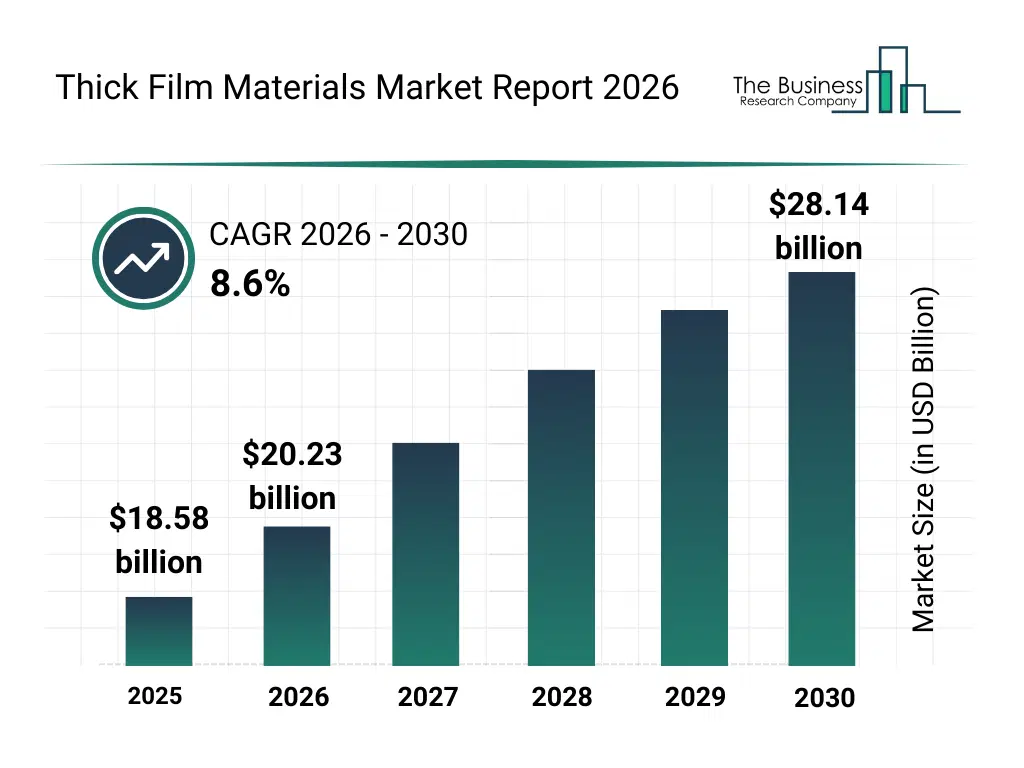
What Is The Thick Film Materials Market Size 2026 And Growth Rate?
The thick film materials market size has grown strongly in recent years. It will grow from $18.58 billion in 2025 to $20.23 billion in 2026 at a compound annual growth rate (CAGR) of 8.9%. The growth in the historic period can be attributed to rising demand for printed electronics, growth in automotive electronics, increasing industrial automation, development of ltcc and multilayer ceramics, adoption in medical devices.What Is The Thick Film Materials Market Growth Forecast?
The thick film materials market size is expected to see strong growth in the next few years. It will grow to $28.14 billion in 2030 at a compound annual growth rate (CAGR) of 8.6%. The growth in the forecast period can be attributed to expansion of electric vehicles, rise in wearable and flexible electronics, increasing adoption in renewable energy, growth in smart sensors and iot devices, advancements in hybrid thick film materials. Major trends in the forecast period include advanced material formulations, miniaturization of electronic components, high-temperature firing innovations, enhanced conductivity & reliability, integration with flexible & wearable electronics.
Global Thick Film Materials Market Segmentation
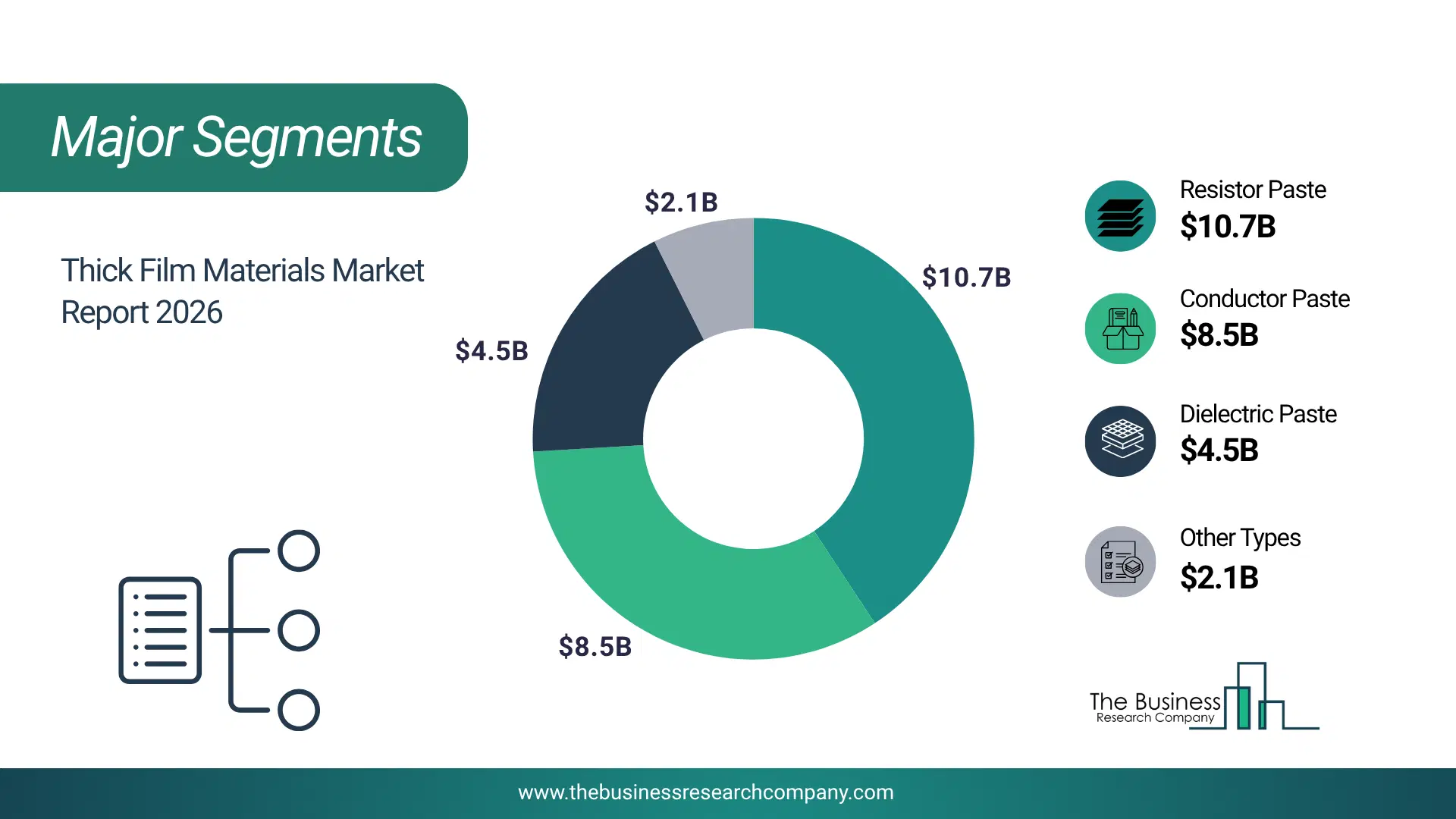
1) By Type: Conductive Thick Film Materials, Insulative Thick Film Materials, Hybrid Thick Film Materials 2) By Formulation Type: Water-Based Formulations, Solvent-Based Formulations, Paste Formulations 3) By Application Type: Circuit Board, Electronic Components, Low Temperature Co-Fiired Ceramic (Ltcc), Sensors, Photovoltaic, Automotive, Other Applications 4) By End-Use Industry: Automotive Electronics, Industrial Electronics, Medical Electronics, Aerospace Subsegments: 1) By Conductive Thick Film Materials: Silver Based Conductive Thick Film Materials, Gold Based Conductive Thick Film Materials, Copper Based Conductive Thick Film Materials, Platinum Based Conductive Thick Film Materials 2) By Insulative Thick Film Materials: Glass Based Insulative Thick Film Materials, Ceramic Based Insulative Thick Film Materials, Polymer Based Insulative Thick Film Materials, Mica Based Insulative Thick Film Materials 3) By Hybrid Thick Film Materials: Conductive-Insulative Hybrid Thick Film Materials, Ceramic-Polymer Hybrid Thick Film Materials, Metal-Glass Hybrid Thick Film Materials, Composite Hybrid Thick Film Materials The top segments in the thick film materials market will be: • Resistor Paste will reach $10.66 billion by 2030. • Conductor Paste will reach $8.47 billion by 2030. • Dielectric Paste will reach $4.48 billion by 2030. • Other Types will reach $2.09 billion by 2030.What Is The Driver Of The Thick Film Materials Market?
The increasing demand for consumer electronics is expected to propel the growth of the thick film materials market going forward. Consumer electronics are electronic products designed for daily use by people, including smartphones, televisions, laptops, and household gadgets. The demand for consumer electronics is rising because more people are adopting smartphones and wearable devices, which drives higher production of electronic components and thick film materials. Rising demand for consumer electronics drives the need for thick film materials, as these specialized materials are essential components used in manufacturing resistors, circuit boards, and hybrid integrated circuits that power smartphones, tablets, televisions, and other electronic devices. For instance, in May 2023, according to the Japan Electronics and Information Technology Industries Association, a Japan-based trade association, in May 2023, Japan's electronic equipment production amounted to approximately USD 5.6 billion (771,457 million yen). The output of consumer electronics rose to around USD 233 million (32,099 million yen), an increase from about USD 183 million(25,268 million yen) recorded in May 2022. Therefore, the increasing demand for consumer electronics is driving the growth of the thick film materials industry.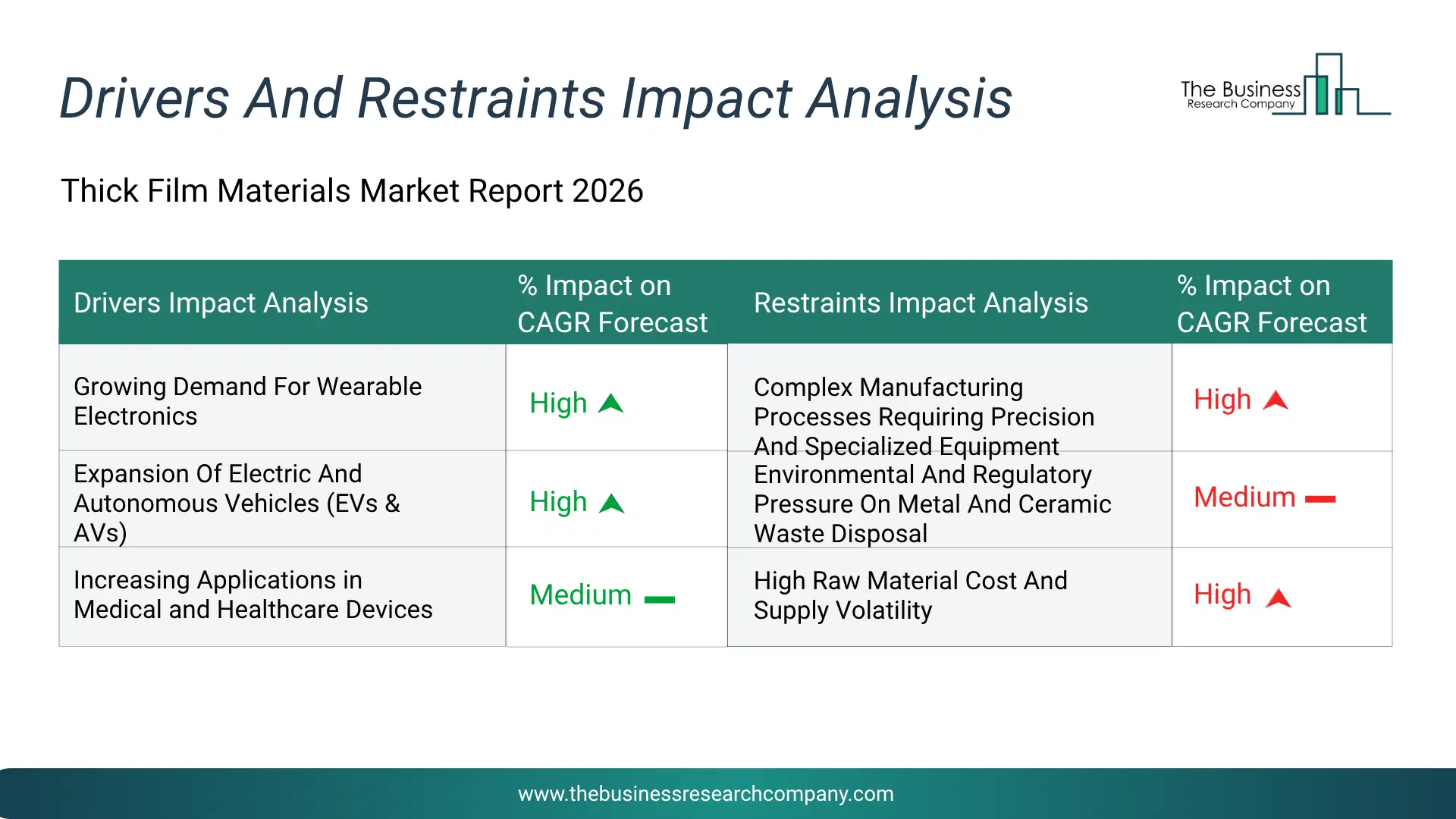
Infographic Chart Showing Key Market Drivers Analysis And Restraints For Thick Film Materials Market
The chart presents an impact analysis of key drivers and restraints, quantifying their relative influence on the market's growth rate and helping assess the balance between growth enablers and limiting factors. This chart offers a high-level perspective; the full report contains more detailed insights.
How Will The Drivers Impact Growth In The Global Thick Film Materials Market?
• Growing Demand For Wearable Electronics (High) – During the forecast period, the growing demand for wearable electronics is expected to become a key growth driver for the thick film materials market by 2030. The rapid adoption of wearable devices such as smartwatches, fitness trackers, and health monitors is driving the need for compact, reliable, and high-performance electronic components. Thick film materials are crucial for miniaturized circuits, sensors, and interconnects in these devices, enabling enhanced functionality and durability. Manufacturers are increasingly using conductor, resistor, and dielectric pastes to meet the demand for lightweight and flexible electronics. This trend boosts the consumption of thick film pastes and related materials. As wearable electronics continue to expand globally, the market for thick film materials grows in tandem. • Expansion Of Electric And Autonomous Vehicles (EVs & AVs) (High) – During the forecast period, the expansion of electric and autonomous vehicles (evs & avs) is expected to emerge as a major factor driving the expansion of the thick film materials market by 2030. The rise of evs and autonomous vehicles is increasing demand for advanced electronic systems, including battery management, power control, and sensor networks. Thick film materials are widely used in hybrid circuits, power modules, and sensors essential for vehicle electronics. Their high reliability, thermal stability, and compact form factor make them ideal for automotive applications. As automakers invest in ev and av technologies, thick film material consumption is growing significantly. This driver is fueling both volume and value growth in the market. • Increasing Applications in Medical and Healthcare Devices (Medium) – During the forecast period, the increasing applications in medical and healthcare devices is expected to act as a key growth catalyst for the thick film materials market by 2030. Medical devices, such as diagnostic equipment, monitoring sensors, and implantable electronics, require highly reliable, precise, and small-scale circuitry. Thick film materials enable the production of compact and robust electronic components capable of operating under demanding conditions. The growing adoption of advanced medical technologies worldwide drives the need for these materials. Their ability to ensure accuracy, durability, and miniaturization makes them critical in healthcare electronics manufacturing. Consequently, this trend is expanding the overall market for thick film materials.How Will The Restraints Impact Growth In The Global Thick Film Materials Market?
• Complex Manufacturing Processes Requiring Precision And Specialized Equipment (High) – During the forecast period, the complex manufacturing processes act as a restraint for the thick film materials market because they require highly precise control over paste composition, screen-printing accuracy, and firing conditions to ensure consistent performance. The need for specialized equipment and skilled technicians increases production costs and limits scalability. Even minor variations in temperature or alignment can lead to defects or inconsistent electrical properties. This complexity also extends production cycles, making mass manufacturing less efficient. As a result, many manufacturers face barriers to entry and slower adoption compared to simpler thin-film or printed electronics technologies. • Environmental And Regulatory Pressure On Metal And Ceramic Waste Disposal (Medium) – During the forecast period, the environmental and regulatory pressures on metal and ceramic waste disposal act as a major restraint for the thick film materials market. Strict regulations such as rohs and reach restrict the use of hazardous substances like lead and certain heavy metals in conductive and dielectric pastes. Manufacturers are required to reformulate materials and adopt eco-friendly alternatives, which increases r&d and compliance costs. Disposal of metallic and ceramic residues also demands specialized waste treatment, raising operational expenses. These constraints collectively slow down production efficiency and limit flexibility in material selection. • High Raw Material Cost And Supply Volatility (High) – During the forecast period, the high raw material cost and supply volatility act as a restraint for the thick film materials market by increasing overall production expenses and reducing cost predictability for manufacturers. Key inputs such as precious metals, glass frits, and ceramic powders are subject to frequent price fluctuations driven by global demand and supply chain constraints. This makes long-term pricing strategies difficult and affects profit margins. Additionally, dependence on limited suppliers for certain specialized materials further increases supply risk. As a result, manufacturers face challenges in maintaining stable production costs and competitive pricing.Key Players In The Global Thick Film Materials Market
Major companies operating in the thick film materials market are Heraeus Holding GmbH, Henkel AG & Co. KGaA, Parker-Hannifin Corporation, TE Connectivity Ltd., Kyocera Corporation, DuPont de Nemours Inc., Sumitomo Metal Mining Co. Ltd., Sun Chemical Corporation, KYOCERA AVX Components Corporation, Vishay Intertechnology Inc., CoorsTek Inc., Morgan Advanced Materials plc, Noritake Co. Limited, Mitsuboshi Belting Ltd., KOA Speer Electronics Inc., Arraycom (India) Limited, CMS Circuit Solutions Inc., Koartan Microelectronic Interconnect Materials Inc., Hybrid Sources Inc., Micro Precision Technologies Inc.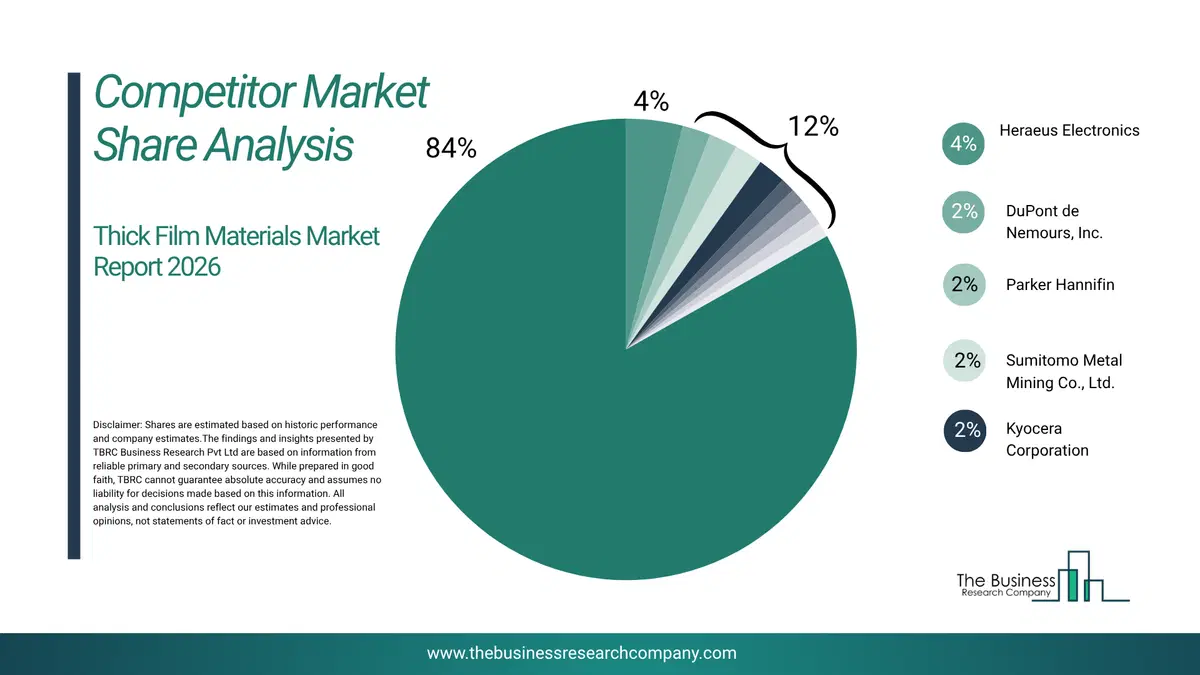
This chart is for illustrative purposes; the full report includes a detailed competitor analysis and comprehensive overview of the top 10 companies in the market.
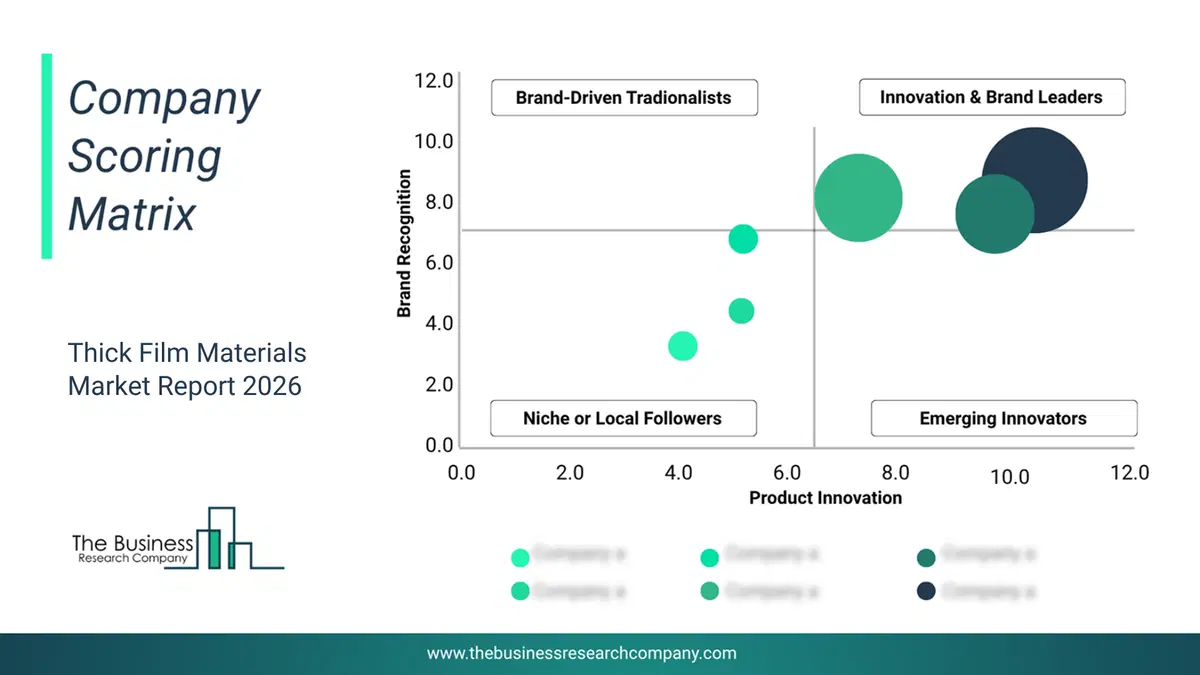
This chart maps companies by product innovation and brand strength, with bubble size indicating relative revenue, helping identify market leaders, challengers, and niche players. This is an illustrative chart; the full report provides a complete and accurate competitive analysis.
Global Thick Film Materials Market Trends and Insights
Major companies operating in the thick film materials market are adopting a strategic partnership approach to enhance technology integration and expand market reach. A strategic partnership typically refers to a collaborative relationship between two or more organizations where they combine their resources, expertise, and efforts to achieve common goals or objectives. For instance, in January 2024, Sumitomo Metal Mining, a Japan-based mining, smelting, and materials manufacturing company together with NIMS, N.E. CHEMCAT CORPORATION, and Priways, introduced a new thick-film conductive ink for printed electronics at the 38th Nepcon Japan exhibition (January 24–26, 2024). The innovation combines Sumitomo Metal Mining’s copper-based metal complex inks with copper particles to enable low-temperature (≈200°C) thick-film wiring on heat-resistant plastic substrates. Engineered to be cost-effective and more resistant to oxidation than conventional conductive inks, it delivers film thicknesses over three times greater than existing solutions, positioning it well for high-current, large-area applications such as solar panels and large displays.What Are Latest Mergers And Acquisitions In The Thick Film Materials Market?
In February 2024, Sumitomo Metal Mining Co., Ltd., a Japan-based materials supplier, partnered with N.E. CHEMCAT Corporation, Priways Co., Ltd., and the National Institute for Materials Science (NIMS) for the development of thick-film conductive ink for printed electronics. With this collaboration, Sumitomo Metal Mining, N.E. CHEMCAT, Priways, and NIMS aim to leverage their respective expertise in metal complex inks, metallic powder synthesis, and materials research, combining Sumitomo’s advanced metallic materials with the partners’ conductive ink and printing technologies to provide electronics manufacturers with a high-performance solution for printing circuits and sensors on flexible and rigid substrates, enhancing efficiency, conductivity, and scalability in printed electronics applications. N.E. CHEMCAT Corporation and Priways Co., Ltd. are Japan-based chemical and materials companies specializing in conductive inks and printing materials, while NIMS is a Japan-based national research institute focused on advanced materials and nanotechnology.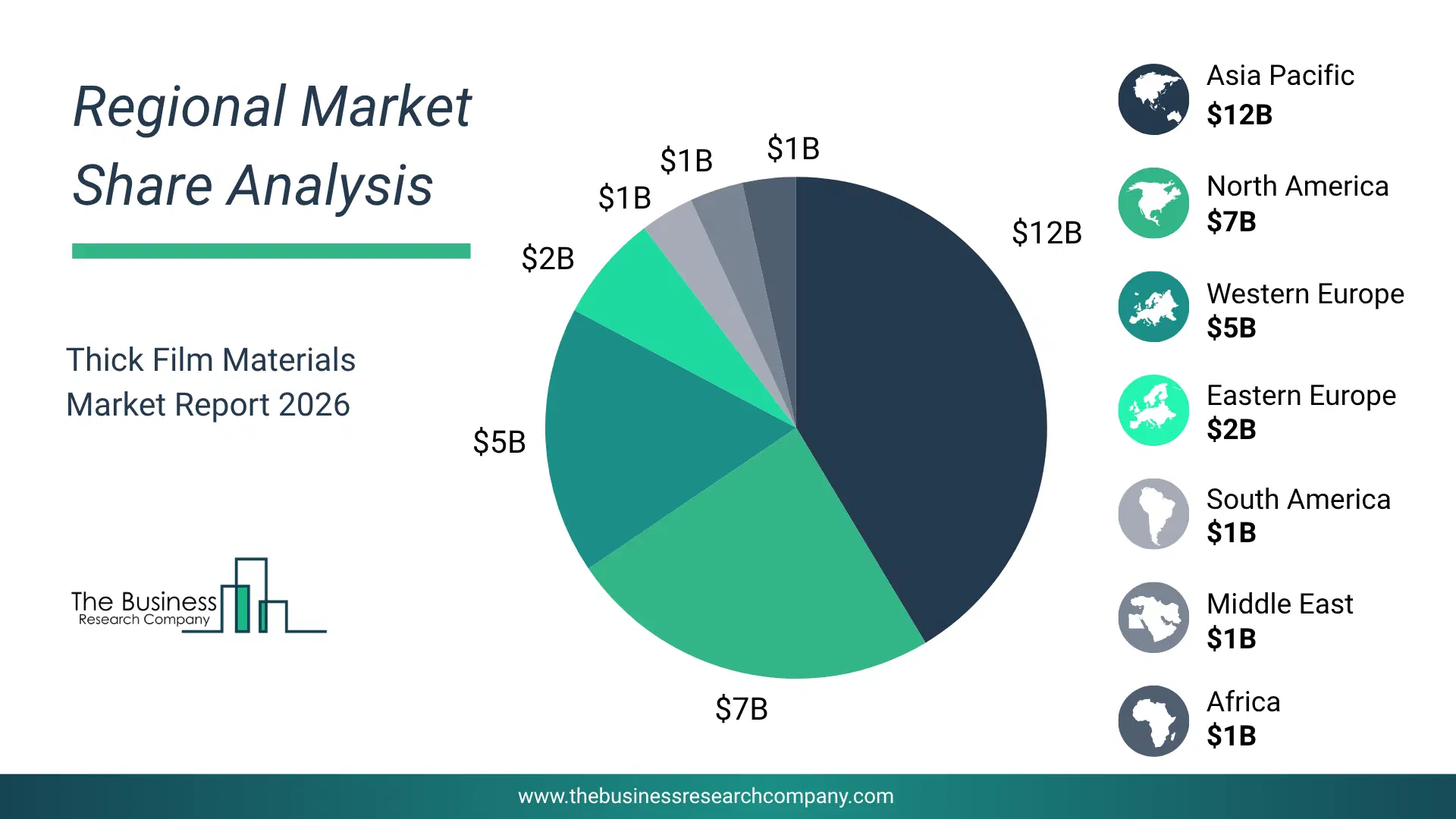
Regional Outlook
Asia-Pacific was the largest region in the thick film materials market in 2025. Asia-Pacific is expected to be the fastest-growing region in the forecast period. The regions covered in this market report are Asia-Pacific, South East Asia, Western Europe, Eastern Europe, North America, South America, Middle East, Africa. The countries covered in this market report are Australia, Brazil, China, France, Germany, India, Indonesia, Japan, Taiwan, Russia, South Korea, UK, USA, Canada, Italy, Spain.What Defines the Thick Film Materials Market?
The thick film materials market consists of sales of carbon pastes, overcoat pastes, polyimide-forming pastes, gold and platinum conductor pastes, and stretchable pastes. Values in this market are ‘factory gate’ values, that is, the value of goods sold by the manufacturers or creators of the goods, whether to other entities (including downstream manufacturers, wholesalers, distributors, and retailers) or directly to end customers. The value of goods in this market includes related services sold by the creators of the goods.How is Market Value Defined and Measured?
The market value is defined as the revenues that enterprises gain from the sale of goods and/or services within the specified market and geography through sales, grants, or donations in terms of the currency (in USD unless otherwise specified). The revenues for a specified geography are consumption values that are revenues generated by organizations in the specified geography within the market, irrespective of where they are produced. It does not include revenues from resales along the supply chain, either further along the supply chain or as part of other products.
This chart presents market attractiveness based on a quantitative evaluation of growth, competition, strategic alignment, and risk, offering a clear view of opportunity areas for decision-making. This chart is for illustrative purposes; the full report contains the complete analysis.

This chart highlights the Total Addressable Market (TAM) by estimating the maximum revenue opportunity using an assumption-driven approach, supporting strategic planning and opportunity sizing across markets. The chart is illustrative; the full report provides a more comprehensive analysis.
What Key Data and Analysis Are Included in the Thick Film Materials Market Report 2026?
The thick film materials market research report is one of a series of new reports from The Business Research Company that provides market statistics, including industry global market size, regional shares, competitors with the market share, detailed market segments, market trends and opportunities, and any further data you may need to thrive in the thick film materials industry. The market research report delivers a complete perspective of everything you need, with an in-depth analysis of the current and future state of the industry.Thick Film Materials Market Report 2026 Market Report Forecast Analysis
| Report Attribute | Details |
|---|---|
| Market Size Value In 2026 | $20.23 billion |
| Revenue Forecast In 2030 | $28.14 billion |
| Growth Rate | CAGR of 8.6% from 2026 to 2030 |
| Base Year For Estimation | 2025 |
| Actual Estimates/Historical Data | 2020-2025 |
| Forecast Period | 2026 - 2030 |
| Market Representation | Revenue in USD Billion and CAGR from 2026 to 2030 |
| Segments Covered | Type, Formulation Type, Application Type, End-Use Industry |
| Regional Scope | Asia-Pacific, Western Europe, Eastern Europe, North America, South America, Middle East, Africa |
| Country Scope | The countries covered in the report are Australia, Brazil, China, France, Germany, India, ... |
| Key Companies Profiled | Heraeus Holding GmbH, Henkel AG & Co. KGaA, Parker-Hannifin Corporation, TE Connectivity Ltd., Kyocera Corporation, DuPont de Nemours Inc., Sumitomo Metal Mining Co. Ltd., Sun Chemical Corporation, KYOCERA AVX Components Corporation, Vishay Intertechnology Inc., CoorsTek Inc., Morgan Advanced Materials plc, Noritake Co. Limited, Mitsuboshi Belting Ltd., KOA Speer Electronics Inc., Arraycom (India) Limited, CMS Circuit Solutions Inc., Koartan Microelectronic Interconnect Materials Inc., Hybrid Sources Inc., Micro Precision Technologies Inc. |
| Customization Scope | Request for Customization |
| Pricing And Purchase Options | Explore Purchase Options |