
Thymoglobulin Market Report 2026
Epidemiology, Pipeline Analysis, Market Insights & Forecasts
Thymoglobulin Market Overview
• The Thymoglobulin market growth in the historic period has been driven by increasing organ transplantation procedures, growing acceptance of antibody-based immunosuppression • Market expansion is supported by increasing investments in transplant immunology research, rising demand for personalized immunosuppressive regimens • Growth Driver: Increasing Number of Organ Transplantations Fueling the Growth of the Market due to Higher Demand for Immunosuppressive Therapies • Market Trend: Strategic Investments Boost Thymoglobulin Production To Meet Growing Demand in Transplant Rejection And Autoimmune Disorder Treatments • North America was the largest region in 2025.What Is Covered Under Thymoglobulin Market?
Thymoglobulin is an immunosuppressive medication used to prevent organ rejection in transplant patients. It is a polyclonal antibody derived from rabbit serum that depletes T lymphocytes to suppress the recipient's immune response and reduce the risk of graft rejection. The main types of indications for thymoglobulin are renal transplantation and bone marrow transplantation. Renal transplantation is a surgical procedure in which a healthy donor kidney is transplanted into a patient with end-stage kidney disease (ESKD) to restore kidney function and eliminate the need for dialysis. It is distributed through various channels such as hospital pharmacies, retail pharmacies, and online pharmacies, catering to various end users such as adults and geriatrics.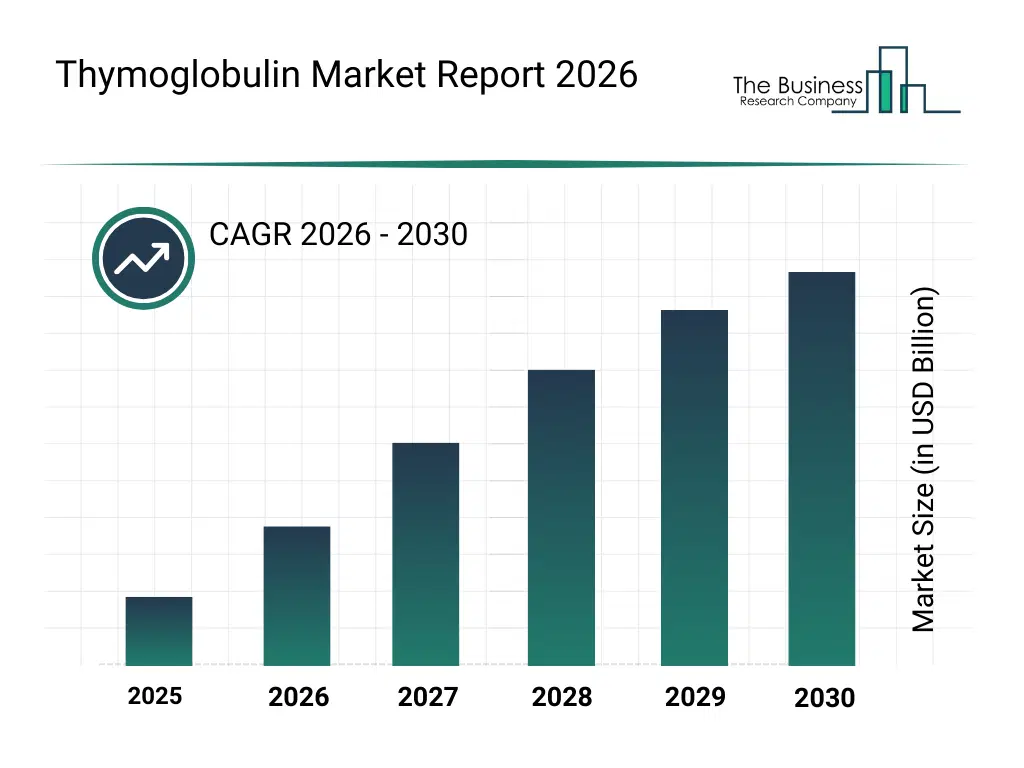
What Is The Thymoglobulin Market Size and Share 2026?
The growth in the historic period can be attributed to increasing organ transplantation procedures, growing acceptance of antibody-based immunosuppression, expansion of transplant centers globally, rising prevalence of end-stage renal disease, improvements in biologic drug formulation.What Is The Thymoglobulin Market Growth Forecast?
The growth in the forecast period can be attributed to increasing investments in transplant immunology research, rising demand for personalized immunosuppressive regimens, expansion of biologics manufacturing infrastructure, growing focus on reducing long-term rejection rates, increasing adoption in bone marrow transplantation protocols. Major trends in the forecast period include increasing use of polyclonal antibody therapies, rising adoption of immunosuppressive induction protocols, growing focus on graft survival optimization, expansion of advanced biologic manufacturing capabilities, enhanced monitoring of immune response outcomes.
Global Thymoglobulin Market Segmentation
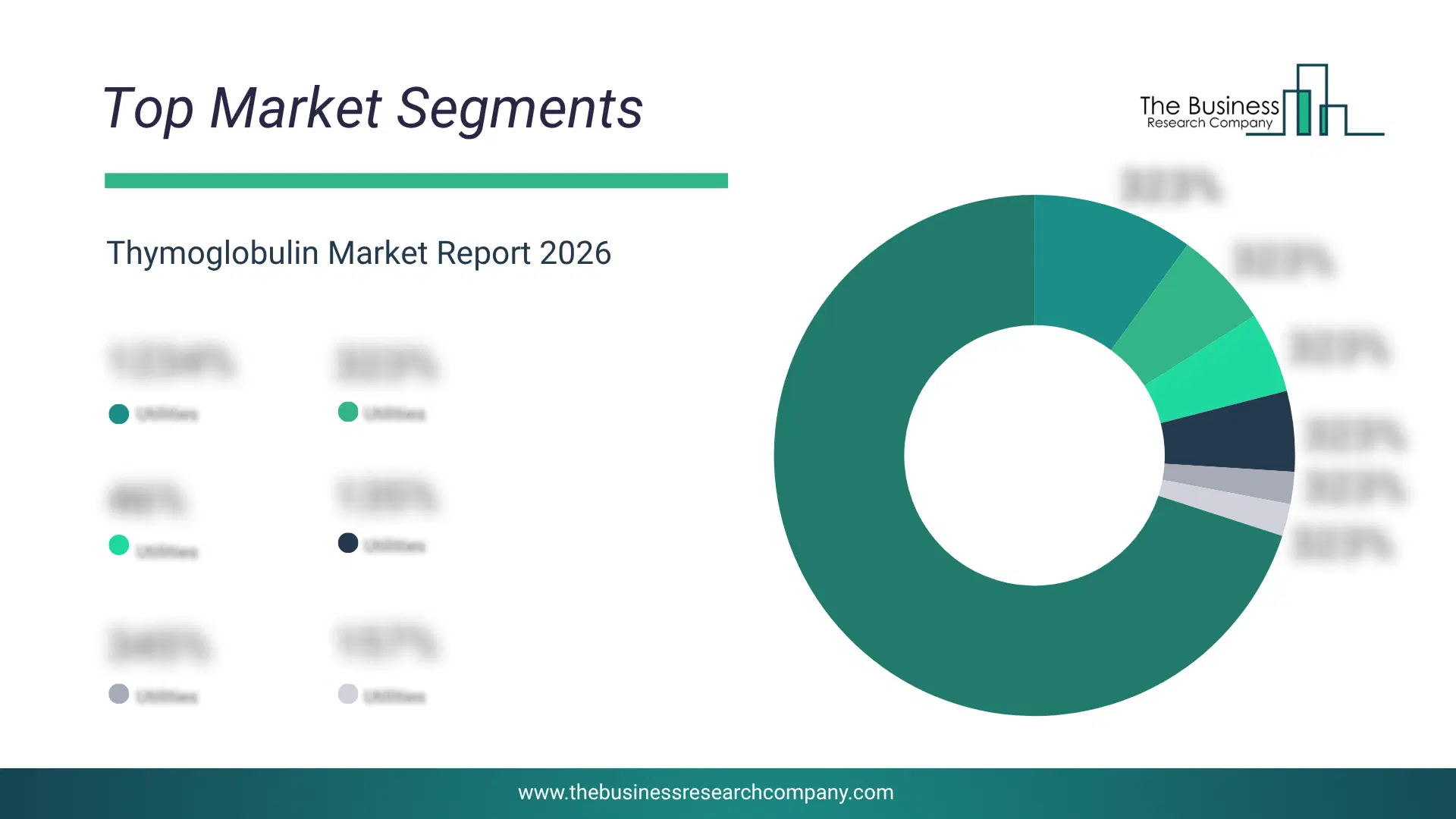
1) By Indication: Renal Transplantation, Bone Marrow Transplantation 2) By Distribution Channel: Hospital Pharmacies, Retail Pharmacies, Online Pharmacies 3) By End User: Adult, GeriatricWhat Are The Drivers Of The Thymoglobulin Market?
The increasing number of organ transplantations is expected to propel the growth of the Thymoglobulin market going forward. Organ transplantations refer to surgical procedures in which a failing or damaged organ is replaced with a healthy one from a donor. The rise in transplant procedures is driven by advances in surgical techniques, improved organ availability, and growing prevalence of end-stage organ diseases. Thymoglobulin, an immunosuppressive therapy, helps prevent and treat organ rejection in transplant patients by modulating the immune response. For instance, in January 2024, according to the Organ Procurement and Transplantation Network (OPTN), a US-based national membership organization in 2023, a total of 46,632 organ transplants were performed from both living and deceased donors, marking an 8.7% increase compared to 2022. Therefore, the increasing number of organ transplantations is driving the growth of the Thymoglobulin industry. The increasing prevalence of autoimmune disorders is expected to propel the growth of the thymoglobulin market going forward. Autoimmune disorders are conditions in which the immune system mistakenly attacks the body's tissues, perceiving them as foreign invaders. The increasing prevalence of autoimmune disorders can be attributed to factors such as genetic predisposition, environmental triggers, lifestyle changes, improved diagnosis, an aging population, the hygiene hypothesis, hormonal influences, and the use of immunosuppressive medications. Thymoglobulin helps manage autoimmune disorders by depleting T-cells, which attack the body's tissues, modulating the immune response and reducing inflammation. For instance, in February 2024 according to the Arthritis Australia is a Australia-based non-profit organization In 2025, an estimated 212,136 males and 362,137 females are projected to have rheumatoid arthritis (RA), with the numbers expected to rise by 2040 to approximately 280,040 males and 479,828 females. Therefore, the increasing prevalence of autoimmune disorder cases drives growth in the thymoglobulin industry.Key Players In The Global Thymoglobulin Market
Major companies operating in the thymoglobulin market are Sanofi S.A.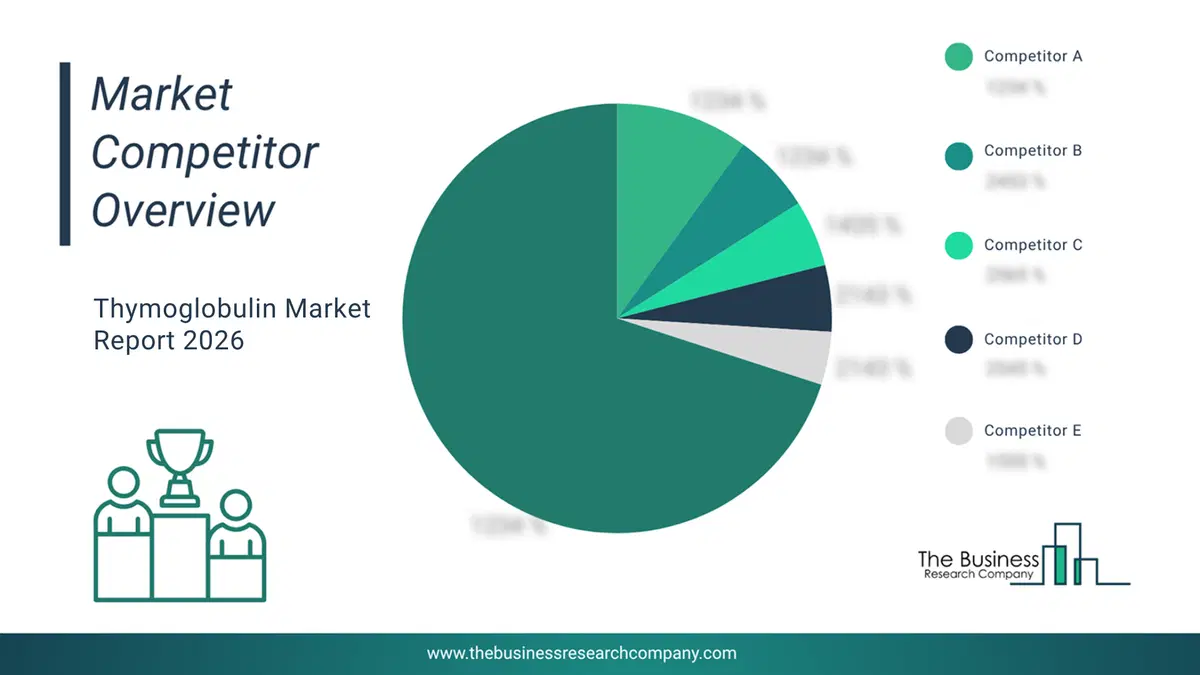
This chart is for illustrative purposes; the full report includes a detailed competitor analysis and comprehensive overview of the top 10 companies in the market.
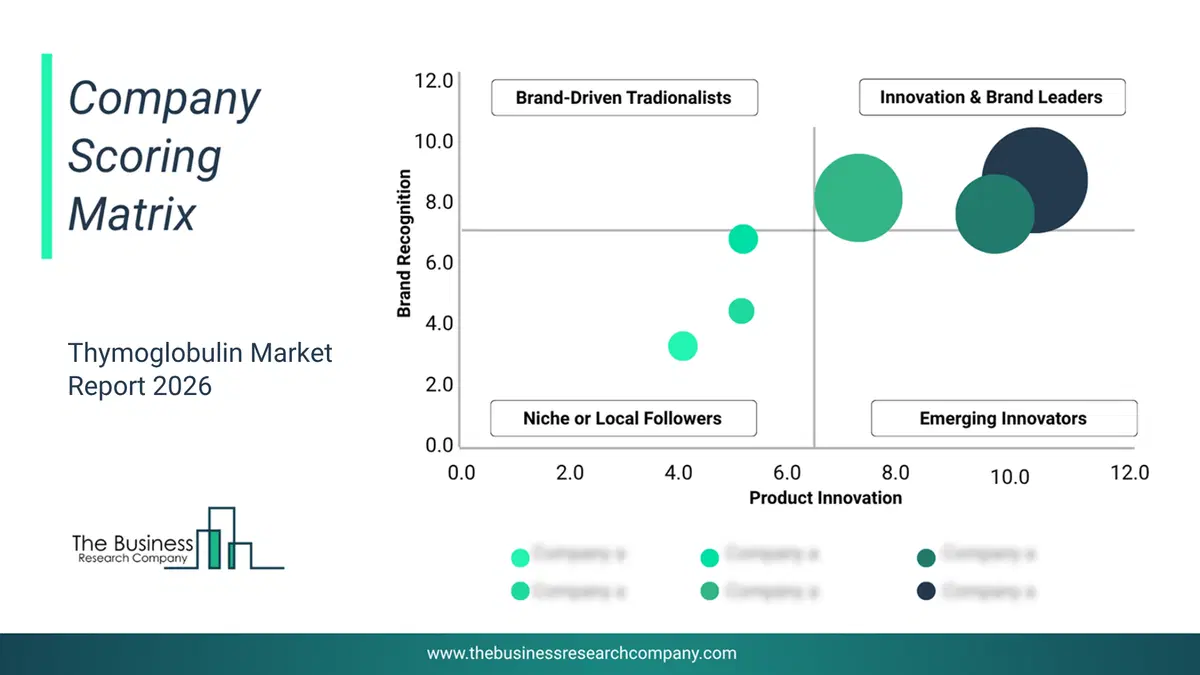
This chart maps companies by product innovation and brand strength, with bubble size indicating relative revenue, helping identify market leaders, challengers, and niche players. This is an illustrative chart; the full report provides a complete and accurate competitive analysis.
Global Thymoglobulin Market Trends and Insights
A key trend in the thymoglobulin market is adopting strategic investments to enhance treatment options for transplant rejection and autoimmune disorders. Strategic investments refer to investments made to achieve long-term objectives, such as gaining a competitive advantage or expanding market presence. For instance, in November 2024, Sanofi S.A., a France-based pharmaceutical industry company, made a significant investment of $40.17 million (€40 million) to expand its biomanufacturing capabilities. This investment will focus on scaling up the production of Thymoglobulin at the Lyon Gerland facility, which is the drug's sole producer. By enhancing its production capabilities, Sanofi aims to improve access to Thymoglobulin, addressing the growing global demand for transplant rejection treatments and autoimmune disorder therapies.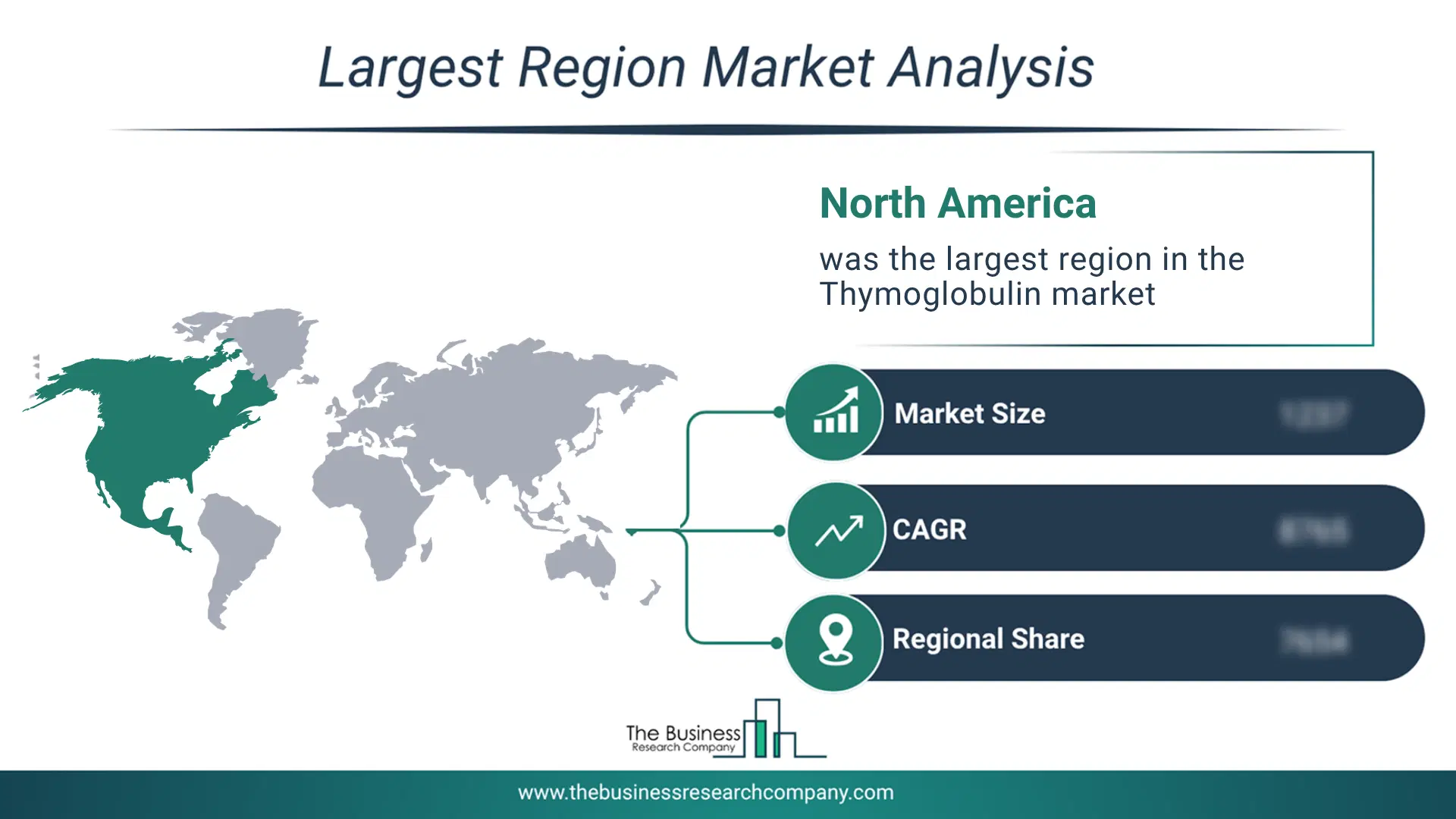
Regional Insights
North America was the largest region in the thymoglobulin market in 2025. The regions covered in this market report are Asia-Pacific, Western Europe, Eastern Europe, North America, South America, Middle East, Africa. The countries covered in this market report are Australia, India, China, South Korea, Japan, UK, France, Germany, USA, Canada.What Defines the Thymoglobulin Market?
The thymoglobulin market consists of sales of lyophilized powder, pre-filled syringes, custom dosage forms, biosimilars, and combination products. Values in this market are ‘factory gate’ values, that is, the value of goods sold by the manufacturers or creators of the goods, whether to other entities (including downstream manufacturers, wholesalers, distributors, and retailers) or directly to end customers. The value of goods in this market includes related services sold by the creators of the goods.How is Market Value Defined and Measured?
The market value is defined as the revenues that enterprises gain from the sale of goods and/or services within the specified market and geography through sales, grants, or donations in terms of the currency (in USD unless otherwise specified). The revenues for a specified geography are consumption values that are revenues generated by organizations in the specified geography within the market, irrespective of where they are produced. It does not include revenues from resales along the supply chain, either further along the supply chain or as part of other products.
This chart presents market attractiveness based on a quantitative evaluation of growth, competition, strategic alignment, and risk, offering a clear view of opportunity areas for decision-making. This chart is for illustrative purposes; the full report contains the complete analysis.

This chart highlights the Total Addressable Market (TAM) by estimating the maximum revenue opportunity using an assumption-driven approach, supporting strategic planning and opportunity sizing across markets. The chart is illustrative; the full report provides a more comprehensive analysis.
What Key Data and Analysis Are Included in the Thymoglobulin Market Report 2026?
The thymoglobulin market research report is one of a series of new reports from The Business Research Company that provides market statistics, including industry global market size, regional shares, competitors with the market share, detailed market segments, market trends and opportunities, and any further data you may need to thrive in the thymoglobulin industry. The market research report delivers a complete perspective of everything you need, with an in-depth analysis of the current and future state of the industry.Thymoglobulin Market Report Forecast Analysis
| Report Attribute | Details |
|---|---|
| Market Size Value In 2026 | - |
| Revenue Forecast In 2030 | - |
| Growth Rate | - |
| Base Year For Estimation | 2025 |
| Actual Estimates/Historical Data | 2020-2025 |
| Forecast Period | 2026 - 2030 |
| Market Representation | Revenue in USD Billion and CAGR from 2026 to 2030 |
| Segments Covered | Indication, Distribution Channel, End User |
| Regional Scope | Asia-Pacific, Western Europe, Eastern Europe, North America, South America, Middle East, Africa |
| Country Scope | The countries covered in the report are Australia, Brazil, China, France, Germany, India, Indonesia, Japan, Taiwan, Russia, South Korea, UK, USA, Canada, Italy, Spain. |
| Key Companies Profiled | Sanofi S.A. |
| Customization Scope | Request for Customization |
| Pricing And Purchase Options | Explore Purchase Options |