

Treatment-Resistant Depression Market Report 2026
Global Outlook – By Drug Class (Selective Serotonin Reuptake Inhibitors (SSRIs), Monoamine Oxidase Inhibitors, Tricyclic Antidepressants, Psychedelics), By Route Of Administration (Oral, Parenteral, Other Routes Of Administration), By Distribution Channel (Hospital Pharmacies, Retail Pharmacies, Online Pharmacies), By End-User (Hospitals, Homecare, Specialty Clinics, Other End-Users) - Market Size, Trends, Strategies, and Forecast to 2030
Treatment-Resistant Depression Market Overview
• Treatment-Resistant Depression market size has reached to $1.87 billion in 2025 • Expected to grow to $2.59 billion in 2030 at a compound annual growth rate (CAGR) of 6.7% • Growth Driver: High Prevalence Of Mental Disorders Driving The Market Due To Increasing Incidence Of Treatment Non-Response • Market Trend: Innovative Therapies To Address Unmet Patient Needs In Treatment-Resistant Depression • North America was the largest region in 2025 and Asia-Pacific is the fastest growing region.What Is Covered Under Treatment-Resistant Depression Market?
Treatment-resistant depression (TRD) is a severe and persistent form of major depressive disorder (MDD) characterized by inadequate response to at least two different antidepressant treatments of adequate dose and duration, leading to prolonged psychological distress and functional impairment. Individuals with TRD often require advanced therapeutic approaches, including novel pharmacological treatments, neuromodulation techniques, and personalized mental health interventions, to achieve symptom relief and improve overall well-being. The main drug classes in treatment-resistant depression are selective serotonin reuptake inhibitors (SSRIs), monoamine oxidase inhibitors, tricyclic antidepressant, psychedelics, and others. Selective serotonin reuptake inhibitors (SSRIs) are a class of antidepressant medications that function by increasing serotonin levels in the brain by inhibiting its reabsorption into neurons, thereby enhancing mood regulation and treating conditions such as depression and anxiety disorders. The drugs are administered through routes including oral, parenteral, and others, which are distributed by various channels such as hospital pharmacies, retail pharmacies, and online pharmacies for the end users, including hospitals, homecare, specialty clinics, and others.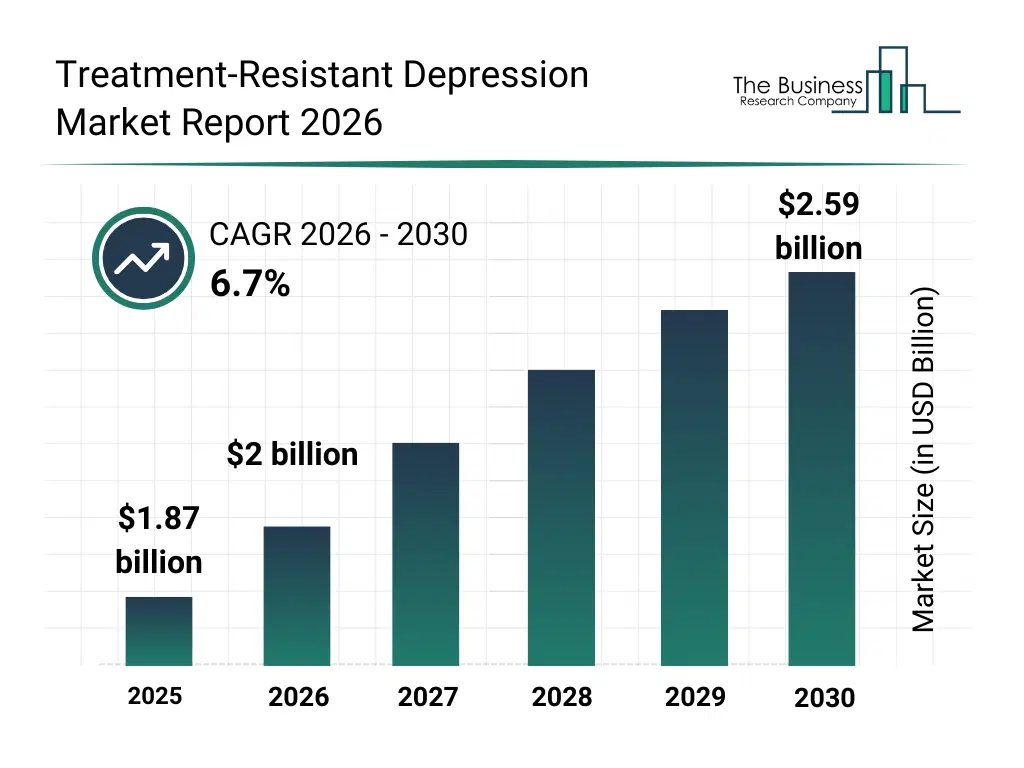
What Is The Treatment-Resistant Depression Market Size and Share 2026?
The treatment-resistant depression market size has grown strongly in recent years. It will grow from $1.87 billion in 2025 to $2 billion in 2026 at a compound annual growth rate (CAGR) of 6.9%. The growth in the historic period can be attributed to rising prevalence of major depressive disorder, limited efficacy of conventional antidepressants, increased diagnosis of refractory depression cases, expansion of psychiatric specialty clinics, growing acceptance of advanced mental health therapies.What Is The Treatment-Resistant Depression Market Growth Forecast?
The treatment-resistant depression market size is expected to see strong growth in the next few years. It will grow to $2.59 billion in 2030 at a compound annual growth rate (CAGR) of 6.7%. The growth in the forecast period can be attributed to increasing investments in precision psychiatry, growing approval of ketamine and esketamine therapies, expansion of biomarker-driven treatment selection, rising demand for long-term depression management solutions, increased use of digital therapeutic support tools. Major trends in the forecast period include increasing adoption of novel rapid-acting antidepressants, rising use of neuromodulation therapies, growing focus on personalized psychiatry approaches, expansion of psychedelic-based treatment research, enhanced integration of digital mental health tools.
Global Treatment-Resistant Depression Market Segmentation
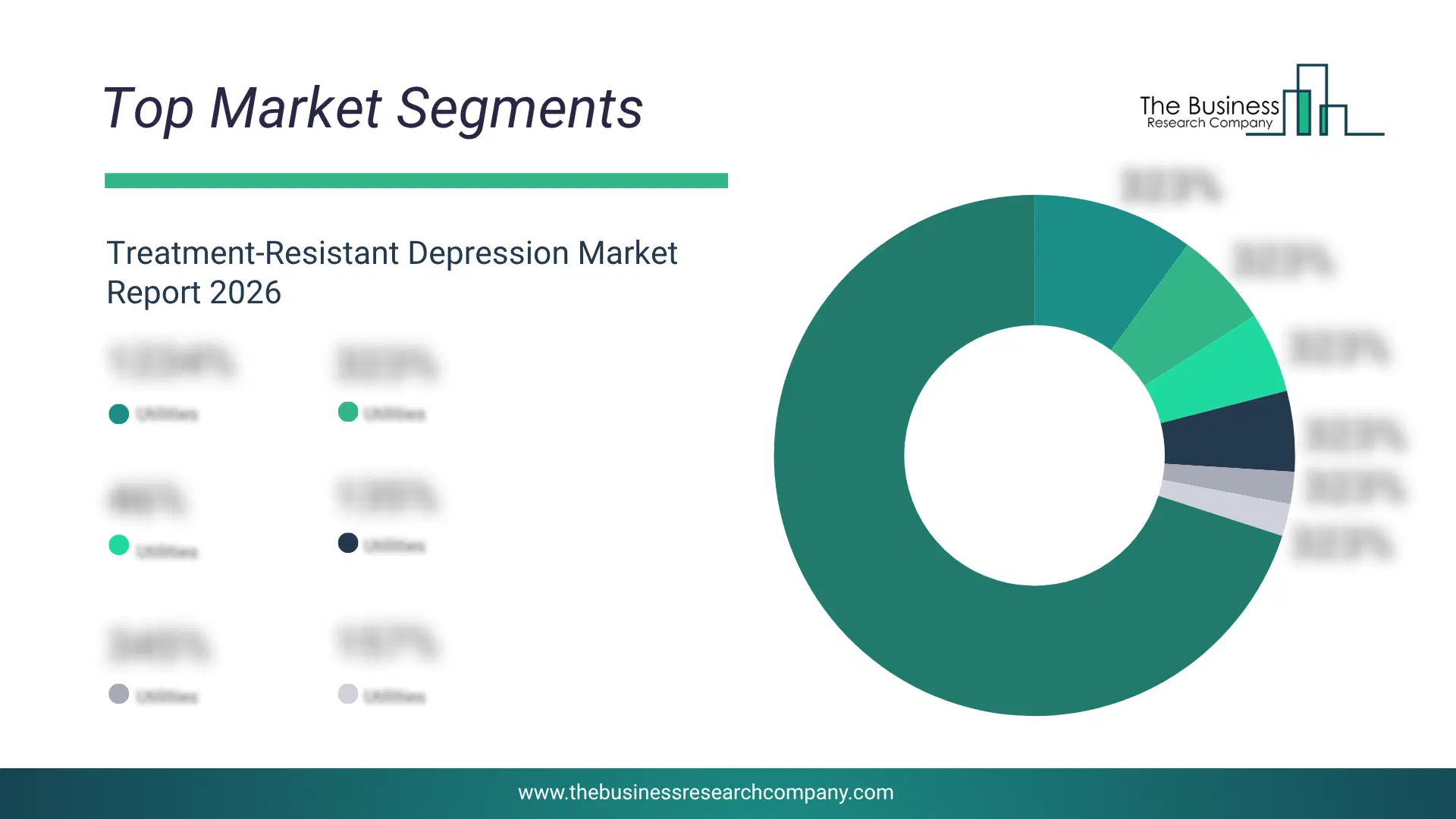
1) By Drug Class: Selective Serotonin Reuptake Inhibitors (SSRIs), Monoamine Oxidase Inhibitors, Tricyclic Antidepressants, Psychedelics 2) By Route Of Administration: Oral, Parenteral, Other Routes Of Administration 3) By Distribution Channel: Hospital Pharmacies, Retail Pharmacies, Online Pharmacies 4) By End-User: Hospitals, Homecare, Specialty Clinics, Other End-Users Subsegments: 1) By Selective Serotonin Reuptake Inhibitors (SSRIs): Fluoxetine, Sertraline, Paroxetine, Citalopram, Escitalopram 2) By Monoamine Oxidase Inhibitors (MAOIs): Phenelzine, Tranylcypromine, Isocarboxazid, Selegiline 3) By Tricyclic Antidepressants (TCAs): Amitriptyline, Nortriptyline, Imipramine, Clomipramine, Doxepin 4) By Psychedelics: Ketamine, Esketamine, Psilocybin, Lysergic Acid Diethylamide (LSD), 3,4-Methylenedioxymethamphetamine (MDMA)What Is The Driver Of The Treatment-Resistant Depression Market?
The high prevalence of mental disorders is expected to propel the growth of the treatment-resistant depression market going forward. Mental disorders are a broad range of conditions that affect an individual’s cognitive, emotional, and behavioral functioning, often leading to significant distress and impairment in daily life. The high prevalence of mental disorders is driven by factors such as genetic predisposition, as inherited genetic variations can influence brain chemistry and increase susceptibility to conditions such as depression, anxiety, and schizophrenia. Treatment-resistant depression (TRD) supports mental disorder patients by encouraging the use of more personalized and advanced treatments when standard therapies don’t work, helping improve their chances of recovery and quality of life. For instance, in November 2023, according to the American Psychological Association (APA), a US-based scientific and professional organization, among adults, those aged 18 to 34 reported the highest rate of mental illnesses at 50% in 2023, while adults aged 35 to 44 experienced the largest increase in diagnoses, with 45% reporting a mental illness. Therefore, the high prevalence of mental disorders is driving the growth of the treatment-resistant depression industry.Key Players In The Global Treatment-Resistant Depression Market
Major companies operating in the treatment-resistant depression market are Pfizer Inc., Johnson & Johnson Services Inc., Neurocrine Biosciences Inc., Relmada Therapeutics Inc., Neuronetics Inc., COMPASS Pathways, BrainsWay Ltd., Magstim Company Limited, MindMed, Alto Neuroscience, Sage Therapeutics Inc., MindBio Therapeutics Ltd., Reunion Neuroscience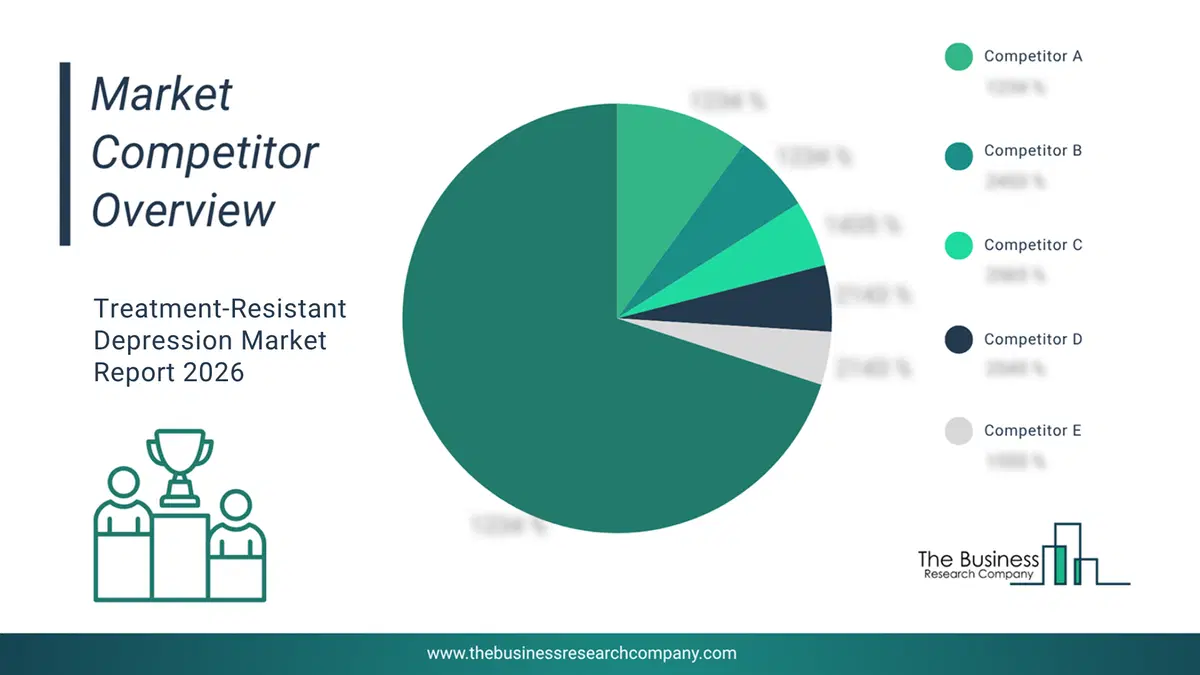
This chart is for illustrative purposes; the full report includes a detailed competitor analysis and comprehensive overview of the top 10 companies in the market.
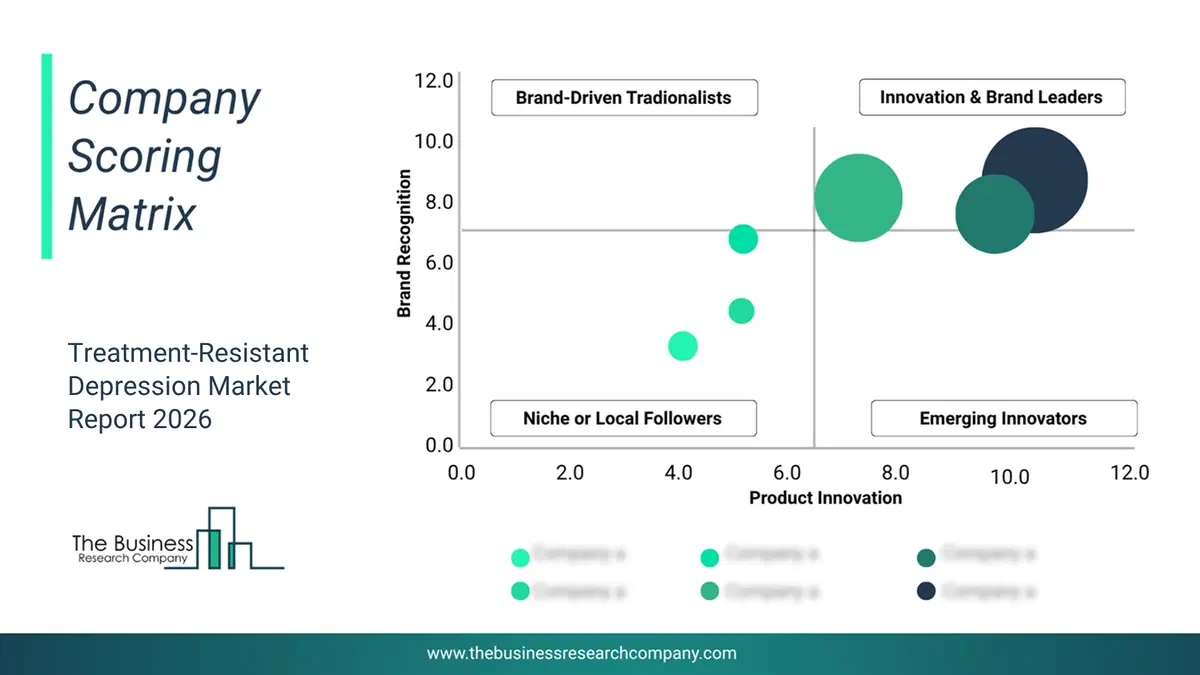
This chart maps companies by product innovation and brand strength, with bubble size indicating relative revenue, helping identify market leaders, challengers, and niche players. This is an illustrative chart; the full report provides a complete and accurate competitive analysis.
Global Treatment-Resistant Depression Market Trends and Insights
Major companies operating in the treatment-resistant depression market are focusing on developing innovative therapies such as monotherapy to address unmet patient needs, improve efficacy, and reduce side effects. Monotherapy is the use of a single treatment or medication to treat a condition, rather than combining it with others. It helps to treat treatment-resistant depression by offering a single, focused treatment that may be more effective for patients who haven't responded to multiple medications. For instance, in January 2025, Johnson & Johnson Services Inc., a US-based pharmaceutical, biotechnology, and medical technology company, announced U.S. Food and Drug Administration (FDA), a US-based government regulatory body, approval for SPRAVATO (esketamine) nasal spray, a fast-acting treatment for adults with treatment-resistant depression (TRD). SPRAVATO is used alongside an oral antidepressant when patients have not responded adequately to at least two other antidepressant therapies. The drug's rapid effects address the limitations of traditional antidepressants, which often take weeks to show results. As a derivative of ketamine, esketamine works by targeting the brain's NMDA receptors, potentially improving mood within hours. The approval marked a significant advancement in the field of mental health treatment.What Are Latest Mergers And Acquisitions In The Treatment-Resistant Depression Market?
In October 2024, Resilience Lab, a US-based health care company, acquired Options MD for an undisclosed amount. With this acquisition, Resilience Lab aims to strengthen its mental health service offerings by integrating Options MD’s specialized treatment platform for severe and treatment-resistant depression, thereby expanding access to personalized and evidence-based care. Options MD is a US-based telepsychiatry company treating severe and treatment-resistant depression (TRD), bipolar disorder, post-traumatic stress disorder (PTSD), and other mental health conditions.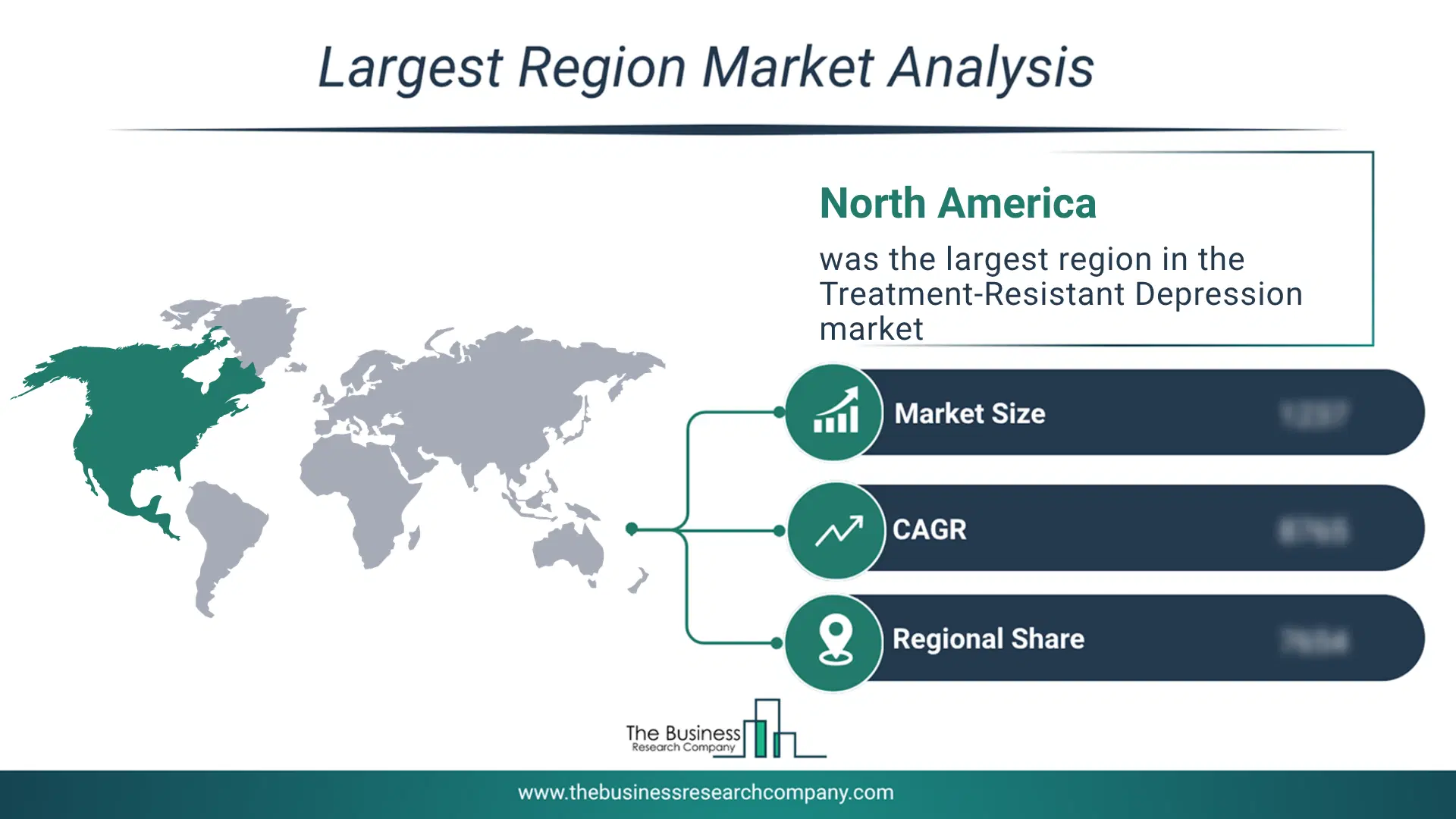
Regional Outlook
North America was the largest region in the treatment-resistant depression market in 2025. Asia-Pacific is expected to be the fastest-growing region in the forecast period. The regions covered in this market report are Asia-Pacific, South East Asia, Western Europe, Eastern Europe, North America, South America, Middle East, Africa. The countries covered in this market report are Australia, Brazil, China, France, Germany, India, Indonesia, Japan, Taiwan, Russia, South Korea, UK, USA, Canada, Italy, Spain.What Defines the Treatment-Resistant Depression Market?
The treatment-resistant depression market consists of revenues earned by entities by providing services such as psychiatric counseling, cognitive behavioral therapy (CBT), transcranial magnetic stimulation (TMS) therapy, electroconvulsive therapy (ECT), and ketamine infusion therapy. The market value includes the value of related goods sold by the service provider or included within the service offering. The treatment-resistant depression market includes sales of products such as esketamine nasal spray, vagus nerve stimulation (VNS) devices, deep brain stimulation (DBS) systems, neuromodulation devices, glutamate receptor modulators, and digital therapeutics. Values in this market are ‘factory gate’ values, that is, the value of goods sold by the manufacturers or creators of the goods, whether to other entities (including downstream manufacturers, wholesalers, distributors, and retailers) or directly to end customers. The value of goods in this market includes related services sold by the creators of the goods.How is Market Value Defined and Measured?
The market value is defined as the revenues that enterprises gain from the sale of goods and/or services within the specified market and geography through sales, grants, or donations in terms of the currency (in USD unless otherwise specified). The revenues for a specified geography are consumption values that are revenues generated by organizations in the specified geography within the market, irrespective of where they are produced. It does not include revenues from resales along the supply chain, either further along the supply chain or as part of other products.
This chart presents market attractiveness based on a quantitative evaluation of growth, competition, strategic alignment, and risk, offering a clear view of opportunity areas for decision-making. This chart is for illustrative purposes; the full report contains the complete analysis.

This chart highlights the Total Addressable Market (TAM) by estimating the maximum revenue opportunity using an assumption-driven approach, supporting strategic planning and opportunity sizing across markets. The chart is illustrative; the full report provides a more comprehensive analysis.
What Key Data and Analysis Are Included in the Treatment-Resistant Depression Market Report 2026?
The treatment-resistant depression market research report is one of a series of new reports from The Business Research Company that provides market statistics, including industry global market size, regional shares, competitors with the market share, detailed market segments, market trends and opportunities, and any further data you may need to thrive in the treatment-resistant depression industry. The market research report delivers a complete perspective of everything you need, with an in-depth analysis of the current and future state of the industry.Treatment-Resistant Depression Market Report Forecast Analysis
| Report Attribute | Details |
|---|---|
| Market Size Value In 2026 | $2 billion |
| Revenue Forecast In 2030 | $2.59 billion |
| Growth Rate | CAGR of 6.7% from 2026 to 2030 |
| Base Year For Estimation | 2025 |
| Actual Estimates/Historical Data | 2020-2025 |
| Forecast Period | 2026 - 2030 |
| Market Representation | Revenue in USD Billion and CAGR from 2026 to 2030 |
| Segments Covered | Drug Class, Route Of Administration, Distribution Channel, End-User |
| Regional Scope | Asia-Pacific, Western Europe, Eastern Europe, North America, South America, Middle East, Africa |
| Country Scope | The countries covered in the report are Australia, Brazil, China, France, Germany, India, Indonesia, Japan, Taiwan, Russia, South Korea, UK, USA, Canada, Italy, Spain |
| Key Companies Profiled | Pfizer Inc., Johnson & Johnson Services Inc., Neurocrine Biosciences Inc., Relmada Therapeutics Inc., Neuronetics Inc., COMPASS Pathways, BrainsWay Ltd., Magstim Company Limited, MindMed, Alto Neuroscience, Sage Therapeutics Inc., MindBio Therapeutics Ltd., Reunion Neuroscience |
| Customization Scope | Request for Customization |
| Pricing And Purchase Options | Explore Purchase Options |