

Virtual Tourism Market Report 2026
Global Outlook – By Type (360 Virtual Tour, Three-Dimensional (3D) Virtual Tour, Virtual Reality Tour), By Deployment Mode (Cloud-Based, Web-Based), By Technology (Three-Dimensional (3D) Scanning And Imaging, Photogrammetry, Computer Vision, Haptic Feedback, Spatial Audio, Other Technologies), By Direct Suppliers (Hotel Campaigns, Tour Operators, Government Bodies), By End-Use (Travelers And Tourists, Hospitality And Accommodation, Cultural And Historical Sites, Entertainment And Recreation, Education And Training, Other End-Uses) – Market Size, Trends, Strategies, and Forecast to 2030
Virtual Tourism Market Overview
• Virtual Tourism market size has reached to $14.56 billion in 2025 • Expected to grow to $32.81 billion in 2030 at a compound annual growth rate (CAGR) of 17.6% • Growth Driver: Growth In Real Estate Industry Fuels Expansion Of The Virtual Tourism Market • Market Trend: Affordable AI-Powered 3D Virtual Tours Revolutionize Real Estate Experiences • North America was the largest region in 2025.What Is Covered Under Virtual Tourism Market?
Virtual tourism is the use of technology to create simulated experiences of real or imagined locations, allowing people to explore and interact with them without physically being present. Virtual tourism offers a secure and convenient alternative to exploring countries, particularly when travel is dangerous or impractical. It also helps to preserve and promote cultural heritage by creating digital records of historic sites and traditions. The main types of virtual tourism are 360 virtual tours, three-dimensional (3D) virtual tours, and virtual reality tours. A 360-degree virtual tour allows users to navigate through a virtual environment using panoramic images captured from all directions that provide a comprehensive view of a location, allowing users to look around and explore different areas as if they were physically present. They provide different product types, such as cloud-based and web-based, with various technologies, including three-dimensional (3D) scanning and imaging, photogrammetry, computer vision, haptic feedback, spatial audio, and others. The various direct suppliers, including airlines, hotel campaigns, tour operators, government bodies, and those used in various end-uses such as travelers and tourists, hospitality and accommodation, cultural and historical sites, entertainment and recreation, education and training, and others.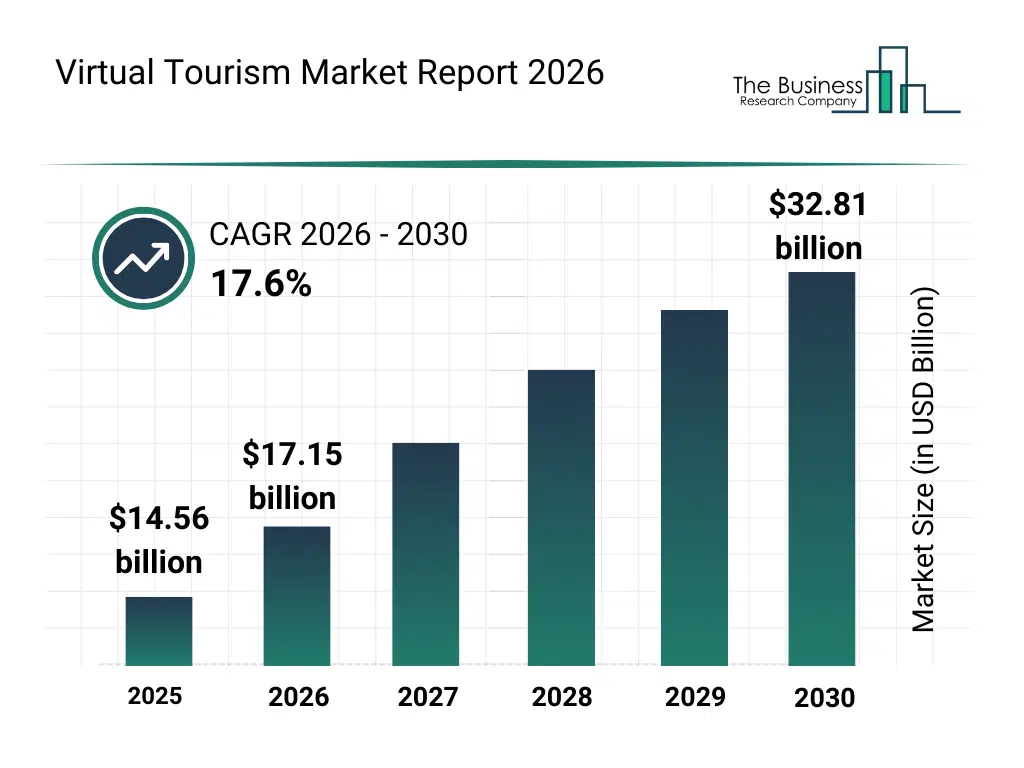
What Is The Virtual Tourism Market Size and Share 2026?
The virtual tourism market size has grown rapidly in recent years. It will grow from $14.56 billion in 2025 to $17.15 billion in 2026 at a compound annual growth rate (CAGR) of 17.7%. The growth in the historic period can be attributed to restricted global travel activities, early adoption of virtual museum experiences, growing digitization of cultural landmarks, increased internet penetration, rising use of 360-degree media content.What Is The Virtual Tourism Market Growth Forecast?
The virtual tourism market size is expected to see rapid growth in the next few years. It will grow to $32.81 billion in 2030 at a compound annual growth rate (CAGR) of 17.6%. The growth in the forecast period can be attributed to increasing demand for remote travel experiences, expansion of metaverse-based tourism platforms, growing investments in immersive content creation, rising adoption of vr devices, increasing collaboration between tourism boards and tech providers. Major trends in the forecast period include increasing adoption of immersive virtual reality tours, rising use of high-resolution 3d scanning technologies, growing integration of spatial audio and haptic feedback, expansion of cloud-based virtual tourism platforms, enhanced focus on cultural heritage digitization.
Global Virtual Tourism Market Segmentation
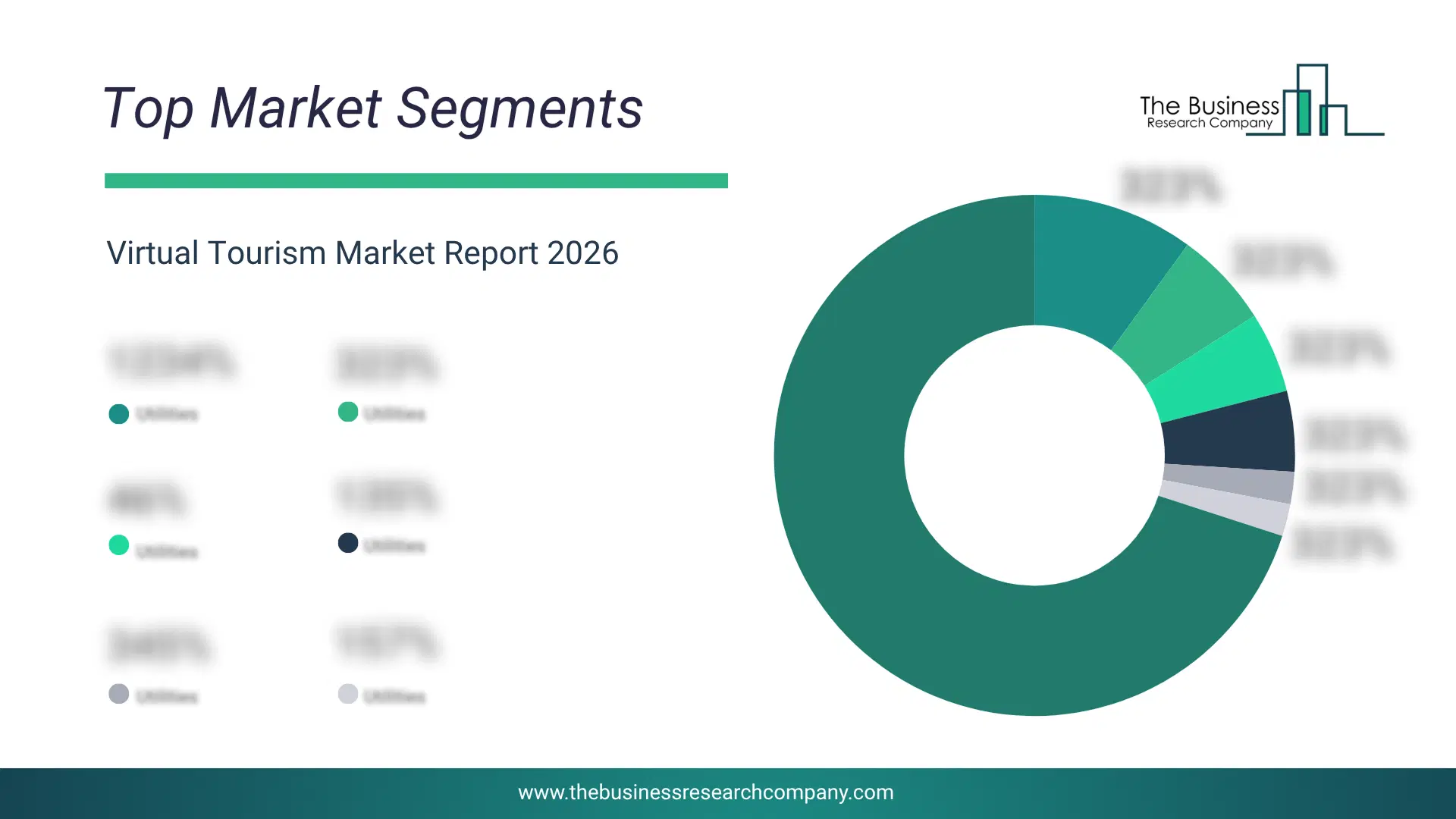
1) By Type: 360 Virtual Tour, Three-Dimensional (3D) Virtual Tour, Virtual Reality Tour 2) By Deployment Mode: Cloud-Based, Web-Based 3) By Technology: Three-Dimensional (3D) Scanning And Imaging, Photogrammetry, Computer Vision, Haptic Feedback, Spatial Audio, Other Technologies 4) By Direct Suppliers: Hotel Campaigns, Tour Operators, Government Bodies 5) By End-Use: Travelers And Tourists, Hospitality And Accommodation, Cultural And Historical Sites, Entertainment And Recreation, Education And Training, Other End-Uses Subsegments: 1) By 360 Virtual Tour: Single Location 360 Tours, Multiple Location 360 Tours 2) By Three-Dimensional (3D) Virtual Tour: 3D Static Tours, 3D Interactive Tours 3) By Virtual Reality Tour: Immersive VR Tours, Non-immersive VR ToursWhat Is The Driver Of The Virtual Tourism Market?
The increasing real estate industry is expected to drive the virtual tourism market going forward. Real estate industries are enterprises that buy, sell, lease, and manage residential, commercial, and industrial properties. The real estate industry is growing due to urbanization, economic development, and favorable investment conditions. Real estate companies leverage virtual reality (VR) and augmented reality (AR) technologies to offer immersive property tours, enabling global exploration without physical visits. This boosts virtual tourism by attracting buyers and tourists with detailed, interactive views of luxury properties. For instance, in July 2024, according to the United States Census Bureau, a US-based government administration, in June 2023, the number of privately owned housing units allowed by building permits was 1,493,000, which is 3.1 percent higher than the 1,399,000 units permitted in May 2023. Therefore, increasing the real estate industry will drive the virtual tourism industry.Key Players In The Global Virtual Tourism Market
Major companies operating in the virtual tourism market are Google LLC, Intel Corporation, Toshiba Corporation, Ricoh Co. Ltd., Zebra Technologies Corp., Autodesk Inc., Trimble Inc., Zillow Group, Leica Geosystems AG, Cvent Inc., Magic Leap Inc., Vuzix, Real Tour Vision (RTV) Inc., Vieweet, Urbanimmersive Inc., Blippar Group Limited, UNIMERSIV, Kuula Inc., Virtual Pictures Corp., Cupix Inc.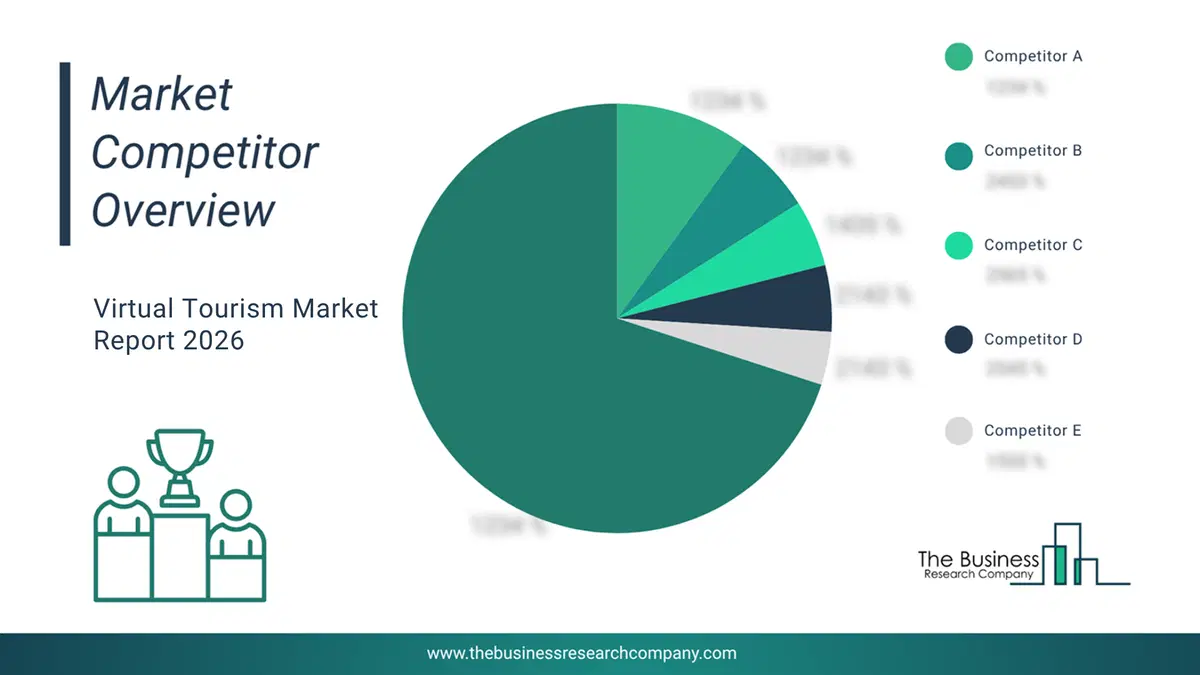
This chart is for illustrative purposes; the full report includes a detailed competitor analysis and comprehensive overview of the top 10 companies in the market.
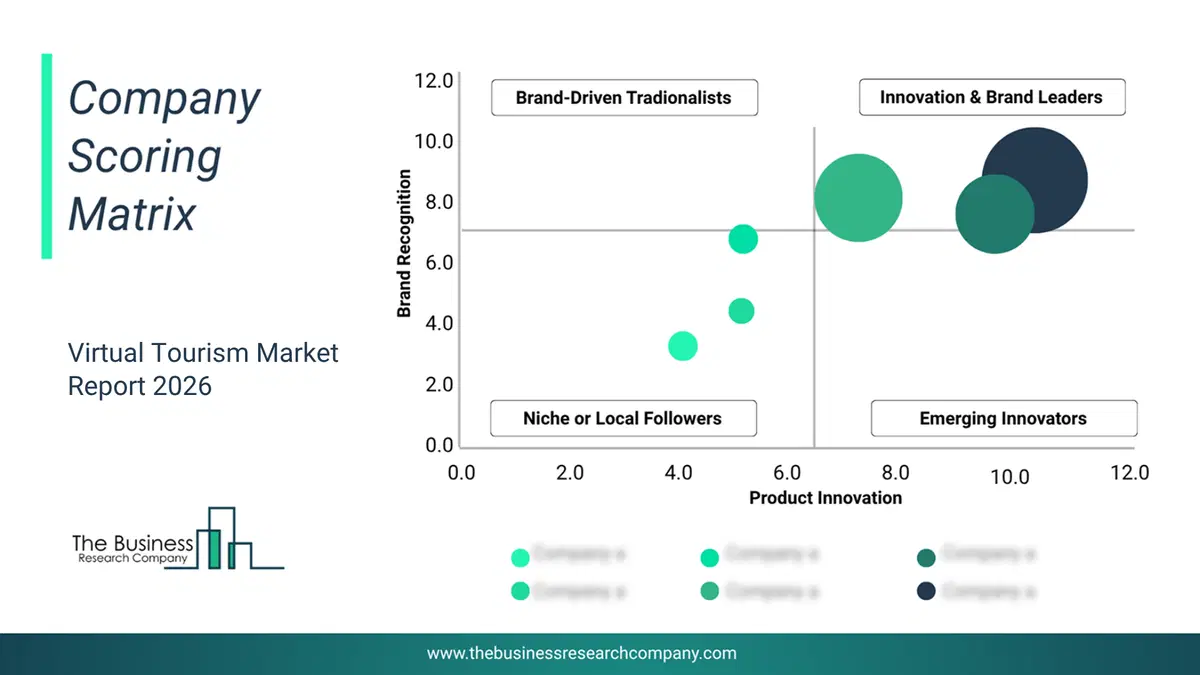
This chart maps companies by product innovation and brand strength, with bubble size indicating relative revenue, helping identify market leaders, challengers, and niche players. This is an illustrative chart; the full report provides a complete and accurate competitive analysis.
Global Virtual Tourism Market Trends and Insights
Major companies operating in the virtual tourism market are developing advanced technology with AI-powered three-dimensional (3D) virtual tours to provide affordable and lightning-fast 3D solutions to revolutionize virtual real estate experiences. AI-powered three-dimensional (3D) virtual tours use artificial intelligence to create immersive, realistic digital simulations of real-world locations. They allow users to explore and interact with virtual environments in three dimensions, featuring adaptive content and personalized experiences. For instance, in January 2024, Planitar Inc., a Canada-based measurement technology provider, launched iGUIDE Instant. It offers a cost-effective solution at just USD 7.99 per project, allowing real estate photographers to rapidly create high-quality virtual tours and floor plans, often within minutes of capturing property data. It integrates seamlessly with social media and web platforms, providing customizable branding for listing agents. Additionally, iGUIDE Instant delivers analytics reports to track online engagement, helping agents assess listing effectiveness. The system captures high-resolution 360° imagery, enabling potential buyers to explore properties in exceptional detail and enhance the viewing experience.What Are Latest Mergers And Acquisitions In The Virtual Tourism Market?
In February 2025, CoStar Group Inc., a US-based provider of online real estate marketplaces, information, and analytics, acquired Matterport Inc. for an undisclosed amount. Through this acquisition, CoStar aims to enhance its 3D virtual tour and digital twin capabilities by integrating Matterport’s spatial data and AI technologies across its property platforms, including Apartments.com, LoopNet, and Homes.com. Matterport Inc. is a US-based company that provides immersive 3D digital twin and virtual tour technology for residential, commercial, and other real estate sectors.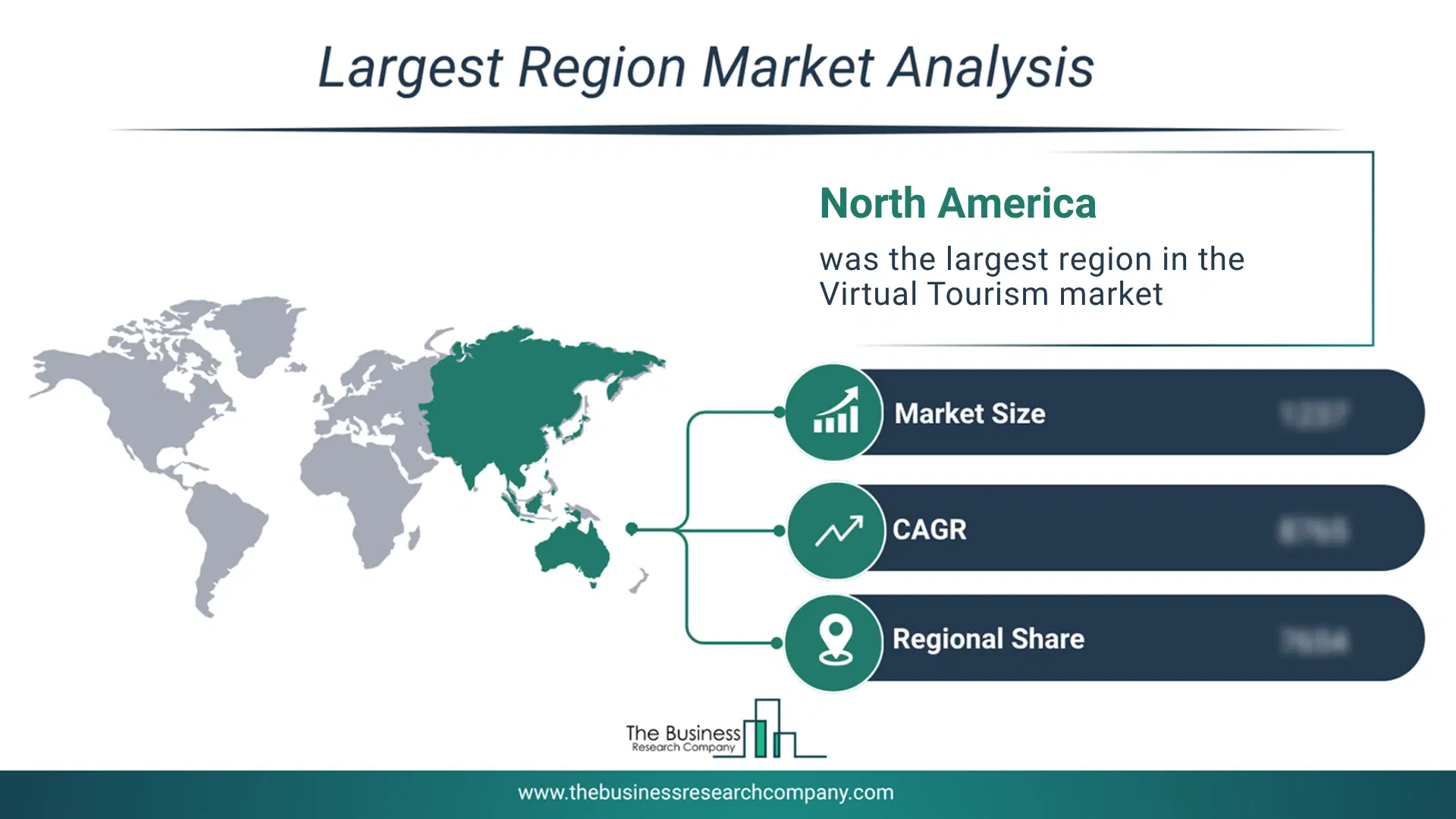
Regional Outlook
North America was the largest region in the virtual tourism market in 2025. The regions covered in this market report are Asia-Pacific, South East Asia, Western Europe, Eastern Europe, North America, South America, Middle East, Africa The countries covered in this market report are Australia, Brazil, China, France, Germany, India, Indonesia, Japan, Taiwan, Russia, South Korea, UK, USA, Canada, Italy, Spain.What Defines the Virtual Tourism Market?
The virtual tourism market consists of revenues earned by entities by providing services such as virtual event and exhibition participation, digital travel planning services, educational virtual field trips, virtual shopping, and souvenir purchases. The market value includes the value of related goods sold by the service provider or included within the service offering. The virtual tourism market also includes sales of virtual reality (VR) headsets, augmented reality (AR) glasses, and high-performance computers. Values in this market are ‘factory gate’ values, that is, the value of goods sold by the manufacturers or creators of the goods, whether to other entities (including downstream manufacturers, wholesalers, distributors, and retailers) or directly to end customers. The value of goods in this market includes related services sold by the creators of the goods.How is Market Value Defined and Measured?
The market value is defined as the revenues that enterprises gain from the sale of goods and/or services within the specified market and geography through sales, grants, or donations in terms of the currency (in USD unless otherwise specified). The revenues for a specified geography are consumption values that are revenues generated by organizations in the specified geography within the market, irrespective of where they are produced. It does not include revenues from resales along the supply chain, either further along the supply chain or as part of other products.
This chart presents market attractiveness based on a quantitative evaluation of growth, competition, strategic alignment, and risk, offering a clear view of opportunity areas for decision-making. This chart is for illustrative purposes; the full report contains the complete analysis.

This chart highlights the Total Addressable Market (TAM) by estimating the maximum revenue opportunity using an assumption-driven approach, supporting strategic planning and opportunity sizing across markets. The chart is illustrative; the full report provides a more comprehensive analysis.
What Key Data and Analysis Are Included in the Virtual Tourism Market Report 2026?
The virtual tourism market research report is one of a series of new reports from The Business Research Company that provides market statistics, including Market Report 2026?global market size, regional shares, competitors with the market share, detailed market segments, market trends and opportunities, and any further data you may need to thrive in the virtual tourism Market Report 2026? The market research report delivers a complete perspective of everything you need, with an in-depth analysis of the current and future state of the Market Report 2026?Virtual Tourism Market Report Forecast Analysis
| Report Attribute | Details |
|---|---|
| Market Size Value In 2026 | $17.15 billion |
| Revenue Forecast In 2030 | $32.81 billion |
| Growth Rate | CAGR of 17.7% from 2026 to 2030 |
| Base Year For Estimation | 2025 |
| Actual Estimates/Historical Data | 2020-2025 |
| Forecast Period | 2026 - 2030 |
| Market Representation | Revenue in USD Billion and CAGR from 2026 to 2030 |
| Segments Covered | Type, Deployment Mode, Technology, Direct Suppliers, End-Use |
| Regional Scope | Asia-Pacific, Western Europe, Eastern Europe, North America, South America, Middle East, Africa |
| Country Scope | The countries covered in the report are Australia, Brazil, China, France, Germany, India, Indonesia, Japan, Taiwan, Russia, South Korea, UK, USA, Canada, Italy, Spain. |
| Key Companies Profiled | Google LLC, Intel Corporation, Toshiba Corporation, Ricoh Co. Ltd., Zebra Technologies Corp., Autodesk Inc., Trimble Inc., Zillow Group, Leica Geosystems AG, Cvent Inc., Magic Leap Inc., Vuzix, Real Tour Vision (RTV) Inc., Vieweet, Urbanimmersive Inc., Blippar Group Limited, UNIMERSIV, Kuula Inc., Virtual Pictures Corp., Cupix Inc. |
| Customization Scope | Request for Customization |
| Pricing And Purchase Options | Explore Purchase Options |