
Voluntary Carbon Credit Market Report 2026
Global Outlook – By Type (Forestry, Renewable Energy, Waste Disposal, Other Types), By Project Type (Removal Or Sequestration Projects, Avoidance Or Reduction Projects), By Application (Industrial, Household Devices, Energy, Agriculture, Other Applications), By End Use (Government Agencies, Non-Governmental Organizations (NGOs), Private Companies, Individuals) – Market Size, Trends, Strategies, and Forecast to 2030
Voluntary Carbon Credit Market Overview
• Voluntary Carbon Credit market size has reached to $1.88 billion in 2025 • Expected to grow to $4.92 billion in 2030 at a compound annual growth rate (CAGR) of 21.1% • Growth Driver: Growing Demand For Clean Energy Propels Growth Of Market Due To Increasing Investment In Renewable Energy And Emission Offsetting • Market Trend: Advancing Digital Solutions For Streamlined Carbon Credit Access • North America was the largest region in 2025 and Asia-Pacific is the fastest growing region.What Is Covered Under Voluntary Carbon Credit Market?
A voluntary carbon credit is a tradable certificate that represents the reduction, removal, or avoidance of one metric ton of carbon dioxide (CO2) or its equivalent (CO2e) in greenhouse gases (GHGs). These credits are generated by projects that reduce emissions, such as reforestation, renewable energy, carbon capture, and energy efficiency initiatives. The voluntary carbon credits are bought and sold in the voluntary carbon market (VCM) by businesses, organizations, and individuals who aim to offset their carbon footprint beyond regulatory requirements. The main types of voluntary carbon credits are forestry, renewable energy, waste disposal, and others. Forestry refers to projects that capture and store carbon dioxide through activities such as reforestation, afforestation, and forest conservation, helping mitigate climate change by enhancing natural carbon sinks. These credits are classified by project type into removal or sequestration projects and avoidance or reduction projects for various applications, including industrial, household devices, energy, agriculture, and others, having end users such as government agencies, non-governmental organizations (NGOs), private companies, and individuals.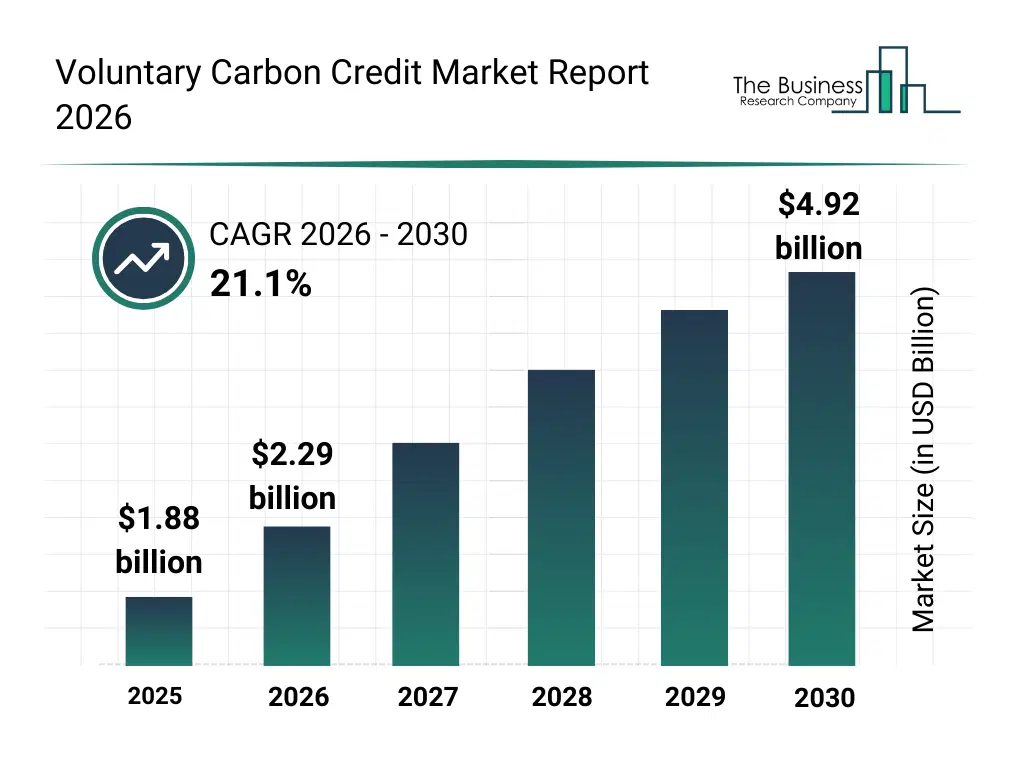
What Is The Voluntary Carbon Credit Market Size and Share 2026?
The voluntary carbon credit market size has grown exponentially in recent years. It will grow from $1.88 billion in 2025 to $2.29 billion in 2026 at a compound annual growth rate (CAGR) of 21.5%. The growth in the historic period can be attributed to corporate sustainability commitments, early adoption of voluntary offset programs, growth of renewable energy projects, development of forestry-based credits, emergence of independent verification standards.What Is The Voluntary Carbon Credit Market Growth Forecast?
The voluntary carbon credit market size is expected to see exponential growth in the next few years. It will grow to $4.92 billion in 2030 at a compound annual growth rate (CAGR) of 21.1%. The growth in the forecast period can be attributed to increasing net-zero pledges by corporations, rising integration of blockchain in carbon markets, expansion of global carbon registries, growing investment in removal-based credits, increasing regulatory alignment with voluntary markets. Major trends in the forecast period include increasing demand for high-integrity carbon credits, rising adoption of digital carbon trading platforms, growing focus on nature-based credit projects, expansion of corporate voluntary offset programs, enhanced emphasis on transparency and verification.
Global Voluntary Carbon Credit Market Segmentation
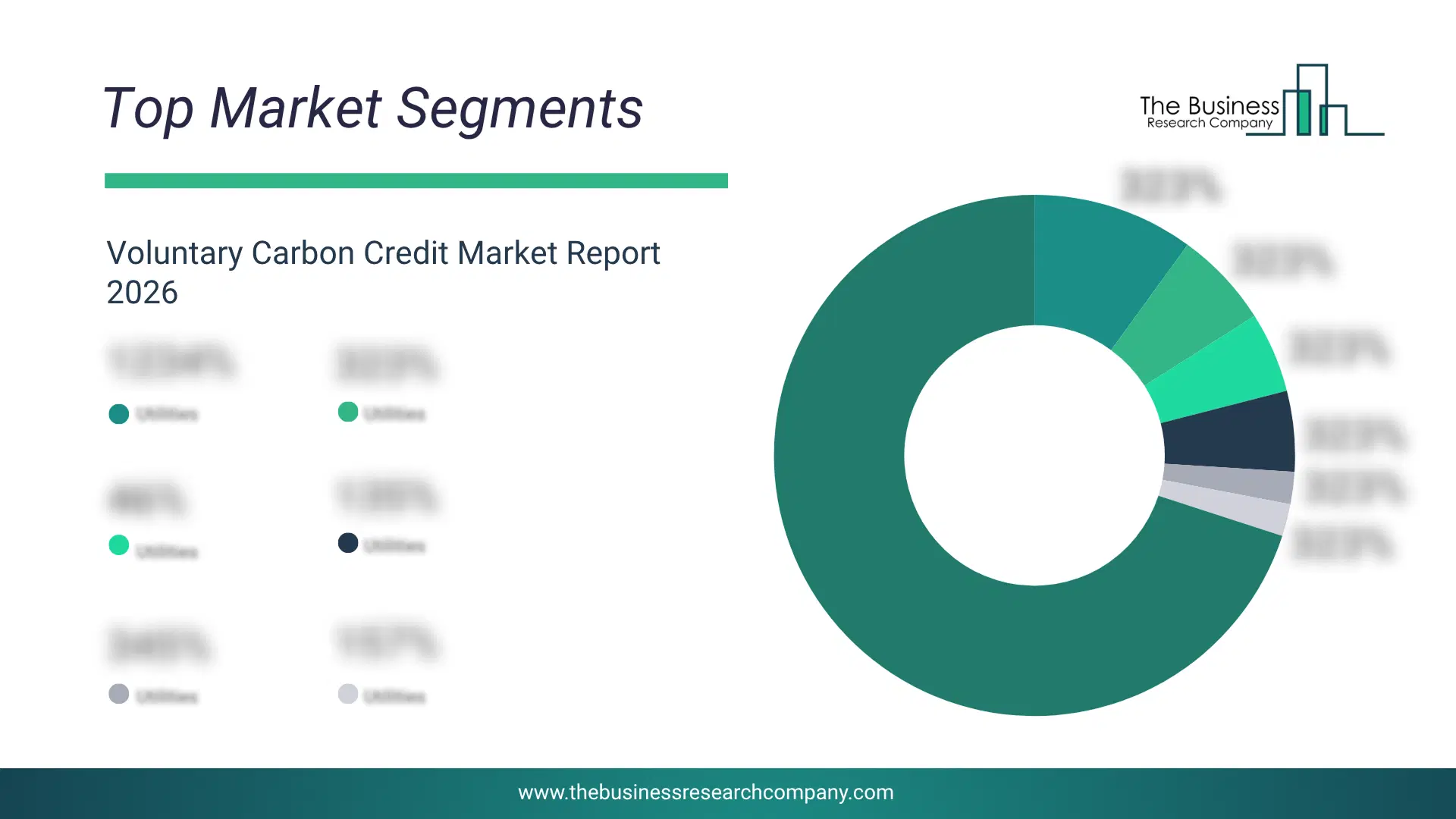
1) By Type: Forestry, Renewable Energy, Waste Disposal, Other Types 2) By Project Type: Removal Or Sequestration Projects, Avoidance Or Reduction Projects 3) By Application: Industrial, Household Devices, Energy, Agriculture, Other Applications 4) By End Use: Government Agencies, Non-Governmental Organizations (NGOs), Private Companies, Individuals Subsegments: 1) By Forestry: Afforestation, Reforestation, Avoided Deforestation, Forest Management 2) By Renewable Energy: Wind Energy Projects, Solar Energy Projects, Hydropower Projects, Biomass Energy Projects, Geothermal Energy Projects 3) By Waste Disposal: Methane Capture From Landfills, Waste-To-Energy Projects, Composting Projects, Recycling And Circular Economy Initiatives 4) By Other Types: Blue Coastal and Marine Ecosystem Restoration (Carbon), Soil Carbon Sequestration, Carbon Capture and Storage (CCS), Biochar ProjectsWhat Is The Driver Of The Voluntary Carbon Credit Market?
The growing demand for clean energy is expected to propel the growth of the voluntary carbon credit market going forward. Clean energy is defined as energy obtained from sources with a minimum environmental impact and emitting little or no greenhouse gases. The demand for clean energy is due to environmental protection, public health benefits, energy security and independence, and regulatory and policy incentives. The rising demand for clean energy boosts investment in renewables, generating carbon credits by cutting emissions. These credits help businesses offset their footprint, strengthening the carbon market and promoting green energy growth. For instance, in March 2024, according to the American Clean Power Association, a US-based organization, in 2024, America’s clean power industry invested nearly $80 billion in energy infrastructure and manufacturing. Developers installed 49 gigawatts of new domestic capacity, 33% more than the previous record set in 2023. Therefore, the growing demand for clean energy is driving the growth of the voluntary carbon credit industry.Key Players In The Global Voluntary Carbon Credit Market
Major companies operating in the voluntary carbon credit market report are Ambipar Group, Rubicon Carbon, South Pole, EKI Energy Services Ltd., The Carbon Trust, 3Degrees, Climate Impact Partners, Allcot Group, Green Mountain Energy, First Climate, ClimeCo LLC, Aera Group, Forliance, ComBio Energia, BioCarbon Partners, CarbonBetter, Atmosfair, NativeEnergy, NatureOffice GmbH, Carbon Credit Capital LLC, Finite Carbon, GreenTrees LLC, Puro.earth, Tasman Environmental Markets, TerraPass, CarbonClear, BURN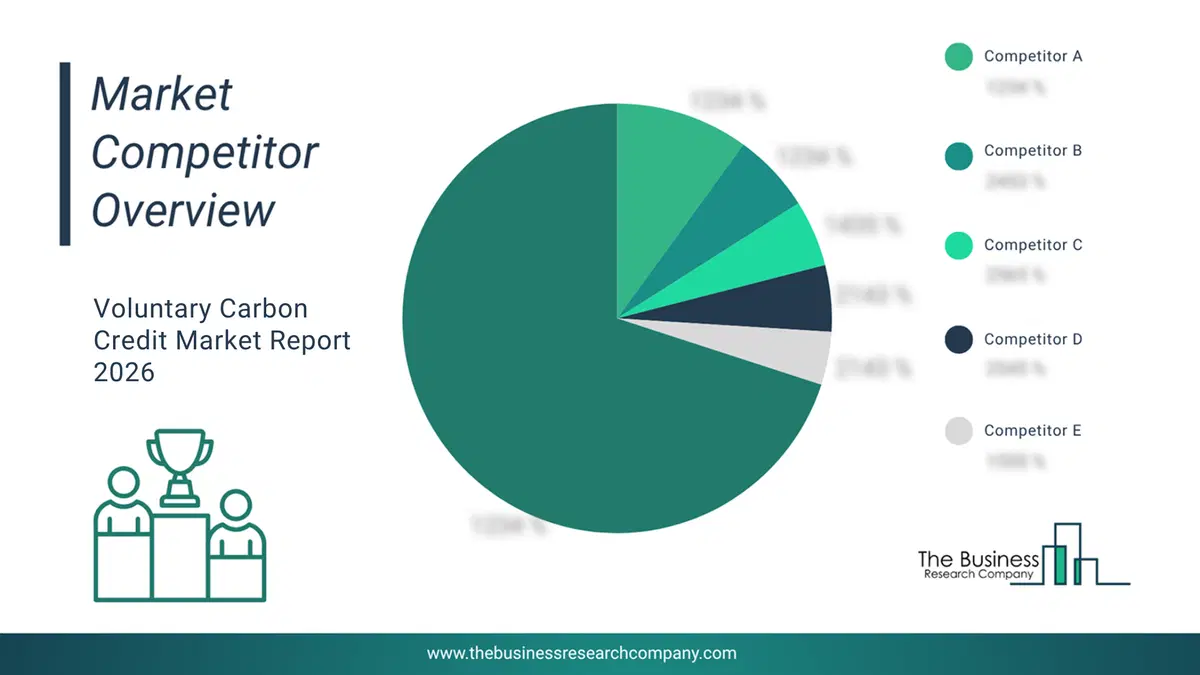
This chart is for illustrative purposes; the full report includes a detailed competitor analysis and comprehensive overview of the top 10 companies in the market.
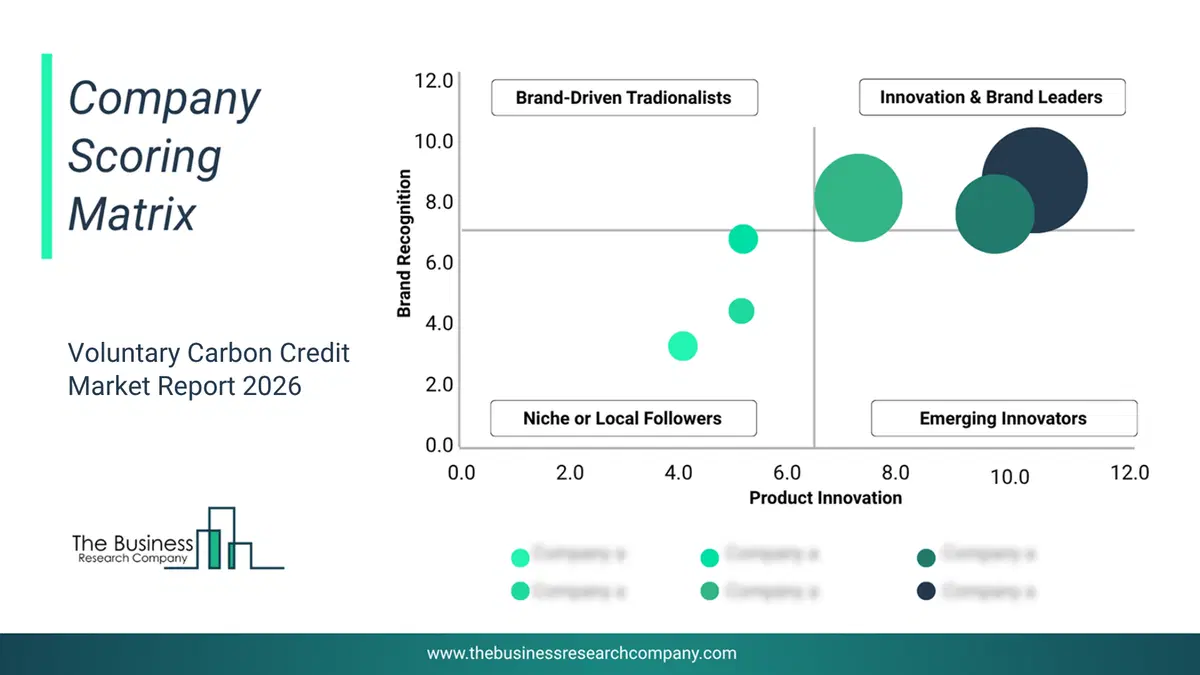
This chart maps companies by product innovation and brand strength, with bubble size indicating relative revenue, helping identify market leaders, challengers, and niche players. This is an illustrative chart; the full report provides a complete and accurate competitive analysis.
Global Voluntary Carbon Credit Market Trends and Insights
Major companies operating in the voluntary carbon credit market are focusing on developing advanced solutions such as digital carbon credit sourcing to streamline carbon credit access, supporting companies' sustainability and emissions reduction efforts. Digital carbon credit sourcing refers to using online platforms and technologies to identify, purchase, and trade carbon credits, streamlining access to certified carbon offset projects. For instance, in September 2024, the ERM International Group Limited, a UK-based sustainability consultancy, launched the ERM Carbon Credit Portal designed to facilitate client access to the voluntary carbon market. This initiative aims to streamline the selection and purchasing process for carbon credits, enabling organizations to complement their greenhouse gas emissions reduction strategies effectively. The portal features pre-screened projects that allow users to evaluate climate benefits and associated risks, enhancing transparency and trust in the carbon credit procurement process. This launch is part of ERM's broader strategy to support corporate decarbonization efforts.What Are Latest Mergers And Acquisitions In The Voluntary Carbon Credit Market?
In November 2023, MSCI Inc., a US-based provider of critical decision support tools and solutions for the global investment community, acquired Trove Research for an undisclosed amount. The acquisition aims to enhance MSCI's data and analytics capabilities in the voluntary carbon markets, providing clients with comprehensive tools to manage carbon emissions and support sustainability goals across industries. Trove Research is a UK-based data, analysis, and advisory firm focusing on corporate climate action and the voluntary carbon market.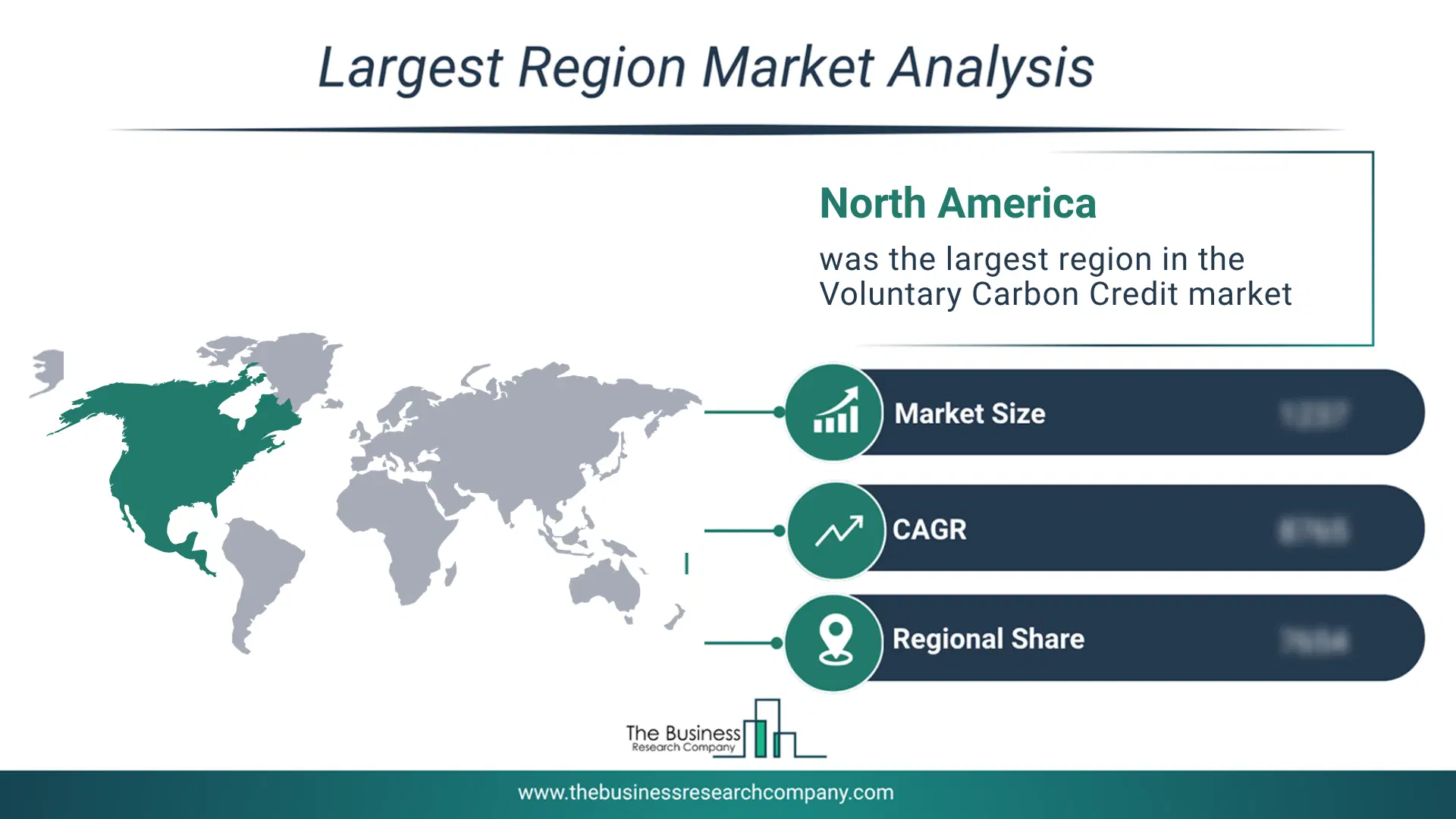
Regional Outlook
North America was the largest region in the voluntary carbon credit market in 2025. Asia-Pacific is expected to be the fastest-growing region in the forecast period. The regions covered in this market report are Asia-Pacific, South East Asia, Western Europe, Eastern Europe, North America, South America, Middle East, Africa. The countries covered in this market report are Australia, Brazil, China, France, Germany, India, Indonesia, Japan, Taiwan, Russia, South Korea, UK, USA, Canada, Italy, SpainWhat Defines the Voluntary Carbon Credit Market?
The voluntary carbon credit market includes revenues earned by entities by providing services such as methane capture initiatives, transportation emission reduction projects, carbon offset certification services, and technology-driven carbon capture and storage solutions. The market value includes the value of related goods sold by the service provider or included within the service offering. Only goods and services traded between entities or sold to end consumers are included.How is Market Value Defined and Measured?
The market value is defined as the revenues that enterprises gain from the sale of goods and/or services within the specified market and geography through sales, grants, or donations in terms of the currency (in USD unless otherwise specified). The revenues for a specified geography are consumption values that are revenues generated by organizations in the specified geography within the market, irrespective of where they are produced. It does not include revenues from resales along the supply chain, either further along the supply chain or as part of other products.
This chart presents market attractiveness based on a quantitative evaluation of growth, competition, strategic alignment, and risk, offering a clear view of opportunity areas for decision-making. This chart is for illustrative purposes; the full report contains the complete analysis.

This chart highlights the Total Addressable Market (TAM) by estimating the maximum revenue opportunity using an assumption-driven approach, supporting strategic planning and opportunity sizing across markets. The chart is illustrative; the full report provides a more comprehensive analysis.
What Key Data and Analysis Are Included in the Voluntary Carbon Credit Market Report 2026?
The voluntary carbon credit market research report is one of a series of new reports from The Business Research Company that provides market statistics, including industry global market size, regional shares, competitors with the market share, detailed market segments, market trends and opportunities, and any further data you may need to thrive in the voluntary carbon credit industry. The market research report delivers a complete perspective of everything you need, with an in-depth analysis of the current and future state of the industry.Voluntary Carbon Credit Market Report Forecast Analysis
| Report Attribute | Details |
|---|---|
| Market Size Value In 2026 | $2.29 billion |
| Revenue Forecast In 2030 | $4.92 billion |
| Growth Rate | CAGR of 21.5% from 2026 to 2030 |
| Base Year For Estimation | 2025 |
| Actual Estimates/Historical Data | 2020-2025 |
| Forecast Period | 2026 - 2030 - 2030 |
| Market Representation | Revenue in USD Billion and CAGR from 2026 to 2030 |
| Segments Covered | Type, Project Type, Application, End Use |
| Regional Scope | Asia-Pacific, Western Europe, Eastern Europe, North America, South America, Middle East, Africa |
| Country Scope | The countries covered in the report are Australia, Brazil, China, France, Germany, India, Indonesia, Japan, Taiwan, Russia, South Korea, UK, USA, Canada, Italy, Spain. |
| Key Companies Profiled | Ambipar Group, Rubicon Carbon, South Pole, EKI Energy Services Ltd., The Carbon Trust, 3Degrees, Climate Impact Partners, Allcot Group, Green Mountain Energy, First Climate, ClimeCo LLC, Aera Group, Forliance, ComBio Energia, BioCarbon Partners, CarbonBetter, Atmosfair, NativeEnergy, NatureOffice GmbH, Carbon Credit Capital LLC, Finite Carbon, GreenTrees LLC, Puro.earth, Tasman Environmental Markets, TerraPass, CarbonClear, BURN |
| Customization Scope | Request for Customization |
| Pricing And Purchase Options | Explore Purchase Options |