
Workwear Market Report 2026
Global Outlook – By Product (Topwear, Bottomwear, Coveralls), By Category (Men, Women, Unisex), By Distribution Channel (Wholesalers, Supermarkets And Hypermarkets, Specialty Stores, Online Platforms), By Application (Chemical, Power, Food And Beverage, Biological, Other Applications), By End Use (Construction, Oil And Gas, Chemicals, Healthcare, Other End Users) – Market Size, Trends, Strategies, and Forecast to 2030
Workwear Market Overview
• Workwear market size has reached to $22.39 billion in 2025 • Expected to grow to $31.63 billion in 2030 at a compound annual growth rate (CAGR) of 7.1% • Growth Driver: Rising Industrial Accidents Fuel Demand For Enhanced Protective Clothing • Market Trend: Advancing Environmentally Responsible Worker Safety Solutions • Asia-Pacific was the largest region and fastest growing region.What Is Covered Under Workwear Market?
Workwear refers to clothing specifically designed for individuals engaged in manual labor or physical work. These garments are typically made from durable materials such as denim, canvas, or polyester blends to withstand tough conditions and provide protection. The main types of products in workwear are topwear, bottomwear, and coveralls. Topwear in the workplace includes shirts, t-shirts, jackets, and other upper-body garments designed for work environments. These products are tailored for various categories, including men, women, and unisex options, and are distributed through multiple sales channels such as wholesalers, supermarkets and hypermarkets, specialty stores, and online platforms. They are used in various applications, including chemical, power, food and beverage, biological, and other sectors, serving end users in industries such as construction, oil and gas, chemicals, healthcare, and others.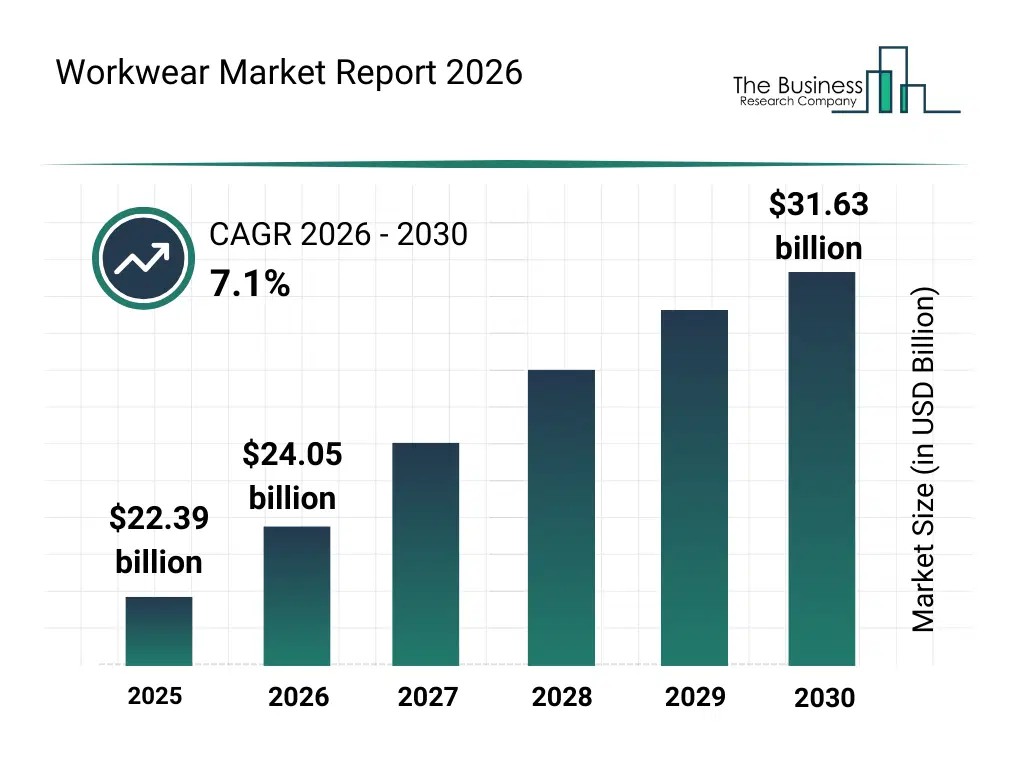
What Is The Workwear Market Size and Share 2026?
The workwear market size has grown strongly in recent years. It will grow from $22.39 billion in 2025 to $24.05 billion in 2026 at a compound annual growth rate (CAGR) of 7.4%. The growth in the historic period can be attributed to expansion of industrial and construction employment, rising occupational safety awareness, increased use of uniforms in regulated industries, growth of contract labor workforce, availability of mass-produced work garments.What Is The Workwear Market Growth Forecast?
The workwear market size is expected to see strong growth in the next few years. It will grow to $31.63 billion in 2030 at a compound annual growth rate (CAGR) of 7.1%. The growth in the forecast period can be attributed to increasing demand for sustainable workwear solutions, rising investments in smart and protective textiles, expansion of healthcare and industrial safety standards, growing preference for ergonomic work clothing, increasing adoption of digital procurement platforms. Major trends in the forecast period include increasing demand for durable and multi-functional work apparel, rising adoption of protective and flame-resistant fabrics, growing use of sustainable textile materials, expansion of custom-fit and branded workwear, enhanced focus on worker safety and compliance.
Global Workwear Market Segmentation
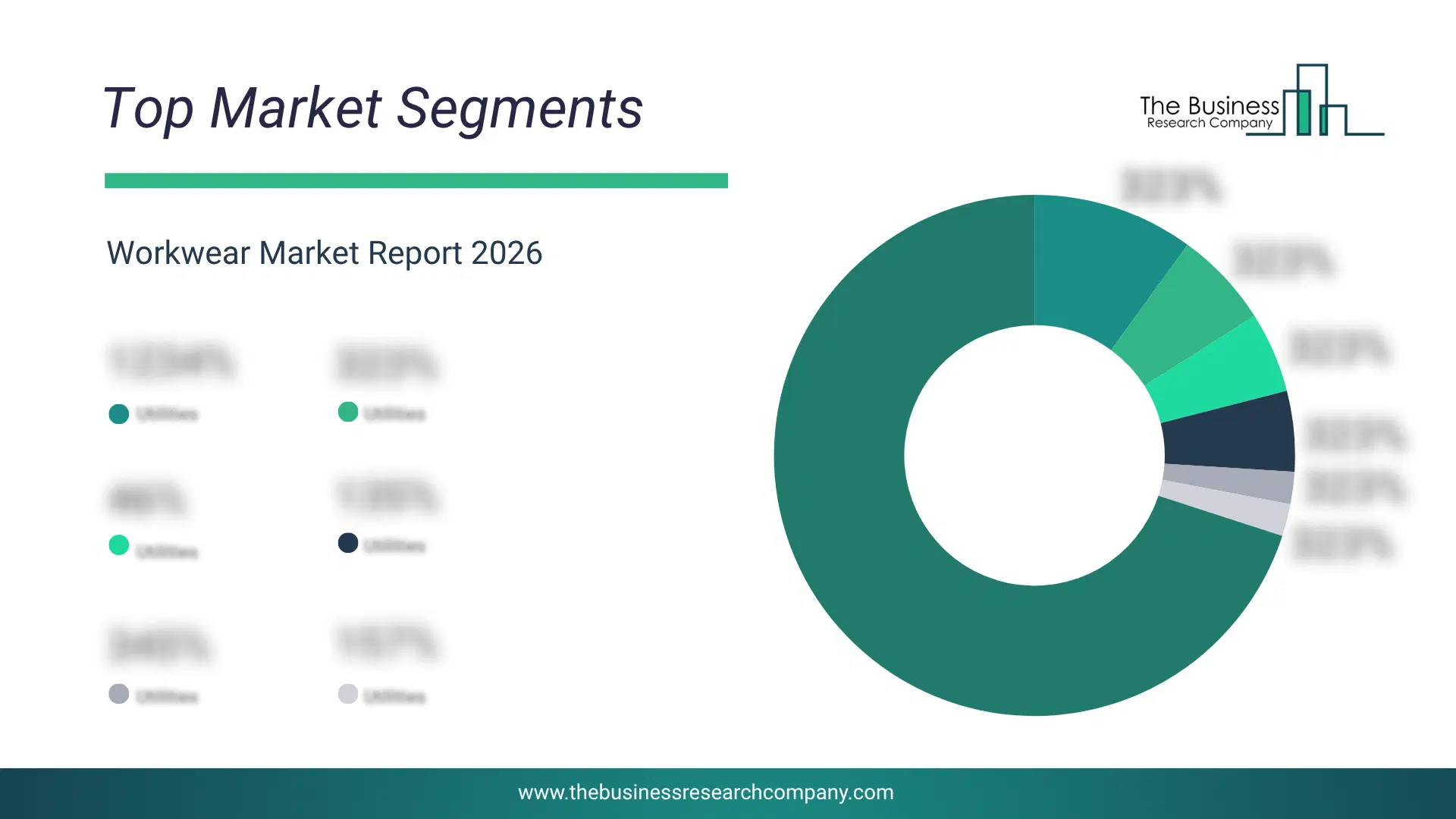
1) By Product: Topwear, Bottomwear, Coveralls 2) By Category: Men, Women, Unisex 3) By Distribution Channel: Wholesalers, Supermarkets And Hypermarkets, Specialty Stores, Online Platforms 4) By Application: Chemical, Power, Food And Beverage, Biological, Other Applications 5) By End Use: Construction, Oil And Gas, Chemicals, Healthcare, Other End Users Subsegments: 1) By Topwear: T-Shirts, Shirts, Jackets, Sweaters 2) By Bottomwear: Trousers, Shorts, Skirts, Overalls 3) By Coveralls: Disposable Coveralls, Chemical-Resistant Coveralls, Flame-Resistant CoverallsWhat Is The Driver Of The Workwear Market?
The increase in the number of industrial accidents is expected to propel the growth of the workwear market going forward. Industrial accidents refer to unexpected events in the workplace that cause harm or death, including fatal work injuries. The increase in industrial accidents partially occurred due to improper worker safety management, insufficient training, and inadequate safety measures, which fail to protect workers and mitigate risks effectively. Workwear helps to prevent industrial accidents by providing essential protection against hazards, reducing the risk of injuries, and improving overall safety compliance. For instance, in November 2024, according to the US Bureau of Labor Statistics (BLS), a US-based federal government agency responsible for producing essential labor market and workplace safety data, private industry employers reported about 2.6 million nonfatal workplace injuries and illnesses in 2023. Therefore, the increase in industrial accidents is driving the growth of the workwear industry.Key Players In The Global Workwear Market
Major companies operating in the workwear market are Honeywell International Inc, Aramark Corporation, VF Corporation, Portwest LLC, Williamson-Dickie Manufacturing Co LLC, Mascot International A/S, Carhartt Inc, Duluth Trading Company, Sioen Industries NV, Delta Plus Group, Hultafors Group AB, Engelbert Strauss Ltd, Workwear Group Pty Ltd, Lakeland Industries Inc, Fristads AB, Wearwell Ltd, RefrigiWear Inc, Berne Apparel, Hejco Workwear, Alsico Group, FlexiTog, Harveys Workwear, Ben Davis Inc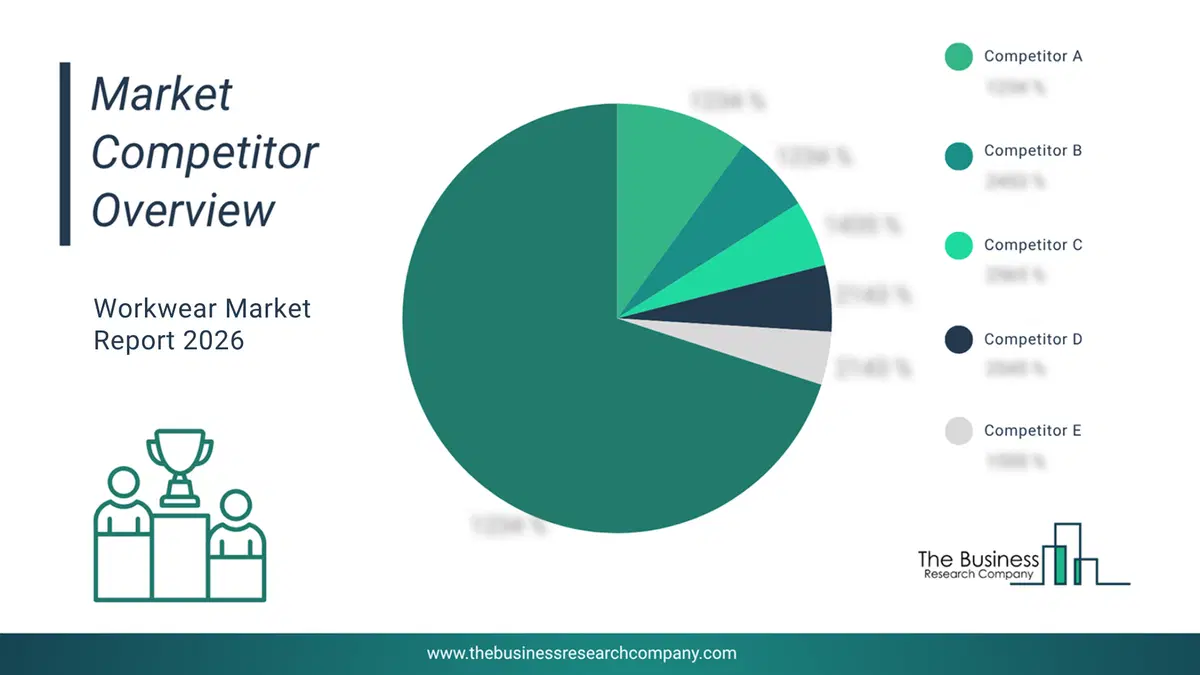
This chart is for illustrative purposes; the full report includes a detailed competitor analysis and comprehensive overview of the top 10 companies in the market.
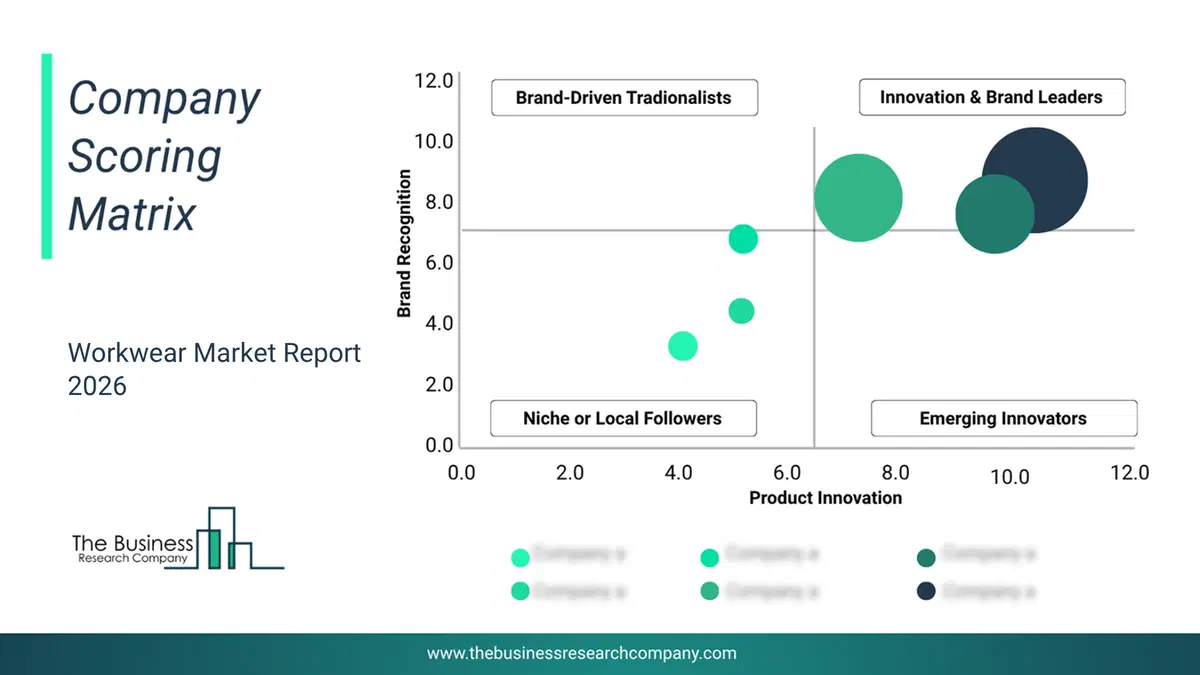
This chart maps companies by product innovation and brand strength, with bubble size indicating relative revenue, helping identify market leaders, challengers, and niche players. This is an illustrative chart; the full report provides a complete and accurate competitive analysis.
Global Workwear Market Trends and Insights
Major companies operating in the workwear market are focusing on developing sustainable protective apparel such as high-visibility workwear to enhance worker safety, durability, and environmental performance. High-visibility workwear are protective garments designed using reflective materials and fluorescent fabrics to improve wearer visibility in hazardous or low-light environments, enabling capabilities such as regulatory compliance, accident risk reduction, and enhanced worker recognition. For instance, in January 2024, PULSAR Workwear, a UK-based protective clothing manufacturer, launched the Life Collection, a high-visibility workwear range designed to deliver certified worker protection while reducing environmental impact, featuring garments manufactured using recycled polyester fabrics, compliance with EN ISO 20471 visibility standards, and durable weather-resistant construction. The Life Collection improves workplace safety and sustainability by combining certified high-visibility performance with lower material impact and extended garment lifespan.What Are Latest Mergers And Acquisitions In The Workwear Market?
In June 2023, Portwest, an Ireland-based clothing manufacturing company, acquired IFR Workwear Inc. for an undisclosed amount. Through this acquisition, Portwest aims to enhance its flame-resistant protective clothing portfolio and expand its North American presence, leveraging IFR's brand and distribution to ensure continued growth and innovation in safety wear. IFR Workwear Inc. is a Canada-based company offering premium workwear for industrial and occupational use.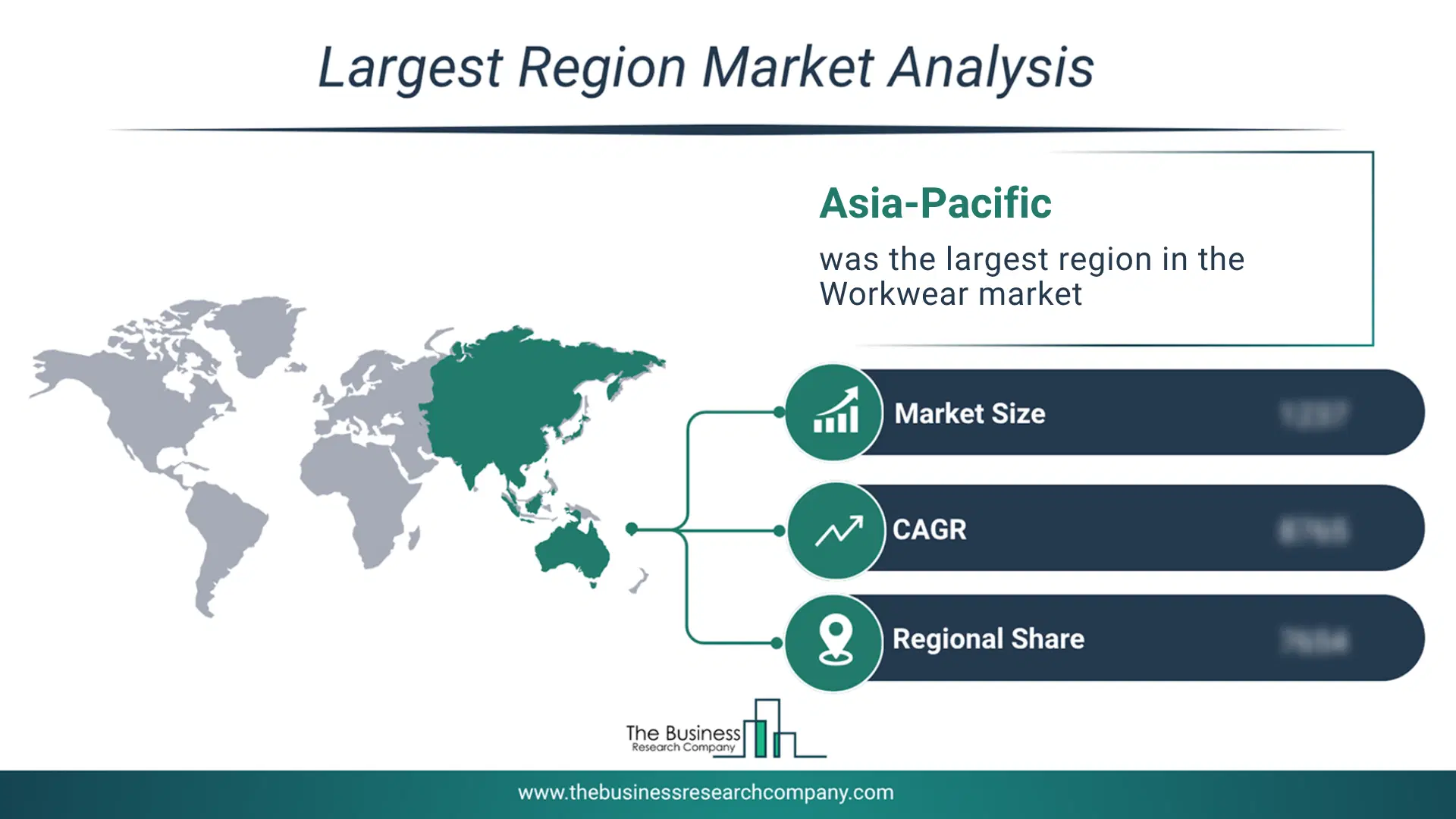
Regional Outlook
Asia-Pacific was the largest region in the workwear market in 2025. Asia-Pacific is expected to be the fastest-growing region in the forecast period. The regions covered in this market report are Asia-Pacific, South East Asia, Western Europe, Eastern Europe, North America, South America, Middle East, Africa. The countries covered in this market report are Australia, Brazil, China, France, Germany, India, Indonesia, Japan, Taiwan, Russia, South Korea, UK, USA, Canada, Italy, Spain.What Defines the Workwear Market?
The workwear market consists of sales of protective clothing, work pants, uniforms, safety shoes, and industrial gloves. Values in this market are ‘factory gate’ values, that is, the value of goods sold by the manufacturers or creators of the goods, whether to other entities (including downstream manufacturers, wholesalers, distributors, and retailers) or directly to end customers. The value of goods in this market includes related services sold by the creators of the goods.How is Market Value Defined and Measured?
The market value is defined as the revenues that enterprises gain from the sale of goods and/or services within the specified market and geography through sales, grants, or donations in terms of the currency (in USD unless otherwise specified). The revenues for a specified geography are consumption values that are revenues generated by organizations in the specified geography within the market, irrespective of where they are produced. It does not include revenues from resales along the supply chain, either further along the supply chain or as part of other products.
This chart presents market attractiveness based on a quantitative evaluation of growth, competition, strategic alignment, and risk, offering a clear view of opportunity areas for decision-making. This chart is for illustrative purposes; the full report contains the complete analysis.

This chart highlights the Total Addressable Market (TAM) by estimating the maximum revenue opportunity using an assumption-driven approach, supporting strategic planning and opportunity sizing across markets. The chart is illustrative; the full report provides a more comprehensive analysis.
What Key Data and Analysis Are Included in the Workwear Market Report 2026?
The workwear market research report is one of a series of new reports from The Business Research Company that provides market statistics, including Market Report 2026?global market size, regional shares, competitors with the market share, detailed market segments, market trends and opportunities, and any further data you may need to thrive in the workwear Market Report 2026? The market research report delivers a complete perspective of everything you need, with an in-depth analysis of the current and future state of the Market Report 2026?Workwear Market Report Forecast Analysis
| Report Attribute | Details |
|---|---|
| Market Size Value In 2026 | $24.05 billion |
| Revenue Forecast In 2030 | $31.63 billion |
| Growth Rate | CAGR of 7.4% from 2026 to 2030 |
| Base Year For Estimation | 2025 |
| Actual Estimates/Historical Data | 2020-2025 |
| Forecast Period | 2026 - 2030 |
| Market Representation | Revenue in USD Billion and CAGR from 2026 to 2030 |
| Segments Covered | Product, Category, Distribution Channel, Application, End Use |
| Regional Scope | Asia-Pacific, Western Europe, Eastern Europe, North America, South America, Middle East, Africa |
| Country Scope | The countries covered in the report are Australia, Brazil, China, France, Germany, India, Indonesia, Japan, Taiwan, Russia, South Korea, UK, USA, Canada, Italy, Spain. |
| Key Companies Profiled | Honeywell International Inc, Aramark Corporation, VF Corporation, Portwest LLC, Williamson-Dickie Manufacturing Co LLC, Mascot International A/S, Carhartt Inc, Duluth Trading Company, Sioen Industries NV, Delta Plus Group, Hultafors Group AB, Engelbert Strauss Ltd, Workwear Group Pty Ltd, Lakeland Industries Inc, Fristads AB, Wearwell Ltd, RefrigiWear Inc, Berne Apparel, Hejco Workwear, Alsico Group, FlexiTog, Harveys Workwear, Ben Davis Inc |
| Customization Scope | Request for Customization |
| Pricing And Purchase Options | Explore Purchase Options |