

Apparel Re-Commerce Market Report 2026
Global Outlook – By Product Type (Clothing And Garments, Footwear, Accessories, Handbags, Other Product Type), By Business Model (Peer-To-Peer (C2C), Business-To-Consumer (B2C)), By Price Range (Premium Or Designer, Mid-Range, Affordable Or Value), By Distribution Channel (Online Platforms, Offline Stores), By End User (Adult, Kids) – Market Size, Trends, Strategies, and Forecast to 2030
Apparel Re-Commerce Market Overview
• Apparel Re-Commerce market size has reached to $121.71 billion in 2025 • Expected to grow to $368.77 billion in 2030 at a compound annual growth rate (CAGR) of 24.8% • Growth Driver: Rising Demand For Second-hand And Pre-owned Apparel Driving The Growth Of The Market Due To Increasing Consumer Preference For Sustainable And Affordable Fashion • Market Trend: Expansion of AI?Enhanced Discovery Tools to Improve Pricing Transparency and Inventory Turnover • North America was the largest region in 2025 and Asia-Pacific is the fastest growing region.What Is Covered Under Apparel Re-Commerce Market?
Apparel re-commerce refers to the buying and selling of pre-owned clothing through organized resale channels. It extends the life of garments by enabling their reuse instead of disposal. This model supports sustainable consumption while offering affordable fashion options. The main product type of apparel re-commerce includes clothing and garments, footwear, accessories, handbags, and others. Clothing and garments refer to wearable items designed to cover the body, providing comfort, protection, and style for everyday use. The various business models such as peer-to-peer (C2C) and business-to-consumer (B2C). The price ranges including premium or designer, mid-range, and affordable or value. There are distribution channels including online platforms and offline stores and the key end users including adults and kids.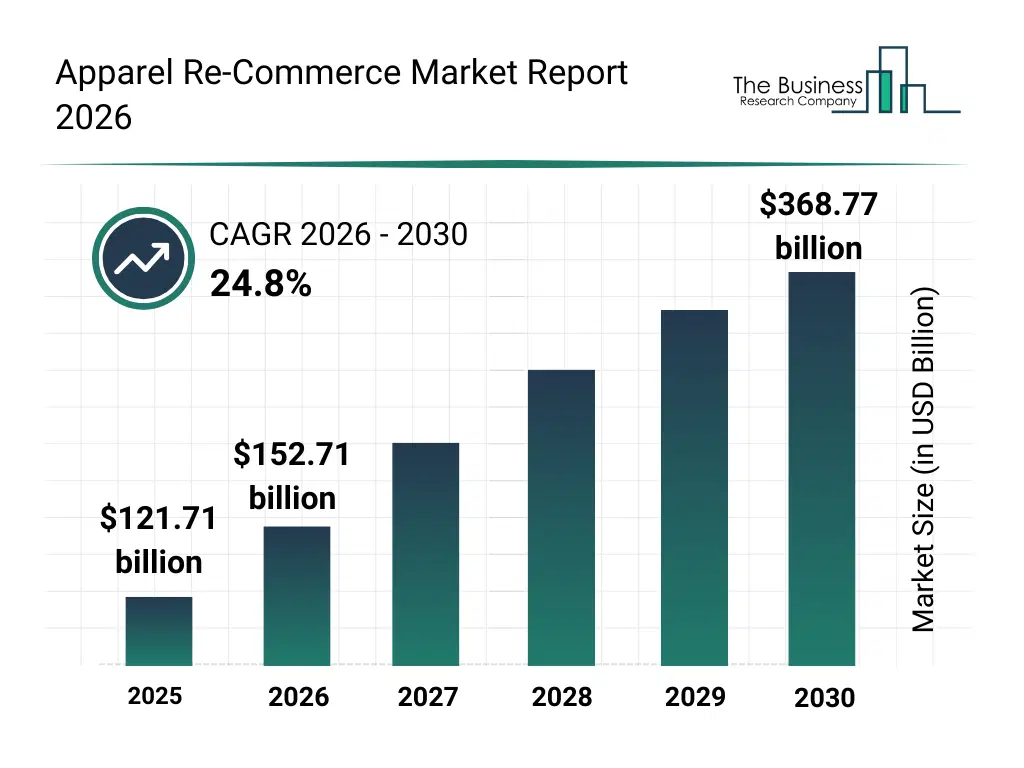
What Is The Apparel Re-Commerce Market Size and Share 2026?
The apparel re-commerce market size has grown exponentially in recent years. It will grow from $121.71 billion in 2025 to $152.71 billion in 2026 at a compound annual growth rate (CAGR) of 25.1%. The growth in the historic period can be attributed to growing consumer awareness about sustainability, the rising popularity of affordable fashion, the increasing adoption of online resale platforms, the growing influence of social media and fashion communities, and the rising demand for unique and vintage apparel.What Is The Apparel Re-Commerce Market Growth Forecast?
The apparel re-commerce market size is expected to see exponential growth in the next few years. It will grow to $368.77 billion in 2030 at a compound annual growth rate (CAGR) of 24.8%. The growth in the forecast period can be attributed to increasing regulatory support for the circular economy, expansion in smartphone and internet usage, rising collaborations between brands and re-commerce platforms, growing environmental regulations and sustainability mandates, and rising investments in re-commerce logistics and operations. Major trends in the forecast period include technology advancements in virtual try-on and AI recommendations, innovations in mobile-first resale apps, developments in omnichannel resale models, research and developments in sustainable fashion certifications, and advancements in subscription-based and community-driven resale platforms.
Global Apparel Re-Commerce Market Segmentation
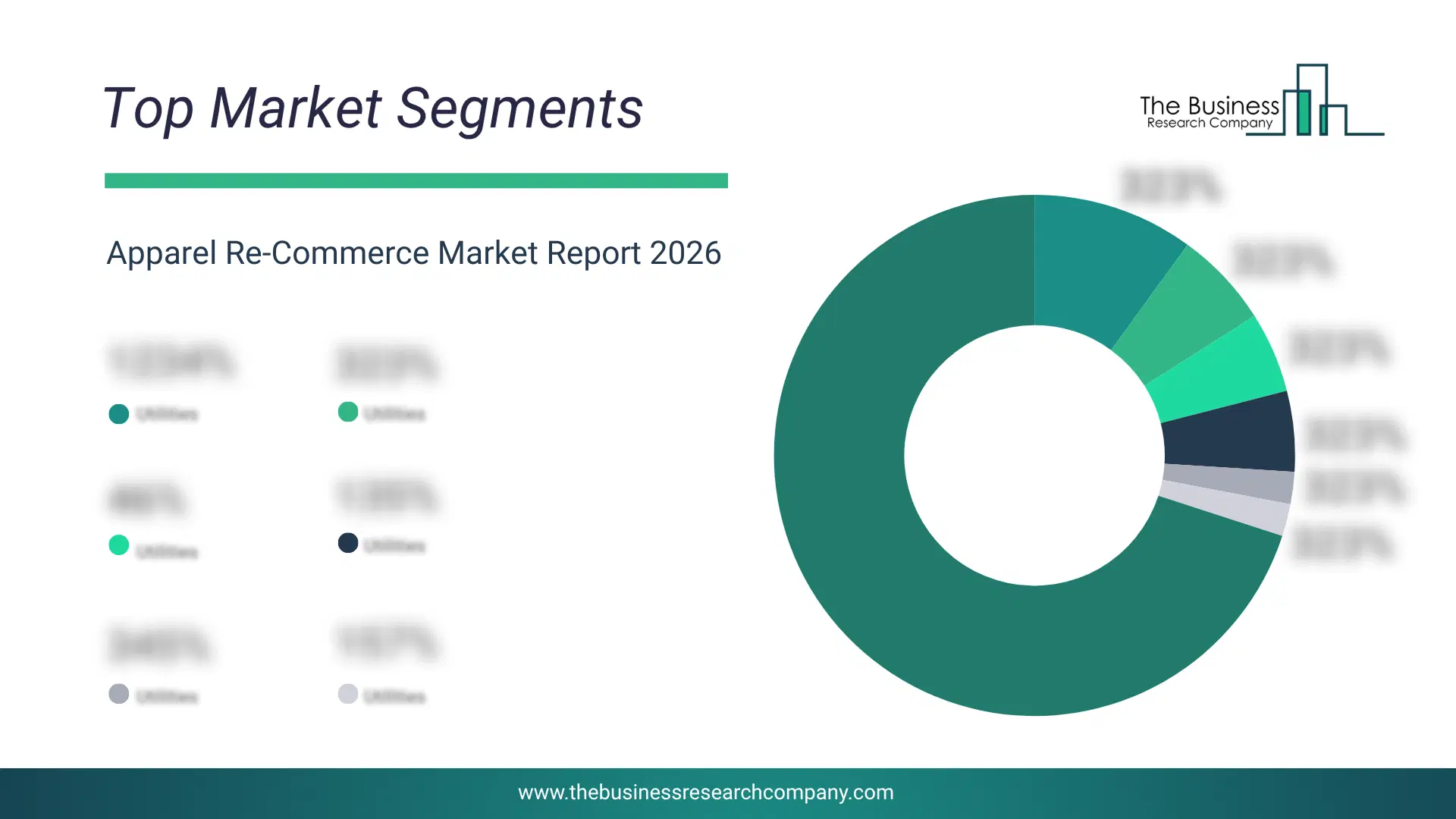
1) By Product Type: Clothing And Garments, Footwear, Accessories, Handbags, Other Product Type 2) By Business Model: Peer-To-Peer (C2C), Business-To-Consumer (B2C) 3) By Price Range: Premium Or Designer, Mid-Range, Affordable Or Value 4) By Distribution Channel: Online Platforms, Offline Stores 5) By End User: Adult, Kids Subsegments: 1) By Clothing And Garments: Casual Wear, Formal Wear, Outerwear, Sportswear, Ethnic Wear 2) By Footwear: Athletic Shoes, Casual Shoes, Formal Shoes, Boots, Sandals 3) By Accessories: Belts, Scarves, Hats, Sunglasses, Jewelry 4) By Handbags: Tote Bags, Shoulder Bags, Crossbody Bags, Clutches, Backpacks 5) By Other Product Type: Watches, Small Leather Goods, Travel Goods, Fashion Collectibles, Limited Edition ItemsWhat Is The Driver Of The Apparel Re-Commerce Market?
The rising demand for second‑hand and pre‑owned apparel is expected to propel the growth of the apparel re‑commerce market going forward. Second‑hand and pre‑owned apparel refers to previously owned clothing that consumers buy, sell, or trade through resale platforms, thrift stores, or online marketplaces. Demand for second‑hand and pre‑owned apparel is rising as more consumers seek affordable and sustainable fashion alternatives amid broader cost pressures and heightened environmental awareness. Apparel re‑commerce supports second‑hand and pre‑owned apparel by providing platforms and systems that make it easier for consumers to access and trade pre‑owned clothing securely and efficiently. For instance, in October 2025, according to the Ethical Consumer Research Association, a UK‑based nonprofit organization, the proportion of goods bought second‑hand increased from 16.74 % in 2024 to 17.98 % in 2025, demonstrating a comparative rise in consumer participation in purchasing used products. Therefore, the rising demand for second-hand and pre-owned apparel is driving the growth of the apparel re-commerce industry.Key Players In The Global Apparel Re-Commerce Market
Major companies operating in the apparel re-commerce market are H & M Hennes & Mauritz AB, ASOS Plc, Mercari Inc., Revolve Group Inc., Patagonia Inc., Vinted Inc., The RealReal Inc., Poshmark Inc., ThredUp Inc., Crossroads Trading Co. Inc., Winmark Corporation, Depop Limited, Buffalo Exchange Inc., Vestiaire Collective S.A.S., Beyond Retro Ltd., Grailed Inc., The Jay Group Ltd., Threadflip Inc., LePrix Inc., Goodfair Inc.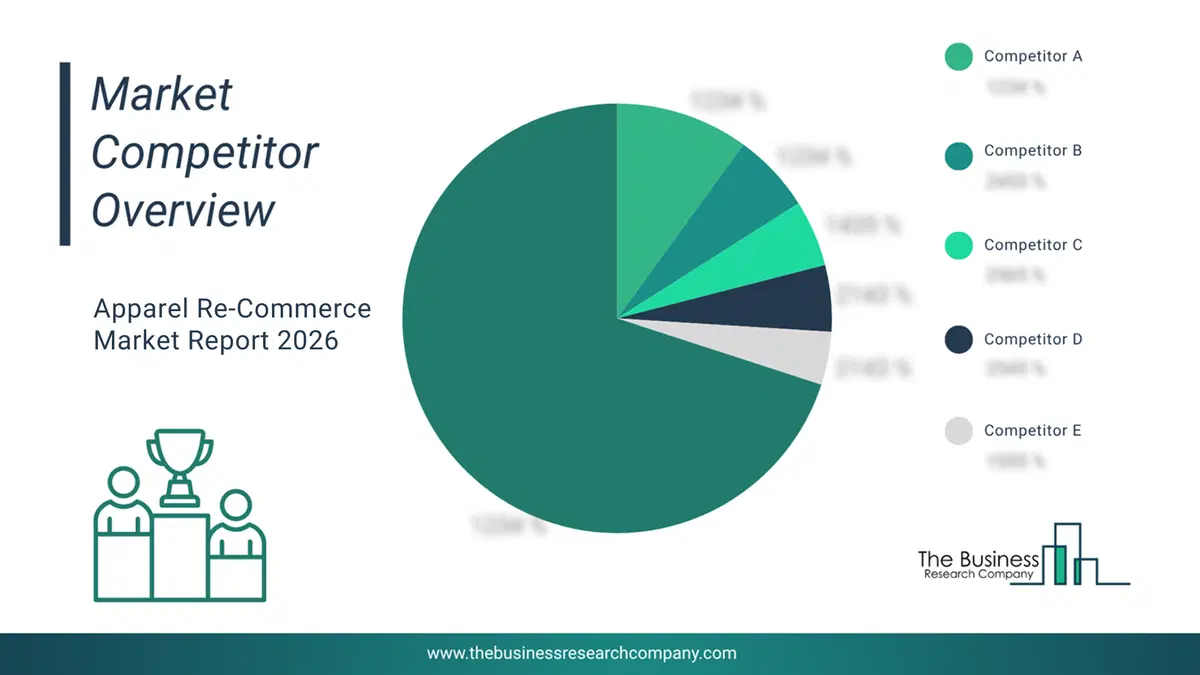
This chart is for illustrative purposes; the full report includes a detailed competitor analysis and comprehensive overview of the top 10 companies in the market.
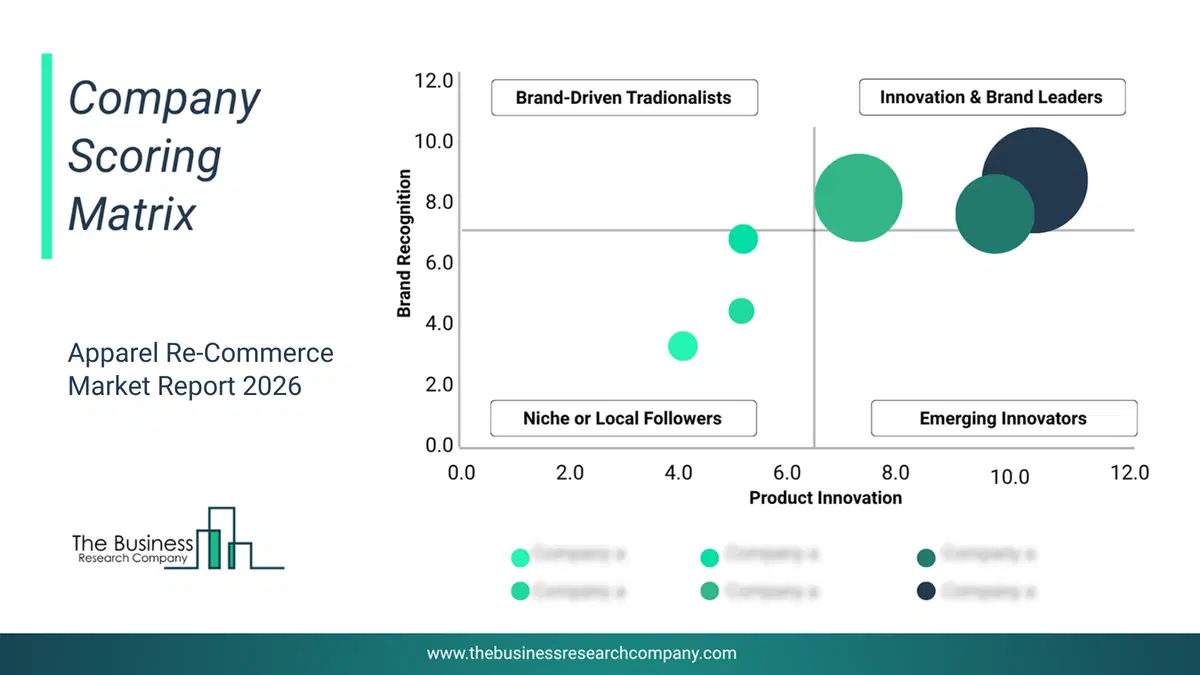
This chart maps companies by product innovation and brand strength, with bubble size indicating relative revenue, helping identify market leaders, challengers, and niche players. This is an illustrative chart; the full report provides a complete and accurate competitive analysis.
Global Apparel Re-Commerce Market Trends and Insights
Major companies operating in the apparel re-commerce market are focusing on developing technologically advanced products, such as AI-powered chatbots, to improve customer engagement, streamline shopping experiences, and drive personalized recommendations. AI-powered chatbots refer to intelligent conversational agents that use artificial intelligence to understand user queries, provide tailored product suggestions, and guide customers through purchase or resale processes efficiently. For instance, in August 2024, ThredUp Inc., a US‑based online resale platform, launched a suite of AI tools that include improved natural language search, image recognition for querying by photo, and an AI‑powered style chatbot to help shoppers discover and curate complete outfits on its resale marketplace, enhancing both search efficiency and user engagement while supporting scalable resale transactions. It enhances the user experience, accelerates purchase decisions, and increases accessibility to second-hand fashion, thereby expanding the reach and efficiency of apparel re-commerce.What Are Latest Mergers And Acquisitions In The Apparel Re-Commerce Market?
In August 2024, Trove Recommerce Inc., a US‑based provider of resale and trade‑in software for fashion brands, acquired Recurate Inc. for an undisclosed amount. Through this acquisition, Trove aims to broaden its apparel re‑commerce offerings by incorporating Recurate’s peer‑to‑peer resale expertise, Shopify integration network, and operational capabilities, enabling brands to launch and manage resale channels more effectively. Recurate Inc. is a US‑based provider of resale platform solutions and peer‑to‑peer marketplace integrations for apparel brands.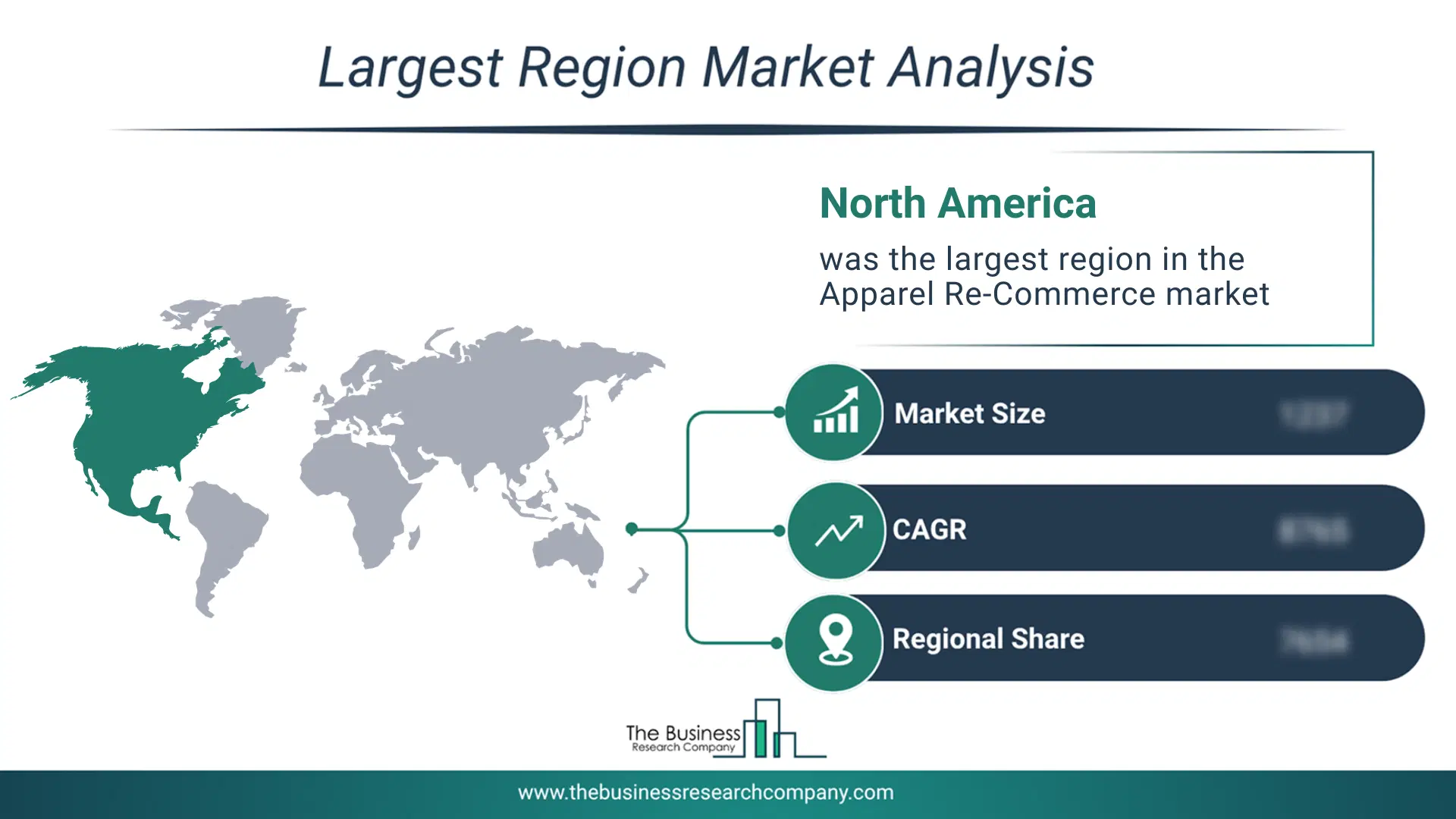
Regional Insights
North America was the largest region in the apparel re-commerce market in 2025. Asia-Pacific is expected to be the fastest-growing region in the forecast period. The regions covered in this market report are Asia-Pacific, South East Asia, Western Europe, Eastern Europe, North America, South America, Middle East, Africa. The countries covered in this market report are Australia, Brazil, China, France, Germany, India, Indonesia, Japan, Taiwan, Russia, South Korea, UK, USA, Canada, Italy, Spain.What Defines the Apparel Re-Commerce Market?
The apparel re-commerce market includes revenues earned by providing services such as pre-owned apparel resale services, product authentication and verification services, refurbishment and quality restoration services, consignment and peer-to-peer selling services, logistics and reverse supply chain services, inventory management services, and digital marketplace facilitation services. The market value includes the value of related goods sold by the service provider or included within the service offering. Only goods and services traded between entities or sold to end consumers are included.How is Market Value Defined and Measured?
The market value is defined as the revenues that enterprises gain from the sale of goods and/or services within the specified market and geography through sales, grants, or donations in terms of the currency (in USD unless otherwise specified). The revenues for a specified geography are consumption values that are revenues generated by organizations in the specified geography within the market, irrespective of where they are produced. It does not include revenues from resales along the supply chain, either further along the supply chain or as part of other products.
This chart presents market attractiveness based on a quantitative evaluation of growth, competition, strategic alignment, and risk, offering a clear view of opportunity areas for decision-making. This chart is for illustrative purposes; the full report contains the complete analysis.

This chart highlights the Total Addressable Market (TAM) by estimating the maximum revenue opportunity using an assumption-driven approach, supporting strategic planning and opportunity sizing across markets. The chart is illustrative; the full report provides a more comprehensive analysis.
What Key Data and Analysis Are Included in the Apparel Re-Commerce Market Report 2026?
The apparel re-commerce market research report is one of a series of new reports from The Business Research Company that provides market statistics, including industry global market size, regional shares, competitors with the market share, detailed market segments, market trends and opportunities, and any further data you may need to thrive in the apparel re-commerce industry. The market research report delivers a complete perspective of everything you need, with an in-depth analysis of the current and future state of the industry.Apparel Re-Commerce Market Report Forecast Analysis
| Report Attribute | Details |
|---|---|
| Market Size Value In 2026 | $152.71 billion |
| Revenue Forecast In 2030 | $368.77 billion |
| Growth Rate | CAGR of 25.1% from 2026 to 2030 |
| Base Year For Estimation | 2025 |
| Actual Estimates/Historical Data | 2020-2025 |
| Forecast Period | 2026 - 2030 |
| Market Representation | Revenue in USD Billion and CAGR from 2026 to 2030 |
| Segments Covered | Product Type, Business Model, Price Range, Distribution Channel, End User |
| Regional Scope | Asia-Pacific, Western Europe, Eastern Europe, North America, South America, Middle East, Africa |
| Country Scope | The countries covered in the report are Australia, Brazil, China, France, Germany, India, Indonesia, Japan, Taiwan, Russia, South Korea, UK, USA, Canada, Italy, Spain. |
| Key Companies Profiled | H & M Hennes & Mauritz AB, ASOS Plc, Mercari Inc., Revolve Group Inc., Patagonia Inc., Vinted Inc., The RealReal Inc., Poshmark Inc., ThredUp Inc., Crossroads Trading Co. Inc., Winmark Corporation, Depop Limited, Buffalo Exchange Inc., Vestiaire Collective S.A.S., Beyond Retro Ltd., Grailed Inc., The Jay Group Ltd., Threadflip Inc., LePrix Inc., Goodfair Inc. |
| Customization Scope | Request for Customization |
| Pricing And Purchase Options | Explore Purchase Options |