
Biotech Collaborations Market Report 2026
Global Outlook – By Collaboration Type (Research And Development Collaborations, Licensing Agreements, Joint Ventures, Mergers Or Acquisitions, Other Collaborations), By Application (Drug Discovery, Clinical Research, Diagnostics, Therapeutics, Other Applications), By End User (Pharmaceutical Companies, Biotechnology Firms, Academic And Research Institutes, Other End-Users) – Market Size, Trends, Strategies, and Forecast to 2030
Biotech Collaborations Market Overview
• Biotech Collaborations market size has reached to $94.35 billion in 2025 • Expected to grow to $159.77 billion in 2030 at a compound annual growth rate (CAGR) of 11% • Growth Driver: Increasing Demand For Personalized Medicine Fueling The Growth Of The Market Due To Advancements In Genomics And Targeted Therapies • Market Trend: Innovative Partnerships Aim To Deliver More Effective And Cost-Efficient Therapies • North America was the largest region in 2025.What Is Covered Under Biotech Collaborations Market?
Biotech collaborations refer to strategic partnerships between biotechnology companies, research institutions, or other organizations aimed at jointly developing, researching, or commercializing biotechnological products and innovations. These collaborations enable the sharing of expertise, resources, and technologies to accelerate innovation, reduce risks, and bring advanced biotech solutions to market more efficiently. The main collaboration types of biotech collaborations are research and development collaborations, licensing agreements, joint ventures, mergers or acquisitions, and other collaborations. Research and development (R&D) collaborations refer to strategic partnerships between two or more organizations to jointly conduct scientific research and develop new products, technologies, or processes. These collaborations support various applications, including drug discovery, clinical research, diagnostics, therapeutics, and others, and cater to diverse end users such as pharmaceutical companies, biotechnology firms, academic and research institutes, and others.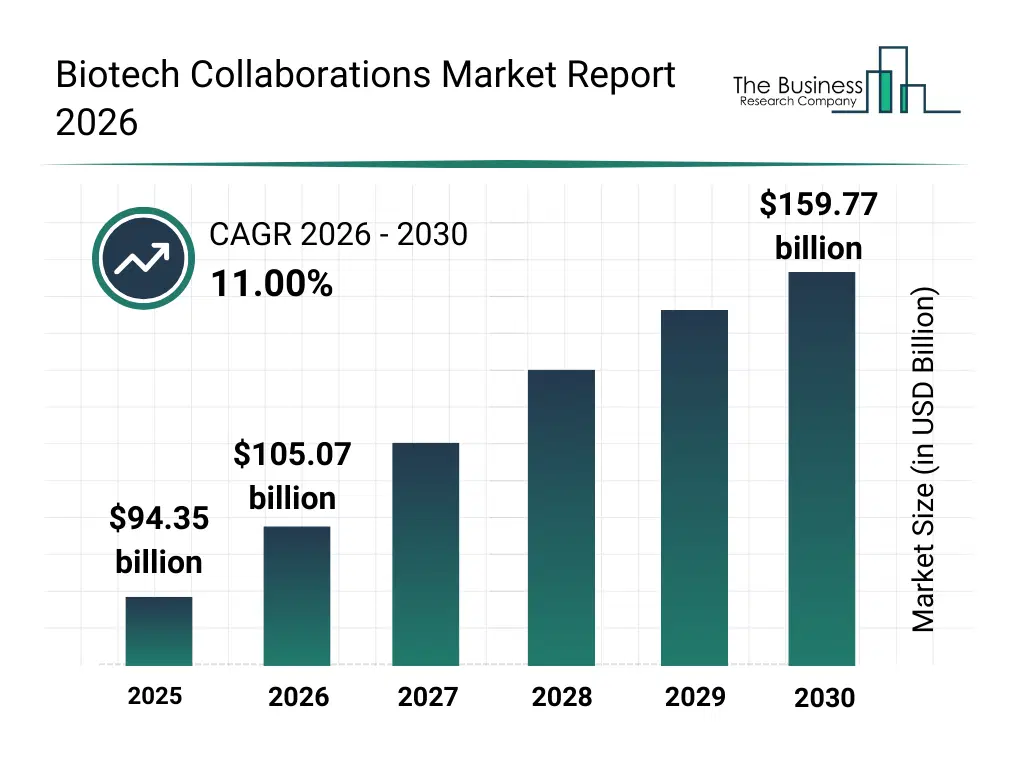
What Is The Biotech Collaborations Market Size and Share 2026?
The biotech collaborations market size has grown rapidly in recent years. It will grow from $94.35 billion in 2025 to $105.07 billion in 2026 at a compound annual growth rate (CAGR) of 11.4%. The growth in the historic period can be attributed to increasing complexity of drug development pipelines, rising costs of clinical trials, expansion of translational research initiatives, growth of venture-backed biotech startups, increased role of academic research.What Is The Biotech Collaborations Market Growth Forecast?
The biotech collaborations market size is expected to see rapid growth in the next few years. It will grow to $159.77 billion in 2030 at a compound annual growth rate (CAGR) of 11.0%. The growth in the forecast period can be attributed to increasing focus on precision medicine collaborations, rising adoption of data-driven drug discovery partnerships, expansion of public-private research programs, growing interest in platform-based biotech alliances, increasing globalization of clinical research. Major trends in the forecast period include increasing strategic r&d partnerships between biotech firms, rising use of licensing and co-development models, growing collaboration with academic research institutes, expansion of cross-border biotech alliances, enhanced focus on risk-sharing innovation.
Global Biotech Collaborations Market Segmentation
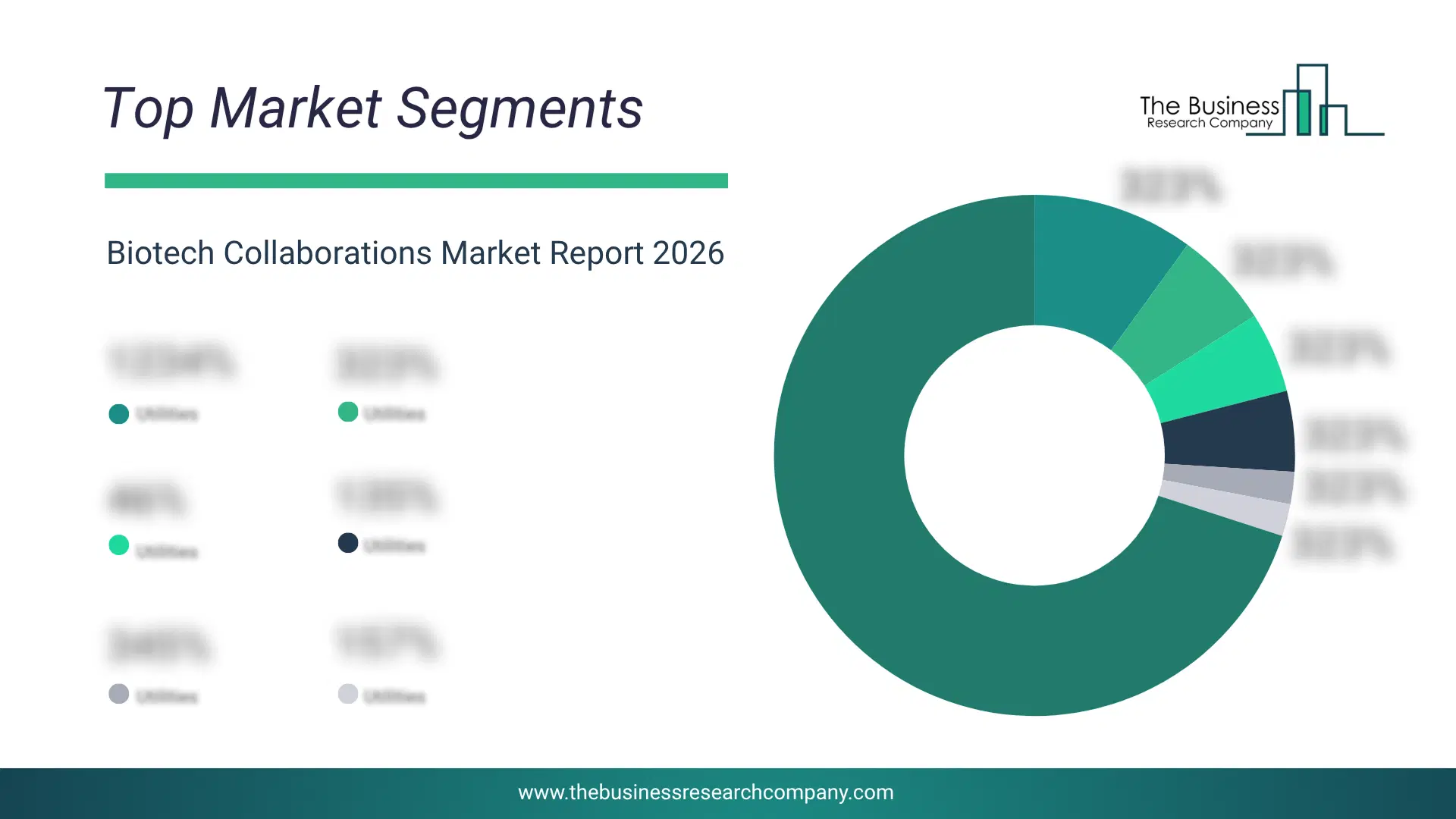
1) By Collaboration Type: Research And Development Collaborations, Licensing Agreements, Joint Ventures, Mergers Or Acquisitions, Other Collaborations 2) By Application: Drug Discovery, Clinical Research, Diagnostics, Therapeutics, Other Applications 3) By End User: Pharmaceutical Companies, Biotechnology Firms, Academic And Research Institutes, Other End-Users Subsegments: 1) By Research And Development Collaborations: Preclinical Research, Clinical Trials, Translational Research, Drug Discovery 2) By Licensing Agreements: Exclusive Licensing, Non Exclusive Licensing, In Licensing, Out Licensing 3) By Joint Ventures: Strategic Alliance, Co Development, Co Marketing, Technology Sharing 4) By Mergers Or Acquisitions: Horizontal Merger, Vertical Merger, Conglomerate Merger, Acquisition Of Assets 5) By Other Collaborations: Research Consortium, Public Private Partnership, Academic Collaboration, Contract ResearchWhat Is The Driver Of The Biotech Collaborations Market?
The increasing demand for personalized medicine is expected to propel the growth of the biotech collaborations market going forward. Personalized medicine refers to a medical approach that tailor’s treatment and prevention strategies to an individual’s unique genetic makeup, lifestyle, and environment. The increasing adoption of personalized medicine is primarily due to advancements in genomics, which enable precise identification of genetic variations and tailored treatments for individuals. Biotech collaborations accelerate the advancement of personalized medicine by combining expertise and innovative technologies, enabling the development of targeted therapies for individual patients. They reduce research timelines and improve success rates, enhancing treatment efficacy and patient outcomes. For instance, in February 2024, according to the Personalized Medicine Coalition (PMC), a US-based nonprofit organization, the U.S. Food and Drug Administration (FDA) approved 26 new personalized medicines in 2023, a significant increase from the 12 approved in 2022. Therefore, the increasing demand for personalized medicine is driving the growth of the biotech collaborations industry.Key Players In The Global Biotech Collaborations Market
Major companies operating in the biotech collaborations market are Johnson And Johnson, F. Hoffmann-La Roche Ltd., Merck And Co. Inc., Pfizer Inc., AbbVie Inc., Bayer AG, Sanofi S.A., Novartis AG, AstraZeneca plc, Bristol-Myers Squibb Company, GlaxoSmithKline plc, Eli Lilly And Company, Novo Nordisk A/S, Takeda Pharmaceutical Company Limited, Amgen Inc., Gilead Sciences Inc., C.H. Boehringer Sohn AG & Co. KG, CSL Limited., Regeneron Pharmaceuticals Inc., Vertex Pharmaceuticals Incorporated, Biogen Inc.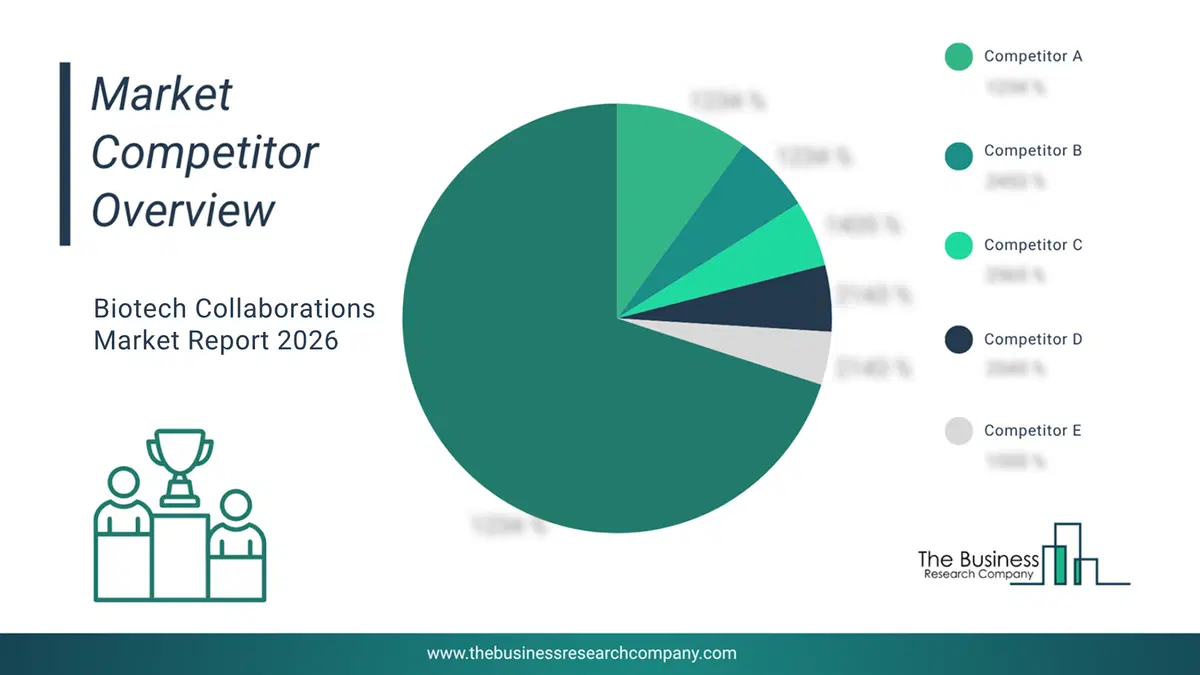
This chart is for illustrative purposes; the full report includes a detailed competitor analysis and comprehensive overview of the top 10 companies in the market.
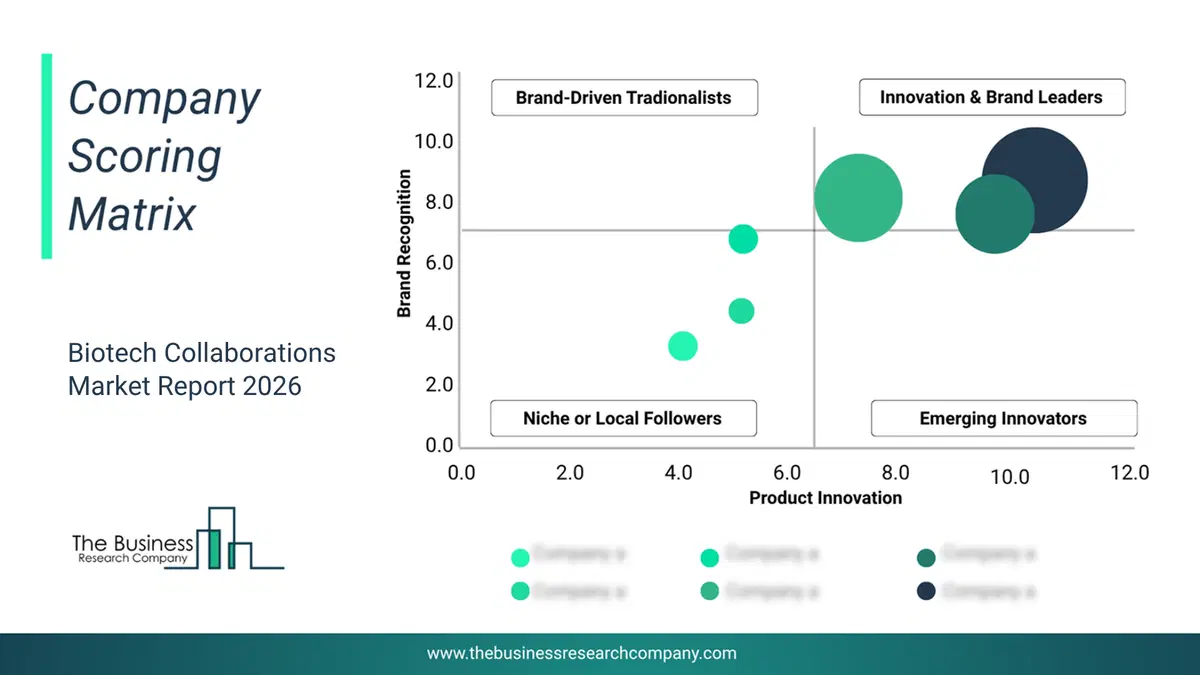
This chart maps companies by product innovation and brand strength, with bubble size indicating relative revenue, helping identify market leaders, challengers, and niche players. This is an illustrative chart; the full report provides a complete and accurate competitive analysis.
Global Biotech Collaborations Market Trends and Insights
Major companies operating in the biotech collaborations market are focusing on developing innovative solutions, such as artificial intelligence-driven drug discovery platforms, to accelerate the identification of novel therapeutics and improve research and development efficiency. Artificial intelligence-driven drug discovery platforms use advanced algorithms and machine learning to analyze biological data, predict drug-target interactions, and streamline the development of new therapeutics. For instance, in January 2025, Iktos S.A.S., a France-based biotechnology company, collaborated with Cube Biotech GmbH, a Germany-based biotechnology company, to develop novel small molecule agonists targeting the amylin receptor, a promising therapeutic target for cardiometabolic disorders, including obesity, diabetes, and metabolic dysfunction-associated steatotic hepatitis (MASH). This partnership leverages Iktos’ generative AI-driven drug discovery and robotic synthesis platform alongside Cube Biotech’s advanced NativeMP membrane protein technology, protein stabilization methods, and biophysical assay expertise. The collaboration seeks to accelerate drug discovery timelines, enhance success rates, and address challenging membrane protein targets more effectively, offering potential therapies that could be more efficient and cost-effective than existing treatments such as GLP-1 receptor agonists.What Are Latest Mergers And Acquisitions In The Biotech Collaborations Market?
In December 2023, Pfizer Inc., a US-based pharmaceutical industry company, acquired Seagen Inc. for $43 billion. With this acquisition, Pfizer aims to strengthen its oncology portfolio, expand its pipeline of targeted cancer therapies, and drive long-term revenue growth. Seagen Inc. is a US-based biopharmaceutical company that has forged strategic collaborations to advance its oncology pipeline.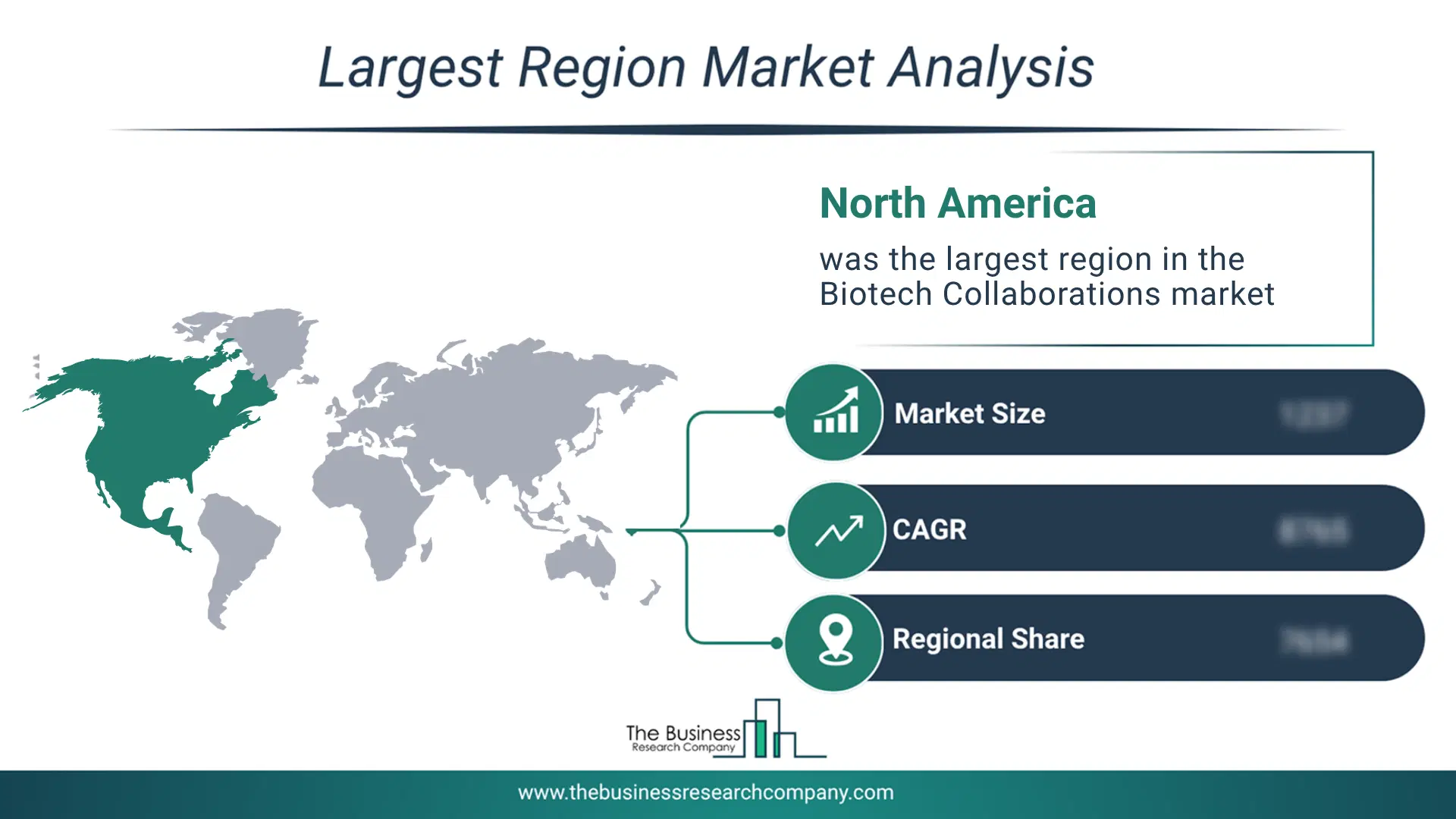
Regional Insights
North America was the largest region in the biotech collaborations market in 2025. The regions covered in this market report are Asia-Pacific, South East Asia, Western Europe, Eastern Europe, North America, South America, Middle East, Africa. The countries covered in this market report are Australia, Brazil, China, France, Germany, India, Indonesia, Japan, Taiwan, Russia, South Korea, UK, USA, Canada, Italy, Spain.What Defines the Biotech Collaborations Market?
The biotech collaborations market includes revenues earned by entities through clinical trial services, licensing and technology transfer, manufacturing and contract development, regulatory and consulting services, and bioinformatics and data analysis services. The market value includes the value of related goods sold by the service provider or included within the service offering. Only goods and services traded between entities or sold to end consumers are included.How is Market Value Defined and Measured?
The market value is defined as the revenues that enterprises gain from the sale of goods and/or services within the specified market and geography through sales, grants, or donations in terms of the currency (in USD unless otherwise specified). The revenues for a specified geography are consumption values that are revenues generated by organizations in the specified geography within the market, irrespective of where they are produced. It does not include revenues from resales along the supply chain, either further along the supply chain or as part of other products.
This chart presents market attractiveness based on a quantitative evaluation of growth, competition, strategic alignment, and risk, offering a clear view of opportunity areas for decision-making. This chart is for illustrative purposes; the full report contains the complete analysis.

This chart highlights the Total Addressable Market (TAM) by estimating the maximum revenue opportunity using an assumption-driven approach, supporting strategic planning and opportunity sizing across markets. The chart is illustrative; the full report provides a more comprehensive analysis.
What Key Data and Analysis Are Included in the Biotech Collaborations Market Report 2026?
The biotech collaborations market research report is one of a series of new reports from The Business Research Company that provides market statistics, including industry global market size, regional shares, competitors with the market share, detailed market segments, market trends and opportunities, and any further data you may need to thrive in the biotech collaborations industry. The market research report delivers a complete perspective of everything you need, with an in-depth analysis of the current and future state of the industry.Biotech Collaborations Market Report Forecast Analysis
| Report Attribute | Details |
|---|---|
| Market Size Value In 2026 | $105.07 billion |
| Revenue Forecast In 2030 | $159.77 billion |
| Growth Rate | CAGR of 11.4% from 2026 to 2030 |
| Base Year For Estimation | 2025 |
| Actual Estimates/Historical Data | 2020-2025 |
| Forecast Period | 2026 - 2030 |
| Market Representation | Revenue in USD Billion and CAGR from 2026 to 2030 |
| Segments Covered | Collaboration Type, Application, End User |
| Regional Scope | Asia-Pacific, Western Europe, Eastern Europe, North America, South America, Middle East, Africa |
| Country Scope | The countries covered in the report are Australia, Brazil, China, France, Germany, India, Indonesia, Japan, Taiwan, Russia, South Korea, UK, USA, Canada, Italy, Spain. |
| Key Companies Profiled | Johnson And Johnson, F. Hoffmann-La Roche Ltd., Merck And Co. Inc., Pfizer Inc., AbbVie Inc., Bayer AG, Sanofi S.A., Novartis AG, AstraZeneca plc, Bristol-Myers Squibb Company, GlaxoSmithKline plc, Eli Lilly And Company, Novo Nordisk A/S, Takeda Pharmaceutical Company Limited, Amgen Inc., Gilead Sciences Inc., C.H. Boehringer Sohn AG & Co. KG, CSL Limited., Regeneron Pharmaceuticals Inc., Vertex Pharmaceuticals Incorporated, Biogen Inc. |
| Customization Scope | Request for Customization |
| Pricing And Purchase Options | Explore Purchase Options |