
Chimeric Antibody Market Report 2026
Global Outlook – By Type Of Antibody (Immunoglobulin G Chimeric Antibodies, Fragment Antigen-Binding Chimeric Antibodies, Single-Chain Variable Fragment Chimeric Antibodies), By Manufacturing Process (Recombinant Deoxyribonucleic Acid (DNA) Technology, Hybridoma Technology, Phage Display Technology), By Mode Of Administration (Intravenous (IV) Administration, Subcutaneous Administration, Intramuscular Administration), By Application (Cancer Therapy, Autoimmune Diseases, Infectious Diseases, Transplant Rejection), By End User (Pharmaceutical Companies, Research Institutes, Clinics And Hospitals) – Market Size, Trends, Strategies, and Forecast to 2030
Chimeric Antibody Market Overview
• Chimeric Antibody market size has reached to $13.74 billion in 2025 • Expected to grow to $23.73 billion in 2030 at a compound annual growth rate (CAGR) of 11.5% • Growth Driver: Increasing Prevalence Of Cancer Fueling The Growth Of The Market Due To Rising Lifestyle-Related Risks • Market Trend: Targeted Immune Modulation Reduces Excessive Inflammatory Responses • North America was the largest region in 2025 and Asia-Pacific is the fastest growing region.Market Gains By 2030 – Top Opportunities By Segment
Market Gain identifies the most promising market opportunities by highlighting the segments or products expected to generate the highest incremental revenue growth over the next five years.
What Is Covered Under Chimeric Antibody Market?
Chimeric antibody refers to a laboratory-engineered monoclonal antibody that combines the variable (antigen-binding) region from a non-human species, usually a mouse, with the constant region of a human antibody. This design improves compatibility with the human immune system while maintaining high target specificity. The main types of chimeric antibody are immunoglobulin G (IgG) chimeric antibodies, fragment antigen-binding (Fab) chimeric antibodies, and single-chain variable fragment (ScFv) chimeric antibodies. Immunoglobulin G (IgG) chimeric antibodies are engineered by combining the variable region from one species with the constant region of human IgG to reduce immunogenicity while retaining antigen specificity. They are produced using various manufacturing processes such as recombinant deoxyribonucleic acid (DNA) technology, hybridoma technology, phage display technology, and transgenic technology, and are administered via different routes, including intravenous (IV), subcutaneous, and intramuscular administration. They are used in various applications such as cancer therapy, autoimmune diseases, infectious diseases, and transplant rejection, with key end users including pharmaceutical companies, research institutes, clinics and hospitals, and diagnostic laboratories.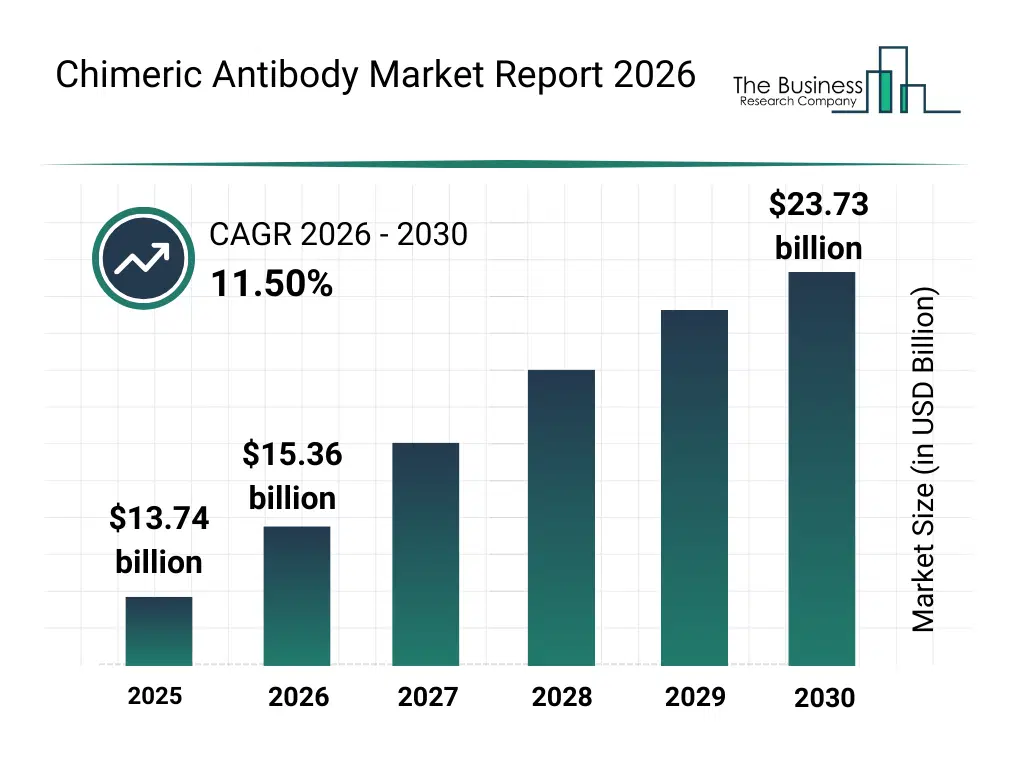
What Is The Chimeric Antibody Market Size and Share 2026?
The chimeric antibody market size has grown rapidly in recent years. It will grow from $13.74 billion in 2025 to $15.36 billion in 2026 at a compound annual growth rate (CAGR) of 11.8%. The growth in the historic period can be attributed to early success of monoclonal antibody therapies, reliance on murine antibody technologies, increasing cancer prevalence, growth in autoimmune disease incidence, expanding research in immunology.What Is The Chimeric Antibody Market Growth Forecast?
The chimeric antibody market size is expected to see rapid growth in the next few years. It will grow to $23.73 billion in 2030 at a compound annual growth rate (CAGR) of 11.5%. The growth in the forecast period can be attributed to advancement in antibody engineering techniques, rising approvals of biologic drugs, expansion of personalized medicine, increasing investment in biopharmaceutical r&d, growing clinical pipeline of chimeric antibodies. Major trends in the forecast period include rising adoption of chimeric antibodies in oncology therapies, increasing use in autoimmune and inflammatory disease treatment, growing demand for target-specific monoclonal antibody therapies, expansion of recombinant dna and phage display technologies, improved safety and reduced immunogenicity compared to murine antibodies.
Global Chimeric Antibody Market Segmentation
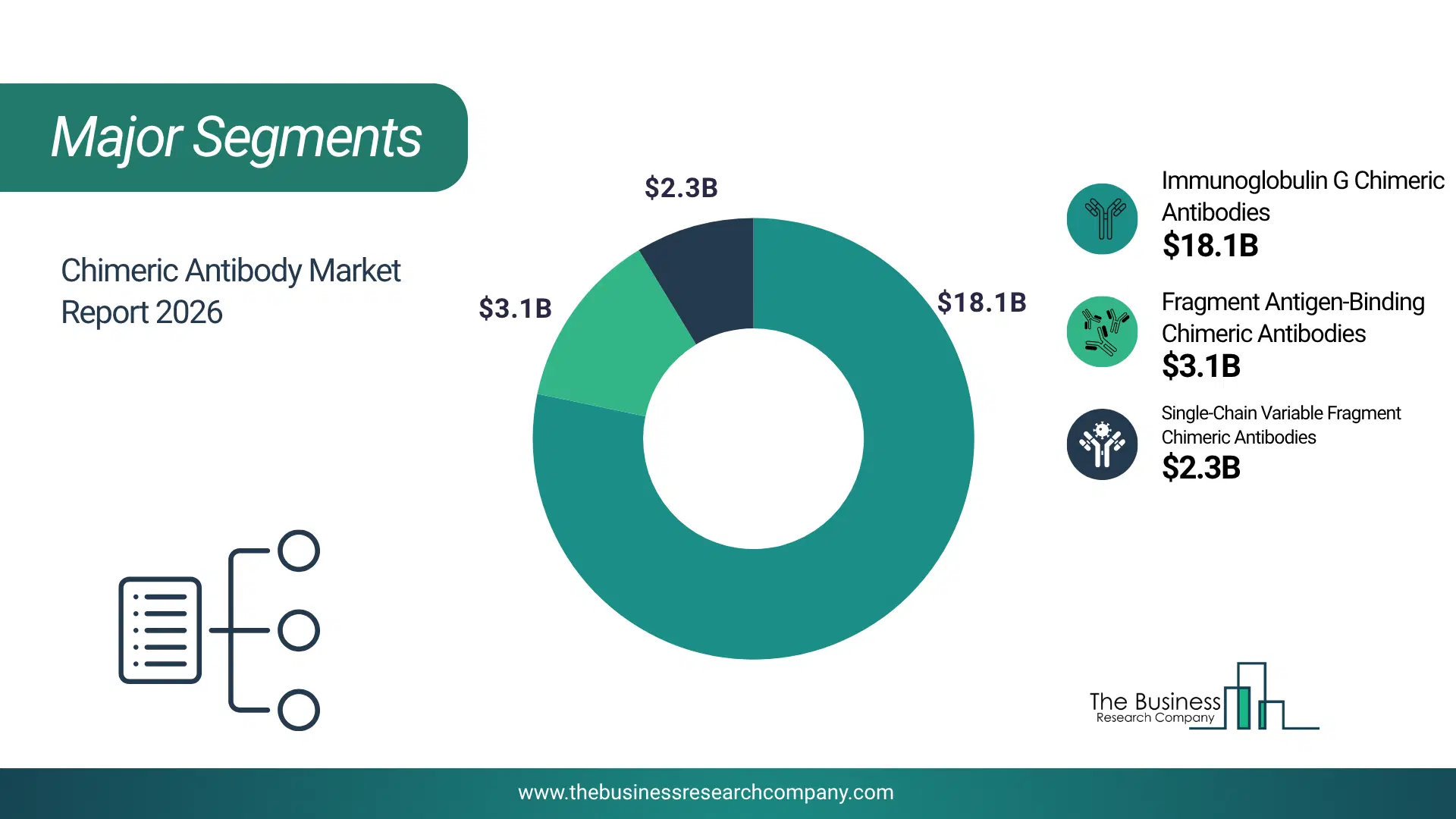
1) By Type Of Antibody: Immunoglobulin G Chimeric Antibodies, Fragment Antigen-Binding Chimeric Antibodies, Single-Chain Variable Fragment Chimeric Antibodies 2) By Manufacturing Process: Recombinant Deoxyribonucleic Acid (DNA) Technology, Hybridoma Technology, Phage Display Technology 3) By Mode Of Administration: Intravenous (IV) Administration, Subcutaneous Administration, Intramuscular Administration 4) By Application: Cancer Therapy, Autoimmune Diseases, Infectious Diseases, Transplant Rejection 5) By End User: Pharmaceutical Companies, Research Institutes, Clinics And Hospitals Subsegments: 1) By Immunoglobulin G Chimeric Antibodies: Full Length Immunoglobulin G (IgG), Engineered Immunoglobulin G 1 (IgG1), Engineered Immunoglobulin G4 (IgG4) 2) By Fragment Antigen-Binding Chimeric Antibodies: Bivalent Fragment Antigen-Binding (Fab) Fragments, Monovalent Fragment Antigen-Binding (Fab) Fragments, Conjugated Fragment Antigen-Binding (Fab) Fragments, Pegylated Fragment Antigen-Binding (Fab) Fragments 3) By Single-Chain Variable Fragment Chimeric Antibodies: Standard Single-Chain Fragment Variable, Tandem Single-Chain Fragment Variable, Bispecific Single-Chain Fragment Variable, Multivalent Single-Chain Fragment Variable The top segments in the chimeric antibody market will be: • Immunoglobulin G Chimeric Antibodies will reach $18.07 billion by 2030. • Fragment Antigen-Binding Chimeric Antibodies will reach $3.04 billion by 2030. • Single-Chain Variable Fragment Chimeric Antibodies will reach $2.23 billion by 2030.What Is The Driver Of The Chimeric Antibody Market?
The increasing prevalence of cancer is expected to propel the growth of the chimeric antibody market going forward. Prevalence of cancer refers to the total number of people, both newly diagnosed and previously diagnosed, who are alive with a history of cancer at a specific point in time. The prevalence of cancer is increasing due to lifestyle-related risks such as poor diet, smoking, alcohol consumption, and exposure to environmental pollutants, elevating the risk of developing various cancers. Chimeric antibodies enhance cancer treatment strategies by offering targeted therapies, making them effective against specific tumor cells. They reduce side effects by precisely attacking malignant cells, improving patient outcomes and treatment efficiency. For instance, in October 2025, according to National Health Service (NHS), a UK-based government health agency, there were 354,820 new cancer diagnoses in 2023, an average of 972 per day, which is 8,605 more than in 2022. Therefore, the increasing prevalence of cancer is driving the growth of the chimeric antibody industry.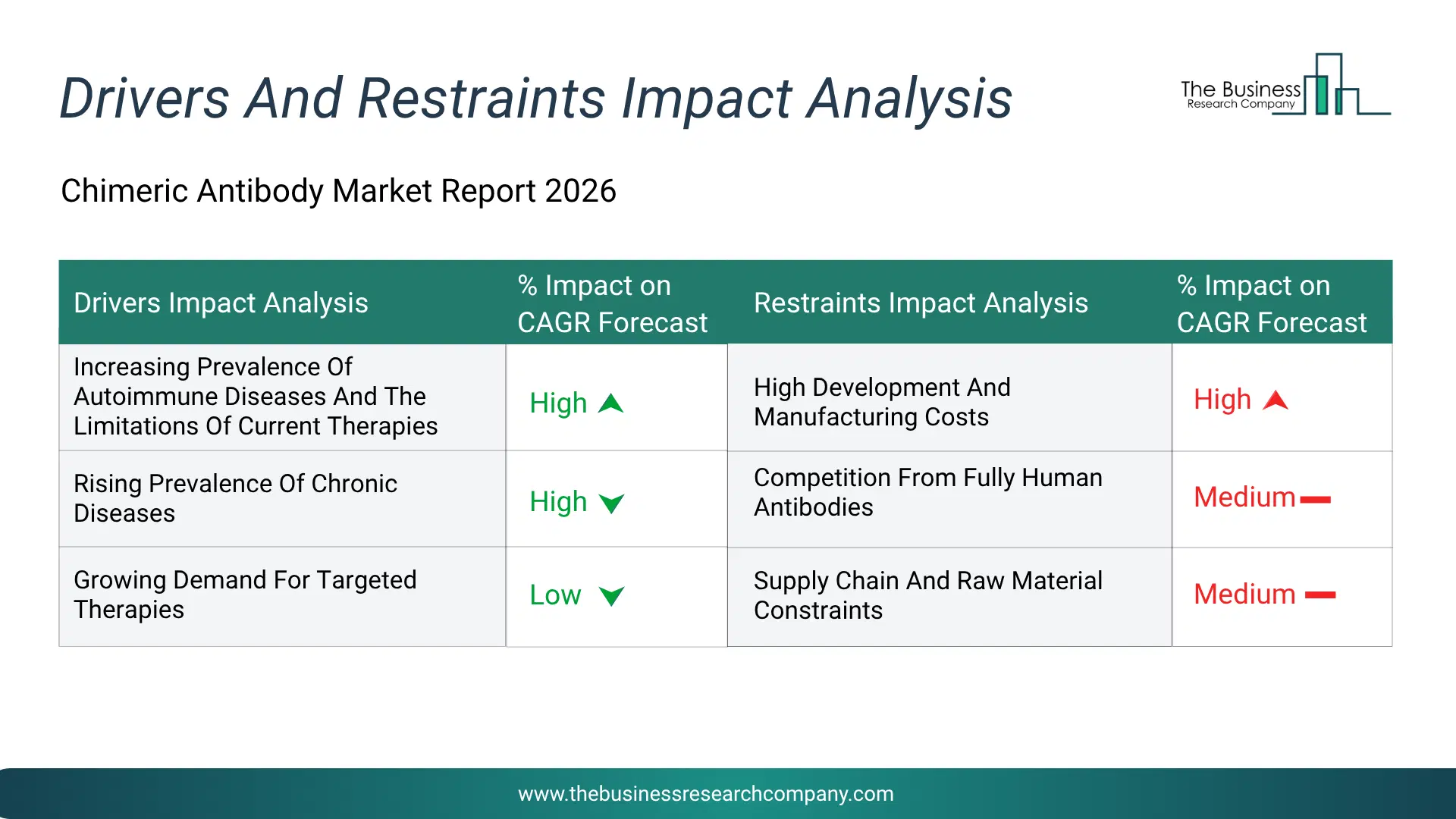
Infographic Chart Showing Key Market Drivers Analysis And Restraints For Chimeric Antibody Market
The chart presents an impact analysis of key drivers and restraints, quantifying their relative influence on the market's growth rate and helping assess the balance between growth enablers and limiting factors. This chart offers a high-level perspective; the full report contains more detailed insights.
How Will The Drivers Impact Growth In The Global Chimeric Antibody Market?
• Increasing Prevalence Of Autoimmune Diseases And The Limitations Of Current Therapies (High) – During the forecast period, the increasing prevalence of autoimmune diseases and the limitations of current therapies is expected to become a key growth driver for the chimeric antibody market by 2030. Traditional treatment options often provide limited efficacy and are associated with adverse side effects, prompting the need for more targeted and effective biologic therapies. Chimeric antibodies offer improved specificity and reduced off -target effects, making them highly suitable for managing complex autoimmune conditions. Pharmaceutical companies are therefore investing in the development of advanced antibody -based therapies to address unmet medical needs. This growing reliance on targeted biologics is reinforcing sustained market expansion. • Rising Prevalence Of Chronic Diseases (High) – During the forecast period, the rising prevalence of chronic diseases is expected to emerge as a major factor driving the expansion of the chimeric antibody market by 2030. Conditions such as cancer, cardiovascular diseases, and inflammatory disorders are increasing globally, creating significant demand for advanced therapeutic solutions. Chimeric antibodies play a crucial role in targeted treatment approaches, particularly in oncology and immunology. Continuous advancements in diagnostic technologies and early disease detection are further supporting the adoption of antibody-based therapies. • Growing Demand For Targeted Therapies (Low) – During the forecast period, the growing demand for targeted therapies is expected to act as a key growth catalyst for the chimeric antibody market by 2030. Precision medicine approaches are gaining traction as healthcare providers seek treatments that offer higher efficacy with minimal side effects. Chimeric antibodies enable selective targeting of disease-specific antigens, improving treatment outcomes and patient safety. Increasing investments in personalized medicine, along with advancements in biotechnology and genomics, are further accelerating the development and adoption of targeted biologics.How Will The Restraints Impact Growth In The Global Chimeric Antibody Market?
• High Development And Manufacturing Costs (High) – During the forecast period, the chimeric antibodies require sophisticated biotechnological processes, including recombinant dna engineering, cell line development, and large-scale bioreactor production, all of which significantly increase costs. The need for highly controlled environments, specialized facilities, and skilled personnel further adds to operational expenses. In addition, extensive preclinical studies and multi-phase clinical trials are necessary to ensure safety and efficacy, prolonging development timelines and increasing financial risk. These high upfront investments make it difficult for small and mid-sized companies to enter the market, limiting competition and innovation. Even after approval, manufacturing costs remain high due to stringent quality control and regulatory compliance requirements. This directly impacts pricing, making therapies expensive for healthcare systems and patients. As a result, adoption may be restricted in price-sensitive markets, particularly in developing regions. High costs also reduce profit margins for manufacturers when pricing pressures from payers and governments increase. Furthermore, biosimilar development, although cheaper than novel drugs, still involves considerable investment. Altogether, the cost burden slows down market expansion and limits accessibility. • Competition From Fully Human Antibodies (Medium) – During the forecast period, the fully human antibodies have emerged as a strong alternative to chimeric antibodies due to their lower immunogenicity and improved safety profiles. Since chimeric antibodies retain a portion of non-human (murine) components, they can trigger immune responses such as human anti-mouse antibody (hama) reactions in some patients. In contrast, fully human antibodies are better tolerated, leading to wider clinical preference among physicians and patients. Advances in technologies such as phage display and transgenic mice have accelerated the development of fully human antibodies, making them more accessible and commercially viable. Pharmaceutical companies are increasingly investing in these next-generation biologics, shifting focus away from chimeric formats. This reduces the pipeline growth and long-term demand for chimeric antibodies. Additionally, regulatory approvals and clinical guidelines often favor therapies with improved safety and efficacy profiles, further strengthening the position of fully human antibodies. As a result, chimeric antibodies face declining competitiveness in newer therapeutic areas. This technological shift acts as a significant restraint on market growth. • Supply Chain And Raw Material Constraints (Medium) – During the forecast period, the the production of chimeric antibodies depends heavily on a complex and sensitive supply chain involving biological raw materials, cell culture media, reagents, and specialized equipment. Any disruption in the availability or quality of these inputs can significantly delay production timelines. Many of these materials require cold-chain logistics and strict storage conditions, increasing the risk of transportation and handling issues. Global events such as pandemics, geopolitical tensions, or trade restrictions can further exacerbate supply shortages and increase costs. Dependence on a limited number of suppliers for critical inputs also creates vulnerabilities in the manufacturing process. Inconsistent supply can lead to production bottlenecks, affecting the ability of manufacturers to meet market demand. This is particularly critical for life-saving therapies where delays can impact patient outcomes. Additionally, fluctuations in raw material prices can increase overall production costs, reducing profitability. These supply chain challenges create uncertainty and operational inefficiencies, ultimately restraining market growth.Key Players In The Global Chimeric Antibody Market
Major companies operating in the chimeric antibody market are Pfizer Inc., Johnson & Johnson, F. Hoffmann-La Roche Ltd., AbbVie Inc., Sanofi S.A., Bristol-Myers Squibb Company, AstraZeneca PLC, Novartis AG, Amgen Inc., Merck KGaA, BioNTech SE, Regeneron Pharmaceuticals Inc., Biogen Inc.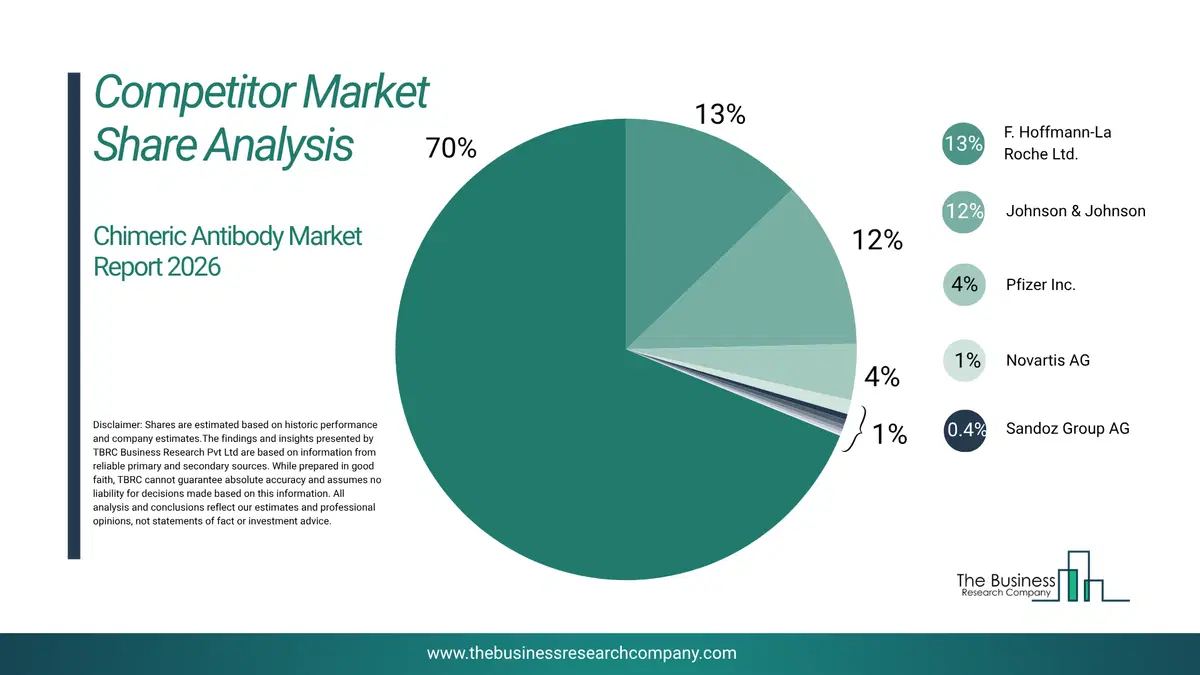
This chart is for illustrative purposes; the full report includes a detailed competitor analysis and comprehensive overview of the top 10 companies in the market.
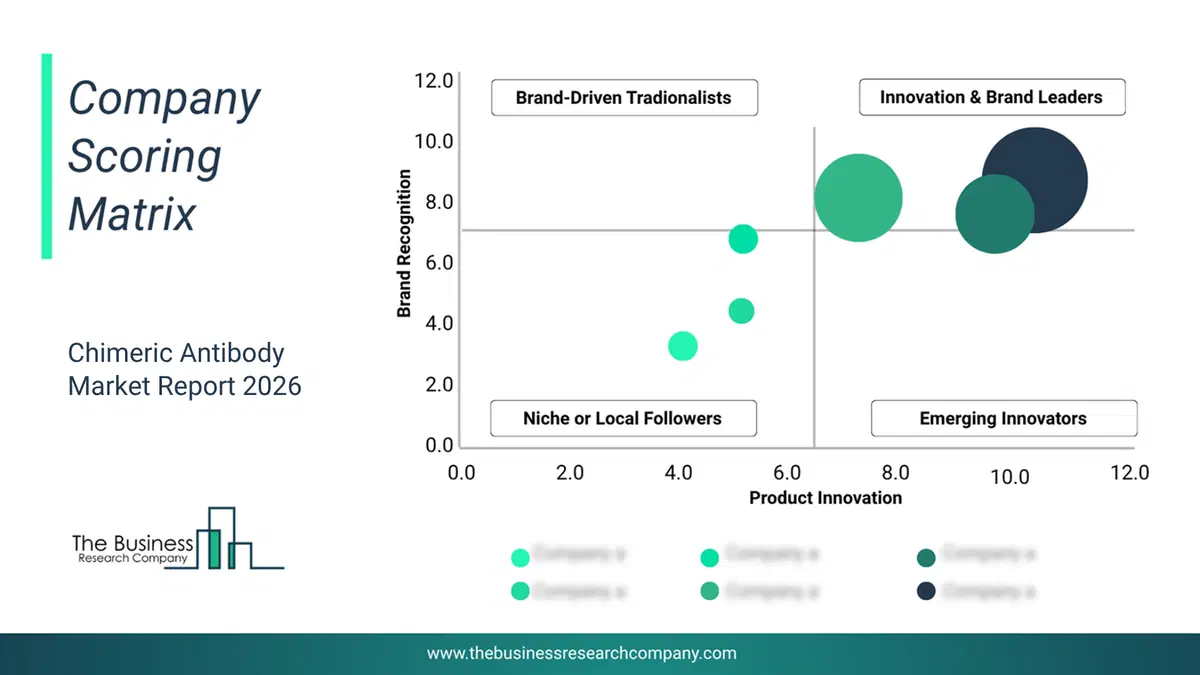
This chart maps companies by product innovation and brand strength, with bubble size indicating relative revenue, helping identify market leaders, challengers, and niche players. This is an illustrative chart; the full report provides a complete and accurate competitive analysis.
Global Chimeric Antibody Market Trends and Insights
Major companies operating in the chimeric antibody market are focusing on advanced therapies, such as monoclonal antibodies, to improve treatment outcomes, enhance patient survival rates, and address critical medical conditions. Monoclonal antibodies refer to laboratory-engineered proteins that mimic the immune system's ability to fight harmful pathogens, including viruses and inflammatory agents. For instance, in June 2023, InflaRx N.V., a Germany-based biopharmaceutical company, commercially launched Gohibic (vilobelimab). It is a chimeric monoclonal antibody that targets C5a in the complement system, blocking C5a-mediated immune responses to reduce excessive inflammation, and is used for the treatment of COVID-19 in hospitalized adults when administered within 48 hours of initiating invasive mechanical ventilation (IMV) or extracorporeal membrane oxygenation (ECMO). This innovative therapy represents a significant advancement in targeting hyperinflammation in severe infections, offering a new treatment option for high-risk patients.What Are Latest Mergers And Acquisitions In The Chimeric Antibody Market?
In December 2023, Pfizer Inc., a US-based pharmaceutical company, acquired Seagen Inc. for approximately $43 billion. With this acquisition, Pfizer aims to boost its oncology portfolio with Seagen’s ADC technology, approved cancer therapies, and promising late-stage candidates. Seagen Inc. is a US-based biopharmaceutical company developing chimeric antibody-based cancer therapies.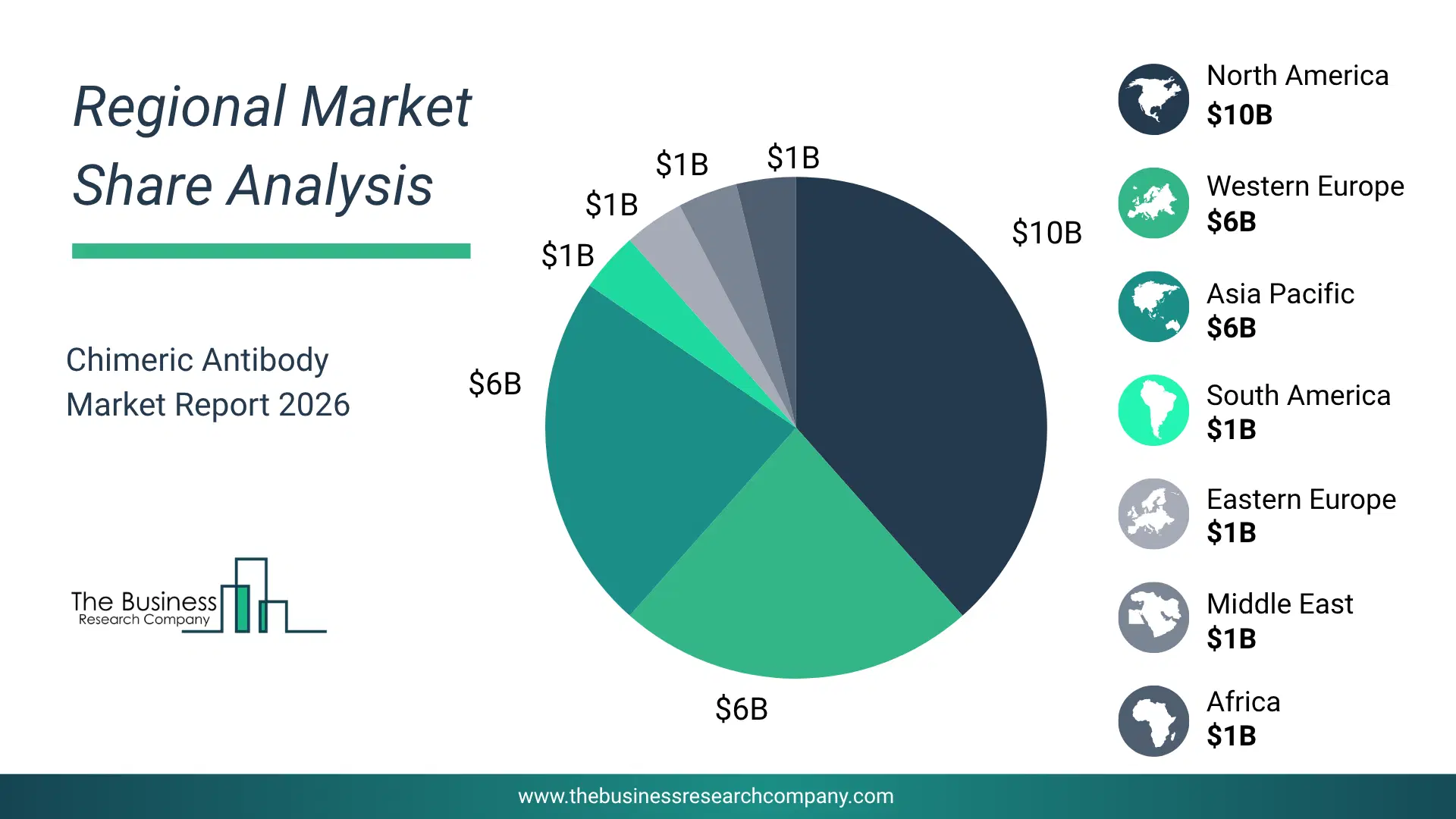
Regional Insights
North America was the largest region in the chimeric antibody market in 2025. Asia-Pacific is expected to be the fastest-growing region in the forecast period. The regions covered in this market report are Asia-Pacific, South East Asia, Western Europe, Eastern Europe, North America, South America, Middle East, Africa. The countries covered in this market report are Australia, Brazil, China, France, Germany, India, Indonesia, Japan, Taiwan, Russia, South Korea, UK, USA, Canada, Italy, Spain.What Defines the Chimeric Antibody Market?
The chimeric antibody market consists of sales of biosimilars of chimeric antibodies, diagnostic chimeric antibodies, and therapeutic chimeric antibodies. Values in this market are ‘factory gate’ values, that is, the value of goods sold by the manufacturers or creators of the goods, whether to other entities (including downstream manufacturers, wholesalers, distributors, and retailers) or directly to end customers. The value of goods in this market includes related services sold by the creators of the goods.How is Market Value Defined and Measured?
The market value is defined as the revenues that enterprises gain from the sale of goods and/or services within the specified market and geography through sales, grants, or donations in terms of the currency (in USD unless otherwise specified). The revenues for a specified geography are consumption values that are revenues generated by organizations in the specified geography within the market, irrespective of where they are produced. It does not include revenues from resales along the supply chain, either further along the supply chain or as part of other products.
This chart presents market attractiveness based on a quantitative evaluation of growth, competition, strategic alignment, and risk, offering a clear view of opportunity areas for decision-making. This chart is for illustrative purposes; the full report contains the complete analysis.

This chart highlights the Total Addressable Market (TAM) by estimating the maximum revenue opportunity using an assumption-driven approach, supporting strategic planning and opportunity sizing across markets. The chart is illustrative; the full report provides a more comprehensive analysis.
What Key Data and Analysis Are Included in the Chimeric Antibody Market Report 2026?
The chimeric antibody market research report is one of a series of new reports from The Business Research Company that provides market statistics, including industry global market size, regional shares, competitors with the market share, detailed market segments, market trends and opportunities, and any further data you may need to thrive in the chimeric antibody industry. The market research report delivers a complete perspective of everything you need, with an in-depth analysis of the current and future state of the industry.Chimeric Antibody Market Report Forecast Analysis
| Report Attribute | Details |
|---|---|
| Market Size Value In 2026 | $15.36 billion |
| Revenue Forecast In 2030 | $23.73 billion |
| Growth Rate | CAGR of 11.5% from 2026 to 2030 |
| Base Year For Estimation | 2025 |
| Actual Estimates/Historical Data | 2020-2025 |
| Forecast Period | 2026 - 2030 |
| Market Representation | Revenue in USD Billion and CAGR from 2026 to 2030 |
| Segments Covered | Type Of Antibody, Manufacturing Process, Mode Of Administration, Application, End User |
| Regional Scope | Asia-Pacific, Western Europe, Eastern Europe, North America, South America, Middle East, Africa |
| Country Scope | The countries covered in the report are Australia, Brazil, China, France, Germany, India, ... |
| Key Companies Profiled | Pfizer Inc., Johnson & Johnson, F. Hoffmann-La Roche Ltd., AbbVie Inc., Sanofi S.A., Bristol-Myers Squibb Company, AstraZeneca PLC, Novartis AG, Amgen Inc., Merck KGaA, BioNTech SE, Regeneron Pharmaceuticals Inc., Biogen Inc. |
| Customization Scope | Request for Customization |
| Pricing And Purchase Options | Explore Purchase Options |