
Dietary Fibers Market Report 2026
Global Outlook – By Product (Soluble Dietary Fibers, Insoluble Dietary Fibers), By Raw Material (Fruits And Vegetables, Cereals And Grains, Legumes, Nuts And Seeds), By Application (Food And Beverage, Pharmaceuticals, Animal Feed, Other Applications) – Market Size, Trends, Strategies, and Forecast to 2030
Dietary Fibers Market Overview
• Dietary Fibers market size has reached to $10.96 billion in 2025 • Expected to grow to $17.05 billion in 2030 at a compound annual growth rate (CAGR) of 9.2% • Growth Driver: Rising Prevalence Of Chronic Diseases To Drive Market Growth • Market Trend: Product Innovations Transforming The Dietary Fibers Market • North America was the largest region in 2025.Market Gains By 2030 – Top Opportunities By Segment
Market Gain identifies the most promising market opportunities by highlighting the segments or products expected to generate the highest incremental revenue growth over the next five years.
What Is Covered Under Dietary Fibers Market?
Dietary fibers refer to a class of plant chemicals that cannot be completely digested in the human stomach. These are used to provide mass to the diet and help in weight control. The main types of products in dietary fibers are soluble dietary fibers and insoluble dietary fibers. Soluble dietary fiber refers to fiber that dissolves in water and includes plant pectin and gums. The raw materials include fruits and vegetables, cereals and grains, legumes, nuts and seeds, and are used in food and beverage, pharmaceuticals, animal feed and others.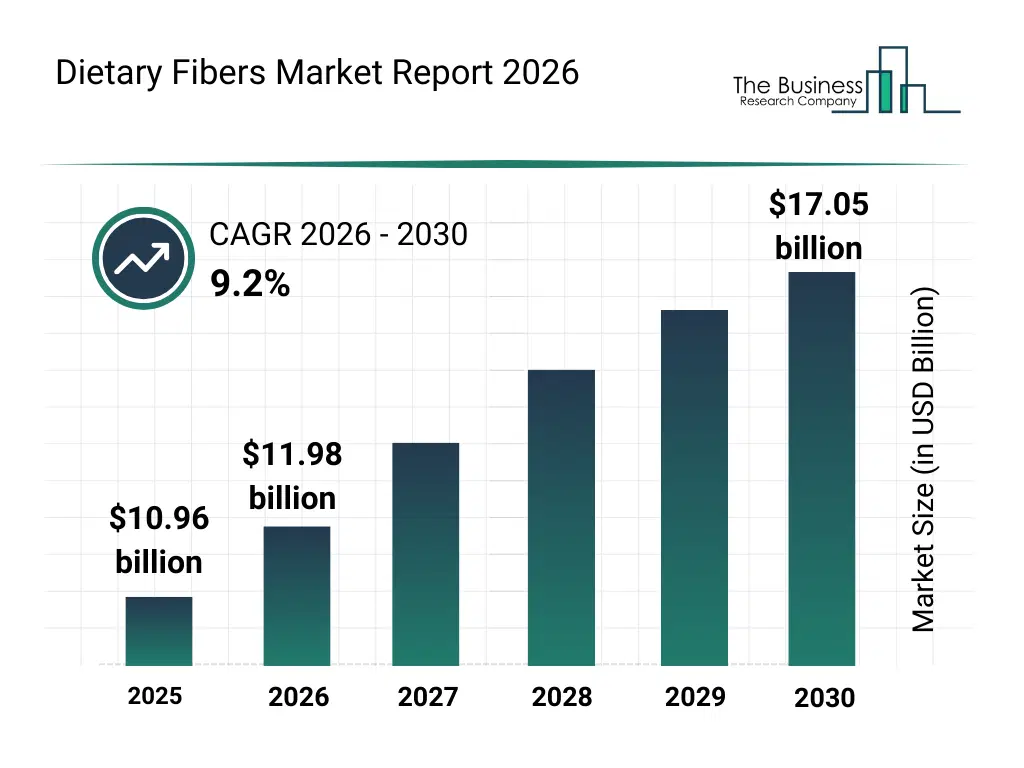
What Is The Dietary Fibers Market Size and Share 2026?
The dietary fibers market size has grown strongly in recent years. It will grow from $10.96 billion in 2025 to $11.98 billion in 2026 at a compound annual growth rate (CAGR) of 9.3%. The growth in the historic period can be attributed to increasing consumer awareness of digestive health, expansion of processed food applications, rising prevalence of lifestyle-related health issues, availability of diverse plant-based fiber sources, growth of functional food categories.What Is The Dietary Fibers Market Growth Forecast?
The dietary fibers market size is expected to see strong growth in the next few years. It will grow to $17.05 billion in 2030 at a compound annual growth rate (CAGR) of 9.2%. The growth in the forecast period can be attributed to increasing demand for gut health solutions, rising use of fibers in pharmaceuticals and supplements, expansion of fiber-fortified foods, growing focus on natural and plant-derived ingredients, increasing innovation in fiber extraction technologies. Major trends in the forecast period include increasing demand for functional dietary ingredients, rising use of soluble fibers in food formulations, growing application in weight management products, expansion of clean-label fiber sources, enhanced focus on digestive health benefits.
Global Dietary Fibers Market Segmentation
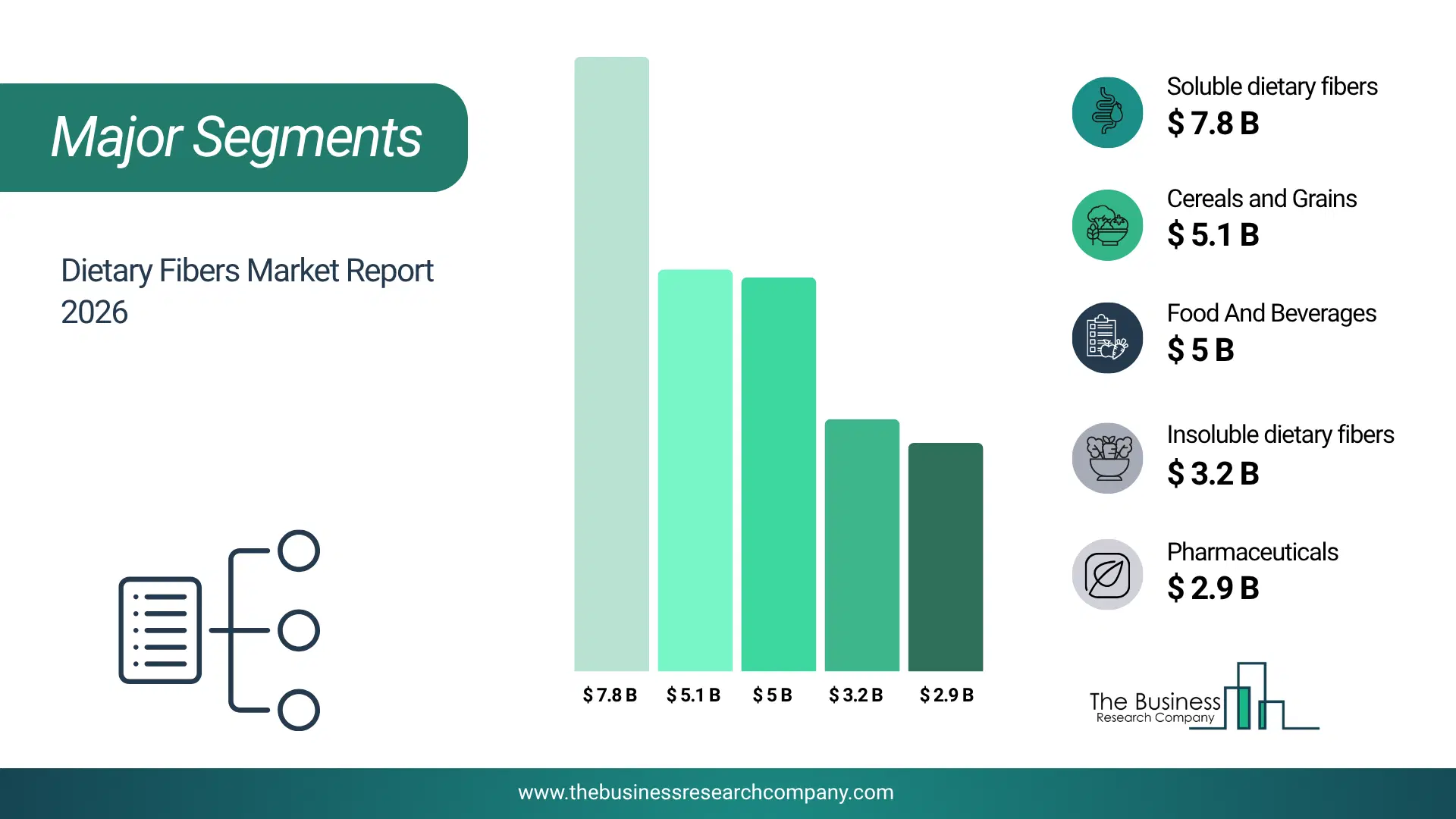
1) By Product: Soluble Dietary Fibers, Insoluble Dietary Fibers 2) By Raw Material: Fruits And Vegetables, Cereals And Grains, Legumes, Nuts And Seeds 3) By Application: Food And Beverage, Pharmaceuticals, Animal Feed, Other Applications Subsegments: 1) By Soluble Dietary Fibers: Oat Fiber, Psyllium Husk, Inulin, Pectin 2) By Insoluble Dietary Fibers: Wheat Bran, Cellulose, Corn Bran, Rice Bran The top segments in the dietary fibers market will be: • Soluble dietary fibers will reach $7824.62 Million by 2025. • Cereals and Grains will reach $5121.73 Million by 2025. • Food And Beverages will reach $5009.3 Million by 2025. • Insoluble dietary fibers will reach $3234.5 Million by 2025. • Pharmaceuticals will reach $2902.38 Million by 2025.What Is The Driver Of The Dietary Fibers Market?
The increasing prevalence of chronic diseases is expected to propel the growth of dietary fibers market going forward. Chronic disease refers to a form of illness that lasts for three months or more and can deteriorate with time. Dietary fibers are recognized for their role in promoting digestive health, weight management, and controlling blood sugar levels. Consumers are increasingly seeking products that contribute to overall well-being and may help mitigate the risk factors associated with chronic diseases. For instance, in January 2023, according to the National Center for Biotechnology Information (NCBI), a US-based National Library of Medicine, there would be 142.66 million people with chronic diseases worldwide by the year 2050. Therefore, the increasing prevalence of chronic diseases is driving the growth of the dietary fibers industry.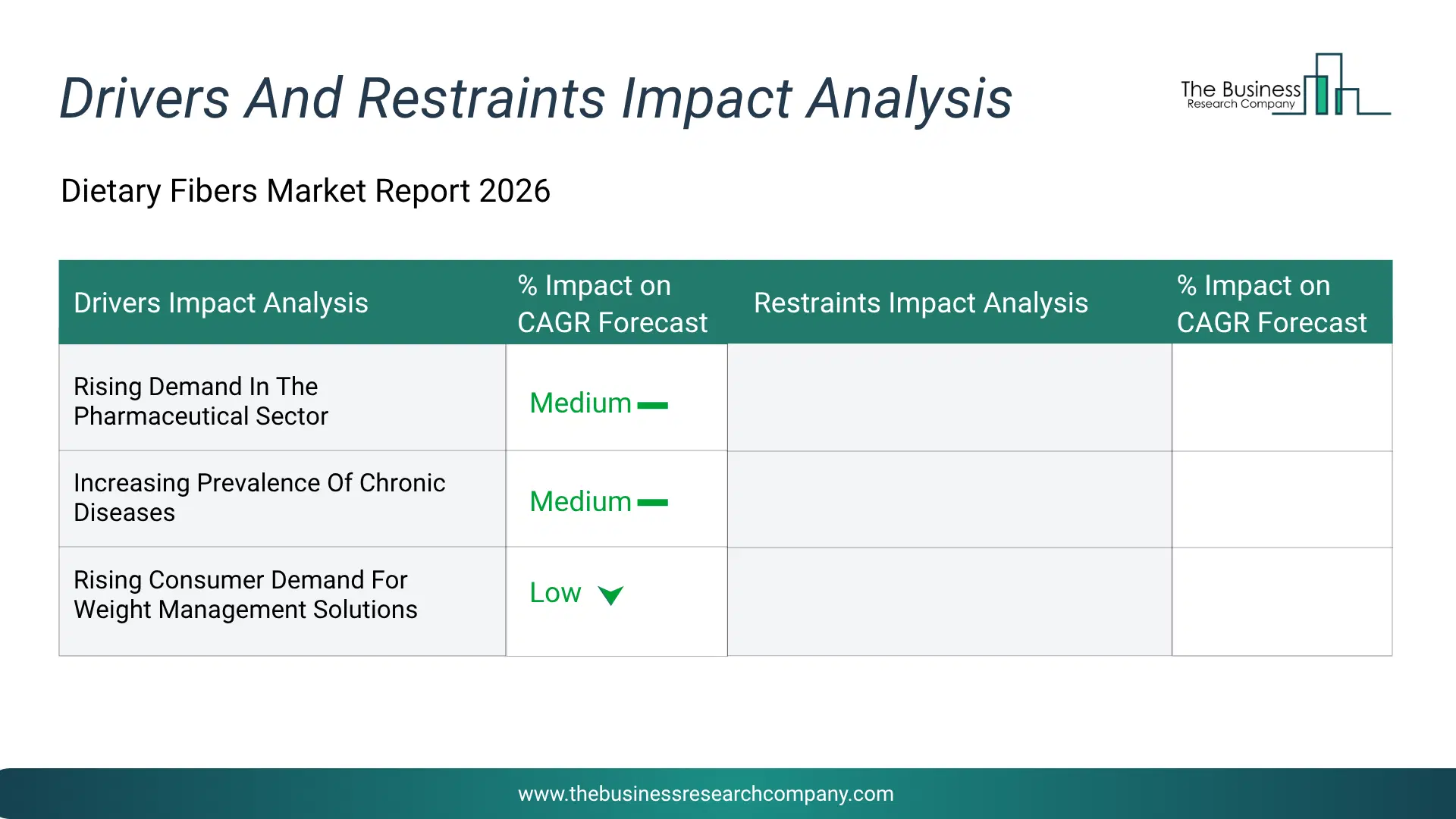
Infographic Chart Showing Key Market Drivers Analysis And Restraints For Dietary Fibers Market
The chart presents an impact analysis of key drivers and restraints, quantifying their relative influence on the market's growth rate and helping assess the balance between growth enablers and limiting factors. This chart offers a high-level perspective; the full report contains more detailed insights.
How Will The Drivers Impact Growth In The Global Dietary Fibers Market?
• Rising Demand In The Pharmaceutical Sector (Medium) – The rising demand in the pharmaceutical sector will become a key driver of growth in the dietary fibers market by 2030. The pharmaceutical sector encompasses industries involved in the research, development, production and distribution of medicinal drugs and therapies to improve healthcare outcomes. Dietary fiber is playing a significant role in boosting the pharmaceutical market due to its increasing recognition for promoting health and managing various medical conditions. As a result, the rising demand in the pharmaceutical sector is anticipated to contributing to a 1.5% annual growth in the market. • Increasing Prevalence Of Chronic Diseases (Medium) – The increasing prevalence of chronic diseases support will emerge as a major factor driving the expansion of the dietary fibers market by 2030. Chronic diseases are long-term health conditions, such as cardiovascular diseases, diabetes, and cancer, that progress slowly and often require ongoing medical management. The increasing prevalence of chronic diseases is driven by factors like aging populations, sedentary lifestyles, and poor dietary habits, with the impact of unhealthy diets evident through rising cases of obesity-linked conditions. Dietary fibers play a crucial role in this trend, as insufficient fiber intake contributes to metabolic disorders, digestive issues, and poor gut health, further exacerbating the burden of chronic diseases. Consequently, the increasing prevalence of chronic diseases is projected to contributing to a 1.0% annual growth in the market. • Rising Consumer Demand For Weight Management Solutions (Low) – The rising consumer demand for weight management solutions as a major factor driving the expansion of the dietary fibers market by 2030. Weight management solutions encompass a range of strategies, products and interventions designed to help individuals achieve and maintain a healthy weight through diet, exercise, and medical support. Dietary fibers play a crucial role in this demand by promoting satiety, regulating digestion, and supporting metabolic health, making them an essential component in weight management strategies. Consequently, rising consumer demand for weight management solutions is projected to contributing to a 0.8% annual growth in the market. • Increasing Consumer Interest In Personalized Nutrition (Low) – The increasing consumer interest in personalized nutrition will emerge as a major factor driving the expansion of the dietary fibers market by 2030. Personalized nutrition is a tailored approach to diet and health that considers an individual’s genetic, metabolic and lifestyle factors to optimize nutritional intake for improved well-being. The increasing consumer interest in personalized nutrition is driven by advancements in nutrigenomics, growing health consciousness and the demand for targeted dietary solutions, with the rise of digital health tools enabling individuals to track and customize their nutrition more effectively. Dietary fibers support gut health, regulating blood sugar levels and enhancing digestive function, making them an essential component of personalized dietary plans. Consequently, the increasing consumer interest in personalized nutrition is projected to contributing to a 0.5% annual growth in the market.How Will The Restraints Impact Growth In The Global Dietary Fibers Market?
• Regulatory Challenges (Medium) – Regulatory Challenges will restrict the growth of the Dietary Fibers market during the forecast period. Dietary fiber products used in food, supplements, and pharmaceuticals are subject to varying regulatory requirements across different regions. The evolving regulatory landscape for health claims, labeling, and novel fiber sources creates compliance challenges for manufacturers. Regulatory uncertainties can delay product approvals and market entry, limiting the growth of the dietary fiber market. • Consumer Resistance To Fiber-Rich Foods Due To Taste And Texture Preferences (Medium) – Consumer Resistance to Fiber-Rich Foods Due To Taste and Texture Preferences will restrict the growth of the Dietary Fibers market during the forecast period. Many dietary fiber products have undesirable taste, texture, and mouthfeel characteristics that limit consumer acceptance. The organoleptic challenges of incorporating high fiber levels into processed foods affect product development and consumer adoption. Consumer resistance to fiber-fortified products can limit market expansion, particularly in conventional food applications.Key Players In The Global Dietary Fibers Market
Major companies operating in the dietary fibers market are The Archer-Daniels-Midland Company, Roquette, The Emsland Group, Cargill Incorporated, DuPont de Nemours Inc., Kerry Inc., Nexira, Ingredion Incorporated, Tate & Lyle PLC, AGT Food and Ingredients, Koninklijke DSM N.V., Grain Millers Inc., PURIS, Taiyo International, Grain Processing Corporation, Fiberstar Inc., SunOpta Inc., Tereos S A, Unipektin Ingredients AG, Cosucra Groupe Warcoing SA, SENSUS Inc.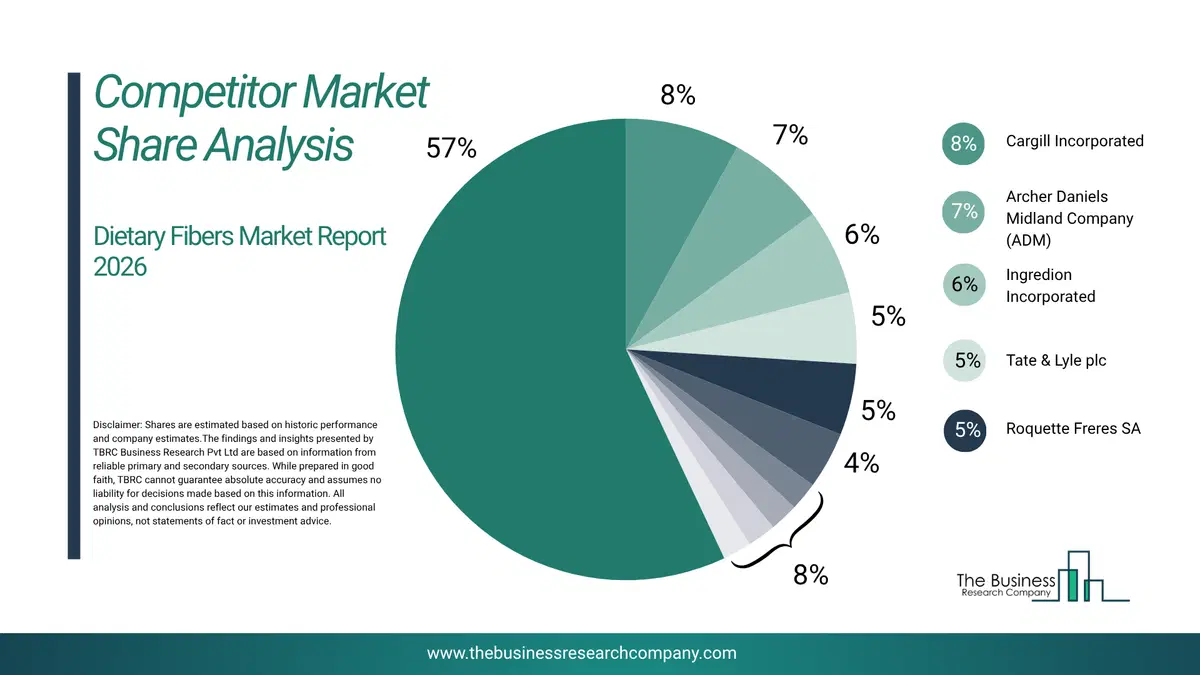
This chart is for illustrative purposes; the full report includes a detailed competitor analysis and comprehensive overview of the top 10 companies in the market.
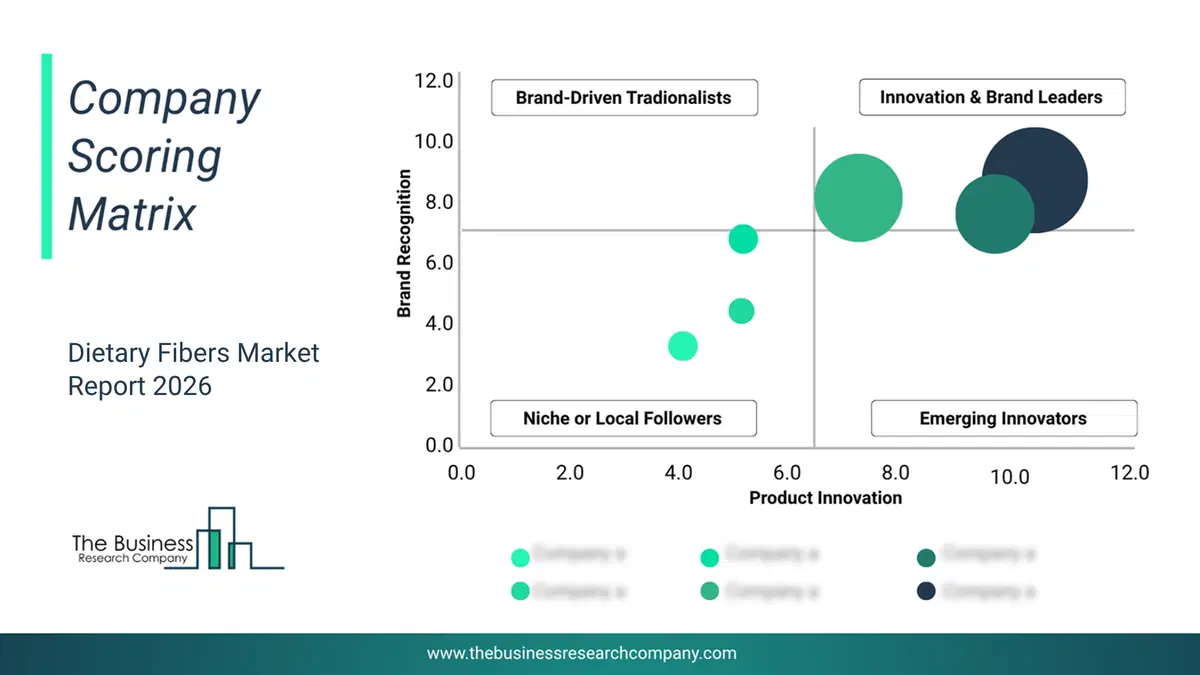
This chart maps companies by product innovation and brand strength, with bubble size indicating relative revenue, helping identify market leaders, challengers, and niche players. This is an illustrative chart; the full report provides a complete and accurate competitive analysis.
Global Dietary Fibers Market Trends and Insights
Major companies operating in the dietary fibers market are focusing on developing innovative solutions, such as multifunctional plant-based fiber ingredients, to meet the rising demand for clean-label formulations, improved texture, and enhanced nutritional profiles across food and beverage applications. These advanced dietary fiber products offer superior water-holding capacity, emulsification, and mouthfeel compared with conventional fiber sources, enabling manufacturers to optimize product quality while supporting natural and sustainable ingredient trends. For instance, in January 2023, Fiberstar Inc., a US-based biotechnology company that manufactures and sells natural and clean, plant-based ingredient solutions, launched a line of organic citrus fibers the Citri-Fi 400 series. The new Citri-Fi 400 organic series is a byproduct of the citrus juicing process, composed of both insoluble and soluble fiber. Its intact native pectin offers excellent water-holding and emulsification properties, providing a pleasant mouthfeel. With dual functionality, Citri-Fi 400 enhances texture, stability, and nutrition in various food and beverage products at usage rates below 1%. It can be used in bakery, dairy, processed meats, dressings, sauces, and frozen foods, as well as plant-based foods like meat substitutes and dairy alternatives.What Are Latest Mergers And Acquisitions In The Dietary Fibers Market?
In November 2024, Tate & Lyle PLC, a UK-based provider of specialty food and beverage ingredients, acquired CP Kelco from J.M. Huber Corporation for US$1.8 billion in cash and shares. Through this acquisition, Tate & Lyle aims to expand its portfolio of plant-based texturizers and dietary-fiber-rich ingredients by integrating CP Kelco’s pectin, citrus fiber, and specialty gum solutions to better serve demand for healthier, clean-label foods. CP Kelco is a US-based nature-derived ingredient supplier specializing in pectin, citrus fiber, refined locust bean gum, xanthan gum, and other hydrocolloids used to add texture, stability, and fiber to food and beverage products.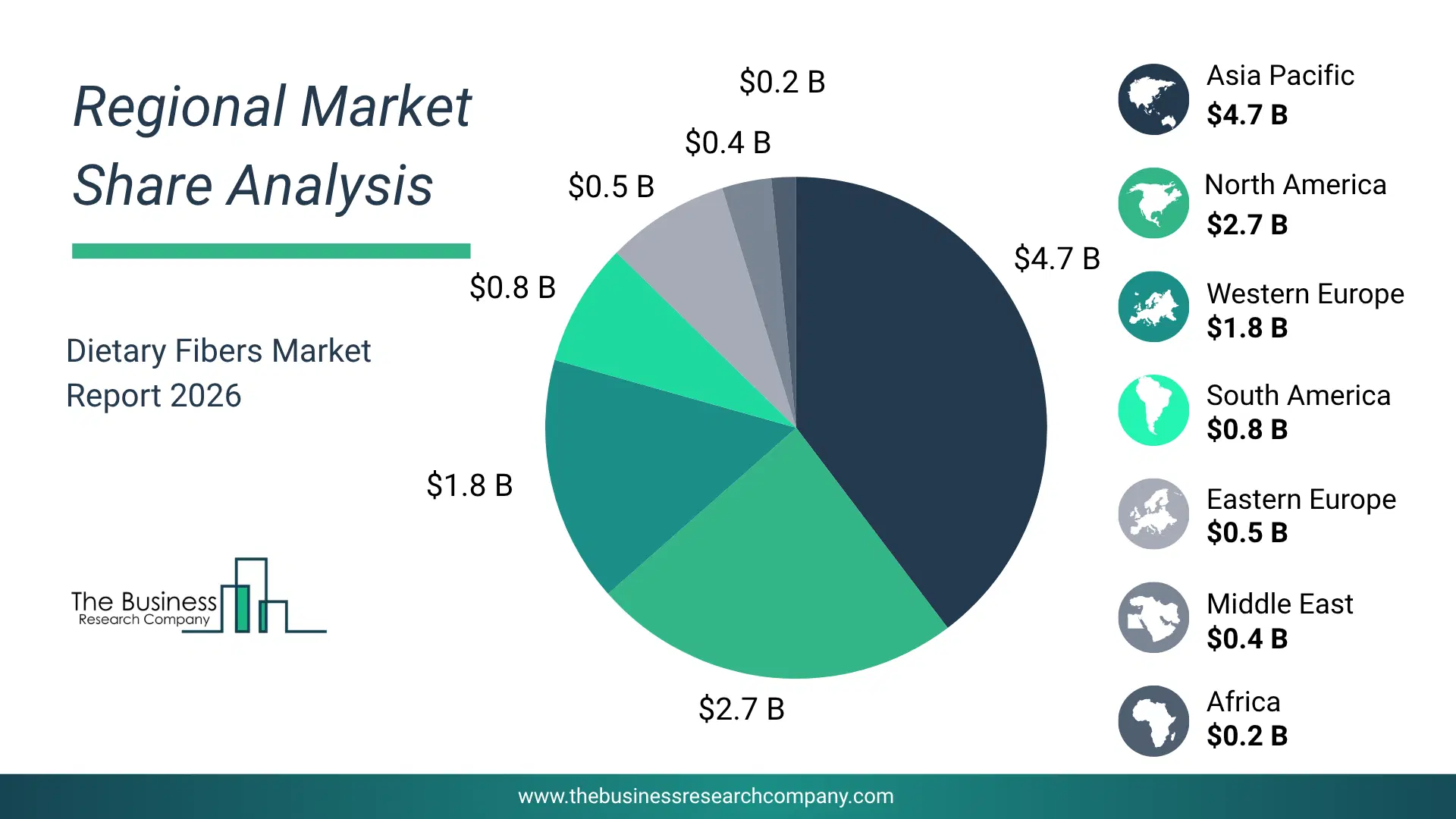
Regional Outlook
North America was the largest region in the dietary fibers market in 2025. The regions covered in this market report are Asia-Pacific, South East Asia, Western Europe, Eastern Europe, North America, South America, Middle East and Africa. The countries covered in this market report are Australia, Brazil, China, France, Germany, India, Indonesia, Japan, Taiwan, Russia, South Korea, UK, USA, Italy, Spain, CanadaWhat Defines the Dietary Fibers Market?
The dietary fibers market consists of sales of gums, fructans, pectins, psyllium, or ß-glucan, cellulose, hemicellulose, lignin, and other dietary fibers. Values in this market are ‘factory gate’ values, that is the value of goods sold by the manufacturers or creators of the goods, whether to other entities (including downstream manufacturers, wholesalers, distributors, and retailers) or directly to end customers. The value of goods in this market includes related services sold by the creators of the goods.How is Market Value Defined and Measured?
The market value is defined as the revenues that enterprises gain from the sale of goods and/or services within the specified market and geography through sales, grants, or donations in terms of the currency (in USD unless otherwise specified). The revenues for a specified geography are consumption values that are revenues generated by organizations in the specified geography within the market, irrespective of where they are produced. It does not include revenues from resales along the supply chain, either further along the supply chain or as part of other products.
This chart presents market attractiveness based on a quantitative evaluation of growth, competition, strategic alignment, and risk, offering a clear view of opportunity areas for decision-making. This chart is for illustrative purposes; the full report contains the complete analysis.

This chart highlights the Total Addressable Market (TAM) by estimating the maximum revenue opportunity using an assumption-driven approach, supporting strategic planning and opportunity sizing across markets. The chart is illustrative; the full report provides a more comprehensive analysis.
What Key Data and Analysis Are Included in the Dietary Fibers Market Report 2026?
The dietary fibers market research report is one of a series of new reports from The Business Research Company that provides market statistics, including industry global market size, regional shares, competitors with the market share, detailed market segments, market trends and opportunities, and any further data you may need to thrive in the dietary fibers industry. The market research report delivers a complete perspective of everything you need, with an in-depth analysis of the current and future state of the industry.Dietary Fibers Market Report Forecast Analysis
| Report Attribute | Details |
|---|---|
| Market Size Value In 2026 | $11.98 billion |
| Revenue Forecast In 2030 | $17.05 billion |
| Growth Rate | CAGR of 9.3% from 2026 to 2030 |
| Base Year For Estimation | 2025 |
| Actual Estimates/Historical Data | 2020-2025 |
| Forecast Period | 2026 - 2030 |
| Market Representation | Revenue in USD Billion and CAGR from 2026 to 2030 |
| Segments Covered | Product, Raw Material, Application |
| Regional Scope | Asia-Pacific, Western Europe, Eastern Europe, North America, South America, Middle East, Africa |
| Country Scope | The countries covered in the report are Australia, Brazil, China, France, Germany, India, Indonesia, Japan, Taiwan, Russia, South Korea, UK, USA, Canada, Italy, Spain. |
| Key Companies Profiled | The Archer-Daniels-Midland Company, Roquette, The Emsland Group, Cargill Incorporated, DuPont de Nemours Inc., Kerry Inc., Nexira, Ingredion Incorporated, Tate & Lyle PLC, AGT Food and Ingredients, Koninklijke DSM N.V., Grain Millers Inc., PURIS, Taiyo International, Grain Processing Corporation, Fiberstar Inc., SunOpta Inc., Tereos S A, Unipektin Ingredients AG, Cosucra Groupe Warcoing SA, SENSUS Inc. |
| Customization Scope | Request for Customization |
| Pricing And Purchase Options | Explore Purchase Options |