
Energy Management Systems Market Report 2026
Global Outlook – By Type (Home Energy Management Systems, Building Energy Management Systems, Industrial Energy Management Systems), By Component (Hardware, Software, Services), By Deployment (On-Premise, Cloud Based), By End-User (Power And Energy, Telecom And IT, Manufacturing, Residential And Commercial, Food And Beverages, Other End-Users) – Market Size, Trends, Strategies, and Forecast to 2030
Energy Management Systems Market Overview
• Energy Management Systems market size has reached to $66.3 billion in 2025 • Expected to grow to $133.22 billion in 2030 at a compound annual growth rate (CAGR) of 15% • Growth Driver: Renewable Sources Boosting The Energy Management Systems Market • Market Trend: Advanced Tools For Automated Power Plant Control Revolutionizing Energy Management • North America was the largest region in 2025 and Asia-Pacific is the fastest growing region.Market Gains By 2030 – Top Opportunities By Segment
Market Gain identifies the most promising market opportunities by highlighting the segments or products expected to generate the highest incremental revenue growth over the next five years.
What Is Covered Under Energy Management Systems Market?
Energy management system refers to an integrated system consisting of software that can control, manage, and store energy parameters, analyze the usage, and analyze the wastage of energy to reduce costs for electricity. These are integrated with innovative technologies such as artificial intelligence and IoT to improve the effectiveness of the energy management system and make it more insightful for customers and are used for controlling and optimizing energy usage of various electronic devices such as fans, pumps and others. The main types of energy management systems are home energy management systems, building energy management systems, and industrial energy management systems. A home energy management system is a combination of hardware and software components that work together to efficiently manage energy usage to reduce energy costs in homes. The components included are hardware, software, and services employed by on-premise and cloud-based deployment models for power and energy, telecom and IT, manufacturing, residential and commercial, food and beverages, and other end-users.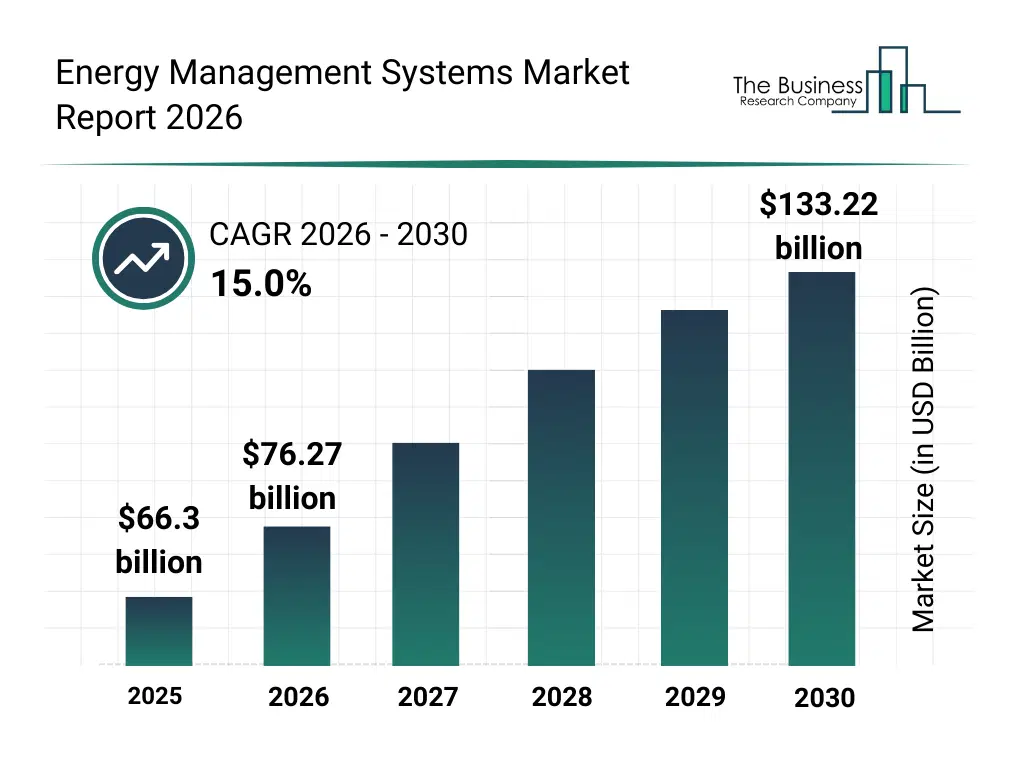
What Is The Energy Management Systems Market Size and Share 2026?
The energy management systems market size has grown rapidly in recent years. It will grow from $66.3 billion in 2025 to $76.27 billion in 2026 at a compound annual growth rate (CAGR) of 15.0%. The growth in the historic period can be attributed to rising electricity consumption, adoption of traditional energy monitoring systems, growth in industrial automation, government initiatives for energy efficiency, increasing awareness of energy cost reduction.What Is The Energy Management Systems Market Growth Forecast?
The energy management systems market size is expected to see rapid growth in the next few years. It will grow to $133.22 billion in 2030 at a compound annual growth rate (CAGR) of 15.0%. The growth in the forecast period can be attributed to expansion of cloud-based ems solutions, integration of renewable energy sources, growing adoption of iot and ai technologies, rising demand in residential and commercial sectors, advancements in predictive maintenance and energy analytics. Major trends in the forecast period include integration of iot-enabled energy monitoring devices, deployment of cloud-based energy management solutions, adoption of predictive analytics and demand response tools, expansion of smart thermostats and home automation systems, implementation of industrial automation and control systems.
Global Energy Management Systems Market Segmentation
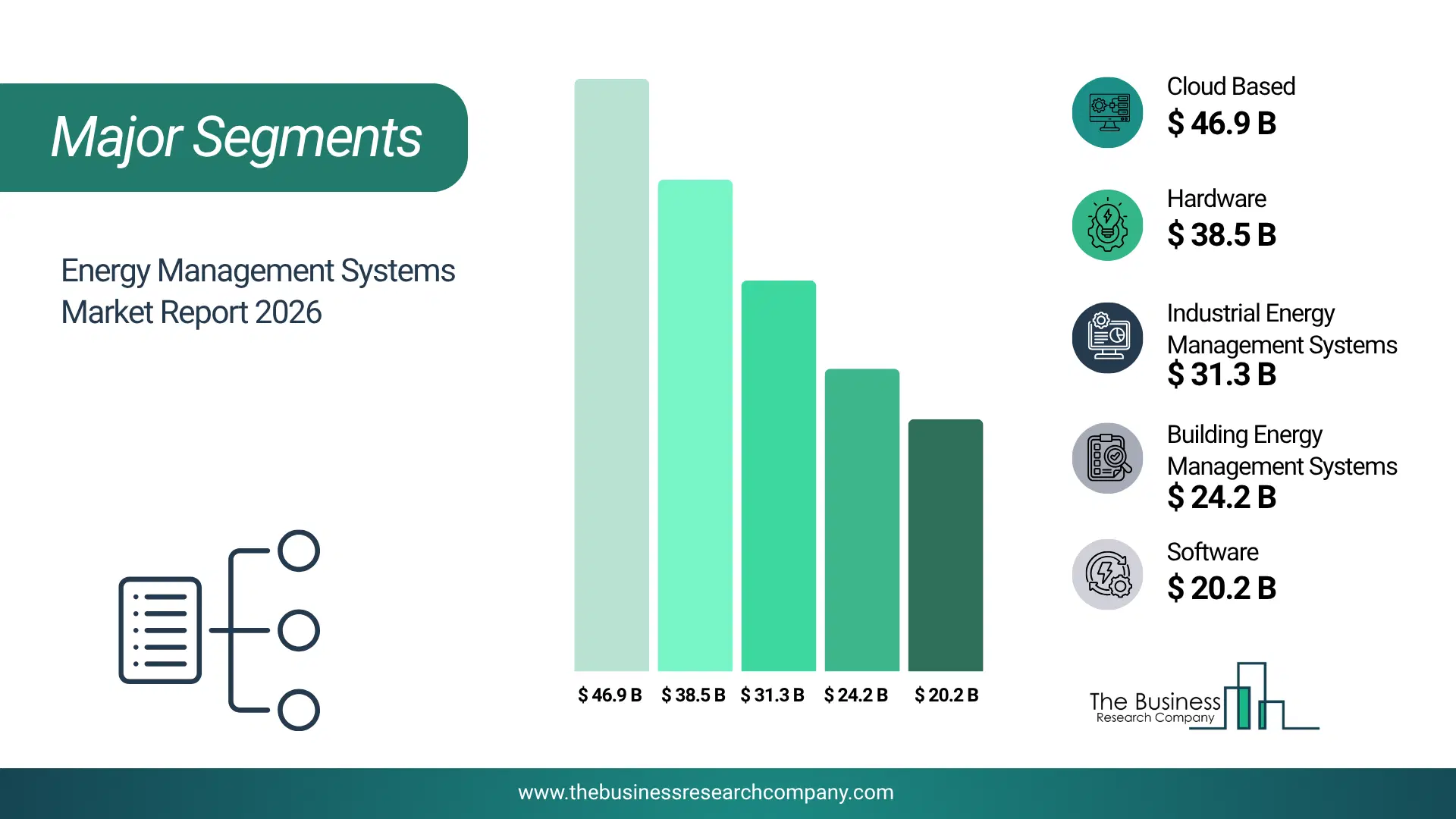
1) By Type: Home Energy Management Systems, Building Energy Management Systems, Industrial Energy Management Systems 2) By Component: Hardware, Software, Services 3) By Deployment: On-Premise, Cloud Based 4) By End-User: Power And Energy, Telecom And IT, Manufacturing, Residential And Commercial, Food And Beverages, Other End-Users Subsegments: 1) By Home Energy Management Systems (HEMS): Smart Thermostats, Energy Monitoring Devices, Smart Plugs And Appliances, Home Automation Systems 2) By Building Energy Management Systems (BEMS): HVAC Control Systems, Lighting Control Systems, Energy Analytics And Reporting Software, Integration With Renewable Energy Sources 3) By Industrial Energy Management Systems (IEMS): Real-Time Energy Monitoring Systems, Predictive Maintenance Tools, Demand Response Solutions, Industrial Automation And Control Systems The top segments in the energy management systems market will be: • Cloud Based will reach $46941.09 Million by 2025. • Hardware will reach $38551.13 Million by 2025. • Industrial Energy Management Systems will reach $31326.44 Million by 2025. • Building Energy Management Systems will reach $24211.48 Million by 2025. • Software will reach $20290.2 Million by 2025.What Is The Driver Of The Energy Management Systems Market?
Increased adoption of renewable sources is expected to propel the growth of the energy management systems market. Renewable energy sources are natural resources that can be replenished or regenerated over time, making them a sustainable and environmentally friendly means of producing energy. Energy management systems optimize the utilization of renewable energy sources by efficiently monitoring, controlling, and balancing their integration into the grid, ensuring a sustainable and cost-effective energy supply. For instance, in December 2023, according to the Department for Energy Security and Net Zero, a UK-based government department, in the third quarter of 2023, renewable electricity generation reached a record high of 30.1 terawatt-hours, marking a 6.8% increase compared to the same period in 2022. Therefore, increased adoption of renewable sources is driving the energy management systems industry.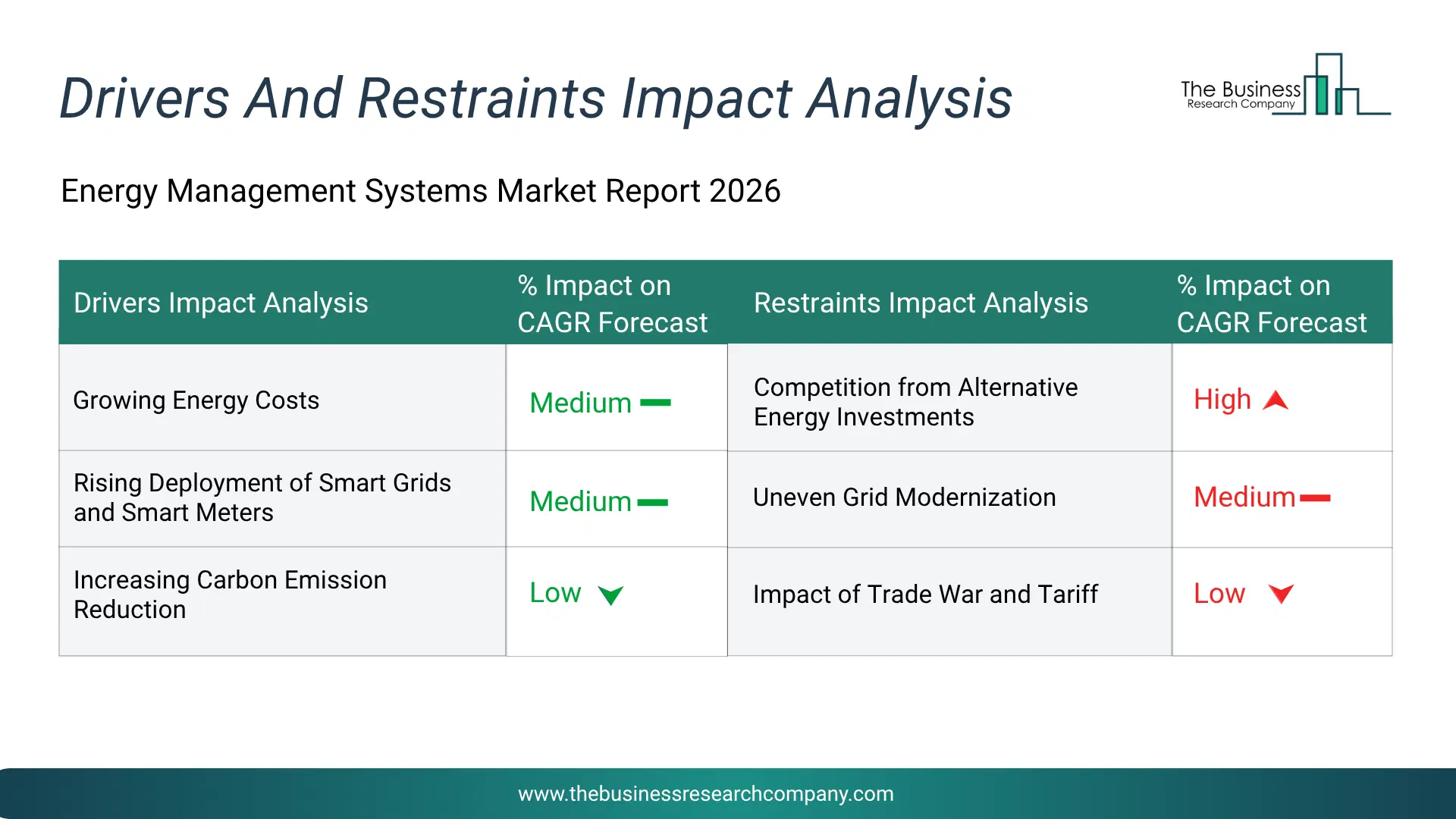
Infographic Chart Showing Key Market Drivers Analysis And Restraints For Energy Management Systems Market
The chart presents an impact analysis of key drivers and restraints, quantifying their relative influence on the market's growth rate and helping assess the balance between growth enablers and limiting factors. This chart offers a high-level perspective; the full report contains more detailed insights.
How Will The Drivers Impact Growth In The Global Energy Management Systems Market?
• Growing Energy Costs (Medium) – The growing energy costs will become a key driver of growth in the energy management systems market by 2030. As global electricity consumption continues to climb—fueled by industrial expansion, urbanization, and the growing adoption of energy-intensive technologies such as data centers and electric vehicles—the demand for power is set to increase substantially. This rising demand, alongside the global shift toward renewable energy, is likely to result in higher electricity prices due to the need for infrastructure upgrades and the integration of intermittent energy sources. In response, both consumers and businesses will increasingly turn to solutions that help them optimize energy use, minimize waste, and control expenses. EMS technologies, offering real-time monitoring, predictive analytics, and automated energy control, will become critical tools for managing consumption and countering the effects of rising energy costs. As a result, the EMS market is well-positioned for robust growth, driven by the urgent need for greater energy efficiency and cost management. As a result, the growing energy costs is anticipated to contributing to a 1.5% annual growth in the market. • Rising Deployment of Smart Grids and Smart Meters (Medium) – The rising deployment of smart grids and smart meters will emerge as a major factor driving the expansion of the energy management systems market by 2030. Smart grids facilitate real-time monitoring and control of electricity distribution, support the integration of renewable energy sources, and improve overall grid reliability. Meanwhile, smart meters offer detailed insights into energy consumption, enabling both consumers and utilities to optimize usage and enhance operational efficiency. With many countries accelerating the adoption of smart grid technologies to meet rising electricity demand and support decentralized energy systems, the need for advanced EMS solutions is increasing. These systems harness data from smart infrastructure to optimize energy use, lower costs, and promote sustainable energy practices. As a result, the EMS market is expected to experience substantial growth in line with the global expansion of smart grids and smart metering. Consequently, the rising deployment of smart grids and smart meters is projected to contributing to a 1.0% annual growth in the market. • Increasing Carbon Emission Reduction (Low) – The increasing carbon emission reduction will serve as a key growth catalyst for the energy management systems market by 2030. In alignment with international climate agreements, governments and organizations worldwide are adopting more ambitious targets to cut greenhouse gas emissions. Many countries are strengthening their climate action plans, further intensifying the push toward sustainable energy practices. This global shift is fueling demand for EMS solutions that provide real-time monitoring, control, and optimization of energy consumption across industries. By leveraging EMS technologies, businesses and individuals can improve energy efficiency, lower their carbon footprints, and support broader environmental goals. As the urgency to address climate change continues to rise, the EMS market is poised for strong growth driven by the need for effective carbon reduction strategies. Therefore, this increasing carbon emission reduction is projected to supporting to a 0.8% annual growth in the market. • Shift to Renewable Energy Sources (Low) – The shift to renewable energy sources will become a significant driver contributing to the growth of the energy management systems market by 2030. As governments and organizations intensify efforts to reduce carbon emissions and improve energy sustainability, the adoption of renewable technologies such as solar, wind, and hydropower is accelerating. This transition is fueled by falling technology costs, supportive regulatory frameworks, and increasing environmental awareness among consumers and businesses alike. However, integrating variable renewable energy sources into the grid presents challenges related to storage, grid stability, and efficient energy distribution. EMS solutions are critical in addressing these issues, offering real-time monitoring, predictive analytics, and automated controls to optimize energy consumption and maintain grid reliability. As a result, the demand for EMS technologies is expected to rise in tandem with the continued expansion of renewable energy infrastructure. Consequently, the shift to renewable energy sources is projected to contributing to a 0.5% annual growth in the market.How Will The Restraints Impact Growth In The Global Energy Management Systems Market?
• Competition from Alternative Energy Investments (Medium) – Competition from Alternative Energy Investments will restrict the growth of the Energy Management Systems market during the forecast period. Energy management systems face competition from alternative energy investments including renewable generation and storage. Limited budgets may prioritize generation investments over management systems. Competition for capital allocation can limit the adoption of energy management solutions. • Uneven Grid Modernization (Low) – Uneven Grid Modernization will restrict the growth of the Energy Management Systems market during the forecast period. Grid modernization progress is uneven across regions, affecting the deployment of advanced energy management systems. Inconsistent infrastructure development limits the addressable market for EMS solutions. Grid modernization gaps can constrain the effectiveness of energy management systems and market growth. • Impact of Trade War and Tariff (Low) – Impact of Trade War and Tariff will restrict the growth of the Energy Management Systems market during the forecast period. Energy management systems rely on imported hardware and software components subject to trade tariffs. Trade barriers can increase system costs and affect affordability. Trade tensions may also impact energy efficiency investment and technology adoption.Key Players In The Global Energy Management Systems Market
Major companies operating in the energy management systems market are Siemens AG, General Electric Company, Hitachi Energy Ltd., Panasonic Corp., IBM Corporation, Oracle Corporation, Mitsubishi Electric Corporation, Schneider Electric SE, Honeywell International Inc., SAP SE, ABB Ltd., Toshiba Corporation, Daikin Industries Ltd., Johnson Controls International plc, Eaton Corporation plc, Carrier Corporation, Trane Technologies plc, Emerson Electric Co., Delta Electronics Inc., Rockwell Automation Inc., Lennox International Inc., Yokogawa Electric Corp., C3.ai Inc., Legrand S.A., Elster Group GmbH, EnerNOC Inc.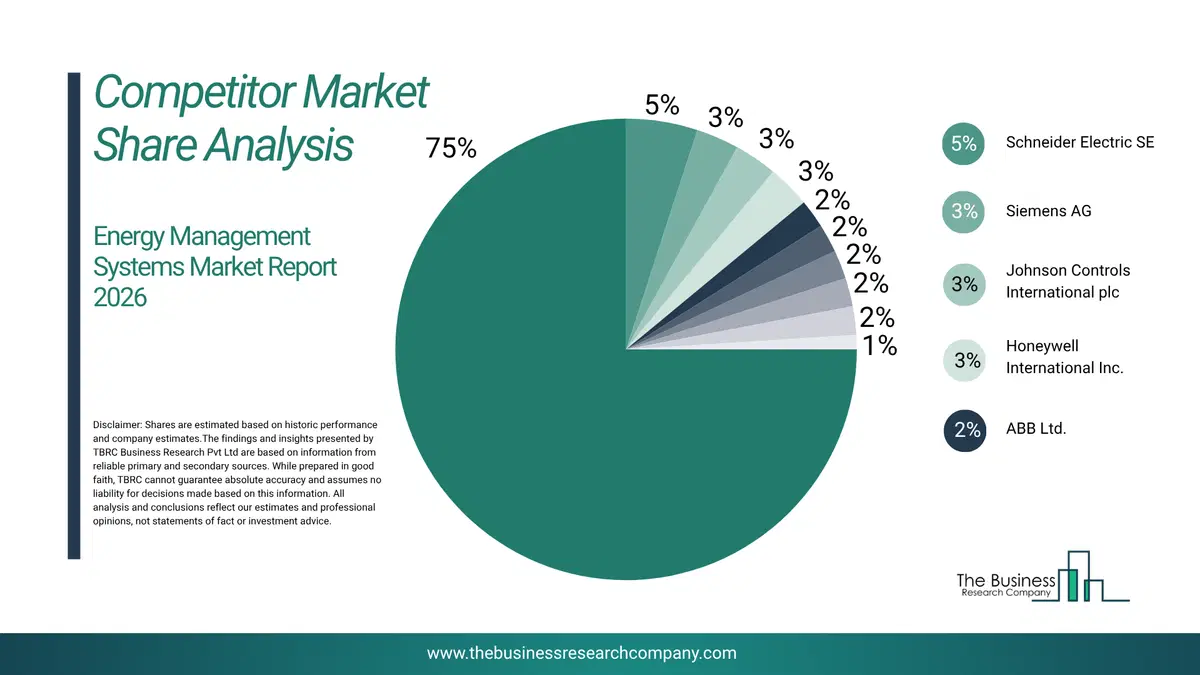
This chart is for illustrative purposes; the full report includes a detailed competitor analysis and comprehensive overview of the top 10 companies in the market.
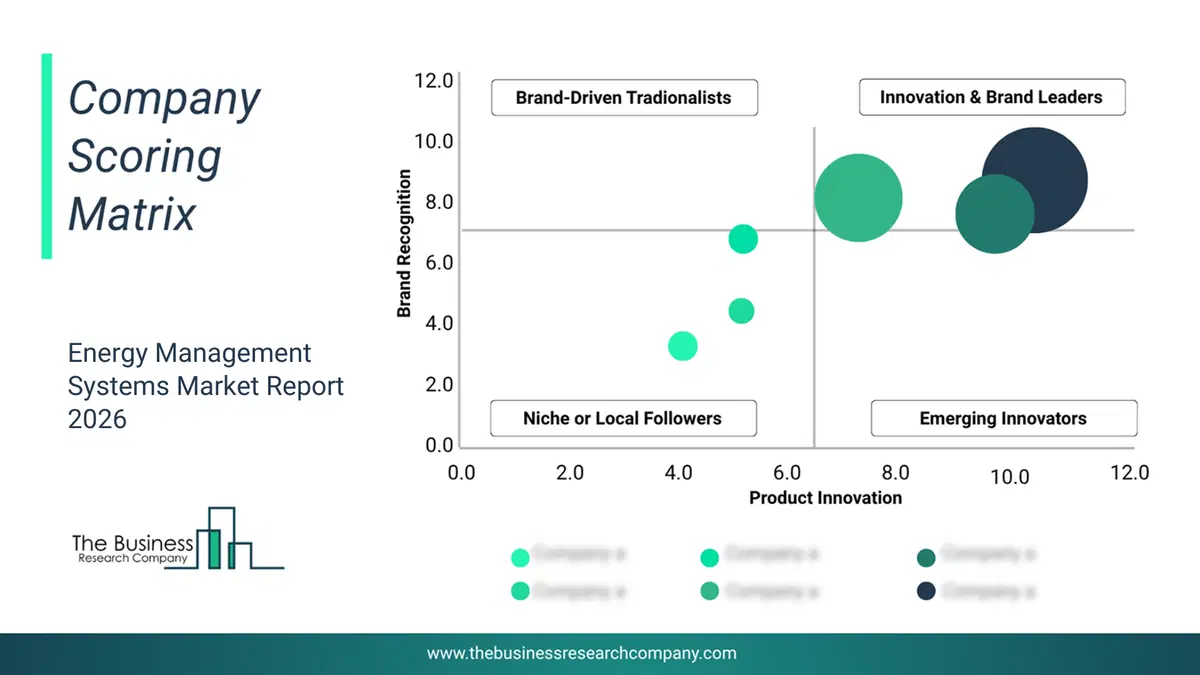
This chart maps companies by product innovation and brand strength, with bubble size indicating relative revenue, helping identify market leaders, challengers, and niche players. This is an illustrative chart; the full report provides a complete and accurate competitive analysis.
Global Energy Management Systems Market Trends and Insights
Major companies operating in the energy management systems market are developing advanced tools for automated power plant control, to enhance operational efficiency, reduce energy consumption, and improve grid reliability. Advanced tools for automated power plant control refer to sophisticated software and hardware systems designed to optimize the operation and management of power generation facilities. For instance, in July 2024, GreenPowerMonitor (GPM), a Spain-based energy management software company, launched an advanced Energy Management System (EMS), an advanced tool for automated power plant control. Energy Management System (EMS) is a comprehensive platform that integrates real-time data monitoring, predictive analytics, and automated control functionalities to optimize the performance of power generation assets. It enables operators to efficiently manage energy flows, forecast demand, and respond dynamically to changing conditions in the energy market, ultimately leading to improved operational efficiency and reduced costs.What Are Latest Mergers And Acquisitions In The Energy Management Systems Market?
In December 2023, Uplight Inc., a US-based energy technology company, acquired AutoGrid Systems Inc. for an undisclosed amount. Through this acquisition, Uplight Inc. aims to enhance its energy management system capabilities by integrating AutoGrid Systems, Inc.’s AI-driven software for distributed energy resource management, virtual power plants, and flexibility optimization, enabling utilities and energy providers to better manage demand, grid operations, and customer energy engagement. AutoGrid Systems Inc. is a US-based software company that provides AI-powered solutions for energy management and distributed energy resource optimization.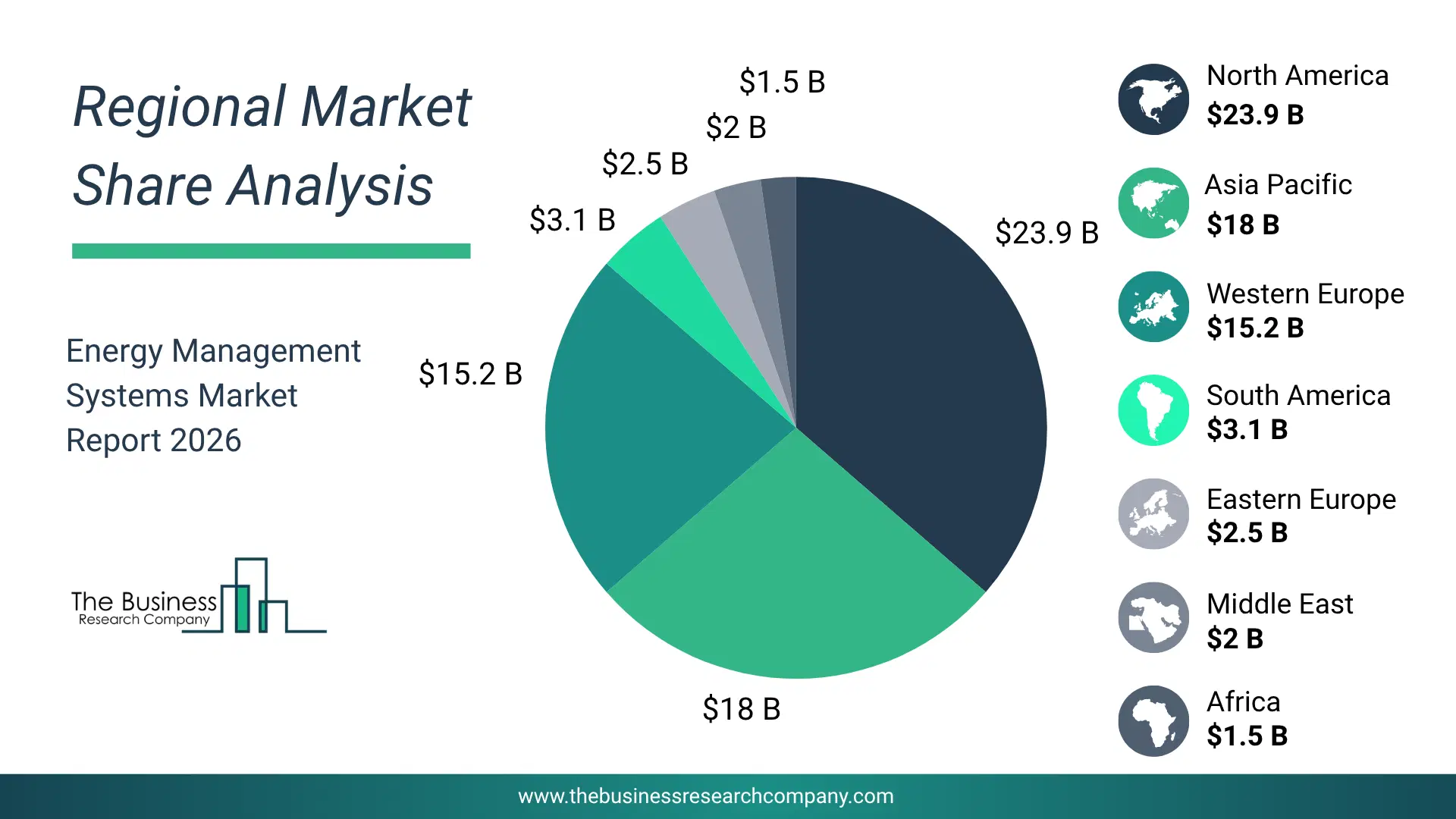
Regional Outlook
North America was the largest region in the energy management systems market in 2025. Asia-Pacific is expected to be the fastest-growing region in the global energy management systems market report during the forecast period. The regions covered in this market report are Asia-Pacific, South East Asia, Western Europe, Eastern Europe, North America, South America, Middle East, Africa. The countries covered in this market report are Australia, Brazil, China, France, Germany, India, Indonesia, Japan, Taiwan, Russia, South Korea, UK, USA, Canada, Italy, SpainWhat Defines the Energy Management Systems Market?
The energy management systems market consists of revenues earned by entities by providing services such as utility expense management, meter reading, billing, collection, meter system design, installation, energy procurement, central plant cost, allocation, and energy benchmarking. The market value includes the value of related goods sold by the service provider or included within the service offering. The energy management systems market also includes sales of computer servers, UI devices, map board, RTUs (remote terminal unit) and other front-end and ancillary devices, which are used in providing energy management system services. Values in this market are ‘factory gate’ values, that is the value of goods sold by the manufacturers or creators of the goods, whether to other entities (including downstream manufacturers, wholesalers, distributors and retailers) or directly to end customers. The value of goods in this market includes related services sold by the creators of the goods.How is Market Value Defined and Measured?
The market value is defined as the revenues that enterprises gain from the sale of goods and/or services within the specified market and geography through sales, grants, or donations in terms of the currency (in USD unless otherwise specified). The revenues for a specified geography are consumption values that are revenues generated by organizations in the specified geography within the market, irrespective of where they are produced. It does not include revenues from resales along the supply chain, either further along the supply chain or as part of other products.
This chart presents market attractiveness based on a quantitative evaluation of growth, competition, strategic alignment, and risk, offering a clear view of opportunity areas for decision-making. This chart is for illustrative purposes; the full report contains the complete analysis.

This chart highlights the Total Addressable Market (TAM) by estimating the maximum revenue opportunity using an assumption-driven approach, supporting strategic planning and opportunity sizing across markets. The chart is illustrative; the full report provides a more comprehensive analysis.
What Key Data and Analysis Are Included in the Energy Management Systems Market Report 2026?
The energy management systems market research report is one of a series of new reports from The Business Research Company that provides market statistics, including Market Report 2026?global market size, regional shares, competitors with the market share, detailed market segments, market trends and opportunities, and any further data you may need to thrive in the energy management systems Market Report 2026? The market research report delivers a complete perspective of everything you need, with an in-depth analysis of the current and future state of the Market Report 2026?Energy Management Systems Market Report Forecast Analysis
| Report Attribute | Details |
|---|---|
| Market Size Value In 2026 | $76.27 billion |
| Revenue Forecast In 2030 | $133.22 billion |
| Growth Rate | CAGR of 15.0% from 2026 to 2030 |
| Base Year For Estimation | 2025 |
| Actual Estimates/Historical Data | 2020-2025 |
| Forecast Period | 2026 - 2030 |
| Market Representation | Revenue in USD Billion and CAGR from 2026 to 2030 |
| Segments Covered | Type, Component, Deployment, End-User |
| Regional Scope | Asia-Pacific, Western Europe, Eastern Europe, North America, South America, Middle East, Africa |
| Country Scope | The countries covered in the report are Australia, Brazil, China, France, Germany, India, Indonesia, Japan, Taiwan, Russia, South Korea, UK, USA, Canada, Italy, Spain. |
| Key Companies Profiled | Siemens AG, General Electric Company, Hitachi Energy Ltd., Panasonic Corp., IBM Corporation, Oracle Corporation, Mitsubishi Electric Corporation, Schneider Electric SE, Honeywell International Inc., SAP SE, ABB Ltd., Toshiba Corporation, Daikin Industries Ltd., Johnson Controls International plc, Eaton Corporation plc, Carrier Corporation, Trane Technologies plc, Emerson Electric Co., Delta Electronics Inc., Rockwell Automation Inc., Lennox International Inc., Yokogawa Electric Corp., C3.ai Inc., Legrand S.A., Elster Group GmbH, EnerNOC Inc. |
| Customization Scope | Request for Customization |
| Pricing And Purchase Options | Explore Purchase Options |