
Fermented Foods Market Report 2026
Global Outlook – By Product Type (Dairy Products, Vegetables, Beverages, Bakery And Confectionery, Other Product Types), By Source of Ingredients (Plant-Based, Animal-Based), By Fermentation Process (Anaerobic Fermentation, Aerobic Fermentation, Continuous Fermentation, Batch Fermentation, Other Fermentation Processes), By Distribution Channel (Supermarkets Or Hypermarkets, Convenience Stores, Online Retail, Specialty Stores, Other Distribution Channels), By Application (Household, Food And Beverage Industry, Other Applications) – Market Size, Trends, Strategies, and Forecast to 2030
Fermented Foods Market Overview
• Fermented Foods market size has reached to $639.13 billion in 2025 • Expected to grow to $916.66 billion in 2030 at a compound annual growth rate (CAGR) of 7.4% • Growth Driver: Rising Prevalence Of Digestive Issues Driving Market Growth Due To Growing Demand For Gut-healthy Fermented Foods • Market Trend: Advancing Efficiency And Sustainability With Fermentation Technologies • Asia-Pacific was the largest region in 2025.Market Gains By 2030 – Top Opportunities By Segment
Market Gain identifies the most promising market opportunities by highlighting the segments or products expected to generate the highest incremental revenue growth over the next five years.
What Is Covered Under Fermented Foods Market?
Fermented foods are foods or drinks that are made by controlled growth of microbes such as bacteria or yeasts, which break down parts of the food through enzymatic reactions. These changes alter the food’s taste, texture, and smell and sometimes increase its nutritional value by making it easier to digest or adding beneficial compounds. Fermented foods help extend freshness and shelf life, enrich and diversify flavors, and contribute to digestive well-being by supporting a healthy balance of gut bacteria. The main product types of fermented foods include dairy products, vegetables, beverages, bakery and confectionery, and others. Fermented dairy products specifically refer to foods produced through the action of microorganisms such as bacteria, yeasts, or molds that convert lactose and other sugars into lactic acid, enhancing flavor, texture, and shelf life. These products are made from both plant-based and animal-based ingredient sources and undergo various fermentation processes, including anaerobic, aerobic, continuous, batch, and others. Fermented foods are distributed through supermarkets or hypermarkets, convenience stores, online retail, specialty stores, and others. The key applications include household consumption, the food and beverage industry, and others.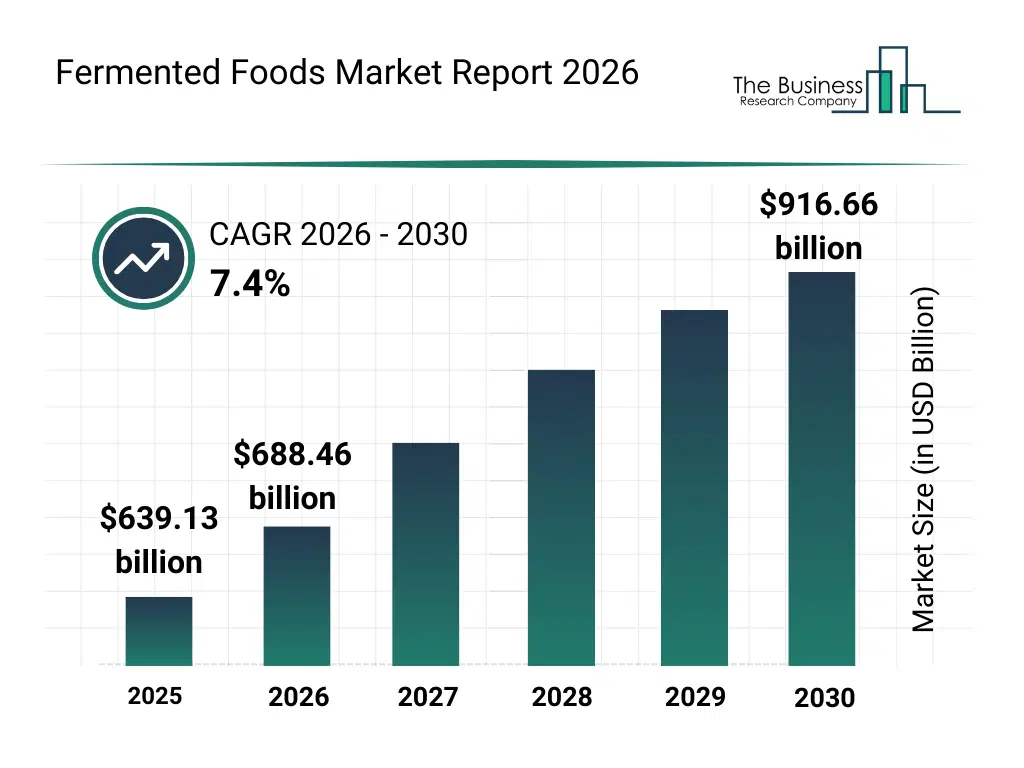
What Is The Fermented Foods Market Size and Share 2026?
The fermented foods market size has grown strongly in recent years. It will grow from $639.13 billion in 2025 to $688.46 billion in 2026 at a compound annual growth rate (CAGR) of 7.7%. The growth in the historic period can be attributed to growth of traditional fermented food consumption, expansion of dairy fermentation practices, increased household adoption of fermented foods, development of commercial fermentation methods, availability of microbial cultures.What Is The Fermented Foods Market Growth Forecast?
The fermented foods market size is expected to see strong growth in the next few years. It will grow to $916.66 billion in 2030 at a compound annual growth rate (CAGR) of 7.4%. The growth in the forecast period can be attributed to increasing demand for gut-health products, rising adoption of functional foods, expansion of fermented beverage categories, growing investments in food biotechnology, increasing focus on clean-label fermented products. Major trends in the forecast period include increasing demand for probiotic-rich foods, growing adoption of traditional fermentation techniques, expansion of plant-based fermented products, increasing use of controlled fermentation processes, enhanced focus on functional nutrition.
Global Fermented Foods Market Segmentation
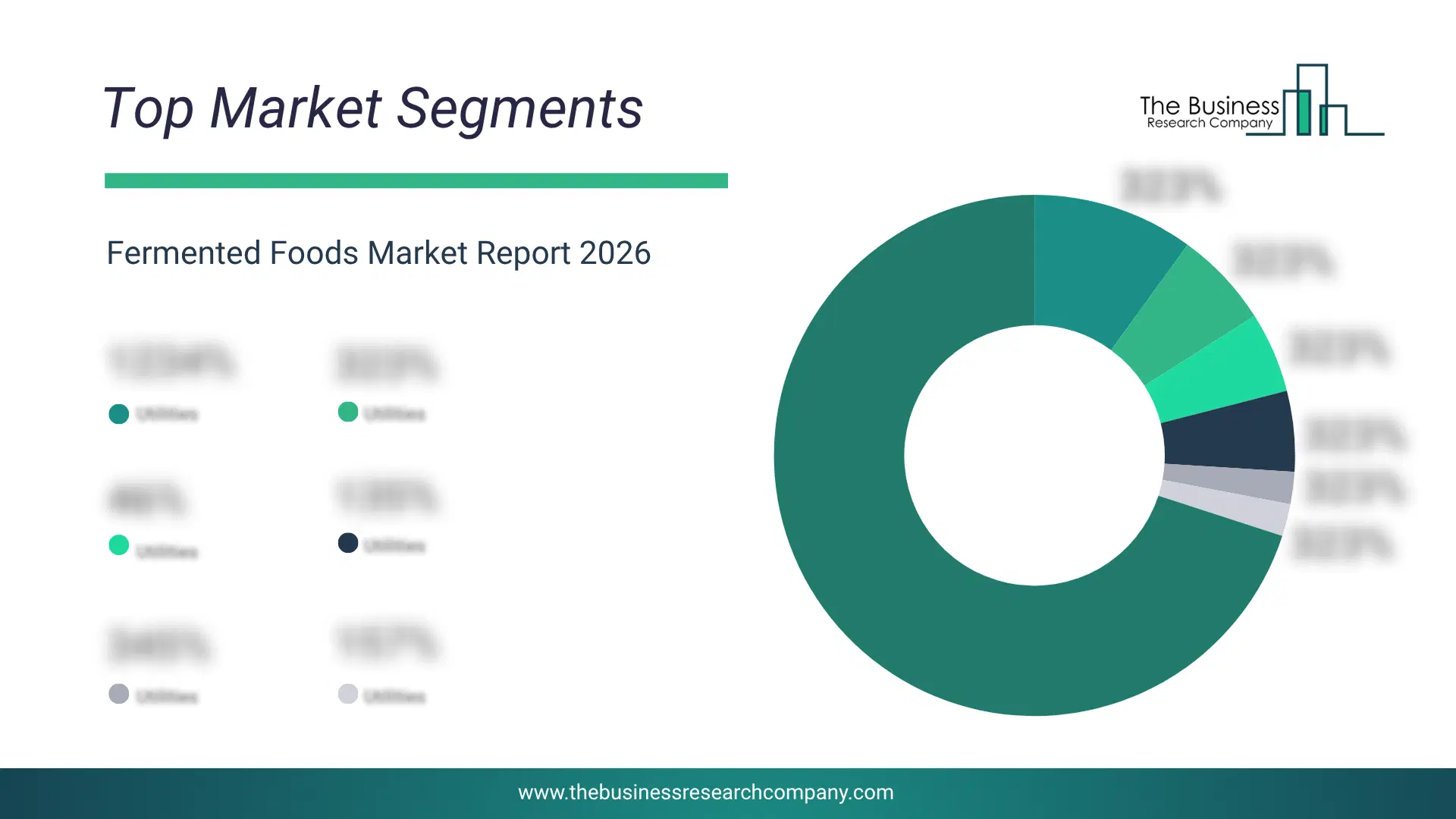
1) By Product Type: Dairy Products, Vegetables, Beverages, Bakery And Confectionery, Other Product Types 2) By Source of Ingredients: Plant-Based, Animal-Based 3) By Fermentation Process: Anaerobic Fermentation, Aerobic Fermentation, Continuous Fermentation, Batch Fermentation, Other Fermentation Processes 4) By Distribution Channel: Supermarkets Or Hypermarkets, Convenience Stores, Online Retail, Specialty Stores, Other Distribution Channels 5) By Application: Household, Food And Beverage Industry, Other Applications Subsegments: 1) By Dairy Products: Yogurt, Cheese, Kefir, Buttermilk, Sour Cream 2) By Vegetables: Sauerkraut, Kimchi, Pickles, Fermented Carrots, Fermented Beets 3) By Beverages: Kombucha, Kefir Drinks, Probiotic Juices, Fermented Tea, Fermented Beer Or Wine Alternatives 4) By Bakery And Confectionery: Sourdough Bread, Fermented Dough Products, Fermented Cakes, Fermented Chocolate, Fermented Candy 5) By Other Product Types: Fermented Soy Products, Fermented Fish And Meat Products, Fermented Grains And Legumes, Fermented Condiments And Sauces, Fermented Fruit Products The top segments in the fermented foods market will be: • Dairy Products will reach $368.6 Billion by 2030. • Beverages will reach $223.4 Billion by 2030. • Vegetables will reach $141.35 Billion by 2030. • Other Product Types will reach $105.67 Billion by 2030. • Bakery And Confectionery will reach $80.76 Billion by 2030.What Is The Driver Of The Fermented Foods Market?
The rising prevalence of digestive issues is expected to propel the growth of the fermented foods market going forward. Digestive issues refer to problems affecting the gastrointestinal system, such as indigestion, bloating, constipation, diarrhea, or acid reflux, that disrupt normal digestion. The prevalence of digestive issues is increasing primarily due to poor dietary habits and the rising consumption of processed foods. Fermented foods help alleviate digestive issues by promoting healthy gut bacteria, improving digestion, and enhancing nutrient absorption. For instance, in July 2023, according to Crohn’s and Colitis Canada, a Canada-based non-profit organization dedicated to supporting research, education, and advocacy for people affected by inflammatory bowel disease, the prevalence of inflammatory bowel disease (IBD) in Canada is projected to rise sharply, increasing from 322,600 individuals in 2023 to 470,000 individuals by 2035. Therefore, the rising prevalence of digestive issues is driving the growth of the fermented foods industry.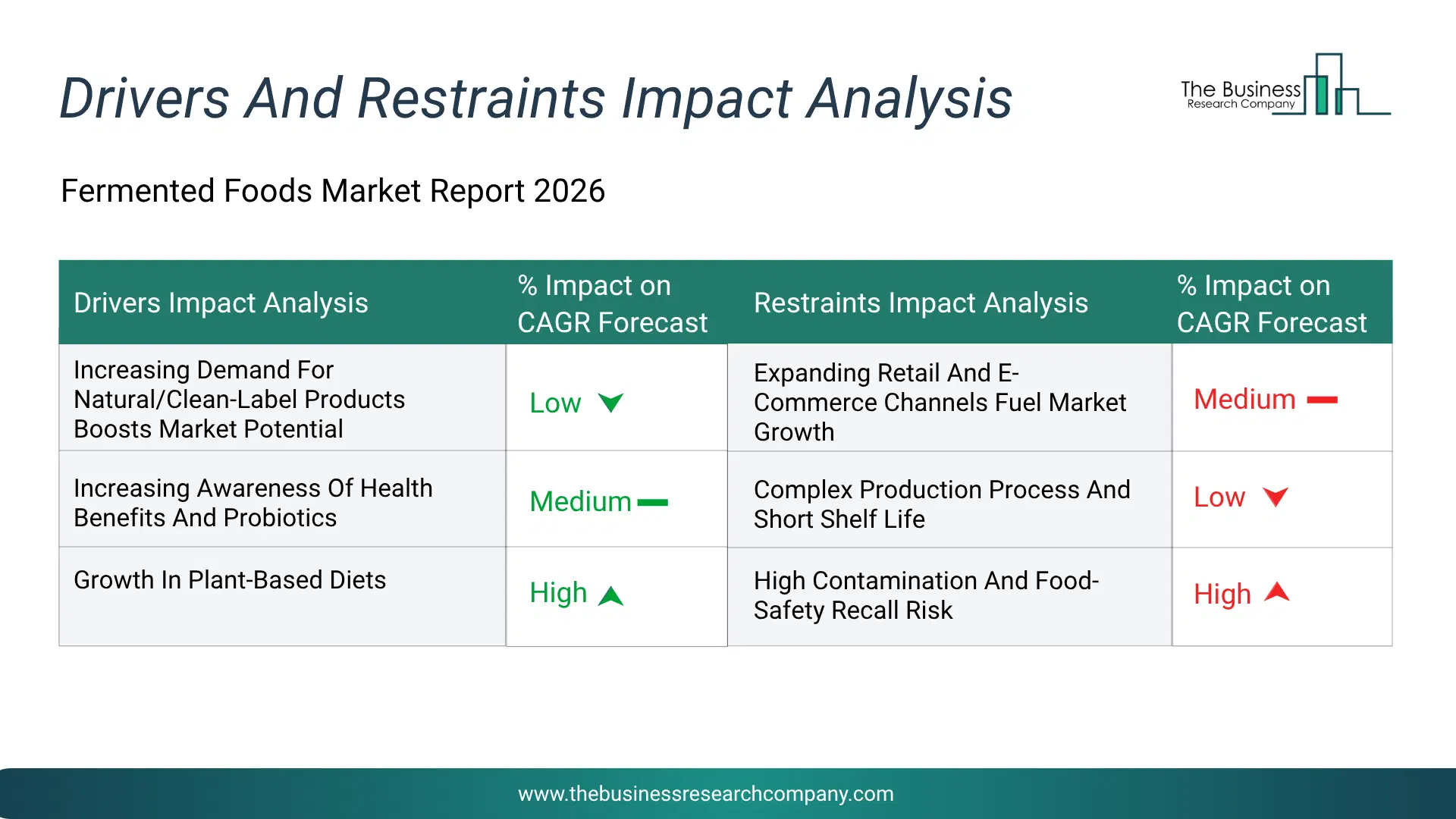
Infographic Chart Showing Key Market Drivers Analysis And Restraints For Fermented Foods Market
The chart presents an impact analysis of key drivers and restraints, quantifying their relative influence on the market's growth rate and helping assess the balance between growth enablers and limiting factors. This chart offers a high-level perspective; the full report contains more detailed insights.
How Will The Drivers Impact Growth In The Global Fermented Foods Market?
• Increasing Demand For Natural/Clean-Label Products Boosts Market Potential (Low) – During the forecast period, the increasing demand for natural/clean-label products boosts market potential is expected to become a key growth driver for the fermented foods market by 2030. Increasing demand for natural/clean-label products boosts market potential acts as a major driver for the fermented foods market because consumers are actively seeking foods with simple ingredients, minimal processing, and no artificial additives. This preference encourages manufacturers to offer traditionally fermented products that align with transparency and authenticity. As a result, products like yogurt, kimchi, and kombucha gain wider acceptance among health-conscious buyers. Companies respond by reformulating products and highlighting clean-label claims to attract more customers. This growing preference significantly accelerates product adoption and market expansion. • Increasing Awareness Of Health Benefits And Probiotics (Medium) – During the forecast period, the increasing awareness of health benefits and probiotics is expected to emerge as a major factor driving the expansion of the fermented foods market by 2030. Increasing awareness of health benefits and probiotics acts as a major driver for the fermented foods market because consumers are becoming more informed about the role of beneficial bacteria in improving digestion and immunity. This awareness increases demand for probiotic-rich foods such as kefir, miso, and sauerkraut. Health professionals and media also promote these benefits, further strengthening consumer trust. As a result, manufacturers invest in functional fermented products with added health claims. This trend drives consistent growth and innovation within the market. • Growth In Plant-Based Diets (High) – During the forecast period, the growth in plant-based diets is expected to act as a key growth catalyst for the fermented foods market by 2030. Growth in plant-based diets acts as a major driver for the fermented foods market because more consumers are shifting toward vegan and vegetarian lifestyles for health, ethical, and environmental reasons. Fermented foods like tempeh and plant-based yogurts serve as important protein and nutrient sources in these diets. This shift encourages companies to expand their plant-based fermented product portfolios. Additionally, fermentation enhances flavor and texture, making plant-based foods more appealing. This rising demand supports strong market growth and diversification.How Will The Restraints Impact Growth In The Global Fermented Foods Market?
• Expanding Retail And E-Commerce Channels Fuel Market Growth (Low) – During the forecast period, the expanding retail and e-commerce channels fuel market growth acts as a major driver for the fermented foods market because improved accessibility allows consumers to easily discover and purchase a wide variety of fermented products. Supermarkets, specialty stores, and online platforms offer greater product visibility and convenience. This expansion helps both established brands and new entrants reach larger audiences. Online channels also enable direct-to-consumer sales and targeted marketing strategies. As a result, increased distribution networks significantly boost overall sales and market penetration. • Complex Production Process And Short Shelf Life (Medium) – During the forecast period, the complex production process and short shelf life act as significant restraints for the fermented foods market by increasing operational challenges and limiting product availability. Fermentation requires precise control of temperature, pH, and microbial activity, making production time-consuming and sensitive to errors. Any deviation can lead to inconsistent quality or spoilage, raising production costs for manufacturers. Additionally, the naturally short shelf life of many fermented products restricts their distribution range and retail presence. As a result, companies face difficulties in scaling production and expanding into distant or emerging markets. • High Contamination And Food-Safety Recall Risk (High) – During the forecast period, the high contamination and food-safety recall risk act as critical restraints for the fermented foods market by affecting consumer trust and increasing regulatory pressure. Since fermentation relies on live microorganisms, there is a higher chance of unintended microbial growth if hygiene and processing standards are not strictly maintained. Contamination incidents can lead to product recalls, financial losses, and damage to brand reputation. Strict food safety regulations further increase compliance costs and operational complexity for producers. Consequently, these risks discourage small-scale manufacturers and slow down overall market growth.Key Players In The Global Fermented Foods Market
Major companies operating in the fermented foods market are Cargill Incorporated, Nestlé S.A., Danone S.A, General Mills Incorporated, Meiji Holdings Company Limited, Yakult Honsha Co. Ltd., Daesang Corporation, Arla Foods Amba, Chobani LLC, Eden Foods Inc., Straus Family Creamery Inc, Fermented Food Holdings Inc., Cleveland Kitchen LLC, Farmhouse Culture LLC, Great Eastern Sun Trading Company Inc., Mama O's Premium Kimchi LLC, Choi’s Kimchi Co. Ltd., Pickled Planet LLC, Alive Ferments LLC, Bombucha.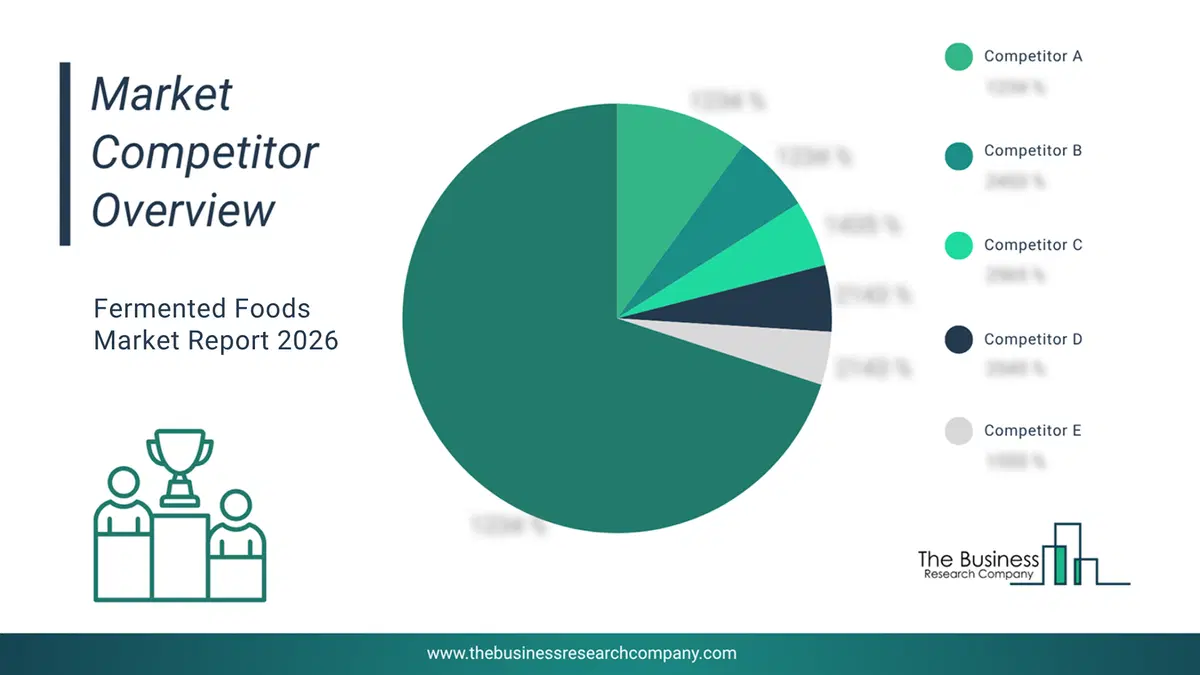
This chart is for illustrative purposes; the full report includes a detailed competitor analysis and comprehensive overview of the top 10 companies in the market.
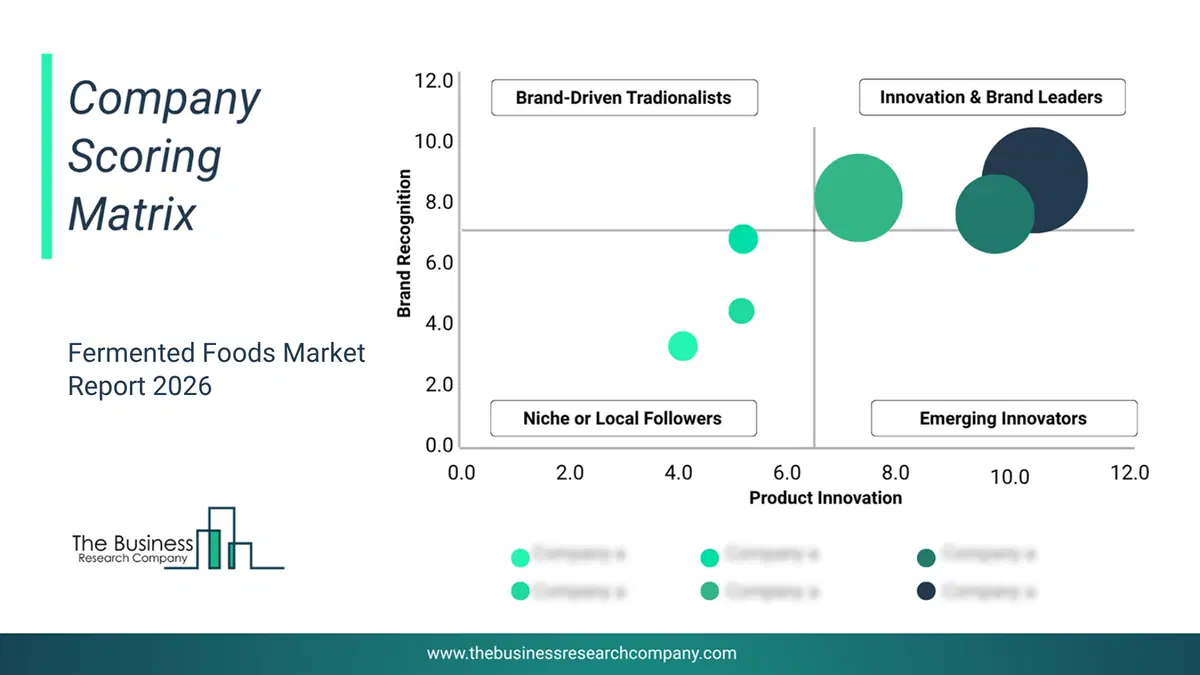
This chart maps companies by product innovation and brand strength, with bubble size indicating relative revenue, helping identify market leaders, challengers, and niche players. This is an illustrative chart; the full report provides a complete and accurate competitive analysis.
Global Fermented Foods Market Trends and Insights
Major companies operating in the fermented foods market are increasingly exploring technological innovations in fermentation, such as precision fermentation, to enhance product development, sustainability, and efficiency. Precision fermentation is an advanced biomanufacturing method that uses engineered microorganisms to produce specific proteins or compounds traditionally sourced from animals or plants, enabling high-quality, animal-free ingredients while potentially reducing environmental impact. For instance, in March 2025, Vivici, a Netherlands-based fermentation ingredients startup, launched Vivitein BLG, a precision-fermented dairy protein produced without cows. The product has been self-affirmed as generally recognized as safe (GRAS) in the US, a company-led safety declaration recognized by the FDA. Vivitein BLG provides the same nutritional benefits as traditional dairy proteins while reportedly using 86% less water and generating 68% lower carbon emissions, enhancing efficiency, product quality, and sustainability in fermented food production and meeting the growing demand for animal-free and environmentally friendly ingredients.What Are Latest Mergers And Acquisitions In The Fermented Foods Market?
In January 2024, SYSTM Foods, a US-based functional beverage brand platform, acquired HUMM Kombucha for an undisclosed amount. With this acquisition, SYSTM Foods gains access to HUMM Kombucha’s established product lines of live, probiotic-rich kombucha, its strong distribution network, and brand recognition in the fermented beverage category, thereby enhancing its product portfolio while expanding its presence in the growing health-focused and functional beverage market. HUMM Kombucha is a US-based provider of raw, live, and unpasteurized kombucha known for its innovative flavors and commitment to delivering high-quality, probiotic-rich fermented beverages.Regional Outlook
Asia-Pacific was the largest region in the fermented foods market in 2025. The regions covered in this market report are Asia-Pacific, South East Asia, Western Europe, Eastern Europe, North America, South America, Middle East and Africa. The countries covered in this market report are Australia, Brazil, China, France, Germany, India, Indonesia, Japan, Taiwan, Russia, South Korea, UK, USA, Italy, Spain, CanadaWhat Defines the Fermented Foods Market?
The fermented foods market consists of sales of yogurt, kimchi, sauerkraut, miso, tempeh, and kombucha. Values in this market are ‘factory gate’ values, that is the value of goods sold by the manufacturers or creators of the goods, whether to other entities (including downstream manufacturers, wholesalers, distributors and retailers) or directly to end customers. The value of goods in this market includes related services sold by the creators of the goods.How is Market Value Defined and Measured?
The market value is defined as the revenues that enterprises gain from the sale of goods and/or services within the specified market and geography through sales, grants, or donations in terms of the currency (in USD unless otherwise specified). The revenues for a specified geography are consumption values that are revenues generated by organizations in the specified geography within the market, irrespective of where they are produced. It does not include revenues from resales along the supply chain, either further along the supply chain or as part of other products.
This chart presents market attractiveness based on a quantitative evaluation of growth, competition, strategic alignment, and risk, offering a clear view of opportunity areas for decision-making. This chart is for illustrative purposes; the full report contains the complete analysis.

This chart highlights the Total Addressable Market (TAM) by estimating the maximum revenue opportunity using an assumption-driven approach, supporting strategic planning and opportunity sizing across markets. The chart is illustrative; the full report provides a more comprehensive analysis.
What Key Data and Analysis Are Included in the Fermented Foods Market Report 2026?
The fermented foods market research report is one of a series of new reports from The Business Research Company that provides market statistics, including industry global market size, regional shares, competitors with the market share, detailed market segments, market trends and opportunities, and any further data you may need to thrive in the fermented foods industry. The market research report delivers a complete perspective of everything you need, with an in-depth analysis of the current and future state of the industry.Fermented Foods Market Report Forecast Analysis
| Report Attribute | Details |
|---|---|
| Market Size Value In 2026 | $688.46 billion |
| Revenue Forecast In 2030 | $916.66 billion |
| Growth Rate | CAGR of 7.7% from 2026 to 2030 |
| Base Year For Estimation | 2025 |
| Actual Estimates/Historical Data | 2020-2025 |
| Forecast Period | 2026 - 2030 |
| Market Representation | Revenue in USD Billion and CAGR from 2026 to 2030 |
| Segments Covered | Product Type, Source of Ingredients, Fermentation Process, Distribution Channel, Application |
| Regional Scope | Asia-Pacific, Western Europe, Eastern Europe, North America, South America, Middle East, Africa |
| Country Scope | The countries covered in the report are Australia, Brazil, China, France, Germany, India, Indonesia, Japan, Taiwan, Russia, South Korea, UK, USA, Canada, Italy, Spain. |
| Key Companies Profiled | Cargill Incorporated, Nestlé S.A., Danone S.A, General Mills Incorporated, Meiji Holdings Company Limited, Yakult Honsha Co. Ltd., Daesang Corporation, Arla Foods Amba, Chobani LLC, Eden Foods Inc., Straus Family Creamery Inc, Fermented Food Holdings Inc., Cleveland Kitchen LLC, Farmhouse Culture LLC, Great Eastern Sun Trading Company Inc., Mama O's Premium Kimchi LLC, Choi’s Kimchi Co. Ltd., Pickled Planet LLC, Alive Ferments LLC, Bombucha. |
| Customization Scope | Request for Customization |
| Pricing And Purchase Options | Explore Purchase Options |