
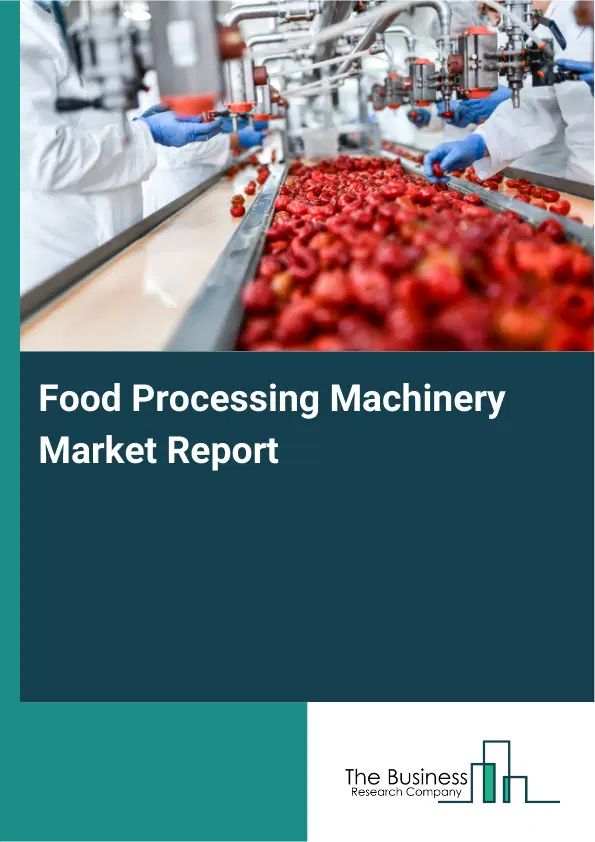
Food Processing Machinery Market Report 2026
Global Outlook – By Type (Depositor, Extruding Machines, Mixers, Refrigeration, Slicers And Dicers, Other Types), By Mode Of Operation (Semiautomatic, Fully Automatic), By Application (Bakery And Confectionery, Meat, Poultry And Seafood, Dairy, Beverages, Other Applications) – Market Size, Trends, Strategies, and Forecast to 2030
Food Processing Machinery Market Overview
• Food Processing Machinery market size has reached to $64.81 billion in 2025 • Expected to grow to $87.14 billion in 2030 at a compound annual growth rate (CAGR) of 6.3% • Growth Driver: Growing Demand For Processed Food Fuels Expansion Of The Food Processing Machinery Market • Market Trend: Innovative Tools Revolutionizing The Food Processing Machinery Market • Europe was the largest region in 2025 and Asia-Pacific is the fastest growing region.Market Gains By 2030 – Top Opportunities By Segment
Market Gain identifies the most promising market opportunities by highlighting the segments or products expected to generate the highest incremental revenue growth over the next five years.
What Is Covered Under Food Processing Machinery Market?
Food processing machinery refers to a wide range of equipment, tools, and machines that are specifically designed and used for the processing, preparation, handling, packaging, and preservation of food products. These food processing tools are used for a variety of food items, from baked goods to beverages and dairy products. The main types of food processing machinery are depositors, extruding machines, mixers, refrigeration, slicers and dicers, and others, which are available with various modes of operation, such as semiautomatic and fully automatic. A food depositor refers to a machine used in the food industry to deposit or dispense precise amounts of food products, such as batters, fillings, and doughs, onto a conveyor or into containers. These are used in several applications including bakery and confectionery, meat, poultry and seafood, dairy, beverages, and others.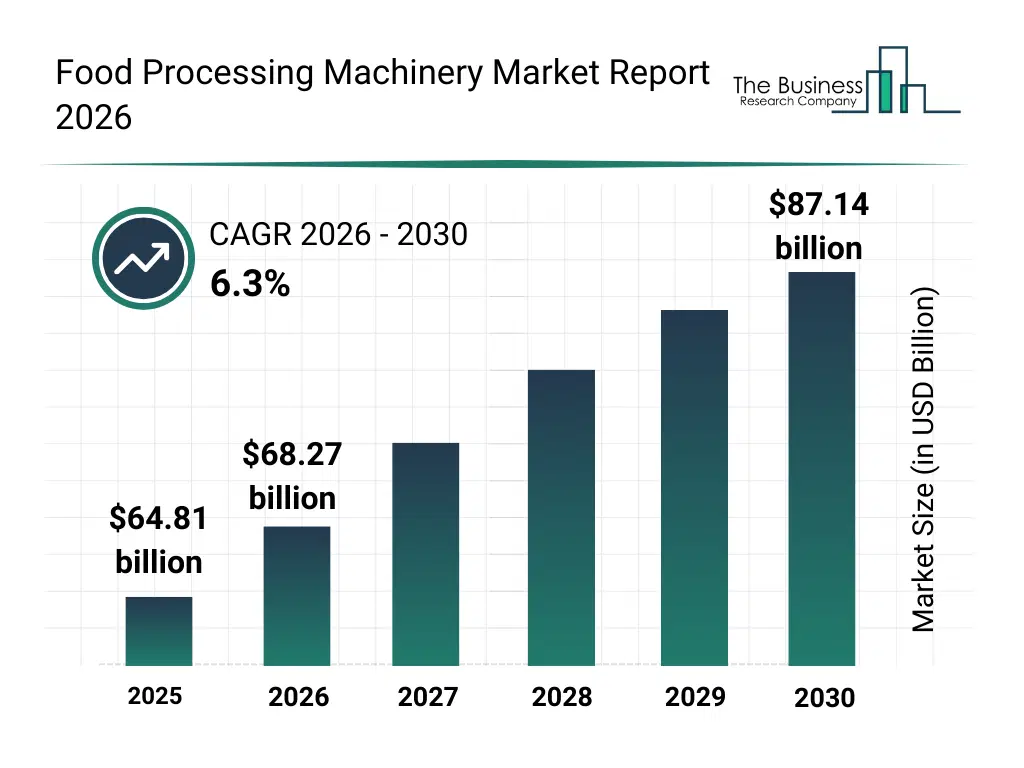
What Is The Food Processing Machinery Market Size and Share 2026?
The food processing machinery market size has grown strongly in recent years. It will grow from $64.81 billion in 2025 to $68.27 billion in 2026 at a compound annual growth rate (CAGR) of 5.3%. The growth in the historic period can be attributed to expansion of industrial food manufacturing, rising demand for packaged foods, growth in cold chain infrastructure, increasing adoption of mechanized food handling, availability of advanced processing equipment.What Is The Food Processing Machinery Market Growth Forecast?
The food processing machinery market size is expected to see strong growth in the next few years. It will grow to $87.14 billion in 2030 at a compound annual growth rate (CAGR) of 6.3%. The growth in the forecast period can be attributed to increasing investments in smart factories, rising adoption of AI-driven process optimization, expansion of global food supply chains, growing demand for sustainable processing solutions, increasing focus on waste reduction. Major trends in the forecast period include increasing adoption of automated food processing equipment, rising integration of smart monitoring systems, growing demand for high-throughput machinery, expansion of modular processing lines, enhanced focus on food safety compliance.
Global Food Processing Machinery Market Segmentation
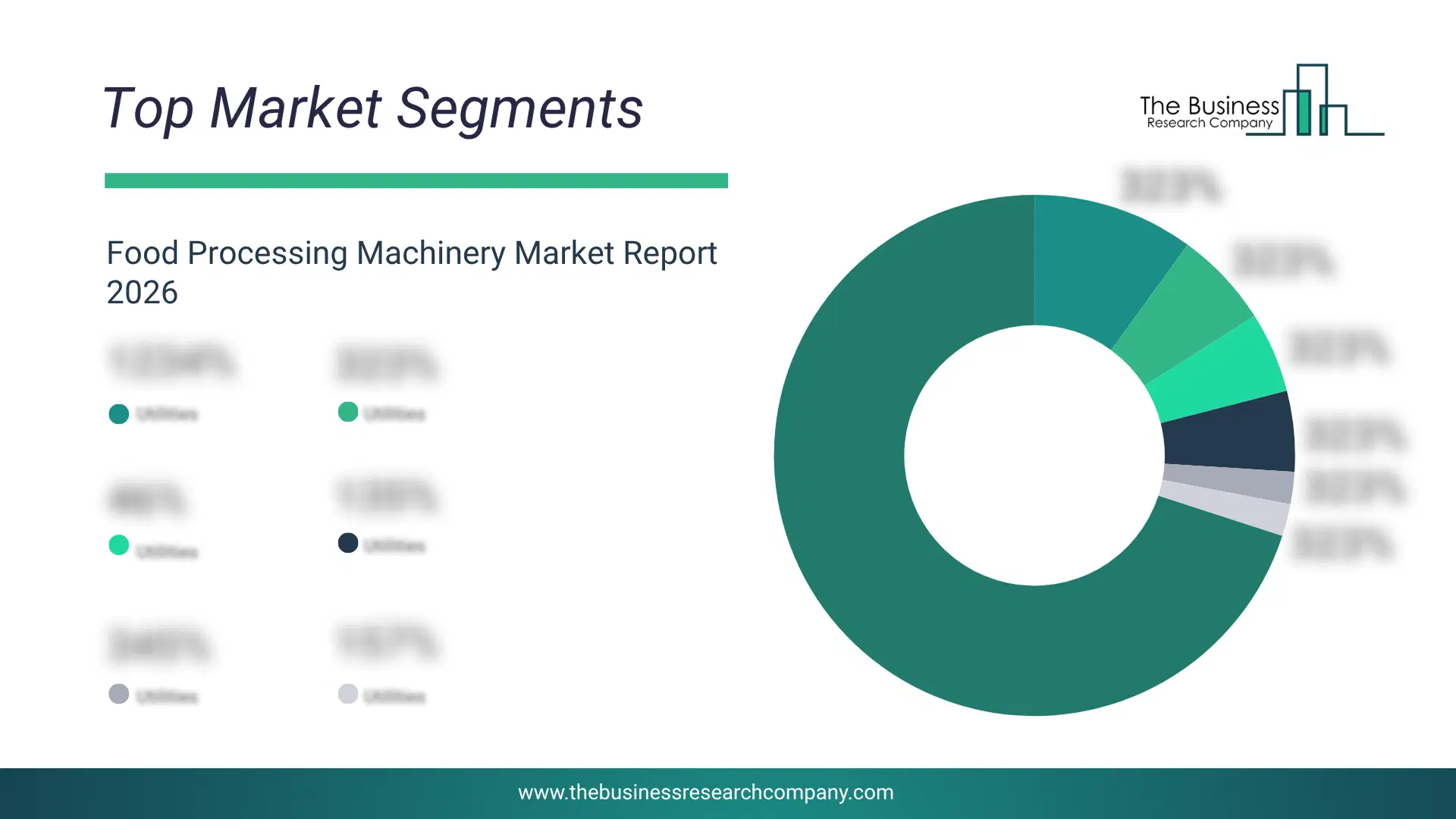
1) By Type: Depositor, Extruding Machines, Mixers, Refrigeration, Slicers And Dicers, Other Types 2) By Mode Of Operation: Semiautomatic, Fully Automatic 3) By Application: Bakery And Confectionery, Meat, Poultry And Seafood, Dairy, Beverages, Other Applications Subsegments: 1) By Depositor: Cookie Depositors, Cake Depositors, Chocolate Depositors 2) By Extruding Machines: Single-Screw Extruders, Twin-Screw Extruders, Sheet Extruders 3) By Mixers: Planetary Mixers, Ribbon Mixers, Batch Mixers 4) By Refrigeration: Industrial Refrigeration Systems, Blast Freezers, Refrigerated Storage Units 5) By Slicers And Dicers: Vegetable Slicers, Meat Slicers, Fruit Dicers 6) By Other Types: Filling Machines, Packaging Machines, Cooking Equipment The top segments in the food processing machinery market will be: • Refrigeration will reach $20.99 Billion by 2030. • Mixers will reach $18.94 Billion by 2030. • Extruding Machines will reach $17.11 Billion by 2030. • Depositor will reach $10.17 Billion by 2030. • Slicers And Dicers will reach $10.13 Billion by 2030.What Is The Driver Of The Food Processing Machinery Market?
Increased demand for processed food is expected to propel the growth of the food processing machinery market. Processed foods refer to any type of food that is not in its natural state and has been subjected to some sort of food processing. This can include foods that have been cooked, canned, frozen, dried, or packaged. These food processing procedures can be carried out using food processing machinery. For instance, in July 20234, according to the American Frozen Food Institute (AFFI), a US-based professional organization, frozen fruit rose 8.8% in unit sales during the first half of 2023, while various meats, including processed chicken (+9.6%), breakfast sausage (+7.4%), and beef (+3.1%), and frozen meal solutions, such as pizza (+1.3%), side dishes (+3.2%), and potato products like fries (+0.6%) and tater tots (+8.2%), also saw increases. Therefore, the increased consumption of processed food is driving the food processing machinery industry.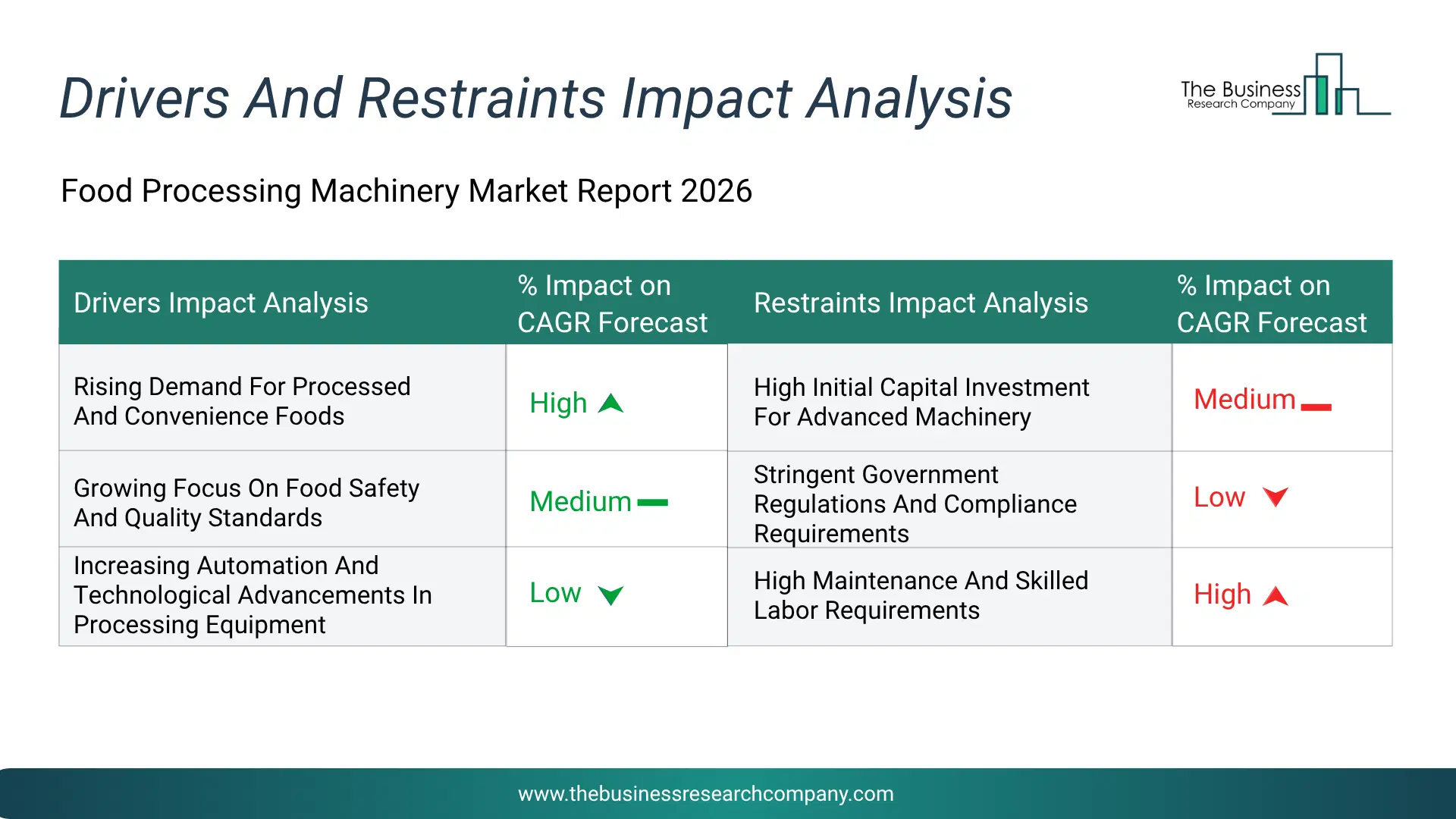
Infographic Chart Showing Key Market Drivers Analysis And Restraints For Food Processing Machinery Market
The chart presents an impact analysis of key drivers and restraints, quantifying their relative influence on the market's growth rate and helping assess the balance between growth enablers and limiting factors. This chart offers a high-level perspective; the full report contains more detailed insights.
How Will The Drivers Impact Growth In The Global Food Processing Machinery Market?
• Rising Demand For Processed And Convenience Foods (High) – During the forecast period, the rising demand for processed and convenience foods is expected to become a key growth driver for the food processing machinery market by 2030. Rising demand for processed and convenience foods is driving growth in the food processing machinery market as changing consumer lifestyles, urbanization, and busy schedules increase preference for ready-to-eat, packaged, and easy-to-prepare food products. Food manufacturers are investing in advanced processing equipment to enhance production capacity, maintain product quality, improve shelf life, and meet growing global demand efficiently. • Growing Focus On Food Safety And Quality Standards (Medium) – During the forecast period, the growing focus on food safety and quality standards is expected to emerge as a major factor driving the expansion of the food processing machinery market by 2030. Growing focus on food safety and quality standards is driving growth in the food processing machinery market as manufacturers increasingly adopt advanced equipment to maintain hygiene, reduce contamination risks, ensure product consistency, and comply with strict regulatory requirements. Modern food processing machinery supports automated cleaning, precise control, and traceability, helping producers deliver safer and higher-quality food products. • Increasing Automation And Technological Advancements In Processing Equipment (Low) – During the forecast period, the increasing automation and technological advancements in processing equipment are expected to act as a key growth catalyst for the food processing machinery market by 2030. Increasing automation and technological advancements in processing equipment are driving growth in the food processing machinery market as manufacturers seek higher productivity, lower labor dependence, improved precision, and reduced operational costs. Advanced machinery with smart controls, robotics, real-time monitoring, and continuous processing capabilities helps food producers enhance efficiency, consistency, and scalability in modern production facilities.How Will The Restraints Impact Growth In The Global Food Processing Machinery Market?
• High Initial Capital Investment For Advanced Machinery (High) – During the forecast period, the high initial capital investment for advanced machinery is restraining growth in the food processing machinery market as purchasing, installing, and integrating modern equipment requires substantial upfront spending. These high costs can discourage small and medium-sized food manufacturers, delay expansion projects, and extend return on investment periods, especially in price-sensitive markets. • Stringent Government Regulations And Compliance Requirements (Medium) – During the forecast period, the stringent government regulations and compliance requirements are restraining growth in the food processing machinery market as manufacturers must meet strict standards related to food safety, hygiene, emissions, worker safety, and equipment certification. Compliance increases documentation, testing, and upgrade costs while adding operational complexity, especially for smaller producers and exporters. • High Maintenance And Skilled Labor Requirements (Low) – During the forecast period, the high maintenance and skilled labor requirements are restraining growth in the food processing machinery market as advanced equipment requires regular servicing, calibration, and technical expertise to ensure efficient and hygienic operations. Shortages of trained operators and maintenance personnel can increase downtime, raise operating costs, and limit adoption, particularly among small and mid-sized manufacturers.Key Players In The Global Food Processing Machinery Market
Major companies operating in the food processing machinery market are Tetra Laval International S.A., SPX Corporation, Nichimo Co Ltd., GEA Group AG, Hosokawa Micron Corp., John Bean Technologies Corporation, Heat and Control Inc., Tomora Systems ASA, AFE Group Ltd., Bühler AG, Krones AG, Alfa Laval AB, Meyer Industries Inc., Baader North America Corporation, Satake Corp., The Middleby Corp., Bucher Industries AG, Marel, Clextral, Fenco Food Machinery, Braunschweigische Maschinenbauanstalt AG, KHS GmbH, Bizerba SE & Co. KG, Atlas Pacific Engineering Company Inc., Duravant Company, Asea Brown Boveri Ltd., Baader, Mecatherm, FAM Stumabo, Rheon Automatic Machinery Co. Ltd., Heatcraft Worldwide Refrigeration, Anko Food Machine Co. Ltd., Baker Perkins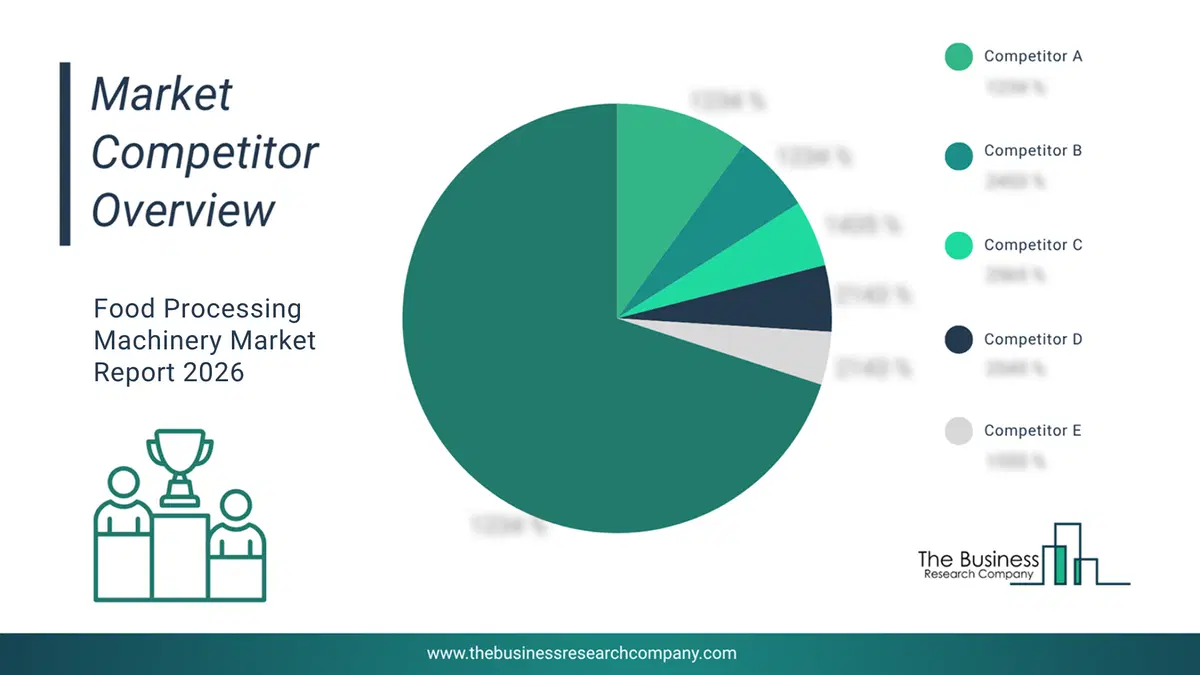
This chart is for illustrative purposes; the full report includes a detailed competitor analysis and comprehensive overview of the top 10 companies in the market.
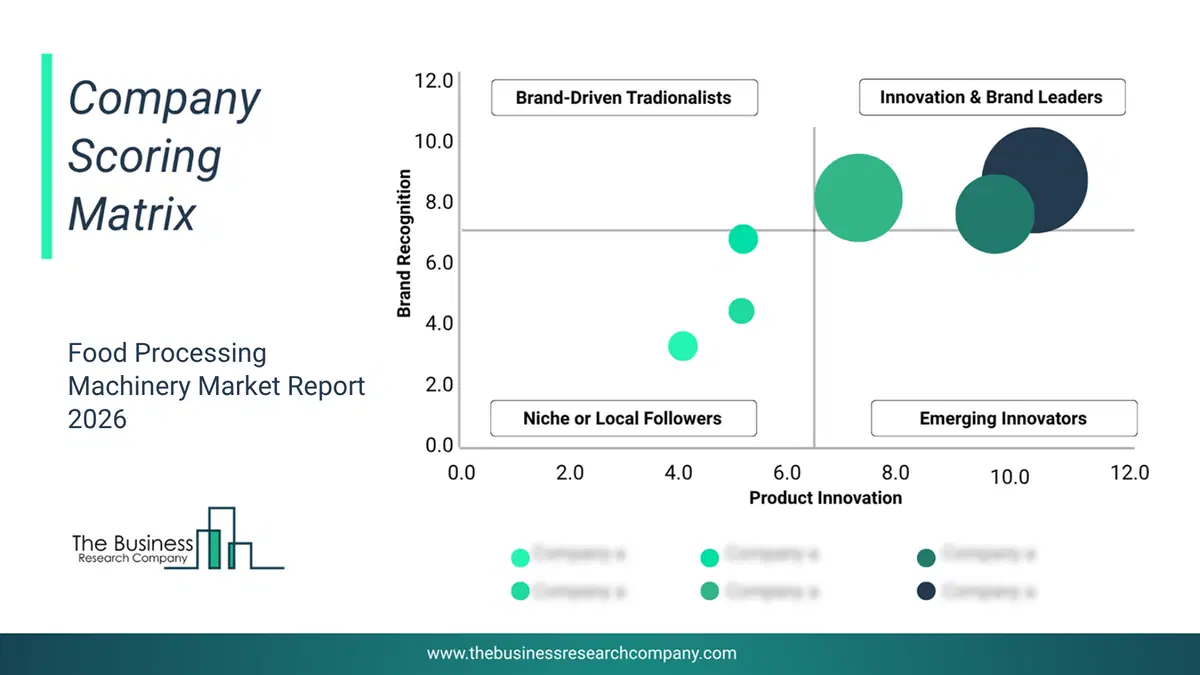
This chart maps companies by product innovation and brand strength, with bubble size indicating relative revenue, helping identify market leaders, challengers, and niche players. This is an illustrative chart; the full report provides a complete and accurate competitive analysis.
Global Food Processing Machinery Market Trends and Insights
Major companies operating in the food processing machinery market are focusing on innovative products, such as food processing automation solutions to enhance efficiency, improve product quality, and meet the evolving demands of consumers for safer and more sustainable food processing solutions. Food processing automation solutions refer to the use of advanced technology and systems to streamline, control, and enhance various stages of food production, including processing, packaging, and quality control. For instance, in March 2024, Fortifi Food Processing Solutions, a New Zealand-based company specializing in food processing machinery and automation solutions, launched a food processing automation platform aimed at transforming the food manufacturing industry. This innovative platform is designed to enhance operational efficiency and streamline processes for food manufacturers by integrating advanced automation technologies. Fortifi’s platform utilizes cutting-edge data analytics and artificial intelligence to optimize production lines, reduce waste, and improve product quality.What Are Latest Mergers And Acquisitions In The Food Processing Machinery Market?
In November 2024, The Middleby Corporation, a US-based commercial kitchen and food-processing equipment company, acquired JC Ford Inc., for an undisclosed amount. Through this acquisition, Middleby aims to strengthen its presence in the growing snack food category and expand its automated, full-line solutions for tortilla and chip production. JC Ford Inc., is a US-based manufacturer providing automated production systems for corn and flour tortillas, tortilla chips, and other corn-based snack products.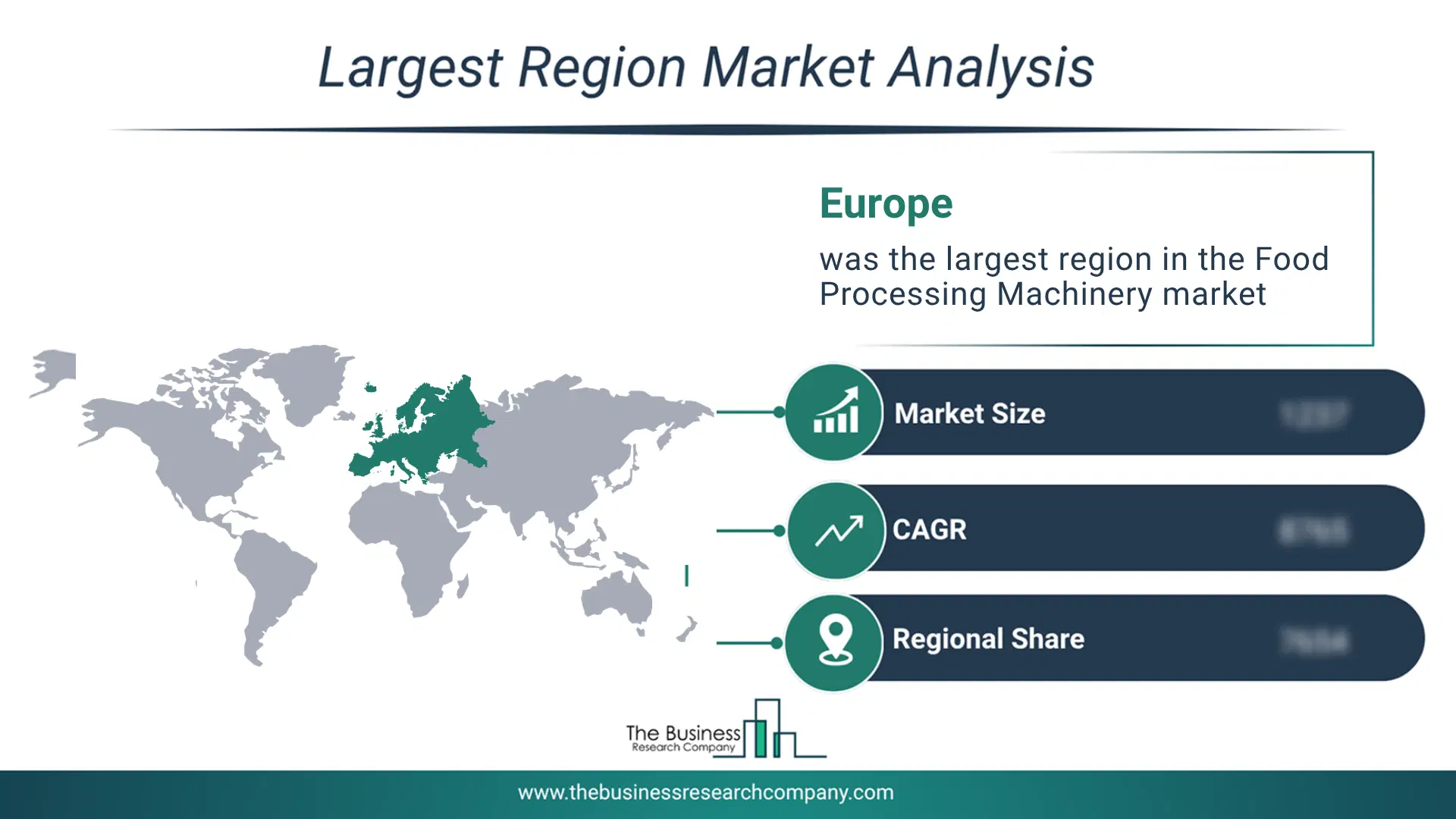
Regional Outlook
Europe was the largest region in the food processing machinery market in 2025.Asia-Pacific is expected to be the fastest-growing region in the global food processing machinery market report during the forecast period. The regions covered in this market report are Asia-Pacific, South East Asia, Western Europe, Eastern Europe, North America, South America, Middle East, Africa The countries covered in this market report are Australia, Brazil, China, France, Germany, India, Indonesia, Japan, Taiwan, Russia, South Korea, UK, USA, Canada, Italy, Spain.What Defines the Food Processing Machinery Market?
The food processing machinery market consists of sales of bowl choppers, marinating injectors, meat bandsaws, marinating vacuum tumblers, meat grinders, and others. Values in this market are ‘factory gate’ values, that is the value of goods sold by the manufacturers or creators of the goods, whether to other entities (including downstream manufacturers, wholesalers, distributors, and retailers) or directly to end customers. The value of goods in this market includes related services sold by the creators of the goods.How is Market Value Defined and Measured?
The market value is defined as the revenues that enterprises gain from the sale of goods and/or services within the specified market and geography through sales, grants, or donations in terms of the currency (in USD unless otherwise specified). The revenues for a specified geography are consumption values that are revenues generated by organizations in the specified geography within the market, irrespective of where they are produced. It does not include revenues from resales along the supply chain, either further along the supply chain or as part of other products.
This chart presents market attractiveness based on a quantitative evaluation of growth, competition, strategic alignment, and risk, offering a clear view of opportunity areas for decision-making. This chart is for illustrative purposes; the full report contains the complete analysis.

This chart highlights the Total Addressable Market (TAM) by estimating the maximum revenue opportunity using an assumption-driven approach, supporting strategic planning and opportunity sizing across markets. The chart is illustrative; the full report provides a more comprehensive analysis.
What Key Data and Analysis Are Included in the Food Processing Machinery Market Report 2026?
The food processing machinery market research report is one of a series of new reports from The Business Research Company that provides market statistics, including industry global market size, regional shares, competitors with the market share, detailed market segments, market trends and opportunities, and any further data you may need to thrive in the food processing machinery industry. The market research report delivers a complete perspective of everything you need, with an in-depth analysis of the current and future state of the industry.Food Processing Machinery Market Report Forecast Analysis
| Report Attribute | Details |
|---|---|
| Market Size Value In 2026 | $68.27 billion |
| Revenue Forecast In 2030 | $87.14 billion |
| Growth Rate | CAGR of 5.3% from 2026 to 2030 |
| Base Year For Estimation | 2025 |
| Actual Estimates/Historical Data | 2020-2025 |
| Forecast Period | 2026 - 2030 |
| Market Representation | Revenue in USD Billion and CAGR from 2026 to 2030 |
| Segments Covered | Type, Mode Of Operation, Application |
| Regional Scope | Asia-Pacific, Western Europe, Eastern Europe, North America, South America, Middle East, Africa |
| Country Scope | The countries covered in the report are Australia, Brazil, China, France, Germany, India, Indonesia, Japan, Taiwan, Russia, South Korea, UK, USA, Canada, Italy, Spain. |
| Key Companies Profiled | Tetra Laval International S.A., SPX Corporation, Nichimo Co Ltd., GEA Group AG, Hosokawa Micron Corp., John Bean Technologies Corporation, Heat and Control Inc., Tomora Systems ASA, AFE Group Ltd., Bühler AG, Krones AG, Alfa Laval AB, Meyer Industries Inc., Baader North America Corporation, Satake Corp., The Middleby Corp., Bucher Industries AG, Marel, Clextral, Fenco Food Machinery, Braunschweigische Maschinenbauanstalt AG, KHS GmbH, Bizerba SE & Co. KG, Atlas Pacific Engineering Company Inc., Duravant Company, Asea Brown Boveri Ltd., Baader, Mecatherm, FAM Stumabo, Rheon Automatic Machinery Co. Ltd., Heatcraft Worldwide Refrigeration, Anko Food Machine Co. Ltd., Baker Perkins |
| Customization Scope | Request for Customization |
| Pricing And Purchase Options | Explore Purchase Options |