
Hot Food Processing Equipment Market Report 2026
Global Outlook – By Type (Baking Equipment, Evaporation Equipment, Pasteurization Equipment, Dehydration Equipment, Roasting and Grilling Equipment, Frying Equipment, Sterilization Equipment, Blanching Equipment, Other Types), By Mode of Operation (Automatic, Semi-Automatic, Manual), By End-User (Food Processing Industries, Food Service Industry) – Market Size, Trends, Strategies, and Forecast to 2030
Hot Food Processing Equipment Market Overview
• Hot Food Processing Equipment market size has reached to $26.05 billion in 2025 • Expected to grow to $34.89 billion in 2030 at a compound annual growth rate (CAGR) of 6% • Growth Driver: Increasing Demand For Meat And Poultry Products Propels Growth In The Hot Food Processing Equipment Market • Market Trend: Emerging Technological Advancements In The Hot Food Processing Equipment Market • Asia-Pacific was the largest region and fastest growing region.Market Gains By 2030 – Top Opportunities By Segment
Market Gain identifies the most promising market opportunities by highlighting the segments or products expected to generate the highest incremental revenue growth over the next five years.
What Is Covered Under Hot Food Processing Equipment Market?
Hot food processing equipment refers to food processing equipment that can alter the physical, chemical, biochemical, and biological properties of the food, improving its overall quality, including ovens, blanchers, dryers, and heat exchangers. The hot food processing includes revenue earned by entities by providing of blanching, pasteurization, sterilization, infrared heater. The market value includes the value of related goods sold by the service provider or included within the service offering. Only goods and services traded between entities or sold to end consumers are included.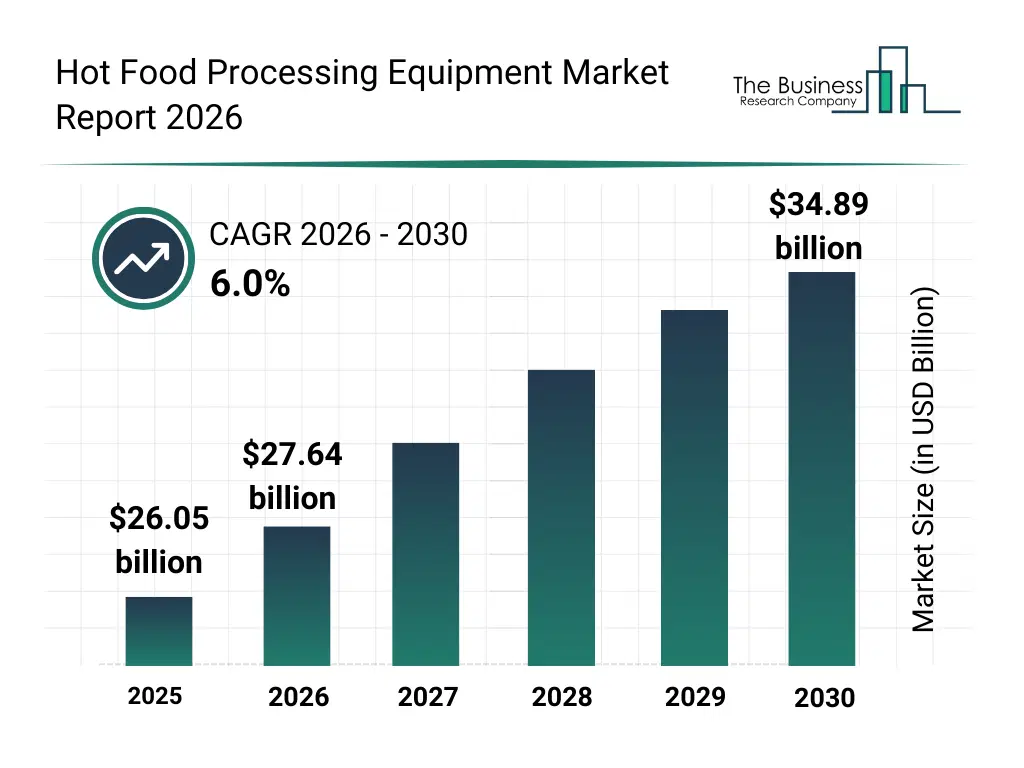
What Is The Hot Food Processing Equipment Market Size and Share 2026?
The hot food processing equipment market size has grown strongly in recent years. It will grow from $26.05 billion in 2025 to $27.64 billion in 2026 at a compound annual growth rate (CAGR) of 6.1%. The growth in the historic period can be attributed to expansion of processed food consumption, growth of commercial food manufacturing facilities, increasing demand for shelf-stable food products, adoption of industrial cooking technologies, rising investment in food safety compliance.What Is The Hot Food Processing Equipment Market Growth Forecast?
The hot food processing equipment market size is expected to see strong growth in the next few years. It will grow to $34.89 billion in 2030 at a compound annual growth rate (CAGR) of 6.0%. The growth in the forecast period can be attributed to increasing demand for ready-to-eat food products, rising adoption of smart food processing plants, expansion of energy-efficient cooking technologies, growing focus on sustainable food manufacturing, increasing automation in food service operations. Major trends in the forecast period include increasing adoption of automated food processing lines, rising demand for energy-efficient heating equipment, growing integration of hygienic processing designs, expansion of high-capacity thermal processing systems, enhanced focus on product quality and safety control.
Global Hot Food Processing Equipment Market Segmentation
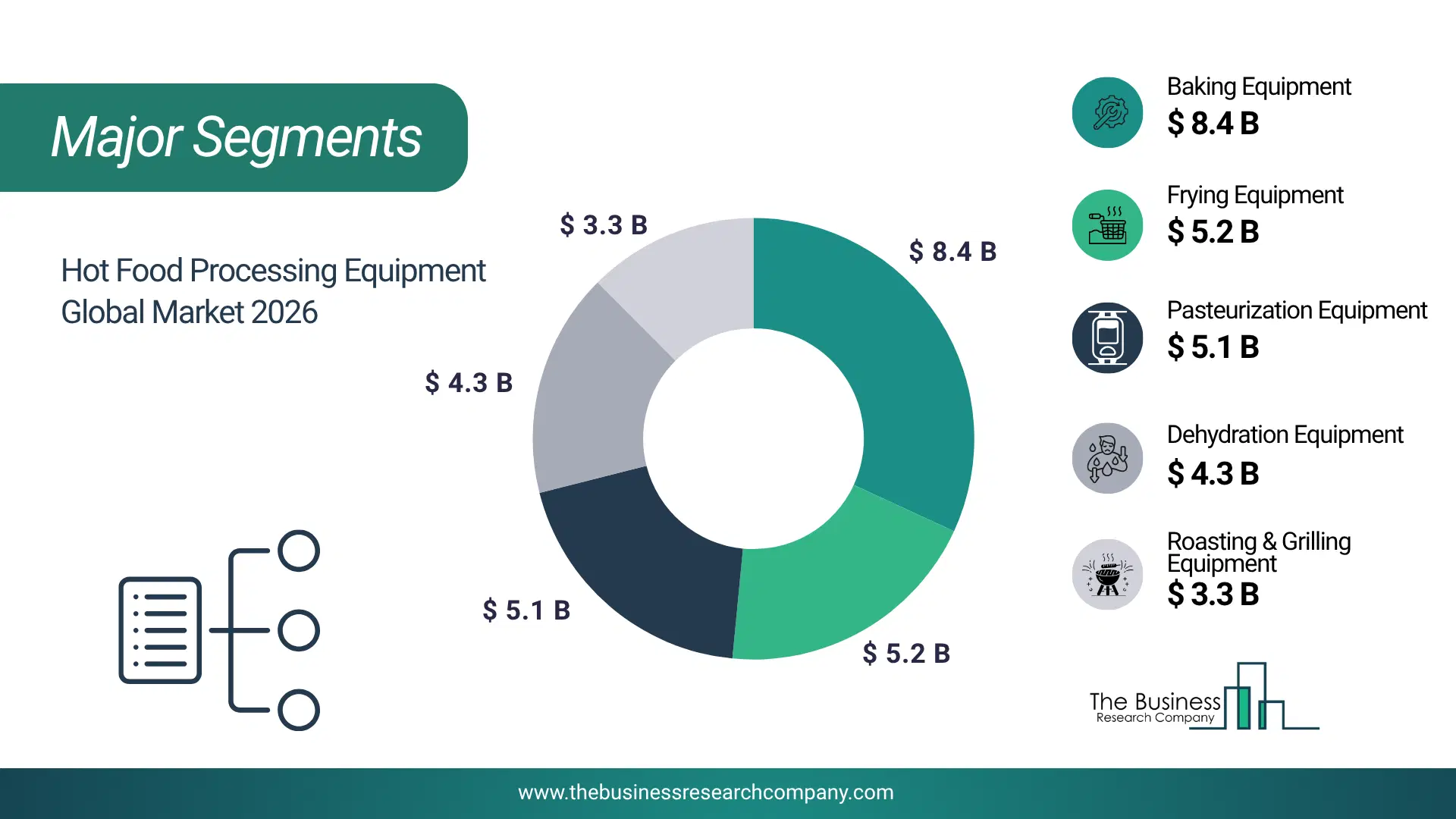
1) By Type: Baking Equipment, Evaporation Equipment, Pasteurization Equipment, Dehydration Equipment, Roasting and Grilling Equipment, Frying Equipment, Sterilization Equipment, Blanching Equipment, Other Types 2) By Mode of Operation: Automatic, Semi-Automatic, Manual 3) By End-User: Food Processing Industries, Food Service Industry Subsegments: 1) By Baking Equipment: Ovens, Mixers And Dough Sheeters 2) By Evaporation Equipment: Falling Film Evaporators, Rising Film Evaporators 3) By Pasteurization Equipment: Plate Pasteurizers, Tubular Pasteurizers 4) By Dehydration Equipment: Tray Dehydrators, Continuous Belt Dehydrators 5) By Roasting and Grilling Equipment: Commercial Ovens, Griddles And Charbroilers 6) By Frying Equipment: Deep Fryers, Pressure Fryers 7) By Sterilization Equipment: Autoclaves, Steam Sterilizers 8) By Blanching Equipment: Batch Blanchers, Continuous Blanchers 9) By Other Types: Cooking and Holding Equipment, Specialty Food Processing Equipment The top segments in the hot food processing equipment market will be: • Baking Equipment will reach $8.36 billion by 2030. • Frying Equipment will reach $5.15 billion by 2030. • Pasteurization Equipment will reach $5.14 billion by 2030. • Dehydration Equipment will reach $4.32 billion by 2030. • Roasting & Grilling Equipment will reach $3.3 billion by 2030.What Is The Driver Of The Hot Food Processing Equipment Market?
Increasing demand for meat and poultry products is expected to propel the growth of the hot food processing equipment market going forward. Meat and poultry products are foods derived from the flesh of animals, such as beef, chicken, or pork, and can include various cuts, processed items, and by-products. Hot food processing equipment for meat and poultry products refers to machinery and tools designed for cooking, sterilizing, or otherwise handling these products at elevated temperatures to ensure food safety and quality. For instance, in November 2023, the Organisation for Economic Co-operation and Development (OECD), a France-based international government organization and the Food and Agriculture Organization (FAO), specialized agency of the United Nations published that poultry meat production is expected to surpass the output of other meat sources like pork, beef, and lamb, reaching over 139 million metric tons (mt) in 2023, marking an increase of 3% from 2022. Therefore, the increasing demand for meat and poultry products is driving the growth of the hot food processing equipment industry.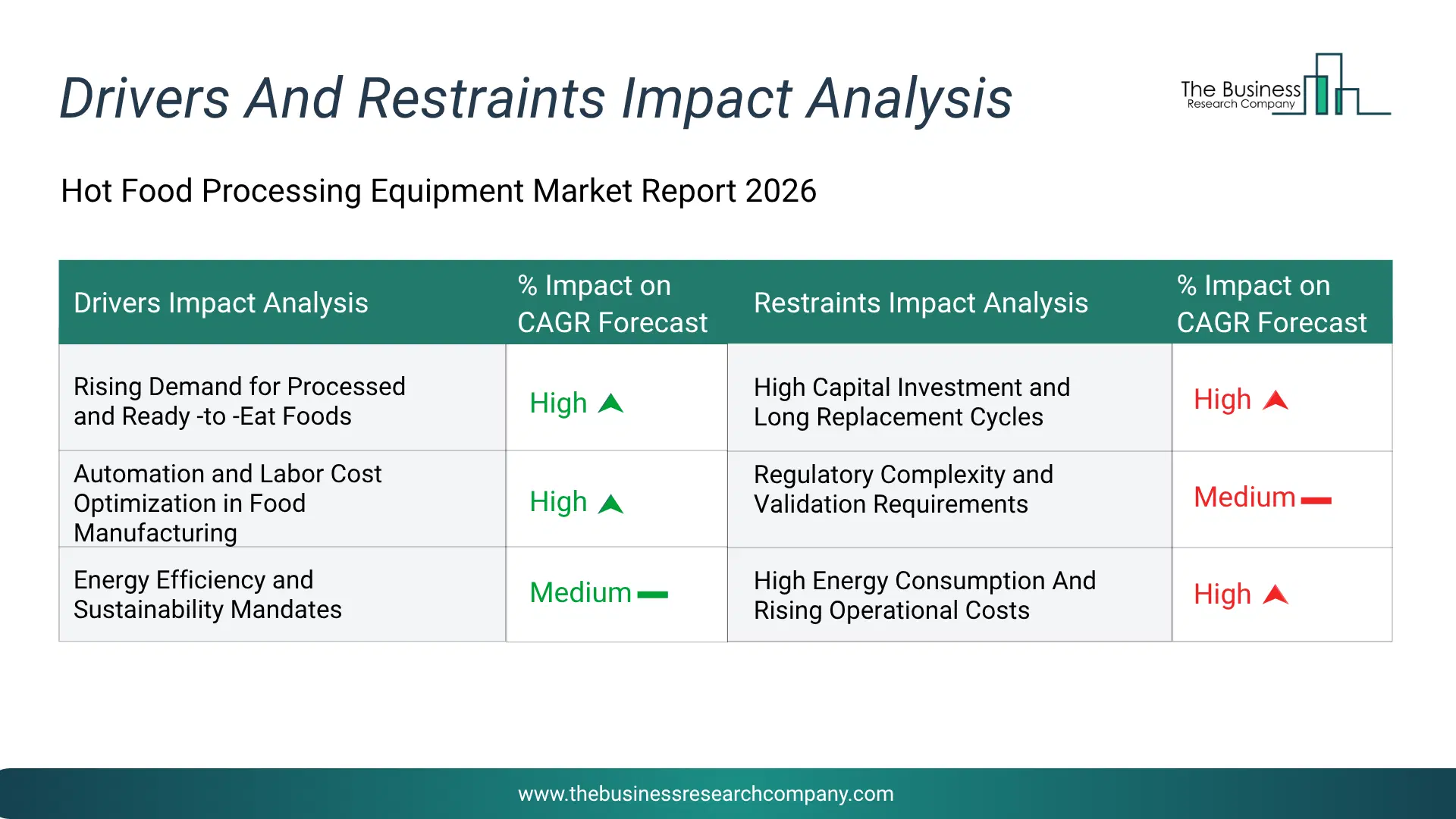
Infographic Chart Showing Key Market Drivers Analysis And Restraints For Hot Food Processing Equipment Market
The chart presents an impact analysis of key drivers and restraints, quantifying their relative influence on the market's growth rate and helping assess the balance between growth enablers and limiting factors. This chart offers a high-level perspective; the full report contains more detailed insights.
How Will The Drivers Impact Growth In The Global Hot Food Processing Equipment Market?
• Rising Demand for Processed and Ready -to -Eat Foods (High) – During the forecast period, the rising demand for processed and ready -to -eat (rte) foods is expected to become a primary growth driver for the hot food processing equipment market by 2030. Rapid urbanization, expanding middle -class populations, increasing participation of women in the workforce, and time -constrained consumer lifestyles are accelerating dependence on convenience -based food consumption. This shift is driving food manufacturers to expand production capacities for fried snacks, bakery products, processed meats, frozen meals, and packaged ready meals. As a result, investments in high -capacity frying, baking, roasting, pasteurization, and sterilization systems are increasing to ensure scalability and product consistency. Additionally, the expansion of organized retail and e -commerce grocery platforms is reinforcing demand for standardized, shelf -stable, and thermally processed food products. • Automation and Labor Cost Optimization in Food Manufacturing (High) – During the forecast period, automation and labor cost optimization in food manufacturing are expected to become significant growth drivers for the hot food processing equipment market by 2030. Persistent labor shortages, wage inflation, and operational inefficiencies are compelling processors to adopt integrated and automated cooking lines. Companies are increasingly deploying robotics -enabled handling systems, continuous thermal processing equipment, and digitally controlled temperature management solutions to enhance throughput and minimize manual intervention. Automation also improves process repeatability, food safety compliance, traceability, and overall equipment effectiveness (oee). • Energy Efficiency and Sustainability Mandates (Medium) – During the forecast period, energy efficiency and sustainability mandates are expected to become key structural growth drivers for the hot food processing equipment market by 2030. Rising energy prices and increasing regulatory pressure to reduce carbon emissions are prompting food processors to upgrade to energy -efficient thermal systems. Manufacturers are investing in advanced heat recovery systems, optimized burner technologies, hybrid electric heating solutions, and improved insulation materials to reduce energy consumption per unit of output. In parallel, multinational food brands are aligning procurement strategies with corporate sustainability commitments, prioritizing equipment with lower lifecycle emissions and enhanced resource efficiency. Additionally, regulatory frameworks in europe and north america are accelerating the transition toward environmentally compliant and low -emission processing systems.How Will The Restraints Impact Growth In The Global Hot Food Processing Equipment Market?
• High Capital Investment and Long Replacement Cycles (High) – During the forecast period, the hot food processing equipment involves substantial upfront capital expenditure, particularly for integrated thermal processing lines and customized industrial systems. Small and mid-sized processors often delay modernization due to budget constraints and uncertain return on investment timelines. Additionally, equipment life cycles typically range from 10 to 20 years, limiting frequent replacement demand. These financial and structural barriers moderate overall market expansion despite strong underlying demand. • Regulatory Complexity and Validation Requirements (Medium) – During the forecast period, the stringent food safety standards related to thermal lethality validation, hygienic design, traceability, and sanitation impose complex compliance requirements on equipment manufacturers. Meeting region-specific certifications such as eu hygiene directives, fda standards, and global food safety benchmarks increases design and documentation costs. Extended testing and validation cycles can delay product launches and increase operational expenses. While these regulations enhance long-term industry credibility, they can temporarily slow market penetration and innovation cycles. • High Energy Consumption And Rising Operational Costs (High) – During the forecast period, the high energy consumption and rising operational costs act as a restraint for the hot food processing equipment market by increasing the total cost of ownership for manufacturers and food processors. Thermal processing systems require continuous heating, cooling, and precise temperature control, which leads to significant electricity and fuel usage. Fluctuating energy prices further add unpredictability to operational budgets. This makes it difficult for companies to maintain cost efficiency, especially in price-sensitive markets. As a result, many processors delay upgrades or opt for lower-capacity systems, slowing overall market growth.Key Players In The Global Hot Food Processing Equipment Market
Major companies operating in the hot food processing equipment market are GEA Group Aktiengesellschaft, Buhler AG, The Middleby Corporation, JBT Corporation, Heat and Control Inc., SPX Flow Inc., Tetra Laval International S.A., Alfa Laval AB, TNA Australia Pty Limited, Braunschweigische Maschinenbauanstalt AG, Bongard S.A.S, Marlen International Inc, Paul Mueller Company, Bucher Industries AG, Equipamientos Carnicos S.L., Clextral S.A.S, Bigtem Makine A.S, FENCO Food Machinery s.r.l., Krones Group, Finis Food Processing Equipment B.V., Bettcher Industries Inc, The Vollrath Company LLC, GROTE CO INC, FMC Corporation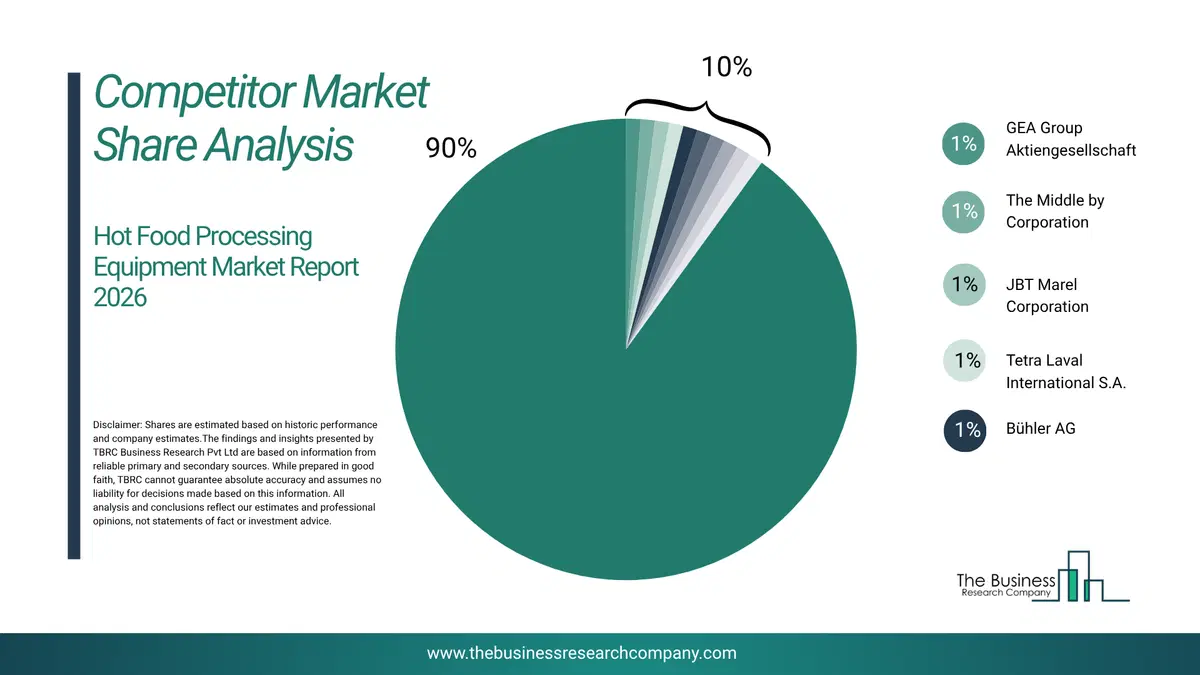
This chart is for illustrative purposes; the full report includes a detailed competitor analysis and comprehensive overview of the top 10 companies in the market.
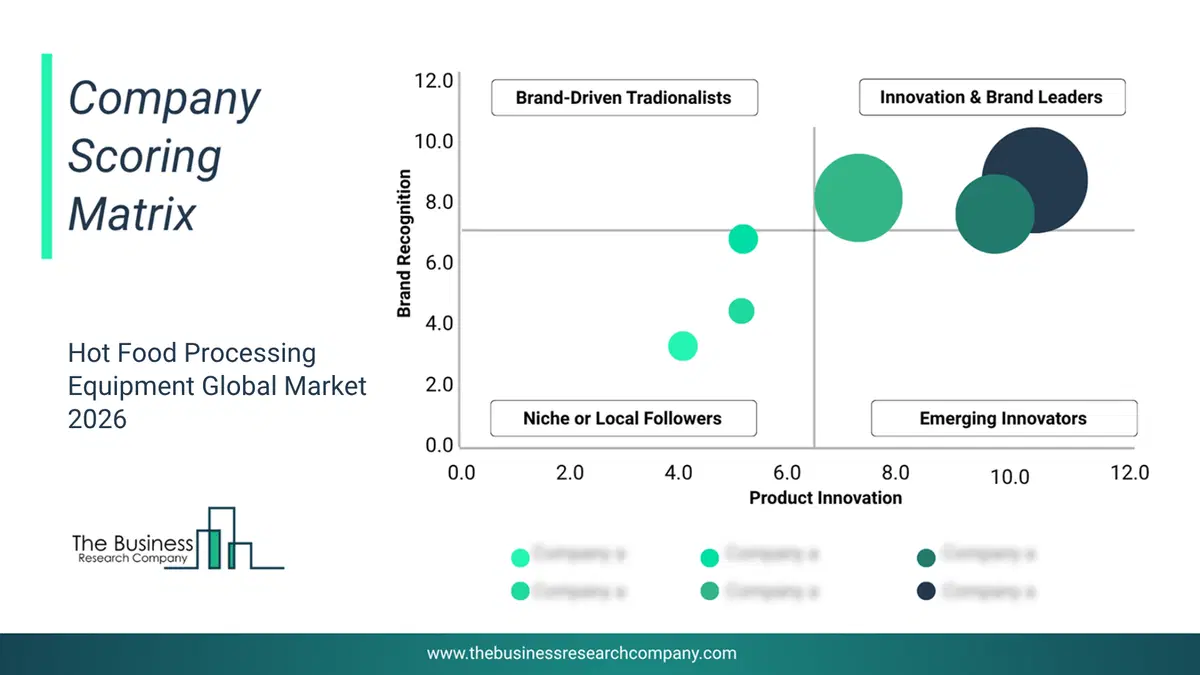
This chart maps companies by product innovation and brand strength, with bubble size indicating relative revenue, helping identify market leaders, challengers, and niche players. This is an illustrative chart; the full report provides a complete and accurate competitive analysis.
Global Hot Food Processing Equipment Market Trends and Insights
Major companies operating in the hot food processing equipment market are developing advanced solutions, such as unified platforms for food brands, to streamline production processes, improve operational efficiency, and enhance product quality across various food processing stages. A unified platform for food brands is an integrated system that consolidates various aspects of food production, management, and processing into a single, cohesive platform. For instance, in March 2024, Fortifi Food Processing Solutions, a US-based automated food processing solution launched a Food Processing Automation Platform. The Food Processing Automation Platform is a unified platform for food brands and products within food processing equipment and automation solutions. The platform aims to improve food processing efficiency by offering tailored automation solutions for both single lines and entire plants.What Are Latest Mergers And Acquisitions In The Hot Food Processing Equipment Market?
In September 2023, Hillenbrand, Inc., a U.S.-based industrial processing equipment provider, acquired Schenck Process Food and Performance Materials (FPM) for an undisclosed amount. With this acquisition, Hillenbrand expanded its Advanced Process Solutions segment and enhanced its capabilities in food-sector equipment, material handling, baking, and processing technologies to better serve the processed food and pet food markets globally. FPM is a U.S.-based provider of feeding, filtration, baking, and material handling systems and equipment for food processing applications.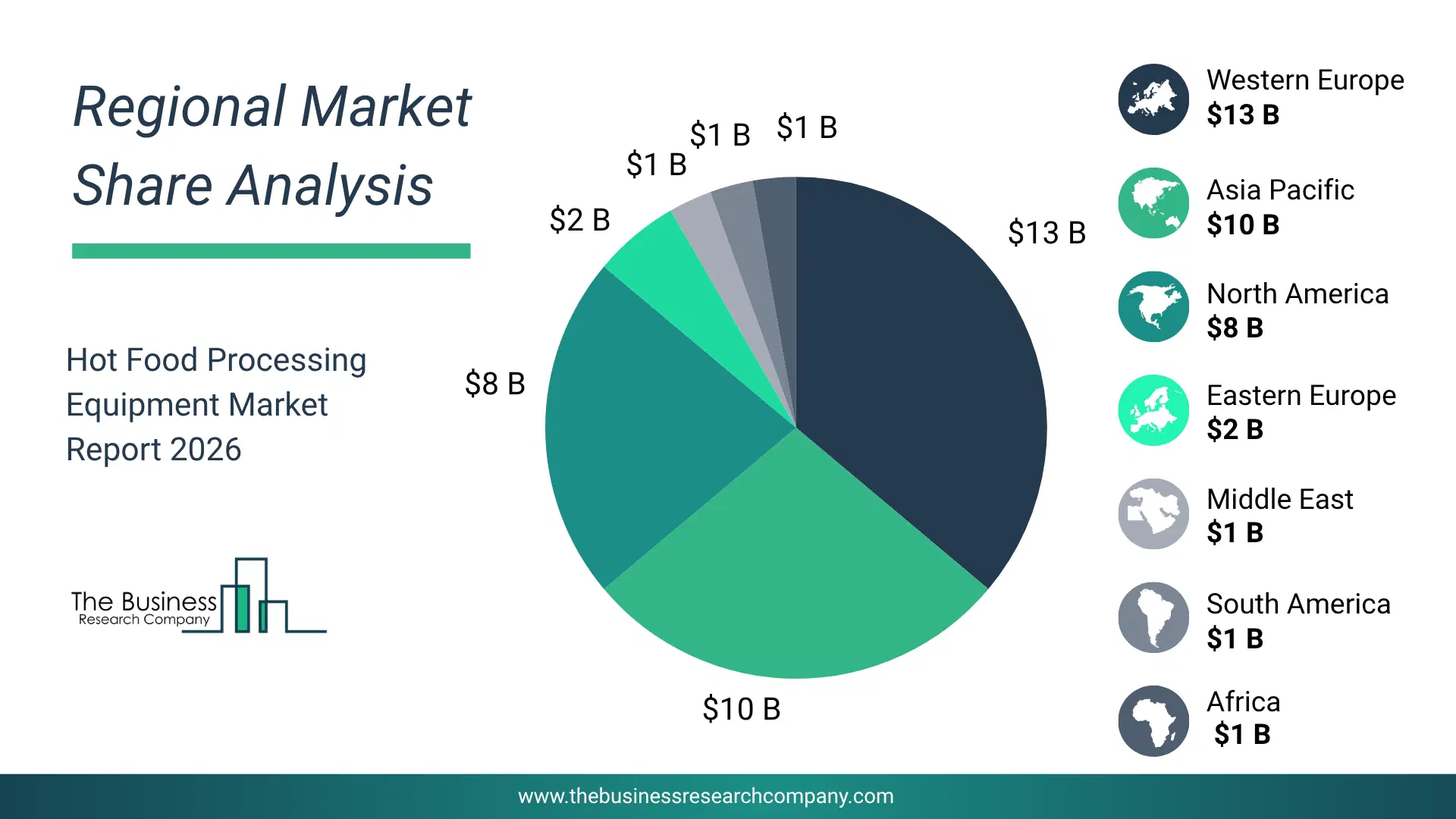
Regional Outlook
Asia-Pacific was the largest region in the hot food processing equipment market in 2025. Asia-Pacific is expected to be the fastest-growing region in the forecast period. The regions covered in this market report are Asia-Pacific, South East Asia, Western Europe, Eastern Europe, North America, South America, Middle East and Africa. The countries covered in this market report are Australia, Brazil, China, France, Germany, India, Indonesia, Japan, Taiwan, Russia, South Korea, UK, USA, Italy, Spain, CanadaWhat Defines the Hot Food Processing Equipment Market?
The hot food processing market includes revenues earned by entities by providing washing, chopping, pasteurizing, freezing, fermenting services.The market value includes the value of related goods sold by the service provider or included within the service offering. Only goods and services traded between entities or sold to end consumers are includedHow is Market Value Defined and Measured?
The market value is defined as the revenues that enterprises gain from the sale of goods and/or services within the specified market and geography through sales, grants, or donations in terms of the currency (in USD unless otherwise specified). The revenues for a specified geography are consumption values that are revenues generated by organizations in the specified geography within the market, irrespective of where they are produced. It does not include revenues from resales along the supply chain, either further along the supply chain or as part of other products.
This chart presents market attractiveness based on a quantitative evaluation of growth, competition, strategic alignment, and risk, offering a clear view of opportunity areas for decision-making. This chart is for illustrative purposes; the full report contains the complete analysis.

This chart highlights the Total Addressable Market (TAM) by estimating the maximum revenue opportunity using an assumption-driven approach, supporting strategic planning and opportunity sizing across markets. The chart is illustrative; the full report provides a more comprehensive analysis.
What Key Data and Analysis Are Included in the Hot Food Processing Equipment Market Report 2026?
The hot food processing equipment market research report is one of a series of new reports from The Business Research Company that provides market statistics, including industry global market size, regional shares, competitors with the market share, detailed market segments, market trends and opportunities, and any further data you may need to thrive in the hot food processing equipment industry. The market research report delivers a complete perspective of everything you need, with an in-depth analysis of the current and future state of the industry.Hot Food Processing Equipment Market Report Forecast Analysis
| Report Attribute | Details |
|---|---|
| Market Size Value In 2026 | $27.64 billion |
| Revenue Forecast In 2030 | $34.89 billion |
| Growth Rate | CAGR of 6.1% from 2026 to 2030 |
| Base Year For Estimation | 2025 |
| Actual Estimates/Historical Data | 2020-2025 |
| Forecast Period | 2026 - 2030 |
| Market Representation | Revenue in USD Billion and CAGR from 2026 to 2030 |
| Segments Covered | Type, Mode of Operation, End-User |
| Regional Scope | Asia-Pacific, Western Europe, Eastern Europe, North America, South America, Middle East, Africa |
| Country Scope | The countries covered in the report are Australia, Brazil, China, France, Germany, India, Indonesia, Japan, Taiwan, Russia, South Korea, UK, USA, Canada, Italy, Spain. |
| Key Companies Profiled | GEA Group Aktiengesellschaft, Buhler AG, The Middleby Corporation, JBT Corporation, Heat and Control Inc., SPX Flow Inc., Tetra Laval International S.A., Alfa Laval AB, TNA Australia Pty Limited, Braunschweigische Maschinenbauanstalt AG, Bongard S.A.S, Marlen International Inc, Paul Mueller Company, Bucher Industries AG, Equipamientos Carnicos S.L., Clextral S.A.S, Bigtem Makine A.S, FENCO Food Machinery s.r.l., Krones Group, Finis Food Processing Equipment B.V., Bettcher Industries Inc, The Vollrath Company LLC, GROTE CO INC, FMC Corporation |
| Customization Scope | Request for Customization |
| Pricing And Purchase Options | Explore Purchase Options |